
National Garden Week ended a few days ago and, as usual, I am the proverbial few days late and a few dollars short. I have very valid reasons, though. I was out gardening. And I was buying a few more plants, despite the ten day forecast having a few too many 100 degree days lined up. Alas. Just like Jack, I would trade the family’s cow for some magic bean seeds any day.
National Garden Week is an annual event, held the first full week of June. This year that happened to be June 4th through 10th. National Garden Clubs, a non-profit organization, holds this event as a way to promote the love of gardening. Even though I am late to this (garden) party, I simply cannot miss a chance to promote the love of gardening. And – who knows! – I may even go out and buy a new pair of plants to celebrate with! So, without further ado, here are just a few of the reasons why everyone should have, at the minimum, a small garden space.
1.) Gardening is a great way to stay physically active, which is so important in today’s world where we are often either glued to our office chairs, cell phones or automobiles.
Gardening can be an intense workout. Yes, you can go to the gym and do farmer’s carries with a couple of heavy metal plates, but you can also do that in the garden with two five-gallon buckets of homebrewed compost tea. Yes, you can go to the gym and do sled pushes, but have you ever walked three miles in one day, moving a pile of mulch one wheelbarrow load at a time? Many years ago, my family doctor told me that gardening wasn’t good exercise. I invited him over to my place to help me garden, as I had recently had a bulk delivery of compost and mulch. He didn’t take me up on the invite… Thankfully, most doctors now realize that gardening can be a great all-around workout. Not only does gardening burn more calories that channel surfing, it also helps build muscles and it challenges the gardener’s balance and flexibility.
That said, gardening doesn’t have to be an intense workout if one is physically not able to do the heavy lifting and hauling. There are ways to make gardening accessible for everyone, from tall raised beds that can accommodate wheelchairs and walkers to a small patio garden in containers or even growing microgreens on a sunny windowsill.
2.) Have you ever heard of the “runner’s high,” where runner’s get a rush of endorphins? At least one study has been conducted showing that gardeners get a boost in dopamine, a neurological “reward response,” when harvesting the fruits of their labor. When gardener’s say there is nothing quite like picking their own homegrown strawberries or tomatoes, that is the dopamine response, the pleasure, the state of bliss, from growing something yourself and eating it straight off the plant. Additionally, healthy soil is full of beneficial bacteria that releases serotonin in our brains, helping to alleviate depression and improve mental health. Gardening outside has the added benefit of increasing exposure to natural Vitamin D from the sunshine. Gardening also relieves stress (so long as you aren’t weeding something evil, like trumpet vine!) All together, there are many solid mental health benefits to gardening.
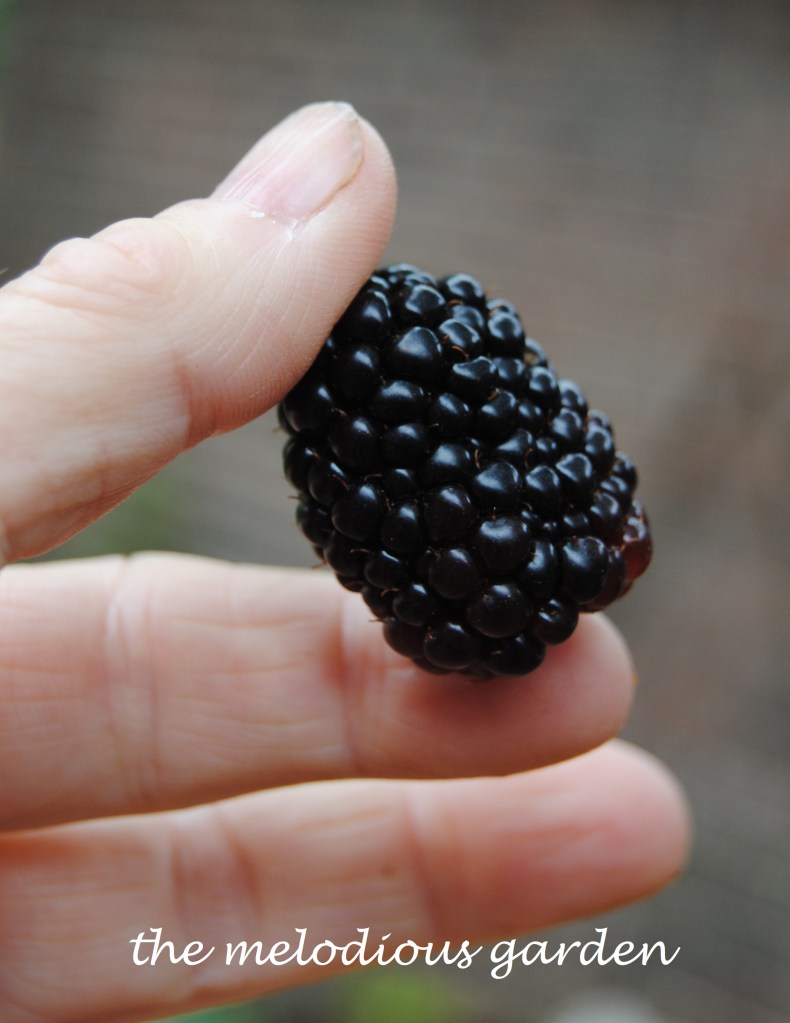
3.) Growing a fraction of your own food – or even just a few herbs – promotes healthier eating habits. When our tastebuds are more attuned to the pleasures of fresh dill sprinkled over a salad, a vine ripened cherry tomato, the sweetness of a blackberry still warm from the sun, we are less likely drawn to commercialized food products.
(Below photograph: My first blackberry of 2023!)
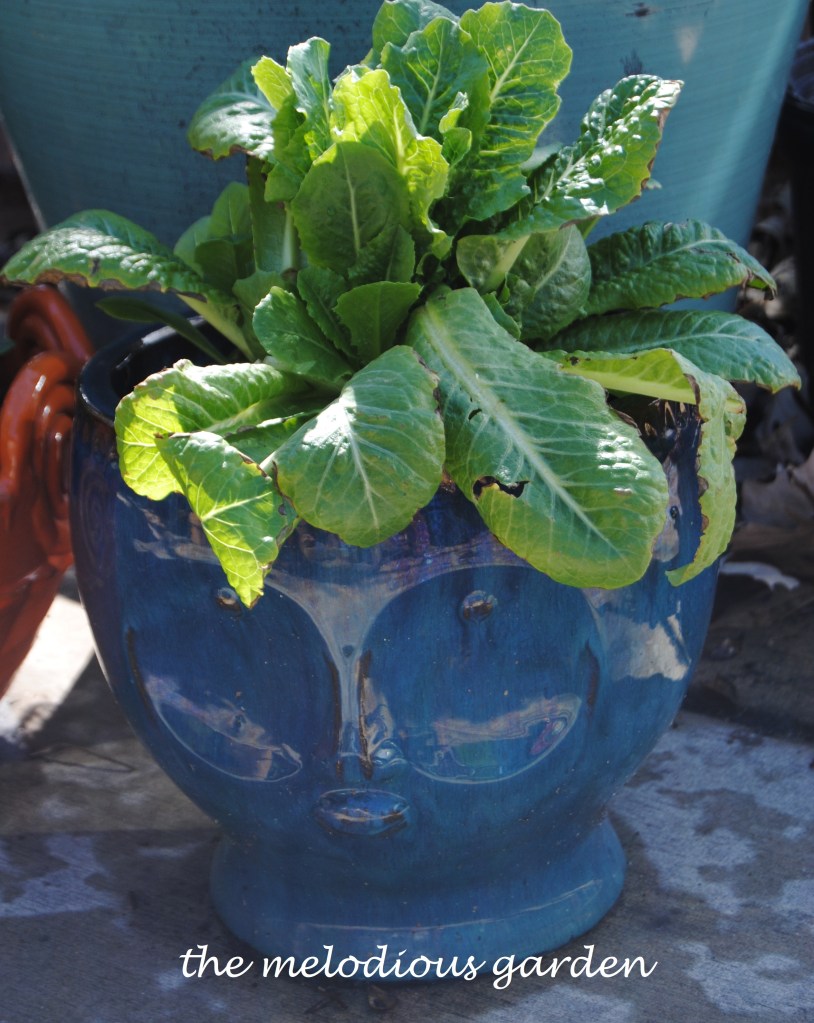
Having a selection of greens growing right outside the kitchen door makes healthy eating fun and enjoyable. Knowing what can be grown in each season in your region expands both the culinary palette and the nutritional benefits. Kale, for example, grows great in Texas from fall through winter and in to early spring, before “bolting,” or going to seed, in the heat. Longevity spinach, on the other hand, grew wonderfully in a container on my covered patio all of last summer, even when it reached 108 degrees. Okra, that southern staple, loves the Texas summer. Did you know the leaves are edible and make a great addition to summer salads?
(Photograph below: Romaine lettuce growing in a blue glazed container this past winter.)
4.) We – on a small scale – may not be able to stop the deforestation of the rainforests or prevent the glaciers from melting, but we can make a big difference right here in our own back yards. And our front yards, too! As I sit outside on this glorious June day, writing, I have been pausing from time to time to watch a swallowtail butterfly flutter from the coneflowers to the bee balm and back again, stopping to nectar here and there, knowing that I have done just a little something to make this world a bit better off. I have given wildlife a refuge from the fast pace of development and habitat destruction. I have built up my soils so that water seeps slowly down in to the earth instead of rushing off in to storm drains. I try to keep as much organic material on our property as possible, from composting kitchen scraps and toilet paper tubes to lining pathways with fallen tree branches to allowing leaves to decompose in place. Those are just some of the ways that gardening can benefit our planet. It is a loose, unscientific version of a symbiotic relationship… The garden feeds us zucchini. I compost the plant at the end of the season, where it breaks down and feeds the soil. That soil grows a beautiful stand of bee balm, which supplies the swallowtail butterfly with much needed nectar. Watching the swallowtail dance about my garden feeds my soul and I am drawn once again outside where I harvest yet more zucchini.
5.) Gardening can help build communities. Pausing the lawnmower to chat with the neighbor. Joining a garden club. (Which I highly recommend!) Giving away excess tomato plants when you started too many from seed. Passing along iris rhizomes to fellow gardeners. Saving flower seeds to give to friends and family near and far. Participating in a community garden. We live in such a technologically connected yet socially disconnected world these days. We need connection to survive and to thrive. Gardening can bridge that span. Gardening can also span the generations, from engaging toddlers that are fascinated by the caterpillars feasting on the passionvine to asking grandma about Victory Gardens during World War II. We can all benefit from the social aspects of gardening.
I hope I have encouraged you today to “dig in the dirt,” whether to plant up a small pot of herbs or break ground on a butterfly garden. Be sure to take a pause and appreciate the smallest parts of our natural world around us. It’s good for our mental well-being, after all.
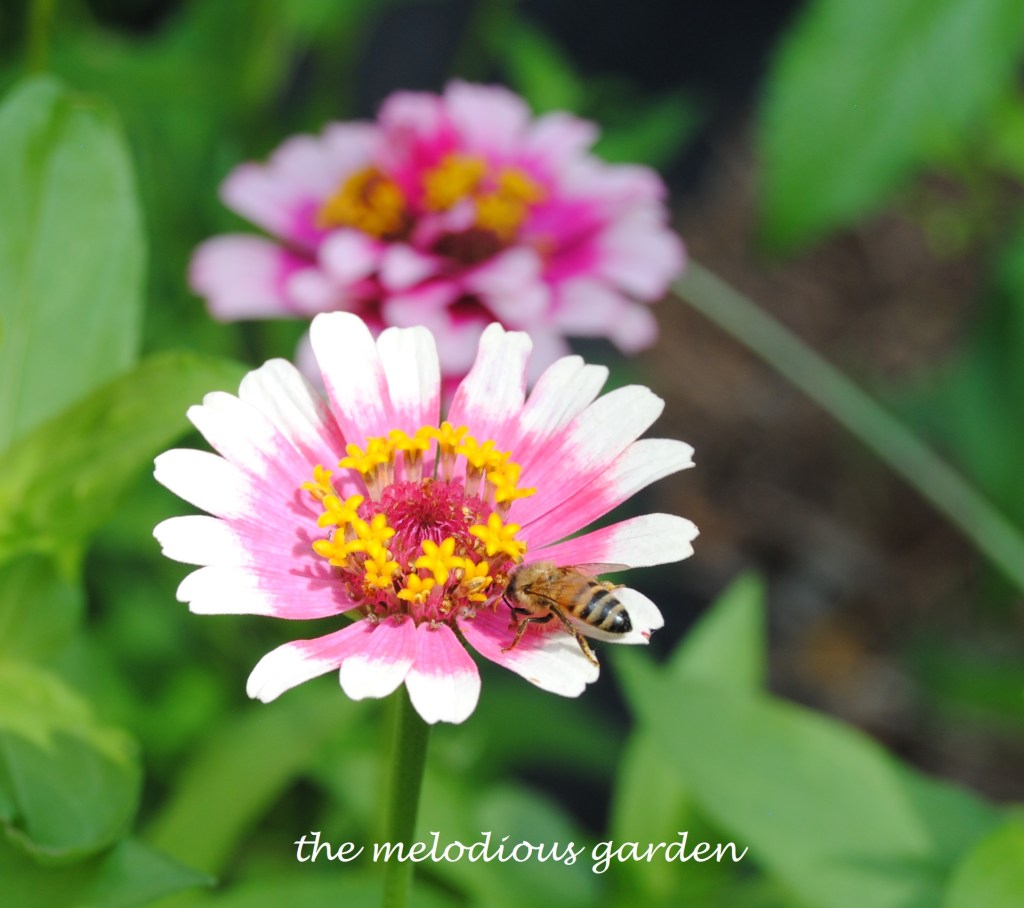
(Photograph above: Bee on a zinnia – June 8, 2023)

 the melodious garden