
“How blest to sit in the fragrant shade,
In the hush of a summer noon,
To watch the bees at their happy task,
And listen their drowsy tune…” ~ Elizabeth Anne Chase Akers Allen

Poets and gardeners alike adore the bee family. Many lines of poetry have been written about the humming and buzzing of bees, and every gardener worth their weight in honey knows the important role bees play in pollinating their gardens. Alas. Few poets write wistfully of flies and I have yet to meet a gardener that talks about the flies in their garden. Mark Twain perhaps said it best when he wrote that he would “rather have ten snakes in the house than one fly.” That could explain why I have yet to stumble across a field guide to the various flies of Texas.
This happens to be Pollinator Week, a time to say Thank You to all of our hardworking pollinators, and not just the bees that poets wax poetic about. Bees – and flies! – hummingbirds, butterflies, moths, wasps, bats and beetles are all responsible for pollinating our crops.
Instead of stepping on my usual soapbox and writing about the importance of pollinators and how much humans depend on them to pollinate our crops and how everyone can take small steps to benefit our pollinators… because we all know that is important, right?… Instead I thought I would share some of the pollinators spotted around my melodious garden this month of June and some of the flowers I have that lure in the pollinators, because honestly we should be celebrating them all month long.
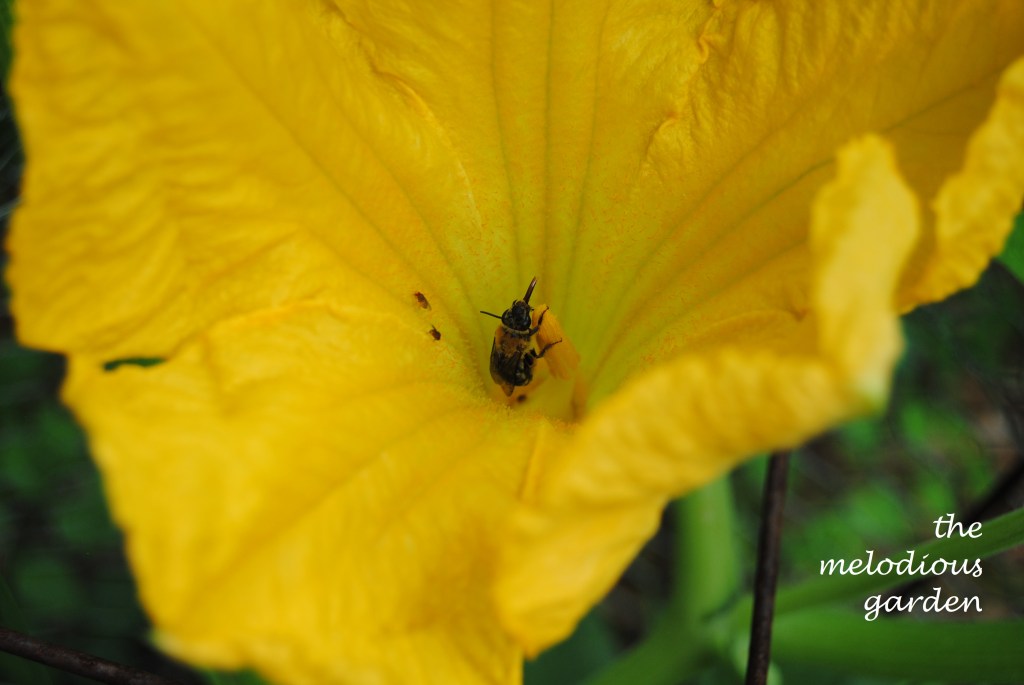
A little pollinator action on a zucchini plant, shown in the photograph above, taken on June 21st.
It is estimated that one out of every three bites of food we eat requires pollination. Some foods require pollination to produce, such as zucchini. Other foods indirectly require pollination, such as meat and dairy. Livestock are primarily fed grains that require pollination, so to raise meat for consumption or to produce milk, pollinators are needed. Some foods, such as blueberries, are self-fertile and do not require pollination to produce a crop, but the plants will have higher yields with pollination.
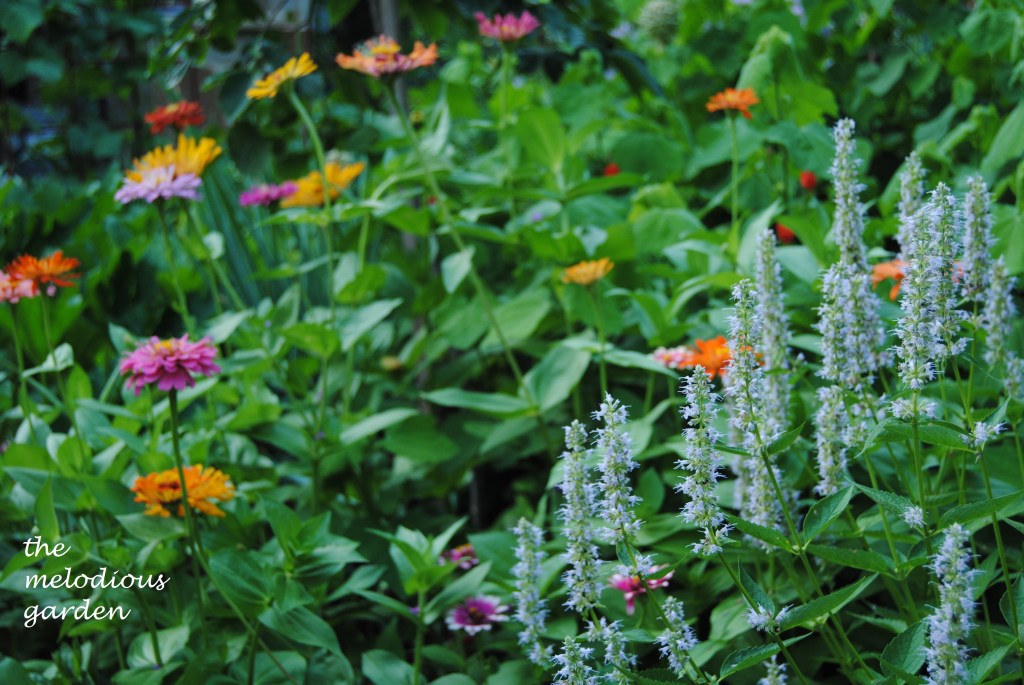
A large patch of zinnias, shown below, is planted just behind the zucchini in the above photograph. Blue fortune agastache is a lovely contrast to the bold, bright colors of the zinnias. Both plants are attractive to bees and butterflies. Planting flowers around your vegetables is a great way to ensure plenty of pollination.
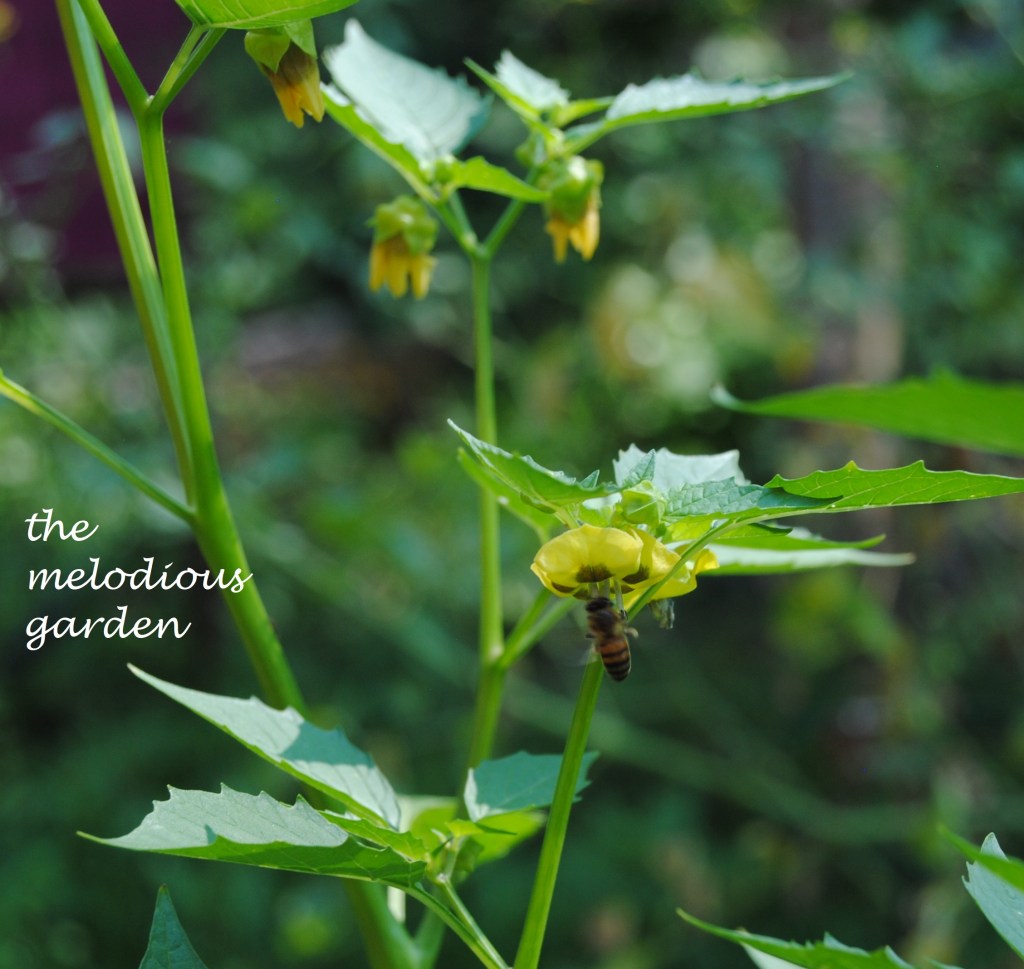
A little pollinator action on a tomatillo, shown below, photograph taken June 1st.
Cosmos and zinnia, shown in the photograph below, are planted directly in front of the tomatillos.

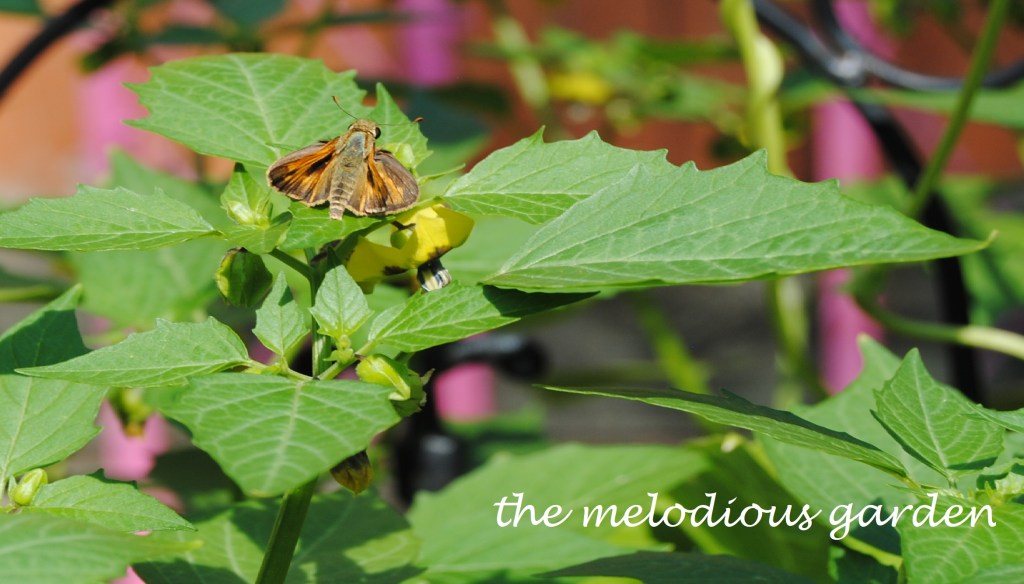
Moths are often overlooked as pollinators, but they are an equally important insect to have in the garden. In addition to pollinating plants, they are a great food source for amphibians and birds. In the photograph below, a moth rests for a spell on a tomatillo plant.
“I like to psychoanalyze the flies. They are very inquisitive, for instance – eager to investigate anything, taste anything, crawl over any object from a buzz-saw to a bald head. Flies are the most obstinate creatures in the universe for they never give up an undertaking. They don’t know how to desist.” ~ Dorothy Scarborough
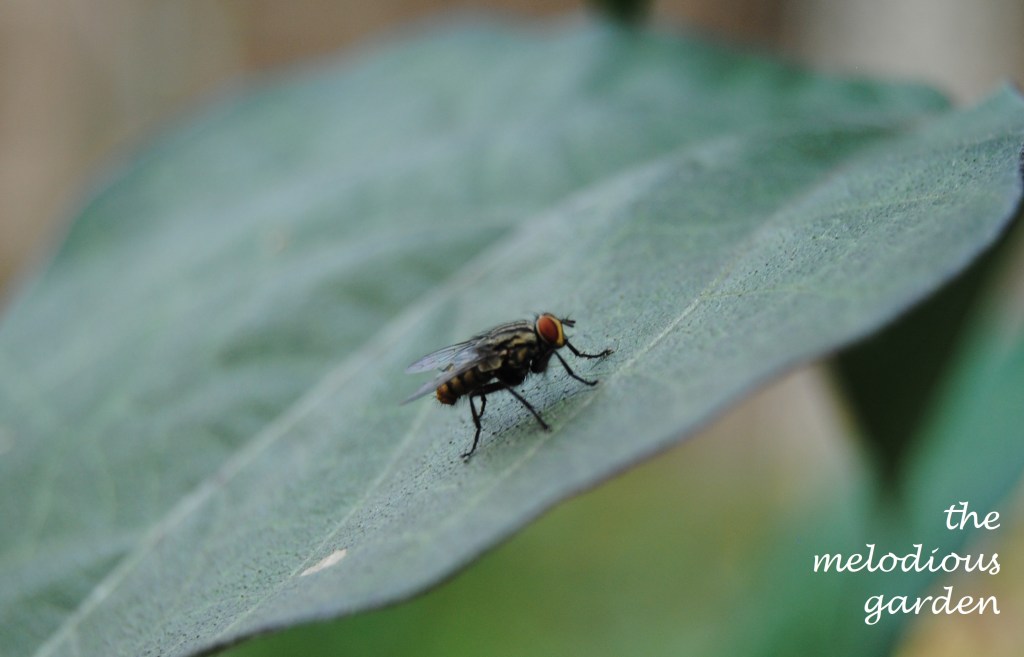
You didn’t think I could mention flies without photographing one, did you? It actually took me quite a while to find a fly, shown in the photograph above, then there he was – sunning himself on the leaf of a pole bean.
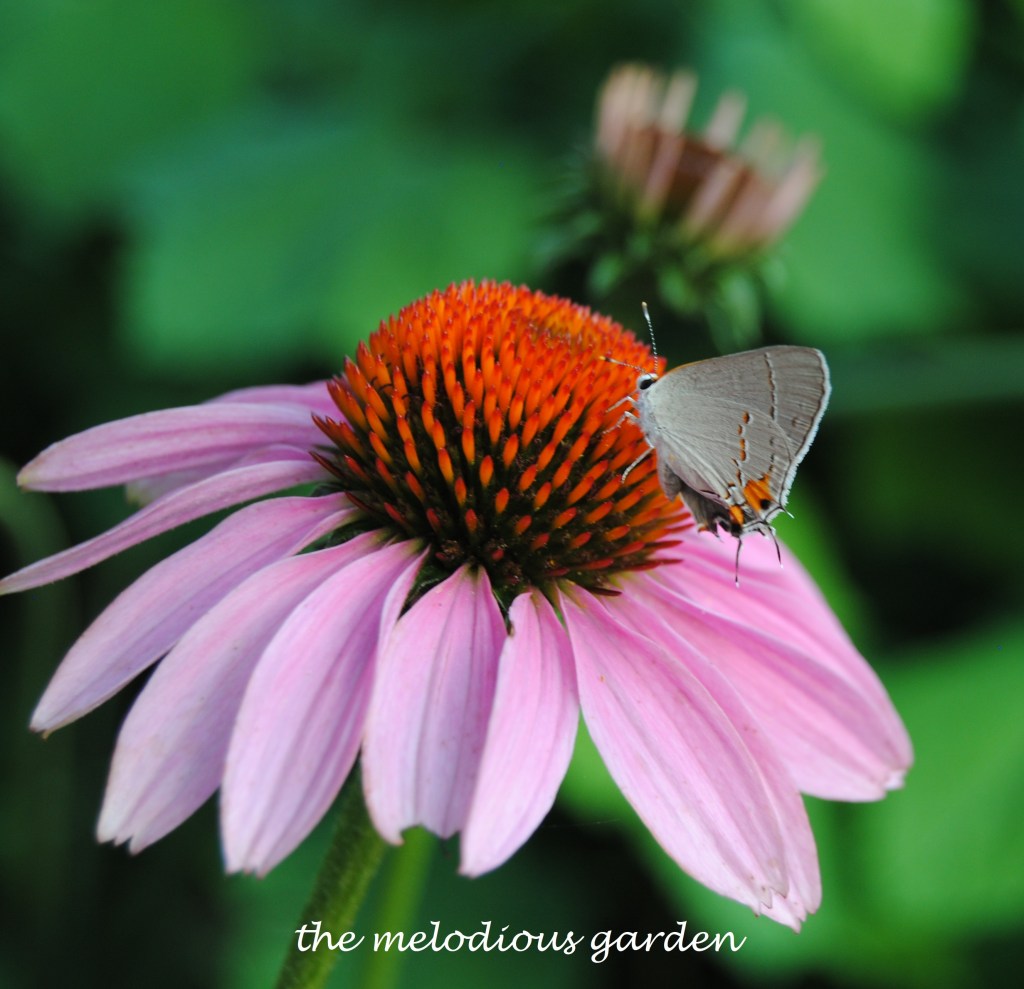
Above, a gray hairstreak nectars on our native echinacea, aka coneflower. The native variety attracts a wide variety of pollinators.
Host plants, such as passionvine, shown below, are also important to pollinators. Gulf fritillary butterflies lay their eggs on passionvine. The eggs then hatch and the caterpillars feed on the passionvine.

“I am regretful that in my growing up years bugs were not regarded seriously as now. I have to get my mind adjusted to the notion of taking them as important members of society, since in my green days they were brushed aside or stepped on without qualm. I didn’t know that scholars gave their whole lives to studying worms, or work up a passionate fervor over spiders, or rhapsodize over bees.” ~ Dorothy Scarborough
I could rhapsodize all day and night over the pollinators in my garden, but will leave this here for now… It is unseasonably hot in Texas right now. While poets and gardeners can seek relief in air conditioned homes, wildlife cannot. (Except, perhaps, flies and mosquitoes.) Celebrate Pollinator Week Month and consider doing just one small thing to help our pollinators. Need ideas? (You didn’t really think I could pass a chance to step on my soapbox, did you?)

 the melodious garden