gardening, nature

Summer has set in

Nearly two hundred years ago Samuel Taylor Coleridge famously – or infamously? – wrote that summer set in “with its usual severity.” Much the same could be written today, on this summer solstice.

Texas has been in the national spotlight this past week for its record high heat index readings. This is where I would normally say, “Ah, but it’s a dry heat…” Alas. No. Unseasonably high humidity is pushing the “feels like” temperatures in to the stratosphere. “People don’t notice whether it’s winter or summer when they’re happy,” Anton Chekov wrote in 1898. Oh, there is no missing that it is summer in Texas right now! Even the happiest of folks know 115 degrees when they feel it. Today I am grateful for air conditioning and deodorant and iced tea.

“Heat, Ma’am! It was so dreadful, that I found there was nothing left for it but to take off my flesh and sit in my bones,” wrote Sydney Smith. Today I am also grateful for native plants and zinnias and daylilies and for the bees that dart about my garden as I sit here, sweltering in my bones.

Our native beautyberry won’t form its namesake beautiful berries for quite a while yet and their flowers are less than noteworthy and somewhat hidden under its large leaves, but that doesn’t stop the bees from partaking of its nectar. Callicarpa americana (shown above) grows three to six feet tall and wide and its berries, which grow in clusters along the branches, are an important food source for birds during the winter. In its natural habitat, beautyberry would be found growing in wet bottomlands or along waterways, but it is very adaptable to our irrigated gardens.
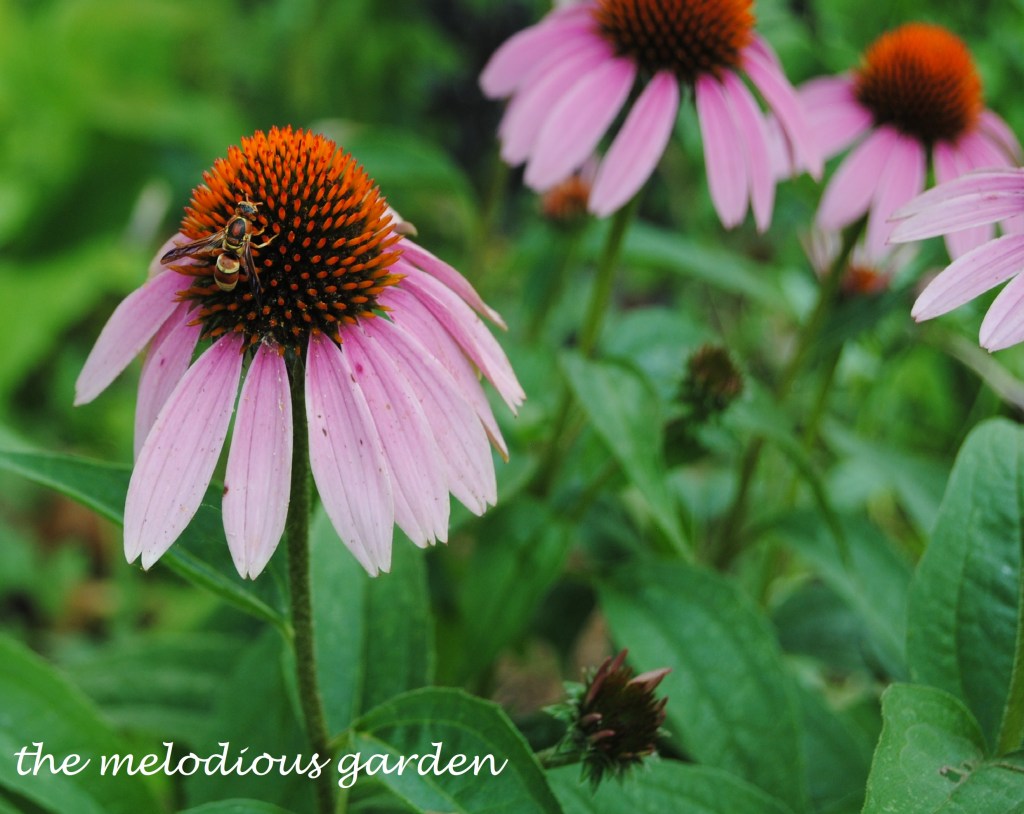
Echinacea, aka coneflower, was one of the first native plants in my garden 28 years ago and it remains one of my favorites. It attracts many beneficial insects and is extremely durable, even withstanding full sun, with scant supplemental watering, around my mailbox. I will periodically deadhead the spent flowers through the summer, which encourages another wave of blooms into late summer and early fall. I stop deadheading echinacea (shown above) in the fall and allow those seedheads to remain standing through the winter. It is reported that songbirds will feed on the seeds in the cold of winter, though I have never personally witnessed that in my garden. In the late winter or early spring, I will cut down any remaining coneflower stalks and scatter those seeds about the garden. In this manner, I have sown multiple stands of echinacea around my property.
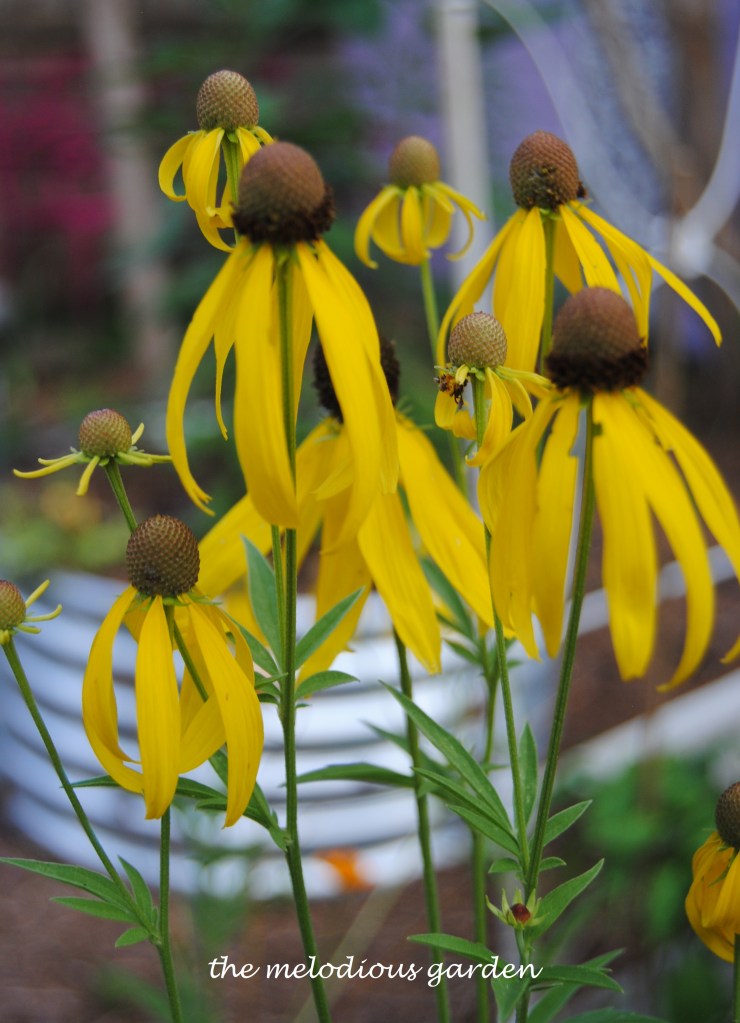
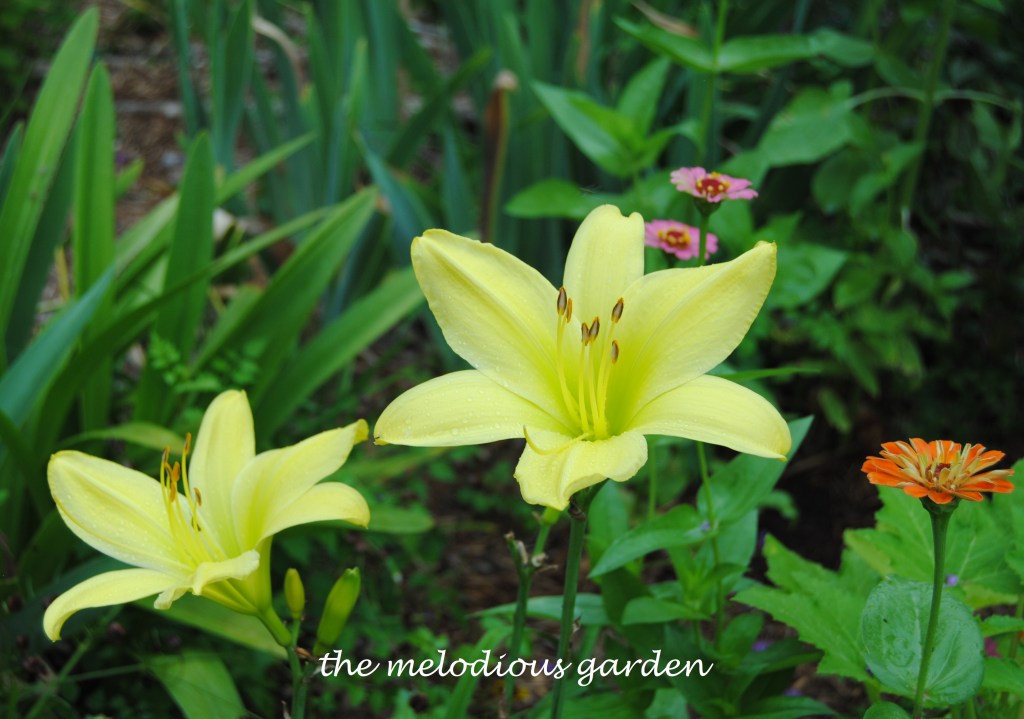
Ratibida pinnata (above) is possibly one of my new favorite plants, in part because I love its common name. Grayheaded coneflower. As my “new and improved” gardens were coming together last year, I found myself drawn to BIG. And not just BIG, but – Tall plants. Big blooms. Bold botany. Plants that command your attention. Thus entered the grayheaded coneflower. At three to five feet tall, he fits the bill. Big. Yet oh, so, wispy. I also adore how delicate – and bright yellow – the petals are.

Zinnias and agastache (shown above) are a happy accidental combination. I direct sow zinnias in the garden, at first with thoughtful selection of seed and careful consideration to date and location of sowing, later with reckless abandon. A little here, a little too much there, I morph into the botanical version of Tinker Bell scattering pixie dust. But then. This happens. And I am reminded exactly why I take a lighthearted approach to gardening. Nothing by the rows. Nothing by the rules. Sometimes happenstance gardening is best. Such a beautiful way to enter summer, sitting on the patio with this amazing view.

The pollinators were out in force this morning, happily working away at pollinating my zucchini plants. (Shown above.) Last year, I fought squash vine borers something fierce. And by “something fierce,” I mean – I gave in and let them have the plants until I gave up and ripped them out and tossed them in the compost bin. This year, I sowed three to ten times more seeds than needed, of different varieties and at staggered dates. The squash vine borers? I think they were overwhelmed by their options and flew right on past. Which means zucchini is on the menu more than a handful of times each week. Zucchini bread. Zucchini lasagna. Zucchini and bean soup. Zucchini enchiladas. Zucchini muffins. In all honesty, some years are just better for one crop over another crop. Last year, I had great success with both Dragon’s Tongue and Helda beans. This year, neither one germinated well and the ones that did grow haven’t produced much. But the zucchini? This has been a very good year for the zucchini.

Keep Calm and Stay Cool. Plant something and watch it grow, what a wonderful way to honor the longest day of the year!
All photographs taken June 21st, 2023, in my zone 8a North Texas garden.
gardening, nature

Late to the (garden) party…

National Garden Week ended a few days ago and, as usual, I am the proverbial few days late and a few dollars short. I have very valid reasons, though. I was out gardening. And I was buying a few more plants, despite the ten day forecast having a few too many 100 degree days lined up. Alas. Just like Jack, I would trade the family’s cow for some magic bean seeds any day.

National Garden Week is an annual event, held the first full week of June. This year that happened to be June 4th through 10th. National Garden Clubs, a non-profit organization, holds this event as a way to promote the love of gardening. Even though I am late to this (garden) party, I simply cannot miss a chance to promote the love of gardening. And – who knows! – I may even go out and buy a new pair of plants to celebrate with! So, without further ado, here are just a few of the reasons why everyone should have, at the minimum, a small garden space.

1.) Gardening is a great way to stay physically active, which is so important in today’s world where we are often either glued to our office chairs, cell phones or automobiles.

Gardening can be an intense workout. Yes, you can go to the gym and do farmer’s carries with a couple of heavy metal plates, but you can also do that in the garden with two five-gallon buckets of homebrewed compost tea. Yes, you can go to the gym and do sled pushes, but have you ever walked three miles in one day, moving a pile of mulch one wheelbarrow load at a time? Many years ago, my family doctor told me that gardening wasn’t good exercise. I invited him over to my place to help me garden, as I had recently had a bulk delivery of compost and mulch. He didn’t take me up on the invite… Thankfully, most doctors now realize that gardening can be a great all-around workout. Not only does gardening burn more calories that channel surfing, it also helps build muscles and it challenges the gardener’s balance and flexibility.

That said, gardening doesn’t have to be an intense workout if one is physically not able to do the heavy lifting and hauling. There are ways to make gardening accessible for everyone, from tall raised beds that can accommodate wheelchairs and walkers to a small patio garden in containers or even growing microgreens on a sunny windowsill.

2.) Have you ever heard of the “runner’s high,” where runner’s get a rush of endorphins? At least one study has been conducted showing that gardeners get a boost in dopamine, a neurological “reward response,” when harvesting the fruits of their labor. When gardener’s say there is nothing quite like picking their own homegrown strawberries or tomatoes, that is the dopamine response, the pleasure, the state of bliss, from growing something yourself and eating it straight off the plant. Additionally, healthy soil is full of beneficial bacteria that releases serotonin in our brains, helping to alleviate depression and improve mental health. Gardening outside has the added benefit of increasing exposure to natural Vitamin D from the sunshine. Gardening also relieves stress (so long as you aren’t weeding something evil, like trumpet vine!) All together, there are many solid mental health benefits to gardening.

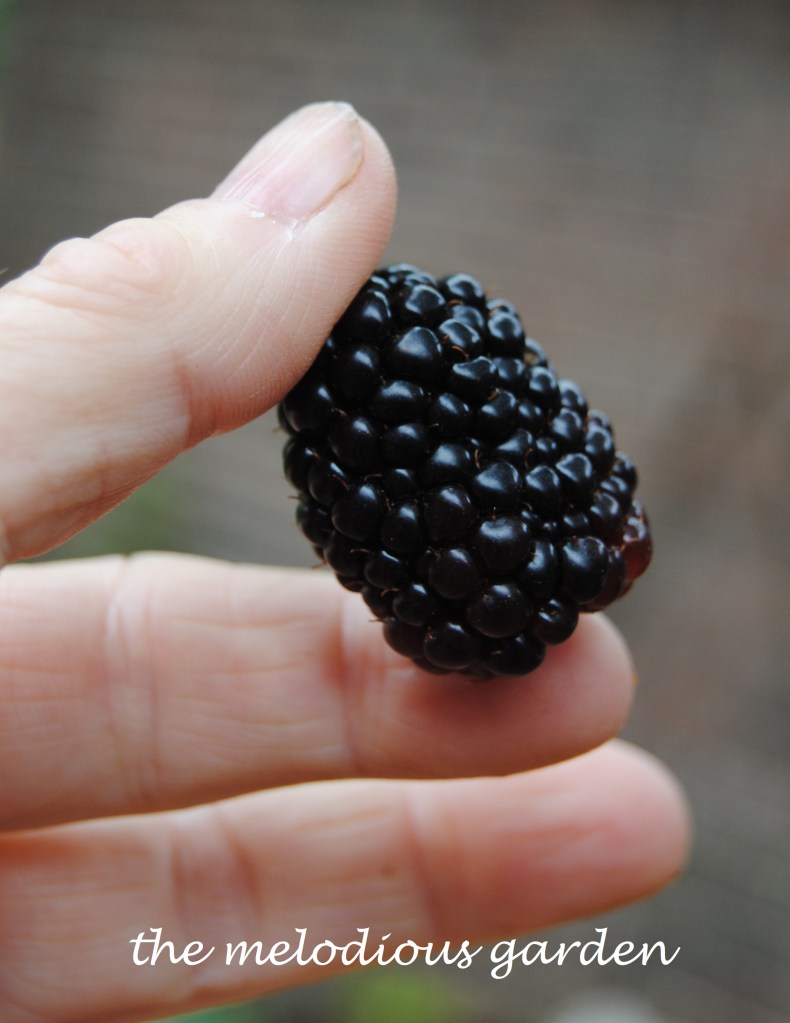
3.) Growing a fraction of your own food – or even just a few herbs – promotes healthier eating habits. When our tastebuds are more attuned to the pleasures of fresh dill sprinkled over a salad, a vine ripened cherry tomato, the sweetness of a blackberry still warm from the sun, we are less likely drawn to commercialized food products.

(Below photograph: My first blackberry of 2023!)

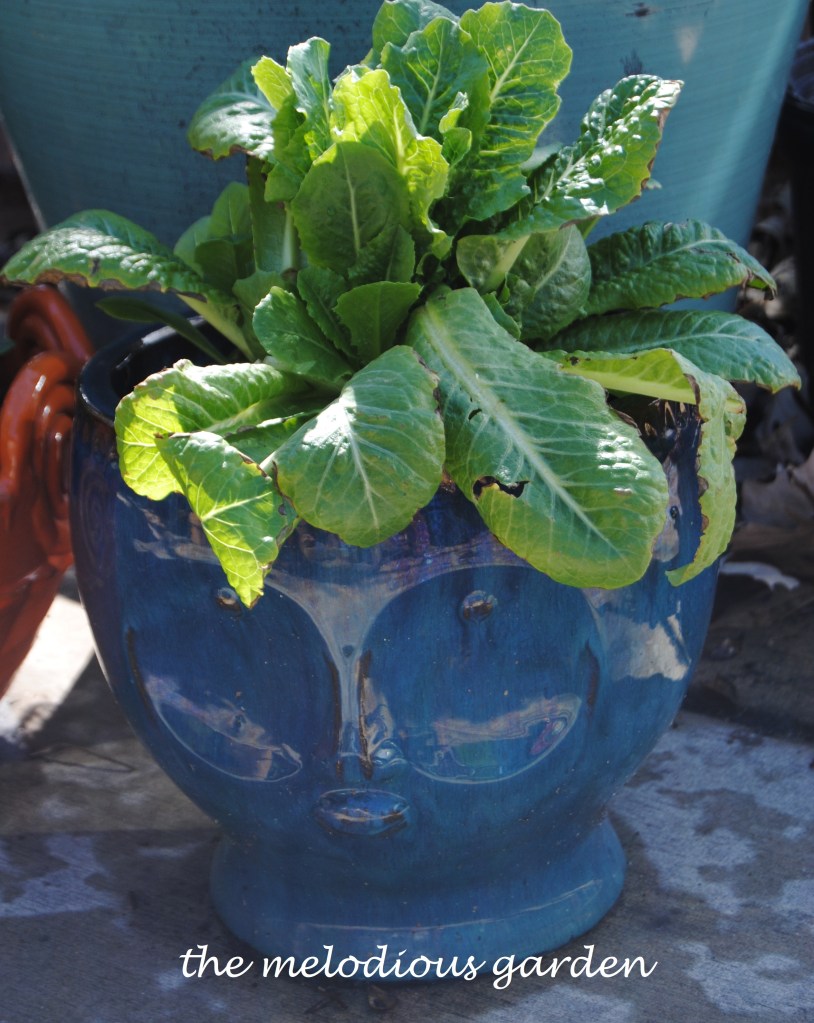
Having a selection of greens growing right outside the kitchen door makes healthy eating fun and enjoyable. Knowing what can be grown in each season in your region expands both the culinary palette and the nutritional benefits. Kale, for example, grows great in Texas from fall through winter and in to early spring, before “bolting,” or going to seed, in the heat. Longevity spinach, on the other hand, grew wonderfully in a container on my covered patio all of last summer, even when it reached 108 degrees. Okra, that southern staple, loves the Texas summer. Did you know the leaves are edible and make a great addition to summer salads?

(Photograph below: Romaine lettuce growing in a blue glazed container this past winter.)

4.) We – on a small scale – may not be able to stop the deforestation of the rainforests or prevent the glaciers from melting, but we can make a big difference right here in our own back yards. And our front yards, too! As I sit outside on this glorious June day, writing, I have been pausing from time to time to watch a swallowtail butterfly flutter from the coneflowers to the bee balm and back again, stopping to nectar here and there, knowing that I have done just a little something to make this world a bit better off. I have given wildlife a refuge from the fast pace of development and habitat destruction. I have built up my soils so that water seeps slowly down in to the earth instead of rushing off in to storm drains. I try to keep as much organic material on our property as possible, from composting kitchen scraps and toilet paper tubes to lining pathways with fallen tree branches to allowing leaves to decompose in place. Those are just some of the ways that gardening can benefit our planet. It is a loose, unscientific version of a symbiotic relationship… The garden feeds us zucchini. I compost the plant at the end of the season, where it breaks down and feeds the soil. That soil grows a beautiful stand of bee balm, which supplies the swallowtail butterfly with much needed nectar. Watching the swallowtail dance about my garden feeds my soul and I am drawn once again outside where I harvest yet more zucchini.

5.) Gardening can help build communities. Pausing the lawnmower to chat with the neighbor. Joining a garden club. (Which I highly recommend!) Giving away excess tomato plants when you started too many from seed. Passing along iris rhizomes to fellow gardeners. Saving flower seeds to give to friends and family near and far. Participating in a community garden. We live in such a technologically connected yet socially disconnected world these days. We need connection to survive and to thrive. Gardening can bridge that span. Gardening can also span the generations, from engaging toddlers that are fascinated by the caterpillars feasting on the passionvine to asking grandma about Victory Gardens during World War II. We can all benefit from the social aspects of gardening.

I hope I have encouraged you today to “dig in the dirt,” whether to plant up a small pot of herbs or break ground on a butterfly garden. Be sure to take a pause and appreciate the smallest parts of our natural world around us. It’s good for our mental well-being, after all.

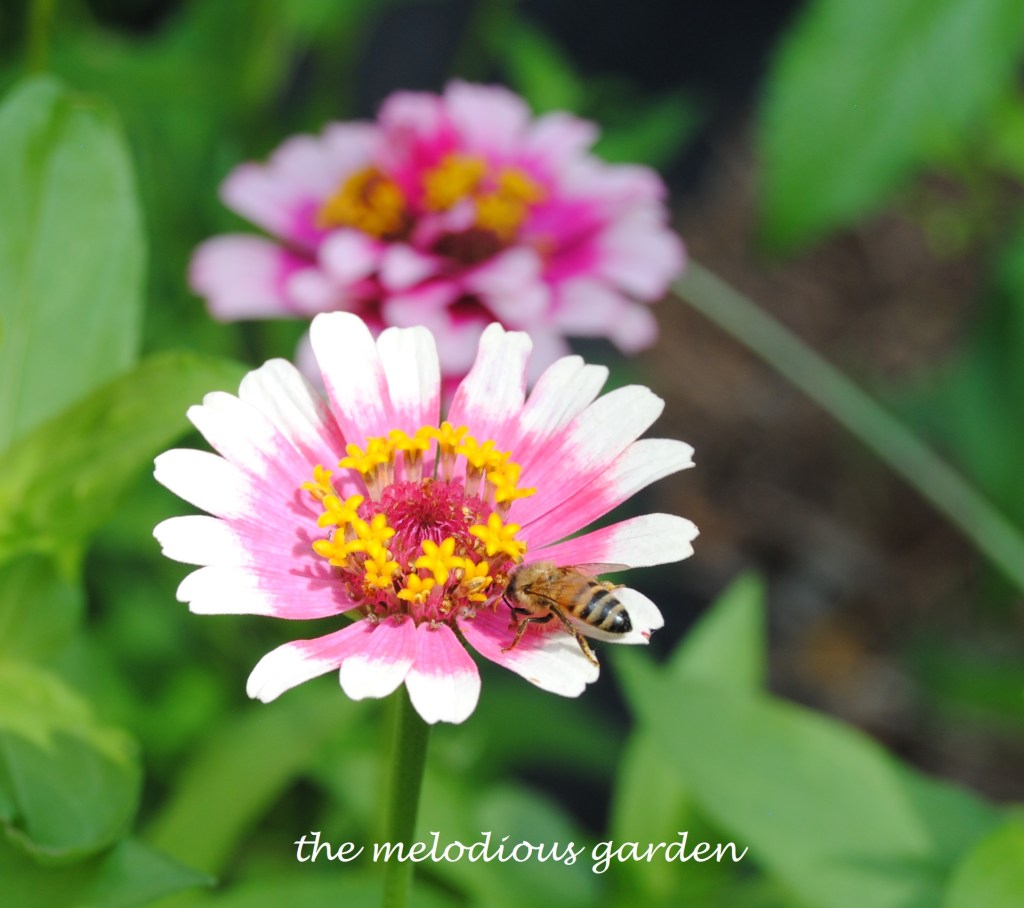
(Photograph above: Bee on a zinnia – June 8, 2023)

gardening, nature

Idly afloat in the sunshine

“One of my chief joys in porch life is studying the butterflies. There are numbers of them about every day, of lovely pastel shades…” ~ Dorothy Scarborough, From a Southern Porch

Thursday dawned and found me once again wandering about the garden, where two very important observations were made. The first: If bird watchers can have bird blinds and deer hunters can have deer blinds, then I could have a butterfly blind. A place to sit and watch butterflies without disturbing their flutterings about my garden. Once upon a time, an older property in town had an old deer blind out at their fence line with a faded “for sale” sign nailed to one of its pink camouflage sides. Yes. Pink. Camouflage. Why my husband never bought this for my garden still baffles me. Wouldn’t it have made a fabulous butterfly blind? Yes, I think so, too.

The second observation that was made Thursday morning was that my camera outfit needs some additional zoom lenses.

A day later, still turning these observations over in my mind and examining them again and again, I think I can forego the butterfly blind as I would need multiple ones – one for each sunny area of our oddly shaped property – but additional camera lenses will be researched and added to my Christmas wish list.

I find that the older I get and the faster the world goes by, the more I just want to wander barefoot about my gardens, camera in hand, studying and recording the wildlife that seeks out refuge or food here. The earlier quote landed in my path at just the right time, for one of the chief joys of gardening is studying butterflies, the lovely pastel shades of the numerous butterflies that flutter overhead and stop to partake in the banquet of nectar spread out before them.

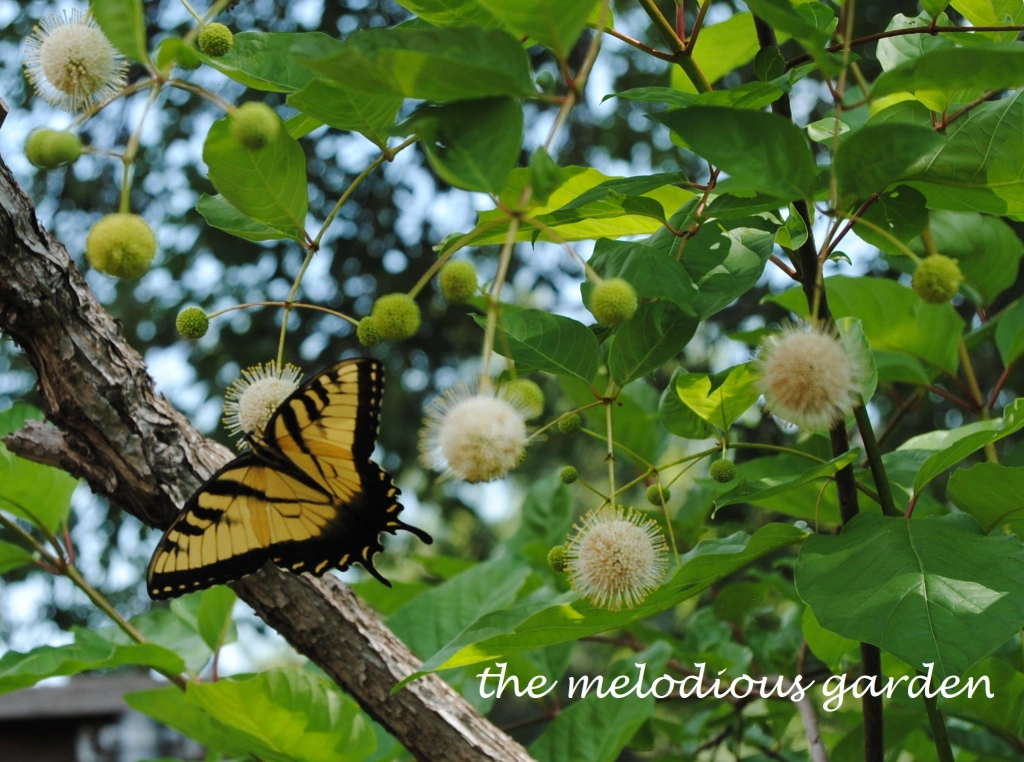
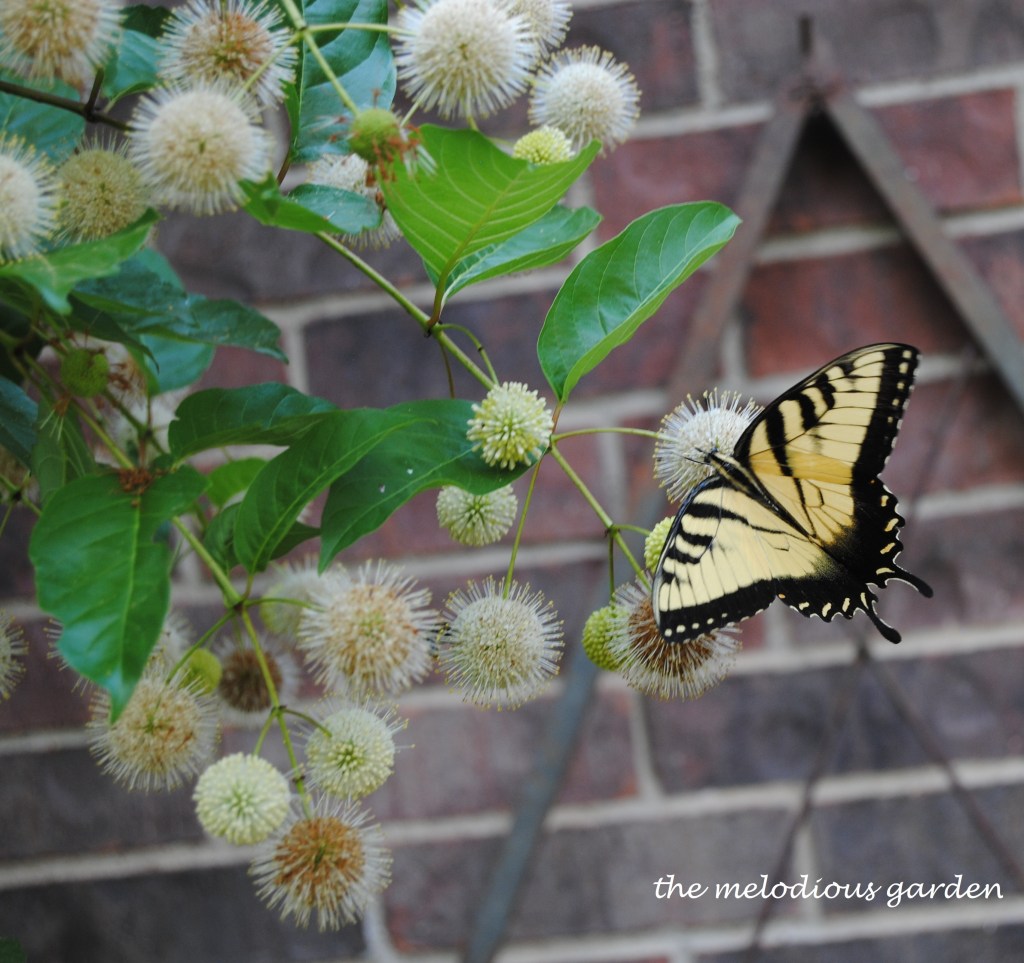
Today I share photographs of a tiger swallowtail butterfly sipping nectar on the native buttonbush in my garden on June 8th, 2023. Swallowtails are named for the long “tail” that extends beyond their hindwings, resembling the tail on the swallow, a type of bird.

There are more than 500 species of swallowtail butterflies, with around 25 species living in the United States.

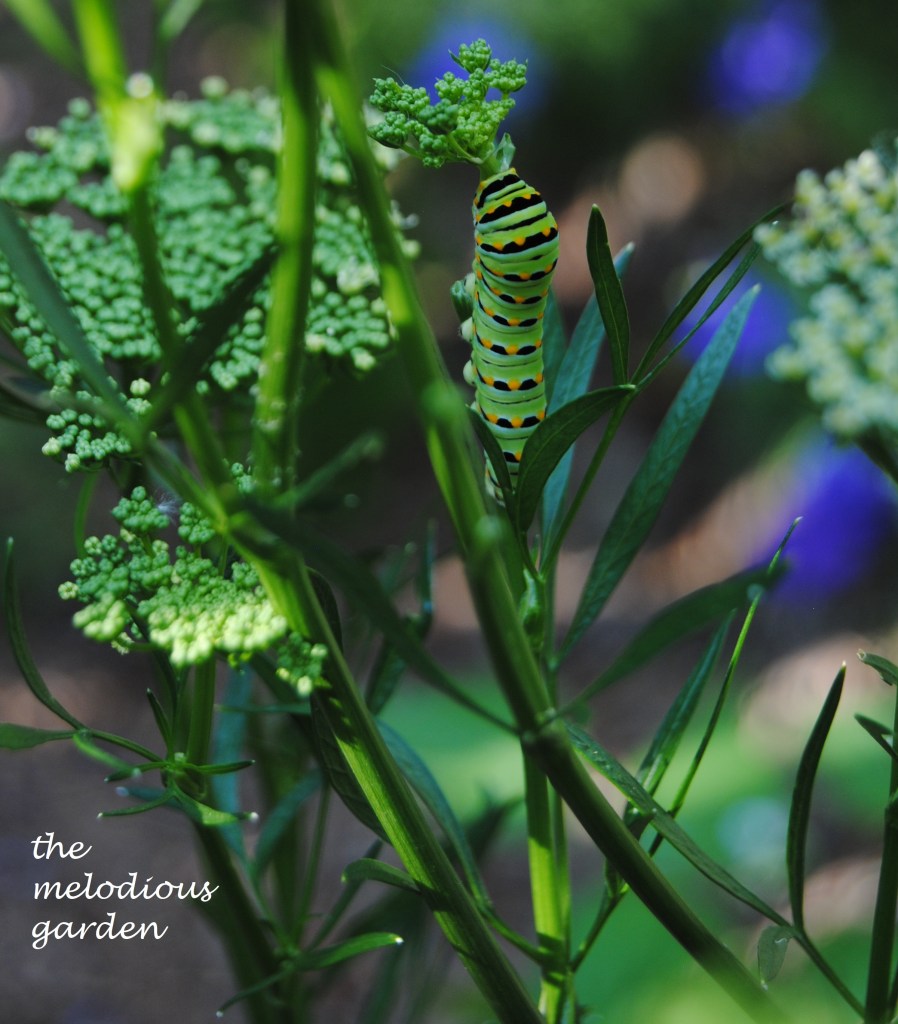
This particular butterfly species lays its eggs on plants in the parsley family, as shown in the photograph below.

“I’ve watch’d you now a full half-hour,
….What joy awaits you, when the breeze
Hath found you out among the trees,
And calls you forth again!…” ~ William Wordsworth, To a Butterfly

“…Here rest your wings when they are weary;
Here lodge as in a sanctuary!…” ~ William Wordsworth, To a Butterfly

“STAY near me–do not take thy flight!
A little longer stay in sight!” ~ William Wordsworth, To a Butterfly

“Idly afloat in the sunshine, butterflies look like flower-petals from some enchanted garden, possession motion and life, so that when they fall, instead of perishing, they take on a new, unearthly beauty that will not die. Or are they perchance the souls of flowers that faded yesterday, or the imperishable dreams we mortals cherish, too delicate to come true, but too lovely to be destroyed? ~Dorothy Scarborough, From a Southern Porch

All photographs taken during the morning hours of June 8th, 2023, in my Southern Denton County, Texas, garden. Zone 8a.

gardening, nature

…what could I do but laugh and go?

Tonight found me home alone, standing at the kitchen sink, peeling carrots in to the bowl I use for compostable materials. My go-to, easy meal for one: carrots, cauliflower and hummus. A thousand times a day I am at the kitchen sink, glancing out the large window at the garden space just beyond the pane. The 20+ year old fig tree is recovering nicely from the deep freeze of February 2021. Behind the fig tree, against the wooden fence, is an old wrought iron headboard, someday a trellis for the small raspberry that is planted at its base. To the side, an old metal chair. Morning glory vines would be precious scrambling up the chair, but so far that hasn’t happened. An old statue sits on the chair, my Suzie Sells Seashells by the Seashore statue. All together, it is a fabulous vintage vignette. How do I like my garden accessories? Old, old and old, thankyouverymuch. The chippy white is perfectly chippy white, in sharp contrast to the deep green of the fig leaves. And that spot of bright yellow? A stunning daylily, which today graced my garden with two perfectly placed blossoms. Which brings me back to peeling carrots and a glance out the window. I meant to do my work today. The words popped up from my mental file of memorized poems. I meant to make supper tonight. But a daylily called out to me. So what could I do but laugh and go? Carrots can wait another hour. The perfect lighting. The perfect blossoms. These moments don’t come around just any day. I am reminded that I need to live more in the present moment, enjoy these moments right before my eyes, not to let my mind rush ahead to tomorrow’s troubles or perceived troubles.

I Meant To Do My Work Today

I meant to do my work today – but a brown bird sang in the apple tree, and a butterfly flitted across the field, and all the leaves were calling me. And the winds went sighing over the land, tossing grasses to and fro, and a rainbow held out its shining hand – so what could I do but laugh and go? ~ by Richard Le Gallienne

My morning ritual consists of making a fresh glass of ice tea and taking a stroll about the garden. My rescued shelter mutt, Princess Leia, knows the routine. She pushes past me to get out the back door first, eager to make sure the garden is secure and no squirrels, bunnies or neighborhood cats are about. My evening garden strolls, however, are more often about chores. What needs watered? What area needs some attention, aka weeding? I must remember to toss aside chores and carrots and pick up my camera and simply… go outside and enjoy the garden. Enjoy this moment right here, right now. The evening lighting is enchanting, don’t you think?

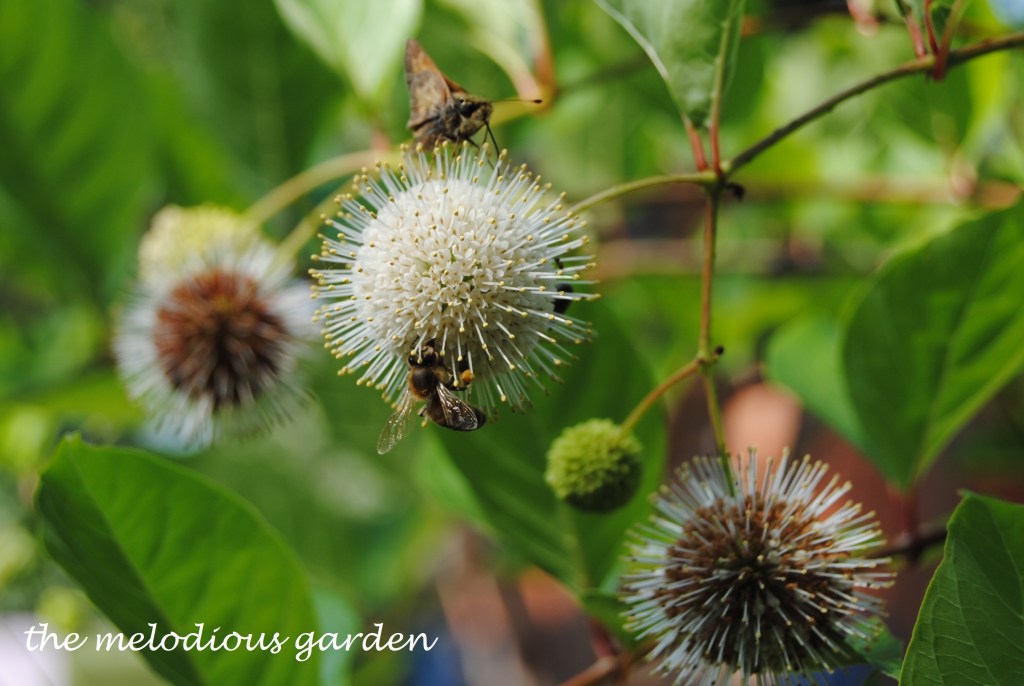
No garden stroll is complete without stopping under the native buttonbush, currently in full bloom. The bees are still hard at work, but now in the evening hours they are joined by several moths. The bees pay me no attention, buzzing all about. The moths are more skittish, the slightest movement sends them fluttering off. But if one stays perfectly still, they return and land just inches away.

The garden by evening light is serene, soothing away the day’s troubles. I must remember this and set aside chores and carrots more often.

All photographs taken around 7:30 p.m. on June 7th, 2023, in my Southern Denton County, Texas, garden. Zone 8a.

gardening, nature

There’s a party goin’ on right here…

Little Talk

Don’t you think it’s probable
That beetles, bugs and bees
Talk about a lot of things—
You know, such things as these:

The kind of weather where they live
In jungles tall with grass
And earthquakes in their villages
Whenever people pass!

Of course, we’ll never know if bugs
Talk very much at all,
Because our ears are far too big
For talk that is so small. ~ Aileen Fisher

Pollinating: Many feet make light work.

A dear friend and fellow naturalist recently commented that seeing pollinators in the garden is akin to getting a gold star on a school project. How right she is.

If it’s morning, chances are I am in the garden, still in pajamas, feet bare so I can feel the earth, camera in hand. It is during these still sleepy moments when I am most amazed at the number of gold stars my humble little garden has amassed already this year. “Build it and they will come” applies to pollinator gardens as much as to cheesy baseball movies. I do not know if my pollinators – yes, “my” pollinators, as I am quite protective of them – speak with one another or how or even when they first discovered my garden, but it is apparent that the welcome mat has been unfurled, for the bees and the moths have arrived and are all feasting together this early June morning.

While bees are the most widely known of the pollinators, wasps, flies, beetles, moths and butterflies also lend a helping foot.

Pollinating: It’s a tough job but someone’s gotta do it.

More than 100 crops grown in the United States are dependent on insects for pollination, from the apple to the zucchini and every tomato, fig and cherry in between. By some estimates, 3/4 of our food supply requires pollination.

Pollinating: There’s a party goin’ on right here

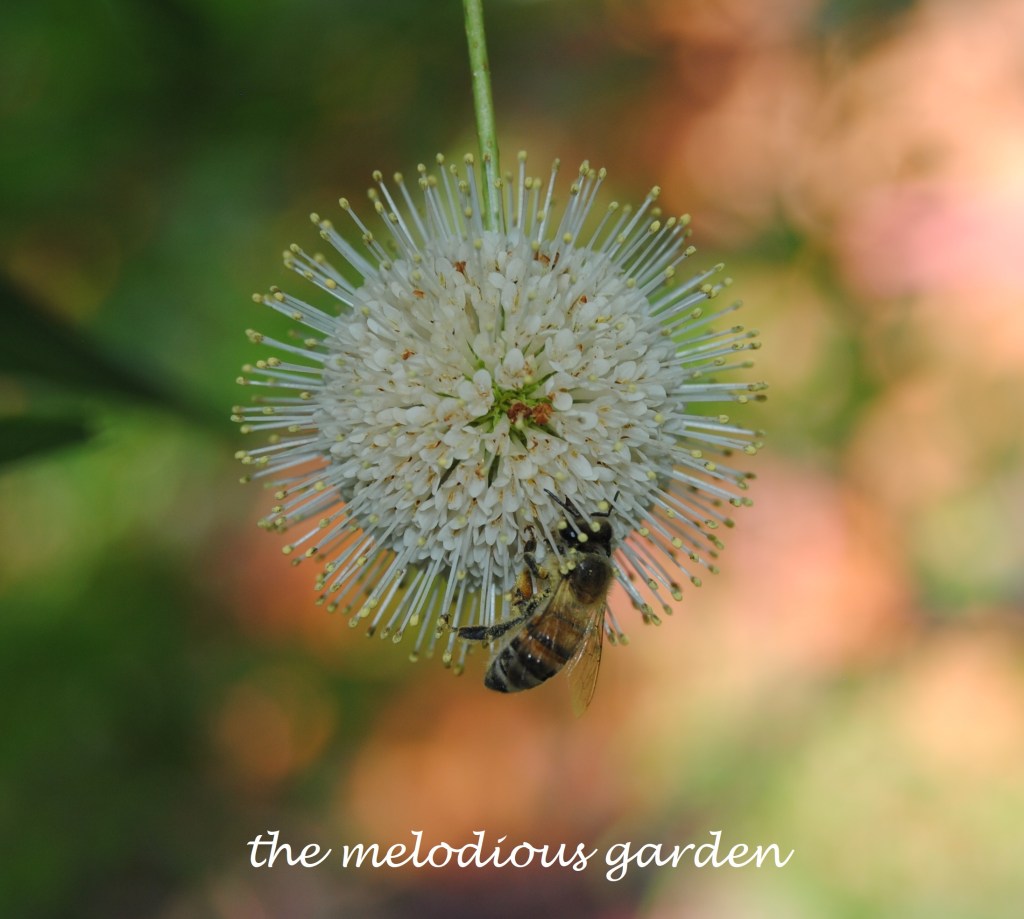
National Pollinator Week is fast approaching – June 18th through the 25th – but we should be celebrating our pollinators every day of the year… A celebration to last throughout the year! (Cue some Kool and The Gang…) I often sing the praises of our native buttonbush, as I absolutely adore its oddly spherical orbs of pollen. It draws in pollinators from far and wide. This morning, though, I truly felt like I had stumbled in to the insect discotheque and there was a party goin’ on right here.

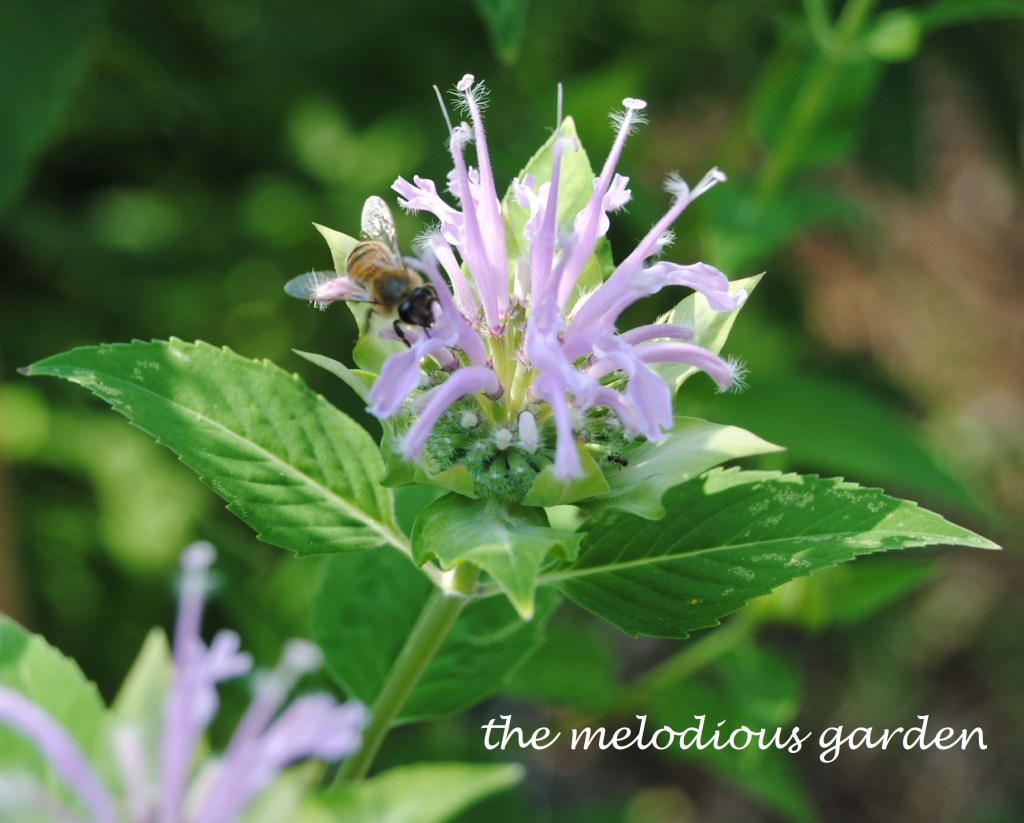
The buttonbush’s flowers are perfectly round, allowing more space for pollinators to meet and greet and perhaps talk about the jungle out there. Bee balm – monarda fistulosa, the native wild growing variety – is another plant with ample blossoms with room to share. The newer, hybridized versions often have smaller blossoms and less pollen. Something has to give when hybridizing plants and it is often the very thing that wildlife needs for survival. Whenever possible, planting the unadulterated, unhybridized, wild as nature intended varieties is best. That isn’t to say that I don’t have hybridized plants in my garden, for I very much do. But I strive to have as many pure native species as possible, whenever possible.

Pollen: It’s what’s for dinner. And breakfast. And Second Breakfast. And Lunch.

All photographs taken the morning of June 6, 2023, in Southern Denton County, Texas. Zone 8a. The round white flowers are buttonbush, a small growing tree or a large growing shrub, gardener’s choice of pruning. The soft lavender-pink blossoms are bee balm.

gardening, nature

Why was June made?

“Why was June made?—Can you guess?
June was made for happiness!
Even the trees
Know this…

…June was made for happy things,
Boats and flowers, stars and wings,
Not for wind and stress,
June was made for happiness!” Annette Wynne

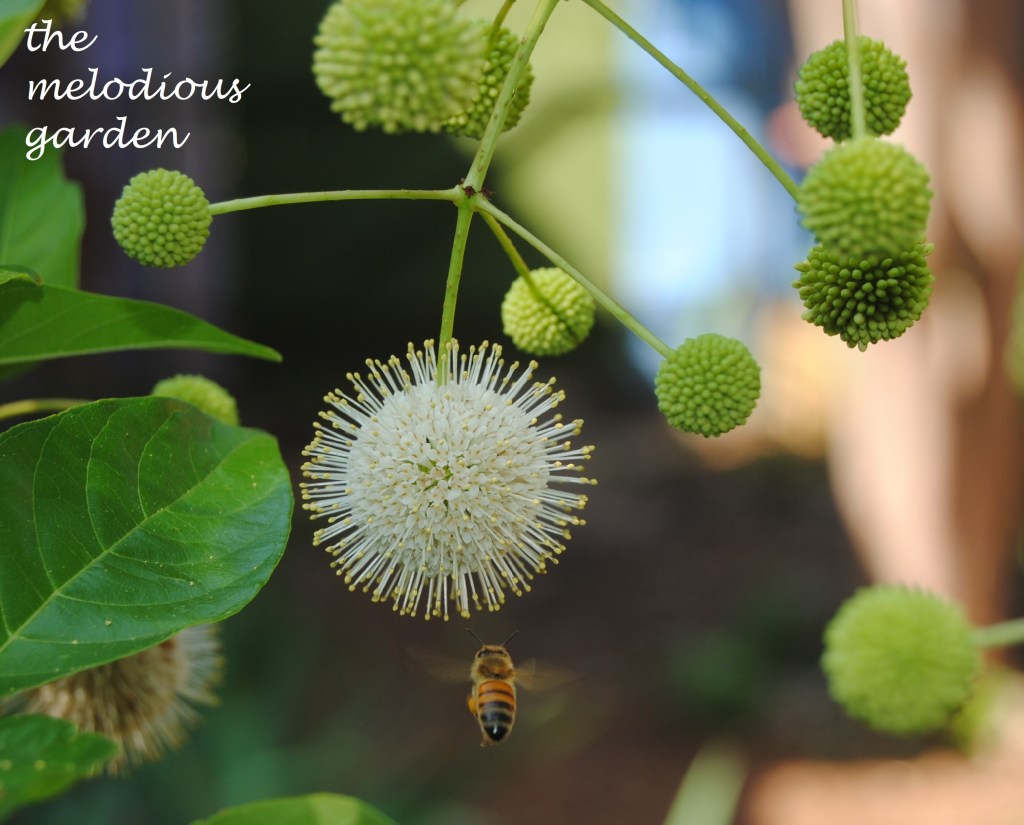
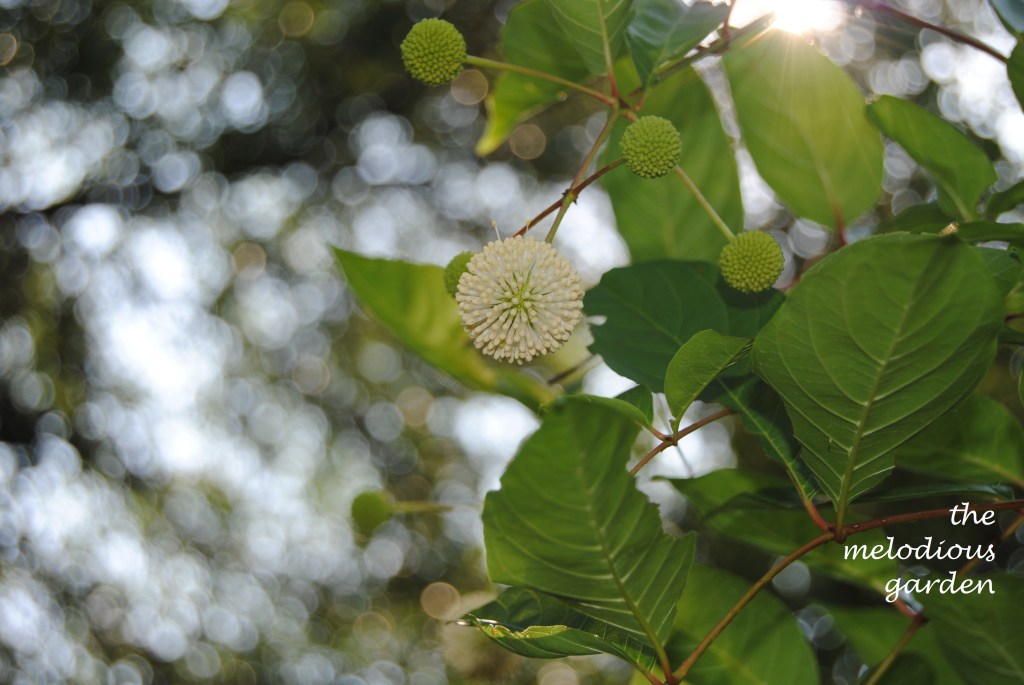
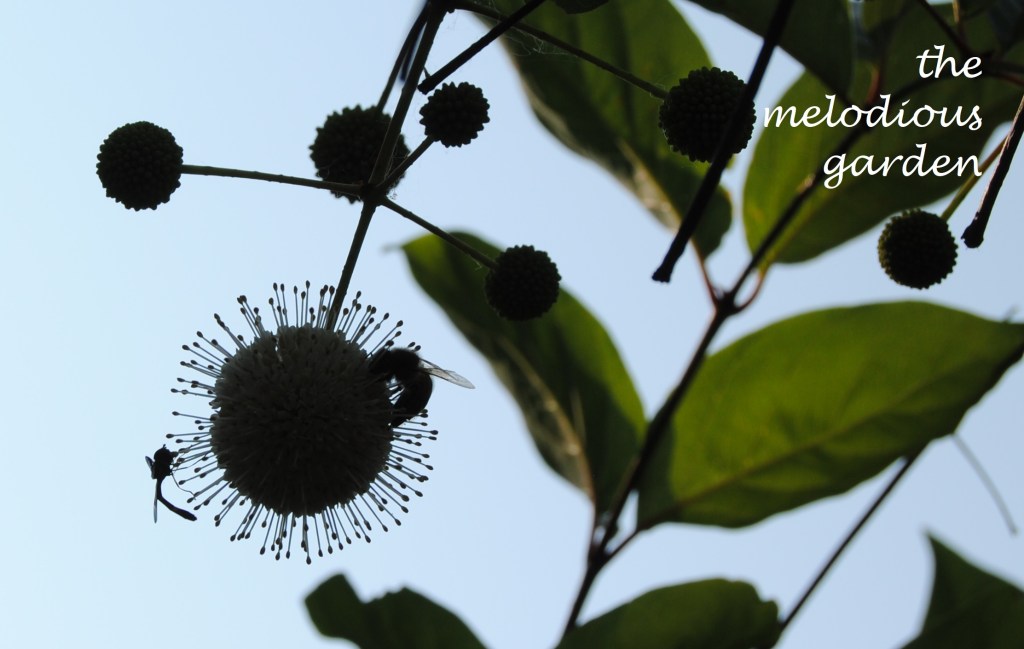
The native buttonbush (shown in photograph above) has just started to burst into bloom. The pollinators danced above my head as I tried to capture a hint of the morning sun shining down upon my melodious garden.

“On this June day the buds in my garden are almost as enchanting as the open flowers. Things in bud bring, in the heat of a June noontide, the recollection of the loveliest days of the year – those days in May when all is suggested, nothing yet fulfilled.” Francis King

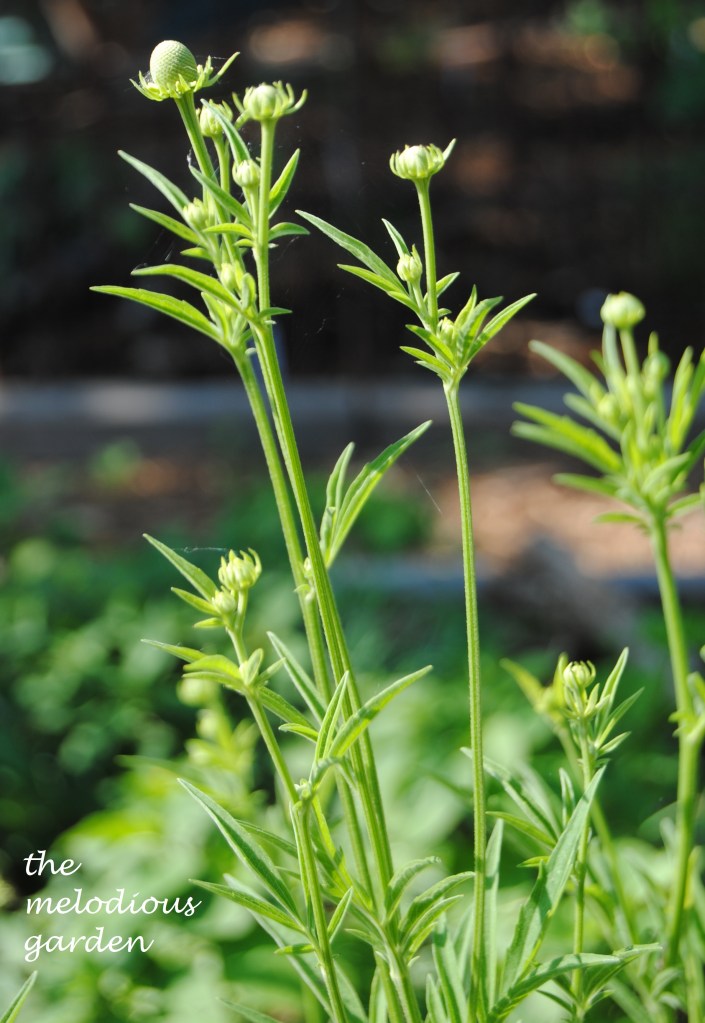
Ratibida pinnata, shown in photographs above and below, was purchased last spring from Almost Eden Plants. “Sleep, creep, leap” is often said about perennials, noting the three stages – or years – that it takes a plant to get settled in to its new home. “Sleep” it did last year. Poor thing. Shipped from Louisiana in a cardboard box, to land in Texas just as Mother Nature cranked up the thermostat. This year? I am not yet sure if it missed the memo and went straight to “Leap” or if I underestimated its ability. If this year is “Creep,” I may regret that I didn’t give it a quarter acre. It is absolutely stunning – and it hasn’t even bloomed yet! Every morning garden stroll takes me immediately to this plant, to see if it has bloomed yet. So far, it is suggested, nothing yet fulfilled. But soon. Patience is a virtue and one this gardener struggles with.

“In June, as many as a dozen species may burst their buds on a single day. No man can heed all of these anniversaries; no man can ignore all of them.” Aldo Leopold

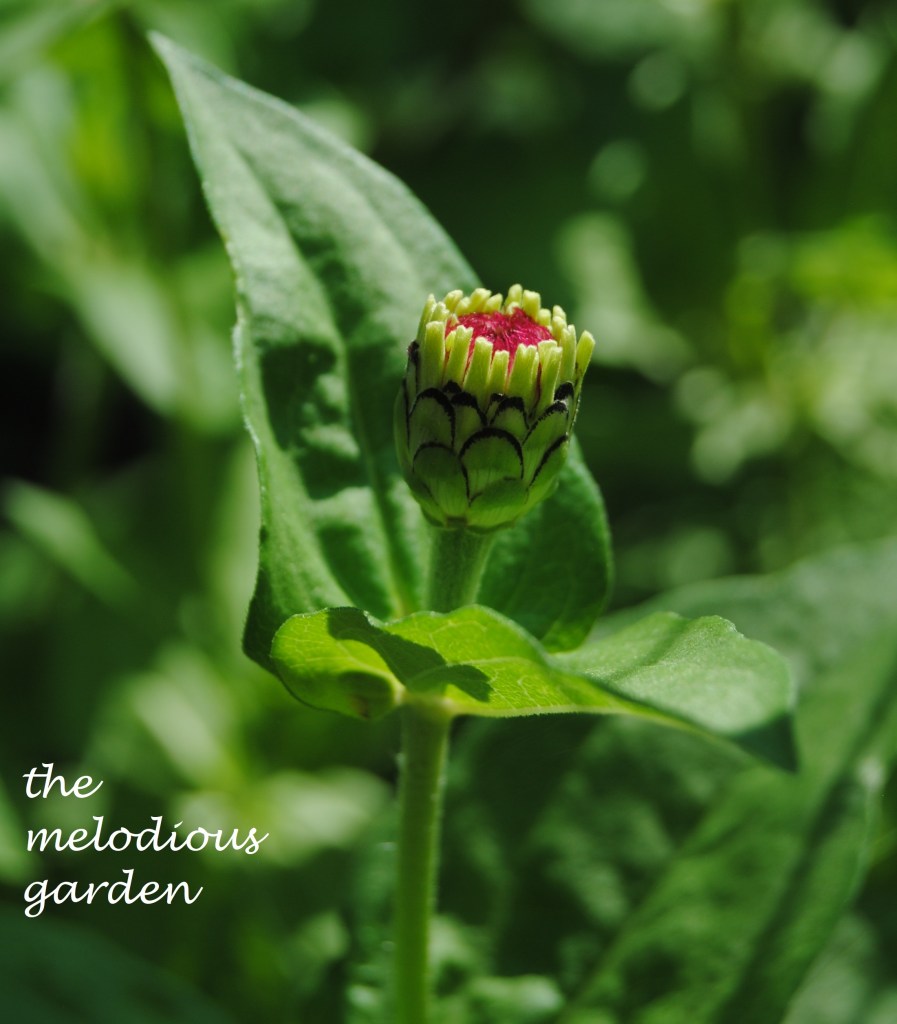
The zinnia bud (above) is one that simply cannot be ignored, for it is ringed with scallops, its petals held tightly in a circle. A day or so later, Behold, the buds have burst wide open. Such a glorious sight. Zinnia and cosmo seeds were mixed together, along with a bit of earthworm castings, and direct sown in the garden in mid-to-late March.

The pollinators are quite busy this first day of June. Below, a bee lands and collects pollen on a red cosmo, part of the riot of blooms in the photograph above.

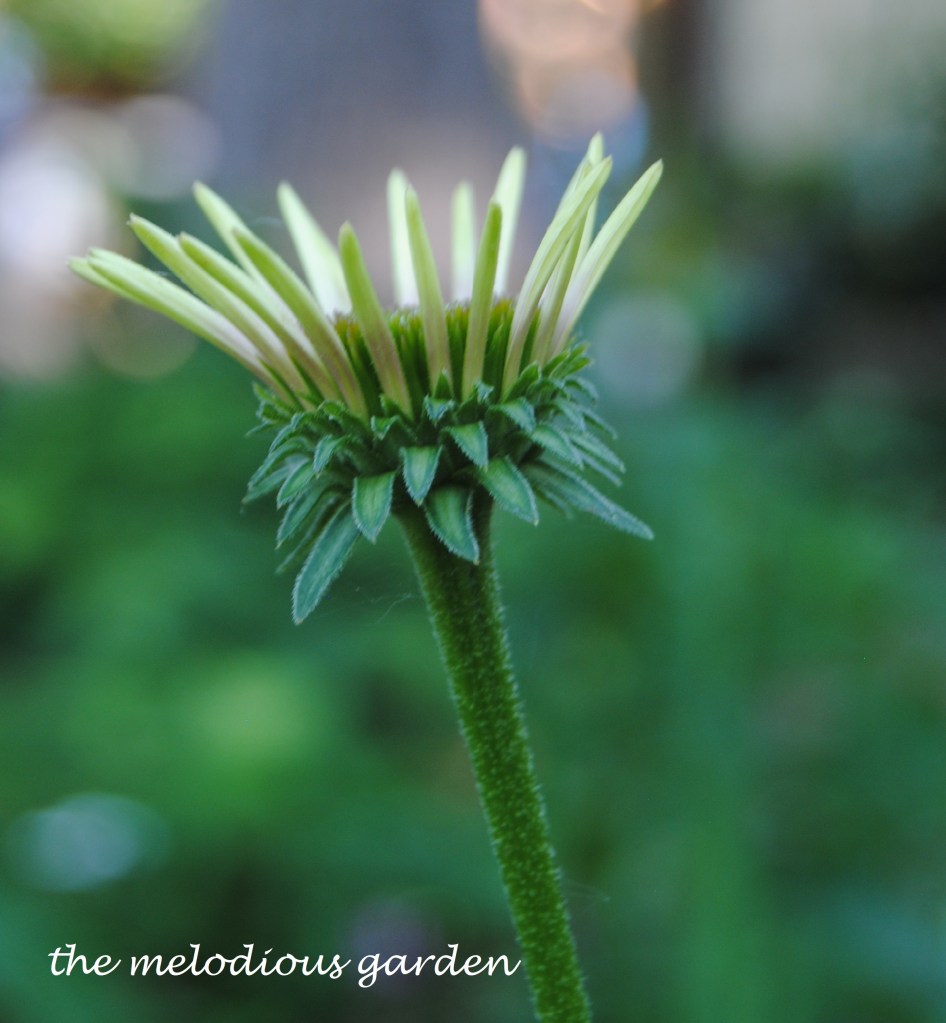
Echinacea is commonly known as coneflower, after the high center cone that the flower sports when it is fully open. In full bloom, it is quite popular with the bees and butterflies. (Photograph below.)

This mid-stage, though. Isn’t it amazing? If fairies inhabit the garden, surely this must be their crown. (Photograph below.)

June’s Coming

“…Again from out the garden hives
The exodus of frenzied bees;
The humming cyclone onward drives,
Or finds repose amid the trees…” John Burroughs

Buttonbush can be viewed in its native habitat along the marsh trails at the Fort Worth Nature Center and Refuge. In the wild, it is rather scrubby looking, not one that many think to plant in their own gardens. Alas. They would then miss the pleasure of standing under these orbs of pollen, watching the pollinators flutter about. Truly, buttonbush is the Dr. Seuss plant of the native genre. (Shown in photographs above and below.) I planted one in a low lying area of my garden about 25 years ago, after development next door created a bit of a swamp during rainy seasons. It does look a bit wild, but I am good with that. I pruned it into a tree shape by removing low growing branches early on and it happily complies.

In June

“A quiet hour beneath the trees;
A little, whispering, lazy breeze;
A perfect sky,
Where, now and then, an idle cloud
Strayed from its mates to wander by…” Matilda Hughes

So much is happening in my melodious garden this June.

Onions, planted in mid-winter, have been pulled to make way for another crop. Someday, hopefully, I will figure out how to grow an amazing crop of onions. I have memories of pulling softball sized onions from my aunt’s garden in Nebraska. Possibly my memory is off, due to my young age then and my older age now. Possibly it was that midwestern soil that earned its reputation as “The Breadbasket” of the nation. Possibly it was their abundant rainfall and our repeated droughts. Possibly I just don’t know yet what it takes to grow really large onions. All the same, they smell wonderful and will be much enjoyed.

The tomatillos have plenty of flowers and plenty of pollinating, so hopefully some homemade salsa verde is on the horizon. (Photograph above.)

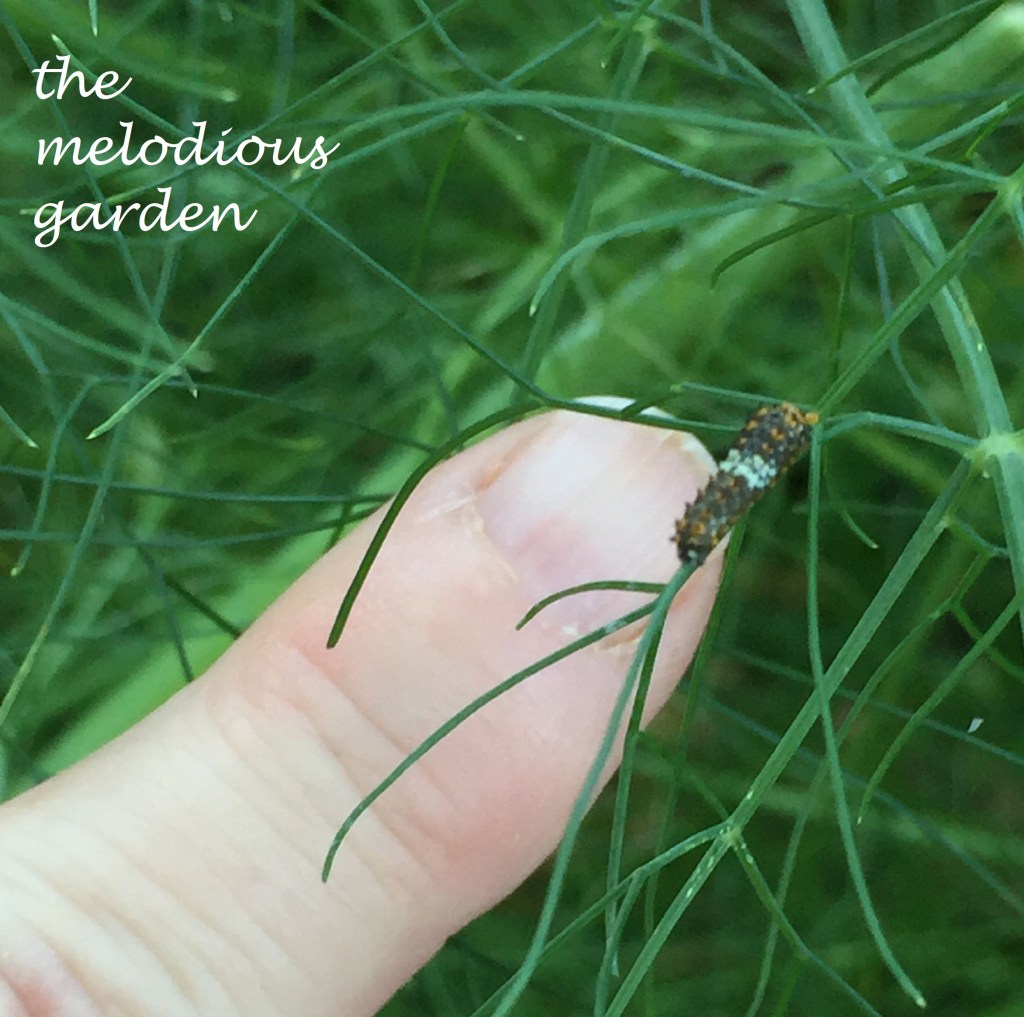
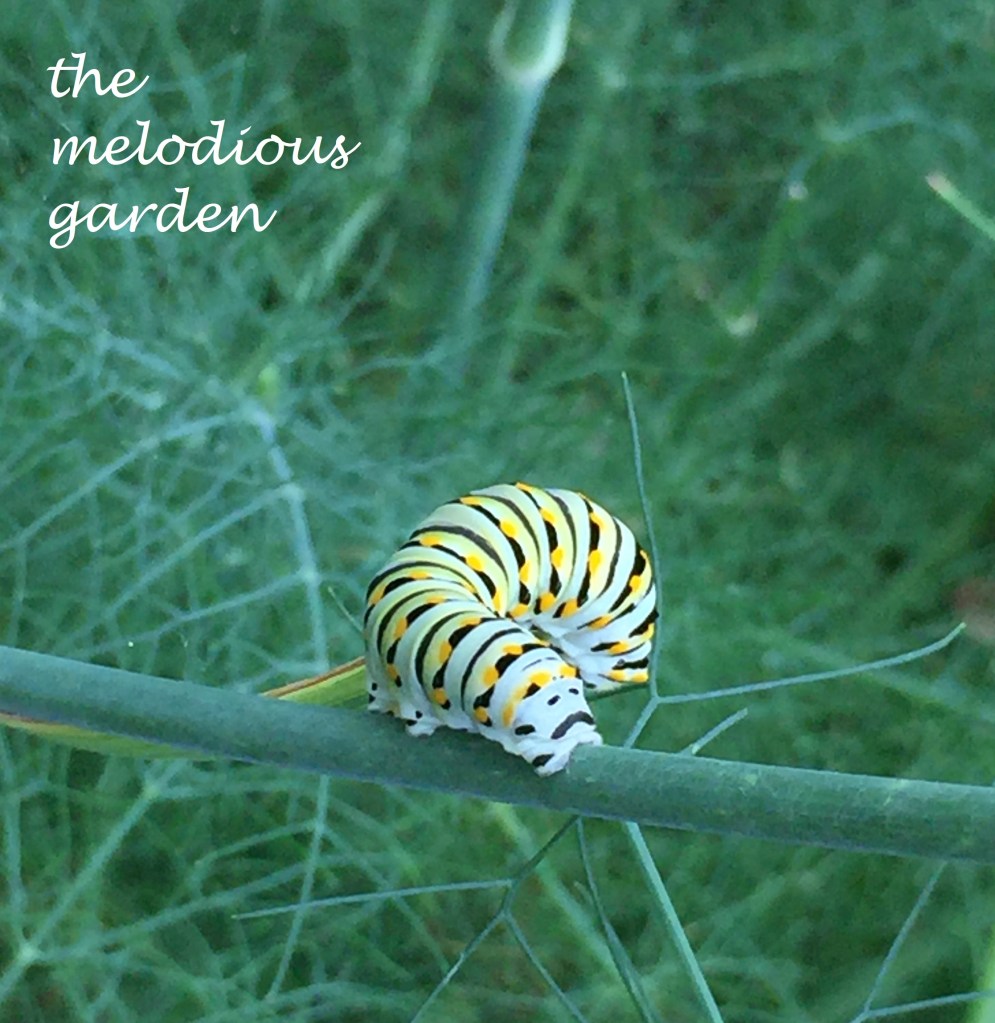
One patch of parsley, a biennial herb, is nearing the end of its lifecycle and is setting flower. To have a continuous supply for the kitchen, it is best to plant a bit more parsley every year. It is also advisable to plant extra, in the happy event a swallowtail butterfly chooses to lay her eggs in your garden. This very hungry caterpillar, shown below, was spotted early this morning. As the saying goes – we can complain that rose bushes have thorns or we can rejoice that thorn bushes have roses – such is the way with caterpillars. We can complain that they are munching down on our herbs or we can rejoice that a butterfly fluttered in to our garden and found just the spot to lay her eggs. Fennel, dill and parsley are host plants for the swallowtail butterfly, so it is best to plan ahead and plant a bit extra so there is enough to share.
This has been an especially good year for the daylilies and I am thankful that I discovered the world of large, bold daylilies. Orange you glad, too? (Sorry. Bad pun.) Yes, orange flowers may just be my new favorite.

Happy June, my fellow gardeners.

“I most often find that happiness is just where I planted it.” Unknown

All photographs taken the morning of June 1, 2023, in southern Denton County, Texas. Zone 8a

gardening, nature, vintage

Plant profile: Penstemon tenuis

“Where flowers bloom, so does hope.” Lady Bird Johnson

Texas is well known, and rightly so, for their springtime display of wildflowers. From the highways to the back roads, the state seems to be awash in blue this time of year. But look a bit closer and one is apt to pick out other, lesser known, wildflowers. Pale pink primrose. Bright orange Indian paintbrush. Hot pink winecups. With more than 5,000 different varieties of wildflowers throughout the state, it would be hard for anyone to list their favorites or for any gardener to grow even a fraction of them. Still one wildflower is often overlooked, which is a shame because it certainly deserves a spot in any top ten or top twenty Texas wildflower list.

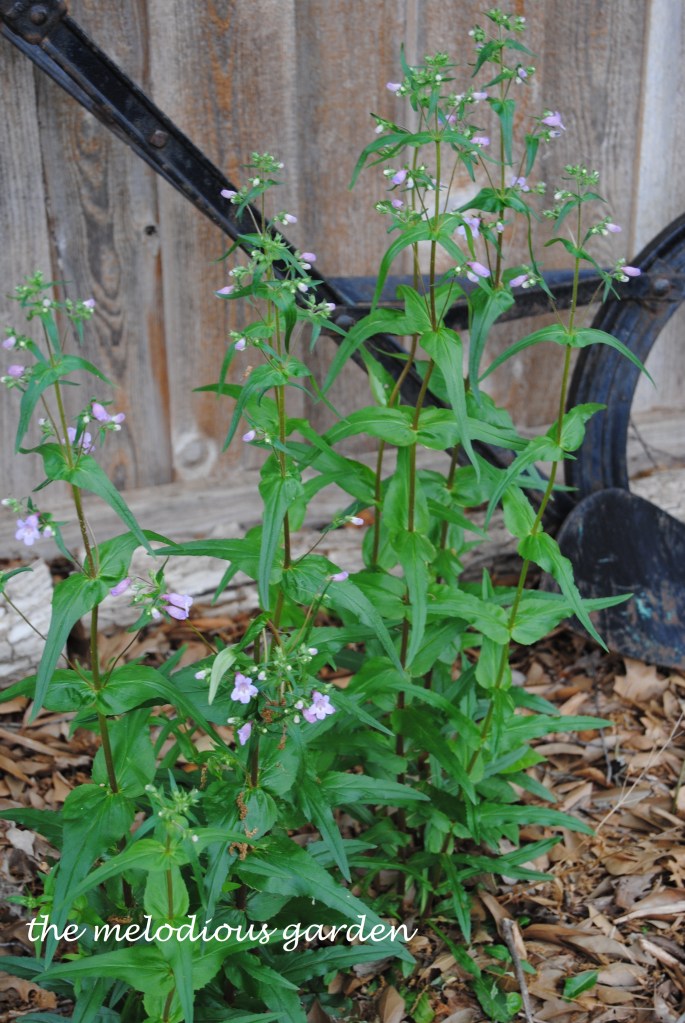
Penstemon tenuis, shown above, sports dainty lavender blossoms that dance in the spring breeze. It is highly adaptable to the cultivated garden, which is not the case with all wildflowers. It is equally at home in a cottage style garden as it is in a meadow. Isn’t it gorgeous with the apricot colored bearded irises in the background? I would love to take credit for that color combination, but I can’t. You see, after Penstemon tenuis is done blooming, I let the seedheads form and dry, then take the seeds and scatter them about. I never know where they might pop up the following year and I love it that way! (Photograph below: Dried seedheads of Penstemon tenuis in late summer, with garlic chive blossom.)

Yes. Sometimes the flower will sprout up in an odd place, such as directly under my native buttonbush, shown below. Thankfully they are great companions and neither one bothers the other. Penstemon tenuis grows best in partial to full sun, so will bloom and flourish just fine in this area of my melodious garden.

Other times, Penstemon tenuis pops up in just the perfect spot, such as in front of an antique plow, shown below. This gardener loves that whimsical side of Mother Nature.

Penstemon tenuis grows to about 2 1/2 feet tall and is airy enough that it can be grown along pathways or the front of formal garden beds. Typical bloom time is from April to June in North Texas. It is a good nectar source for bees and butterflies. Its native range is the Gulf Coast prairies and marshes from Texas to Mississippi and up to Arkansas. Penstemon tenuis is said to be a great cut flower, though I have not personally use it in arrangements.

While not widely available in the nursery trade, it can be found at garden centers that specialize in native plants and seeds can be acquired from fellow gardeners.

gardening, nature

Plant profile: Ornamental quince

Ornamental quince was one of the first shrubs I planted 28 years ago as a new gardener. Later, I would read in a Texas gardening book that it is best planted to the back of the border, where you notice it when in bloom but can ignore it the rest of the year. I am so glad I didn’t read that until long after I had planted mine front and center, as I might have been tempted to believe them. Or I might have taken that as a challenge and still planted it front and center. Most likely, the latter because I have always been a rebel gardener.

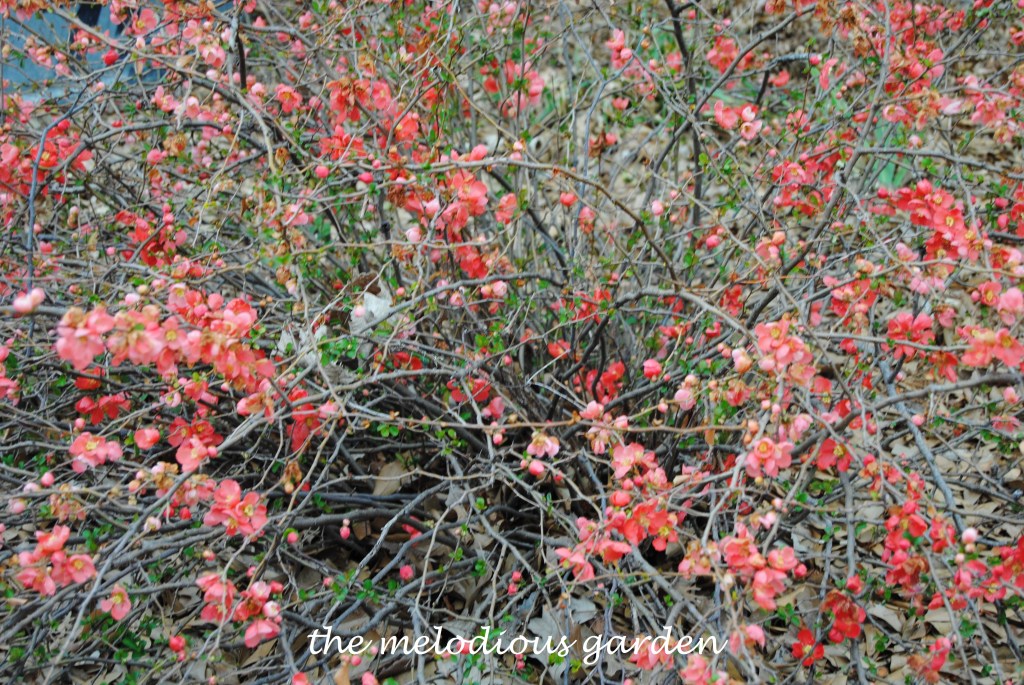
Last year was devoted to garden reconstruction and renewal. Each and every plant was given the critical eye. Does it still deserve space in my new garden vision? Gone are my roses, lost several years ago to rose rosette virus. Gone now are the variegated privet that I planted as a cheap and easy hedge, long before I knew or understood how invasive they can be. Gone is the vitex, also now recognized as an invasive weed. Gone are the two redbuds that framed my back gardens. Oh, how I do miss thee, dear redbuds. Alas. “Short lived” lived up to that description when they both died right at their 25 year mark. But that original quince? It is still lovely. It is still going strong. And, most importantly, it survived my garden reconstruction assessment, as did the four ornamental quince I planted after losing my beloved antique roses. Yes, quince does indeed still warrant space in my garden. In fact, I will soon plant another two quince, even though I am shifting from ornamental gardener to primarily fruit, vegetable and herb gardener.

Some may question why I would grow seven non-fruit bearing shrubs at a time when I am attempting to grow as much of my food as possible on a standard suburban lot. (Read: Space is at a premium.) First, though, a bit of horticulture dissection. There are multiple plants referred to as quince – ornamental quince (Chaenomeles) and Cydonia oblonga, which produces an edible fruit commonly known as quince. For this discussion, I am referring to the first, Chaenomeles. (These may or may not produce bitter, largely inedible, fruit, depending on variety.)

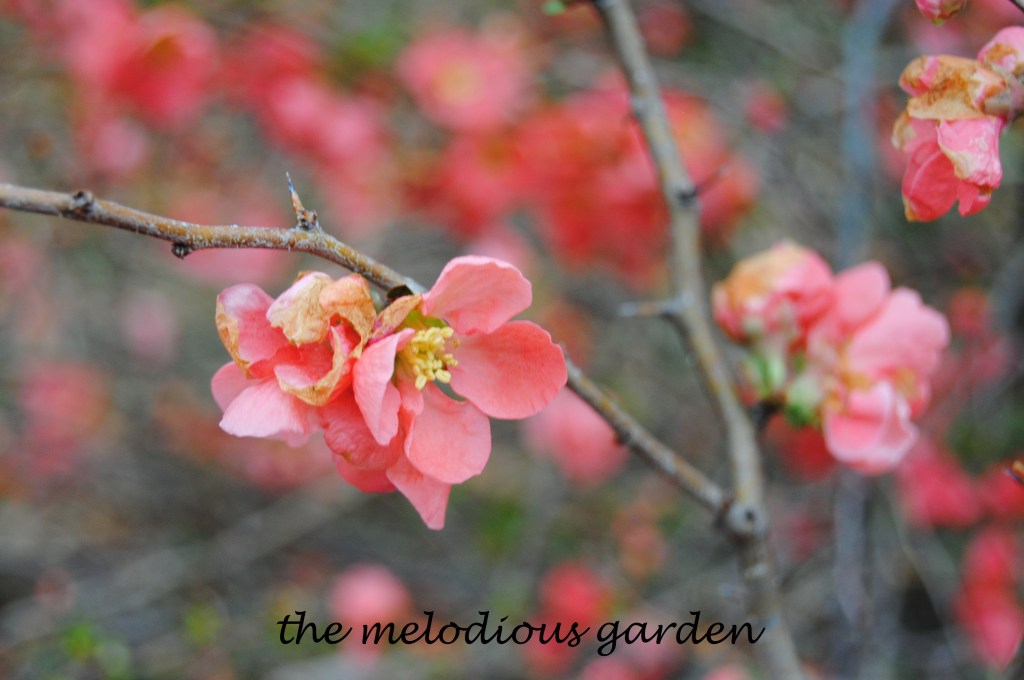
Ornamental quince is a deciduous shrub without any remarkable fall foliage. One day it is your basic green shrub, a few days later its branches are bare. In my zone 8a garden, it will start to set flower buds shortly after losing its leaves. Mine have been blooming now since shortly after Christmas, even through our February ice storm. Yes, the flowers were beat down for a few days, but they quickly perked back up and resumed glowing in the winter sun. If you look closely and critically, there is notable browning from the ice, though it is easily overlooked.

We are now one week in to March, which means that this shrub has been blooming for a full two months. If it were blooming in the middle of summer, one might scoff at the idea of a shrub blooming for only two months. But that is where quince really shines. It blooms in mid to late winter in North Texas, at a time when very little else is blooming. It has virtually no competition for our attention, aside from our winter pansies.

Ornamental quince is Mother Nature’s way of saying, “You got this. If I can shine through some storms, so can you.” It is for this reason that 1.) I am glad I didn’t know I should have relegated quince to the back of the border and 2.) I will soon have seven ornamental quince in my melodious garden.

Quince is as carefree as shrubs come. I have never pruned mine, nor deadheaded them or shaped them up in any way. The branches are rather gangly and arching while bare, though this gives them a soft rounded appearance when fully leafed out. I may or may not hit them with some organic fertilizer as I am applying fertilizer to the lawn or flower beds.

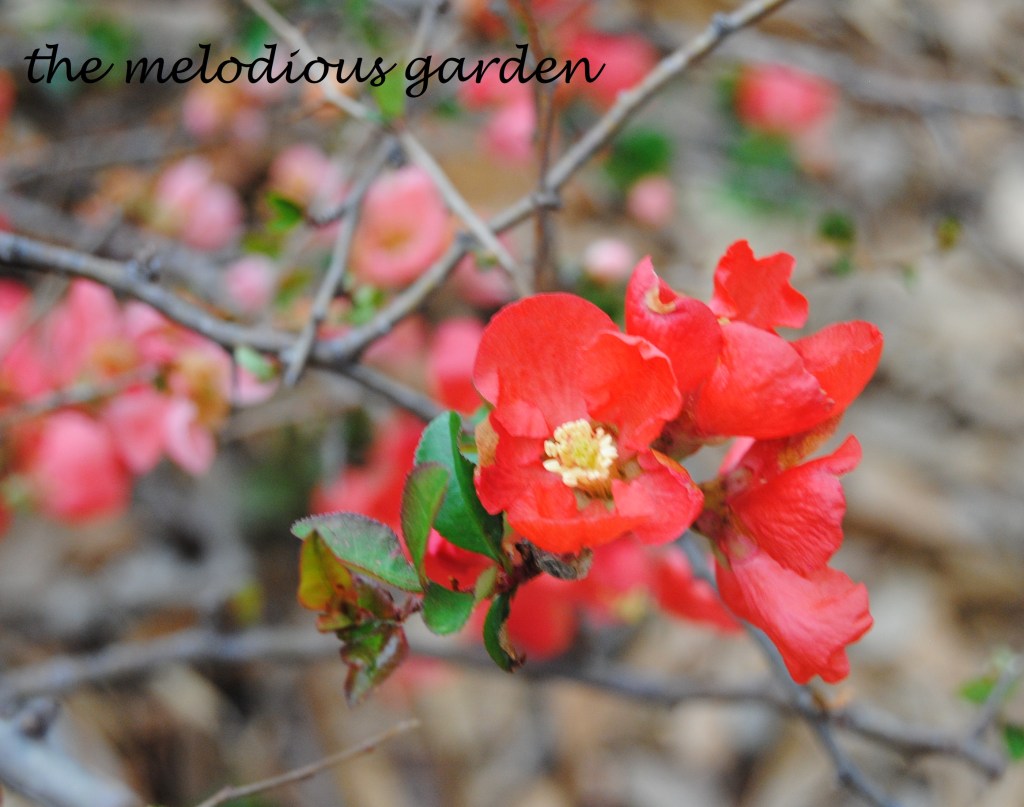
In full disclosure, I planted my original quince so long ago that I have long since lost any record of which quince variety it is. I have not been able to find any reference to one that exactly matches it. This one sports a single row of petals in a deep coral color, does not have thorns and has never set fruit. It has also stayed at at tidy three feet tall and three to four feet wide. (If you happen to know, please drop a comment.)

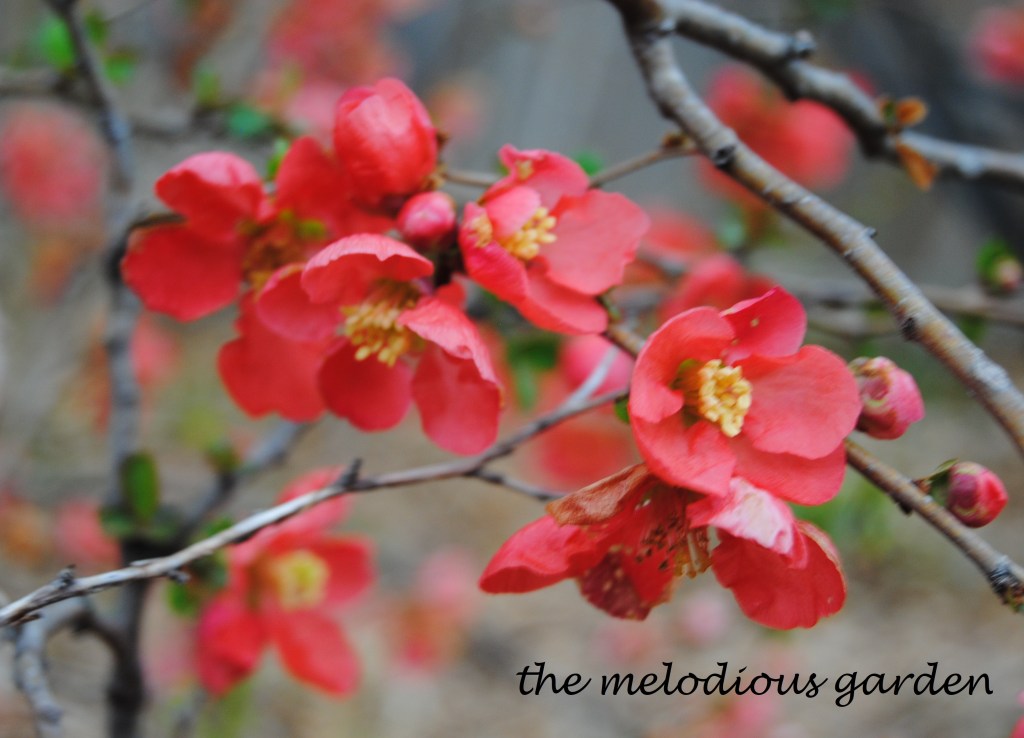
Double Take Scarlet quince is a newer cultivar and one I planted in my early post-rose days. This is the first year that it has put on a real show in my garden. I have found that if one purchases a smaller, one gallon size shrub, they will take a few years to get settled before blooming well, though that may also be due to my laissez faire approach to fertilizing.

Once spring is in full swing, the quince is finished blooming and fully leafed out. It could easily fade off now, overshadowed by nearby spring and summer blooms. However, that is when quince goes to work, in my opinion. You see, once its branches are fully covered with greenery, it makes a fabulous shelter for insects, lizards and small birds, all an essential part of a vibrant ecosystem. Too many times, we overlook the importance of natural shelter, protection from both the elements and from species further up the food chain. To smaller species, the quince’s tangle of arching branches offers just the perfect habitat for them to weather out a storm or seek protection from a hawk flying overhead.

Wildlife need shelter, food and water to survive, and gardeners need wildlife. Wildlife brings life and vibrancy in to the garden. And wildlife helps with pest management and control, for the ladybettles come in to feed on the aphids, which draws in the lizards and, suddenly, before your eyes, you have an entire ecosystem seeking to balance itself out.

In a forest, there are multiple layers, from the canopy far overhead, to the vines that climb up those trees to the life below ground. The understory or shrub layer of a forest or backyard garden is an important layer for wildlife, as this is their shelter. The lizards or small birds that come in seeking shelter may stay and eat some insects, therefore the shrub layer may also provide a natural food source. Water collecting on the leaves or petals of a bloom may also provide essential water. Quince provides all this – and it blooms in the dead of winter, too!

So Keep Calm and Garden On and Plant Some Shrubs. You won’t regret it. Trust me.

gardening, nature

What good are bugs? And what good is henbit anyway?!

It’s henbit season here in North Texas. When lines are drawn. Either you are for henbit or you are against henbit. A middle ground is sometimes found. Against henbit in the front yard. For henbit in the back. Where the neighbors can’t see it. We have probably all had that one neighbor at one time or another that would saunter over and give some unsolicited advice on lawncare. Thankfully mine moved away several years ago. I am thinking the couple that bought that house must be for henbit. Or their lawn crew just hasn’t been called out yet. Right now, their front lawn is a blaze of lavender flowers, bees buzzing about. I walked past it earlier today and couldn’t help but smiling, for I know somewhere in the universe, the previous homeowner is cringing and just knows that his once tightly manicured and chemically induced lawn has gone to the bees.

As I was mulling over today’s blog topic, I glanced over at the bookcase that holds many of my gardening books and one book’s title – out of the hundred or so books – jumped out at me. What good are bugs?

My past few posts have focused on the quote “If something is not eating your plants, your garden isn’t part of the ecosystem.” I have highlighted two beautiful butterflies, along with their caterpillar stage and their specific host plants. I think supporting the life cycles of butterflies is something we can all agree on, right? But what about other bugs? Do we have to love them all? And for that matter. What good is henbit anyway?!

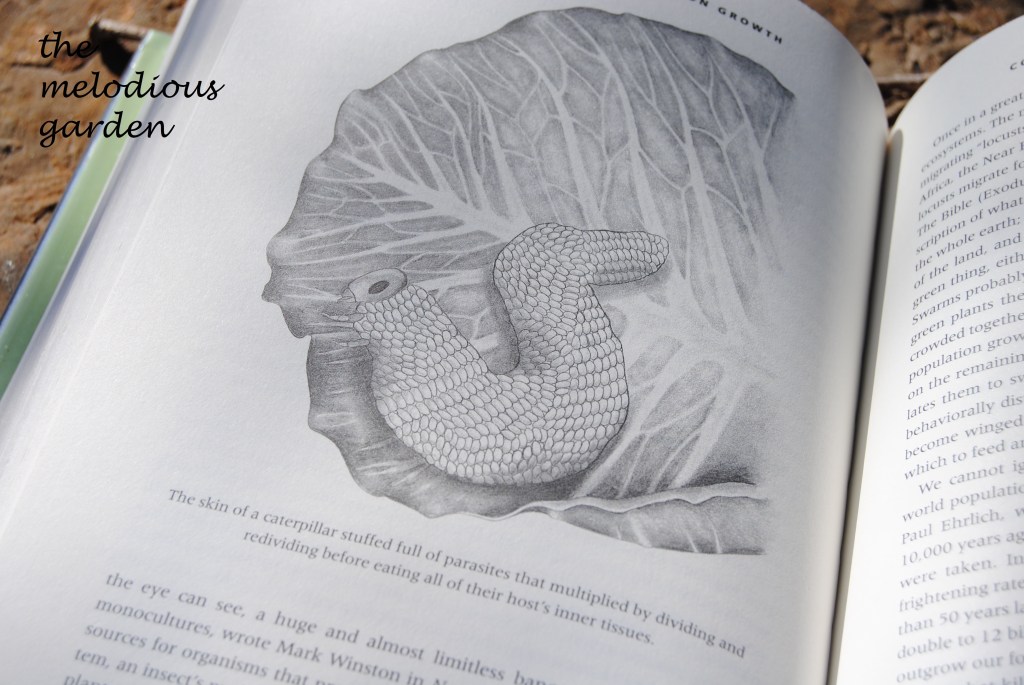
What Good Are Bugs? Insects In The Web Of Life, written by Gilbert Waldbauer, may be a heavier read than most people are interested in, but it does a great job explaining exactly why humans need bugs in our lives. (And, thankfully, it can be read in bits and pieces, as that is how I tend to read non-fiction.)

We know – and appreciate – that our food supply is dependent on insects for pollination. But do we stop and appreciate the bugs that are on the clean up crew? The ones that eat and break down dead animals and plants, not to mention animal dung? Without them, the planet would look vastly different than it does. Insects are also important food sources for wildlife further up the food chain. If we eat eggs and/or chicken, than we also need to appreciate that free range chickens are an insect eating machine.

Where does henbit fit in this picture? Henbit starts blooming in mid- to late-winter, a time when very few plants are blooming, yet this is also a time when many insects are venturing out on warm, sunny days, in search of nectar.

Do you remember the old advertisements for lawn chemicals? Chances are the man in the ad is smoking a cigarette or a pipe while applying whatever chemical is being touted. The children and family dog are probably nearby, playing on the lawn, still wet from the chemicals. The wife is likely standing on the patio, wearing high heels and a dress, smiling. Some ideals are hard to break from. Others are easy to kick to the curb. We can look at the old advertisements today and see them as quaint. A different era. Smoking hasn’t been allowed in advertisements since the Nixon administration. But what about the ideal that our lawns must be sprayed with chemicals and devoid of all life except for the desired green grass? When are we going to kick that to the curb?

Thankfully, society is starting to wake up. More and more, we see and hear about people that are planting for pollinators, allowing areas of weeds to bloom, eliminating chemicals, installing native wildlife habitats, the list goes on and on. Imagine if even a quarter of the world did just one or two small things to help wildlife, the changes would ripple out, for we really are intertwined in one giant web of life.

Not convinced on the benefits of henbit? What if I told you it is also edible? And who doesn’t love some free food?! The top growth of henbit (stems, leaves and flowers) can all be eaten and is quite delicious in salads. Wild greens, such as henbit and dandelion, are also high in nutrients.

I have allowed a few of my winter greens to flower, as an added nectar source for the insects. The photograph below shows the lavender blooms of henbit, along with the bright yellow bloom of a winter green. Several types of kale are also shown.

Photograph below, taken today, shows a bee on another winter green I have let go to flower.

The sketches in the book What Good Are Bugs? are quite adorable…

Keep Calm and Appreciate The Insect World.

Even Parasites.

gardening, nature

A Butterfly Talks: Swallowtails in the garden

A butterfly talks to each flower
And stops to eat and drink,
And I have seen one lighting
In a quiet spot to think;
For there are many things he sees that puzzle him, indeed,
And I believe he thinks as well as some who write and read.

Poem by Annette Wynne

In Robert Heinlein’s book The Cat Who Walks Through Walls, Captain John Sterling says, “Butterflies are not insects. They are self-propelled flowers.”

To watch a butterfly dance about a patch of flowers, one must surely think the butterfly a self-propelled flower. But – to appreciate the butterfly – one must also appreciate its caterpillar.

In my previous post, I shared photographs of the gulf fritillary caterpillar feasting on its host plant, the passionvine, in my melodious garden. Today I would like to share photographs of the swallowtail, both as butterfly and as caterpillar.

Each species of butterfly has its own requirements for a host plant. The swallowtail butterfly lays its eggs on fennel, dill, parsley and a few more botanically related plants. In the above photograph, the swallowtail is flitting over a patch of fennel in my garden, depositing its eggs.

When planting these herbs, especially if one is wanting to welcome in swallowtail butterflies, it is best to plant more than you think you ever might need. Trust me. If the butterflies find it, you will be grateful for having enough to go around. If you have ever heard the old saying, “Four seeds in a row. One for the crow. One for the mouse. One to rot. And one to grow,” this holds especially true when planting host plants for butterflies. Plant two herbs for the butterflies and two for you. Or, better yet, ten for the butterflies and two for you.

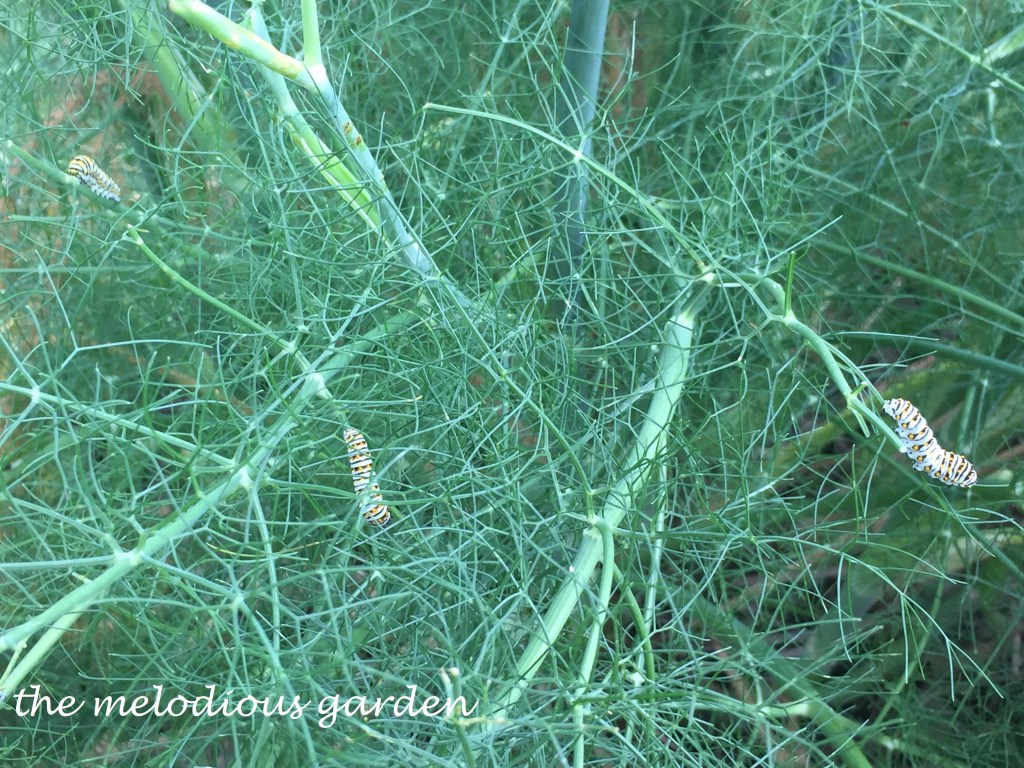
Butterflies, like all insects, lay dozens of eggs at one time as few ever make it through to the adult stage. The caterpillar hatches from the egg, eats its shell, then begins feasting on its host plant. The photographs above and below show the swallowtail butterfly as a young caterpillar.

The caterpillars continue to eat and grow and eat some more. Their appearance changes quite a bit from young caterpillar to mature caterpillar.

I am always drawn out to the garden to count the caterpillars and to watch them grow, as it seems they grow from morning to evening.

And this – this is the reward!

One can see why a poet would write that the butterfly talks to each flower.

To watch butterflies come full circle in the garden is such a rewarding experience. In my nearly three decades of gardening this plot of land, I have never tired of watching caterpillars feast and grow in my garden.

Starting a butterfly garden is relatively simple. First, choose the right location within your garden, as butterflies prefer sunny locations. Research which butterflies inhabit your region and which host plants they need to lay their eggs on. Be sure to plant a mix of host plants and flowers. The flowers will attract the butterflies and they will feed on the nectar those flowers provide. The host plants will provide a place for the butterflies to lay their eggs. Eliminate pesticides in your garden, as those are dangerous to butterflies and caterpillars. Expect your plants to be eaten! Remember: If something isn’t eating your plants, your garden isn’t part of the ecosystem! Finally, sit back and watch these self-propelled flowers flutter about your garden.

Keep Calm and Plant A Butterfly Garden.