
I don’t know about you, but I never miss a chance to celebrate, especially when celebrating means buying a new plant. Or two. Or ten. Of course, celebrating Texas Native Plant Week requires gardeners (for me, at least) to visit a garden center. Or at the very least, it allows us to promote the many benefits of our wide variety of plants native to this state.
Rick Perry, our former governor, designated the third week of October as Texas Native Plant Week in 2009. Our state’s Arbor Day is also in the fall – the first Friday in November. Now many people may wonder why we celebrate plants in the fall in Texas when many states are already experiencing their first freezes of the season or will soon be buried under a blanket of snow. Fall is actually the best time to plant hardy perennials, trees and shrubs in southern climates, as our temperatures are cooler and rainfall more plentiful. Fall planting gives plants additional time to adjust before our hot and dry summers hit.
Adding native plants – ones that are better adapted to growing in our soils and climate – preserve our water resources, as they require less water once established. As our state’s population continues to grow, our manmade lakes will feel the strain that traditional landscapes require. Water restrictions will to be the norm for most of the state going forward. Native plants also don’t need special treatment to thrive, no fertilizers or special soil mixes. They also provide much needed native habitat and food for our wildlife and help conserve our wildlife populations.
So here we are – Happy Texas Native Plant Week! Have a slice of cake and plant a few natives in your landscape. Here are some of my favorite native plants, in no particular order.

Echinacea, commonly known as coneflower: A wonderful reseeding perennial. A wide variety of insects will nectar on its blooms and songbirds will feast on the dried seeds through the winter. What seeds remain in late winter, I will cut back and scatter throughout the garden. (Coneflower is shown in photograph above.)
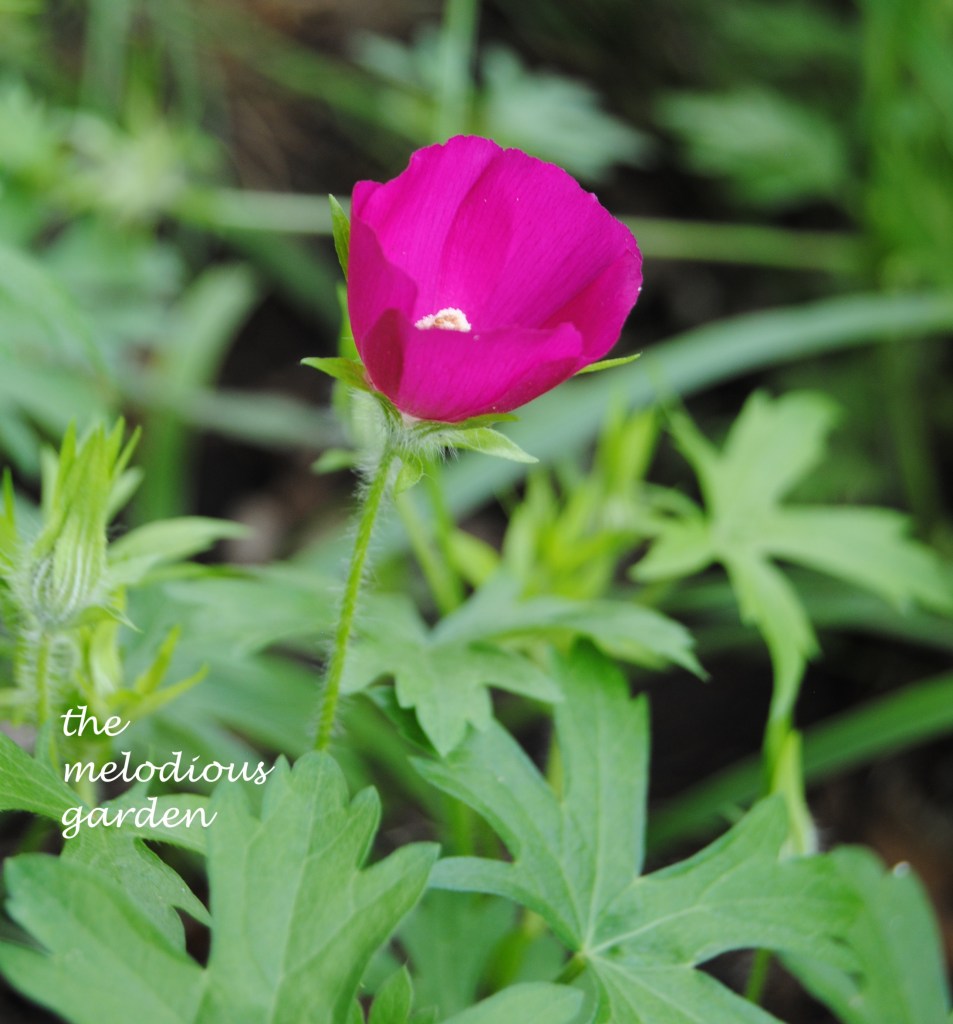
Callirhoe involucrata, commonly known as winecups: A rosette of greenery will emerge from its tuberous root in late winter and will scamper up and over and about the garden. It will start blooming in late spring in to early summer. It is dormant in the heat of summer and fall. (Winecup is shown in photograph above.)
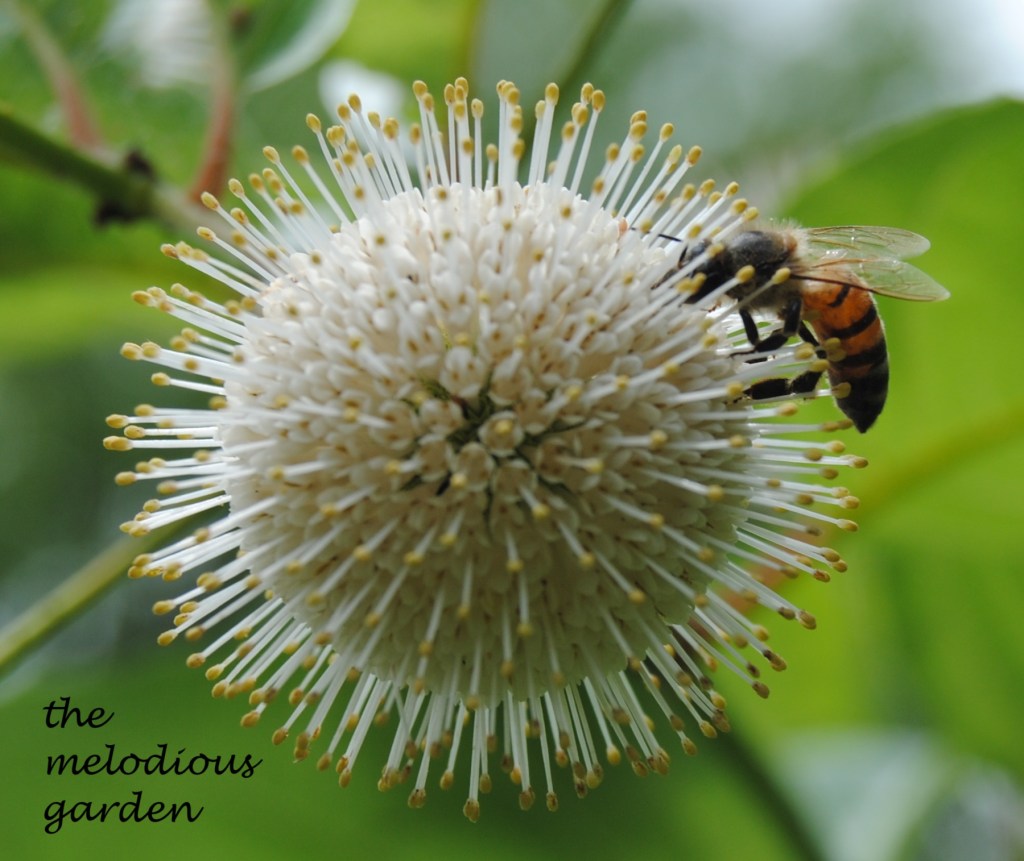
Cephalanthus occidentalis, commonly known as buttonbush: I would have a hard time selecting a favorite native plant, but buttonbush would likely be it. I love standing under the small tree when it is in bloom and watching just an outstanding variety of insects nectaring on the orb shaped flowers. Where else can you get a Dr. Seuss style bloom that is so well loved by the insect world? (Buttonbush is shown above.)
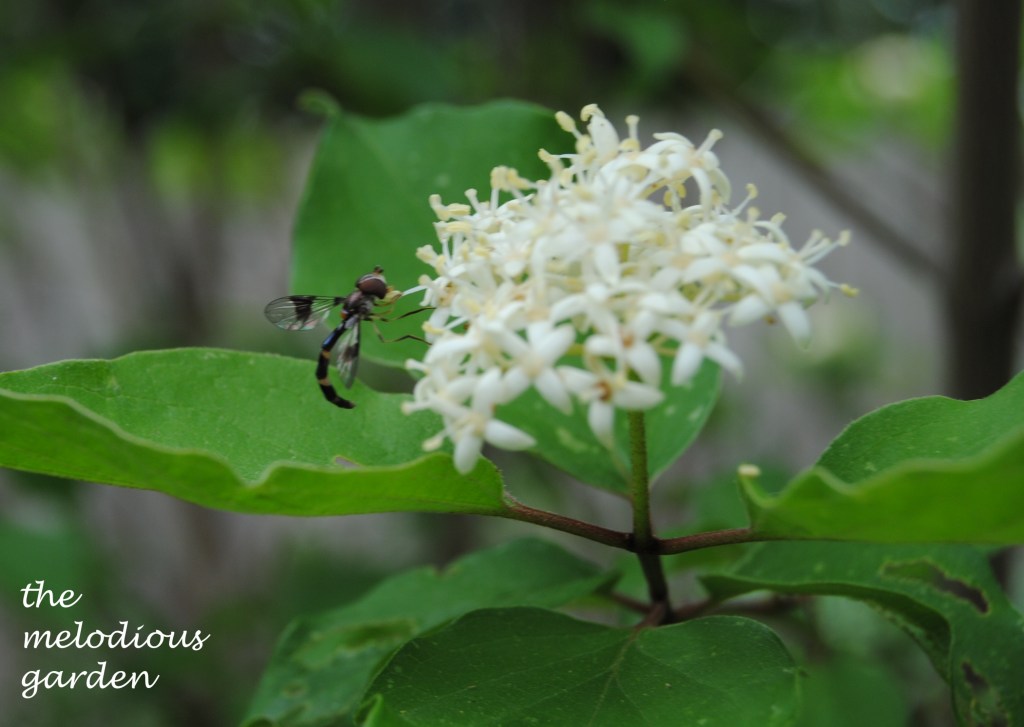
Cornus drummondii, commonly known as rough-leaf dogwood: For years – okay, two decades?! – I tried to eliminate this shrubby tree from my garden, as it wants to spread and take over. Alas. I have given in to its lovely blossoms and its willingness to thrive on neglect. Added bonuses: Insects love the blooms and songbirds love the berries. (Rough-leaf dogwood shown above.)
Twenty five years and another lifetime ago, I worked at a small organic garden center in the Dallas-Fort Worth area. We received a much-awaited shipment of native plants. Alas. As the driver opened the back of the box truck, with a cluster of garden center employees standing ready to Ooh and Aw over the plants, horror awaited. The heavy wooden shelf system had collapsed during transit and crushed everything underneath, including a dozen or so rough-leaf dogwood trees. Nearly everything in the truck lay broken and bruised and little was salvageable. That night after work, I took home a tiny broken twig of rough-leaf dogwood. Within two years, I was trying to eliminate it from my garden because it was like the Little Engine That Could. It thought it could grow. It thought it could grow. And grow it did! Now I absolutely love it and am glad I made peace with its determined growing habits.

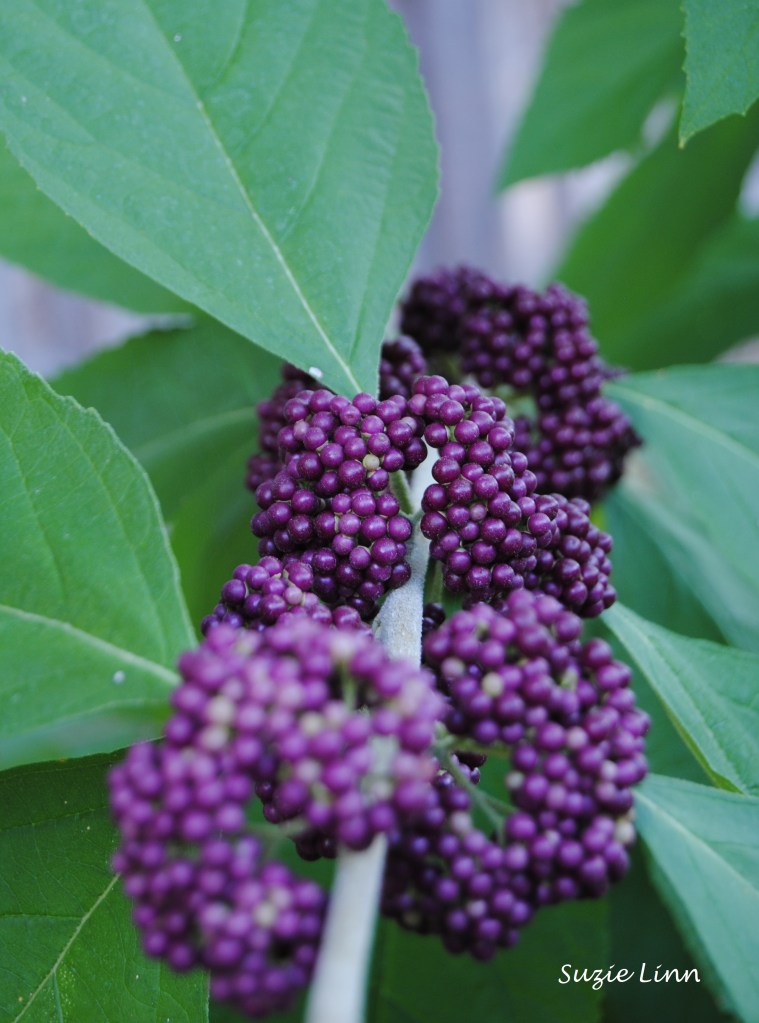
Callicarpa americana, commonly known as beautyberry: A shrub with clusters of flowers in the spring, followed by brilliant purple berries in the summer and fall. (Beautyberry shown in photographs above and below.)
Calyptocarpus vialis, commonly known as horseherb: There is a native plant for every growing situation and need. This is a fabulous lowgrowing ground cover for shady areas. (Horseherb shown below.)

Monarda fistulosa, commonly known as beebalm: There are many beebalms on the market, but the majority of them are hybridized, non-native varieties. Those tend to succumb to powdery mildew in this area and their flowers lack the nectar of the native variety. Fistulosa is the native one; many garden centers offer it in their herb section. This beebalm is especially loved by butterflies as the nectar is deep within the flower. (Swallowtail butterfly shown on monarda fistulosa in photograph below.)

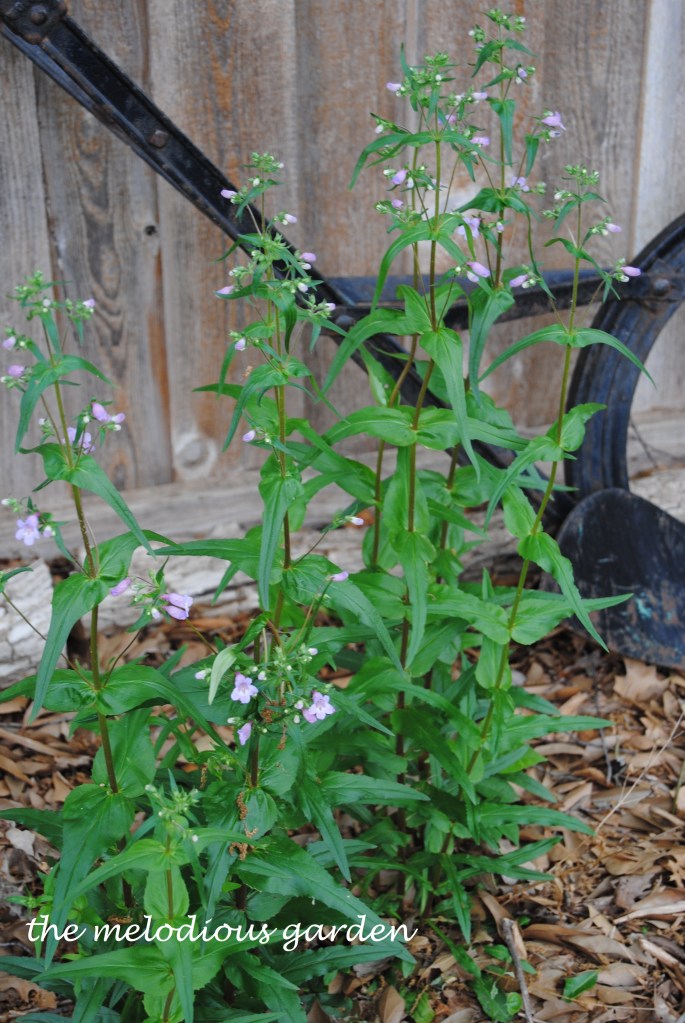
Penstemon tenuis: A lovely reseeding perennial. This penstemon blooms very early in the spring, at a critical time for insects. The plants are light and airy, with blooms held above the foliage. (Penstemon tenuis shown in bottom two photographs.)
There you have it – some of my favorite Texas native plants. No matter how you celebrate Texas Native Plant Week, I hope you get to enjoy some cake and visit one of the many wonderful garden centers we have throughout our state. We are so fortunate to have a number of locally owned garden centers that were early on the native plant bandwagon and really fought to bring native plants to the mainstream. Please seek them out and support them whenever possible!

All photographs taken in my own garden – zone 8b, southern Denton County, Texas.

 the melodious garden