gardening, nature, vintage

Plant profile: Penstemon tenuis

“Where flowers bloom, so does hope.” Lady Bird Johnson

Texas is well known, and rightly so, for their springtime display of wildflowers. From the highways to the back roads, the state seems to be awash in blue this time of year. But look a bit closer and one is apt to pick out other, lesser known, wildflowers. Pale pink primrose. Bright orange Indian paintbrush. Hot pink winecups. With more than 5,000 different varieties of wildflowers throughout the state, it would be hard for anyone to list their favorites or for any gardener to grow even a fraction of them. Still one wildflower is often overlooked, which is a shame because it certainly deserves a spot in any top ten or top twenty Texas wildflower list.

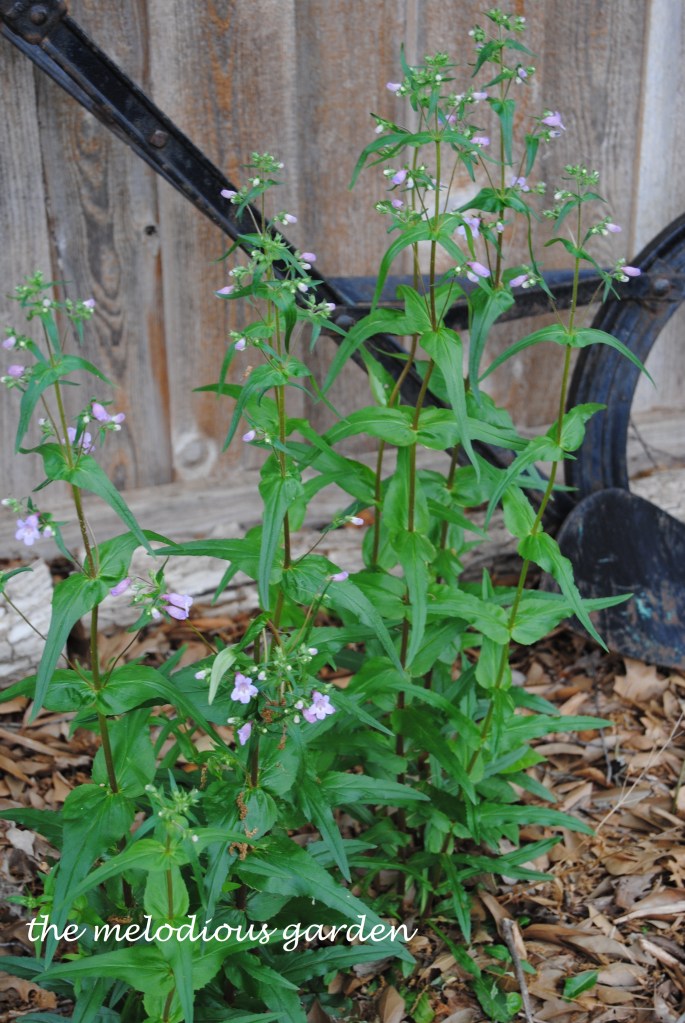
Penstemon tenuis, shown above, sports dainty lavender blossoms that dance in the spring breeze. It is highly adaptable to the cultivated garden, which is not the case with all wildflowers. It is equally at home in a cottage style garden as it is in a meadow. Isn’t it gorgeous with the apricot colored bearded irises in the background? I would love to take credit for that color combination, but I can’t. You see, after Penstemon tenuis is done blooming, I let the seedheads form and dry, then take the seeds and scatter them about. I never know where they might pop up the following year and I love it that way! (Photograph below: Dried seedheads of Penstemon tenuis in late summer, with garlic chive blossom.)

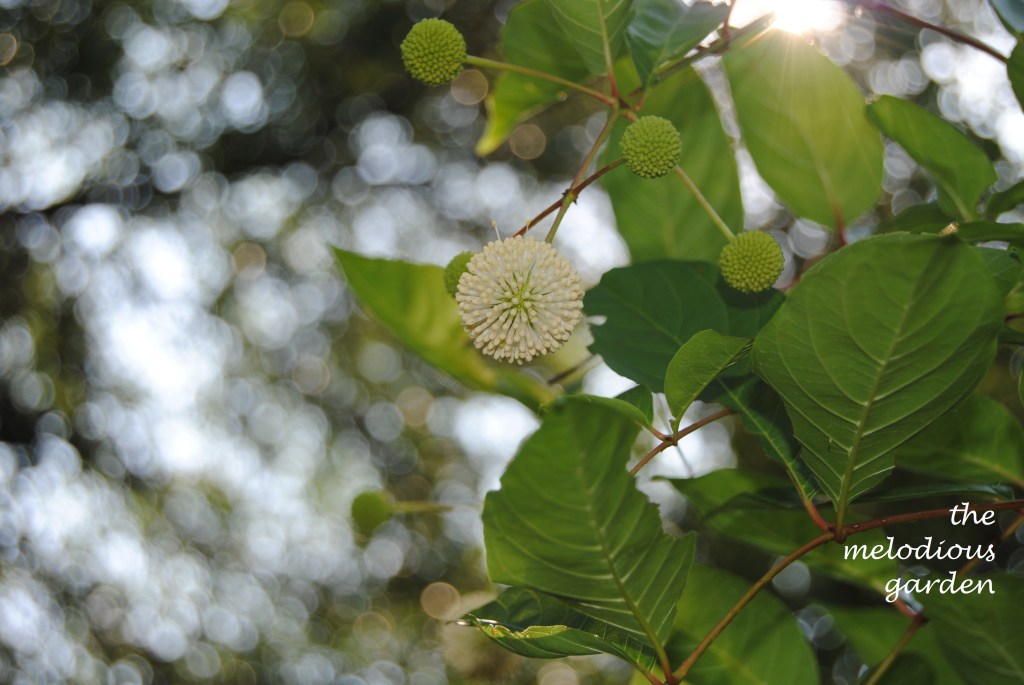
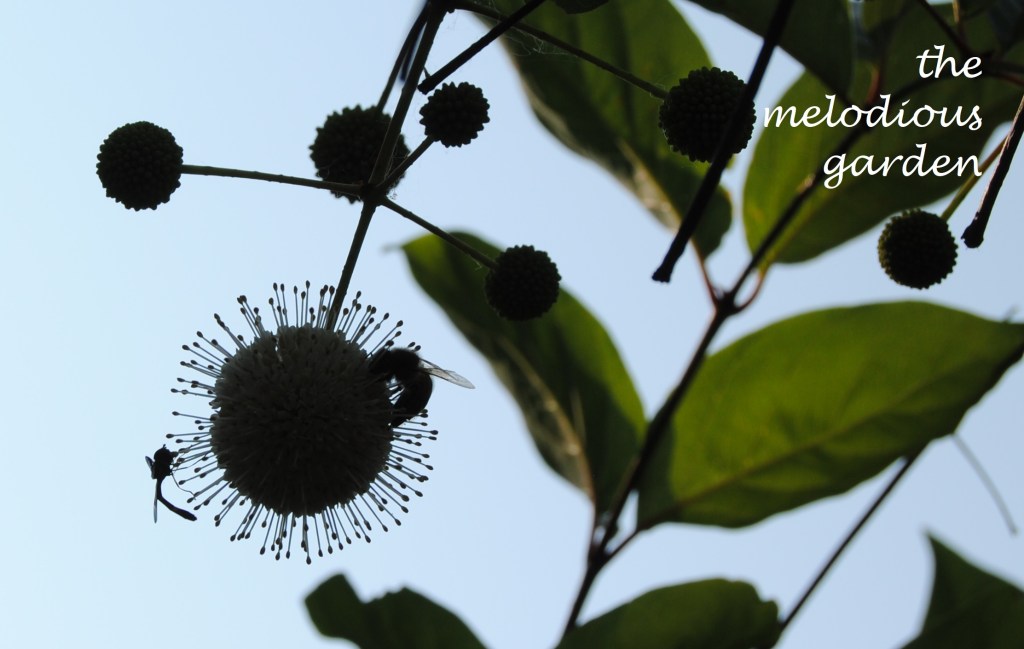
Yes. Sometimes the flower will sprout up in an odd place, such as directly under my native buttonbush, shown below. Thankfully they are great companions and neither one bothers the other. Penstemon tenuis grows best in partial to full sun, so will bloom and flourish just fine in this area of my melodious garden.

Other times, Penstemon tenuis pops up in just the perfect spot, such as in front of an antique plow, shown below. This gardener loves that whimsical side of Mother Nature.

Penstemon tenuis grows to about 2 1/2 feet tall and is airy enough that it can be grown along pathways or the front of formal garden beds. Typical bloom time is from April to June in North Texas. It is a good nectar source for bees and butterflies. Its native range is the Gulf Coast prairies and marshes from Texas to Mississippi and up to Arkansas. Penstemon tenuis is said to be a great cut flower, though I have not personally use it in arrangements.

While not widely available in the nursery trade, it can be found at garden centers that specialize in native plants and seeds can be acquired from fellow gardeners.

gardening

April! April! Is it you?

“April! April! is it you?
See how fair the flowers are springing!
Sun is warm and brooks are clear,
Oh, how glad the birds are singing!
April! April! is it you?” Poem by Dora Read Goodale

“Spring translates earth’s happiness into colorful flowers.” Terri Guillemets

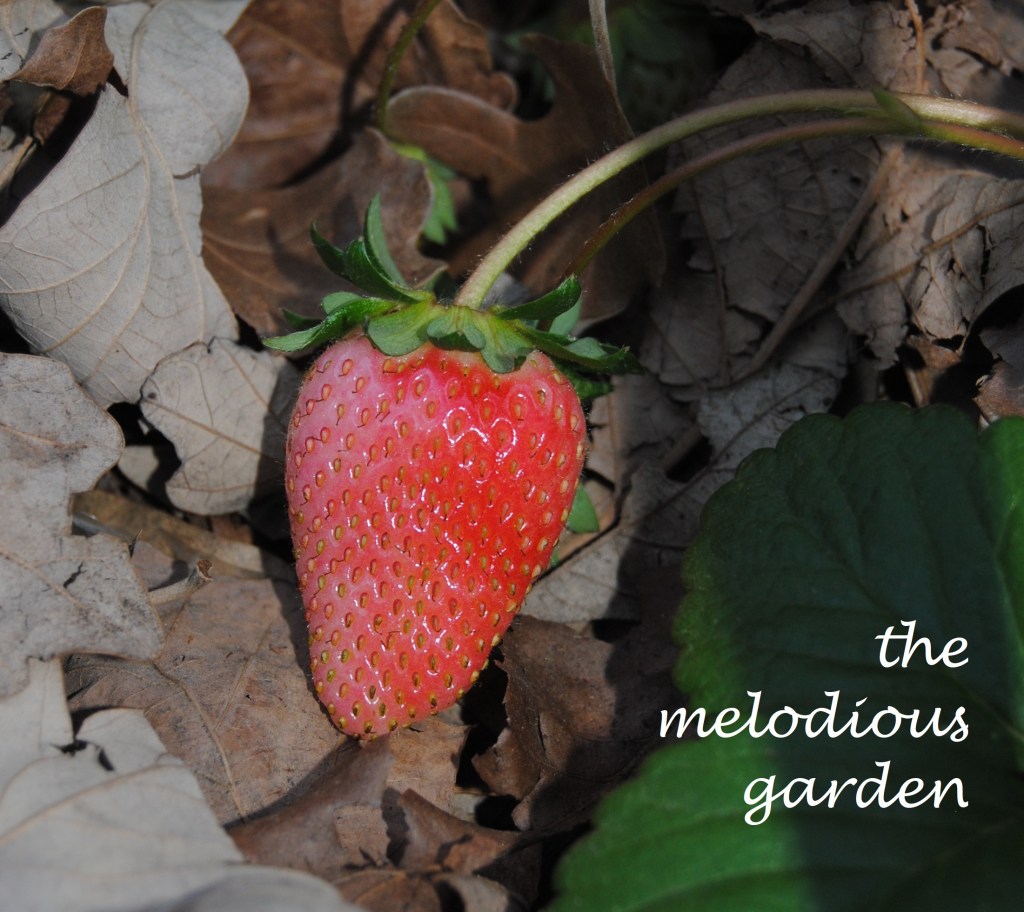
The pale pink roses, shown above, are reminders of my garden past, beautiful blossoms this first day of April. The strawberry, shown below, embodies the hope and possibilities of the season ahead.

“It was such a pleasure to sink one’s hands into the warm earth – to feel at one’s fingertips the possibilities of the new season.” Kate Morton

One question that has been asked dozens of times the past few weeks has been, “Is it safe to plant now?” That translates to: Have we seen our last freeze of the year? Old-timers will tell you that we aren’t out of the woods for a late freeze until Easter. True enough, this gardener remembers an Easter snow many years ago. Mid-March is Dallas-Fort Worth’s average last freeze date. Average meaning: Our last freeze may come in February. Or it may come at Easter. This year the last freeze came early. Or so it appears.

Is it safe to plant now? This gardener will generally answer that question with another question. Is it ever truly safe to plant? One never knows what Mother Nature may throw at us. Late freezes. Hail. Intense heat. Record breaking cold. Prolonged drought. Relentless rain. This week’s weather brought us intense winds, leaving many of the tall bearded irises listing wayward. (Below photograph.) In 28 years of gardening this plot of earth, I have seen the extremes. It is never really safe to plant. To garden is to take chances. One learns quickly to roll with the punches and to always have a backup plan.

This suburban food forest is coming together, nourishing the gardener’s body and soul. To wander about, barefoot, harvesting herbs for a lunchtime salad. The onions and potatoes, planted in January and February, are coming along nicely. Tomatoes and peppers have been planted. Succession plantings of beans has begun. The possibilities truly seem limitless in the springtime garden.

“The glory of gardening: hands in the dirt, head in the sun, heart with nature. To nurture a garden is to feed not just the body, but the soul.” Alfred Austin

Despite the winds, the tall bearded irises, shown below, have been especially delightful this week, nurturing my soul.

“Flowers always make people better, happier and more helpful; they are sunshine, food and medicine for the soul.” Luther Burbank

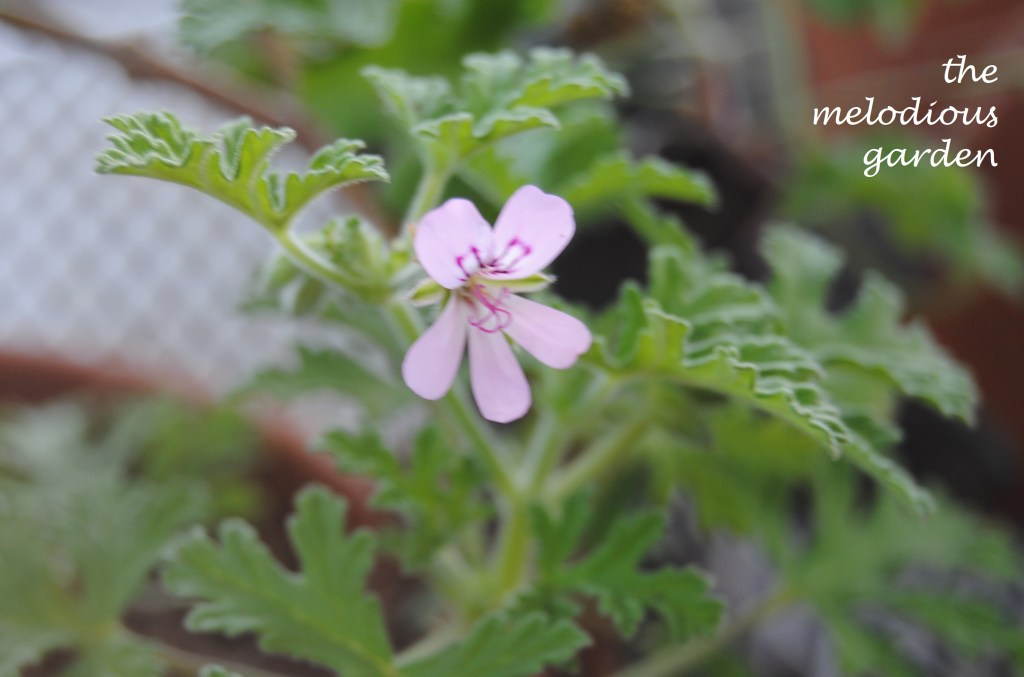
Scented geraniums are best known for their intoxicating scents, though this gardener finds the flowers equally charming. (Shown below.)

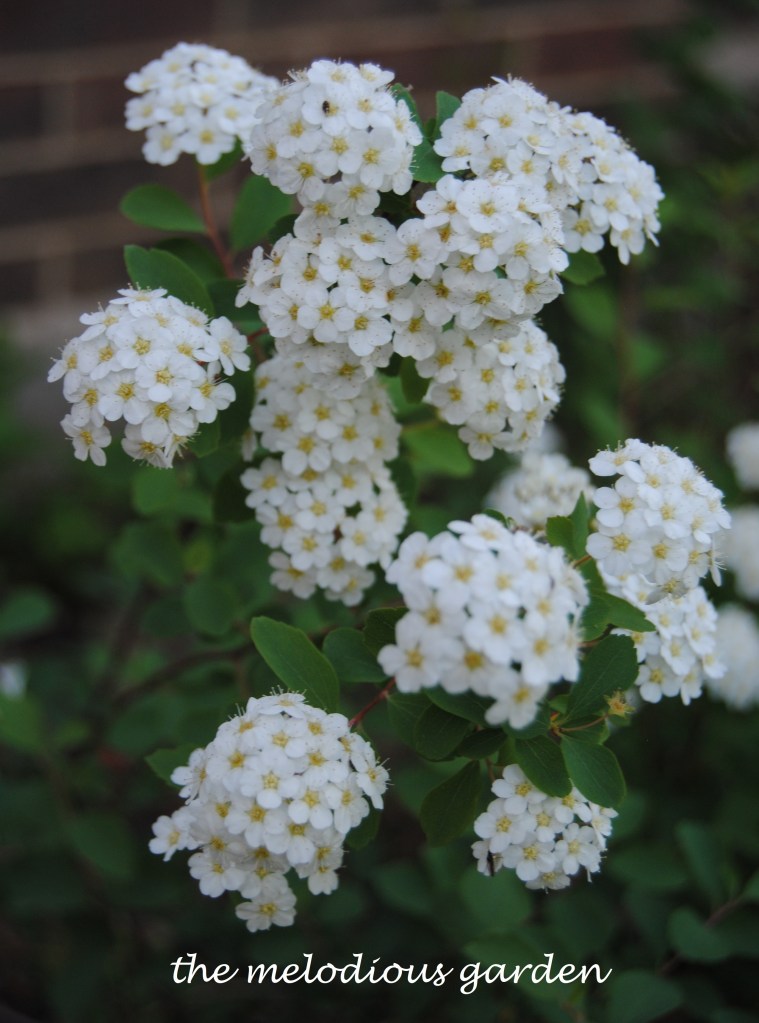
Bridal’s wreath spirea, shown below, is aptly named. Ah, spring! See how fair the flowers are springing!

gardening

I’d fly around the garden with the butterflies…

“If I could be a fairy now, I’d learn a lot of things, what flowers find to talk about and what the birdie sings. I’d fly around the garden with the butterflies for hours, I’d find out if the honey-bee says “thank you” to the flowers.” Source unknown

“Come fairies, take me out of this dull world. For I would ride with you upon the wind and dance upon the mountains like a flame.” W.B. Yeats in The Land of Heart’s Desire

“She was always doing funny things – for a grown-up. Like running through woodland trails or climbing and jumping out of trees. Perhaps, it was because she had just a drop of fairy in her blood, that kept her wild and free.” Source unknown

“Few humans see fairies or hear their music, but many find fairy rings of dark grass, scattered with toadstools, left by their dancing feet.” Judy Allen, Fantasy Encyclopedia

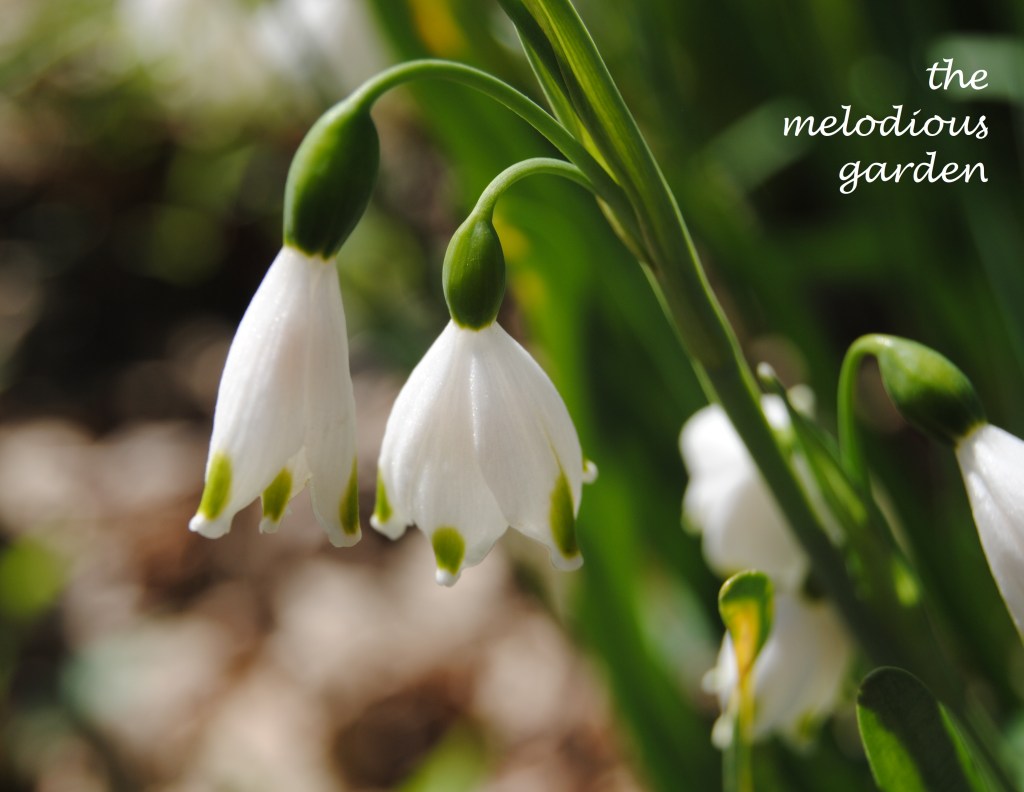
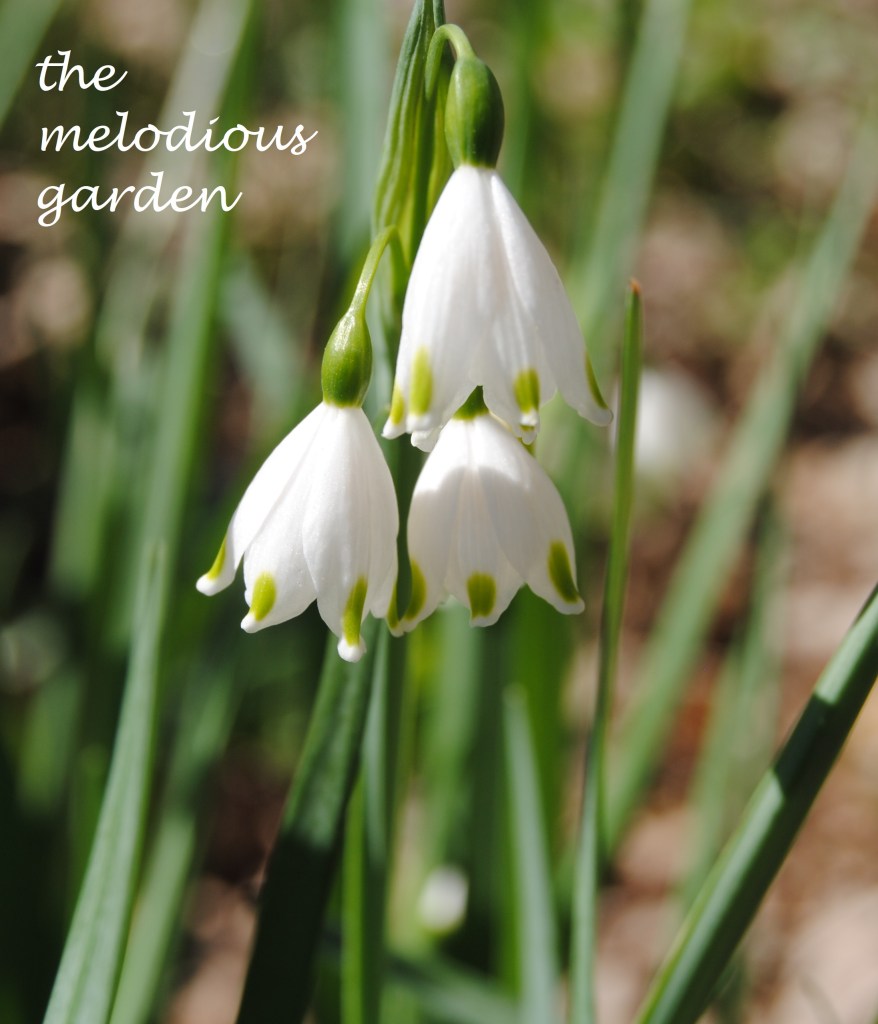
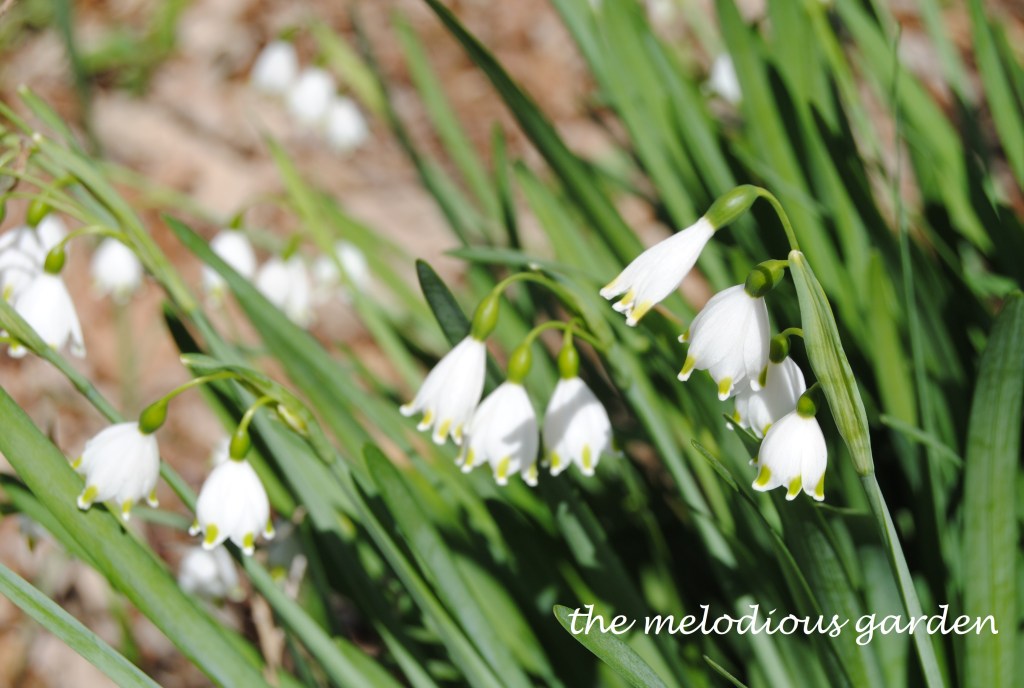
If one needs proof of fairies dancing about the garden, they only need to kneel down and gaze upon the Leucojum blossoms, for the fairies have left little dots of green on every dainty flower.

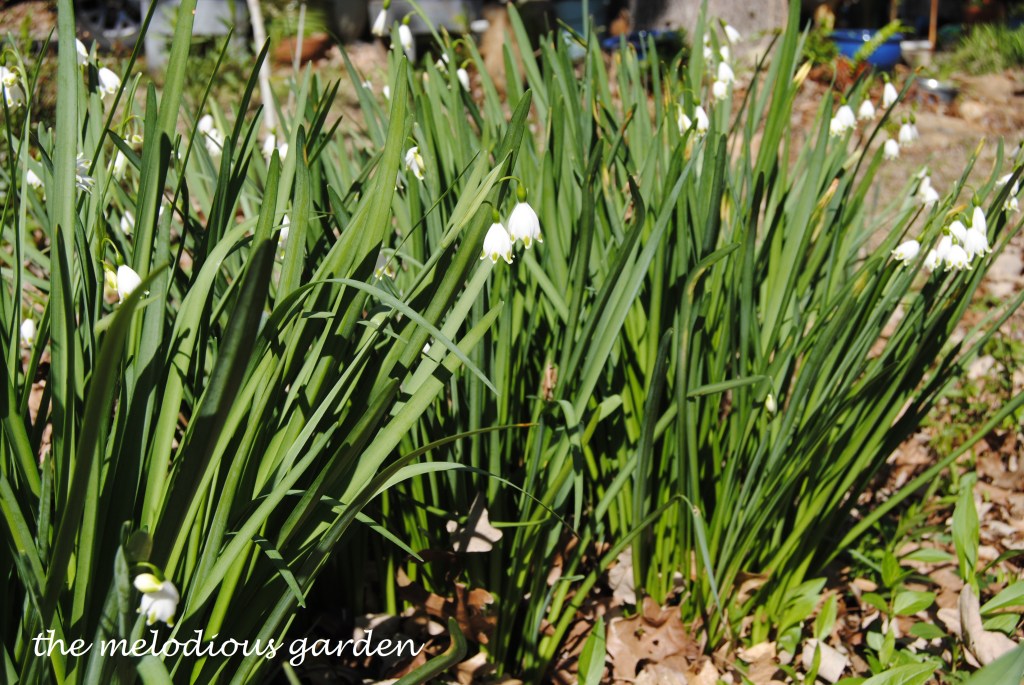
Leucojum, like daffodils and tulips, are planted in the fall for spring time blooms. They naturalize quite nicely in zone 8a, North Texas, returning year after year with ease. Botanically speaking, they are in the amaryllis family with just two species, both commonly referred to as “snowflakes.” Leucojum vernum is the spring blooming bulb and the variety I have growing in my melodious garden. These bulbs were initially planted 20-plus years ago and have received no additional care, sans trimming off the leaves after they have dried and dividing and thinning out every few years. As you can see in the photograph below, this patch is due for dividing, which I will do as soon as they are done flowering.

Leucojum add a bit of whimsy and charm to the spring garden, as they are proof that fairies are indeed real and dance about the garden.

gardening

And spring arose on the garden

“And spring arose on the garden fair, like the spirit of love felt everywhere; and each flower and herb on Earth’s dark breast rose from the dreams of it’s wintery rest.” Percy Bysshe Shelley, The Sensitive Plant

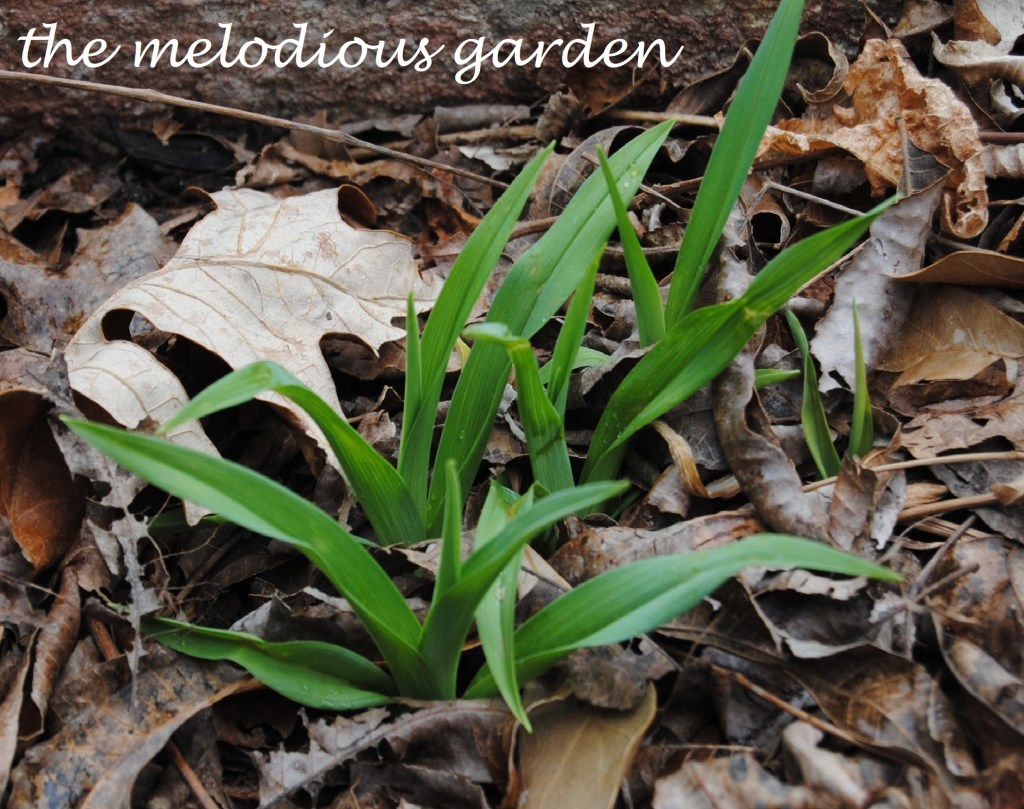
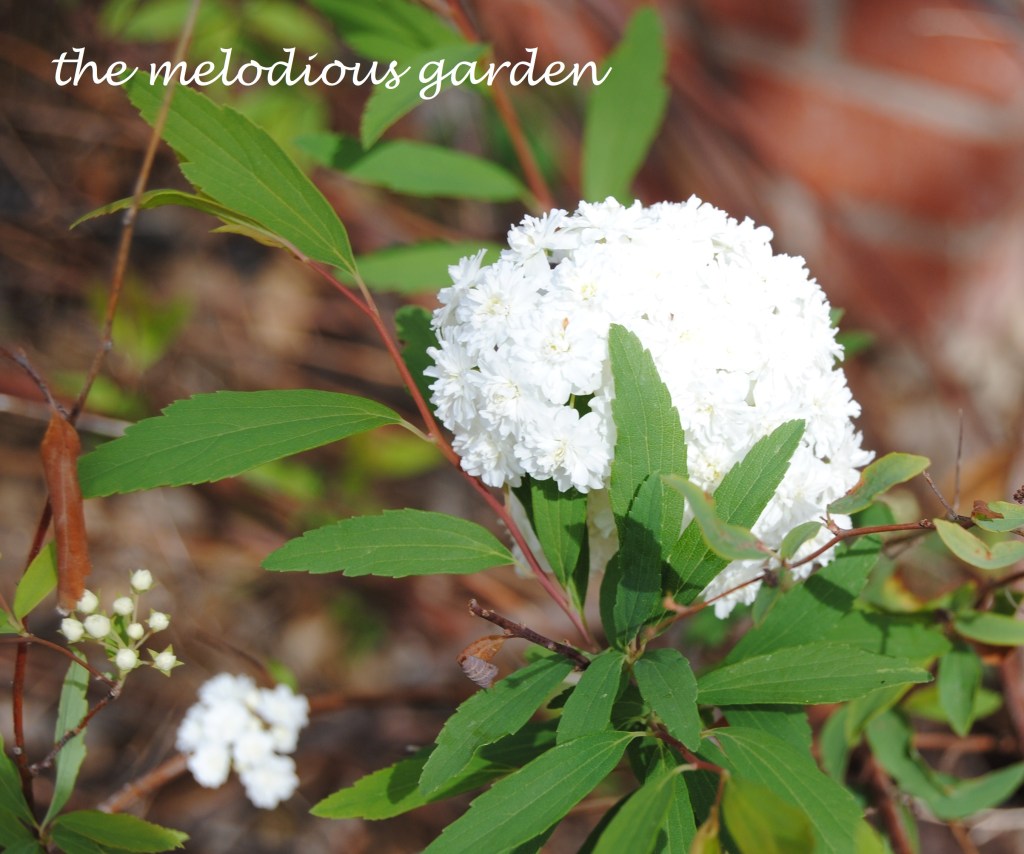
Spring has been popping up for several weeks now in my melodious garden. Daylilies that go dormant in winter have been emerging through the leaves I let blanket the garden. (Shown above.) Spring blooming shrubs are having their moment of glory, as are the bulbs – daffodils and leucojum. (Bridal’s wreath spirea, shown below.)

“She turned to the sunlight and shook her yellow head, and whispered to her neighbor: Winter is dead.” A.A. Milne, When We Were Very Young

Winter is dead. Or so we can hope. The Dallas-Fort Worth area saw overnight low temperatures down to freezing over the weekend but the ten day forecast shows that winter weather may be gone now and spring weather here to stay. Happy Vernal Equinox, indeed. The sun is shining bright this morning and the garden and the gardener are basking in its rays. The gardener is, as usual on days like this, full of garden dreams.

The garden last year was plotted and planned out on the pages of an old school notebook. Late in the season, a downloadable, printable garden journal was purchased through Etsy, fully customizable, where I could add or subtract sections as needed. One section that was subtracted – The Garden Budget. Who has time for things like gardening within the constraints of a budget? Alas. Sometimes a garden budget may be necessary as one large purchase that kept getting tossed aside in favor of more plants was the acquisition of a new wheelbarrow.

Having not shopped for a wheelbarrow in 28 years, I was rather shocked that the entry level price for a decent one is around $150, which equals roughly three to four fruit trees or 37.5 four inch herb plants. Give or take a few. This gardener, you see, is always on team More Plants instead of New Wheelbarrow.

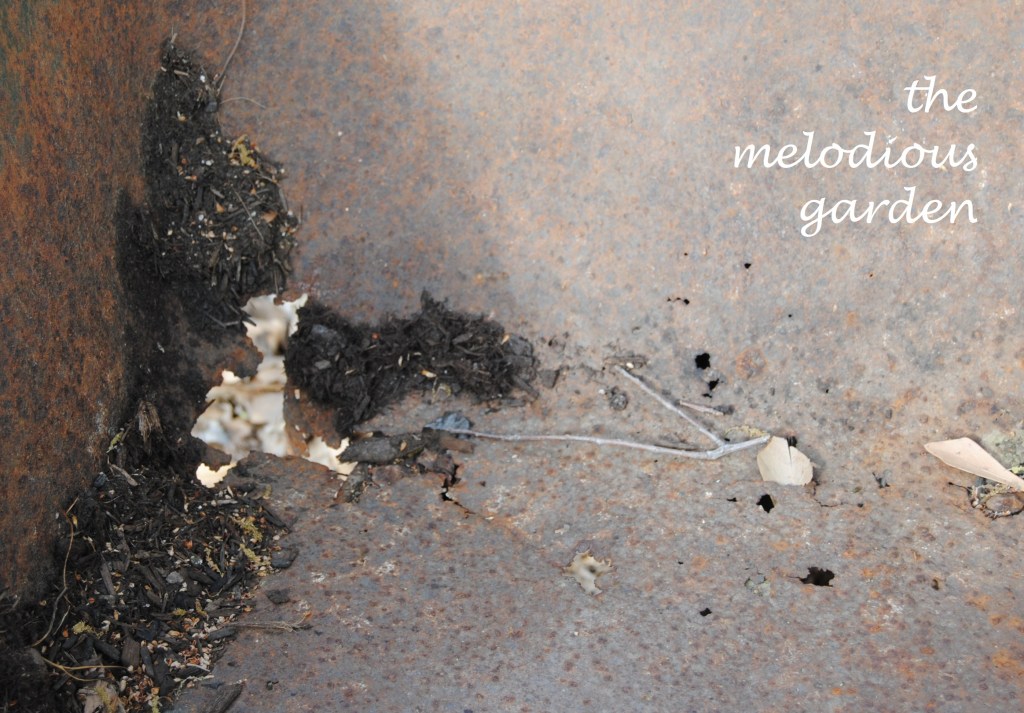
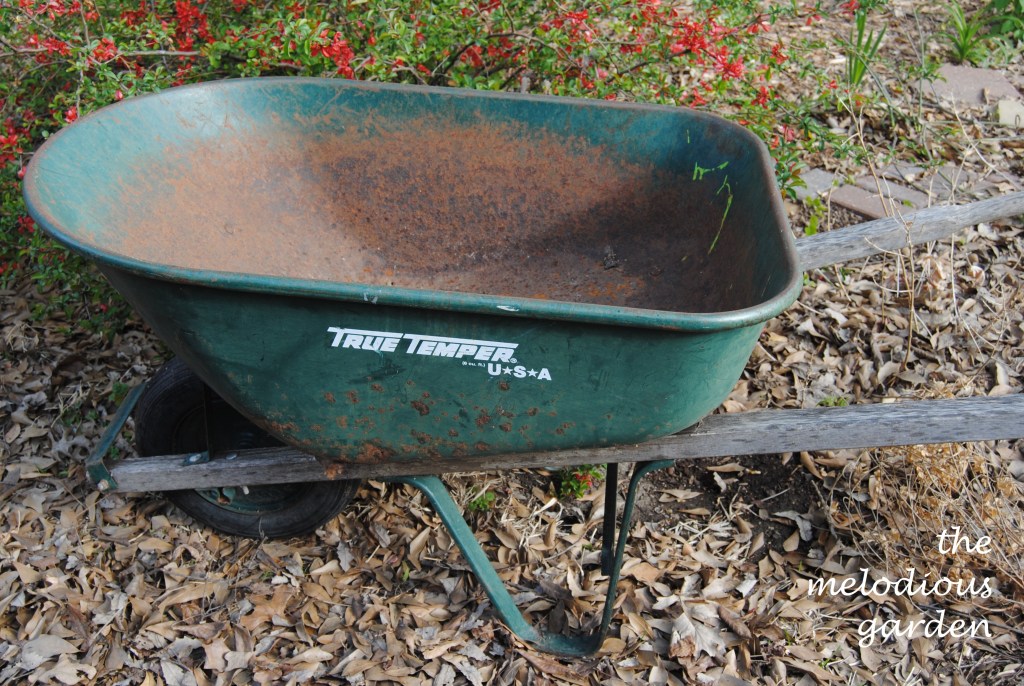
A good wheelbarrow is often one of the first major purchases a gardener will make, as it is handy for moving soil, mulch, rocks, plants and dreams. I don’t remember when or where I bought my first wheelbarrow – or how much it cost! – but I know it has been by my side in the garden for 28 years now. It has hauled a great many cubic yards of compost and mulch. It has hauled tons of rocks and bricks. It has hauled countless plants and garden tools and bags of fertilizer. But years of digging in with a shovel to scoop out its load and years of rocks and bricks jostling about have worn away at its metal. A few small holes here and there over the years gradually grew until – by last fall – the bottom was rusted through in large spots and talk of purchasing a new wheelbarrow ensued. (Just one of the large holes in the old wheelbarrow, shown in photograph above.)

“Talk of purchasing a new wheelbarrow…” generally went like this…

The non-gardener: What do you want for our anniversary? The gardener: A new wheelbarrow.

Which was followed a few weeks later by… The non-gardener: What do you want for Christmas? The gardener: A new wheelbarrow.

Which was immediately followed by… The non-gardener: What do you want for your birthday? The gardener: A new wheelbarrow.

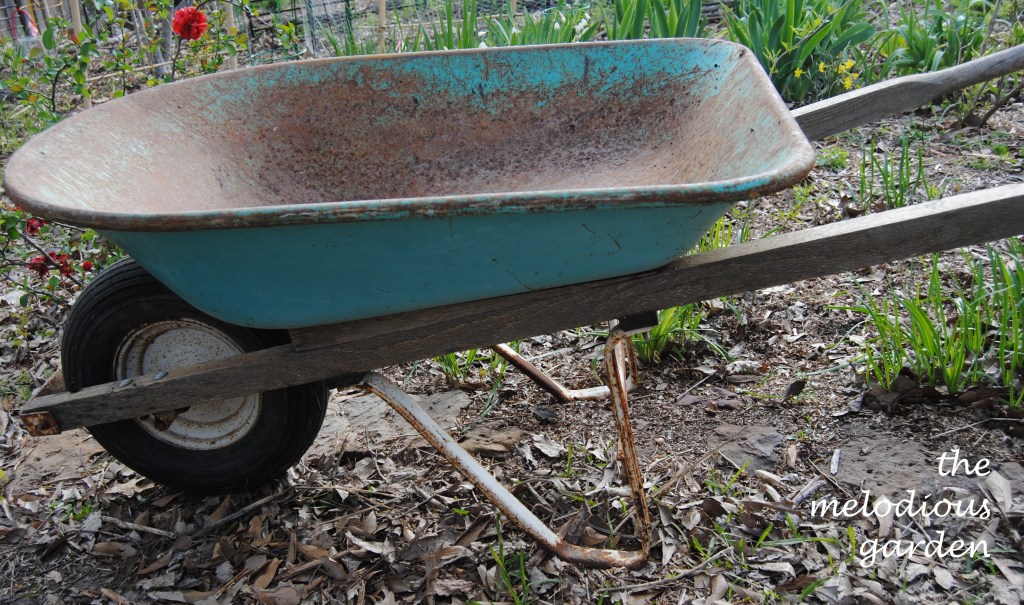
Last month, the talks turned serious. Real serious. The gardener, to the non-gardener: Hey, I bought myself a new wheelbarrow today. Well. It is new to me. Technically, it is probably older than I am. But it doesn’t have any holes in it. Oh. And it is teal.

You see, sometimes the older things are the best things. Wheelbarrows being no exception. Especially when they happen to be teal.

“I love the first tingling of spring when sunlight lingers just a little bit longer and you can almost feel the whole world soften as birds chirp nearby, puddles take slowly to the sky and you gently wake up to what’s growing inside.” M.L. Cole

And so it is. The first tingling days of spring, when the sunlight lingers just a little bit longer, that my trusty old wheelbarrow will be carted off to the great wheelbarrow heaven in the sky. It lived a great, though laborious, life here at the melodious garden. I am forever in its gratitude for the burdens it carried to make my garden chores just a little bit lighter.

Oh. And did I mention the new-to-me wheelbarrow is teal?

I may well someday lead up a Gardeners Anonymous group with, “Hi. My name is Suzie Linn and I own a teal wheelbarrow.” Oh. And she only cost me 5.5 four inch herb plants. Give or take a few. Perhaps most importantly, I didn’t have to figure out a budget to buy myself a new wheelbarrow.

“All through the long winter, I dream of my garden. On the first day of spring, I dig my fingers deep into the soft earth. I can feel its energy, and my spirits soar.” Helen Hayes

I am again at a crossroads in my life. I feel the energy of another spring, though don’t yet know which path to take from here. I long to spend my days puttering about my garden, blocking out the news of the world and the demands to make money. I long to dig my fingers deep into the soft earth and know that this is santosha, my contentment, right here in the garden. I am not yet sure where to go from here, but in the meantime I have bulbs to plant and seeds to sow, new garden gloves to wear out and dreams to dream and miles to go before I sleep.

gardening

Golden daffodils – dancing in the breeze

I wandered lonely as a cloud

That floats on high o’er vales and hills,

When all at once I saw a crowd,

A host, of golden daffodils;

Beside the lake, beneath the trees,

Fluttering and dancing in the breeze.

Continuous as the stars that shine

And twinkle on the milky way,

They stretched in never-ending line

Along the margin of a bay:

Ten thousand saw I at a glance,

Tossing their heads in sprightly dance.

The waves beside them danced; but they

Out-did the sparkling waves in glee:

A poet could not but be gay,

In such a jocund company:

I gazed—and gazed—but little thought

What wealth the show to me had brought:

For oft, when on my couch I lie

In vacant or in pensive mood,

They flash upon that inward eye

Which is the bliss of solitude;

And then my heart with pleasure fills,

And dances with the daffodils.

Poem by William Wordsworth

We are often advised to live in the present moment, which is all well and good, as we only live this moment once and we need to enjoy it for all its worth, but gardeners know we also have to live – and think and plan – a season or two ahead of this moment. That is the way of the garden. Appreciating the beauty of today, but also thinking ahead to our future gardens. Daffodils are the perfect example of this.

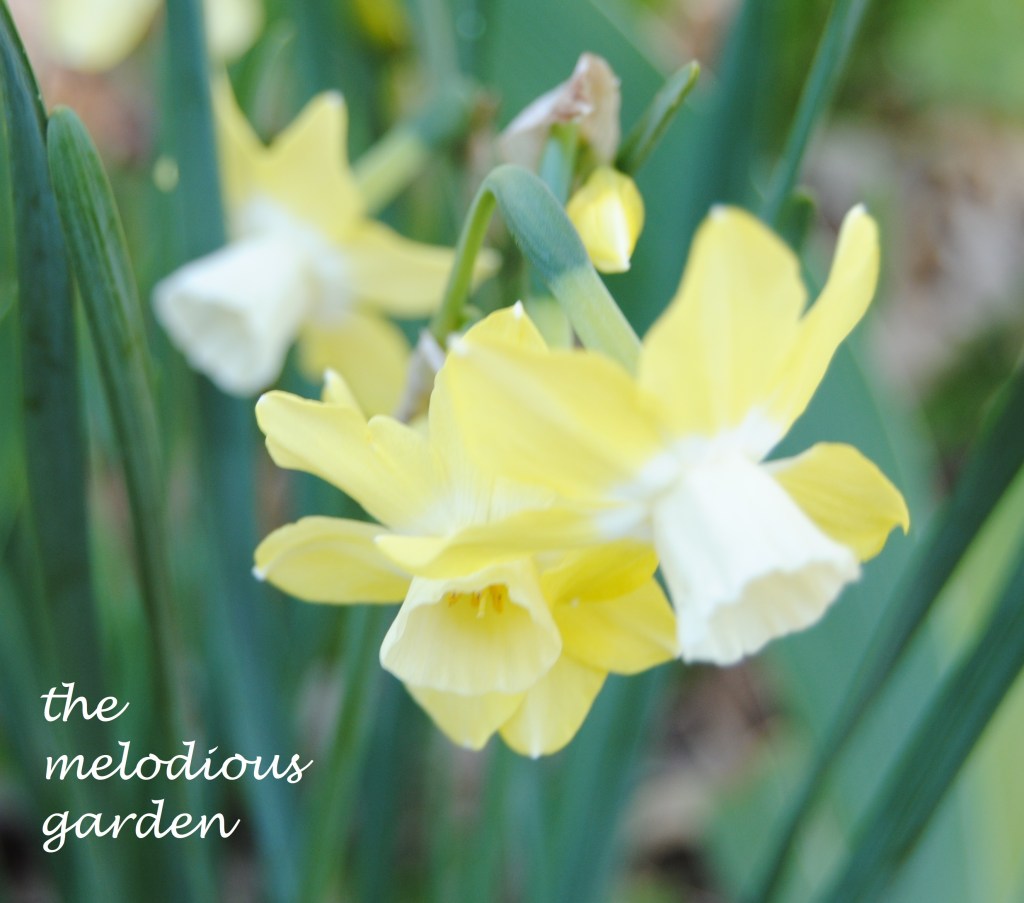
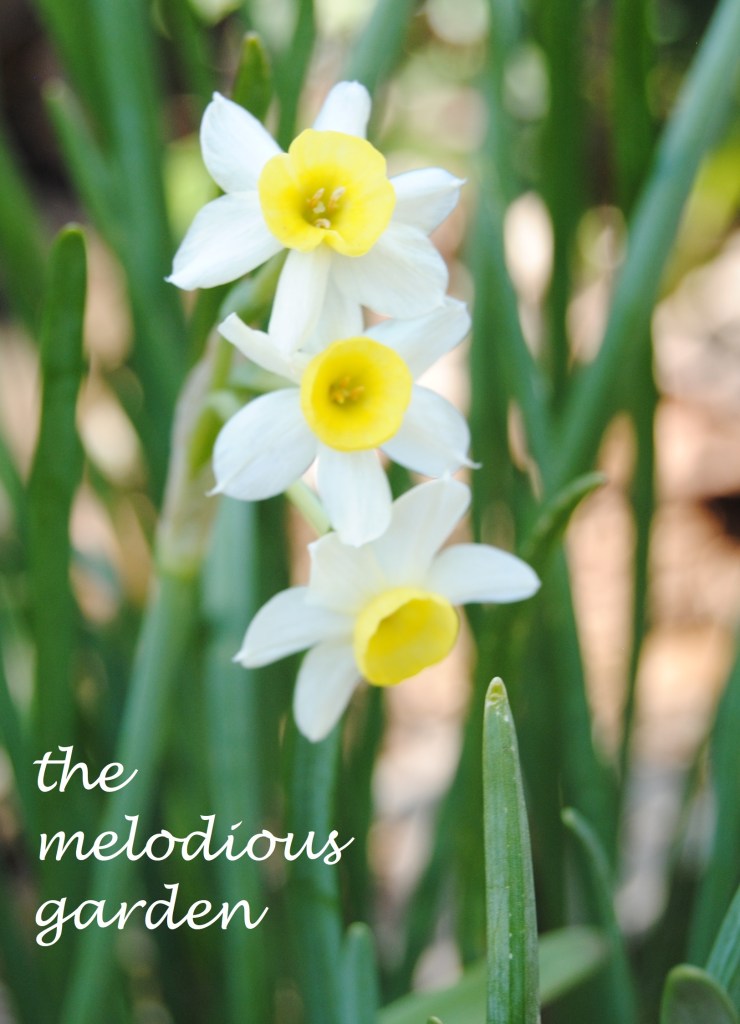
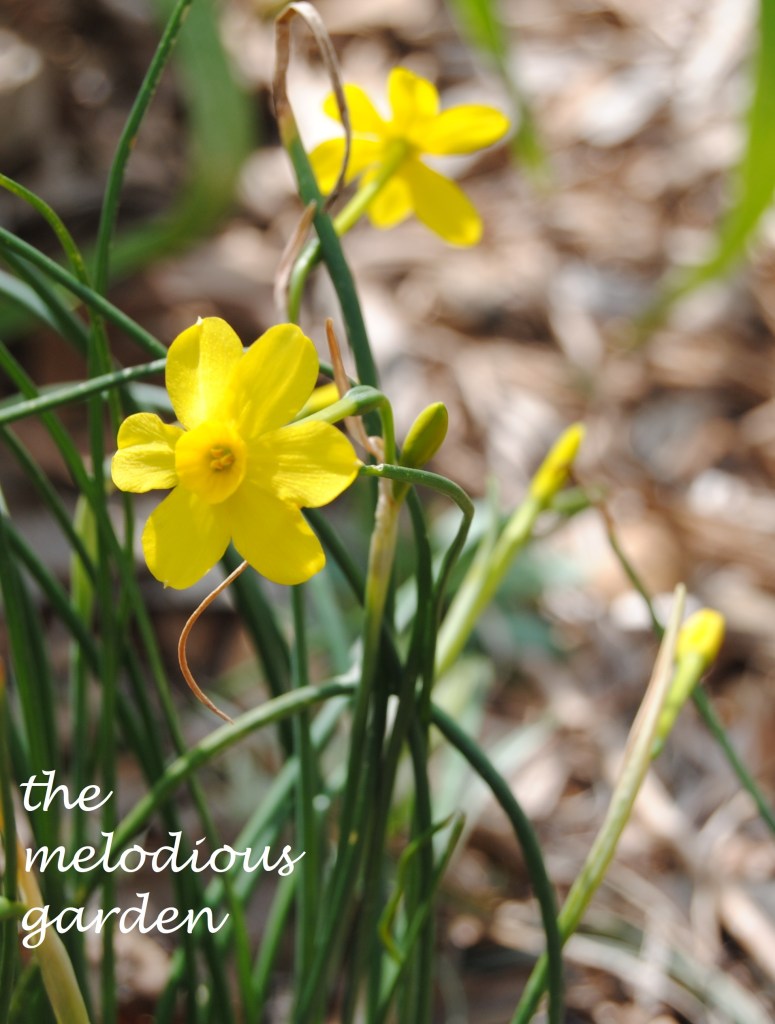
The daffodils shown above are blooming in my melodious garden today, a sunny though chilly mid-March day. We hopefully had our last freeze of the season overnight here in zone 8a, North Texas. Now is the time to take stock of our own gardens and jot down notes. If we already have daffodils, which clumps need divided? What areas of the garden would benefit from a cluster of daffodils, fluttering and dancing in the breeze? We can stroll our neighborhoods to see what other gardeners have blooming now. Or visit a botanical garden or arboretum. Always be sure to take photographs of daffodils you like and would love to have in your own garden next year.

There are several different types of daffodils, so it is best to research and see which ones you are drawn to. (This is where visiting a botanical garden pays off! You can see first hand what different varieties look like and how they perform in your area.) Daffodil colors range from white to yellow to some with peach and orange-ish accents. Colors are always a personal preference. As you can probably tell from the photographs from my own garden, I am drawn to the white and yellow varieties.

After the daffodil flowers have faded, the greens will die down, later to be trimmed off and forgotten about through summer and fall. In late summer or early fall, the gardener can pull out their notes and photographs, as that is the time to plan the spring garden and purchase daffodil bulbs for blooms the following year. In this area, spring blooming bulbs, such as daffodils, can be planted between Thanksgiving and the new year. I generally plan to do this chore on a sunny day when the leaves have fallen from the oak trees, when the heat of summer is just a memory, but the cold of winter hasn’t yet touched my soul. Just such days are perfect for digging in some new bulbs and thinking ahead to spring-time blooms.

Daffodils need to be planted in an area that has well draining soil, as the bulbs will rot if planted where water stands during prolonged wet periods. Daffodils are otherwise not fussy about growing conditions or soil pH. It is important to let the foliage die back naturally, as this stores the bulb’s energy for the following year.

Always stop and smell the flowers and enjoy today to its best! But also keep an eye ahead and plan out those gardens of tomorrow. As William Kent said, “Garden as if you will live forever.”

gardening

Plant something and watch it grow

There are so many beautiful quotes and sayings about planting and gardening… “To plant a garden is to believe in tomorrow,” said Audrey Hepburn. “Blessed are you who sow. Every seed you so plant, will grow into bountiful crops for great harvest,” wrote Lailah Gifty Akita. And – perhaps the best – “If you plant junk, don’t expect to harvest jewels,” attributed to Luke Taylor. While many sowing and harvesting references were likely never meant as a direct analogy to the act of placing a tiny seed into the soil, they still spring to mind as I wander about my melodious garden this week. (Bad pun intended.)

Plant something and watch it grow, indeed is true.

My shift from mostly ornamental gardener to grower of nutrient dense fruits and vegetables wasn’t exactly seamless, for there is a learning curve to pulling tomatoes through 108 degree temperatures and protecting the garden against an Arctic cold front that saw us dipping down to nine degrees. But we survived, the garden and the gardener. Wiser now. And as energized as ever to plant something and watch it grow.

Last year was a time of reconstruction and renewal around my garden. I started in mid winter, one small area at a time. New garden beds were marked off, using the branches and trunks of shrubs and trees that were removed to make room for Garden 2.0.

(Little did I know how much enjoyment I would get at watching the various fungi move in to the garden, photograph below.)

A dump truck load of organic compost and cedar mulch was delivered this time last year, one last workout for my 27 year old wheelbarrow, now too rusted out to haul much of anything. Fruit trees galore were purchased and planted. Seeds were sown. By bits and pieces, a new garden emerged, my suburban food forest. A garden I can wander and harvest and consume healing foods straight off the plant. “Organized chaos” might be an apt name for my garden in 2022. “A goal without a plan is just a wish,” wrote Antoine de Saint-Exupery. Yes, there were plans. Penciled out in an old notebook, drug out to the garden daily, often times soaked in mud and sweat.

Some plans worked out, some didn’t. At a certain point, everything simply came down to just getting the ground covered, as nature – and this gardener – doesn’t like bare soil. Years of organic gardening and soil regeneration were in my favor when a heatwave and extended drought baked North Texas over the summer. When we first moved to this garden, we were cursed with heavy clay dirt, typical of this region. But slowly, over the years, the dirt gave way to a loamy soil that now teems with beneficial life. Last summer I learned to appreciate that okra loves 100+ degree days, as do the bees that visit its blooms. I also realized that I love raw okra, straight off the plant. As a bonus, okra leaves are edible and make a decent salad at a time when it is too hot to grow lettuce or kale. Summer – not soon enough – gave way to fall and winter greens were planted. But now. Now! “Hope springs eternal,” wrote Alexander Pope. And so it does. Entering year two, I am filled with hope. And dreams and plans and wishes. (Too bad my bank account is not filled with money!) Hopes and dreams, after all, are what keep us gardeners perusing seed catalogs.

“Anyone who thinks gardening begins in the spring and ends in the fall is missing the best part of the whole year; for gardening begins in January with a dream,” wrote Josephine Nuese. Seeds were started indoors shortly after the Christmas tree came down and those January dreams are now outside, getting acclimated to the elements, soon to be planted out in the garden.

Biquinho chile peppers, started from seeds from Botanical Interests. (Photograph above.)

Earlier this week, I walked through the garden, camera in one hand and a notebook and pencil in the other. What to plant where? Which trellises to move to make them more efficient? What to grow more of? (Dragon Tongue beans were a favorite last summer, so double the amount will be planted this year.) What to grow less of? (I’m looking at you, turnips!) More plans were penciled out and seeds were sorted by what would be planted where.

Today was unseasonably warm, 87 degrees in mid March, just shy of a record. The day was spent in the garden, putting some of those plans in place, moving tomato cages, expanding the size of the asparagus patch. Yes, this is a time to dream!

gardening, nature

Plant profile: Ornamental quince

Ornamental quince was one of the first shrubs I planted 28 years ago as a new gardener. Later, I would read in a Texas gardening book that it is best planted to the back of the border, where you notice it when in bloom but can ignore it the rest of the year. I am so glad I didn’t read that until long after I had planted mine front and center, as I might have been tempted to believe them. Or I might have taken that as a challenge and still planted it front and center. Most likely, the latter because I have always been a rebel gardener.

Last year was devoted to garden reconstruction and renewal. Each and every plant was given the critical eye. Does it still deserve space in my new garden vision? Gone are my roses, lost several years ago to rose rosette virus. Gone now are the variegated privet that I planted as a cheap and easy hedge, long before I knew or understood how invasive they can be. Gone is the vitex, also now recognized as an invasive weed. Gone are the two redbuds that framed my back gardens. Oh, how I do miss thee, dear redbuds. Alas. “Short lived” lived up to that description when they both died right at their 25 year mark. But that original quince? It is still lovely. It is still going strong. And, most importantly, it survived my garden reconstruction assessment, as did the four ornamental quince I planted after losing my beloved antique roses. Yes, quince does indeed still warrant space in my garden. In fact, I will soon plant another two quince, even though I am shifting from ornamental gardener to primarily fruit, vegetable and herb gardener.

Some may question why I would grow seven non-fruit bearing shrubs at a time when I am attempting to grow as much of my food as possible on a standard suburban lot. (Read: Space is at a premium.) First, though, a bit of horticulture dissection. There are multiple plants referred to as quince – ornamental quince (Chaenomeles) and Cydonia oblonga, which produces an edible fruit commonly known as quince. For this discussion, I am referring to the first, Chaenomeles. (These may or may not produce bitter, largely inedible, fruit, depending on variety.)

Ornamental quince is a deciduous shrub without any remarkable fall foliage. One day it is your basic green shrub, a few days later its branches are bare. In my zone 8a garden, it will start to set flower buds shortly after losing its leaves. Mine have been blooming now since shortly after Christmas, even through our February ice storm. Yes, the flowers were beat down for a few days, but they quickly perked back up and resumed glowing in the winter sun. If you look closely and critically, there is notable browning from the ice, though it is easily overlooked.

We are now one week in to March, which means that this shrub has been blooming for a full two months. If it were blooming in the middle of summer, one might scoff at the idea of a shrub blooming for only two months. But that is where quince really shines. It blooms in mid to late winter in North Texas, at a time when very little else is blooming. It has virtually no competition for our attention, aside from our winter pansies.

Ornamental quince is Mother Nature’s way of saying, “You got this. If I can shine through some storms, so can you.” It is for this reason that 1.) I am glad I didn’t know I should have relegated quince to the back of the border and 2.) I will soon have seven ornamental quince in my melodious garden.

Quince is as carefree as shrubs come. I have never pruned mine, nor deadheaded them or shaped them up in any way. The branches are rather gangly and arching while bare, though this gives them a soft rounded appearance when fully leafed out. I may or may not hit them with some organic fertilizer as I am applying fertilizer to the lawn or flower beds.

In full disclosure, I planted my original quince so long ago that I have long since lost any record of which quince variety it is. I have not been able to find any reference to one that exactly matches it. This one sports a single row of petals in a deep coral color, does not have thorns and has never set fruit. It has also stayed at at tidy three feet tall and three to four feet wide. (If you happen to know, please drop a comment.)

Double Take Scarlet quince is a newer cultivar and one I planted in my early post-rose days. This is the first year that it has put on a real show in my garden. I have found that if one purchases a smaller, one gallon size shrub, they will take a few years to get settled before blooming well, though that may also be due to my laissez faire approach to fertilizing.

Once spring is in full swing, the quince is finished blooming and fully leafed out. It could easily fade off now, overshadowed by nearby spring and summer blooms. However, that is when quince goes to work, in my opinion. You see, once its branches are fully covered with greenery, it makes a fabulous shelter for insects, lizards and small birds, all an essential part of a vibrant ecosystem. Too many times, we overlook the importance of natural shelter, protection from both the elements and from species further up the food chain. To smaller species, the quince’s tangle of arching branches offers just the perfect habitat for them to weather out a storm or seek protection from a hawk flying overhead.

Wildlife need shelter, food and water to survive, and gardeners need wildlife. Wildlife brings life and vibrancy in to the garden. And wildlife helps with pest management and control, for the ladybettles come in to feed on the aphids, which draws in the lizards and, suddenly, before your eyes, you have an entire ecosystem seeking to balance itself out.

In a forest, there are multiple layers, from the canopy far overhead, to the vines that climb up those trees to the life below ground. The understory or shrub layer of a forest or backyard garden is an important layer for wildlife, as this is their shelter. The lizards or small birds that come in seeking shelter may stay and eat some insects, therefore the shrub layer may also provide a natural food source. Water collecting on the leaves or petals of a bloom may also provide essential water. Quince provides all this – and it blooms in the dead of winter, too!

So Keep Calm and Garden On and Plant Some Shrubs. You won’t regret it. Trust me.

gardening

Dear March, Come in!

Dear March, come in!
How glad I am!
I looked for you before.
Put down your hat —
You must have walked —
How out of breath you are!
Dear March, how are you?
And the rest?
Did you leave Nature well?
Oh, March, come right upstairs with me,
I have so much to tell! Poem by Emily Dickinson

March! The start of metrological spring, the point at which we gardeners breath a sigh of relief for having made it through the worse of winter. In North Texas, we are nearing our average last freeze date, though we are always eyeing the ten day forecast for those late last blasts of winter. We know we aren’t really out of winter until Easter, give or take a week or so. Isn’t that the way it is with gardening? Always looking ahead… Goodbye deep freezes and snow and sleet; Hello hail and tornadoes. As William Cullen Bryant wrote, “The stormy March is come at last, With wind, and cloud, and changing skies.”

While our skies are dark and dreary today, the daffodils are sunny and warming to the soul.

Ah, March! I have so much to tell!

2022 was a year of undoing and redoing around my melodious garden, a near total garden transformation. Rising from the ashes of my previous rose garden, a food forest came together. I spent the late winter and early spring tearing out, weeding, moving pathways, moving compost and mulch and planting, planting, planting! We traveled down to Austin in mid-March and came back with a truck filled with plants and hopes and dreams, to supplement the plants (and hopes and dreams) I had already purchased from local nurseries. Plants were ordered from near and far, as I discovered anew the joys of mail-order plant nurseries. And then. Summer hit. One of the hottest and driest on record. We made it through, though, the garden and the gardener. Fall saw another wave of planning and planting, though much less intense than in spring. Then came winter. And nine degrees. Another one for the record books. This morning’s garden stroll was one of reflection and assessment. When was this planted and how is it doing? What was planted here that didn’t make it? Replant or find something else? Thankfully, it appears 98%, give or take a bit, of the plants that joined my wellness garden last year have made it through summer and winter.

The blackberries came first to my melodious garden, planted early last spring. The Ark Traveler blackberry, shown below, is doing quite well. The Ouachita blackberry planted nearby did not make it through summer, despite being given a special shade covering when he was first suffering in the sun. Too little or too late? I don’t know. As the Ark Traveler is doing so well, I will likely buy another one to fill the spot of the dearly departed.

Initially, I was not going to plant raspberries or blueberries, as I had tried both 25 years ago and decided they were way too fussy for our soils. Alas. I am a sucker and fell (hard!) for an on-line sale in late summer and, in a moment of weakness, I ordered… Oh, we probably don’t need details, but let’s just say the order came in three large boxes. On a Saturday. When the husband was home. (In my defense: They were my reward purchase for surviving The Summer of 2022 and 108 Degrees.) Raspberries and blueberries were added to the garden in the fall and all appear to be greening up nicely, though they are still quite small.

Crimson Giant raspberry, shown above, and Sunshine Blues blueberry, shown below. The blueberries got the royal treatment! Their own raised bed, in the semi-shade of a large crepe myrtle, and a truckful of their own acidic soil mix. To ensure good pollination, I planted several different varieties of blueberries and all appear to be doing well.

If you can’t beat them, join them, seems to hold true for gardeners… I decided as long as I was trying again to grow blueberries, I should also try a native viburnum. Last year, I discovered two incredible mail-order nurseries, the first being Almost Eden, located in neighboring Louisiana. They carry a great selection of edible and native plants and the plant quality and shipping are top-notch. I ordered two Viburnum nudum, aka wild raisin. Now I am not a fan of raisins so the common name scared me a bit, but I am wanting to grow a variety of nutrient-dense, edible plants and to extend my growing and harvesting time as much as possible. Both plants are greening up nicely, shown below.

Last spring, I also planted a half dozen different fig trees, several pomegranates, two pear trees and a persimmon. All have made it so far, but be sure to check back in three to five years for reports on harvests!

The second mail-order nursery I discovered last year was One Green World, out of Portland, Oregon. All orders have been outstanding and their selection of edible plants is mind-boggling. I was worried that the sea kale I ordered in the fall wasn’t established enough to make it through our Christmas Deep Freeze, but I spy with my little eye New Green Growth, shown below. Sea kale is a perennial green with edible roots, stems and leaves.

Fava bean seeds were sown in containers in the fall and the plants suffered a severe setback in our December freeze, even though they were covered with two layers of frost cloth. They are, thankfully, now recovered and blooming, shown below. Fava beans contain levodopa and have been studied as a treatment for Parkinson’s Disease. Alas. The amount of levodopa is not stable enough from plant to plant to ensure adequate dosing. Still, I am growing them as fava beans are a good source of vegan protein. I enjoy eating them raw or lightly steamed. The flowers to be quite fascinating, aren’t they?

Switching gears from edibles to flowers, as you can’t enjoy one without the other.

The quince is looking especially lovely this year. This is the first year the double scarlet quince, shown below, has put on quite a show.

I find quince take several years to reach their prime, but then they are just one of those old reliable shrubs that never let you down. Quince was one of the first shrubs I planted 28 years ago. I still have that one and it has been stunning since early January. I have, over the years, planted four more quince and have two more currently in my driveway nursery awaiting planting.

Hyacinth (above) and Muscari (below) are both spring blooming bulbs. It is best to shop for the bulbs in late summer or early fall, then plant in mid-winter. Both are perennial in North Texas, as are the daffodils first mentioned. They do need to be planted in an area that will stay dry throughout the year, as the bulbs will rot if planted in an area that holds water.

This particular muscari popped up next to a winecap. Or perhaps it was vice versa. Either way, they make a lovely combination. Winecap, the green scalloped plant shown above, is one of my favorite native wildflowers and I love seeing their rosettes spring up here and there around the garden. It looks to be an outstanding year for them, as I have several dozen that have sprouted up over the past month. Oh, how I love to watch green things growing!

O the green things growing, the green things growing,
The faint sweet smell of the green things growing!
I should like to live, whether I smile or grieve,
Just to watch the happy life of my green things growing. Poem by Dinah Maria Mulock Craik

gardening, nature

What good are bugs? And what good is henbit anyway?!

It’s henbit season here in North Texas. When lines are drawn. Either you are for henbit or you are against henbit. A middle ground is sometimes found. Against henbit in the front yard. For henbit in the back. Where the neighbors can’t see it. We have probably all had that one neighbor at one time or another that would saunter over and give some unsolicited advice on lawncare. Thankfully mine moved away several years ago. I am thinking the couple that bought that house must be for henbit. Or their lawn crew just hasn’t been called out yet. Right now, their front lawn is a blaze of lavender flowers, bees buzzing about. I walked past it earlier today and couldn’t help but smiling, for I know somewhere in the universe, the previous homeowner is cringing and just knows that his once tightly manicured and chemically induced lawn has gone to the bees.

As I was mulling over today’s blog topic, I glanced over at the bookcase that holds many of my gardening books and one book’s title – out of the hundred or so books – jumped out at me. What good are bugs?

My past few posts have focused on the quote “If something is not eating your plants, your garden isn’t part of the ecosystem.” I have highlighted two beautiful butterflies, along with their caterpillar stage and their specific host plants. I think supporting the life cycles of butterflies is something we can all agree on, right? But what about other bugs? Do we have to love them all? And for that matter. What good is henbit anyway?!

What Good Are Bugs? Insects In The Web Of Life, written by Gilbert Waldbauer, may be a heavier read than most people are interested in, but it does a great job explaining exactly why humans need bugs in our lives. (And, thankfully, it can be read in bits and pieces, as that is how I tend to read non-fiction.)

We know – and appreciate – that our food supply is dependent on insects for pollination. But do we stop and appreciate the bugs that are on the clean up crew? The ones that eat and break down dead animals and plants, not to mention animal dung? Without them, the planet would look vastly different than it does. Insects are also important food sources for wildlife further up the food chain. If we eat eggs and/or chicken, than we also need to appreciate that free range chickens are an insect eating machine.

Where does henbit fit in this picture? Henbit starts blooming in mid- to late-winter, a time when very few plants are blooming, yet this is also a time when many insects are venturing out on warm, sunny days, in search of nectar.

Do you remember the old advertisements for lawn chemicals? Chances are the man in the ad is smoking a cigarette or a pipe while applying whatever chemical is being touted. The children and family dog are probably nearby, playing on the lawn, still wet from the chemicals. The wife is likely standing on the patio, wearing high heels and a dress, smiling. Some ideals are hard to break from. Others are easy to kick to the curb. We can look at the old advertisements today and see them as quaint. A different era. Smoking hasn’t been allowed in advertisements since the Nixon administration. But what about the ideal that our lawns must be sprayed with chemicals and devoid of all life except for the desired green grass? When are we going to kick that to the curb?

Thankfully, society is starting to wake up. More and more, we see and hear about people that are planting for pollinators, allowing areas of weeds to bloom, eliminating chemicals, installing native wildlife habitats, the list goes on and on. Imagine if even a quarter of the world did just one or two small things to help wildlife, the changes would ripple out, for we really are intertwined in one giant web of life.

Not convinced on the benefits of henbit? What if I told you it is also edible? And who doesn’t love some free food?! The top growth of henbit (stems, leaves and flowers) can all be eaten and is quite delicious in salads. Wild greens, such as henbit and dandelion, are also high in nutrients.

I have allowed a few of my winter greens to flower, as an added nectar source for the insects. The photograph below shows the lavender blooms of henbit, along with the bright yellow bloom of a winter green. Several types of kale are also shown.

Photograph below, taken today, shows a bee on another winter green I have let go to flower.

The sketches in the book What Good Are Bugs? are quite adorable…

Keep Calm and Appreciate The Insect World.

Even Parasites.

gardening, nature

A Butterfly Talks: Swallowtails in the garden

A butterfly talks to each flower
And stops to eat and drink,
And I have seen one lighting
In a quiet spot to think;
For there are many things he sees that puzzle him, indeed,
And I believe he thinks as well as some who write and read.

Poem by Annette Wynne

In Robert Heinlein’s book The Cat Who Walks Through Walls, Captain John Sterling says, “Butterflies are not insects. They are self-propelled flowers.”

To watch a butterfly dance about a patch of flowers, one must surely think the butterfly a self-propelled flower. But – to appreciate the butterfly – one must also appreciate its caterpillar.

In my previous post, I shared photographs of the gulf fritillary caterpillar feasting on its host plant, the passionvine, in my melodious garden. Today I would like to share photographs of the swallowtail, both as butterfly and as caterpillar.

Each species of butterfly has its own requirements for a host plant. The swallowtail butterfly lays its eggs on fennel, dill, parsley and a few more botanically related plants. In the above photograph, the swallowtail is flitting over a patch of fennel in my garden, depositing its eggs.

When planting these herbs, especially if one is wanting to welcome in swallowtail butterflies, it is best to plant more than you think you ever might need. Trust me. If the butterflies find it, you will be grateful for having enough to go around. If you have ever heard the old saying, “Four seeds in a row. One for the crow. One for the mouse. One to rot. And one to grow,” this holds especially true when planting host plants for butterflies. Plant two herbs for the butterflies and two for you. Or, better yet, ten for the butterflies and two for you.

Butterflies, like all insects, lay dozens of eggs at one time as few ever make it through to the adult stage. The caterpillar hatches from the egg, eats its shell, then begins feasting on its host plant. The photographs above and below show the swallowtail butterfly as a young caterpillar.

The caterpillars continue to eat and grow and eat some more. Their appearance changes quite a bit from young caterpillar to mature caterpillar.

I am always drawn out to the garden to count the caterpillars and to watch them grow, as it seems they grow from morning to evening.

And this – this is the reward!

One can see why a poet would write that the butterfly talks to each flower.

To watch butterflies come full circle in the garden is such a rewarding experience. In my nearly three decades of gardening this plot of land, I have never tired of watching caterpillars feast and grow in my garden.

Starting a butterfly garden is relatively simple. First, choose the right location within your garden, as butterflies prefer sunny locations. Research which butterflies inhabit your region and which host plants they need to lay their eggs on. Be sure to plant a mix of host plants and flowers. The flowers will attract the butterflies and they will feed on the nectar those flowers provide. The host plants will provide a place for the butterflies to lay their eggs. Eliminate pesticides in your garden, as those are dangerous to butterflies and caterpillars. Expect your plants to be eaten! Remember: If something isn’t eating your plants, your garden isn’t part of the ecosystem! Finally, sit back and watch these self-propelled flowers flutter about your garden.

Keep Calm and Plant A Butterfly Garden.