gardening, nature

If something isn’t eating your plants…

If something isn’t eating your plants, your garden isn’t part of the ecosystem.

I don’t know who to credit for the quote, nor the origins of the photograph bearing that quote. Both make their rounds on social media every so often. But I am fairly certain the source knew that a healthy, vibrant garden resembles something of a scaled down Jurassic Park.

Something…is always eating something.

And…something…is always hunting something.

I am also certain the source of the quote and photo knew that we are made better by bearing witness to the miracles of nature that play out in the ecosystems many of us call a garden.

Gardeners wishing to put in a wildlife habitat know that they need to offer food, water and shelter. Now what exactly that involves will vary by what wildlife the gardener wishes to encourage, as the needs are different from butterflies to birds to amphibians. But gardeners that wish to just grow a few vegetables in the backyard or maybe put in a few rose bushes around the patio may not fully realize that they, too, are indirectly creating a habitat, a source of food, water and shelter. Now what wildlife may find their gardens could vary widely depending on where the gardener lives, what plants one grows and what wildlife populates their area. Perhaps it is a hawk moth that finds their tomato plant. Or a snake that discovers the eggs in the nest a cardinal has built in their rose bush.

Alas. As our world gets more and more developed, wildlife is getting pushed further in to populated areas and becomes more dependent on humans for their survival and – equally – they are more threatened and harmed by humans and their actions.

The plight of the monarch butterfly and the decline of their food source – milkweed – is just one very specific example that has been in the news the past few years. The environmental impact humans have had on wildlife has been an ongoing issue most likely since man first realized they could plant a seed and tend a cultivated garden and the first hawk moth came along to feast. But the introduction of pesticides and the unrealistic image that gardeners can have a picture perfect, pest-free garden has accelerated the damage humans have inflicted on wildlife, especially those on the low end of the food chain.

A garden has many layers, from the soil underground to the plants above ground, from the tiniest of insects to the gardener to the birds that fly overhead. If you have ever watched a praying mantis stalk their prey, you will see just how Jurassic Park-like nature can be.

(Photo below: Watching newly hatched praying mantis in a terrarium is a great activity for children.)

We humans are just one layer of the larger scale. We can tend our garden, searching out what we deem as “needs to be eliminated,” or we can sit back and watch as nature unfolds before our eyes.

I remember participating in garden forums back when online discussion groups were just popping up on that new invention, The Internet. The questions that would be asked over and over again, from one discussion group to the next, was “What is eating my (insert plant name)? And how do I kill it?” Today, those are still the same questions asked repeatedly. I know I sound like a broken record when I say that one of the best things a gardener can buy is a reference book and learn how to identify at least some of the more common forms of insects in their region. Yes, things will be eating your garden. IF it is part of a healthy and vibrant ecosystem. But if we continue to garden from a perspective of “This is eating my garden and this needs to be eliminated,” then we will continue to see declining populations of wildlife, such as monarch butterflies.

I do use monarch butterflies as an example because 1.) everyone loves them 2.) and rightly so, because they have a remarkable journey each year from Mexico to Canada 3.) but that means they depend on a lot of people – gardeners, non-gardeners, farmers and non-farmers – for their very survival. But I am going to shift now to another butterfly. One that is equally beautiful. The gulf fritillary. Why this shift? Because I happen to have photographs from my own garden to use as examples.

But first: A little science lesson.

Butterflies and moths lay their eggs on very specific plants, which are called “host plants.” Now the host plant (or plants) will vary depending on the species.

Monarch butterflies lay their eggs on milkweed.

Hawk moths lay their eggs on tomato plants.

Swallowtail butterflies lay their eggs on parsley, dill and fennel, all of which are botanically related.

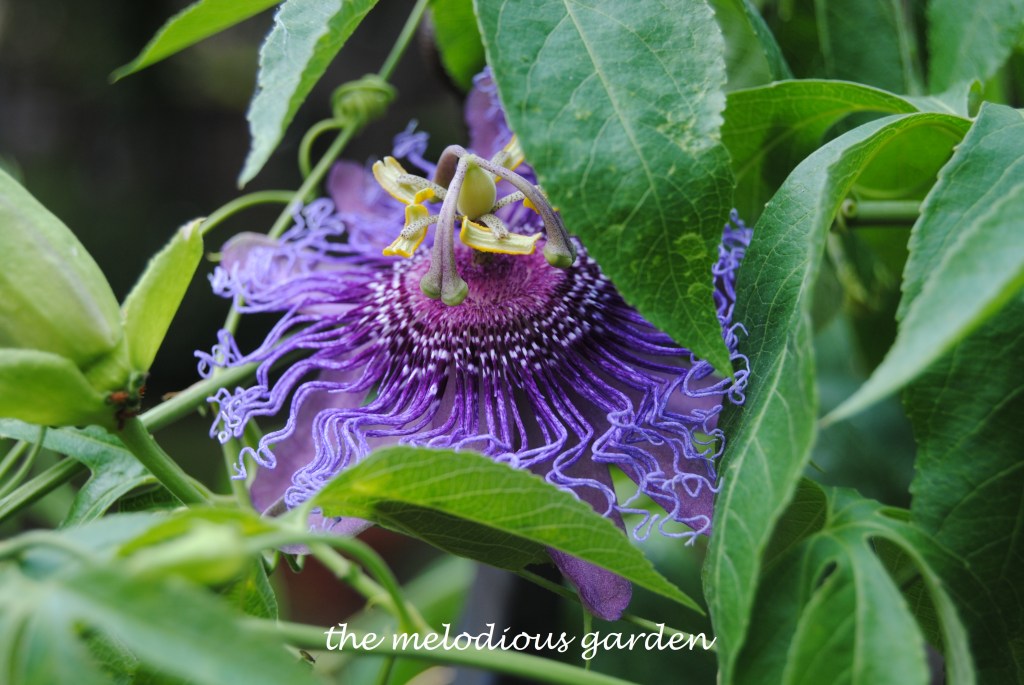
The gulf fritillary butterfly happens to lay their eggs on passionvine (passiflora), a rambling, somewhat aggressive, vine that has amazingly beautiful and extremely tropical looking purple blooms. Gardeners often buy this because of the blooms, not knowing that it also happens to be the host plant for the gulf fritillary butterflies.
Until… The butterfly eggs hatch and – well, if you have ever read The Very Hungry Caterpillar – that is very much what happens.
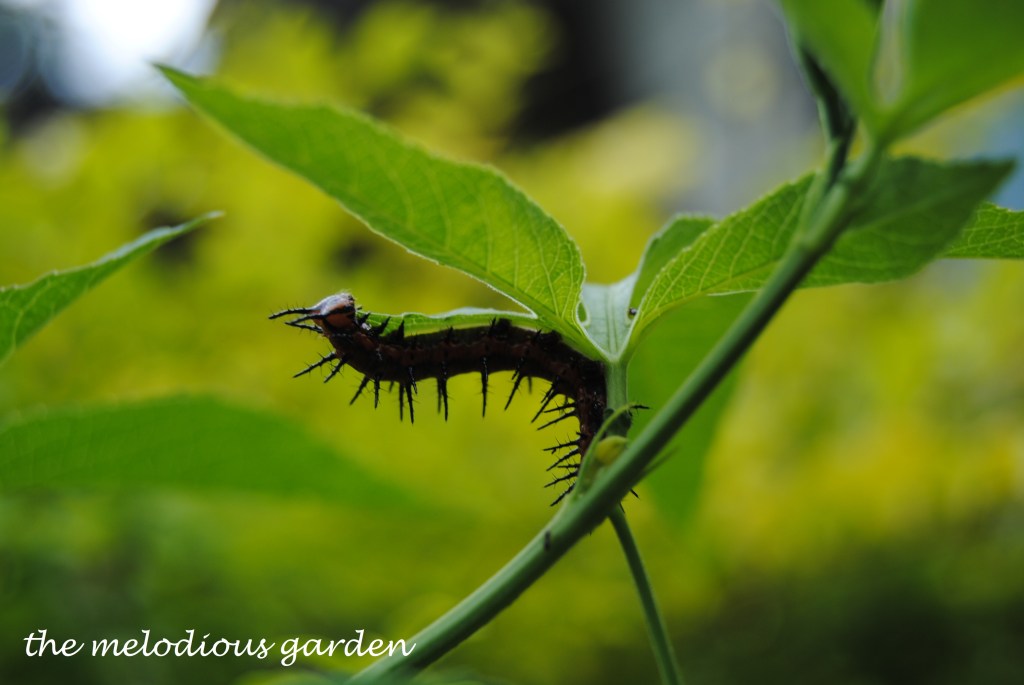
The caterpillar eats and eats and eats.

Now this aspect of nature would largely go unnoticed in the wild. But – when it happens to be a gulf fritillary caterpillar eating your beloved passionvine or the hawk moth – aka tomato hornworm – eating your prized tomato plants – it gets noticed.

This is a dangerous stage for insects. Caterpillars have only a handful of ways to defend themselves, none of which are any match against a human.

A gardener may go out one morning and see…
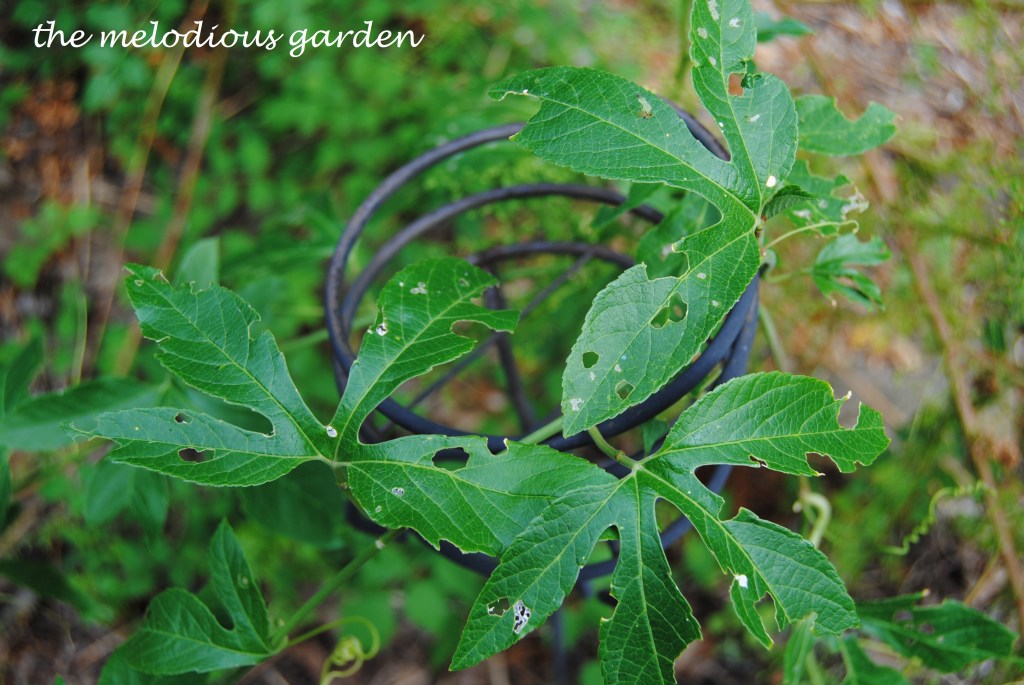
Something has been eating their garden.

Something must be done.

“What is eating my plant? And how do I kill it?”

The fact that “if something isn’t eating your plants, your garden isn’t part of the ecosystem” is lost in the throes of Botanical Whodunit.

After the caterpillar has eaten and grown – and devoured some of your passionvine, if allowed – it will find a nice place to hang out for a while. It will now form a chrysalis, if a butterfly, or a pupa, if a moth. Inside, all sorts of amazing things are now happening and about to happen… Aren’t we all also drawn to butterflies because of this transformation? Because…

Out emerges… cue chorus of angels singing… The.Butterfly.

The insect version of The Ugly Duckling.

“From lowly caterpillar to beautiful. soaring butterfly!”

Or in the case of a moth, a nuisance that we swat away when we walk under a street light at night.

On some level, they are all the same. It’s a dog eat dog world out there. Or a bird eat flying insect world out there. A scissor-tailed flycatcher hardly cares if he is eating a butterfly or a moth. It’s a real life Jurassic Park world for insects and they are on the low end of the feeding chain.
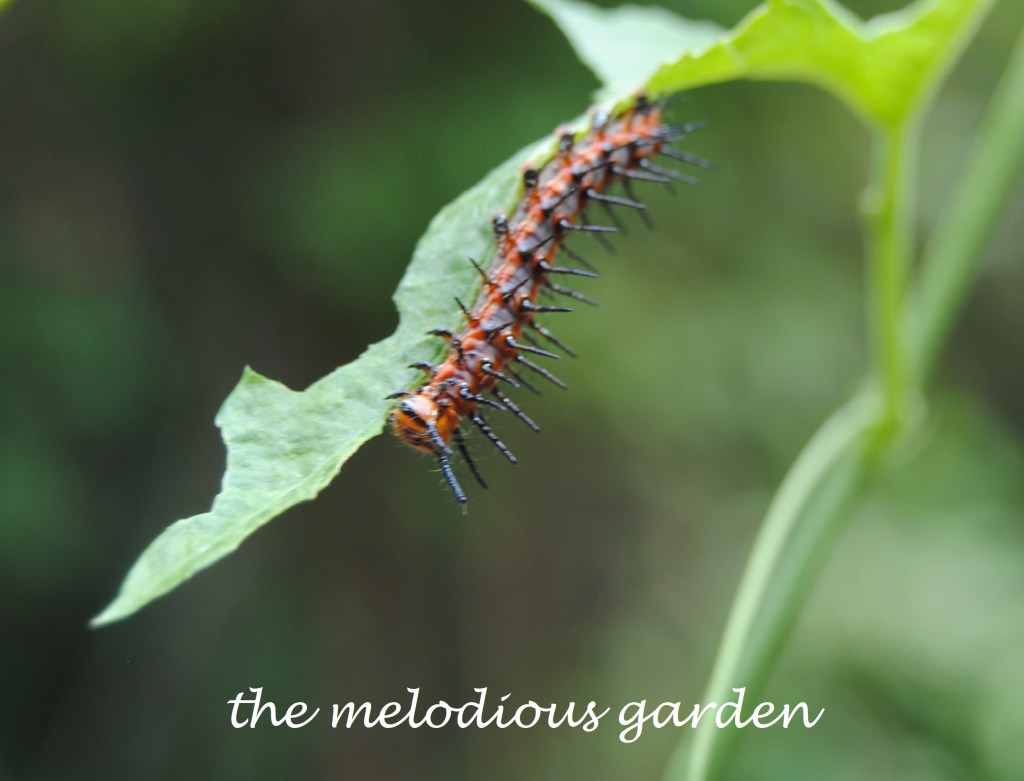
For the millions of insect eggs laid, only a fraction of them ever make it the full cycle to adult. Nature is rough. And gardeners can either make it rougher on them or we can give them a helping hand. Sure, we can try to be selective. Butterflies good, moths bad. Birds good, squirrels bad. But when we build it, they will come. And we don’t always have a lot of input on what we want and what we don’t want. Sure, we can do things to eliminate elements we don’t want, like putting squirrel baffles on bird feeders and taking bird feeders down at night so night rodents (aka: rats) don’t visit them. But we also need to know and appreciate that nature is amazing and we can have a front row seat to witness just a tiny bit of the natural world, all without ever needing to visit Jurassic Park.
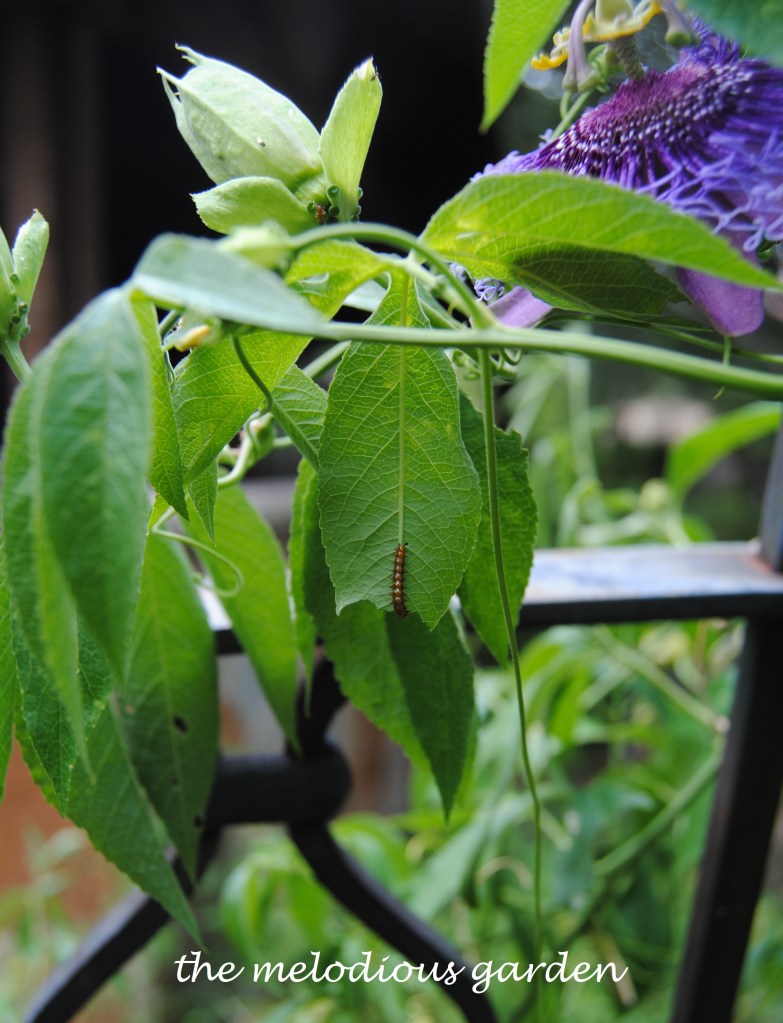
And your passionvine? It will bounce back. Trust me. It doesn’t care that a very hungry caterpillar is eating away at its leaves. It will still bloom. It will still grow. It will still pop up in unexpected places the following season. It is doing what nature intended passionvine to do. Just as the gulf fritillary butterfly is doing what nature intended for it to do.

Perhaps what we need to do is re-frame the question. Flip it on its head.

What is eating my passionvine?

I am so honored that a gulf fritillary chose my garden – My Garden! – to lay her eggs! She could have laid them elsewhere but she chose my ecosystem!

gardening, nature

Does your garden bug you?

Does your garden bug you? It should.

Indulge me a moment on why bugs are good for your garden and, by extension, good for you.

Last summer, our doorbell rang, which set off my rescued mutt Princess Leia. Don’t let her name fool you. She is no princess. Ferocious guard dog, yes. Princess, no. Normally I would ignore the door except my dog smelled a killer on the other side of the door and wasn’t about to back down. Nor was the person on the other side of the door, as knocking soon followed the doorbell. Wrestling Princess Leia into my arms, I opened the door without looking through the peephole to see who might be on the other side. And. Wouldn’t you know it. There was a killer on the other side of the door.

A bug killer.

Nice young man. But a bug killer.

He flashed the identification badge the city requires door to door salespeople to wear, announced what company he was representing, then proceed to tell me I had an incredibly beautiful garden. Now this was after I had renovated the front garden, topped it off with fresh compost and cedar mulch, but before the real heat and drought of summer had set in. It was actually looking quite incredible, if I say so myself. We chatted about the garden for five or ten minutes, while Princess Leia was debating whether she could let her guard down. I mean, Momma is talking gardening with this bug killer, so he must not be too bad, right?

Then the guy drops the conversation down to why he was actually at my door in the first place.

“With a garden like this, you must have a lot of bugs! For only x-amount a month, we can come out and spray your entire foundation, interior and exterior, and you won’t see a single bug!”

I said that I actually wanted to see bugs.

Come again, he asked.

Yes. I want to see bugs.

But bugs are bad! You don’t want bugs!

Oh, but I do want to see bugs. You see, bugs are what pollinate my vegetable garden, bugs are what feed my soul when I see them fluttering from leaf to leaf in search of nectar, bugs are what feed the geckos and lizards and birds that call my garden home. Why would I want to kill them?

His reply? “OMG! You have an entire ecosystem here! That is so amazing!”

Why, yes, that is correct. It is an entire well balanced ecosystem. When you let nature take the reigns, it finds a way to balance things out. You build it and let it be and they will come.

Yes, I do get some bad bugs from time to time. But while I sit back, research options and decide how I want to handle the situation at hand, more times than not something has already moved in and taken care of it. From time to time, we do decide to intervene, though always taking the least harmful options first. Every few years, for example, I apply beneficial nematodes to the gardens, which are fantastic at keeping the dreaded fire ants at bay.

The young man and I ended up chatting about nature and the cycle of life for another ten minutes. I thanked him for his time and he walked off. To the neighbor’s house. To try and sell them on killing all the bugs that were, well, bugging them.

Sometimes it feels like an uphill battle, educating and encouraging others in living a non-pesticide lifestyle.

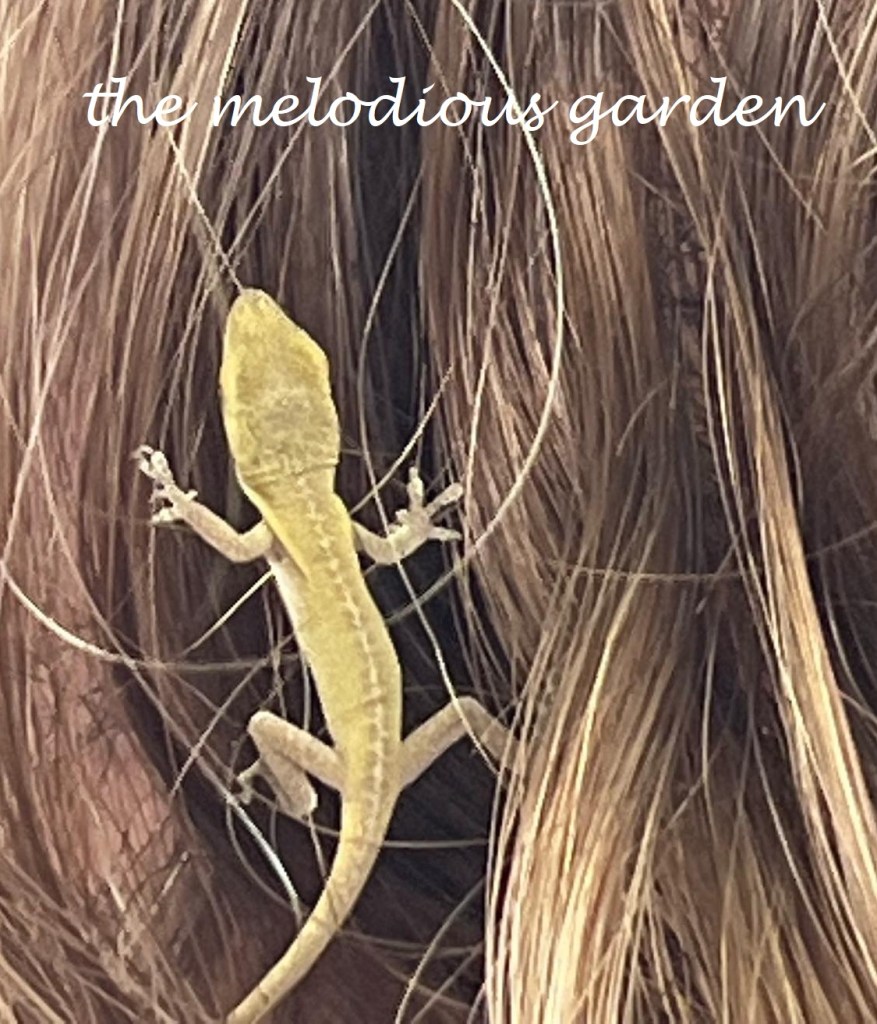
Not thirty minutes later, my husband, son and I were leaving the house for the afternoon. I kid you not, an anole was our vehicle’s windshield, stalking a bug. As we were laughing about Mother Nature’s wicked sense of humor and impeccable timing, and asking “Now where is that bug killer when we need him?” the anole jumped on to our son’s shoulder!

(And. No. I didn’t ask the anole to pose nicely. Happy chance photograph.)

Now my son hasn’t cut his hair since Covid lockdown, which coincided with his first year away at college. He looks a bit like a mashup of John Lennon and Jesus. Seriously. Even people that don’t know him say that when I proudly show off recent photographs of him. So the anole decides he needs to take shelter because six human hands are trying to catch him, which resulted in lots of twisting and turning (us humans) and flipping (the anole) and hiding (still, the anole).

I am pretty sure the bug salesman was across the street this whole time, thinking, Yeah, they do, too, have some bug problems.

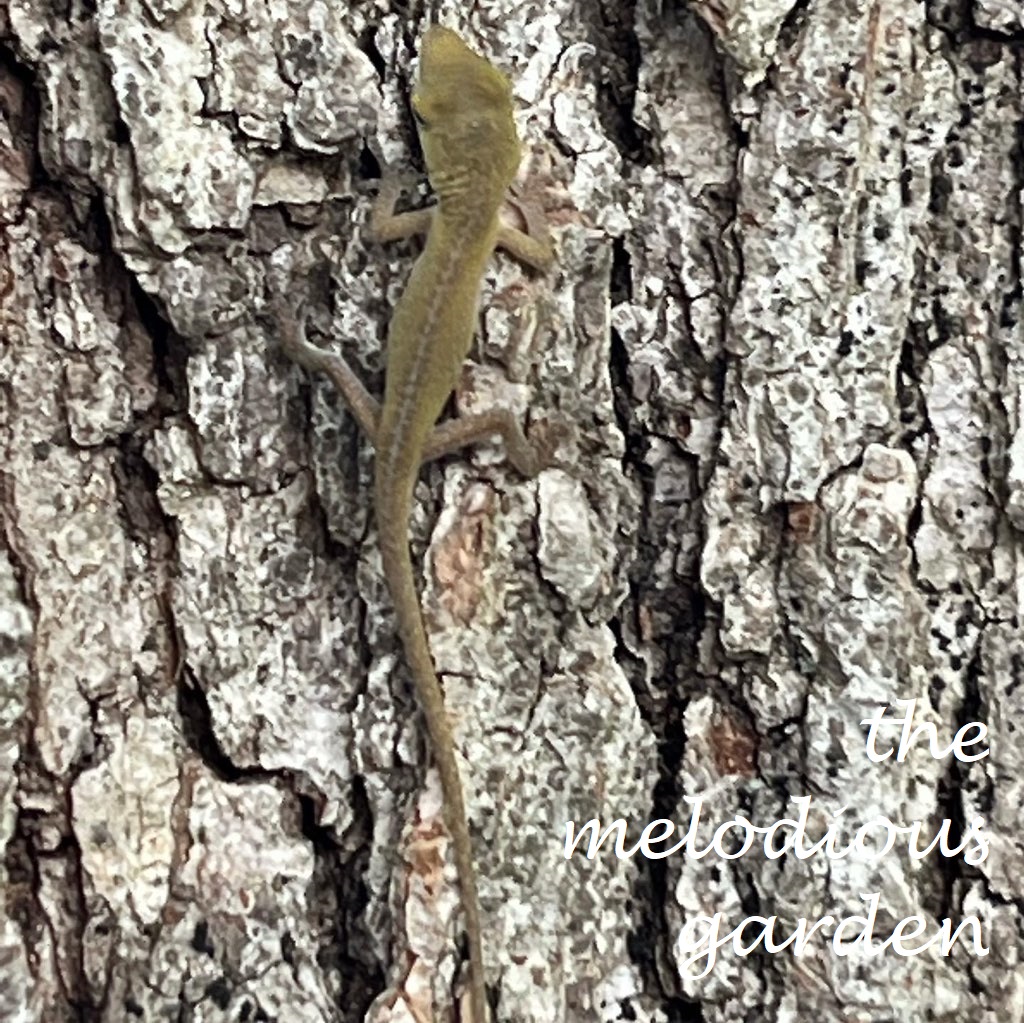
We were finally able to coax the anole to a nearby tree, shown above.

We bought our home 28 years ago, knowing at the time of purchase that I wanted to have an extensive organic garden that welcomed wildlife. We have never used pesticides, nor have we ever been tempted to. As in the movie Field of Dreams, “Build it and they will come.” The good, the bad, the ugly. But they all have a way of balancing off.

There are tons of insects in the world. (More like ten quintillion bugs, if you want to know.) Less than a million of the different species of insects in the world have actually been identified by scientists.

Insects are often classified by gardeners as beneficial (bees), bad (tomato hornworms) or somewhere in between. The majority of insects fall in that middle range. They are neither bad nor beneficial – or they are equally bad and beneficial. The praying mantis is a great example of an insect that falls in that middle area. They are fabulous hunters, taking down both dragonflies (bad!) and grasshoppers (good!) Selective control of bad insects is warranted in some cases and, thankfully, natural options are available. Aphids, for example, can be hosed off a plant with a strong burst of water. Or the gardener can create a habitat that welcomes in natural controls for aphids, such as small hiding places for amphibians and reptiles around the garden. It is also important to be able to recognize insects in their various stages, as the larva stages look nothing like the adult forms more widely recognized. The larva stage of the ladybug is just one example of an insect that is often mistakenly identified as a bad bug. Field guides – either an old school printed book or an online version – are an important resource for creating a pesticide free, wildlife friendly garden.

I have never found a reason to like grasshoppers, though I do know they are an important food source for birds, amphibians and reptiles, so I try to be tolerant of them. But even the much maligned fly serves an important part of our ecosystem, as they pollinate our crops, control other pests, decompose wastes and are an important food source for species further up the food chain. Hoverflies, which are often mistaken for bees or wasps, are quite beautiful and harmless to humans. They also cover a wider territory than bees and will fly in a wider range of weather conditions, making them more effective as a pollinator than bees.

The world is slowly starting to awaken to the reality that indiscriminate killing of insects is harmful to all species on the planet, humans included. What affects one species down the food chain ripples up the food chain. The majority of our food crops are dependent on insects for pollination, whether in own vegetable patch or in a farmer’s field in some far off place. So please, Keep calm and garden on and let your garden bug you.

gardening, nature, vintage

If you don’t like the weather…

Y’all know the saying… If you don’t like the weather in (enter your region), just wait a minute… Though too much a cliche, no truer words have ever been spoken about this week’s weather here in North Texas.

Six days ago, we were battening down the hatches and filling our pantries and readying ourselves for a good old fashioned Texas ice storm. Most of the Dallas-Fort Worth metroplex hung out the “closed” sign as three rounds of sleet and freezing rain made the region one large ice skating rink.

Today? Wearing shorts and a T-shirt and giving thanks for making it through the past week unscathed, thankyouverymuch. But please bear with me as I share a few more photographs from my frozen melodious garden, taken this past week.

I know.

The ice storm is behind us now; let’s move on and look ahead to spring! But it is always a good reminder that even a few days of severe weather impacts our gardens and the wildlife that inhabit our gardens, long after we humans have moved on.

No croquet games played last week.

Even my meditating gnome (below) seemed cold.

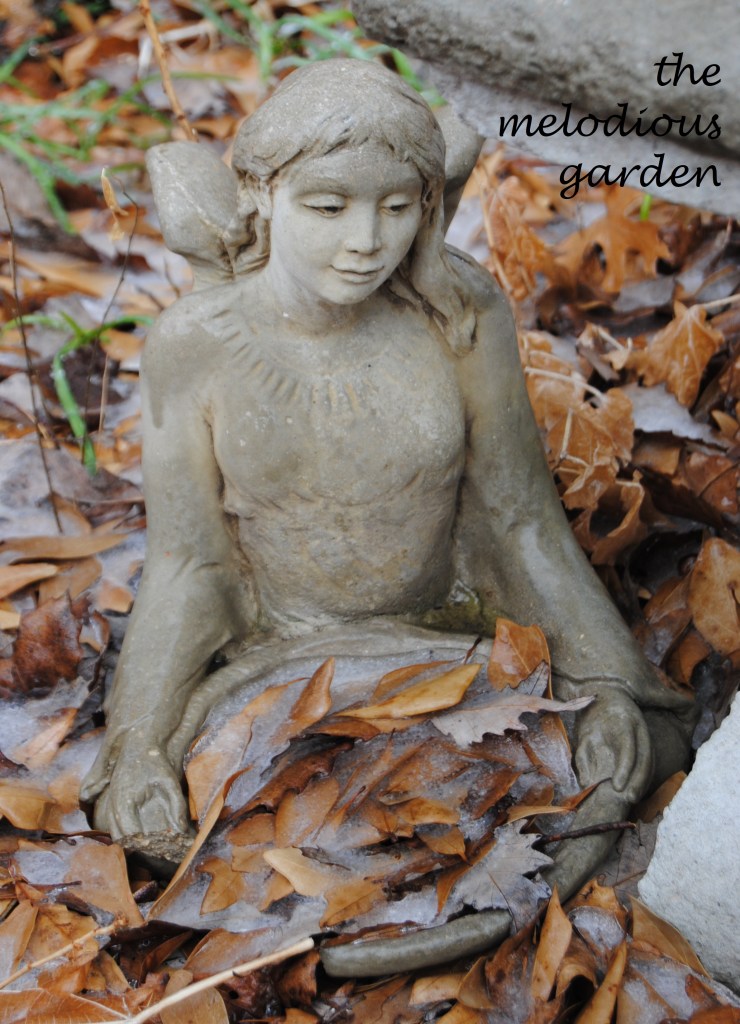
I have collected Campania statuary since I worked at Redenta’s Garden 20plus years ago. I love picking out pieces that represent who I am, my interests and my hobbies. Each piece is so special to me. The gnome and fairy, shown above and below, are both Campania pieces. (Sadly, I dropped something on the bowl of the fairy a few years ago and broke a chunk off. It just reminds me that while we are all broken in some way, we are still beautiful.)

More vintage around the garden. I love using bed frames as trellises or to mark off different areas of the garden. (Above photograph.)

Bear with me while I prattle on a bit about the messy photograph above…

When my now adult age son was much younger, we read together Frances Hodgson Burnett’s The Secret Garden. My son was enthralled with the idea of having his very own secret garden, though he quickly decided he wanted the area to be his very own observation point for wildlife. Thus began “The Secret Biology Lab.” I happily obliged in helping him set up his own space in my overfilled garden. (Read: as in the book, my own garden was somewhat untended, thanks to motherhood…) We crawled to the back fence line, hidden by years of shrubbery left to grow wild. Among the accessories that went in to the secret biology lab, the basket (above) attached to the fence and for years filled with acorns and dried corn on the cob.

Last year I undertook a massive garden deconstruction and renovation project. That line of shrubbery was slated to be removed, having long outlived their usefulness and not in alignment with my current desires. But first, I had to text my son, away at college, and ask him if he would mind if I dismantled his secret biology lab. His response? “Uh… You still have that?” I think he was a tad embarrassed…

Having cleared that hurdle, I shed a few tears, reflected back on those younger days, removed my son’s discarded Tonka truck and the pink flamingo “Welcome” sign he wanted to mark the entrance to his secret biology lab… then I ordered my trusty garden assistant, the dear husband, to take the chainsaw to the shrubs.

To new beginnings! It is never too late to start over, redo, undo, move on!

I decided to leave the basket on the fence and do find it rather useful to hold assorted garden items. The fencing and landscaping pins landed there “for another day, for another project…” Until then – it is a great juxtaposition. The past – the basket – and the future – what project next? – frozen in time. Or frozen in ice, as it is. Someday I will reflect more on the dismantling of the secret biology lab. Good lessons to be learned. Good reasons to never cement anything in place. Until then… A few more frozen photographs!

I love this little… bird? chicken? Not quite sure what it is, but I love it all the same. (Above photo.)

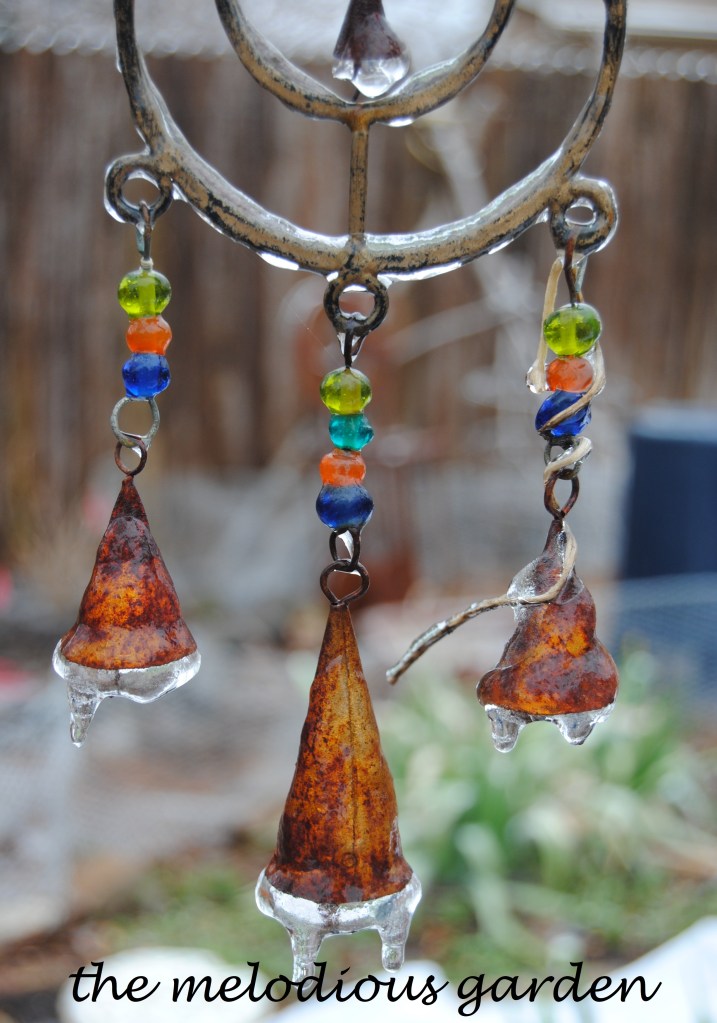
I love to mix different elements and pieces of color around the garden. A very modern, very boho windchime. (Above)

Two frozen cherubs, acquired at an auction. Auctions, estate sales, antique markets and thrift stores are all great sources for unique garden items. A garden, like a home, should be filled with treasures, lovingly collected!

Happy gardening. And remember: It is only February. Yes, we are wearing shorts now, but our average last freeze date isn’t until mid-March. A lot can happen between now and then, so Keep Calm and Garden On! But keep the frost cloth handy and don’t plant those tomatoes outside just yet!

gardening, nature

Go hug a tree, it’s Arbor Day!

Happy Arbor Day!

I hope you are celebrating by planting a tree, or at least hugging a tree. Now I know if you are out of state, you may be thinking, “Wait. Isn’t Arbor Day in April?” Yes, it is in April. For the rest of the country. In Texas, we celebrate Arbor Day on the first Friday in November. While you can technically plant a tree any day of the year in the south, where the ground never freezes, fall is the optimal time for tree planting in Texas. (And most likely for most of the south.)

The theme for this year’s Texas Arbor Day is “It takes all kinds,” which represents tree diversity, the wide variety of ecoregions throughout the state and the amazing and wonderful diversity of humankind. Okay, I added in the amazing and wonderful, but isn’t our population really amazing and wonderful? Even among gardeners, no two are alike. If we were to make a large Venn diagram of gardening styles and types, the central part would most likely be trees. For every garden, for every property, for every need, there is a tree suited to your space and needs. Interested in native gardening and creating a haven for wildlife, trees will be a central part of your design. Interested in growing your own food, fruiting trees can produce a harvest for years to come. Interested in simply stringing up a hammock and enjoying the good life, surely you would enjoy your serene nook even more if it is shaded by a tree or two. It truly does take all kinds!

Our front yard is dominated by two bur oaks, which a dear gardening friend of mine calls, “The Oakiest of the Oaks.” True enough, of all the oaks, the bur oak has the largest acorns and the largest leaves. The larger of our two bur oaks was planted by the developer about 30 years ago. while the slightly smaller oak was planted by a squirrel about 20 years ago. Every autumn, I threaten to hire a flock of neighbor children to pick up the copious amount of acorns that fall from those two trees…

Ignore the green briar…

As my own gardening style is evolving from ornamental rose garden to an edible food forest, I have been exploring the new-to-me world of fruiting trees. It takes all kinds has been my gardening mantra this year. How can I extend my harvests? Can I harvest different fruits six months of the year? Which fig trees produce a breba crop? Which fruit trees remain small and can be grown in a container? (The driveway is mostly wasted space, amiright? Might as well grow food there, too!)

It really does take all kinds. Go out and explore your local garden centers this weekend and see what tree varieties they have. Surely you will find one that is perfect for your property.

gardening, nature

The herbal way to attract pollinators

A year ago, I visited a Texas lavender farm for the first time. I was in awe at the number of bees buzzing around as I stooped to harvest some of the flowering stems. Until then, I had no idea what a bee magnet lavender was!

lavenderfarm7

I have long grown herbs in our North Texas garden. I have always planted at least one African blue basil plant each spring, as the bees are drawn to its blooms in droves. I have even planted fennel and parsley as host plants for butterflies. But beyond that, I never gave much consideration to planting herbs specifically for pollinators until the day I saw a lavender field alive with bees!

This week is National Pollinator Week.

There are many ways that gardeners can lend pollinators a hand. Some may prefer to use only plants native to their region, while others may be drawn to annuals such as zinnias and pentas. Still others may choose the herbal way – attracting pollinators to their garden with herbs and their fragrant blossoms. What a winning arrangement! Growing herbs for use in the home, while also benefiting the earth. (Just please be sure to plant enough to share and don’t use pesticides.)

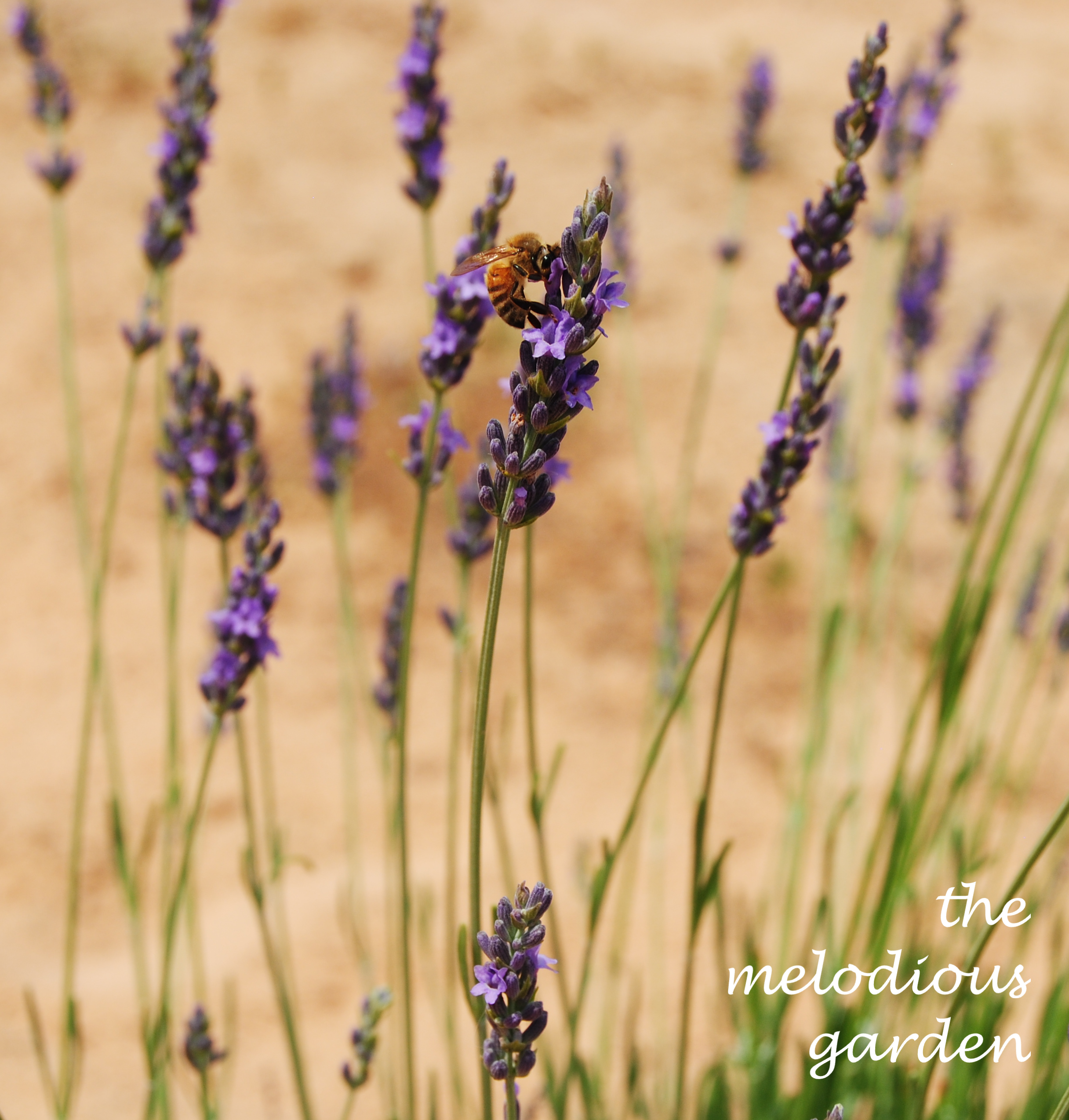
Lavender (shown in photo above) does best in full sun, with well drained soil. There are over 400 varieties of lavender. Some are grown specifically for cooking or for crafting, for distilling into essential oils or for landscaping. The United States Lavender Growers Association is an excellent resource for researching which varieties may be best suited for your intended use. A few lavender varieties have white blossoms, while the majority are some shade of — lavender.

butterfly

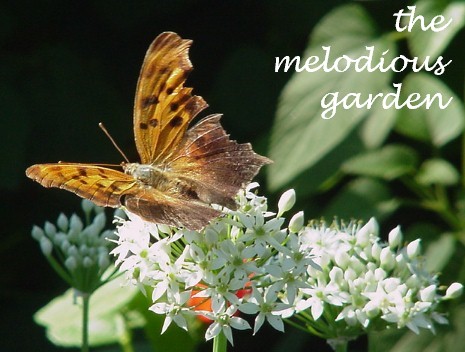
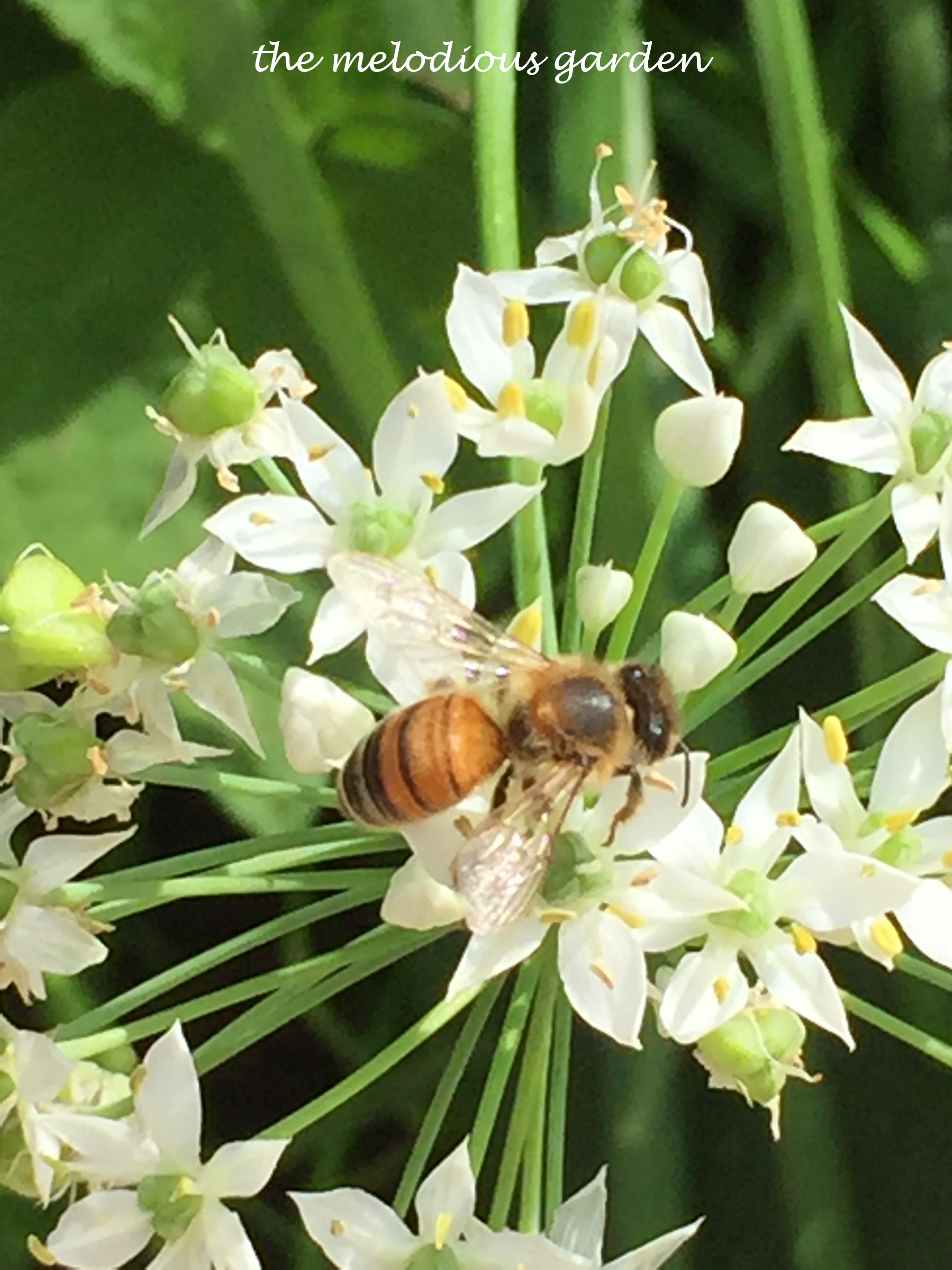
Garlic chives (shown above and below) are somewhat invasive in my North Texas garden, but always a welcome sight. When other plants are slowing down in the late summer heat, garlic chives are only beginning to show their spectacular white blossoms. (Garlic chives can be contained by cutting off the spent blossoms before the seeds have had a chance to dry and spread about. I just never get around to deadheading it in time…)

I choose not to use garlic chives in my kitchen, as I find their flavor to be overpowering. I much prefer the milder onion chives, which have a small pinkish purple bloom in the spring. I do not personally find as many pollinators using  onion chives.

bee on chives

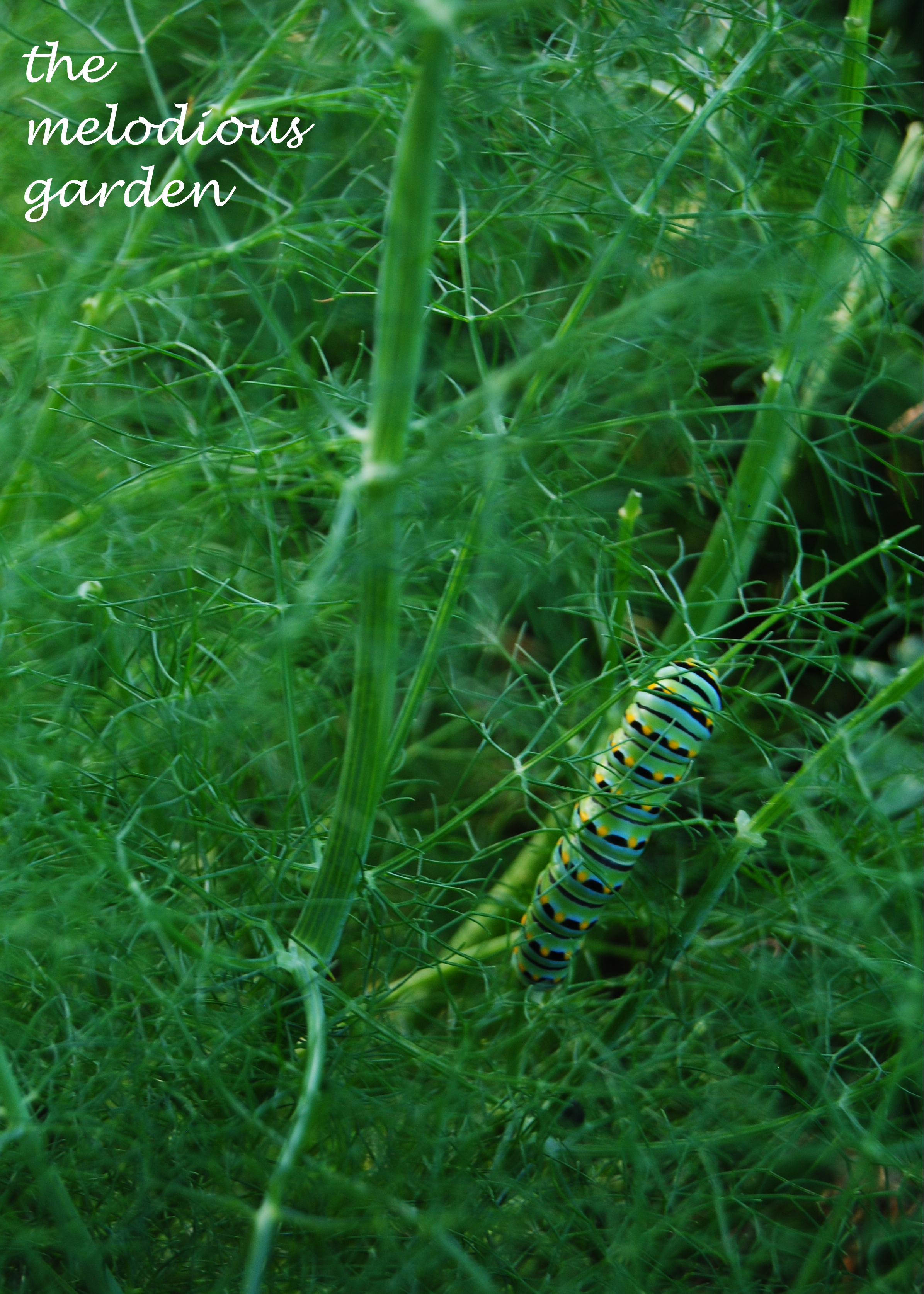
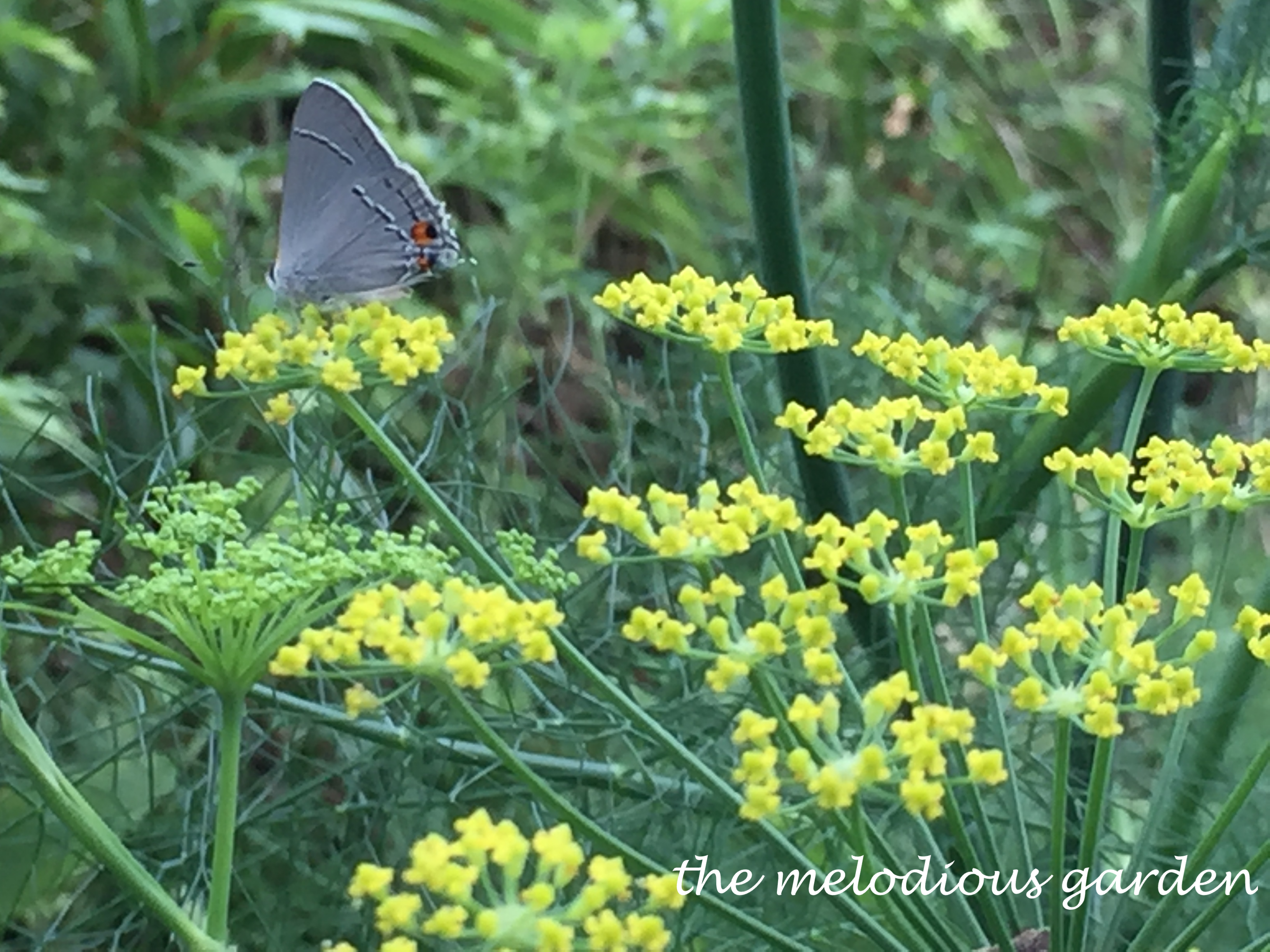
Fennel, as shown below, can be used as a host plant by the black swallowtail butterfly.

caterpiller june 1

The fennel blossom – large, flat and bright yellow – makes the perfect “landing pad” for pollinators large and small. Parsley and dill are also host plants to the black swallowtail butterfly. I have not had great success with dill in my garden, though fennel does extremely well. Parsley has lovely blooms but does not attract pollinators as well as fennel. (Fennel shown below.)

hairstreak on fennel

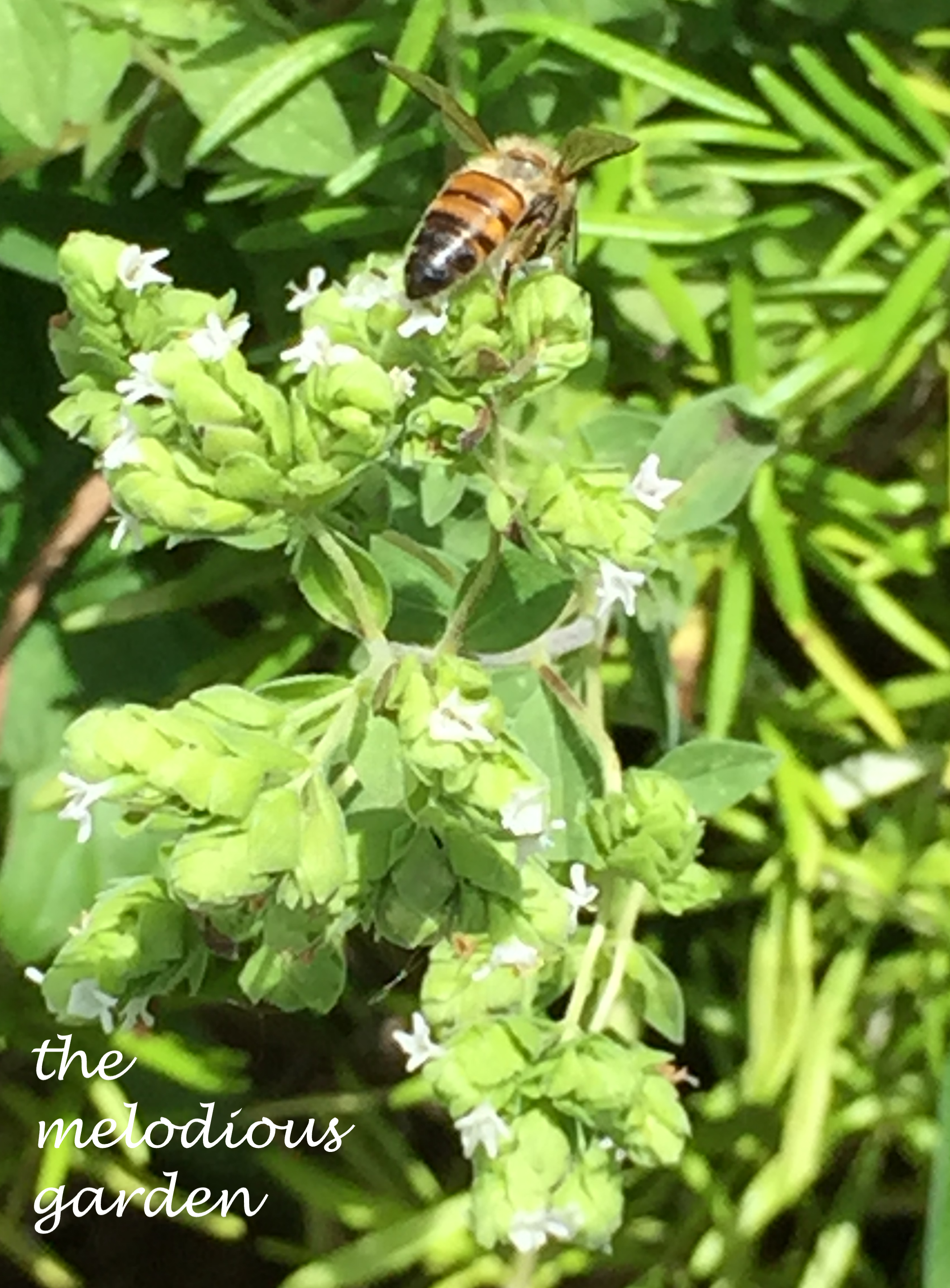
While Greek oregano does not have showy blossoms, bees and smaller butterflies can often be found on it. (Shown below. I personally think this oregano’s blooms look a mess!) Greek Oregano is evergreen in North Texas and can be harvested year-round for Italian cooking. Like lavender, oregano prefers well drained soil and a sunny location.

bee on oregano

Kent Beauty, an ornamental oregano with lovely cascading blooms, will also attract pollinators. What you give up in culinary use, you gain in beauty with this one… Kent Beauty is reported to be winter hardy to zone 9, though I have yet to have one make it through a winter. (I blame our wet winters…)

There are more than 50 varieties of basil, most grown for their wonderfully edible leaves. To keep a basil plant producing leaves, the blossoms need to be pinched off or it will put its energy into producing seeds. Simply snip off any forming blooms every time you harvest basil.

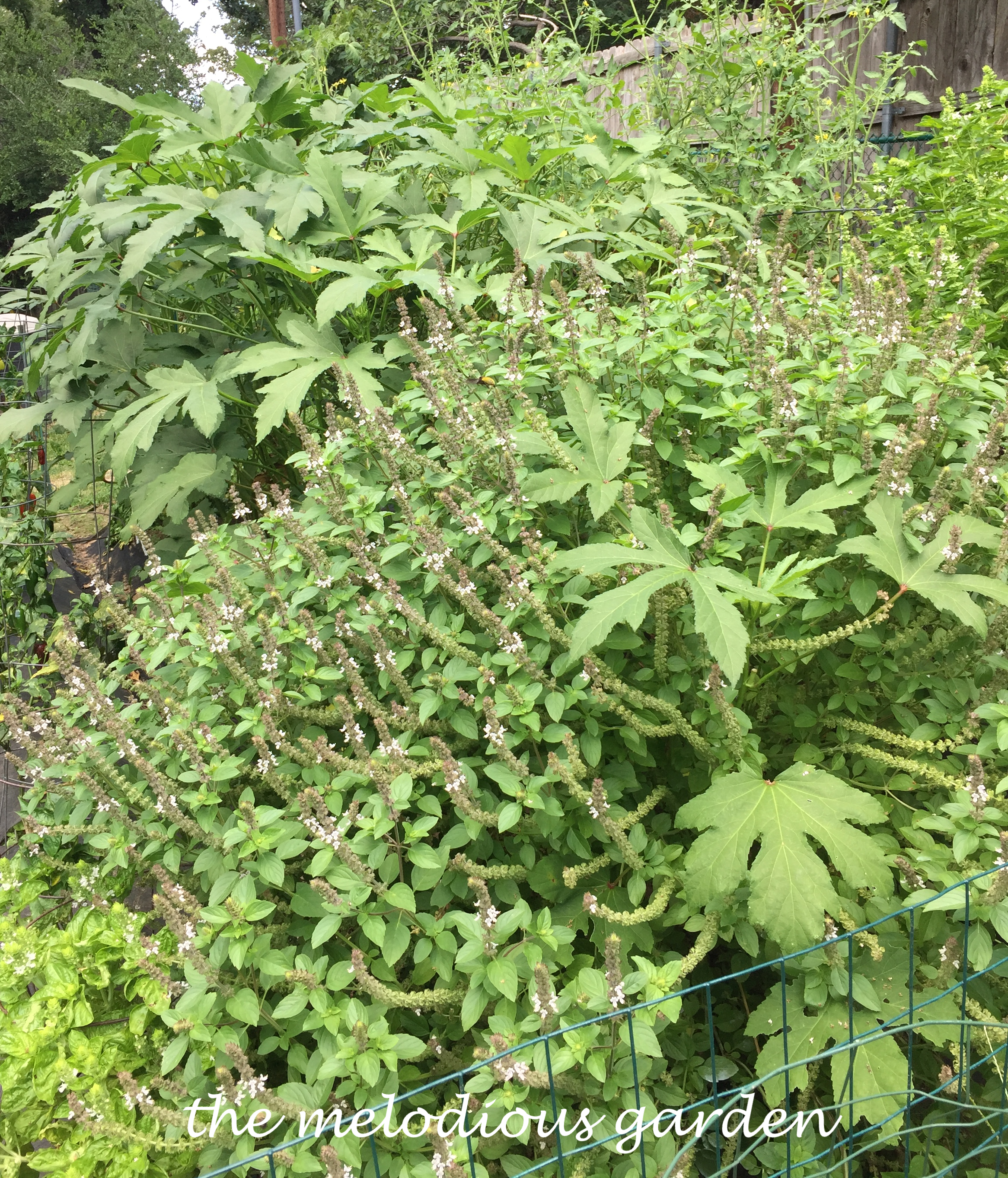
African blue basil, however, is not commonly used in the kitchen as it has a strong camphor smell that many dislike. It will continue producing blossoms – and attracting pollinators – all summer long. In fact, African blue basil (shown below, with okra) is often planted near vegetables to aid in pollination.

african blue basil with okra

This is in no part a complete list of herbs that attract pollinators, rather just a taste of the possibilities As you are celebrating National Pollinator Week, consider adding a few herbs to your garden. A treat for you and a treat for our pollinators.


gardening, nature

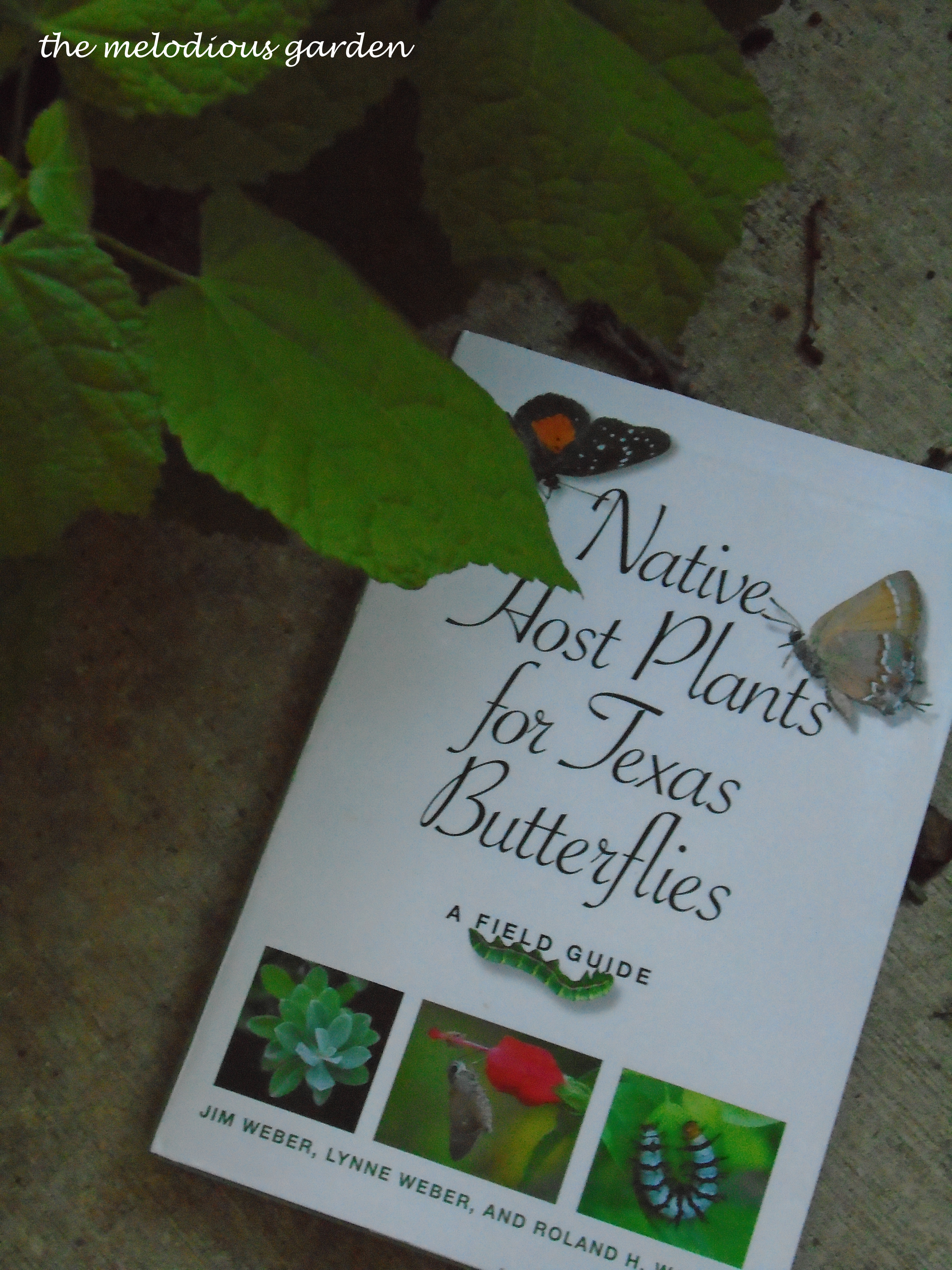
Native Host Plants for Texas Butterflies: A Book Reviewed

There are numerous books on the market for butterfly gardening, but Native Host Plants for Texas Butterflies (by Weber, Weber and Wauer) is the first one I have found dedicated exclusively to the butterflies that call Texas home and the native plants they require for their survival.

June 17th to 23rd is National Pollinator Week and what better time to research and plan your own butterfly habitat.

“The very nature of a healthy ecosystem is defined by the interrelationships and dependencies between species, and nowhere is this more evident than in the world of butterflies and their larval host plants,” the authors write in the book’s opening pages.

native host plants book

Indeed, the balance between the adult butterfly, the tiny eggs she will lay on a specific host plant and the growing caterpillars’ feeding requirements captivates us all, young and old alike. Texas has nearly 500 butterfly species that call it home and this book features more than 140 of them, along with the host plant that the butterfly needs for reproduction.

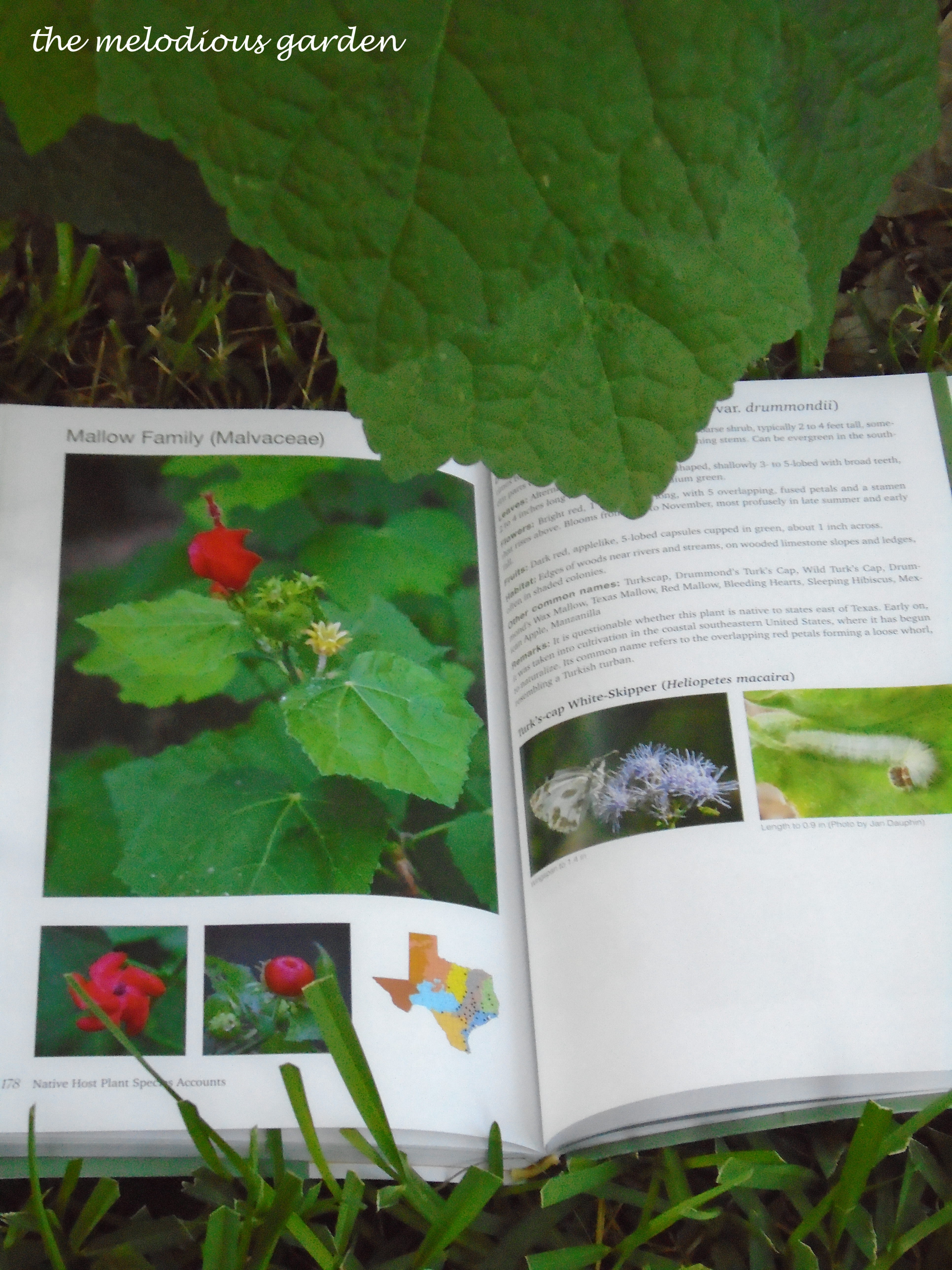
native host plants turks cap

Written as a field guide (and aptly subtitled “A Field Guide”), the material is presented in a clear and concise manner. The book is divided into sections: Wildflowers, Trees, Shrubs and Vines.

Each plant (such as Turk’s Cap, shown above) has two pages dedicated to it. The left page shows the plant – leaves, flower and seed – along with a map where this plant naturally occurs. The right side page includes both the common and Latin name, along with plant and flower descriptions and sizes. The book then shows at least one Texas butterfly – in both adult and larval (caterpillar) stage – that uses that specific plant as its larval host.

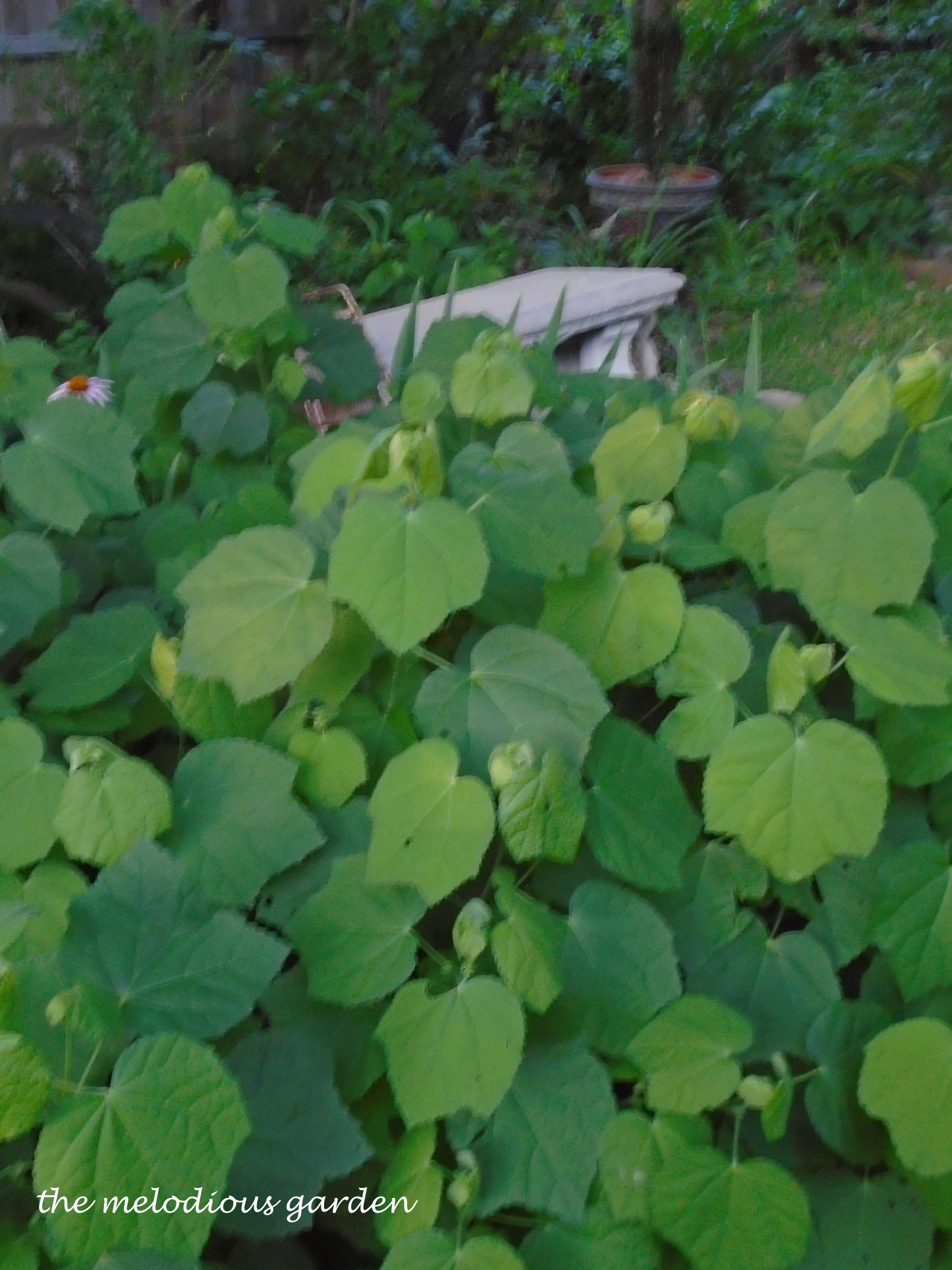
turks cap backyard

To  have that healthy ecosystem, one with interrelationships between species, it is important to remember to offer both foliage and nectar rich flowers. The adults need that foliage to lay their eggs on and for the caterpillars to feed upon, while flowers will attract the adults.

Turk’s Cap (shown above, in my backyard garden) is host to the Turk’s Cap White Skipper. If one is new to butterfly gardening, it is important to remember to plant enough that you can look the other way as the hungry caterpillars munch on the leaves, as those leaves are food for the future generations. Please remember – never use pesticides in a butterfly garden!

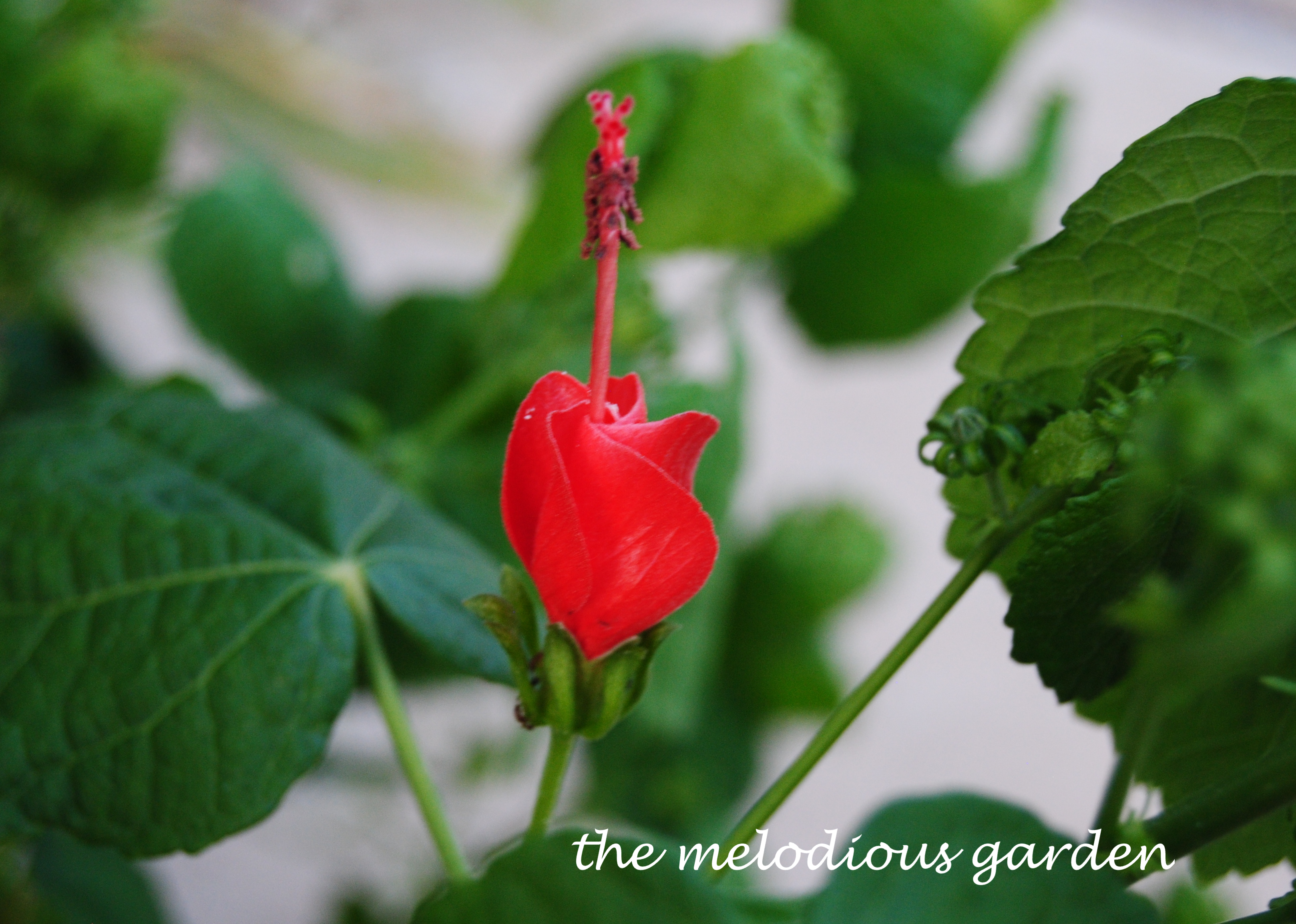
turks cap flower

Adult butterflies, moths, bees and hummingbirds will all appreciate the nectar from the blossoms on the Turk’s Cap (shown above).

Bluebonnets, the official state flower of Texas, are the host plant for the Gray Hairstreak and the Eastern Tailed-Blue. Bluebonnets can be started either by seed or by plants, which are available at garden centers that specialize in native plants.

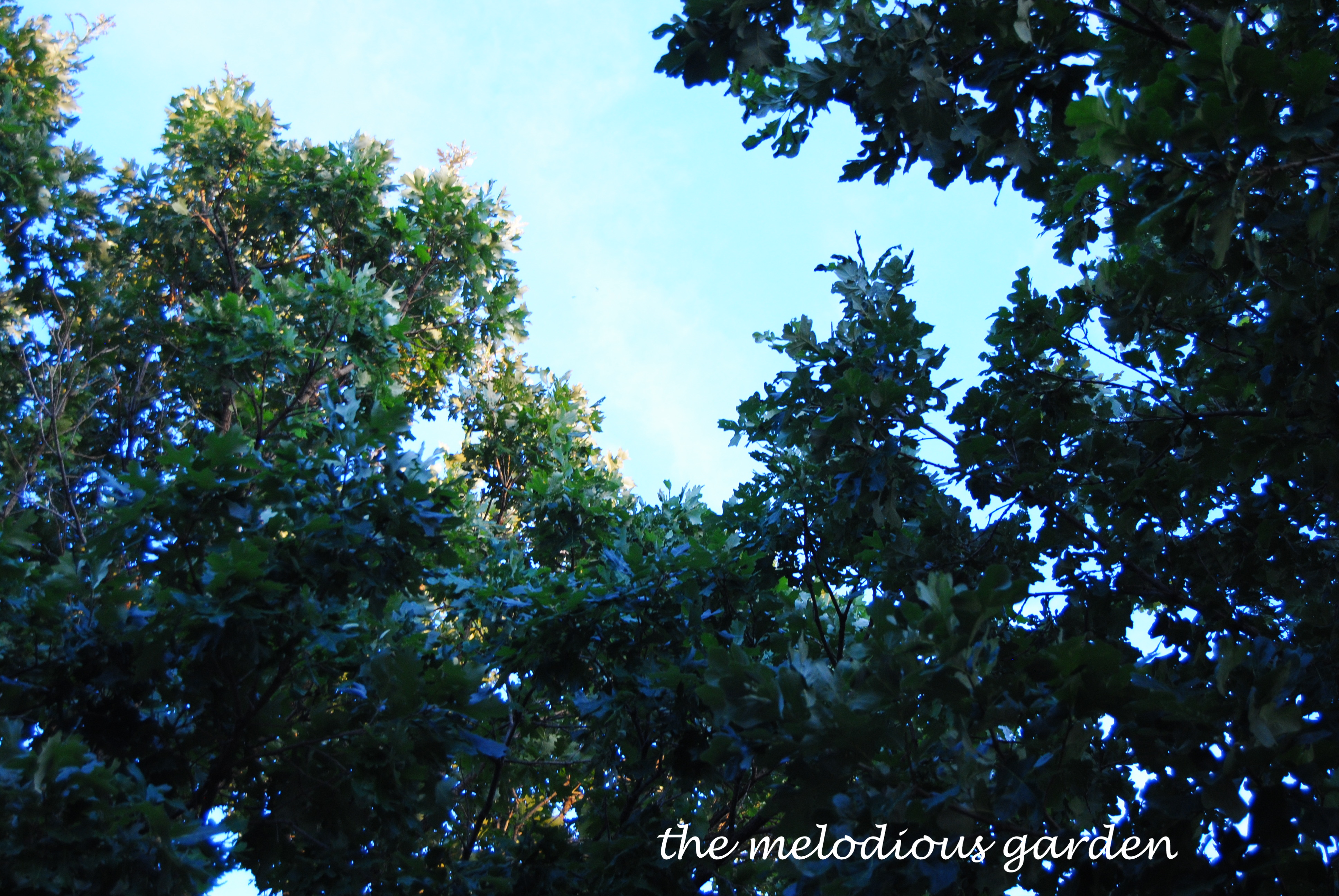
burr oak canopy

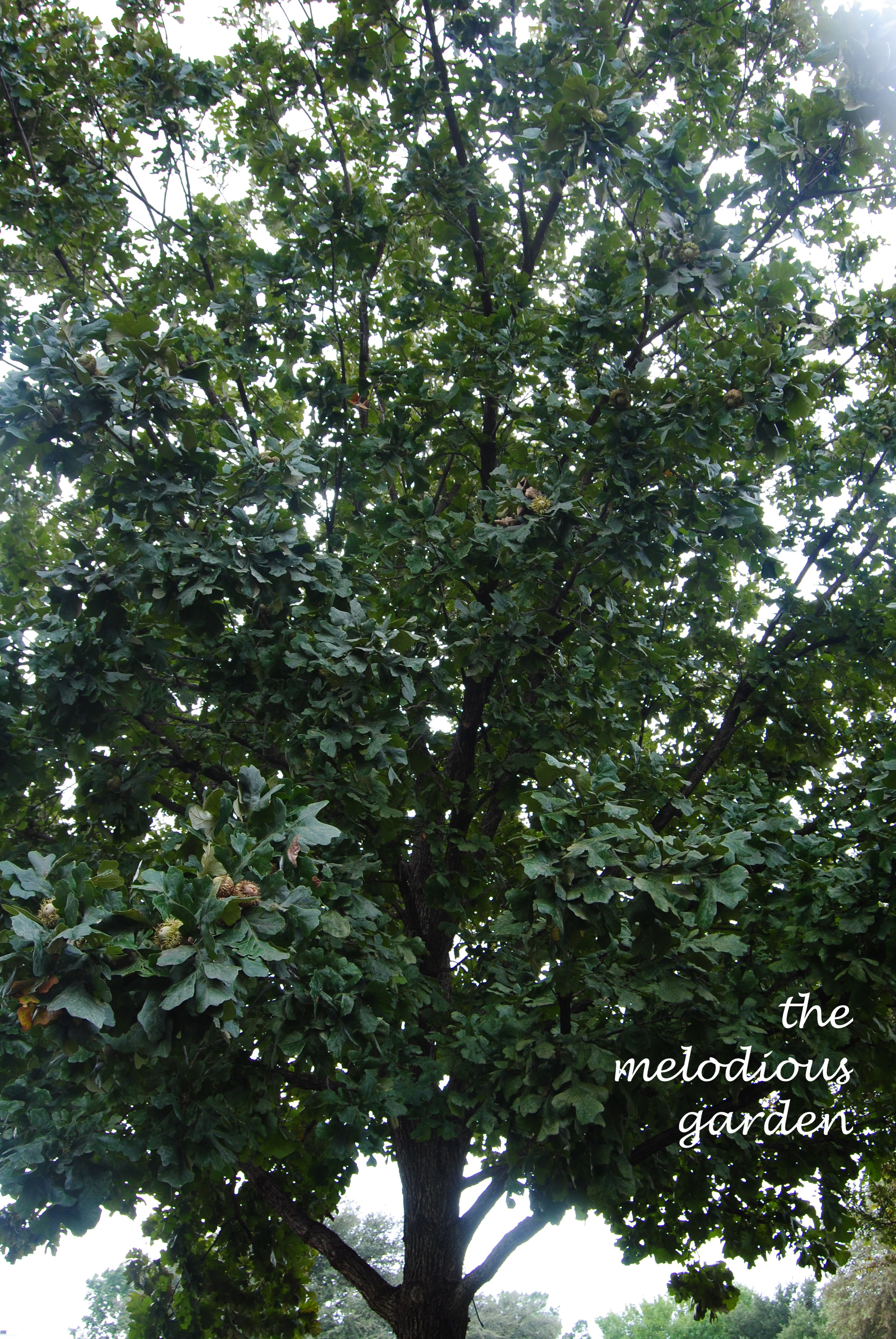
Many of the plants featured in this book are attractive – plants the average homeowner would want to have in their landscape. Bur oak trees (two of which are shown above) offer a lovely shade canopy to our front garden. This oak, available at most garden centers, is the host plant to the Banded Hairstreak and the Juvenal’s Duskywing.

Some of the native plants featured in this book are becoming more and more common across the state, such as the Redbud (host plant to Henry’s Elfin), Black-eyed Susan (host plant to the Silvery Checkerspot) and Cenizo (host plant to the Theona Checkerspot.) Others may need to be purchased either through Native Plant Society’s plant sales or at wildflower centers. (Both The Heard Natural Science Museum and The Ladybird Johnson Wildflower Center have plant sales every spring and offer harder to find native plants.)

This book will appeal to anyone interested in either butterfly gardening or in native plants of Texas. It is easy enough for a beginner gardener to use, but extensive enough to satisfy even a more advanced naturalist. The reader may chose to stick with those native plants that are easier to find or may take the book as a challenge, as they seek out hard to find natives.

Please consider planting a native plant (or two or five) next week in honor of National Pollinator Week.

gardening, nature

National Pollinator Week (Bee Kind…)

Next week – June 17th through the 23rd – is National Pollinator Week.

Seven days to honor the pollinators that our food supply depends on 365 days a year…

Pollinators – bees, butterflies, moths, flies, beetles and small mammals – are responsible for pollinating more than 180,000 plant species and 1,200 crops. Yet they are under threat world-wide due to loss of feeding and nesting habitat, pollution, pesticide use and many other factors.

Thankfully, gardeners and farmers worldwide are realizing that more can be done – needs to be done – every single day to assist the humble workers that pollinate as much as three-quarters of our food crops.

In Texas, gardeners often talk about planting for year-round interest, so their gardens have something in bloom every month of the year. This is actually the single best way to help out our pollinators, too! If you live in colder regions, the principle is still the same. Extend your season. Plan and plant to have something in bloom as much of the growing season as possible.

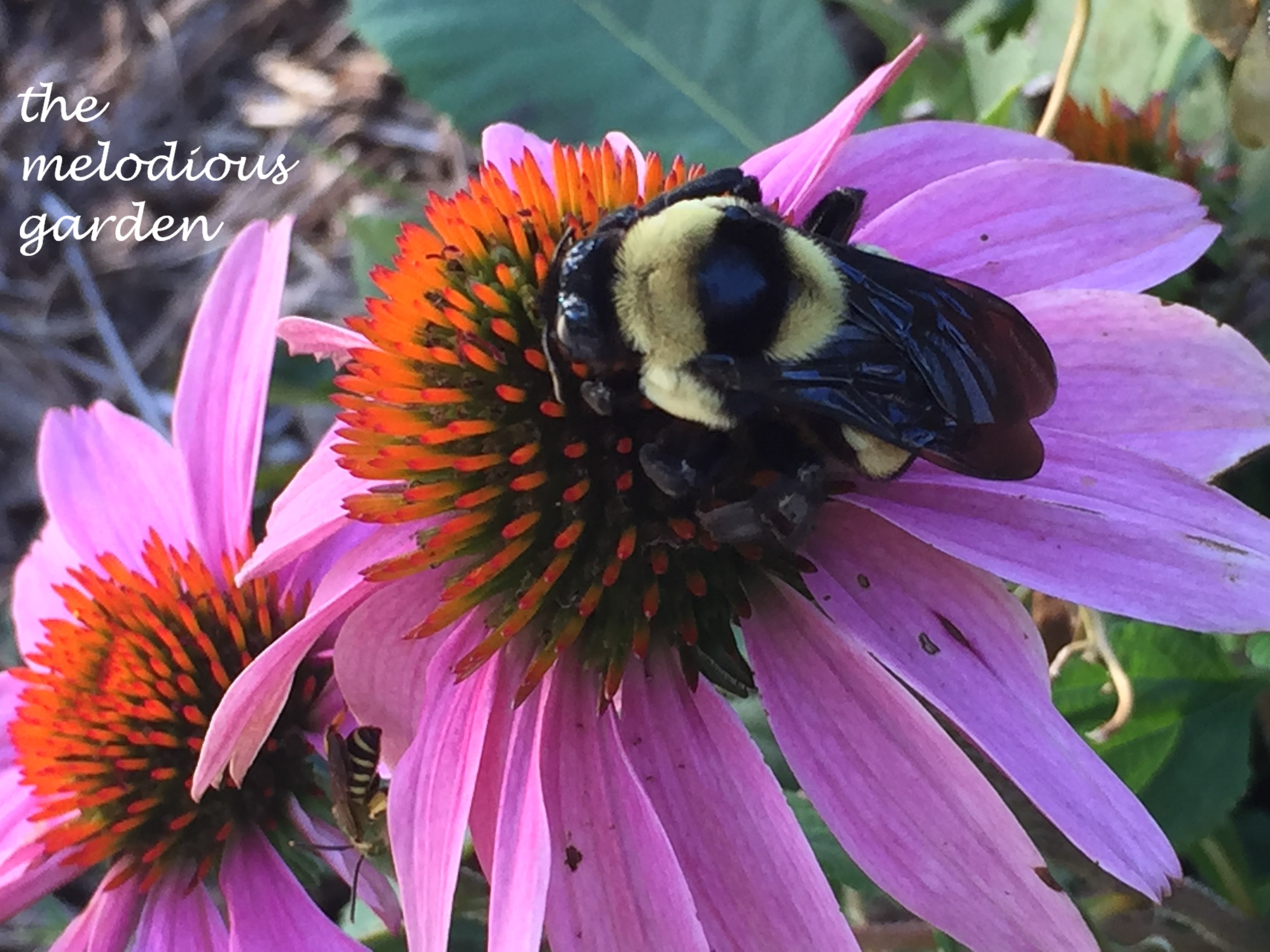
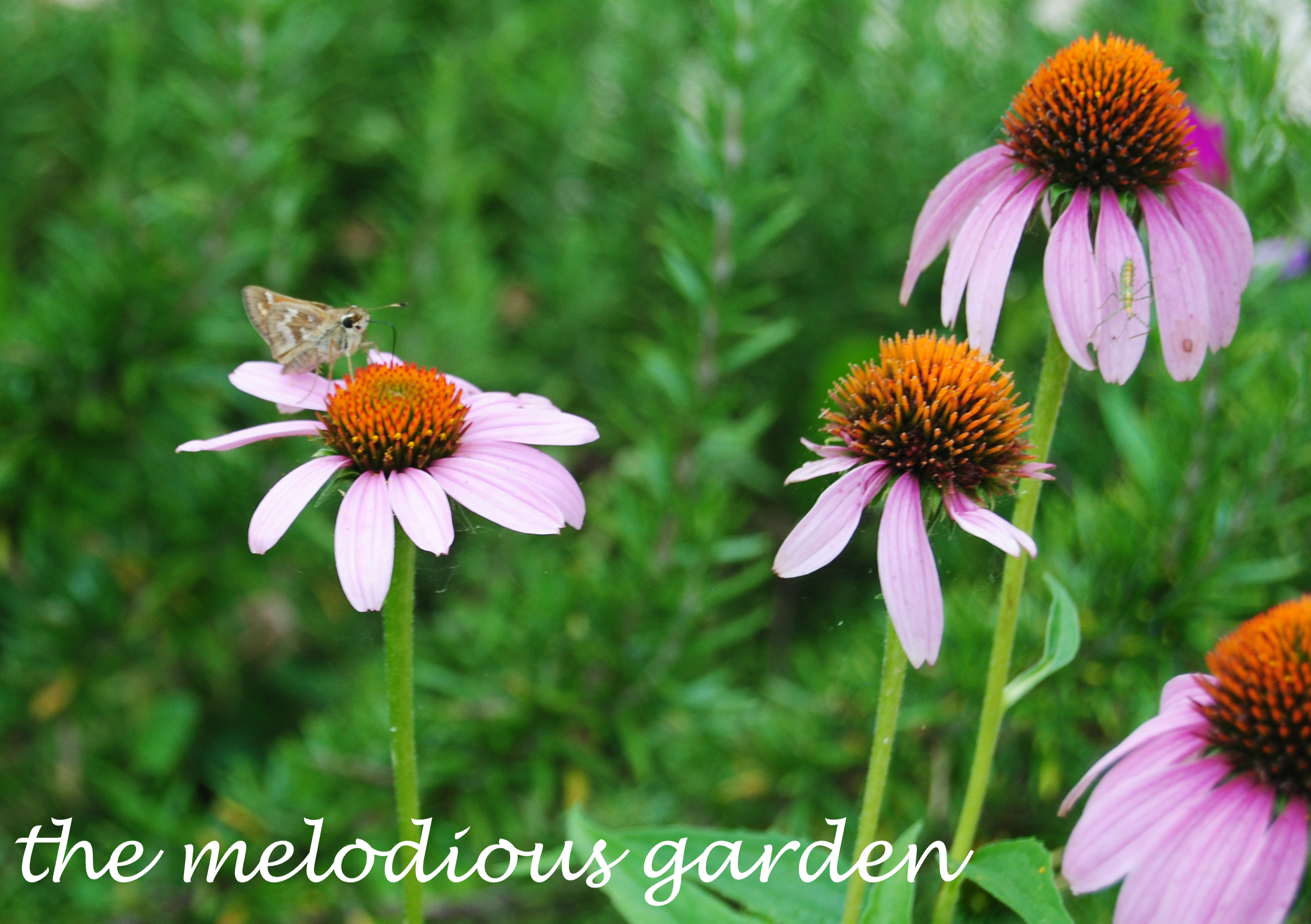
Coneflowers, shown below with a bumble bee, are one of my favorite native plants. They have a long bloom season, blooming roughly seven months of the year in my zone 8a garden. (From May to the first freeze in middle to late November.)  When researching new plants for your garden, make sure to look at the blooming season and include plants that bloom both early and late.

coneflower with bee

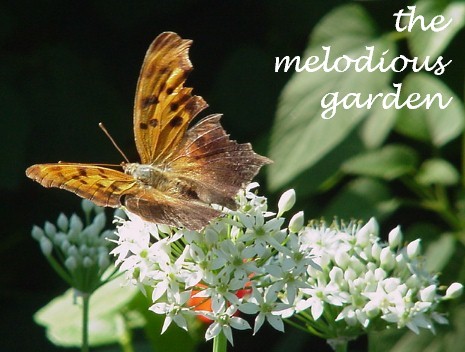
Native plants are very beneficial for pollinators, but one does not need to rely solely on native plants. In fact, I prefer to fill in my seasonal garden with non-native annual flowers, such as zinnias and pentas in the summer. Do include mostly plants that have not been hybridized heavily and avoid plants with “double” blooms as they often produce less pollen. Simple flat flower heads, such as the garlic chive bloom shown below, are best for larger pollinators, while small pollinators will crawl inside a flower bloom. Do plant a variety of bloom colors and sizes, as well as flower types.

butterfly

To specifically help butterflies and moths, plant “host plants,” the plants they will eat while in the larval (caterpillar) stage. Below is a swallowtail butterfly in the larval stage, eating fennel in my garden. Which brings us to the next important thing to do – or rather, not do – to protect pollinators…

caterpiller june 1

Do not use pesticides!

More and more studies have come out in the past few years showing how harmful pesticides are for all of our ecosystem, not just the pest they are intended for.

If you want to attract pollinators to your garden, you do need to adopt two very important rules. 1.) Overlook cosmetic damage done by insects in your garden. 2.) Plant extra for the insects to munch on. These two rules actually go hand in hand. The more you plant, the less you will notice a munch here and there…

There are organic methods to control many common garden pests, but I have found in  25 years of organic gardening that nature tends to balance itself out quite well when left to its own.

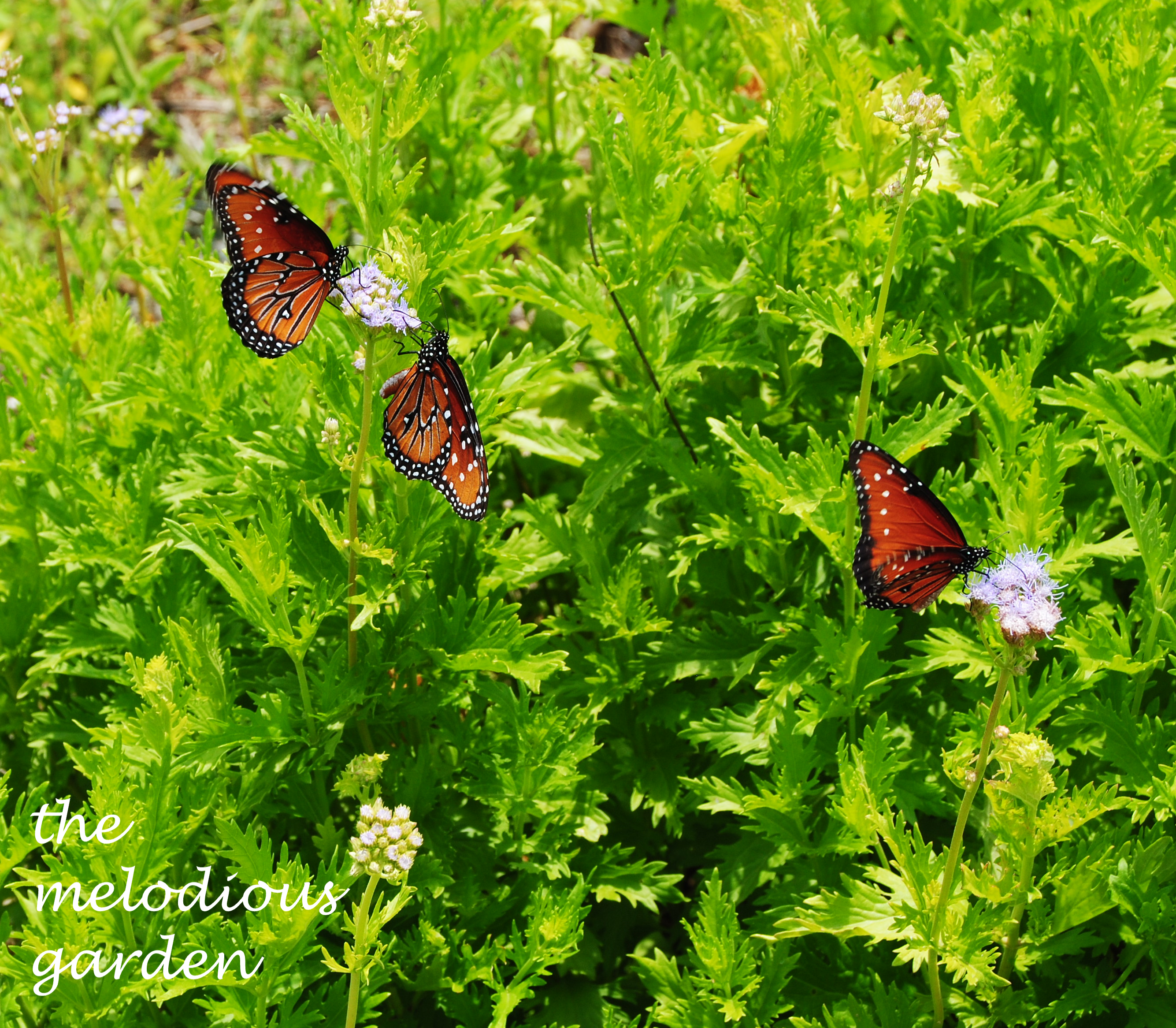
Pollinators prefer a sunny area, sheltered away from the north wind. (Below, butterflies on fall blooming Gregg’s mist flower.)

butterflies

Pollinators need habitat to roost and to nest, not just to feed. Leaf litter (unraked leaves) is a great place for pollinators to seek cover in the fall and winter. Dead trees, if they can be safely left to rot in place, are a great habitat for pollinators. If a dead tree does need to be removed, consider leaving a portion of it down on the ground. Even a small collection of tree branches and twigs can be beneficial to pollinators on a smaller property. Bee boxes or condos for our native bees can also be constructed from tree branches.

moth on coneflower 1

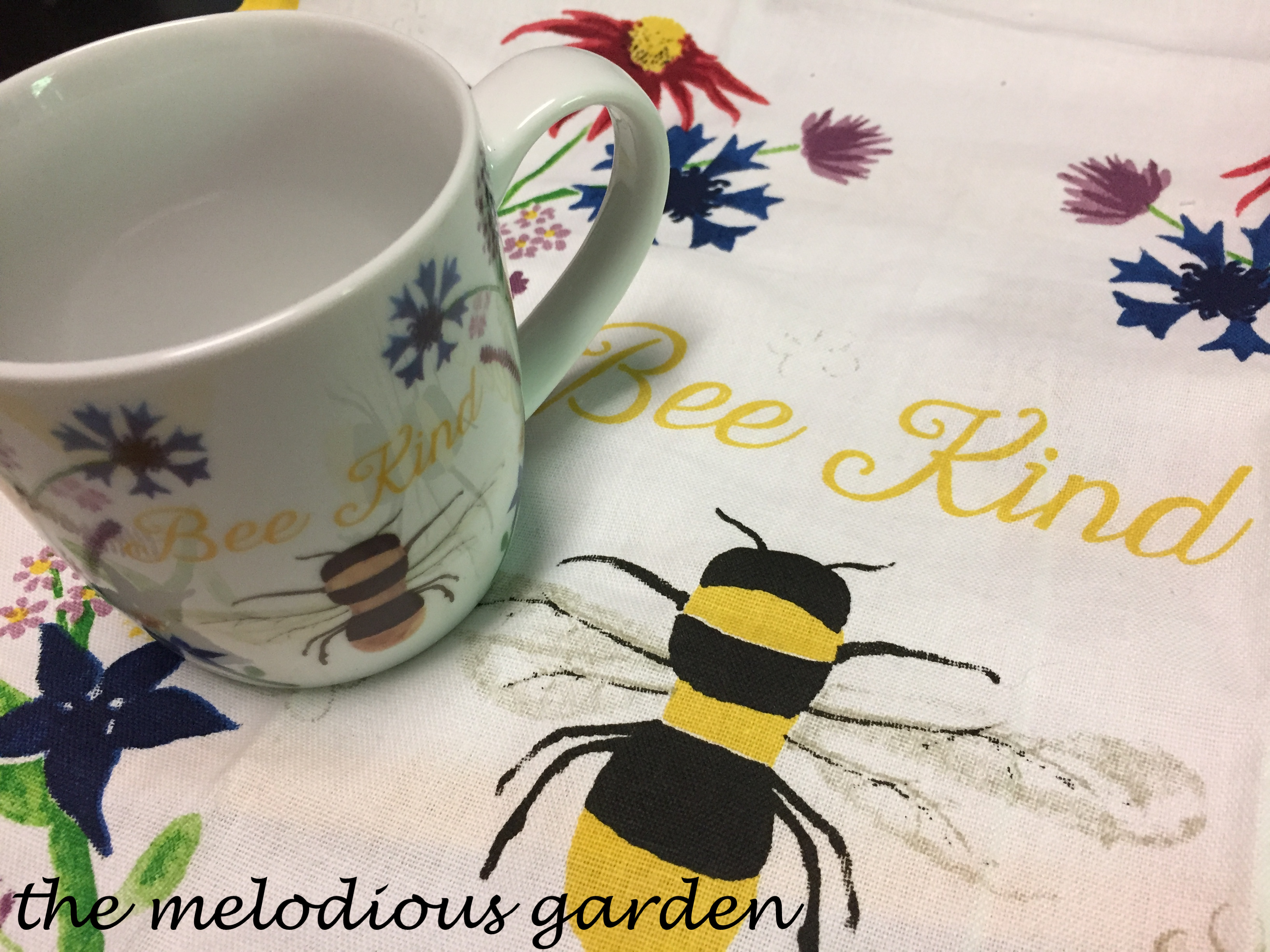
But… Most importantly… Bee Kind.

bee kind cup and tea towel

Be sure to check out your own local resources, whether an arboretum, a native plant nursery or a regional nature guidebook. The more one knows about gardening and nature, the more one can appreciate it.

winecup and mallow

Resources for Texas:

Lady Bird Johnson Wildflower Center (Austin, Texas)

Redenta’s Garden (Dallas, Texas)

Dallas Arboretum and Botanical Garden

bibliophile, gardening, nature

On this June day…

On this June day the buds in my garden are almost as enchanting as the open flowers. Things in bud bring, in the heat of a June noontide, the recollection of the loveliest days of the year – those days of May when all is suggested, nothing yet fulfilled.
– Francis King

coneflower

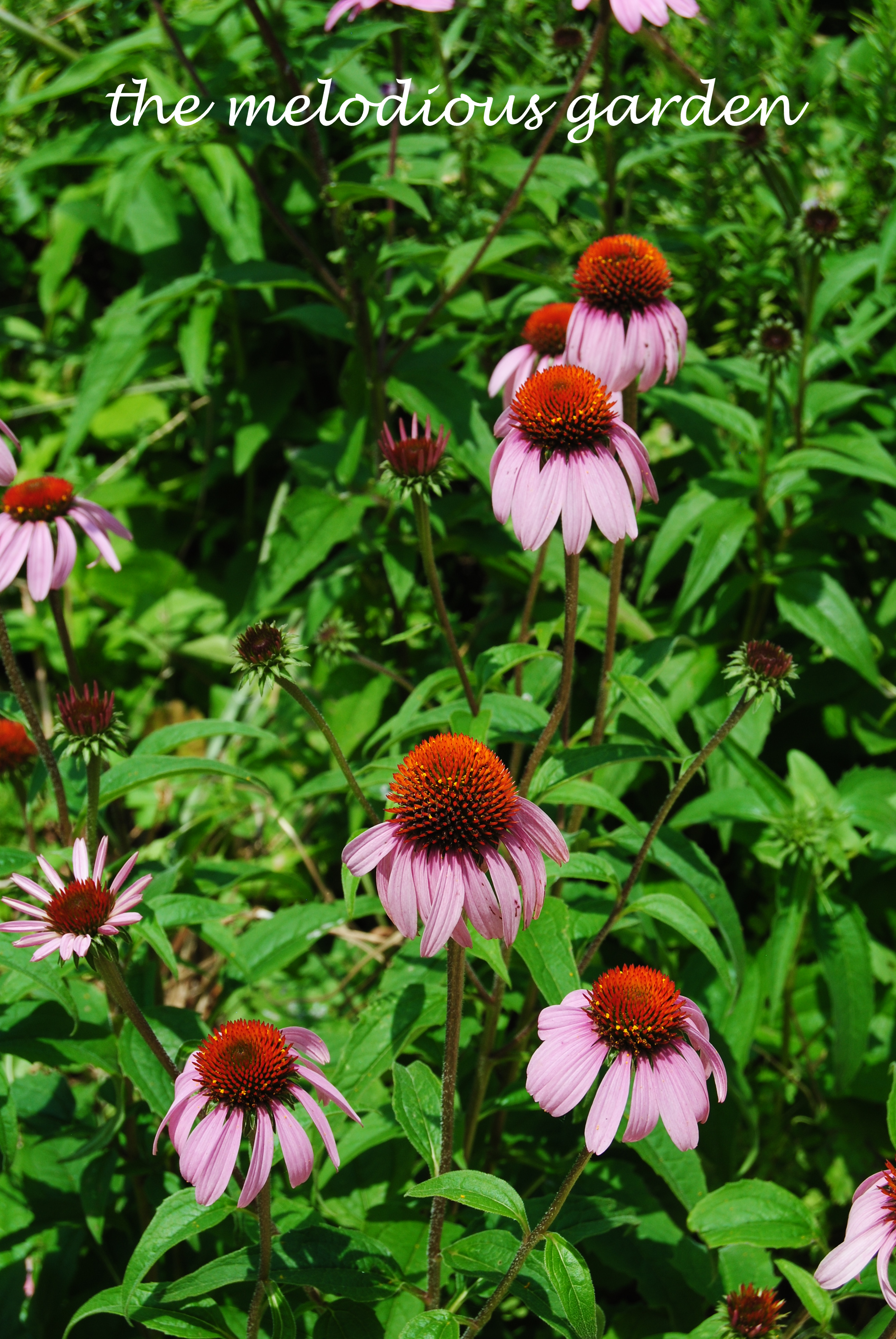
Purple coneflower. Echinacea purpurea. “…suggested, not yet fulfilled.”

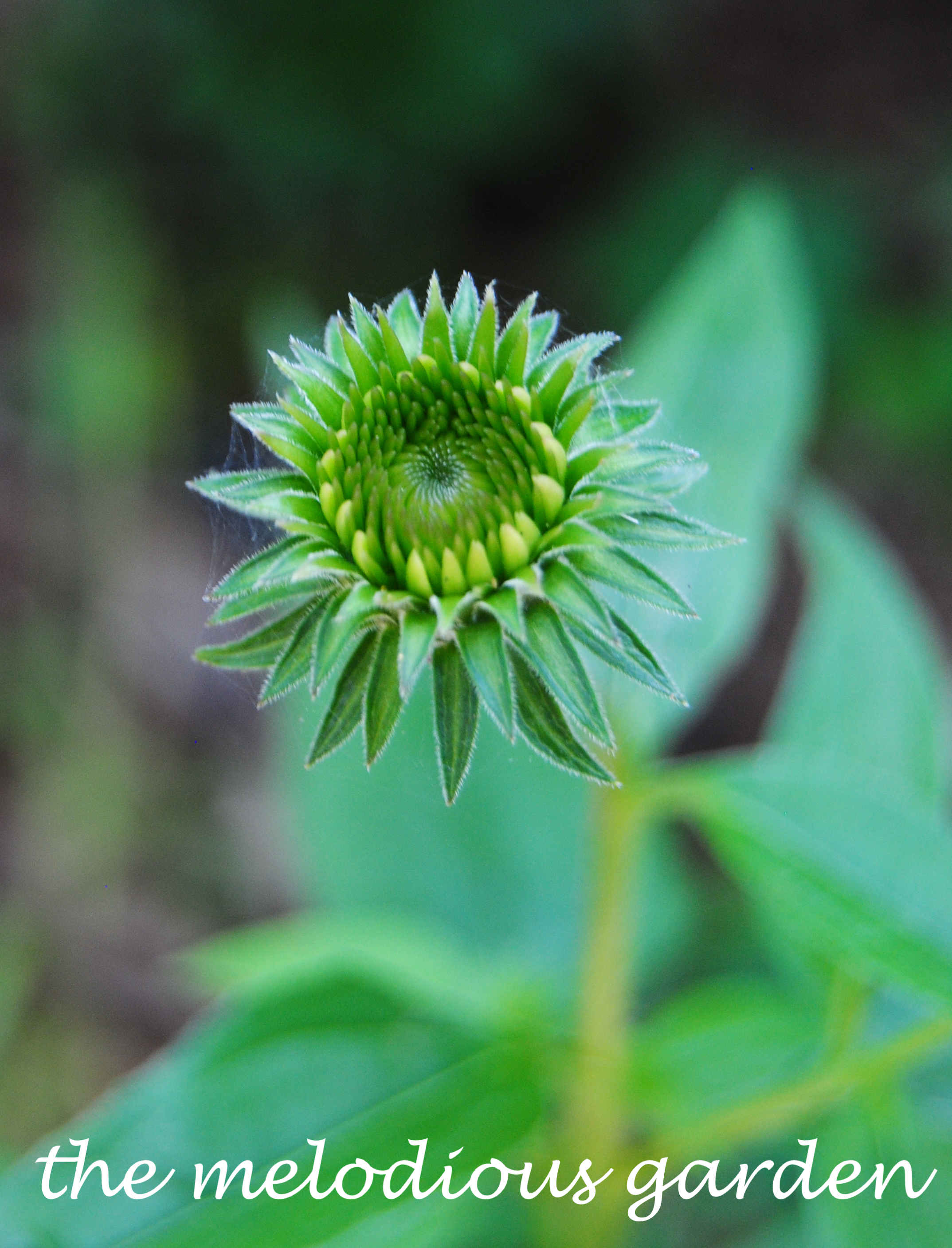
The unopened bloom is almost. almost. as pretty as the opened bloom.

So symmetrical. So green. So full of promise, with not even a hint of the “cone” of which its name comes from.

coneflowerjune1

And then this happens. The bloom is fulfilled and oh, so enchanting.

The many stages of blooms in just one brief snapshot. From bud to cone. From suggestion to fulfilled.

~ ~ ~

I garden to have year-round color, so “all” is not suggested in May as Francis King writes, yet his thought is so beautiful I cannot pass over it.

In June, as many as a dozen species may burst their buds on a single day. No man can heed all of these anniversaries; no man can ignore all of them.
– Aldo Leopold

Indeed, a dozen species – or so it seems- are bursting forth each day. Spring rains have left the garden lush and thriving. Especially the weeds. But such is life in the garden.

The daylilies are stealing the scene on this June day. The winecups continue to offer a colorful backdrop from every vantage point.

daylily and winecup

This one (I believe it is Ruby Spider) is especially big and bold today. Oakes Daylilies has long been my go-to source for quality daylilies. Their website allows you to shop by bloom size, bloom height, color or many other features you may be searching for.

For me, last year was the year I shopped for daylilies with huge blooms. That decision is paying off already with this stunner!

daylilyjune1

Daylily blooms, as their name suggest, last for one day. Daylily plants are generally loaded with both blooms and buds this time of year. The suggested and the fulfilled.

(Speaking of weeds. Sometimes our “weeds” were once well intended plants that thrived all too well in the garden. Such is the case with that lovely Oriental Limelight Artemisia, to the left of the daylily in the photograph above… It is beautiful, but way, way too happy in my garden!)

It’s beautiful the Summer month of June
When all of God’s own wildflowers are in bloom
And sun shines brightly most part of the day
And butterflies o’er lush green meadows play.

– Francis Duggan, June

Zexmenia, a Texas native wildflower, is coming in to bloom.

zexmenia

I have yet to see many butterflies fluttering over its sun gold blooms… I am trying not to worry, but the bees and butterflies have been noticeably absent from my garden this spring. I am hoping the rain has just delayed their presence. National Pollinator Week is coming up and, like every year, I will add more pollinator plants to my garden. Won’t you do the same? So much of our food supply is dependent on pollinators and our pollinators are struggling as more and more of the world is moving from rural, untouched earth to developed suburbia.

In Dallas, North Haven Gardens is hosting a workshop for National Pollinator Week. Planting a pollinator garden with your children or grandchildren is a great way to expose young ones to the joy of gardening. I hope to write more on that in the upcoming weeks.

No flowers, no bees;
No bees, no flowers.
Blooming and buzzing,
Buzzing and blooming;
Married and still in Love.
–  Mike Garofalo, Cuttings

daylily winecup coneflower

One of the benefits – and joys — of planning and planting a garden for year-round color is that you can attract – and assist – wildlife year-round. In the photo above are winecups,  coneflowers and daylilies. The winecups and coneflowers are both native, while the daylililes are well adapted to much of the United States. They have similar water, soil and sun requirements, though their bloom season overlaps. The winecups have been blooming for well over a month now…while the daylililes and coneflowers are just now starting to bloom. The coneflowers will now bloom off and on to our first freeze. All are beneficial to pollinators. I will allow the late coneflowers to dry on the plant, where the seeds will attract and feed winter birds.

I wonder what it would be like to live in a world where it was always June.
– L. M. Montgomery

I love L.M. Montegomery’s thought. June is perhaps my favorite time of year. So much happening in the garden! And yet… I would miss the other seasons in the garden.

button bush

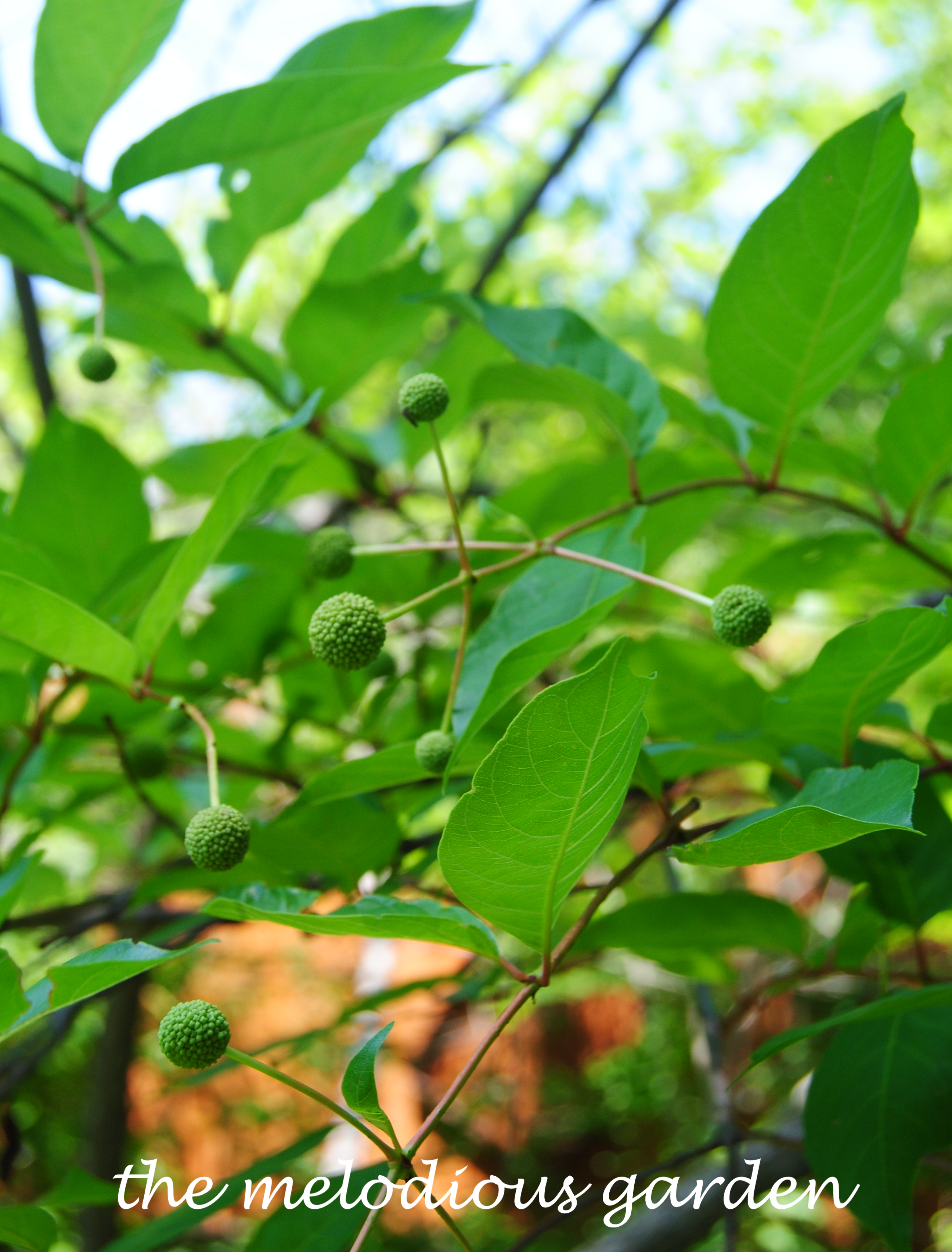
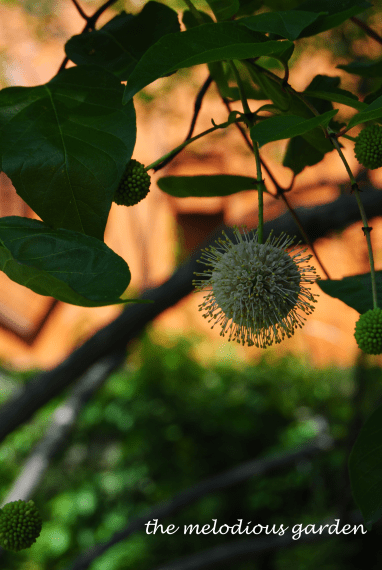
Our native Button Bush is just now forming buds, these tiny green balls – so much suggested and not yet fulfilled.

beauty berrry

Same with our native Beauty Berry. As the name applies, it has beautiful berries, still a few months from fully developing and ripening into its rich purple berries that the birds love.

turks cap

Our native Turk’s Cap has loved the abundant rains this spring, but its red blooms – a true hummingbird magnet – have not yet appeared. Once it starts blooming, it will continue to bloom – and attract wildlife – through to our first freeze next fall/winter.

What is one to say about June, the time of perfect young summer, the fulfillment of the promise of the earlier months, and with as yet no sign to remind one that its fresh young beauty will ever fade.
–  Gertrude Jekyll, On Gardening

I hope you have enjoyed walking through my garden and my thoughts with me today.

gardening, nature

The creation of a thousand forests…

The creation of a thousand forests is in one acorn. ~ Ralph Waldo Emerson

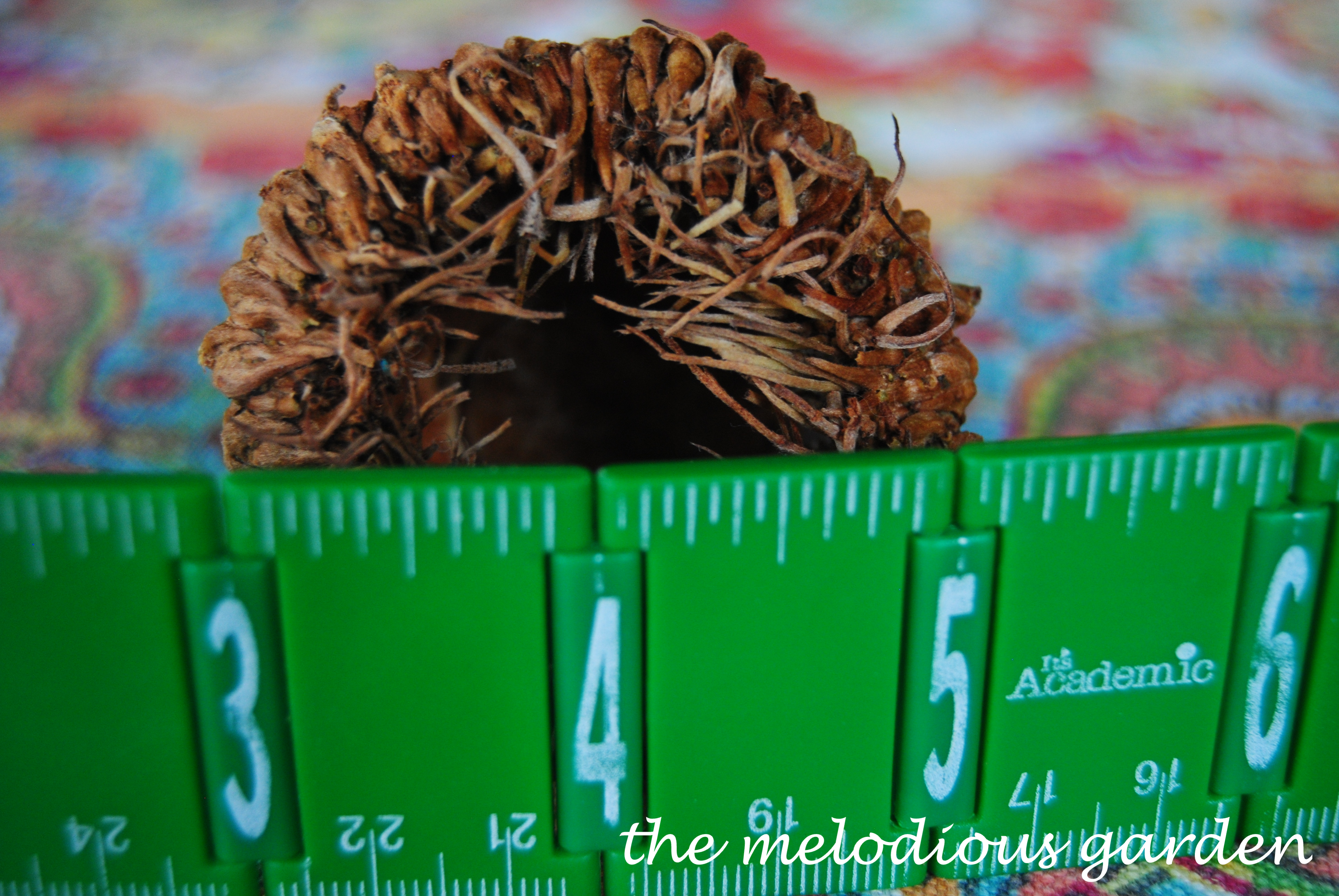
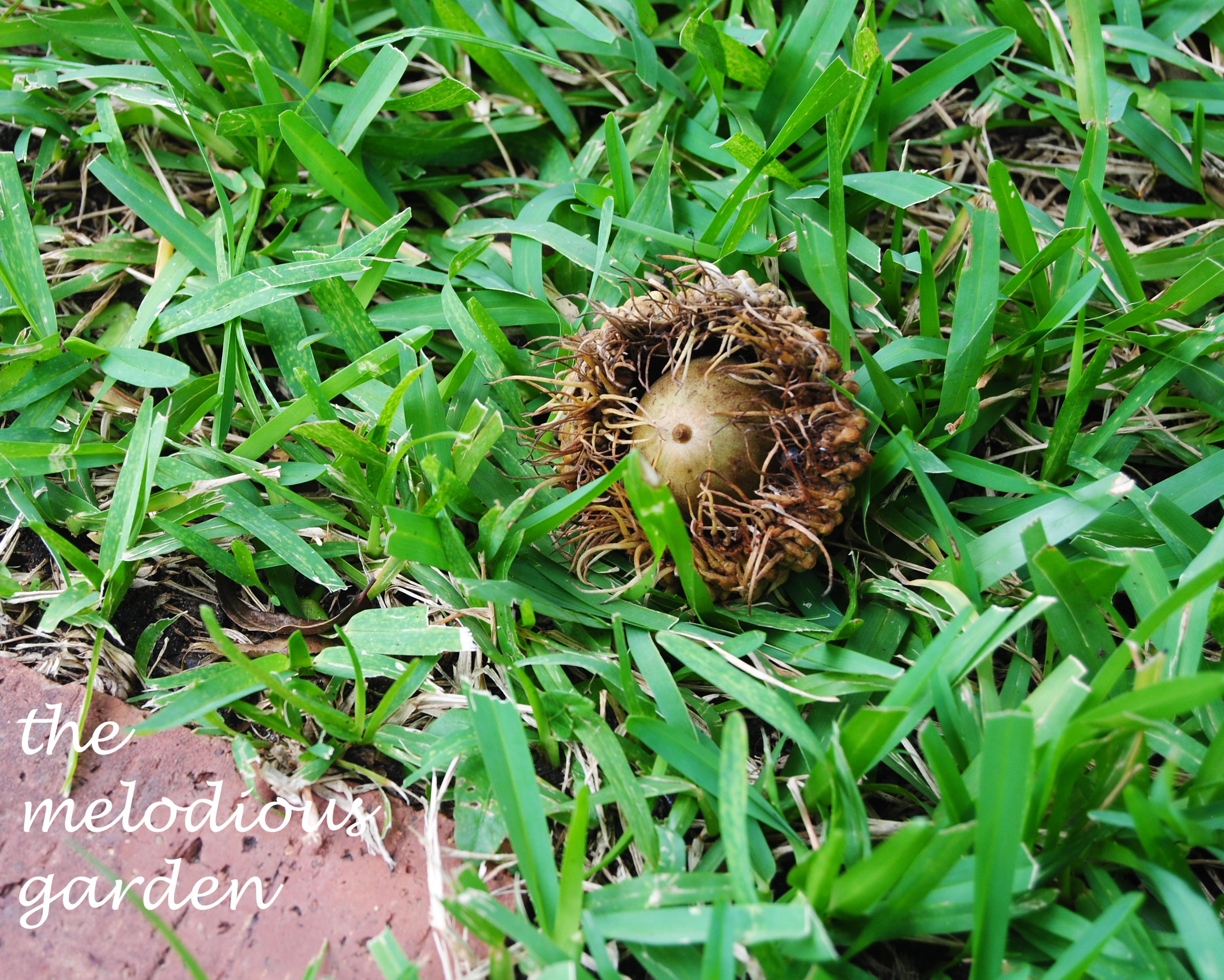
Yes. I know I often quote Emerson, but I was reminded of those thousand forests this afternoon when my puppy drug in the largest acorn I think I have ever seen.

burr oak cap

Sorry. No adorable puppy photo. But I was able to save the acorn cap to measure and photograph. It got me thinking about the bur oak tree… And how a long-time friend, Tamara, says that the bur oak tree is the “oakiest” of all the oak trees.

Indeed. It has the largest acorns.

Quercus macrocarpa – The bur oak’s latin name. Macrocarpa means “large fruit” in Ancient Greek. (Photo below is a slight exaggeration.)

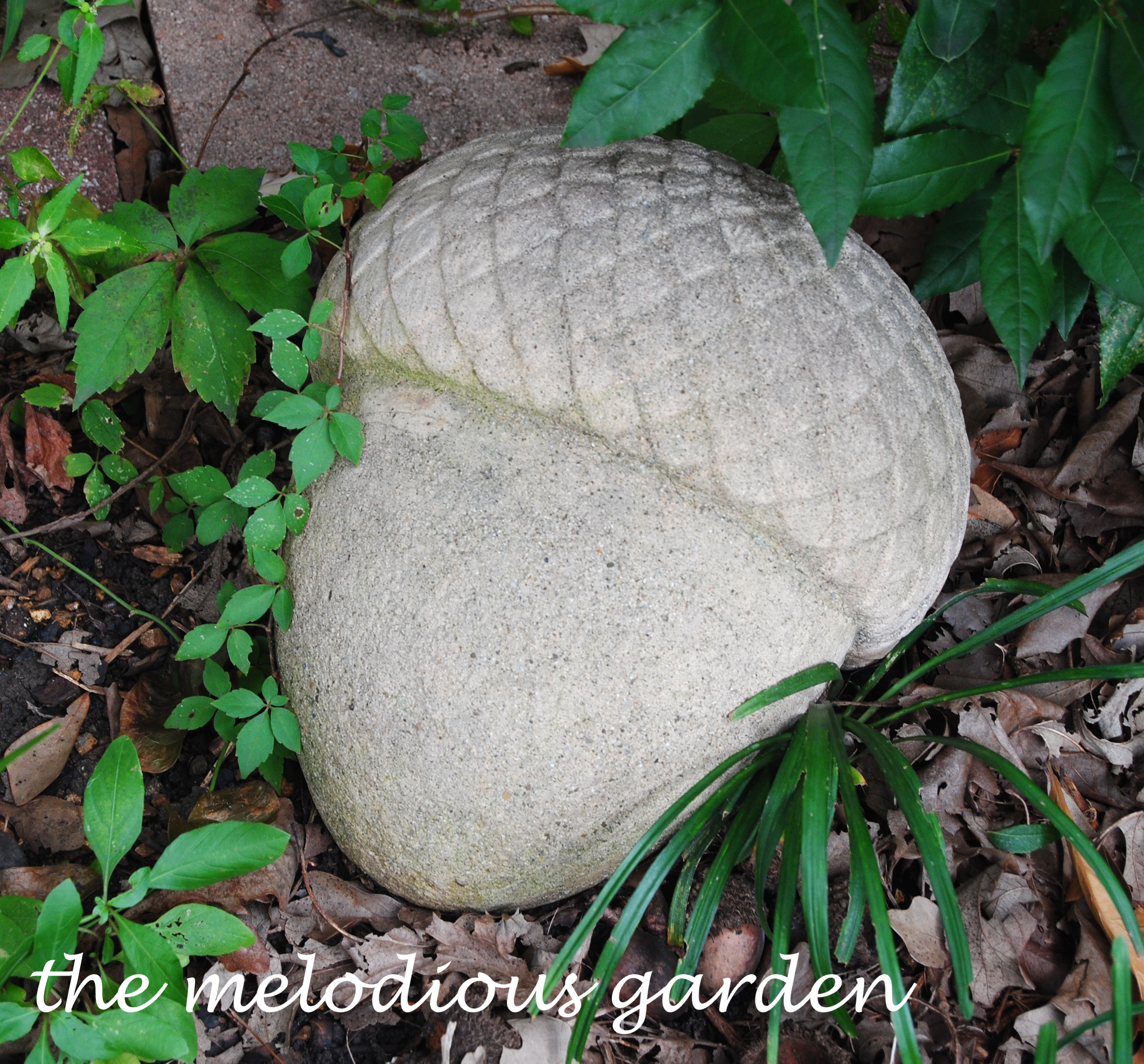
oak ornament

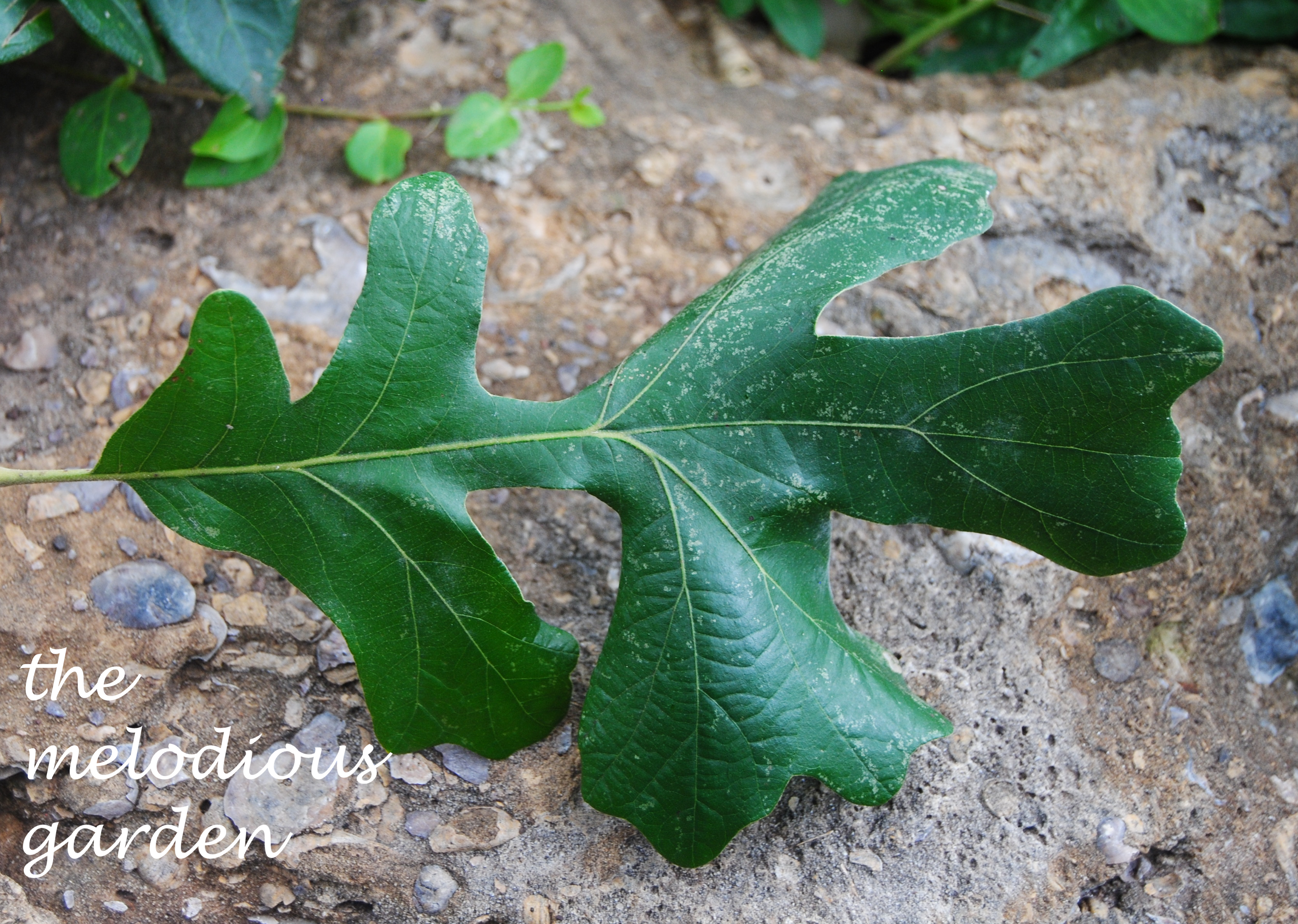
It has the largest leaves.

burr oak leaf

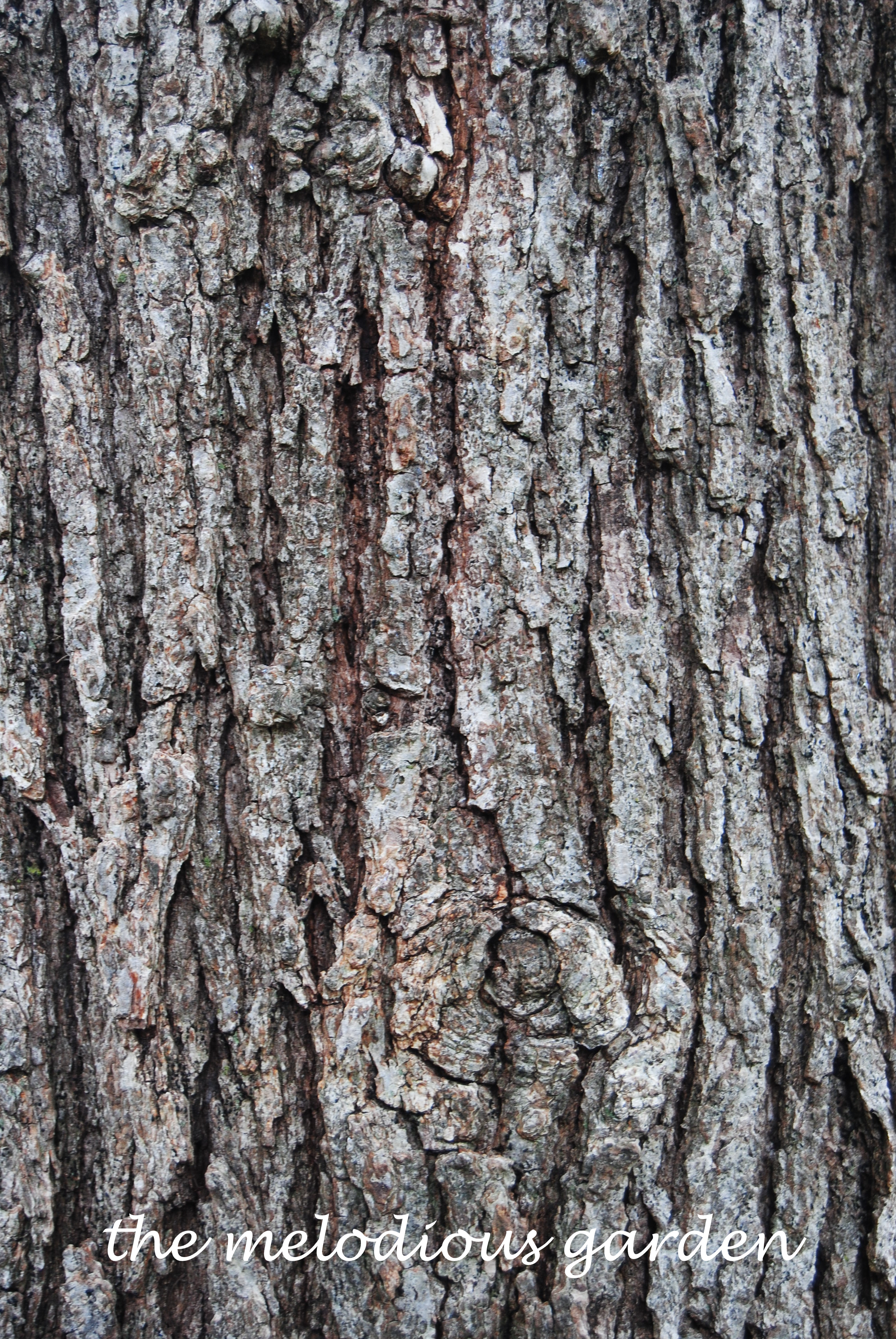
The roughest corky bark.

burr oak bark

And. Truly. If the creation of a thousand forests is contained in a single acorn, then a million forests must be contained within a bur oak acorn.

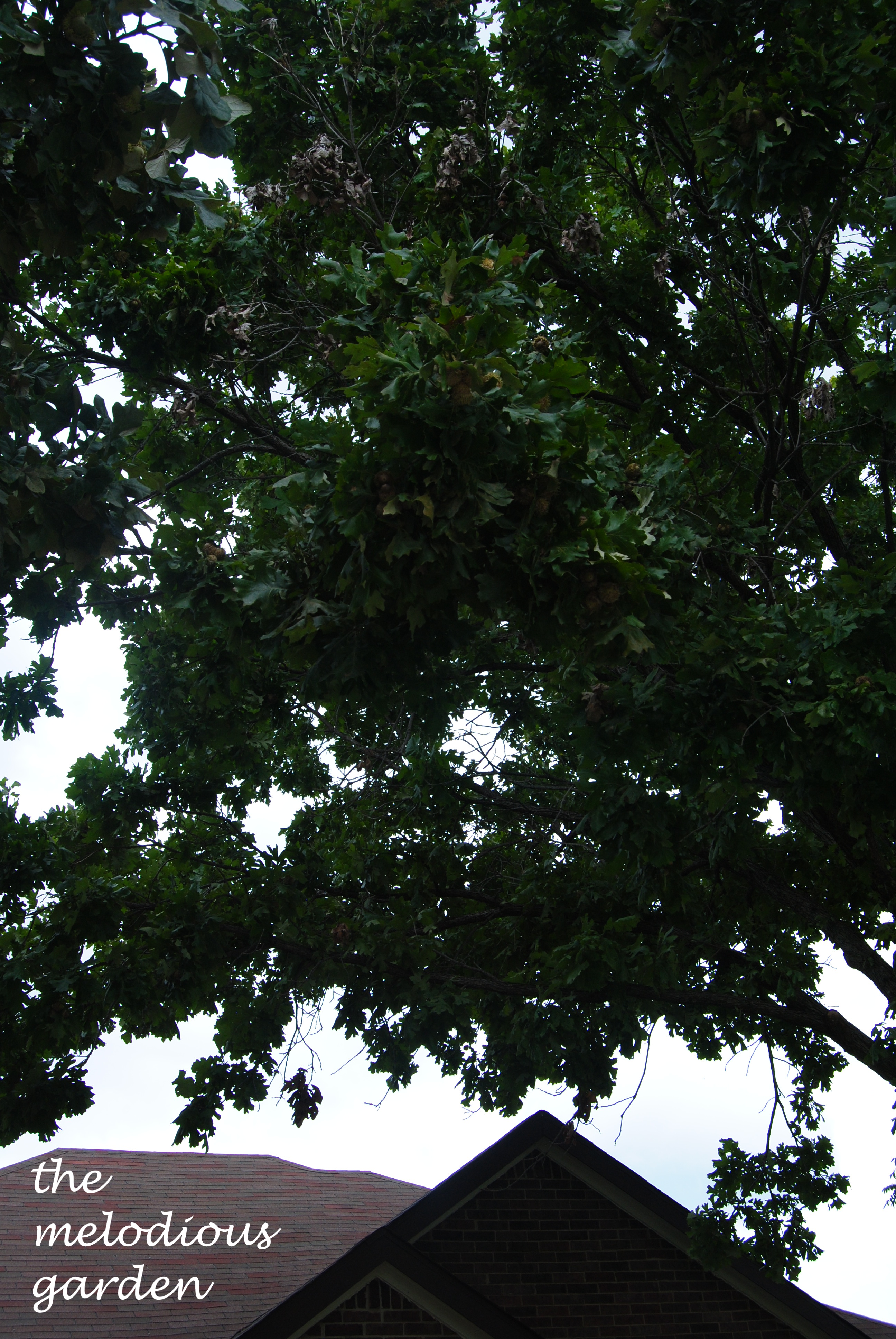
burr oak with house

Someone’s sitting in the shade today because someone planted a tree a long time ago. ~ Warren Buffett

I have read mixed reports of the bur oak’s rate of growth, but from personal experience, I would rate it as a fast grower.

We have two bur oak trees on our suburban lot. One planted by the developer 25 years ago and the other planted by a squirrel 15 years ago. Both trees now tower over our house. (Photo above and below.)

oak tree2

Trees are poems that the earth writes upon the sky.  ~ Kahlil Gebran

The bur oak, which in the white oak family, is native to much of the United States, including North Texas. It is sometimes appropriately called “mossycup oak.” (See photo below.)

burr oak acorn

Bur oak trees can reach 100 feet tall and live to around 200-300 years old.

The care of the Earth is our most ancient and most worthy, and after all, our most pleasing responsibility.  ~ Wendell Berry

November 1st is Arbor Day in Texas, so plan now to plant a shade tree so future generations can sit in its shade and wax poetically about forests and acorns.

Even if I knew that tomorrow the world would go to pieces, I would still plant my apple tree oak tree. ~ Martin Luther

gardening, nature

Buttonbush for pollinators

When I broke ground on my first garden area 23 years ago, I knew I wanted to create a habitat for butterflies and birds, lizards and toads and such. But specifically bees? Pollinators? It wasn’t until the European honey bee’s population started to decline from Colony Collapse Disorder around 2006 that our pollinators gained some much deserved attention.

buttonbushbee

Eleven years ago, the U.S. senate voted to mark a week each year to address pollinators’ declining populations. What started as an American initiative is now a worldwide movement to “promote the health of our pollinators, critical to our food and ecosystems, through conservation, education and research.” (Mission statement from Pollinator Partnership.)

This week is National Pollinator Week. Somehow a week hardly seems enough time to celebrate our pollinators, so vitally important to our world’s food supply. Currently, about one third of the food we consume is reliant upon pollinators for production.

Pollinator Partnership reports there are 200,000 species of pollinators, with only about 1,000 of those being hummingbirds, bats and small mammals. Bees, ants, beetles, butterflies and moths make up the remaining pollinators.

buttonbushbutterfly2

After all these years of gardening in North Texas, I have several plants that I now recommend for attracting wildlife, specifically butterflies and bees. But one plant, in particular, is my favorite – and it is also one of the unsung natives that, like pollinators, deserves more attention.

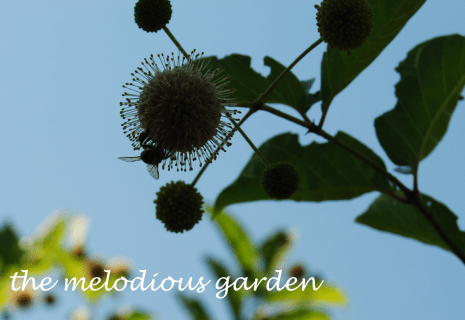
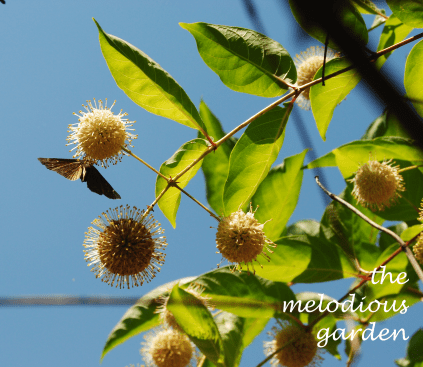
Buttonbush – Cephalanthus occidentalis

This plant – large shrub or small tree, depending on how pruned – produces white perfectly spherical globes of nectar.

buttonbush3

Butterflies, bees and other beneficial insects dine on the nectar, with birds eating the fruits in the winter. Buttonbush is also a host plant for several species of butterflies and moths.

buttonbush2

Buttonbush is native to many areas of the United States and can be found naturally growing in wet areas. Thankfully it is highly adaptable and will grow in any soil type and in a traditional garden setting. It likes full to partial sun.

buttonbushladybug

To attract pollinators, it is important to select a variety of plants so your garden features blooms throughout the growing season. Native plants are preferred, whenever possible. Be sure to include larval host plants, such as milkweed for monarchs and fennel or dill for swallowtail butterflies. And. Avoid pesticides!

Please visit Pollinator Partnership for additional information and ideas on what you can do in your own backyard or corner of the world to support pollinators.

pwgraphic-for-SM-post