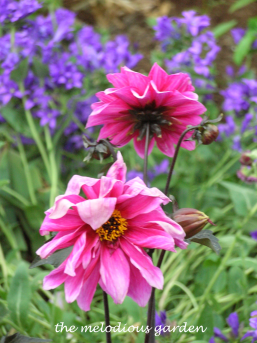
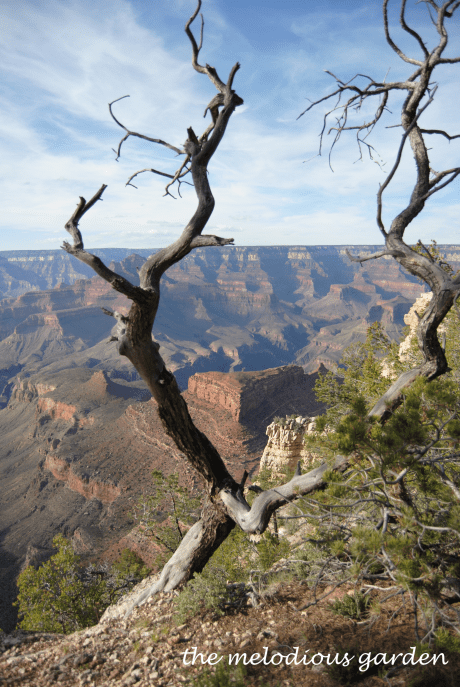
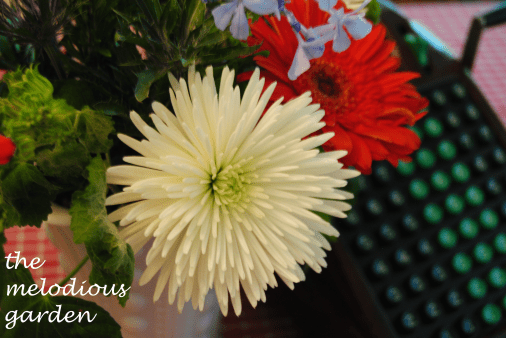
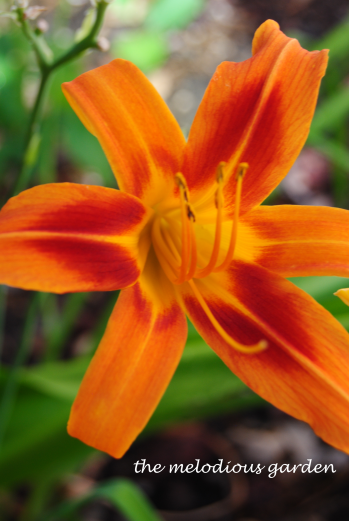
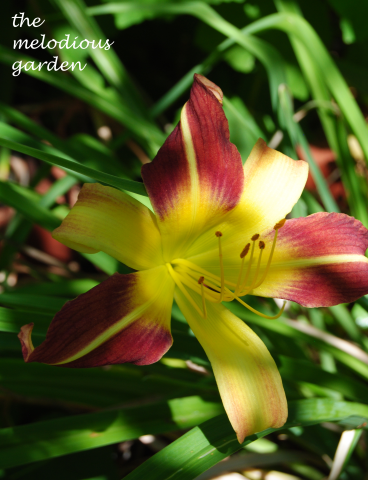
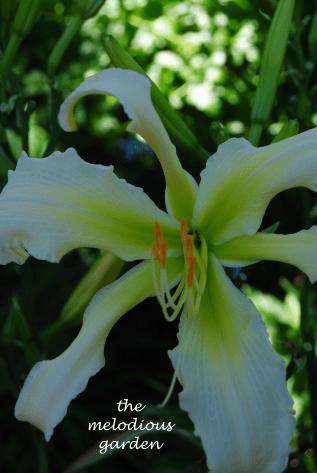
Happy 4th of July from the melodious garden.
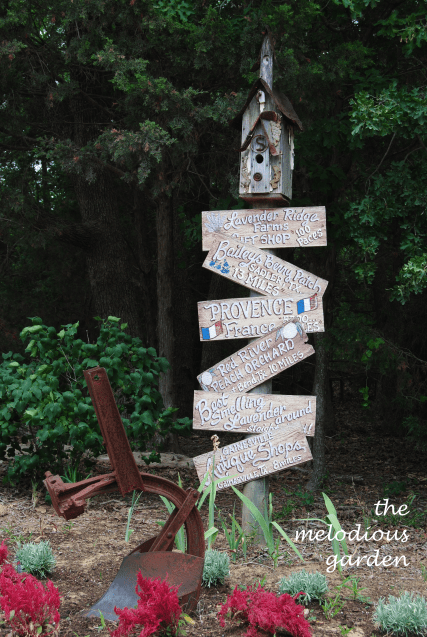
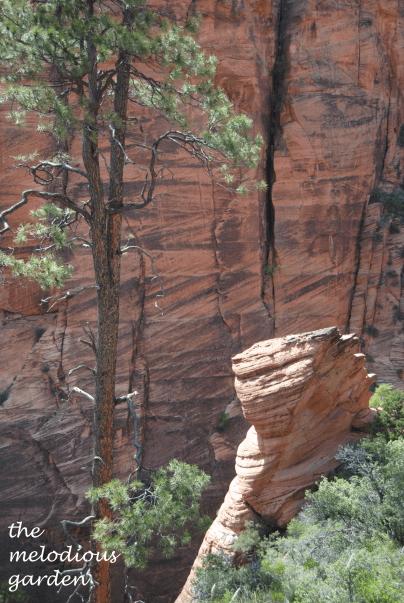
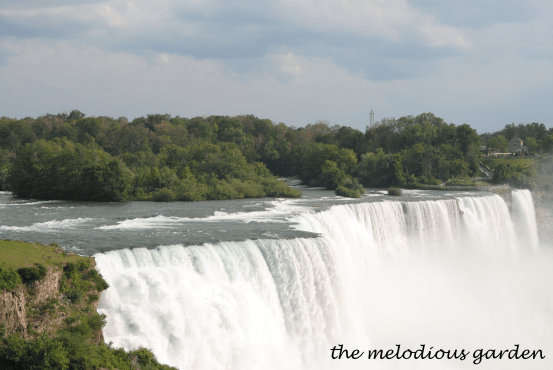
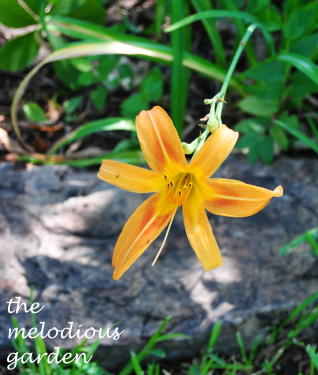
(Photos: Colorado, Zion National Park, Niagara Falls and The Grand Canyon)


Happy 4th of July from the melodious garden.
(Photos: Colorado, Zion National Park, Niagara Falls and The Grand Canyon)
When I broke ground on my first garden area 23 years ago, I knew I wanted to create a habitat for butterflies and birds, lizards and toads and such. But specifically bees? Pollinators? It wasn’t until the European honey bee’s population started to decline from Colony Collapse Disorder around 2006 that our pollinators gained some much deserved attention.

Eleven years ago, the U.S. senate voted to mark a week each year to address pollinators’ declining populations. What started as an American initiative is now a worldwide movement to “promote the health of our pollinators, critical to our food and ecosystems, through conservation, education and research.” (Mission statement from Pollinator Partnership.)
This week is National Pollinator Week. Somehow a week hardly seems enough time to celebrate our pollinators, so vitally important to our world’s food supply. Currently, about one third of the food we consume is reliant upon pollinators for production.
Pollinator Partnership reports there are 200,000 species of pollinators, with only about 1,000 of those being hummingbirds, bats and small mammals. Bees, ants, beetles, butterflies and moths make up the remaining pollinators.

After all these years of gardening in North Texas, I have several plants that I now recommend for attracting wildlife, specifically butterflies and bees. But one plant, in particular, is my favorite – and it is also one of the unsung natives that, like pollinators, deserves more attention.
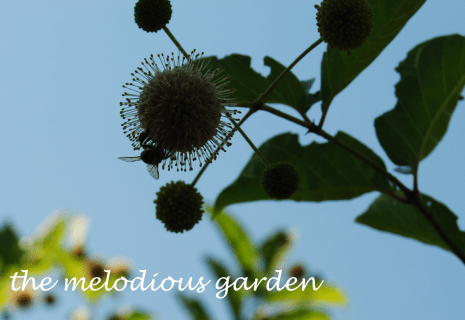
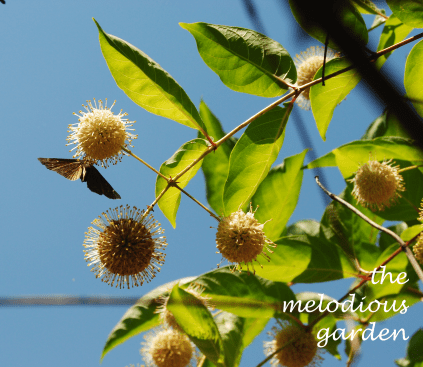
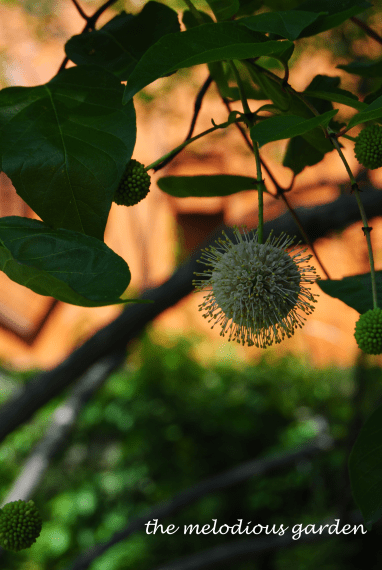
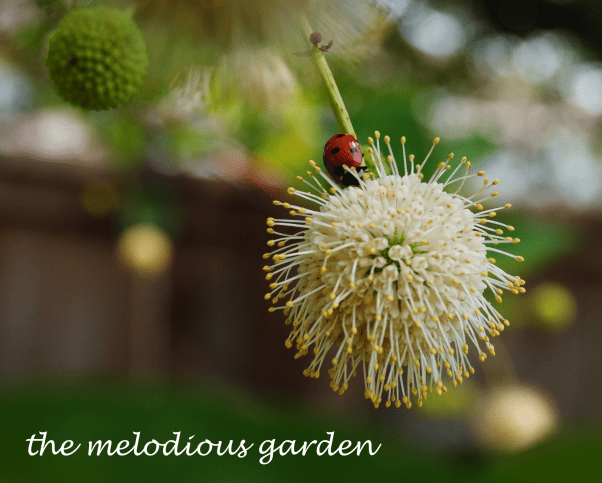
Buttonbush – Cephalanthus occidentalis
This plant – large shrub or small tree, depending on how pruned – produces white perfectly spherical globes of nectar.

Butterflies, bees and other beneficial insects dine on the nectar, with birds eating the fruits in the winter. Buttonbush is also a host plant for several species of butterflies and moths.

Buttonbush is native to many areas of the United States and can be found naturally growing in wet areas. Thankfully it is highly adaptable and will grow in any soil type and in a traditional garden setting. It likes full to partial sun.

To attract pollinators, it is important to select a variety of plants so your garden features blooms throughout the growing season. Native plants are preferred, whenever possible. Be sure to include larval host plants, such as milkweed for monarchs and fennel or dill for swallowtail butterflies. And. Avoid pesticides!
Please visit Pollinator Partnership for additional information and ideas on what you can do in your own backyard or corner of the world to support pollinators.

Spring in North Texas went out with a bang. Correctly, it went out with a rumble of thunder, a flash of lightening and 60 mile per hour winds. And, as a dear gardening friend said, “a legit downpour.” The rain was a much welcome sight. The wind, not so much. And with that —- spring is over and we welcome in the first day of summer.

Daylilies have been blooming for over a month now, yet I still walk the garden each morning, eager to see which ones are blooming that day. My garden is in transition – leaving behind the pink flowers and rose-filled cottage garden to a tapestry of bold colors and even bolder blooms, sans the roses. (Rose Rosette is still running rampant in North Texas…)

“Clapping my hands
with the echoes the summer moon
begins to dawn.”
~ Basho
A new daylily for my garden, still in its nursery pot on my driveway. The blossoms are larger than my hands.

“To see the Summer Sky
Is Poetry, though never in a Book it lie –
True Poems flee”
~ Emily Dickinson
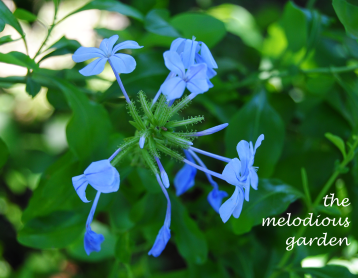
Tropical plumbago (Plumbago auriculata) perfectly echos the color of the summer sky. Though not winter hardy in my zone 8a garden, it has overwintered in a container in my garage for many years now. It has a sprawling habit, so is great to grow in a container or spilling over a retaining wall.

“The hum of bees is the voice of the garden.” ~ Elizabeth Lawrence
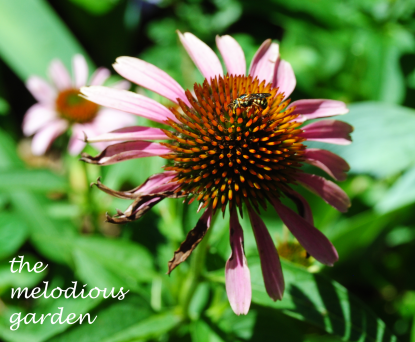
The coneflowers were abuzz with bees this morning, a good reminder this week – National Pollinator Week – of the importance of planting flowers that attract and nourish our pollinators.

(I am not sure why bees always pose for photographs on the rattiest flowers available.)

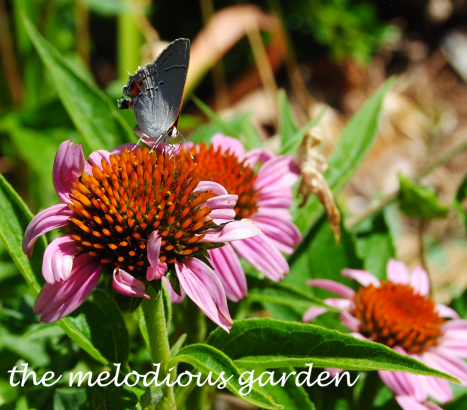
I cut back the coneflowers once they have bloomed in early summer, allowing for a second or third wave of blooms in the late summer and fall. Below, a gray hairstreak braved the bees to partake of the coneflower’s nectar.

(See above about bees posing on the rattiest flower. This hairstreak sure picked a messed up flower!)
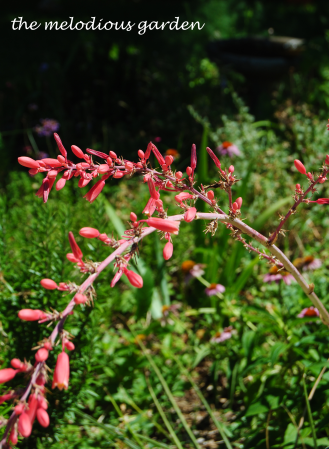
Two of my favorite flowers for pollinators are red yucca and Turk’s cap (Malvaviscus drummondii). Red yucca is extremely drought tolerant, once established, and makes a nice “evergreen” in the winter garden.

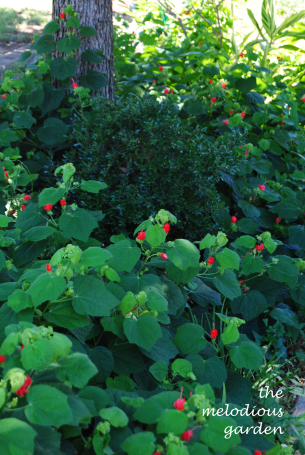
Turk’s cap has proven to be extremely adaptable in my Denton County garden. Originally planted in partial shade in an area that stays relatively moist due to our neighbor’s overwatering tendencies, it has spread into heavier shade and out into full sun and very dry patches. It grows just as well in all areas of my garden, though the leaves are smaller on the plants in full sun. Turk’s cap blooms from May until first freeze. It dies to the ground in the winter. I generally wait to cut it back until new growth is appearing in the spring. Below, Turk’s cap has spread along our driveway. Some of the plants are under the shade of a bur oak tree, while others are out in full sun.

Below, Turk’s cap has seeded out into full sun.

“There ought to be gardens for all months in the year, in which, severally, things of beauty may be then in season.” ~ Sir Francis Bacon
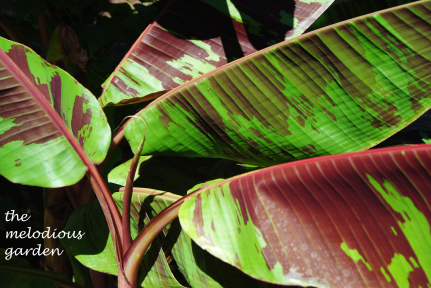
Summer is the perfect time to gain an appreciation for foliage, reminding ourselves that beauty does not only come from flowers. Below, an ornamental banana, which overwinters in my garage.

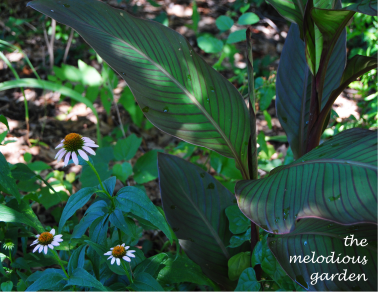
Coneflowers have popped up next to a variegated canna.

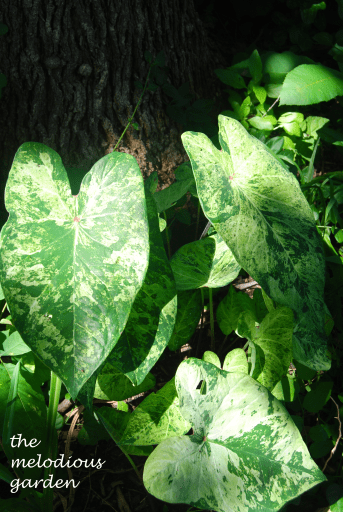
Caladiums, to me, have always been a foliage filler in a summer container arrangement… And then along came… Frog in a Blender, pictured below. I was wandering around Marshall Grain early this spring, when I spotted the bulbs, in a box labeled… Frog in a Blender. Always game for something unusual, I grabbed a few bulbs. And… I may now be addicted. To Frog in a Blender.

“Gardening imparts an organic perspective on the passage of time.”
~ William Cowper
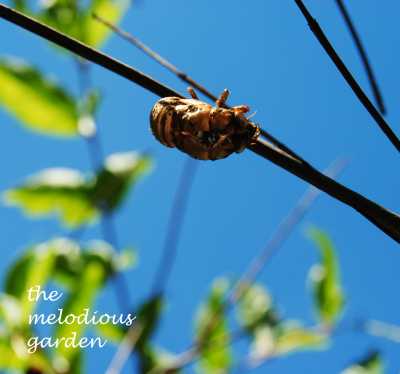
We are always reminded to stop and smell the flowers, but we should also be reminded to stop and look up, for you never know where you might find a cicada molt.

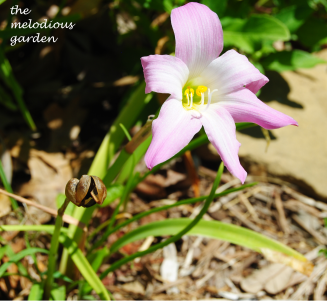
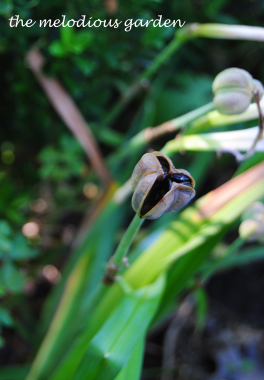
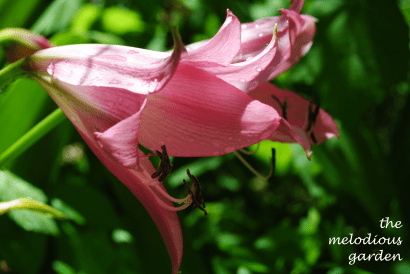
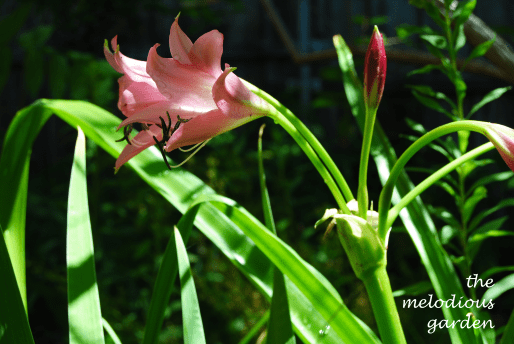
The pink rainlilies have been especially beautiful this season. I wait until the seedpod has dried and cracked open to take the fresh seeds and scatter them throughout the garden.

Below, the seedpod to the far right is still drying… I will wait until the seedpod has split open, like the one in the middle of the photo. One can pop off the seedpod and rub the papery seeds to the wind, allowing rainlilies to pop up wherever they may.

“When on a summer’s morn I wake,
And open my two eyes,
Out to the clear, born-singing rills
My bird-like spirit flies.
To hear the Blackbird, Cuckoo, Thrush,
Or any bird in song;
And common leaves that hum all day
Without a throat or tongue.
And when Time strikes the hour for sleep,
Back in my room alone,
My heart has many a sweet bird’s song —
And one that’s all my own.”
~ William Henry Davies, When on a Summer’s Morn

Whichever way you look at the blossoms, the crinum lily (above and below) are a true Southern garden staple. Steve Bender writes that the crinum lily “has a bulldog constitution.” Yes, they are that tough. And yet – so beautiful!

“Now summer is in flower and natures hum
Is never silent round her sultry bloom
Insects as small as dust are never done
Wi’ glittering dance and reeling in the sun
And green wood fly and blossom haunting bee
Are never weary of their melody
Round field hedge now flowers in full glory twine
Large bindweed bells wild hop and streakd woodbine
That lift athirst their slender throated flowers
Agape for dew falls and for honey showers
These round each bush in sweet disorder run
And spread their wild hues to the sultry sun.”
~ John Clare, June
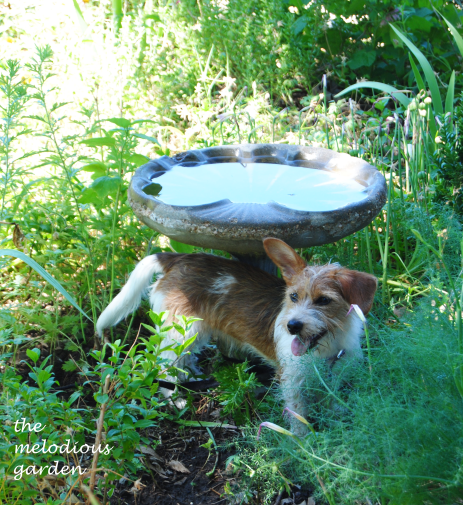
Below, Leia, now nine months old, looking adorable and innocent in the garden. (She had just eaten my brand new prescription bifocal glasses an hour before…)

“When June comes dancing o’er the death of May,
With scarlet roses tinting her green breast,
And mating thrushes ushering in her day,
And Earth on tiptoe for her golden guest.”
~ A Memory of June, by Claude Mckay

The first of June in North Texas, where a forecast “cold front” promising highs “only” in the mid-90s is music to the ears. We are coming off one of our warmest and driest springs, with summer heat setting in early. But the garden still shines bright.
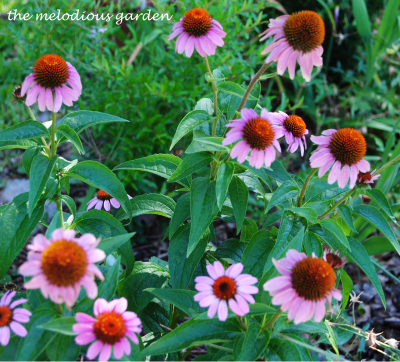
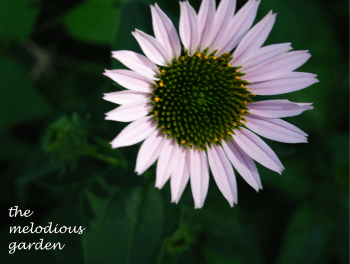
The coneflowers are coming on strong. I love the varying shades of pink as the blooms slowly open to reveal the center cone, the source of its name. Coneflowers will bloom from now until the approaching winter. I deadhead coneflowers through the summer, then stop deadheading them in early fall so that the cones can remain upright through the winter, a source of food for songbirds. Come spring, I will remove the remaining stalks standing in the garden and scatter the seeds wherever I want coneflowers to grow.

“What is one to say about June, the time of perfect young summer, the fulfillment of the promise of the earlier months, and with as yet no sign to remind one that its fresh young beauty will ever fade.” ~ On Gardening, by Gertrude Jekyll
The colors in the early June garden still radiate, no sun bleached petals yet. The daylilies are having their time in the spotlight.


“It is the month of June,
The month of leaves and roses,
When pleasant sights salute the eyes
And pleasant scents the noses.”
~ The Month of June, by Nathaniel Parker Willis


“And since all this loveliness can not be Heaven, I know in my heart it is June.” ~ Abba Woolson

“In June, as many as a dozen species may burst their buds on a single day. No man can heed all of these anniversaries; no man can ignore all of them.” ~ Aldo Leopold
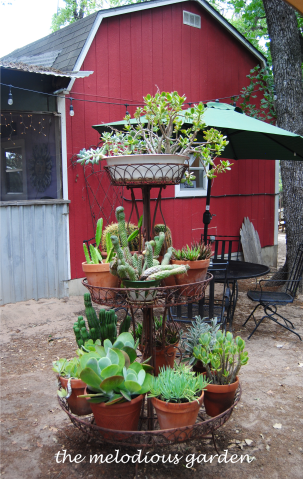
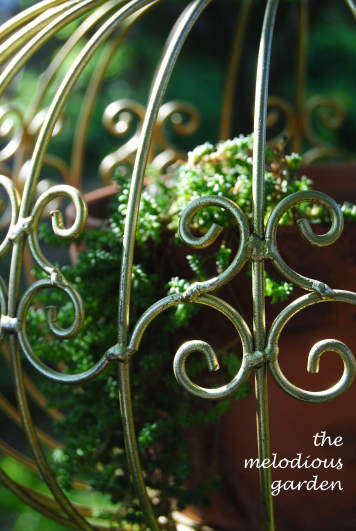
I love growing sedums in clay pots inside ornate metal hanging baskets. They bring another layer to the garden, where the sun, peeking through the tree leaves, highlights sedum and metal alike.

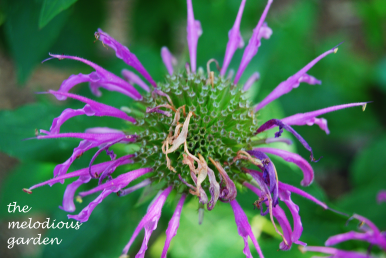
No bees this morning, but the bee balm is blooming beautifully.

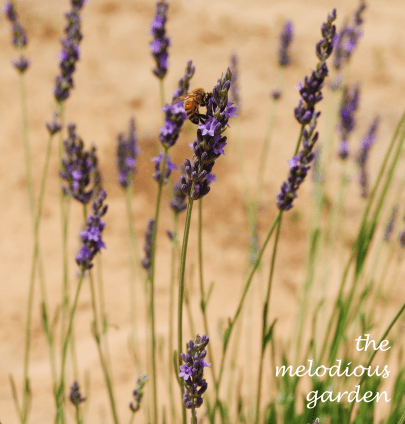
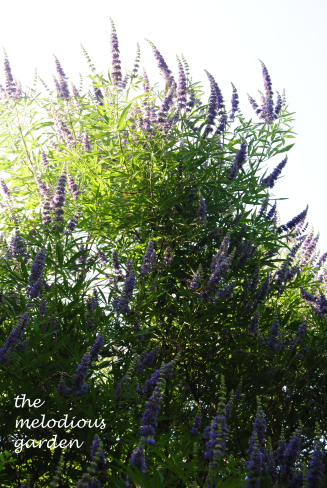
Vitex, sometimes call the Texas Lilac, is blooming and buzzing with life this June morning. (Perhaps it has lured the bees away from the bee balm?) Alas, the vitex smells nothing like the real lilac! (I find it malodorous…) Vitex has been noted as a Texas Superstar plant, as it is very well adapted to grow and thrive throughout the state, even in hot and dry locations. The spiky lavender blooms attract both bees and butterflies in abundance.

“Summer is coming!” the soft breezes whisper;
“Summer is coming!” the glad birdies sing.
Summer is coming – I hear her quick footsteps;
Take your last look at the beautiful Spring.
~ Summer is Coming, by Dora Goodale
Passion fruit vine is showing off its exotic blossoms. It scrambles here and there throughout my garden, not being the best behaved of plants. Passion fruit vine is often grown in butterfly gardens, as the gulf fritillary butterfly uses this as a host plant.

I love to grow fennel both for its ferny foliage and for the black swallowtail butterflies. This caterpillar has been munching and growing for the past week or so.

“I wonder what it would be like to live in a world where it was always June.” ~ L.M. Montgomery (Montgomery is the author of The Anne of Green Gables series, a great book to read-aloud! Boys and girls alike can identify with the lovable Anne.)
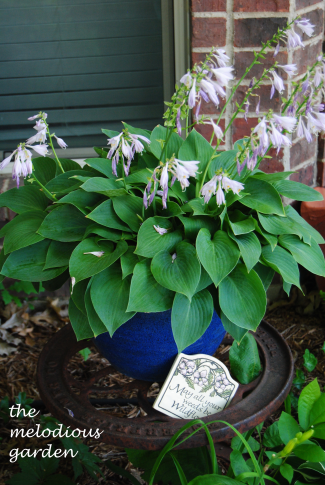
Though I don’t have much shade, I love to tuck in hosta plants wherever I can. While grown for their foliage, hosta have beautiful and delicate blooms in early summer.

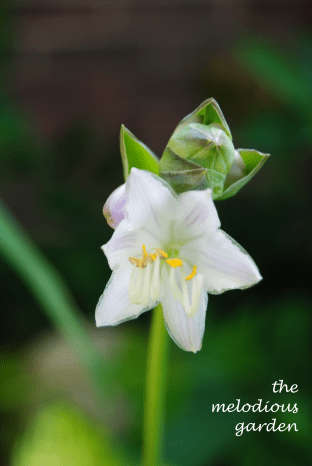
Hosta leaves and blooms are both edible. I have not yet tried them myself, but these blossoms would be a colorful addition to any salad. (As would daylily blooms, which are also edible.)

I love how dainty hosta blooms are! This one is no larger than a nickle.

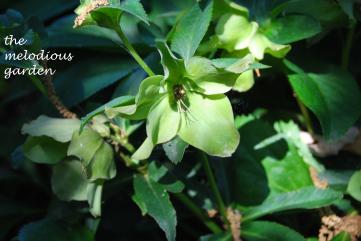
Hellebores, which began blooming in mid-winter, are still going strong.

I love using metal tubs and buckets and such as planters. This old tub is planted with coleus, rue, silver thyme and begonia. Rue is a host plant to both the black swallowtail and the giant swallowtail butterflies.

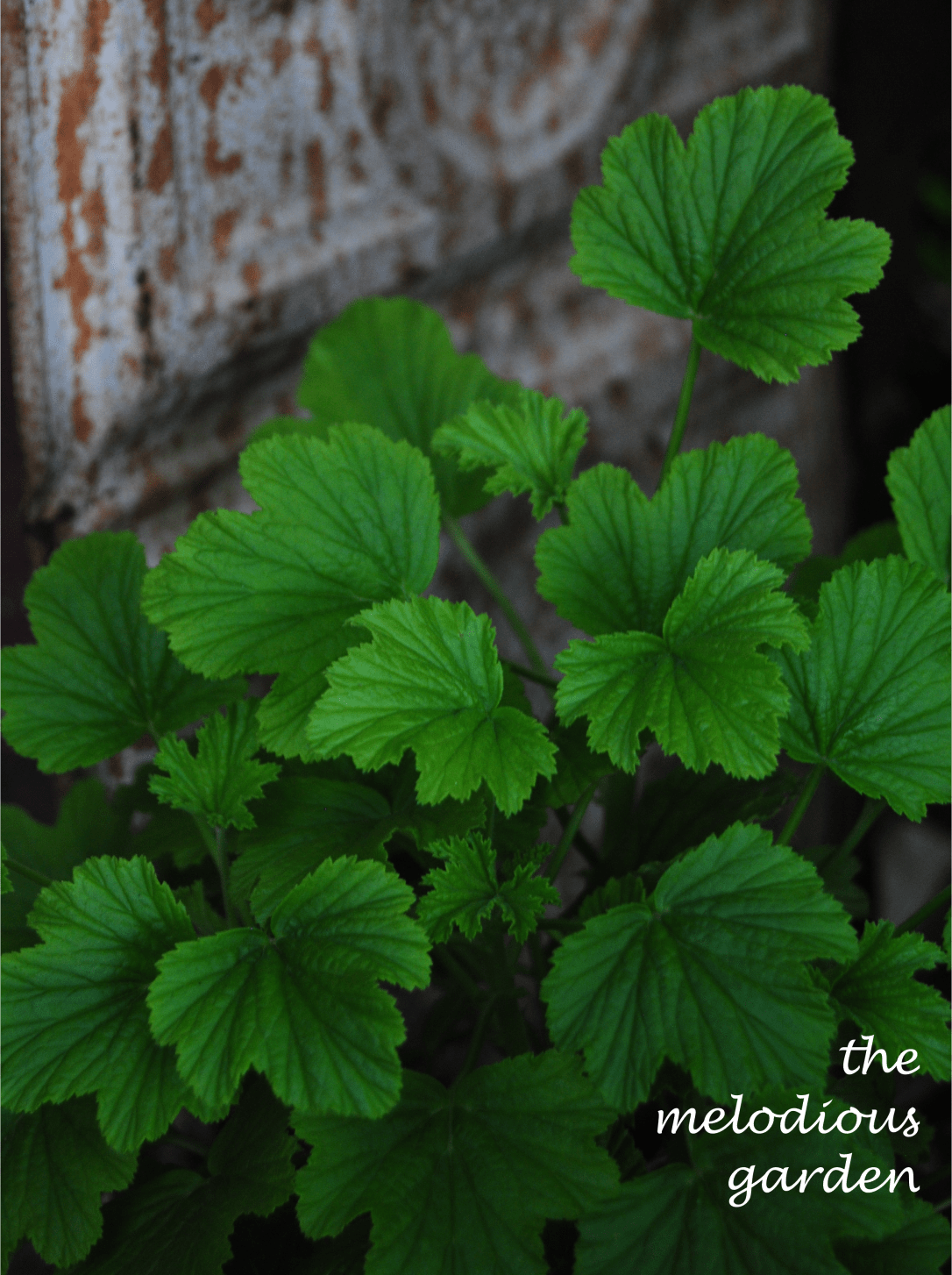
An orange scented geranium and an old ceiling tile add a mix of texture to my potted garden by the front door.

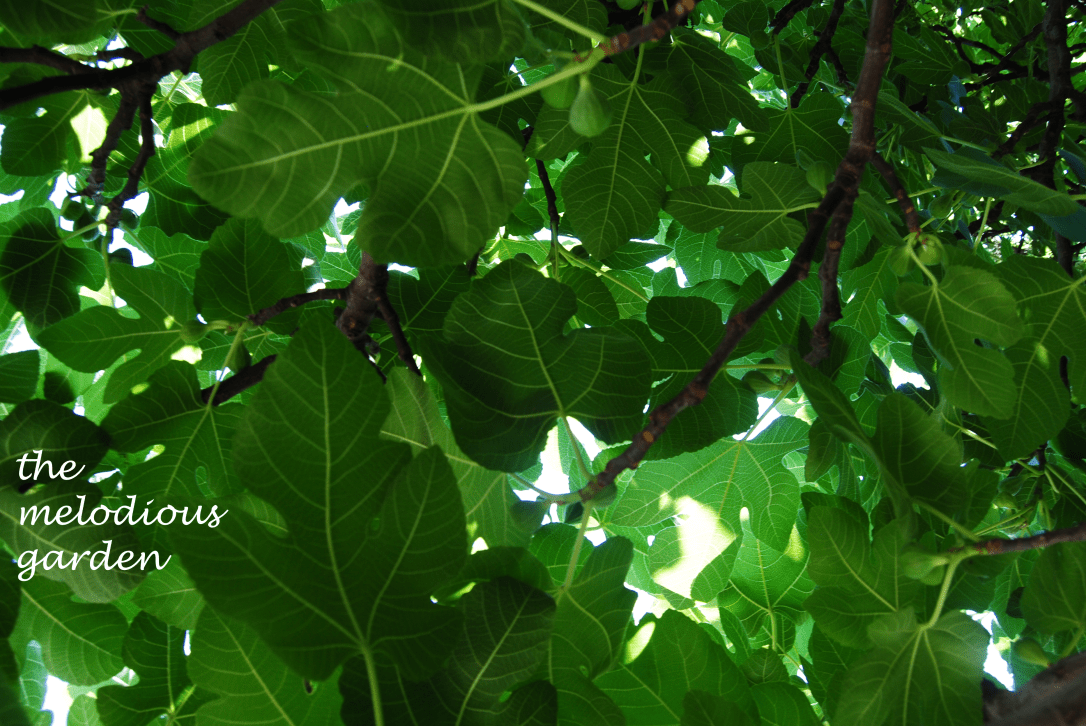
Ah… The fig tree. Beautiful leaves. Wondrous shade. Edible figs! Though they are little now, they hold the promise of an abundant harvest.

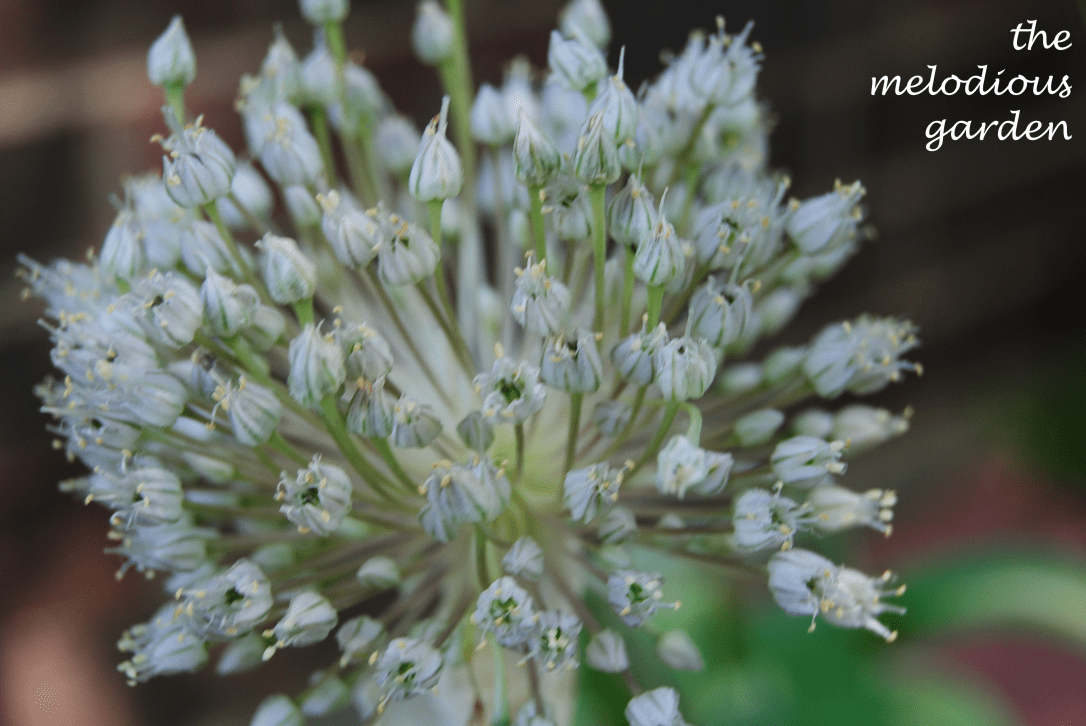
Once upon a time, when I grew antique roses by the dozens, I planted garlic around the garden, as it is reported to ward off insects. While it didn’t save my garden from being ravished by rose rosette, I still have garlic blooming here and there. I love their large flower heads.

I will leave you with one more bloom – a mutant coneflower. And one last poetic look at June.

“With flower petals soft unfurled
And vines around the trellis curled.
The grass is sweet and richly green
With shining luminescent sheen –
Your face, my June, a beauteous scene.”
~ My Lovely June, by Valerie Dohren
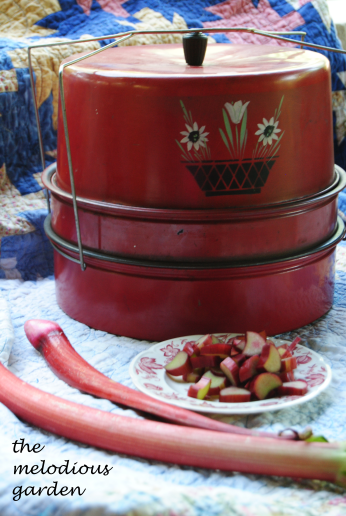
I have no clue who first tasted rhubarb and thought, “Why, if one only added enough sugar, this might be edible!” I do know that rhubarb didn’t become widely consumed until sugar became affordable.
When I was growing up, the children in my neighborhood would sit and swing and dare each other to eat a bit of raw rhubarb. “Found a peanut, found a peanut, found a peanut yesterday” we would sing as we swung. “Cracked it open, cracked it open, cracked it open yesterday,” and we would snap a piece off and eat it. If we were brave enough. My mouth still remembers that sharp tartness all these years later!
Much like lemon and gooseberry, rhubarb is in a league of its own. Perfectly inedible alone. Wonderfully edible with enough sugar.
As a new Texas homeowner 22 years ago, I thought rhubarb grew like a weed everywhere. Not so. The foliage came up beautifully that first spring. It grew and grew and looked wonderful. Then summer hit. And the rhubarb melted back into the earth from which it had emerged, never to be seen again. I have since thought rhubarb impossible to grow this far south.
Alas, Texas A&M says it is possible! As an annual, not a perennial like northern gardeners grow it. Oh. And through the winter, not the summer. Basically, if you are familiar with growing rhubarb up north, turn everything on its head and you, too, can grow it Texas. Maybe some day I will try again to grow rhubarb. Until then, I will just buy it at the grocery store.
(Texas A&M also says that rhubarb is never eaten raw, which may explain why I still shiver when I think about eating it raw as a child.)

Rhubarb upside down cake
Ingredients:
3 cups sliced fresh or frozen rhubarb
1 cup sugar
2 tablespoons all-purpose flour
1/4 teaspoon ground nutmeg
1/2 cup butter, melted
Batter:
1/4 cup butter, melted
3/4 cup sugar
1 large egg
1 1/2 cups all-purpose flour
2 teaspoons baking powder
1/2 teaspoon ground nutmeg
1/4 teaspoon salt
2/3 cup whole milk
Place rhubarb in a greased 10-ince cast iron skillet. Combine sugar, flour and nutmeg. Sprinkle over rhubarb. Drizzle with butter and set aside. For the batter, in a large bowl, beat the butter and sugar until blended. Beat in the egg. Combine flour, baking powder, nutmeg and salt. Gradually add to the egg mixture alternately with milk, beating well after each addition.
Spread over rhubarb mixture. Bake at 350 degrees for 35 minutes or until a toothpick inserted in the center comes out clean. Loosen edges immediately and invert onto a serving dish. Serve warm.
Serve with whipped, cream, if desired.
(Rhubarb is technically a vegetable so eating the leftovers for breakfast starts your day off right. Just sayin’.)

If you have never tried fresh ground nutmeg, you must… It is so much fresher than the ground spice bought at the grocery store.
I am on a quest…
How to use tea in my baking? Can I (Could I? Should I?) add herbs into all of my recipes? If so, does it add depth to the dish or is the addition merely cosmetic? And: What herbs and teas go best together?
Since I have long been enamored with hibiscus in my garden, I thought it only appropriate to start on this quest with hibiscus tea.
I had tea- and herb-loving company visiting from out of town over Mother’s Day weekend so that seemed like a great time to launch this culinary adventure.
Conclusion: The hibiscus tea gave the lemon bars a wonderful rose coloring, while adding some cranberry-like tartness to the lemon. Lemon verbena, added to the crust, brought nothing to the dish. The crust was made from gluten-free flour and turned out perfectly with no adjustments.
Trinity Rose Tea Shoppe, a locally owned small business, has a wonderful selection of herbal teas. I used their Organic Radiant Red Hibiscus Tea in this recipe.
Isn’t this beautiful? It really is a radiant red!

Crust ingredients:
1/2 cup butter, room temperature
1/4 cup sugar
1 cup flour
pinch of salt (if using unsalted butter)
1 teaspoon vanilla bean paste
Filling ingredients:
1/2 cup fresh squeezed lemon juice
1 tablespoon dried hibiscus tea
3 large eggs
1 1/2 cups sugar
1/2 cup flour
Preheat over to 350 degrees.
Cream butter, sugar and vanilla together. Add in the flour and salt, mix until it is just combined. Press the dough evenly across the bottom of a 9×9 baking pan.
Bake the crust for 15 minutes or until it is lightly browned. Set it aside to cool, while leaving the oven on.
To make the filling, stir the hibiscus tea into the lemon juice and let it sit for 15 minutes. Strain and discard the hibiscus.
Whisk the eggs and sugar together until well blended. Stir in the lemon juice and then blend in the flour.
Pour the filling over the cooled crust and return to the oven and bake another 20-25 minutes, or until the filling is set.
Let cool fully before slicing. Dust with powdered sugar before serving.

Memorial Day traditionally kicks off the start of summer but here in North Texas, gardeners have been thinking about (dreading?) summer for the past month or two. The temperatures have crept up. Then jumped up. And with that summer is here.
What plants can survive – let alone thrive – a Texas summer? Above 100 degree days. Nighttime lows a sticky 85 degrees. Endless days, weeks, with no rain in sight.
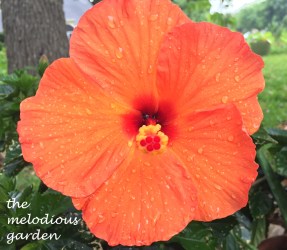
Hibiscus are a great option. While some are native to this region and others from far away continents, all do very well in this area and offer bold splashes of color that will last through the summertime.
Where to even begin when talking about hibiscus? Malvaviscus… What a mouthful the Latin name is! They are often referred to as mallows, which is much easier on the tongue.
Some hibiscus are perennial in North Texas, while others are not. But almost all of them have large, tropical looking blooms. Wiki reports that they have “conspicuous” flowers. You think?!

As Steve Bender wrote in “Passalong Plants, “If you are the kind of gardener who considers bright, splashy colors and big, bold blooms an affront to polite society, then you should probably pass (hibiscus) by.”
Not one to shy away from big and bold, I grow a number of hibiscus varieties and am always looking for more.
Tropical hibiscus…

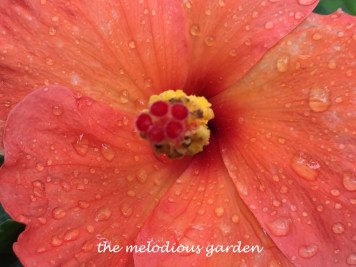
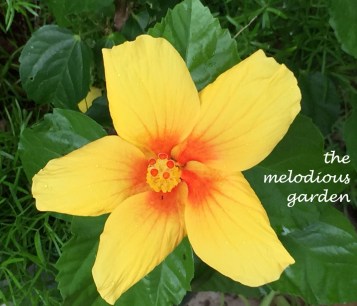
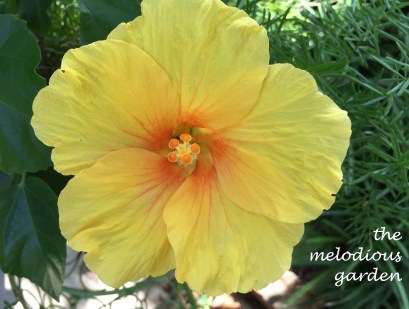
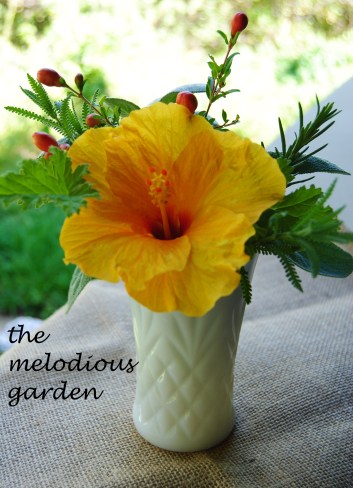
Tropical hibiscus are available in a wide range of colors – reds, oranges, yellows, pinks and white and many variations in between and blends thereof.

I bring my tropical hibiscus into the garage once temperatures get into the 40s at night, though I will schlep them outside and water them on warm winter days. (I just have to remember to get them back inside before the temperatures drop!)

Hibiscus schizopetalus, sometimes called fringed rose mallow or spider hibiscus… It has delicate petals that hang downward, sure to stop garden visitors in their steps. (Photo below.)

Perennial hibiscus…
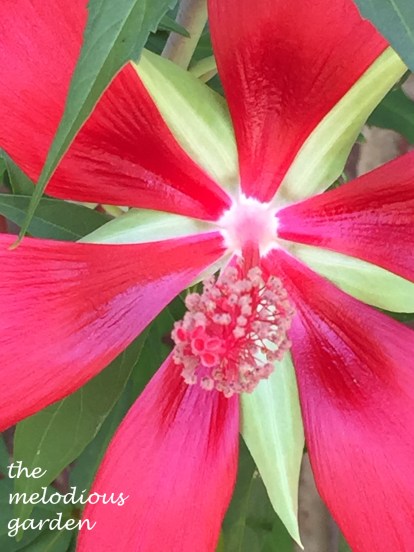
Texas star hibiscus – hibiscus coccineus – a native hibiscus. Sometimes called scarlet rose mallow. This hibiscus can grow in swampy areas or in a pond, but will also tolerate drier (though not dry!) areas of the garden. Like all hibiscus, it will do best with ample water and fertilizer. It can grow to 6-7 feet tall in one season, so is best planted at the back of the flower bed. Texas star hibiscus is also available in white, if bright red is not your style.


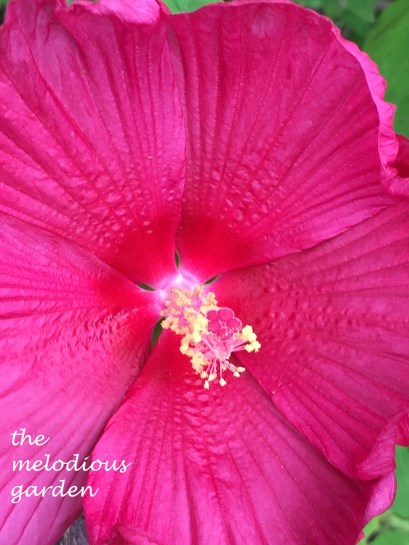
Perennial hibiscus – hibiscus moscheutos – sometimes called hardy hibiscus. This hibiscus is available in red, pinks, white and variations of those. (Photos below.)


All hibiscus can tolerate some afternoon shade, but do best in full sun. The more sun, the more flowers. Likewise, more fertilizer, more flowers. I feed my perennial hibiscus once in the spring, early summer and late summer. I try to fertilize my container plants, hibiscus included, once a month as container soils do not hold nutrients as well.
Perennial hibiscus will die to the ground in the winter. Do not remove the dead plant stalks until spring, when new growth is emerging. I top-dress hibiscus with fresh compost each spring when I cut them back.
Both tropical and perennial hibiscus are easy to grow, with big rewards.
There are several hundred species of hibiscus, from our 35 rose mallows that are native to southeastern part United States to hibiscus syriacus (also known as both Rose of Sharon and Shrub Althea) which can be grown as a large shrub or a small tree. I am still exploring all the nooks and crannies of this genus. To nourish me along this horticultural quest, I am experimenting with food and drinks made from hibiscus. (Next up: Hibiscus lemon bars…)

“Sweet April showers do spring May flowers,” wrote Thomas Tusser in 1557.
“When April steps aside for May, like diamonds all the rain-drops glisten; Fresh violets open every day: To some new bird each hour we listen,” penned Lucy Larcom.
If the earth does indeed laugh in flowers, as Ralph Waldo Emerson wrote, it surely must be May that binds poetry and botany forever together.
“May and June. Soft syllables, gentle names for the two best months in the garden year…”~ Peter Loewer

“The May-pole is up, now give me the cup; I’ll drink to the garlands around it; But first unto those whose hands did compose the glory of flowers that crown’d it.” ~ Robert Herrick, The Maypole

Come take a tour of the melodious garden, located in zone 8a, southern Denton County, Texas, and see what is blooming this first day of May, 2018.
“Horticulturally, the month of May is opening night, homecoming and graduation day all rolled into one.” ~ Tam Mossman

This deep purple clematis is always a show-stopper. And a reminder that I simply must plant more! While many vines are aggressive overachievers (I am talking to you, trumpet vine!), most varieties of clematis are well-behaved and grow lightly over rose branches or trellis.
“Now every field is clothed with grass, and every tree with leaves; now the woods put forth their blossoms, and the year assumes its gay attire.” ~ Virgil

Wine Cups (Callirhoe involucrata) are a native wildflower that rivals the best patch of bluebonnets, in my honest opinion. It grows from a rhizome, with foliage branching out along the ground. The hot magenta flowers (shaped like… wine cups!) attract bees and butterflies. It is extremely drought tolerant and slowly reseeds in the garden. I thin out the older rhizomes when the Wine Cups have finished blooming, then I thin out a few more so I can share this beautiful flower with fellow gardeners.
“Sweet spring, full of sweet days and roses…” George Herbert

Green Ice, a unique miniature rose, is one of the few roses in my garden that survived the plague that is Rose Rosette Virus. I am not sure why or how not one, but two! Green Ice roses survived when the other roses in the area were infected. Miniature roses are not known to be exceptionally hardy, after all. But here they are. Beautiful. The white blooms will take on a greenish cast over the next few weeks, hence its name. Green. Ice.
“The world’s favorite season is the spring. All things seem possible in May.” Edwin Way Teale
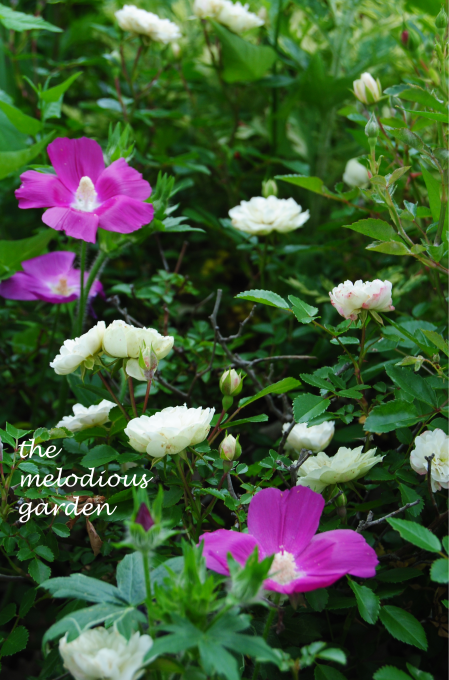
The photo above shows the mini rose Green Ice with Wine Cups scrambling through its branches. Wine Cups do not smother out other plants, in my experience.
“Never yet was a springtime, when the buds forgot to bloom.” ~ Margaret Elizabeth Sangster

Ah. One lone poppy. I have no idea why, but after years of not growing in my garden, I had one lone poppy pop up this year. It is a stunner, isn’t it?
“A little madness in the spring is wholesome even for the king.” ~ Emily Dickinson

I love plants that reseed here and there. Above is Penstemon tenuis, the perfect reseeding perennial. Tough as nails, not aggressive, lovely shade of lavender. What more could one ask for? Well, it also makes a great cut flower. I do not dead-head this plant when it is done flowering. Rather, I let the seed pods dry completely on the plant, then I cut them way back and cast the seed heads here and there, wherever I would like to see it spread. On-site composting and super easy seed sowing all in one.
“O the month of May, the merry month of May, so frolic, so gay, and so green, so green, so green!” ~ Thomas Dekker

I love the greenness that hostas add to the garden. While flowers are lovely, sometimes green – different shades of green, different textures of green – are a welcome relief to the riot of color that is spring. The above hosta, Curly Fries, has been a great container plant in my garden, nestled back into my one shady spot.
“I think that no matter how old or infirm I may become, I will always plant a large garden in the spring. Who can resist the feelings of hope and joy that one gets from participating in nature’s rebirth?” ~ Edward Giobbi

And who can resist a shot of bright red on the first day of May? Hippeastrum (amaryllis) is a great addition to any southern garden. It is often dug up, divided and passed along to others after it is done blooming.
“Sweet May hath come to love us, flowers, trees, their blossoms don’ and through the blue heavens above us the very clouds move on.” ~ Heinrich Heine, Book of Songs

While there is no such thing as a blue rose, Veilchenblau may come closest of all. This is another RRV survivor in my garden. A rambling old rose, its blooms start out crimson colored, then fade out to the above colored grayish mauve. While it only blooms in the spring, it is worth the garden space!
“Among the changing months, May stands confest the sweetest, and in fairest colors dressed.” ~ James Thomson, On May
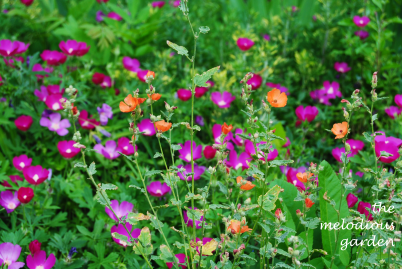
As I was contemplating my RRV devastated garden a few years back and wondering how I would ever be able to garden again, something hit me. Orange. Bright orange! Gone are the soft pinks of my dear antique roses. I am now playing more with colors and adding in splashes of oranges, yellows and reds. Above, Munro’s Globe Mallow (Sphaeralcea munroana) blooms happily alongside Wine Cups.
“Be like a flower and turn your face to the sun.” Kahlil Gibran
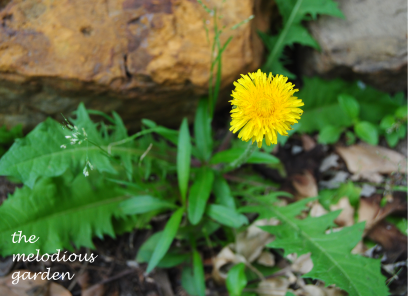
I couldn’t resist. She was blooming in my garden today and I just could not overlook her. The dandelion. The lowly dandelion. Why it has that reputation, I do not know. Please, please leave dandelions in your garden. They are an important source of nectar for honeybees!

In the insect world, there are good bugs and there are bad bugs. And then there is the praying mantis. The indiscriminate hunter. The dinosaur of the insect world. The hunter and the hunted. Both intriguing and deadly.
Watching a praying mantis stalk its prey feels a bit like Jurassic Park. They will sit still, waiting the perfect moment to ambush the unexpecting. Insect. Lizard. Small bird. They don’t care. They will take down a nasty grasshopper just as easily as a beautiful butterfly or a beneficial honeybee. They are carnivores, eating meat instead of vegetation like many garden insects. The mantis: both good bug and bad bug. All in one fascinating package.
Mary Ann, a child’s picture book by Betsy James, was a favorite at our home when my son was young.

Amy, sad that her best friend Mary Ann moved away, told her daddy that she wished there were hundreds and hundreds of Mary Anns. “Then if one ever moves away, it wouldn’t matter,” she says. When Amy finds a praying mantis in her clubhouse, she names the mantis Mary Ann and puts the mantis in a terrarium inside their home. Every day the mantis gets larger and larger, until one day, “when summer was over, she pushed a ball of foam out of her tail, onto a fern stem.” This foam hardens, thus protecting the eggs inside. Mary Ann, the mantis, passes away after laying her eggs, as often happens in the insect world. Time passes, and the lid falls off the terrarium. Then.. one day… the family returns home to find…the egg has hatched!
“Look at all the Mary Anns!”
Hundreds and hundreds of Mary Anns.

Mary Anns in the teacups. Mary Anns on the toaster and the telephone, under the soap, behind the vegetables! Mary Anns all over the house! “I had hundreds and hundreds of Mary Anns,” the excited girl in the story exclaims!
And such it is when a praying mantis egg hatches. A small hard foamy egg about the diameter of a quarter, home to hundreds of babies!
The babies, about the size of half a grain of rice, emerge in bunches, by the hundreds.

It is an amazing sight to behold.
The female mantis lays one egg case in the fall – a foamy capsule, generally attached to a small stem or branch. She then dies. Come spring, the egg case hatches.
Praying mantis egg cases may be purchased from science supply companies, online garden sources or at some local nurseries. Place the egg case in a (well!) covered terrarium (so you don’t have Mary Anns in your teacups!) Make sure the terrarium is out of direct sunlight! And then…wait patiently…ever so patiently…until one day you will notice – movement! The egg case is…covered…with itty bitty baby praying mantis.
There are around 2,000 species of mantis around the world. Depending on the species, one praying mantis may lay up to 400 eggs.

The praying mantis has an incomplete metamorphosis, meaning that the nymph (young insect) that emerges looks like a mini replica of the adult praying mantis. Triangular head. Bulging compound eyes. Elongated body. Large forelegs, perfectly adapted for catching prey.

Fierce hunter, right from the beginning. Once hatched, the terrarium lid needs to be removed so the mantis can scatter. They are hungry and ready to eat immediately and, if not able to find other food, they will turn cannibal.

Insects that go through incomplete metamorphosis have three stages of life – egg, nymph and adult. They will shed their hard exoskeleton as they grow, molting, discarding one exoskeleton for another, several times throughout their short lives. Most of the praying mantis species in our country grow to about three inches in length.
Never pick up a praying mantis, as they are easily injured. However, you can place your hand near them and they will walk onto you. No need to worry about being bit.
Whether they are beneficial to an organic garden or not is debatable, but hatching a mantis egg is a fun spring-time science experiment for children – of all ages!

I would like to introduce another long-time friend of mine.
Mr. Crinkleroot.
I could tell you all about him, but I think I will let him speak for himself. “Crinkleroot was born in a tree and raised by bees.” How cool is that? “He can whistle in a hundred languages and speak caterpillar, salamander, and turtle, too.” I want that Super Power! But most importantly, “he knows all about wild animals, even the ones that live around your house.”
Mr. Crinkleroot, you see, is a rugged naturalist, a creation of Jim Arnosky, self taught writer, artist and natural scientist.

My son and I first met Mr. Crinkleroot when my son was just a wee thing, maybe preschool or kindergarten age. We had read this wonderful book called Owl Moon by Jane Yolen and my son wanted to learn more about owls. A library catalog search led us to All About Owls by Jim Arnosky, which led us to dissecting our first of many owl pellets and thus began a long relationship with Mr. Arnosky and Mr. Crinkleroot.
“Education is not the filling of a pail, but the lighting of a fire,” wrote William Butler Yeats. Lighting that fire, raising the curiosity, that is what Mr. Crinkleroot did in our household and what he has done for a great many other children.
Our family has kept a nature collection for many years. Throughout this post, there will be photographs of Mr. Arnosky’s books, along with items from our nature collection. For us, the two went hand in hand. The more we read about and studied nature, the more we discovered, even when we weren’t looking for it. Suddenly that dead moth on our driveway wasn’t just a dead moth on our driveway. It was something to observe, something to admire, something to collect. No animals or insects were harmed in the making of our nature collection. (The tree was harmed, but it needed to go and a dozen better adapted trees were planted in its place. The turtle shell was found on our property as is. I fear it was our neighbor’s turtle that escaped their yard several years before I found its remains.) Please be sure to look at Mr. Arnosky’s art work in the photographs. The attention to detail is what drew us into his work.

We now own more than a dozen of Mr. Arnosky’s books. Don’t be impressed by our collection. He has written and published more than 130-some books! I obviously have more book collecting to do before I even make a dent in his publications.
Besides Mr. Arnosky’s amazingly detailed illustrations, the drawings are often life size. Thunder Birds, in particular, has fold out pages that show the real size of a pelican’s beak and an osprey’s wing span. Did I mention he is a self-taught artist?! That fact is even more impressive when you see his illustrations on that larger scale.

Big Jim and The White-Legged Moose, thankfully, is not drawn life size. The tall-tale was inspired by Mr. Arnosky’s real life encounter with a bull moose in the fall of 1987. “Big Jim dropped his art supplies and climbed a nearby birch. With the bull below, Jim prayed, as if he were in church.” I won’t give away the ending, but it is a fun book worth seeking out.

Crinkleroot’s guide books inspired a great many nature hunts and explorations of us. Crinkleroot’s Guide to Knowing… The Trees… Butterflies and Moths… Walking in Wild Places… Animal Habitats… These books are very informative, with practical information like how to identify poison ivy and poison sumac. Crinkleroot’s Guide to Knowing Animal Habitats details the three most common types of wetlands – marsh, bog and swamp – along with drawings of what animals might be found in each place. As with many of his drawings, every butterfly and moth featured in Crinkleroot’s Guide to Knowing Butterflies and Moths is shown real size. His information – as detailed as it is – is always presented in such a way that even the youngest child can appreciate.

Mr. Arnosky’s books reflect his admiration of other naturalists before him, such as John Muir and John Burroughs. Field Trips, a book that continues to inspire me to grab my binoculars and field guides and head out on a hike, was dedicated to the great ornithologist, Roger Tory Peterson. Field Trips, like all of his books, is a treasure trove of his art work – more than 300 drawings and 175 identification silhouettes.

If you are looking for a book for an older child, or even for yourself, Nearer Nature is Mr. Arnosky’s reflections and observations of life on his Vermont farm. Secrets of a Wildlife Watcher is another great book for older readers, as it explains how to find and observe wild animals in their various habitats.

“When you witness an intimate tidbit of a wild animal’s private life, glean all you can from the experience. Pay attention to the details, and wonder about what you see… Don’t just look. Observe…You can always be sharpening your powers of observation.” (page 44 of Secrets of a Wildlife Watcher) Whenever I read that quote, I am reminded that some medical schools today require their students to study art, as that power of observation, being able to look and find the smallest detail, is fading away, yet it is an important skill to have and to hone.
I would like to end this post with a direct quote, as I couldn’t say it better myself. “(Crinkleroot) can find puzzles hidden among the leaves and stories written in the snow. There’s nothing he’d like better than to share them with you.” ~ Jim Arnosky