gardening, nature

…what could I do but laugh and go?

Tonight found me home alone, standing at the kitchen sink, peeling carrots in to the bowl I use for compostable materials. My go-to, easy meal for one: carrots, cauliflower and hummus. A thousand times a day I am at the kitchen sink, glancing out the large window at the garden space just beyond the pane. The 20+ year old fig tree is recovering nicely from the deep freeze of February 2021. Behind the fig tree, against the wooden fence, is an old wrought iron headboard, someday a trellis for the small raspberry that is planted at its base. To the side, an old metal chair. Morning glory vines would be precious scrambling up the chair, but so far that hasn’t happened. An old statue sits on the chair, my Suzie Sells Seashells by the Seashore statue. All together, it is a fabulous vintage vignette. How do I like my garden accessories? Old, old and old, thankyouverymuch. The chippy white is perfectly chippy white, in sharp contrast to the deep green of the fig leaves. And that spot of bright yellow? A stunning daylily, which today graced my garden with two perfectly placed blossoms. Which brings me back to peeling carrots and a glance out the window. I meant to do my work today. The words popped up from my mental file of memorized poems. I meant to make supper tonight. But a daylily called out to me. So what could I do but laugh and go? Carrots can wait another hour. The perfect lighting. The perfect blossoms. These moments don’t come around just any day. I am reminded that I need to live more in the present moment, enjoy these moments right before my eyes, not to let my mind rush ahead to tomorrow’s troubles or perceived troubles.

I Meant To Do My Work Today

I meant to do my work today – but a brown bird sang in the apple tree, and a butterfly flitted across the field, and all the leaves were calling me. And the winds went sighing over the land, tossing grasses to and fro, and a rainbow held out its shining hand – so what could I do but laugh and go? ~ by Richard Le Gallienne

My morning ritual consists of making a fresh glass of ice tea and taking a stroll about the garden. My rescued shelter mutt, Princess Leia, knows the routine. She pushes past me to get out the back door first, eager to make sure the garden is secure and no squirrels, bunnies or neighborhood cats are about. My evening garden strolls, however, are more often about chores. What needs watered? What area needs some attention, aka weeding? I must remember to toss aside chores and carrots and pick up my camera and simply… go outside and enjoy the garden. Enjoy this moment right here, right now. The evening lighting is enchanting, don’t you think?

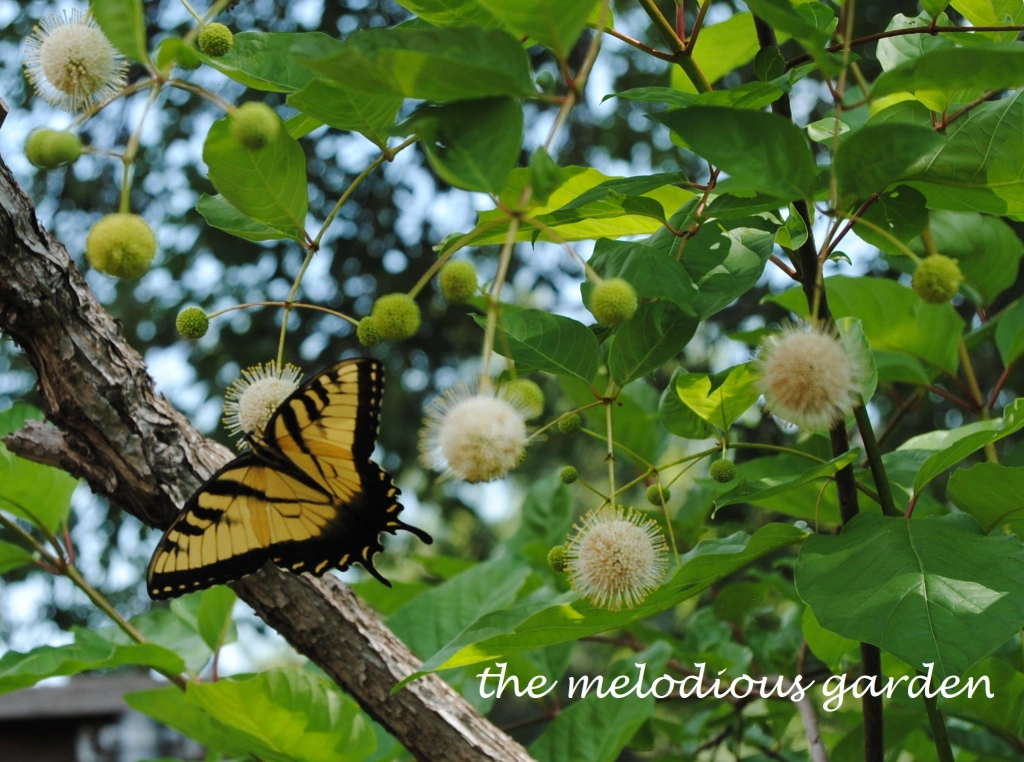
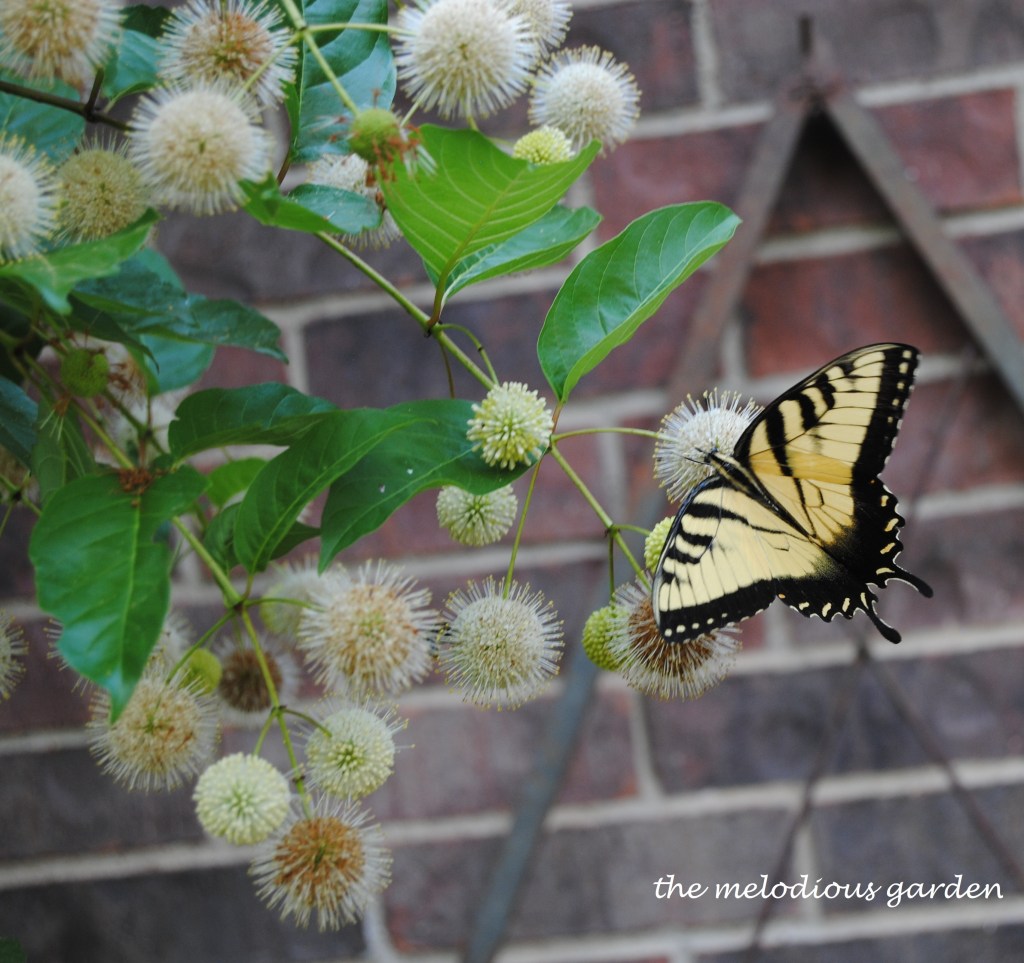
No garden stroll is complete without stopping under the native buttonbush, currently in full bloom. The bees are still hard at work, but now in the evening hours they are joined by several moths. The bees pay me no attention, buzzing all about. The moths are more skittish, the slightest movement sends them fluttering off. But if one stays perfectly still, they return and land just inches away.

The garden by evening light is serene, soothing away the day’s troubles. I must remember this and set aside chores and carrots more often.

All photographs taken around 7:30 p.m. on June 7th, 2023, in my Southern Denton County, Texas, garden. Zone 8a.

gardening, nature

There’s a party goin’ on right here…

Little Talk

Don’t you think it’s probable
That beetles, bugs and bees
Talk about a lot of things—
You know, such things as these:

The kind of weather where they live
In jungles tall with grass
And earthquakes in their villages
Whenever people pass!

Of course, we’ll never know if bugs
Talk very much at all,
Because our ears are far too big
For talk that is so small. ~ Aileen Fisher

Pollinating: Many feet make light work.

A dear friend and fellow naturalist recently commented that seeing pollinators in the garden is akin to getting a gold star on a school project. How right she is.

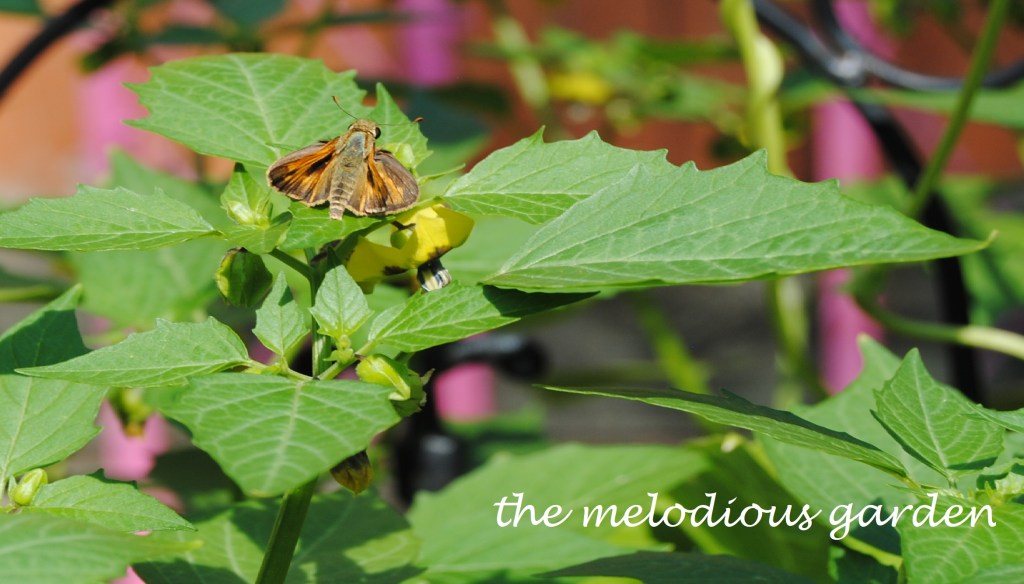
If it’s morning, chances are I am in the garden, still in pajamas, feet bare so I can feel the earth, camera in hand. It is during these still sleepy moments when I am most amazed at the number of gold stars my humble little garden has amassed already this year. “Build it and they will come” applies to pollinator gardens as much as to cheesy baseball movies. I do not know if my pollinators – yes, “my” pollinators, as I am quite protective of them – speak with one another or how or even when they first discovered my garden, but it is apparent that the welcome mat has been unfurled, for the bees and the moths have arrived and are all feasting together this early June morning.

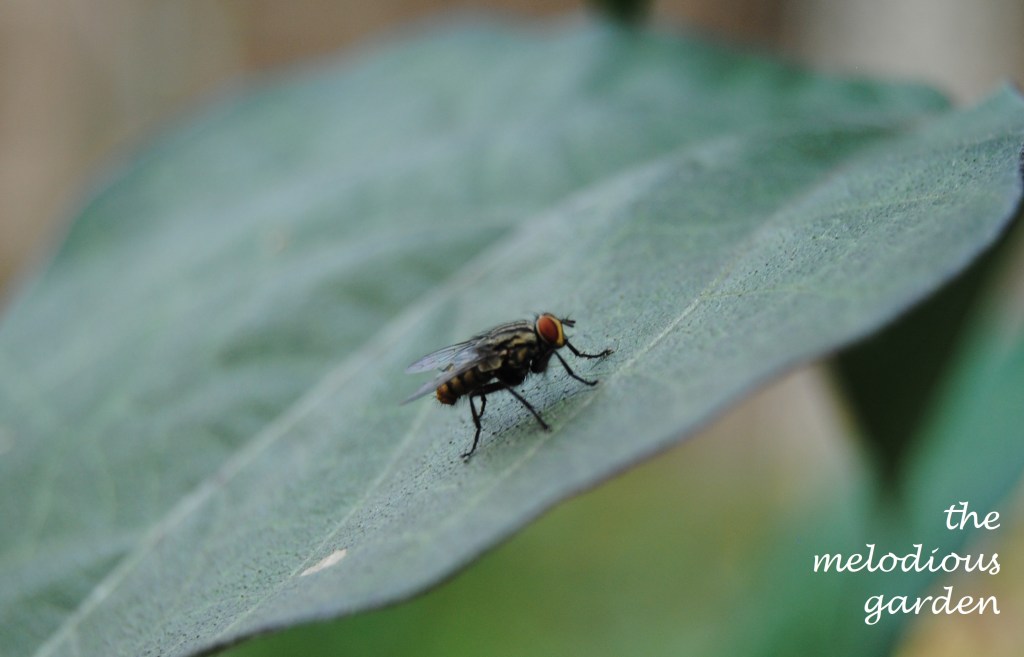
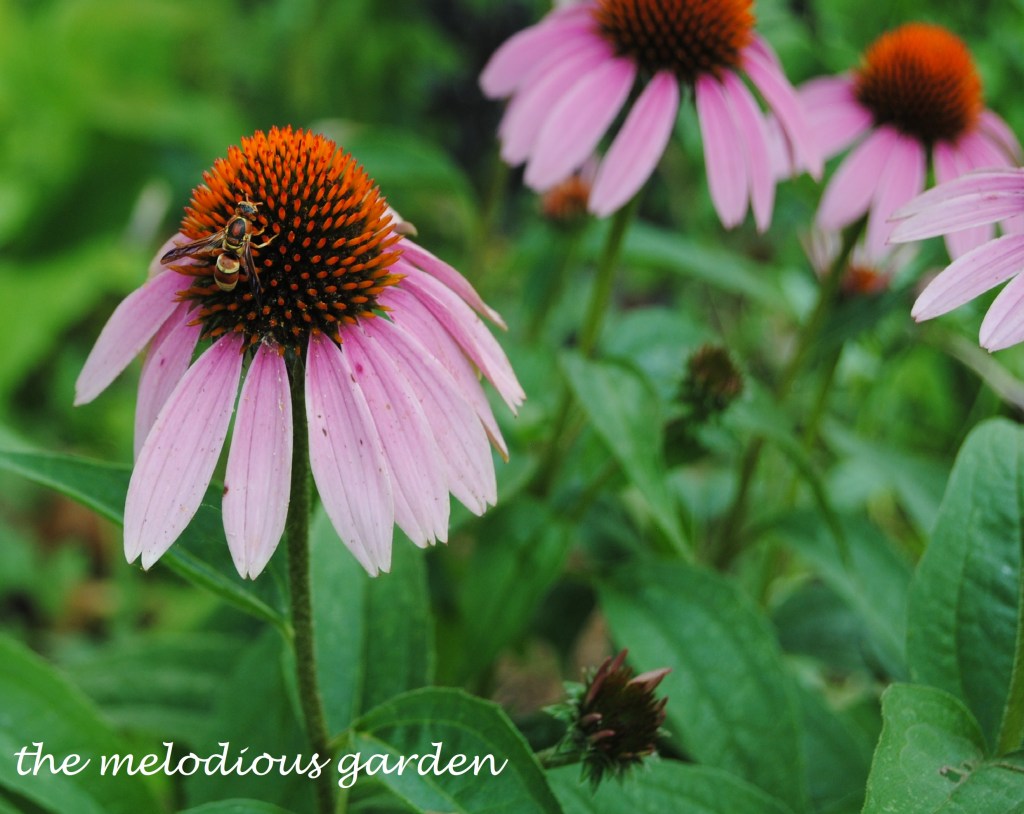
While bees are the most widely known of the pollinators, wasps, flies, beetles, moths and butterflies also lend a helping foot.

Pollinating: It’s a tough job but someone’s gotta do it.

More than 100 crops grown in the United States are dependent on insects for pollination, from the apple to the zucchini and every tomato, fig and cherry in between. By some estimates, 3/4 of our food supply requires pollination.

Pollinating: There’s a party goin’ on right here

National Pollinator Week is fast approaching – June 18th through the 25th – but we should be celebrating our pollinators every day of the year… A celebration to last throughout the year! (Cue some Kool and The Gang…) I often sing the praises of our native buttonbush, as I absolutely adore its oddly spherical orbs of pollen. It draws in pollinators from far and wide. This morning, though, I truly felt like I had stumbled in to the insect discotheque and there was a party goin’ on right here.

The buttonbush’s flowers are perfectly round, allowing more space for pollinators to meet and greet and perhaps talk about the jungle out there. Bee balm – monarda fistulosa, the native wild growing variety – is another plant with ample blossoms with room to share. The newer, hybridized versions often have smaller blossoms and less pollen. Something has to give when hybridizing plants and it is often the very thing that wildlife needs for survival. Whenever possible, planting the unadulterated, unhybridized, wild as nature intended varieties is best. That isn’t to say that I don’t have hybridized plants in my garden, for I very much do. But I strive to have as many pure native species as possible, whenever possible.

Pollen: It’s what’s for dinner. And breakfast. And Second Breakfast. And Lunch.

All photographs taken the morning of June 6, 2023, in Southern Denton County, Texas. Zone 8a. The round white flowers are buttonbush, a small growing tree or a large growing shrub, gardener’s choice of pruning. The soft lavender-pink blossoms are bee balm.

gardening, nature

Why was June made?

“Why was June made?—Can you guess?
June was made for happiness!
Even the trees
Know this…

…June was made for happy things,
Boats and flowers, stars and wings,
Not for wind and stress,
June was made for happiness!” Annette Wynne

The native buttonbush (shown in photograph above) has just started to burst into bloom. The pollinators danced above my head as I tried to capture a hint of the morning sun shining down upon my melodious garden.

“On this June day the buds in my garden are almost as enchanting as the open flowers. Things in bud bring, in the heat of a June noontide, the recollection of the loveliest days of the year – those days in May when all is suggested, nothing yet fulfilled.” Francis King

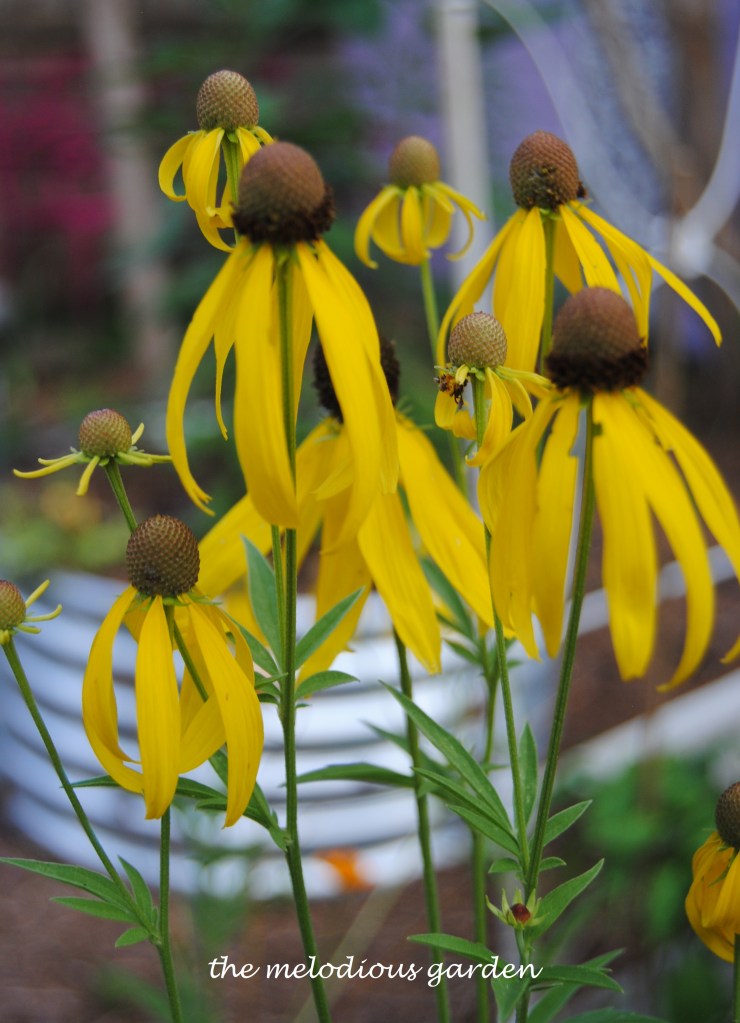
Ratibida pinnata, shown in photographs above and below, was purchased last spring from Almost Eden Plants. “Sleep, creep, leap” is often said about perennials, noting the three stages – or years – that it takes a plant to get settled in to its new home. “Sleep” it did last year. Poor thing. Shipped from Louisiana in a cardboard box, to land in Texas just as Mother Nature cranked up the thermostat. This year? I am not yet sure if it missed the memo and went straight to “Leap” or if I underestimated its ability. If this year is “Creep,” I may regret that I didn’t give it a quarter acre. It is absolutely stunning – and it hasn’t even bloomed yet! Every morning garden stroll takes me immediately to this plant, to see if it has bloomed yet. So far, it is suggested, nothing yet fulfilled. But soon. Patience is a virtue and one this gardener struggles with.

“In June, as many as a dozen species may burst their buds on a single day. No man can heed all of these anniversaries; no man can ignore all of them.” Aldo Leopold

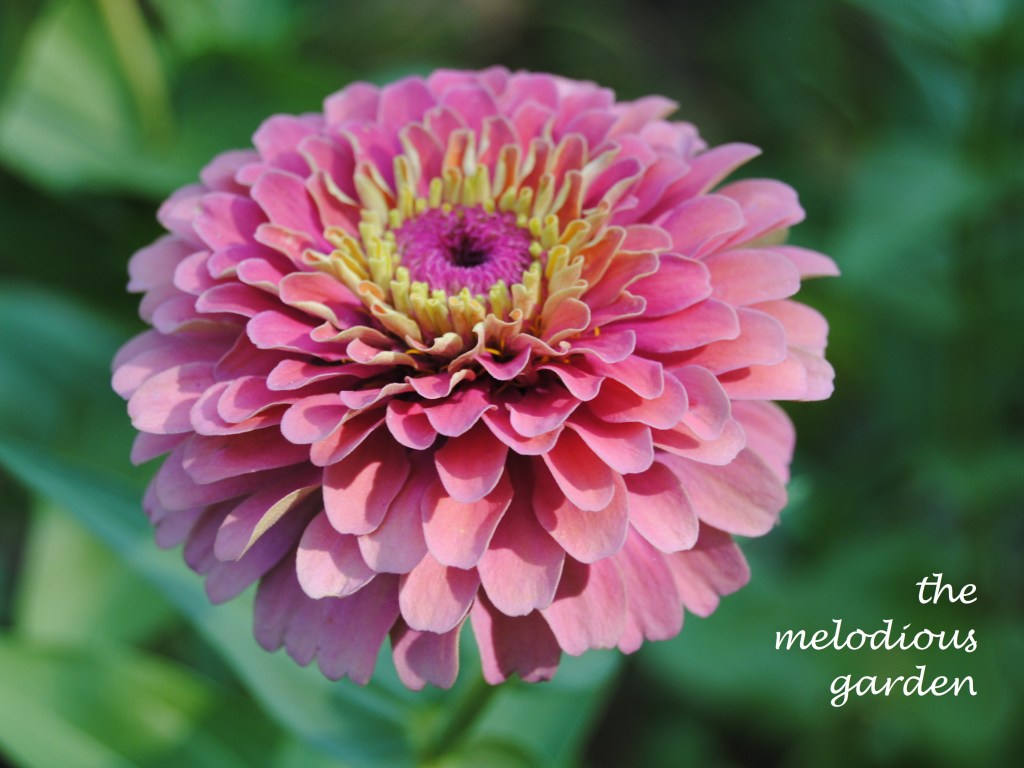
The zinnia bud (above) is one that simply cannot be ignored, for it is ringed with scallops, its petals held tightly in a circle. A day or so later, Behold, the buds have burst wide open. Such a glorious sight. Zinnia and cosmo seeds were mixed together, along with a bit of earthworm castings, and direct sown in the garden in mid-to-late March.

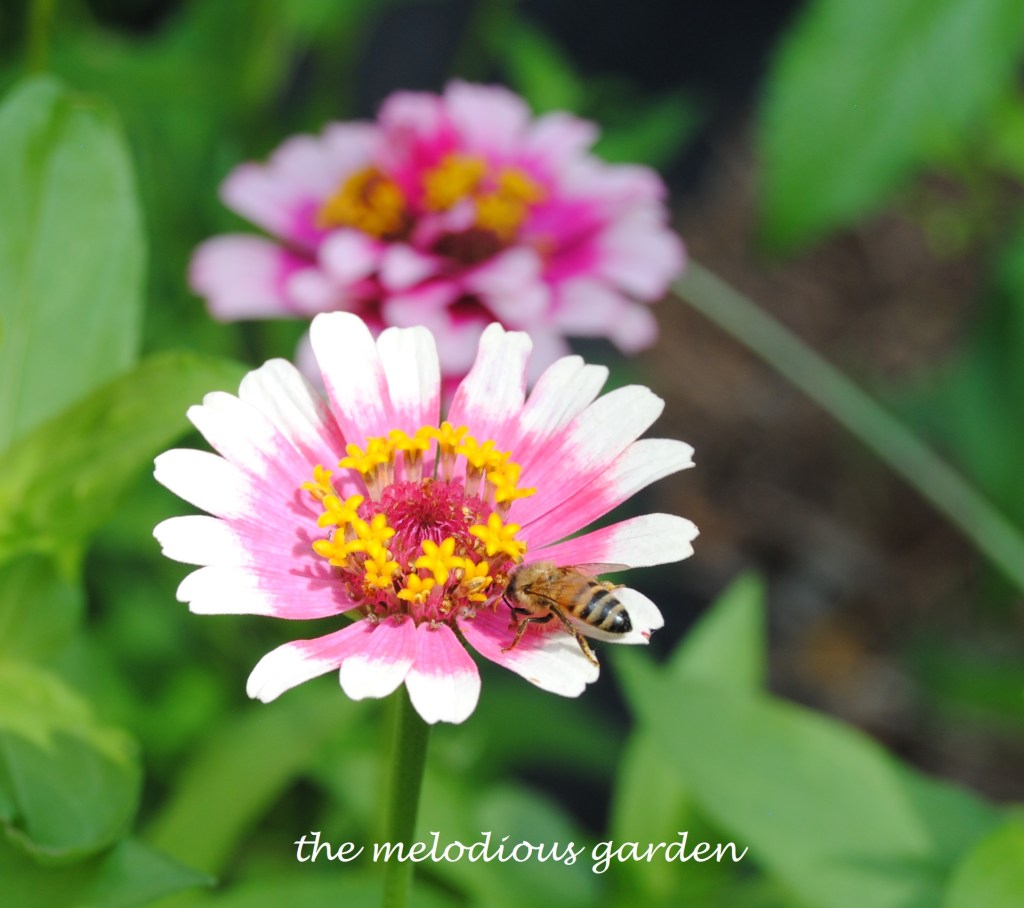
The pollinators are quite busy this first day of June. Below, a bee lands and collects pollen on a red cosmo, part of the riot of blooms in the photograph above.

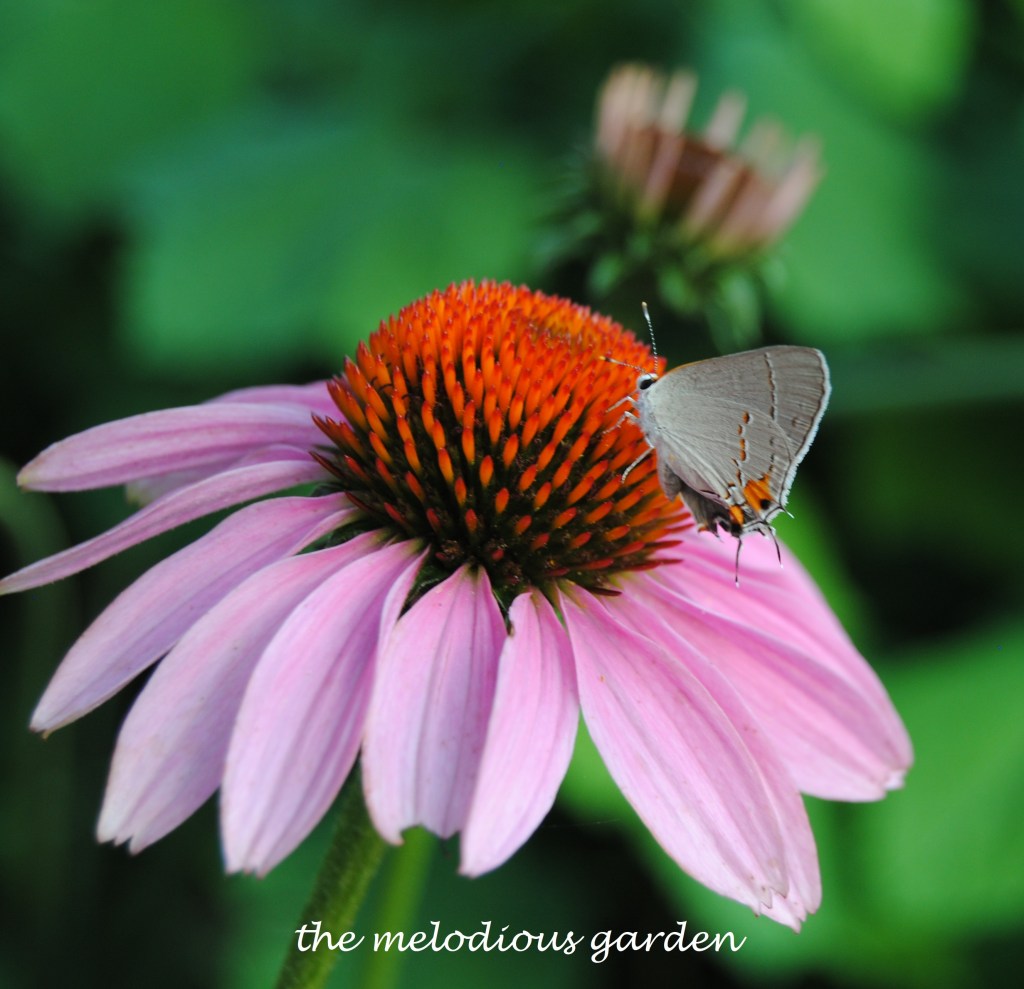
Echinacea is commonly known as coneflower, after the high center cone that the flower sports when it is fully open. In full bloom, it is quite popular with the bees and butterflies. (Photograph below.)

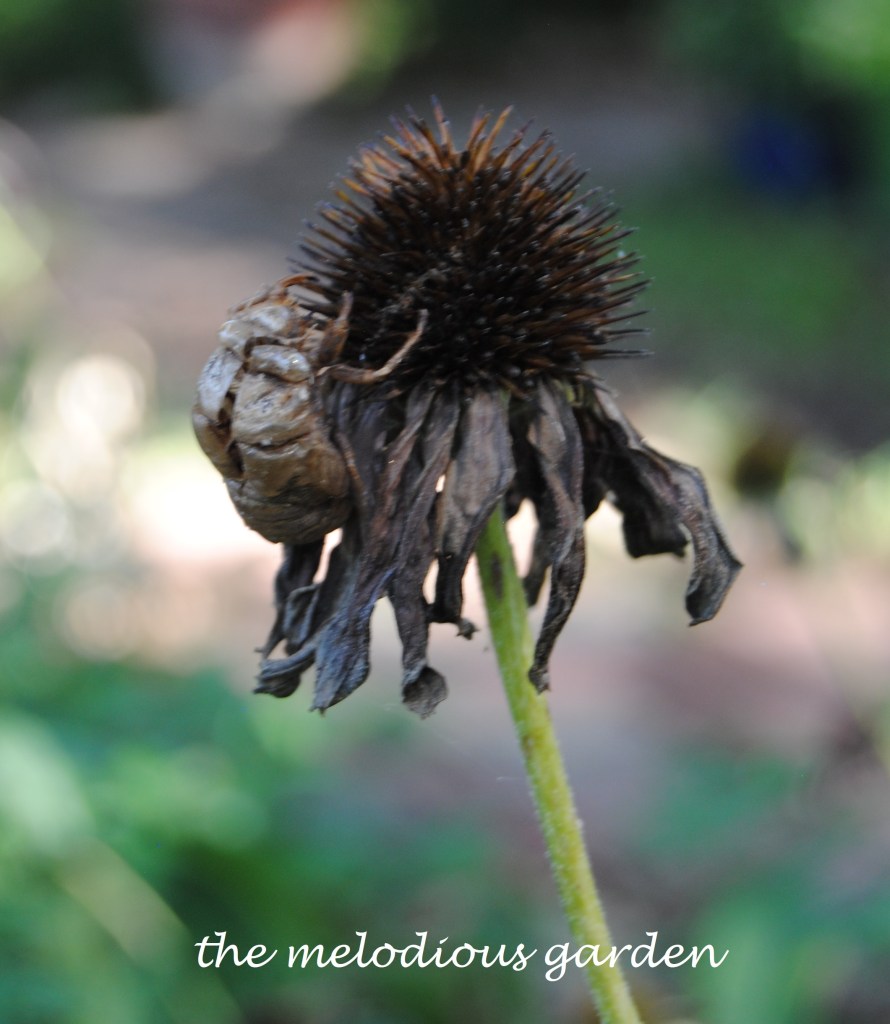
This mid-stage, though. Isn’t it amazing? If fairies inhabit the garden, surely this must be their crown. (Photograph below.)

June’s Coming

“…Again from out the garden hives
The exodus of frenzied bees;
The humming cyclone onward drives,
Or finds repose amid the trees…” John Burroughs

Buttonbush can be viewed in its native habitat along the marsh trails at the Fort Worth Nature Center and Refuge. In the wild, it is rather scrubby looking, not one that many think to plant in their own gardens. Alas. They would then miss the pleasure of standing under these orbs of pollen, watching the pollinators flutter about. Truly, buttonbush is the Dr. Seuss plant of the native genre. (Shown in photographs above and below.) I planted one in a low lying area of my garden about 25 years ago, after development next door created a bit of a swamp during rainy seasons. It does look a bit wild, but I am good with that. I pruned it into a tree shape by removing low growing branches early on and it happily complies.

In June

“A quiet hour beneath the trees;
A little, whispering, lazy breeze;
A perfect sky,
Where, now and then, an idle cloud
Strayed from its mates to wander by…” Matilda Hughes

So much is happening in my melodious garden this June.

Onions, planted in mid-winter, have been pulled to make way for another crop. Someday, hopefully, I will figure out how to grow an amazing crop of onions. I have memories of pulling softball sized onions from my aunt’s garden in Nebraska. Possibly my memory is off, due to my young age then and my older age now. Possibly it was that midwestern soil that earned its reputation as “The Breadbasket” of the nation. Possibly it was their abundant rainfall and our repeated droughts. Possibly I just don’t know yet what it takes to grow really large onions. All the same, they smell wonderful and will be much enjoyed.

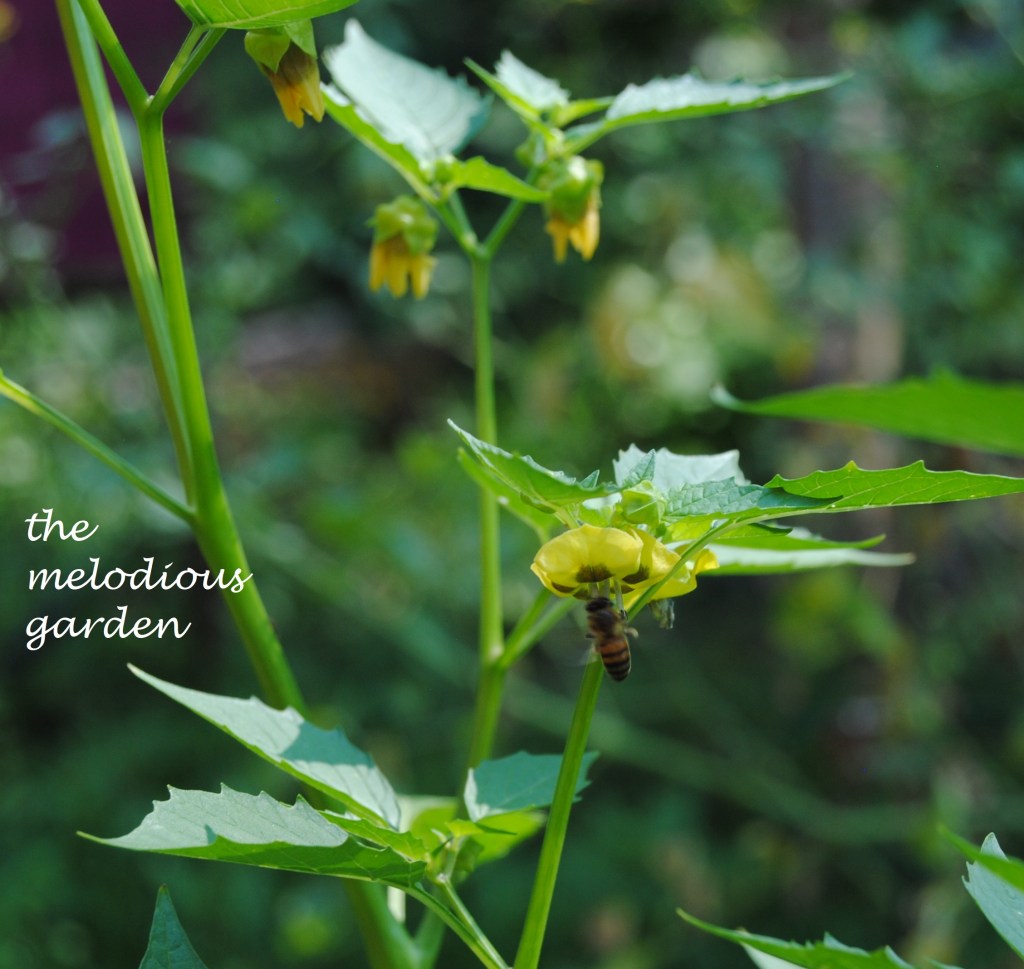
The tomatillos have plenty of flowers and plenty of pollinating, so hopefully some homemade salsa verde is on the horizon. (Photograph above.)

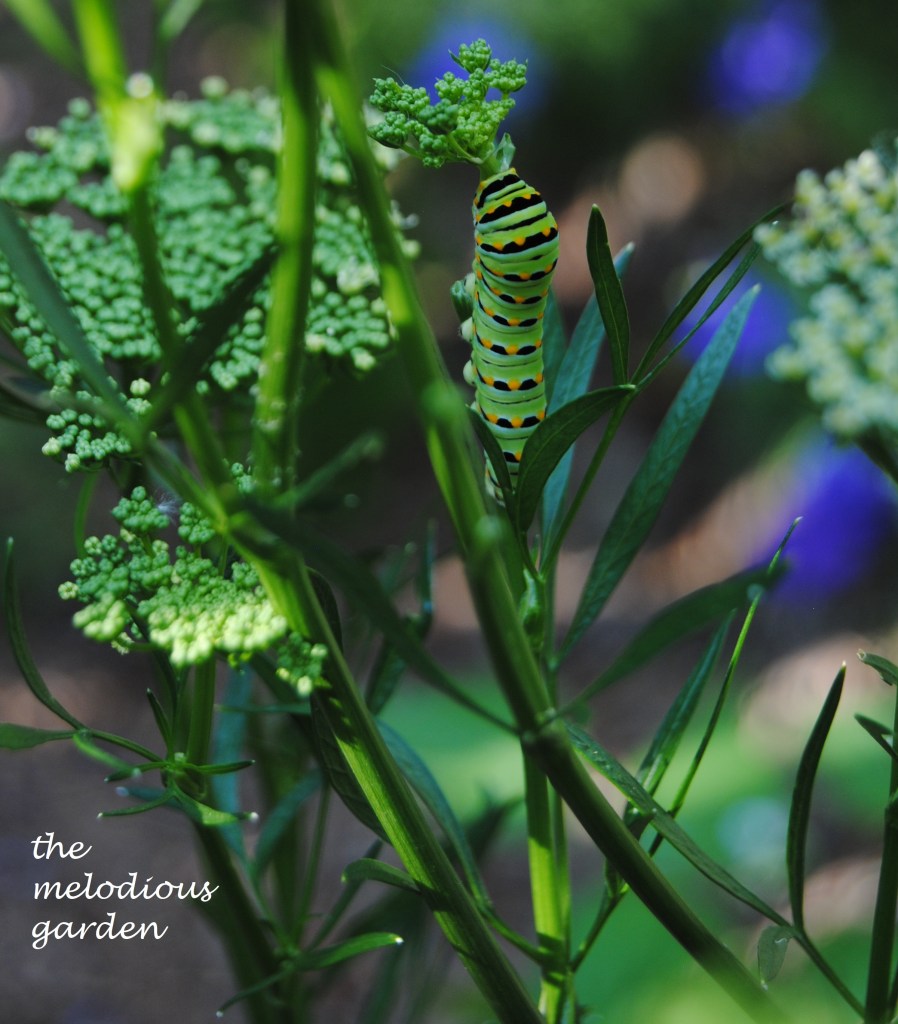
One patch of parsley, a biennial herb, is nearing the end of its lifecycle and is setting flower. To have a continuous supply for the kitchen, it is best to plant a bit more parsley every year. It is also advisable to plant extra, in the happy event a swallowtail butterfly chooses to lay her eggs in your garden. This very hungry caterpillar, shown below, was spotted early this morning. As the saying goes – we can complain that rose bushes have thorns or we can rejoice that thorn bushes have roses – such is the way with caterpillars. We can complain that they are munching down on our herbs or we can rejoice that a butterfly fluttered in to our garden and found just the spot to lay her eggs. Fennel, dill and parsley are host plants for the swallowtail butterfly, so it is best to plan ahead and plant a bit extra so there is enough to share.
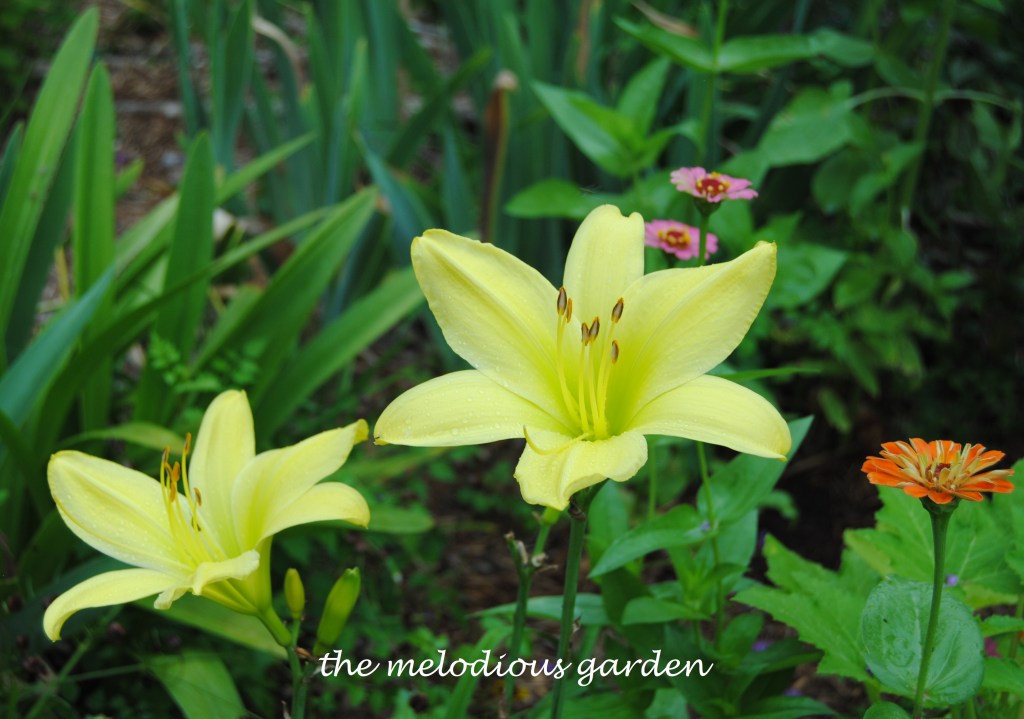
This has been an especially good year for the daylilies and I am thankful that I discovered the world of large, bold daylilies. Orange you glad, too? (Sorry. Bad pun.) Yes, orange flowers may just be my new favorite.

Happy June, my fellow gardeners.

“I most often find that happiness is just where I planted it.” Unknown

All photographs taken the morning of June 1, 2023, in southern Denton County, Texas. Zone 8a

bibliophile, gardening

Flimmering larkspur blue

Poetry. What would the world be like if we didn’t have poets to bring us words such as “flimmering”?

Flimmering: A flickering glimmer.

Carl Sandburg wrote of the “gold of the southwest moon” and “Canada thistle blue and flimmering larkspur blue.” As I scattered larkspur seeds about my garden months ago – a little here, a little there, quite a few over there – never did I imagine that I would today write about flimmering larkspur blue. Nor did I ever imagine that a garden visitor would paint me – Me! – a picture of my larkspur blue.

In some ways, this story begins a year ago April. Or maybe it began nearly twenty years ago when I first stumbled upon the children’s book Miss Rumphius. Either way, let’s begin in April, 2022.

The garden club I have long been a member of was in need of someone to coordinate tours of the club members’ gardens. “I’ll do it!” I found myself saying, eagerly thinking ahead to the many wonderful garden tours I might arrange. Then summer hit. That would be the summer of 2022. The one that will live on as one of the hottest and driest on record for North Texas. The one that saw temperatures of 108 degrees. As if that wasn’t bad enough, the summer was hot on the heels of Snowmageddon 2021.

Snow. Sleet. Freezing rain. Oh, by the end of it, we all knew the difference between the three forms of wet stuff that fell from the sky. And lingered. Because not only were we covered in a sheet of ice, we had record low temperatures, which meant the frozen stuff stayed around. For days and days on end. Now for the gardener, a deep freeze means potentially losing tender vegetation. And ice – while it can provide a layer of protection against the cold – tends to break tree branches and split shrubs in two and all around wreck havoc on the landscape.

Which brings me back to…. arranging garden tours.

“Ask me again in the spring, when the garden has had a chance to recover,” was the answer I heard time and time again. Fair enough. Summer was brutal. We all needed time to recover.

Then came December. Which opened with a rare winter tornado and closed with yet another – though less icy – deep freeze. Nine degrees, so soon after endless days above 100 degrees, added more losses to the garden tally sheet.

If our gardens looked a bit weary and beaten down, who could blame them? They had been through a literal hell (summer), bookended by the two extreme cold events. The only saving grace – weather such as we have experienced of late creates space for renewal and renovation. And. Buying new plants, amiright?

I decided this was my chance to be brave. To look at the stump of my 25 year old bay laurel tree – once as tall as our roof – and to see the potential in the fresh, tender new growth slowly emerging at the base. We gardeners are an optimistic bunch, aren’t we? We scatter seeds, in hopes that flowers will emerge. We can look at what once was and not be sad that it is now gone, but see the promise that is emerging.

In many ways, that has been my gardening life the past few years. Gone are the roses, destroyed by rose rosette virus. A new garden has grown out of the ashes. Was it ready now for prime time? Could I be brave and open up my garden to the garden club? I don’t garden by the rules so there is always the fear: Could others appreciate what I had created? The last time my garden was on a tour was two decades ago. Yes. 2-0 years ago. It was time – perhaps past time – to allow others to see the new garden.

It was a beautiful day. Just the sort of flimmering larkspur blue day that Sandburg had written about. To the best of my knowledge, no one has ever penned a poem about my garden. But I now have something far better than a poem, for one of my garden visitors painted a picture of my garden.
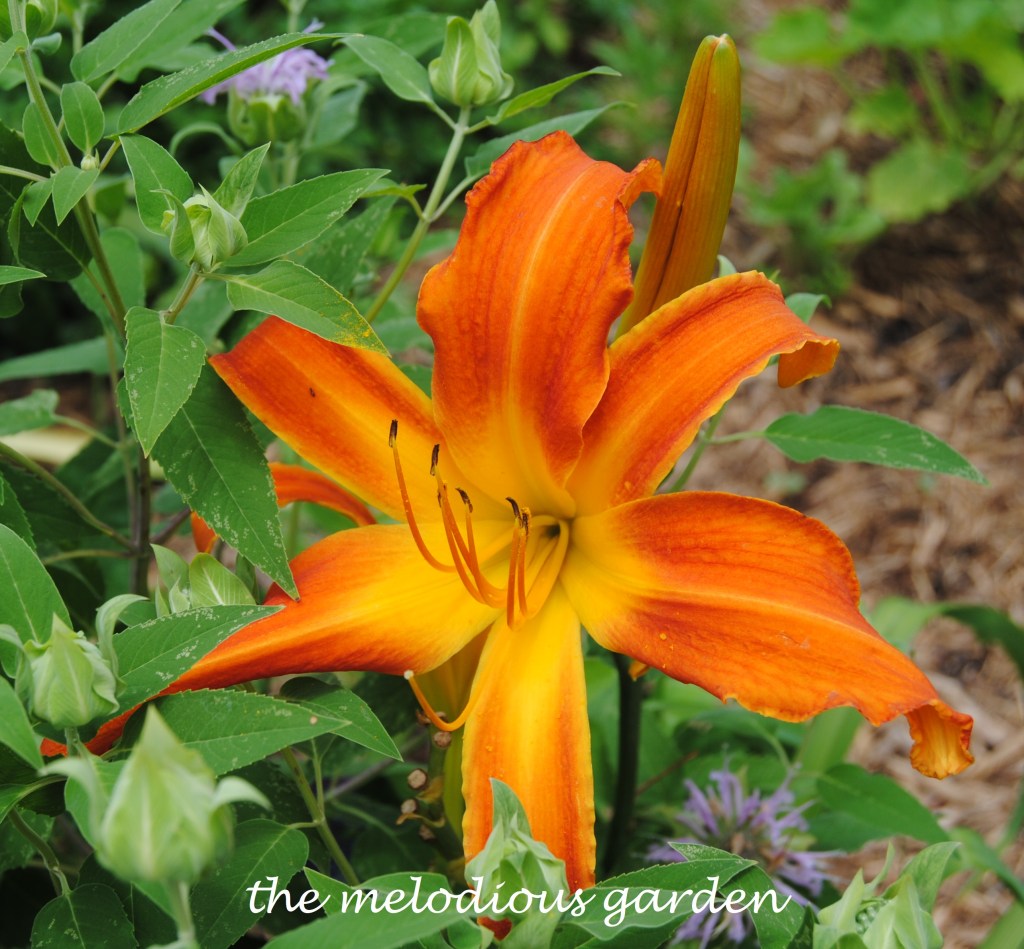
My garden. Painted!

With my flimmering larkspur blue and my southwest moon gold primrose.

Sandburg also wrote about crying over beautiful things, “knowing no beautiful thing lasts.” Beautiful things may not last. The larkspur are now fading away as the temperatures inch upward. The painting, hopefully, will last forever. And – yes – I cried when I opened the envelope that landed in my mailbox a few days after the garden tour. The painting of my garden. Truly, I have never received such a thoughtful and heartwarming gift as that painting.
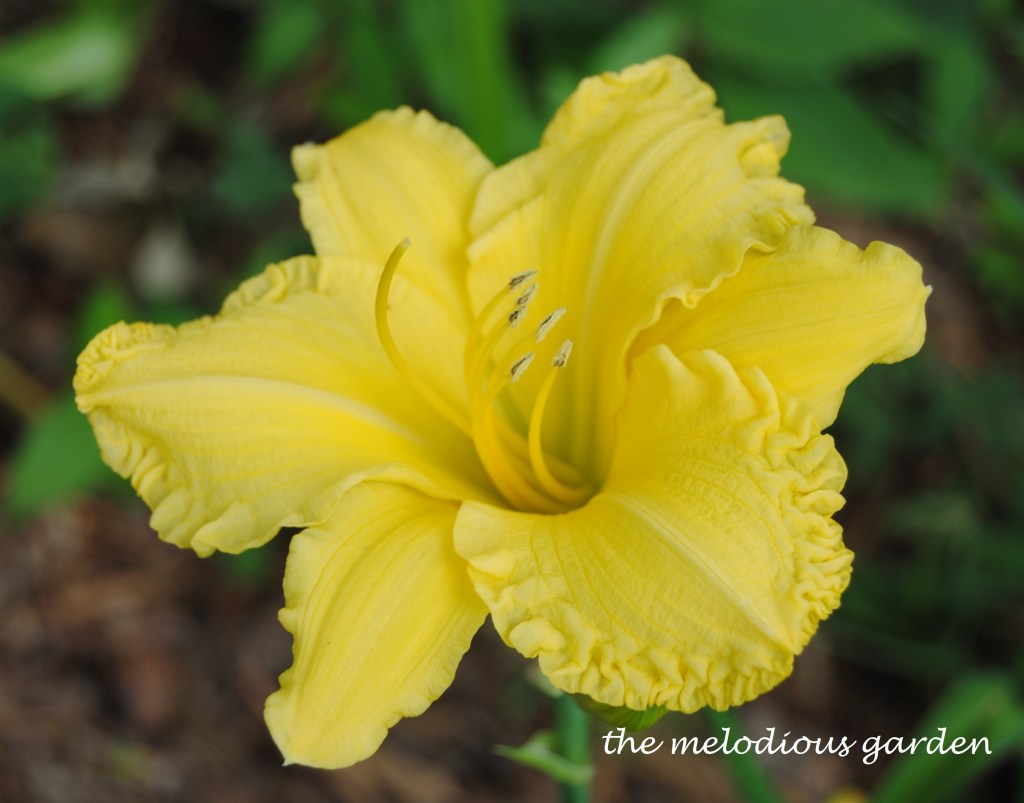
Larkspur was one of the first annuals I planted when I first broke ground 28 years ago. For years, they returned like clockwork, until the antique roses overfilled the flower beds and squeezed out the larkspur. Miss Rumphius is the fictionalized story of Hilda Hamlin, The Lupine Lady, who sowed lupine seeds along the Maine coast. In Barbara Cooney’s book, Miss Rumphius is told by her grandfather to find a way to make the world a more beautiful place, which she does by scattering lupine seeds. Lupines are not fond of our Texas weather but larkspur is just as beautiful and just as flimmering blue.

The variety I grew this year is Giant Imperial Larkspur. And giant it was, with many reaching five feet tall. I am currently saving seed to sow again next year in my garden and to share with the garden club. And perhaps, like Miss Rumphius, to sow about the town.

gardening

The world is full of wonder

We spend a lot of time looking for happiness when the world right around us is full of wonder. To be alive and walk on the earth is a miracle, and yet most of us are running as if there were some better place to be. ~ Thich Nhat Hanh

Perhaps the best part of gardening is that it forces us to slow down, to stop and smell the roses, to admire the intricate details of a flower, to observe a bee gathering pollen, to watch a butterfly drift and flutter about.

Plains Coreopsis (Coreopsis tinctoria), shown below, has such amazing details. Seeds were purchased from Wildseed Farms and direct sown out in the garden.

Have fun even if it’s not the same kind of fun everyone else is having. ~ C. S. Lewis

My former rose garden was straight out the Steel Magnolias. You know the scene… Where Shelby says her wedding colors are blush and bashful and her mother interjects to say the colors are pink and pink. Yes. My rose garden was pink and pink and the many shades of pink. I knew my garden’s reincarnation would not be. I wanted bold. I wanted big. I wanted bright. I wanted fun. Colorful Fun. I wanted anything but delicate soft pink. Enter: The big and bold daylily.

I’m going to make everything around me beautiful – that will be my life. ~ Elsie de Wolfe

Miss Rumphius by Barbara Cooney was one of our family’s favorite books when our son was just a wee thing. Though he towers over me now, I still pull out the book from time to time and tear up reading its story. Miss Rumphius’ grandfather tells the young child to do something to make the world more beautiful. I think of this story again and again as I wander about my garden. As I sit on my patio and gaze out on the garden while writing this post, I listen to the birds chirping and can say that – in my own humble way – I have done something to make the world more beautiful.

This is my first year growing California poppies (shown below), but hopefully it won’t be my last. They have bloomed steadily for well over a month now, such a cheerful, bright color. Poppy seeds need winter’s cold to break down the hard outer coat, so the seeds were direct sown in the garden in late fall.

meraki (verb) to do something with soul, creativity or love; to leave a piece and essence of yourself in your work.

Gold-wave Coreopsis, shown below, is also from Wildseed Farms. Another winner, one that has won a place in my heart and in my garden.

When you do things from your soul, you feel a river moving in you, a joy. ~ Rumi

In my garden there is a large place for sentiment. My garden of flowers is also my garden of thoughts and dreams. The thoughts grow as freely as the flowers and the dreams are as beautiful. ~ Abram L. Urban

Oh, the thoughts and dreams that go in to the garden, not to mention the sweat and work, always a joy. There are a thousand ways to garden, no one correct right or wrong way. Each gardener charts their own journey, sets out to see their visions come alive. Keep calm, my fellow gardeners, and garden on, growing your thoughts and dreams into botanical poetry.

gardening

Thoughts On Gardening & Being Myself

I had the privilege recently of reading a garden review that a retired landscape designer had written about a private garden we had both visited just hours prior. The garden was jaw-dropping amazing, as was the review. Seriously. The review was just as lovely as the garden.

I love horticulture vocabulary. Physical layout. Site analysis. Colorful perennial entrance bed. Now that being said… As much as I can appreciate those features in another gardener’s garden, it just isn’t going to happen in my own. I garden for my personal pleasure, not to please the neighbors or to grace the cover of any formal garden magazine. You know the quote… Be yourself; everyone else is taken. That very much applies to me and my garden. I am myself. Quirks and all. Garden rules and design principles just bring out my inner rebel.

In all art forms, gardening included, there are standard design principles which can either be followed, challenged or completely and unapologetically tossed out the window. Horticulturalist Felder Rushing wrote the book on the latter two types of gardeners. Maverick Gardeners. What a great name for those of us who think – garden – outside the box. (A book review will be forthcoming. Spoiler alert: It’s a great book!) Indeed, one of Mr. Rushing’s radio program listeners came up with an apt name for just us gardeners: Determined Independent Gardeners. Determined and Independent I am. I am myself; everyone else is taken.

The only Unity – one of several horticulture design principles – found in my garden is that anything goes. My garden style could perhaps best be described as a mix of There Appears To Have Been A Struggle and Diary Of A Madman, with a touch of She Wanted It All. And I am good with that. It is me. And my gardens are a reflection of that.

Sequence, Simplicity and Rhythm – more horticulture design principles – may be goals of other gardeners. Drifts of three? I am more a “drift of one” gardener. Now a well-placed solo shrub or a lone large perennial can be considered an accent plant, but in my garden most every plant could then be considered “an accent.” Buying plants as “one of this and one of that” allows for more diversity and experiments, as well as more whimsy. (…I say…trying to justify my plant buying strategy…) I can often be found walking around the garden, plant in one hand, trowel in the other, searching for just a few bare inches of ground to squeeze yet another plant in. Some might say that I garden much the way a child would toss confetti at a birthday party. Reckless abandon. They wouldn’t be too far wrong.

I rarely photograph large areas of my garden, in part because it comes across as “busy,” too much to take in at once. Mine is a strolling garden, one to meander through, pausing to take in the details, reflecting on the story behind a certain plant or garden accruement. I also seem to always have some project going on, a wheelbarrow left out, junk trees popping up somewhere or garden hoses stretched across the property. (We don’t have a sprinkler system, which I am perfectly fine with. But more on that at a later date.) It also feels much too personal to show the garden as a whole, so revealing. It would be akin to me walking down a fashion runway in a bikini. Which isn’t going to happen anytime soon. (You are welcome.) But this year, I am challenging myself to stop and look at the larger picture and embrace it. Garden hoses, drifts of one and all!

The photograph below shows the front flower beds, much as one would see while out for a neighborhood stroll. The winecups (Callirhoe involucrata) and red yucca (Hesperaloe parviflor) are blooming quite nicely this week. But… If you look closely…

… You will see… A junk tree. (Photograph below.) To me, a junk tree is any tree that I did not plant, one that arrived in my garden via bird, squirrel or wind. The one shown below happens to be a pecan tree, compliments of our neighbor’s tree, planted by a squirrel who was sure they would have time to come back and retrieve the stored nut before it decided to set down roots in my garden. In addition to junk pecan trees, I constantly battle junk bur oak trees, planted by squirrels or gravity, and junk elm trees, which arrive via the wind.

Keeping the garden free of weeds is, as every gardener knows, an endless struggle. Keeping the garden free of junk trees is that times ten. I can walk the garden and dig out or cut down every junk tree, then turn around to find one that has grown knee high in the blink of an eye. At some point, all gardeners know this: The garden will never be free of weeds. Nature simply moves faster than any gardener ever could.

“Ignore the weeds,” I always tell garden visitors. “Oh, and ignore that hose.”

The garden hose is often stretched from faucet to whatever area I am working on that day, then most often lapped back around because there is no sense in only tripping over the hose once if you can trip over it two or three times. I am sure there is an app that removes garden hoses from photographs and, if not, there should be. Until then, my choices are to either coil up the garden hose prior to taking photographs, closely cropping photographs to remove any evidence of said garden hose or to make peace with the hose. I generally opt for the close cropping of photographs. Oddly enough, I wouldn’t think twice about a pair of pruners or a pitchfork being in a garden photograph, for all gardeners know and appreciate what a working garden looks like. But a garden hose left out? Not so much.

I am not sure where garden hoses and junk trees fit in horticulture design principles – perhaps Focalization? – but every gardener knows that… to every good garden weeds grow and garden hoses must be dealt with.

Keep Calm and Garden On, Uniquely Yourself.

gardening

April steps aside for May

May. Sweet month of May.

Perhaps the most poetic – and floriferous – of months.

(Yarrow, above)

“May! Queen of blossoms and fulfilling flowers,” penned Lord Edward Thurlow. Not to be outdone, Heinrich Heine wrote, “In the marvelous month of May when all the buds were bursting…” Two centuries and an ocean away, my melodious garden basks in the glory of their poetry, with buds bursting open and fulfilling flowers, capturing the early May sunshine.

(Larkspur and evening primrose, above)

Yes, May is here once again. And with it, perhaps, a new chapter of my life. My melodious garden was a vision 28 years ago. A suburban garden overflowing with flowers and alive with wildlife. Life has taken a lot of twists and turns since I first put down roots in this Texas soil. But the garden has been my constant. My ever present companion. My journey. My mission. The garden and the gardener have evolved and changed with the years and with the seasons. But now, for the first time, I think I can possibly say, The garden is perfect. Perhaps not perfect for everyone. Perhaps not perfect as in complete, finished, done, for is there ever such a thing? But for the first time in 28 years, it is perfect in my eyes. My garden is complete. I am fulfilled. Edits and adjustments will continue, for don’t they always? Yes, there are still weeds. Yes, there are still plants that need planted and paths that need swept and trees that need pruned. But. My vision. It is perfect. This morning, the first day of May, I walked about the garden, camera in hand, knowing that it had all come together. Perhaps I have been here before. My memory fails me at times. Perhaps my younger self knew this same sense of accomplishment. The garden has been in a state of upheaval for so long now, as losing 100plus antique roses – some the size of a VW bug – has a way upheaving the garden. And the gardener. The past eight years have been filled with challenges. Removing well established roses, diseased from rose rosette virus. Extreme temperatures – record setting lows and record setting highs – and drought. Neurological issues and chronic health challenges. But here we are! We pulled through, didn’t we? “The only constant in life is change,” Heraclitus said. I am quite sure he had the garden in mind at the time, for gardens – and gardeners – are constantly changing. Gone are my beloved roses. Vibrant, healing foods, medicine for this gardener’s body, have taken their place. Ah. Sweet May. “All things seem possible in May,” said Edwin Way Teale. Even healing. For as I walk barefoot about the garden, I know that this garden gives me life. It gives me purpose. It gives me happiness. It gives me food, literal food for my body and figurative food for my soul. No garden is complete without flowers to attract the pollinating insects needed for good food production. Photographs are just a few of the buds bursting forth today, this first day of May.

(Candytuft, above)

“May and June. Soft syllables, gentle names for the two best months in the garden year: cool, misty mornings gently burned away with a warming spring sun, followed by breezy afternoons and chilly nights.” Peter Loewer

(Hardy amaryllis, above)

(Louisiana iris, above)

(Poppy, above)

“When April steps aside for May, like diamonds all the rain-drops glisten; Fresh violets open every day: To some new bird each hour we listen.” Lucy Larcom

(Chive blossom, above)

(Red yucca, above)

gardening, nature, vintage

Plant profile: Penstemon tenuis

“Where flowers bloom, so does hope.” Lady Bird Johnson

Texas is well known, and rightly so, for their springtime display of wildflowers. From the highways to the back roads, the state seems to be awash in blue this time of year. But look a bit closer and one is apt to pick out other, lesser known, wildflowers. Pale pink primrose. Bright orange Indian paintbrush. Hot pink winecups. With more than 5,000 different varieties of wildflowers throughout the state, it would be hard for anyone to list their favorites or for any gardener to grow even a fraction of them. Still one wildflower is often overlooked, which is a shame because it certainly deserves a spot in any top ten or top twenty Texas wildflower list.

Penstemon tenuis, shown above, sports dainty lavender blossoms that dance in the spring breeze. It is highly adaptable to the cultivated garden, which is not the case with all wildflowers. It is equally at home in a cottage style garden as it is in a meadow. Isn’t it gorgeous with the apricot colored bearded irises in the background? I would love to take credit for that color combination, but I can’t. You see, after Penstemon tenuis is done blooming, I let the seedheads form and dry, then take the seeds and scatter them about. I never know where they might pop up the following year and I love it that way! (Photograph below: Dried seedheads of Penstemon tenuis in late summer, with garlic chive blossom.)

Yes. Sometimes the flower will sprout up in an odd place, such as directly under my native buttonbush, shown below. Thankfully they are great companions and neither one bothers the other. Penstemon tenuis grows best in partial to full sun, so will bloom and flourish just fine in this area of my melodious garden.

Other times, Penstemon tenuis pops up in just the perfect spot, such as in front of an antique plow, shown below. This gardener loves that whimsical side of Mother Nature.

Penstemon tenuis grows to about 2 1/2 feet tall and is airy enough that it can be grown along pathways or the front of formal garden beds. Typical bloom time is from April to June in North Texas. It is a good nectar source for bees and butterflies. Its native range is the Gulf Coast prairies and marshes from Texas to Mississippi and up to Arkansas. Penstemon tenuis is said to be a great cut flower, though I have not personally use it in arrangements.

While not widely available in the nursery trade, it can be found at garden centers that specialize in native plants and seeds can be acquired from fellow gardeners.

gardening

April! April! Is it you?

“April! April! is it you?
See how fair the flowers are springing!
Sun is warm and brooks are clear,
Oh, how glad the birds are singing!
April! April! is it you?” Poem by Dora Read Goodale

“Spring translates earth’s happiness into colorful flowers.” Terri Guillemets

The pale pink roses, shown above, are reminders of my garden past, beautiful blossoms this first day of April. The strawberry, shown below, embodies the hope and possibilities of the season ahead.

“It was such a pleasure to sink one’s hands into the warm earth – to feel at one’s fingertips the possibilities of the new season.” Kate Morton

One question that has been asked dozens of times the past few weeks has been, “Is it safe to plant now?” That translates to: Have we seen our last freeze of the year? Old-timers will tell you that we aren’t out of the woods for a late freeze until Easter. True enough, this gardener remembers an Easter snow many years ago. Mid-March is Dallas-Fort Worth’s average last freeze date. Average meaning: Our last freeze may come in February. Or it may come at Easter. This year the last freeze came early. Or so it appears.

Is it safe to plant now? This gardener will generally answer that question with another question. Is it ever truly safe to plant? One never knows what Mother Nature may throw at us. Late freezes. Hail. Intense heat. Record breaking cold. Prolonged drought. Relentless rain. This week’s weather brought us intense winds, leaving many of the tall bearded irises listing wayward. (Below photograph.) In 28 years of gardening this plot of earth, I have seen the extremes. It is never really safe to plant. To garden is to take chances. One learns quickly to roll with the punches and to always have a backup plan.

This suburban food forest is coming together, nourishing the gardener’s body and soul. To wander about, barefoot, harvesting herbs for a lunchtime salad. The onions and potatoes, planted in January and February, are coming along nicely. Tomatoes and peppers have been planted. Succession plantings of beans has begun. The possibilities truly seem limitless in the springtime garden.

“The glory of gardening: hands in the dirt, head in the sun, heart with nature. To nurture a garden is to feed not just the body, but the soul.” Alfred Austin

Despite the winds, the tall bearded irises, shown below, have been especially delightful this week, nurturing my soul.

“Flowers always make people better, happier and more helpful; they are sunshine, food and medicine for the soul.” Luther Burbank

Scented geraniums are best known for their intoxicating scents, though this gardener finds the flowers equally charming. (Shown below.)

Bridal’s wreath spirea, shown below, is aptly named. Ah, spring! See how fair the flowers are springing!

gardening

I’d fly around the garden with the butterflies…

“If I could be a fairy now, I’d learn a lot of things, what flowers find to talk about and what the birdie sings. I’d fly around the garden with the butterflies for hours, I’d find out if the honey-bee says “thank you” to the flowers.” Source unknown

“Come fairies, take me out of this dull world. For I would ride with you upon the wind and dance upon the mountains like a flame.” W.B. Yeats in The Land of Heart’s Desire

“She was always doing funny things – for a grown-up. Like running through woodland trails or climbing and jumping out of trees. Perhaps, it was because she had just a drop of fairy in her blood, that kept her wild and free.” Source unknown

“Few humans see fairies or hear their music, but many find fairy rings of dark grass, scattered with toadstools, left by their dancing feet.” Judy Allen, Fantasy Encyclopedia

If one needs proof of fairies dancing about the garden, they only need to kneel down and gaze upon the Leucojum blossoms, for the fairies have left little dots of green on every dainty flower.

Leucojum, like daffodils and tulips, are planted in the fall for spring time blooms. They naturalize quite nicely in zone 8a, North Texas, returning year after year with ease. Botanically speaking, they are in the amaryllis family with just two species, both commonly referred to as “snowflakes.” Leucojum vernum is the spring blooming bulb and the variety I have growing in my melodious garden. These bulbs were initially planted 20-plus years ago and have received no additional care, sans trimming off the leaves after they have dried and dividing and thinning out every few years. As you can see in the photograph below, this patch is due for dividing, which I will do as soon as they are done flowering.

Leucojum add a bit of whimsy and charm to the spring garden, as they are proof that fairies are indeed real and dance about the garden.