gardening, nature

April Showers And May Flowers

If April showers bring May flowers, I should expect a flood of flowers this month.

I know I have said this before – and I likely will say it a thousand more times – but we gardeners are a fickle lot.

It’s too hot. Or too cold. Too wet. Or much too dry.

I am sure someone somewhere is gardening in utopia, but a garden utopia Texas is not!

Much of the state experienced a record setting freeze in February 2021, which was quickly followed by a summer of record setting heat and drought. The following two summers saw us again experiencing record high temperatures. Much – all? – of the state has been in a prolonged drought, with little rainfall even in what are normally our wetter months of the year. Are gardeners fickle about the weather or are we just more aware of the weather patterns and the seasons? Many times over this past winter, I heard gardeners lament the lack of rain and the possibility of another unseasonably warm and dry spring. I am not so sure, I would counter. We are due for a really wet spring, we haven’t had one in a decade or so. It’s time for the precipitation pendulum to swing from drought to flooding.

Truer words (aka: armchair weather forecasting) may have never before been spoken.

Rain, rain and more rain seems to be our current weather pattern. My new rain gauges, purchased two years ago, are finally getting a workout.

And the flowers.

Oh.My.

The Flowers! The garden on May 1st is truly a flood of flowers!

Giant Imperial Larkspur, shown above, is looking especially stately and regal. I allowed last year’s flowers to reseed at will and the results this year are outstanding.

While the rains have left a few of the early season daylily blossoms looking a bit ragged, this one is beautifully perfect. (Unknown red daylily, shown above.)

“As full of spirit as the month of May, and as gorgeous as the sun in Midsummer,” William Shakespeare

The sunny bright yellow blossoms of Coreopsis, shown below, have been especially welcoming given the many April days of overcast skies and rain-heavy clouds.

“May, more than any other month of the year, wants us to feel most alive,” Fennel Hudson

Most days start with a garden stroll, my rescue mutt Princess Leia running out ahead of me, ensuring that the garden is safe from squirrels and rabbits. While she is dashing rapidly from corner to corner, I – still clad in my pajamas and not quite awake – take a more leisurely pace, stopping to see small details, such as a spider’s handiwork on a poppy bud. (Shown below.)
While some gardeners gravitate toward a formal layout and design, I prefer an informal approach. A cottage garden? A wildflower garden? So many ways to approach gardening or describe one’s garden, no one way necessarily better than the other. To each their own. I take the laid back approach, often letting plants wander about. This Nigella Damascena (Love-in-a-Mist) flower, shown below, has popped up directly in a pathway, but what a lovely flower to have to stop and carefully step around.

Geum canadense (White Avens), shown below, is another plant that has wandered a bit about the garden. My original plant was purchased at the Lady Bird Johnson’s Wildflower Center’s spring plant sale many years ago. It now pops up here and there, never a nuisance, always beckoning me to stop and take a closer look at its tiny blossoms. I have not seen Geum canadense available at garden centers, though it may come up from time to time at nurseries that specialize in Texas natives.

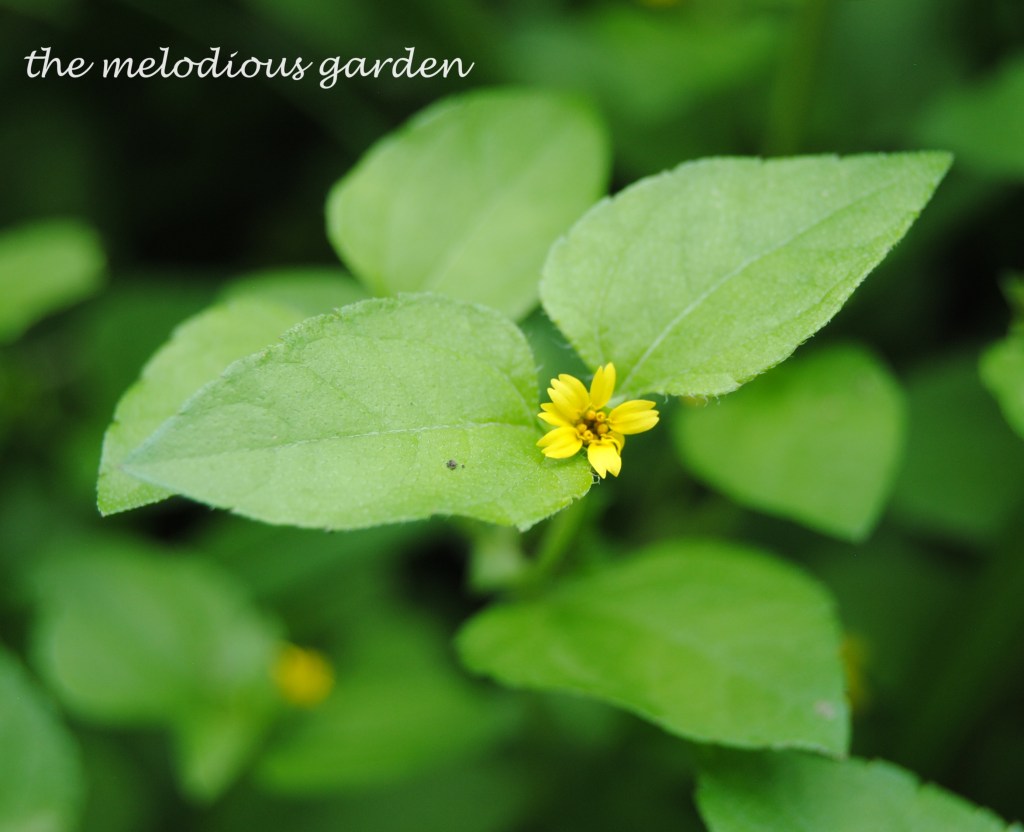
We may not live in a garden utopia, but embracing native plants, as well as older heirloom plants, may just be the way to beat Mother Nature at her game. These are the plants that don’t just survive our extreme weather, but thrive and come back year after year. Calyptocarpus vialis (Horseherb), shown below, is another favorite of mine, as it will grow in both sun and shade and attracts smaller butterflies and pollinators.

“May is the month of expectation, the month of wishes, the month of hope,” Emily Bronte

This May, Keep calm and garden on and don’t forget to make a wish for perfect gardening weather this summer!

All photographs taken today, May 1st, 2024, in my Southern Denton County, Texas, garden.

gardening

Ten thousand plants, more or less…

“Real gardeners buy at least ten thousand plants in the course of a lifetime without having the least idea where they will put any of them when they get home.” ~ Unknown

While I have no source for that quote nor research to back it up, I truly feel as if someone has been watching me…

In the horticulture world, there are two types of people. Those that have an eye for landscape design, who plan out new garden beds and carefully calculate how many plants will fit in a given area to have the desired effect. Then there are the gardeners, the ones that plant whatever strikes their fancy, the ones that push the limits, the ones that never colored inside the lines as a kid. I am that gardener.

If I had to make an educated guess about my own plant buying habits, I would say that 93% of my purchases fall in to the category of “I have no idea where I will ever plant this!” I have been known to walk around the garden, searching for a small space to squeeze in one more plant. I have also been known to dig a hole, tuck in a new plant, stand back to admire its new home, then promptly pull up the plant to try again somewhere else. I have even been known to plant something, then decide a week or a month later that I want to plant it somewhere else. A garden is, after all, always a work in progress, eternally evolving. I firmly believe that we should always remain flexible and open to the possibilities. Sometimes things works out. Sometimes they don’t. This happens to be one of those times that things worked out.

Oh, how it worked out!

I love tall bearded irises, though am not a collector, nor even an aficionado. I love them. I plant them. That is about it. Most of my irises are pastel colors, holdovers from my days of collecting pastel antique roses. Then there is this iris. Stunningly dark and bold.

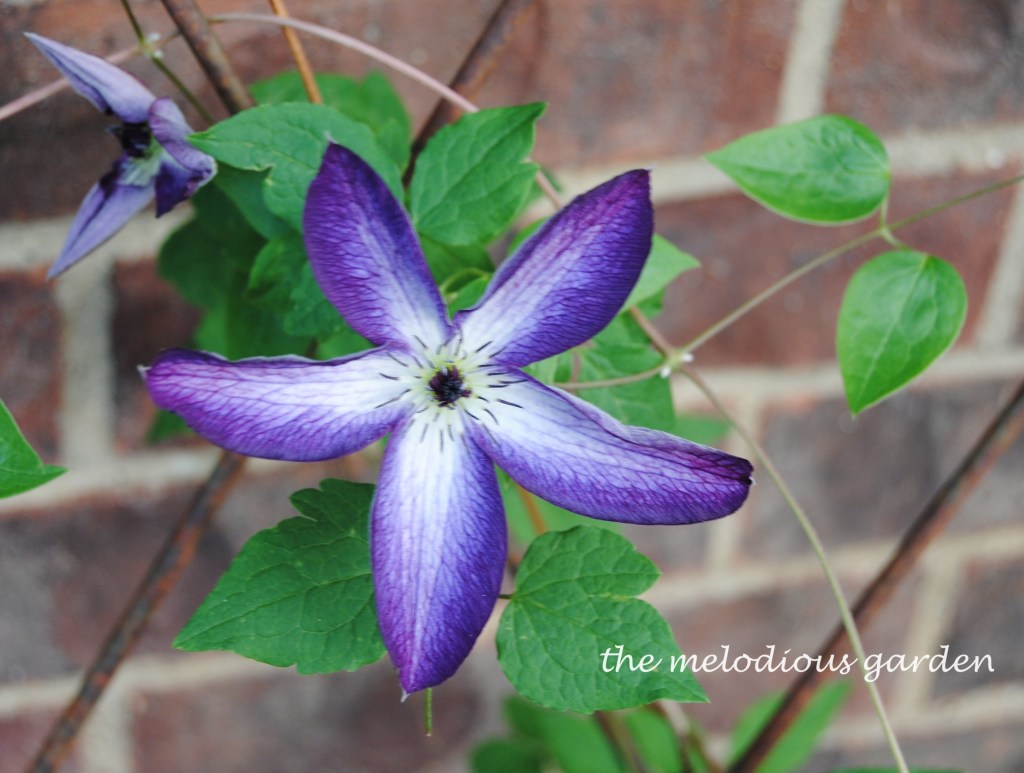
Last spring, I was placing an order with Bluestone Perennials and made the impulse decision to add Clematis Venosa Violacea to my order. See above quote about gardeners buying plants, not knowing where they will plant them. This was one of the few times I knew somewhat where I would actually plant the item.

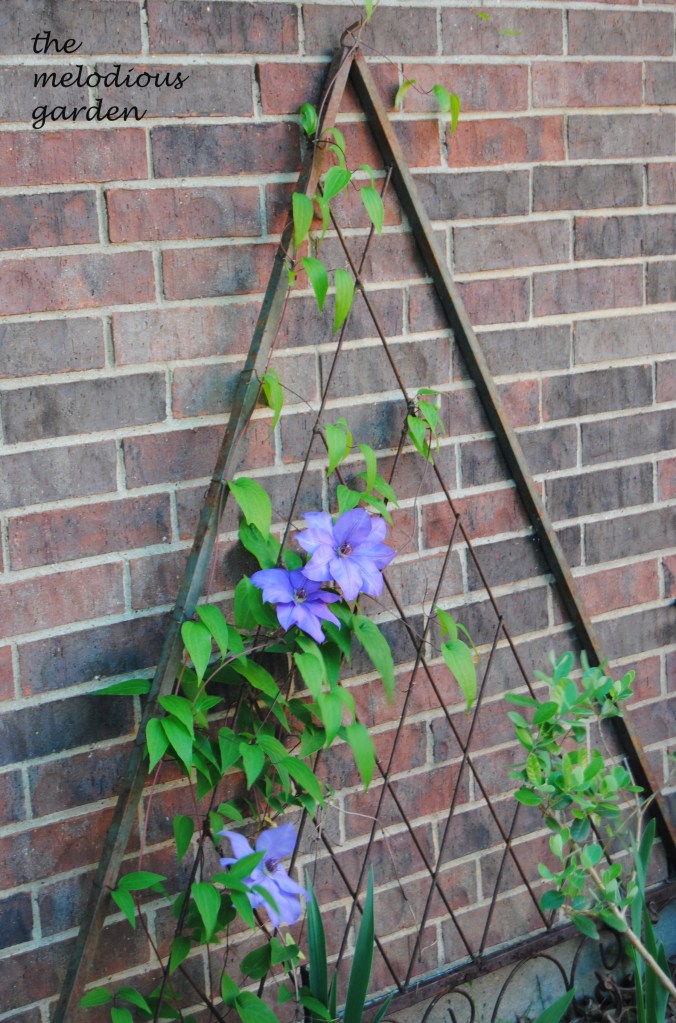
The irises were past blooming when my order arrived, so which color was where was not front and center in my brain. I planted the clematis on one of the triangular gazebo pieces that needed a little somethingsomething to liven it up.

And liven it up, it did.

The color combination is stunning. The bloom time spot on. It was as if… Maybe I actually planned it? I would love to take credit, but it is really just a very happy coincidence.

And. Yes. I am making a note to plant more clematis, as I am sure I have a few more vertical spaces that need some livening up.

All photographs taken on April 14, 2024, in my southern Denton County, Texas, garden.

bibliophile, gardening, vintage

There’s One In Every Crowd

With apologies to Montgomery Gentry…

If every bar has that one big mouth yelling, “Play some Freebird,” then every town has that one gardener that brings the party in us out… the one that makes everybody else look sane… out as far as you can get…

Garden author Felder Rushing would call them us Maverick Gardeners. Otherwise known as Determined Independent Gardeners. “(They) are not rebellious,” he writes, “they are merely other motivated.” It’s as if Felder took a gander at my garden and handed me a Maverick Gardener membership card, while Montgomery nodded in agreement. “Yup, she makes everybody else look sane.”

“There is no such thing as a weird human being. It’s just that some people require more understanding than others.” ~ Tom Robbins

The orange ranunculus shown above is the inspiration for today’s garden ramble, as it exemplifies “that one in every crowd,” as it was the only brightly colored flower to bloom among the pink dianthus earlier this spring.

Overplanted and over-accessorized are two boxes to be checked in order to belong to the Maverick Gardener club, both of which I surpassed a few plants and several rusty buckets ago. If something will hold potting soil or support a vining plant, the item may well find itself right at home in my melodious garden. Discarded? Past its prime? Seen better days? Even better!

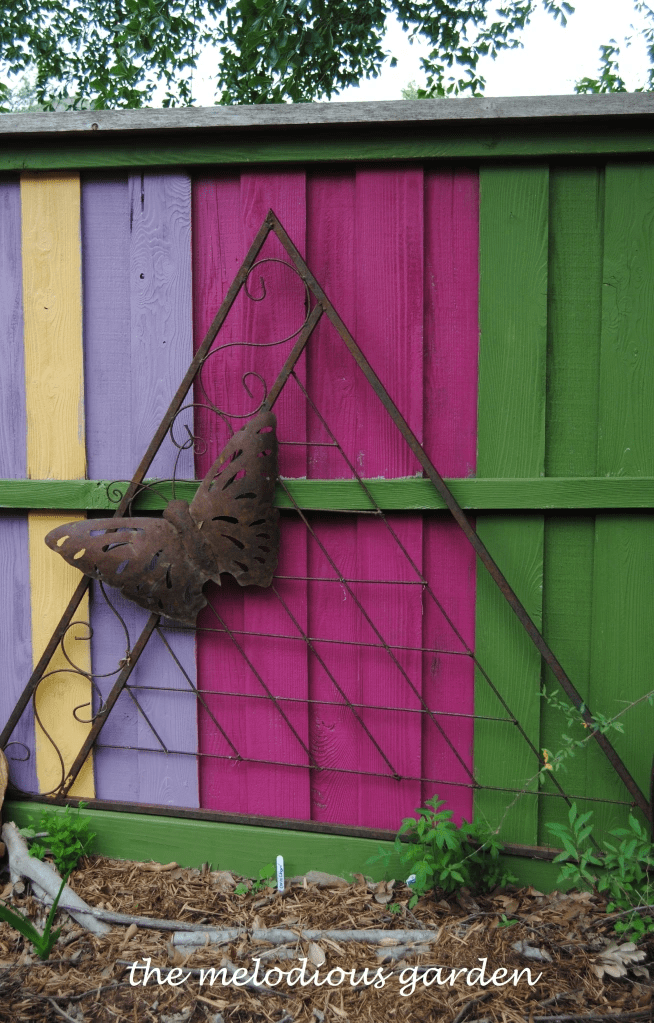
Above, part of an old gazebo has been put to use as a trellis for clematis. All together, the gazebo has six rectangular pieces and four triangular pieces, all scattered about my garden. Step through the garden gate and you will see the piece above, plus two more of the triangular pieces. They rest against the house, trellises for clematis and – soon to be – passion vine. The fourth triangular section (shown below) is straight ahead, against the back fence, a trellis for annual vegetables. If good fences make good neighbors, colorful fences make a fantastic accent piece!

Old buckets are perfect for containing aggressive spreaders, such as mint. Below, variegated pineapple mint grows in an old minnow bucket.

Funnels are equally fun to plant up! Bonus, they have built in drainage!

Old light fixtures are also fun garden pieces!

The counterpart to “If it holds dirt, it’s a container,” is the “If it’s flat, it can be a plant stand!” This old metal spool makes the perfect table for a rusty bucket of mint. The spool also doubles as a hose guide, to keep the garden hoses from dragging across the flower bed. Mints can take heavy water logged soils, so no need to drill a hole in the container. In times of heavy rainfall, I simply tilt the containers of mint on their side for a few days to drain off any excess water.

One rule of over accessorizing the garden: If you don’t know what to do with it, just hang it on a fence!

A full book review of Maverick Gardeners may someday be written. In the meantime. Keep Calm and Garden On. In your own quirky way!

All photographs taken in my southern Denton County, Texas, garden.

gardening, nature

Earth Day 2024

“Always be on the lookout for the presence of wonder.” E. B. White

What better day than Earth Day to be on the lookout for the presence of wonder!

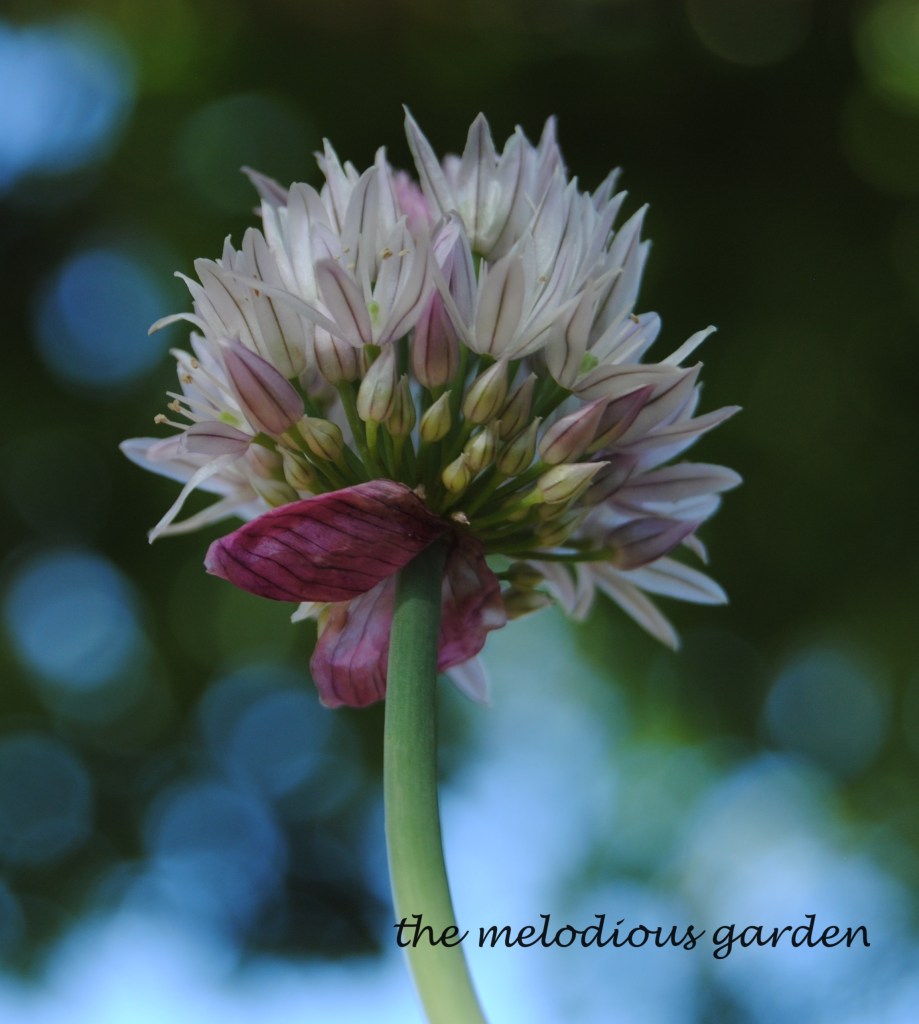
The delicate colorations on the underside of an onion chive blossom.

“We cannot protect something we do not love, we cannot love what we do not know, and we cannot know what we do not see. Or hear. Or sense.” ~ Richard Louv, The Nature Principle

The tissue thin petals of a poppy.

“I do not know if it is possible to love the planet or not, but I do know that it is possible to love the places we can see, touch, smell and experience.” David Orr, Earth in Mind

The purple veins on the hyacinth bean’s leaves.

“If you truly love nature, you will find beauty everywhere.” Vincent Van Gogh

The snow white of a daffodil, blooming so late in the season.

“To walk in nature is to witness a thousand miracles.” ~ Unknown

The cream colored accents on an amaryllis flower, as if a painter ran their brush across the red.

The contrast between today’s coreopsis blossom and tomorrow’s promise, the still tightly closed bud.

Nature is filled with so many tiny details if only we stopped long enough to take them in. This Earth Day, take time to step outside and take in the natural wonders that surround us.

All photographs taken April 22, 2024, in my southern Denton County, Texas, garden.

gardening

…young and hip, I am not… Or am I?

One moment you are young and hip and the next moment you are taking photographs of your vegetables. Or so the meme goes…

I say you can be young and hip *and* still take photographs of your vegetables!

Not that I am either young or hip. Or am I?

I crossed the threshold to “not young” a few years ago. However, I firmly believe, as the saying goes, that “we don’t stop gardening because we grow old, rather we grow old because we stop gardening.” Gardening keeps us all young at heart, as you are never too old to see the magic contained within a simple seed.

I don’t know that I was ever hip. At least not in the conventional sense. But I do think gardeners are quite hip in their own way. We are all gardening our own little piece of this world, doing our own thing, marching to the beat of our own drum, yet all – in a grander sense – beautifying this wonderful planet. And you can’t get any more hip than that, amiright?

Popeye loved his spinach and kale has had its moment of nutritional fame. Chard, however, is often overlooked by today’s chefs and gardeners but it is also a nutritional powerhouse. Chard, shown in the above photograph, has been loving our unusually cool spring days and abundant rainfall. This patch is nearing two years old and it is still tender and flavorful in salads. Chard grows wonderfully in containers and can take a good amount of shade, so it is a leafy green that anyone can grow, even on a small balcony or patio.

Cut and come again mesclun (lettuce) mix, shown above, is another leafy green that does well in containers and in a semi-shady location. This pot was sown in the fall and has provided a number of cuttings through winter and spring. Alas. It was time for one final harvest, so the container could be planted with summertime crops.

Peas are so beautiful in the garden, from the gorgeous blossoms to the delicate tendrils and the dangling pods. Both the leaves and the pods are edible, making this a two-for-one plant. Peas (shown above and below) are a cool season crop so I know our days together are winding down. I will, however, continue to grow some inside so I can enjoy the leaves as a microgreen.

Only time will tell if I have a fava bean (shown below) harvest this spring or not, as they do not like warmer temperatures. We usually go from winter to extreme summer with barely a pause for moderate spring temperatures, making cool season plantings – such as these fava beans – a gardening gamble. Until then, I will admire the flowers and know that they are providing important nectar for the pollinators.

It is always exciting to see the first tomatoes of the year, after a winter with no homegrown ones. “And we are off to the races!” Which tomato will ripen first? Which tomato will be most productive?

Several of my tomatillos (shown below) are already starting to produce, which makes this homemade salsa loving girl very happy.

Ah. Sunchokes. What to say other than, Yes, they appear do to be a super spreader, as I was warned they could be. Sunchokes, aka Jerusalem artichokes, are a love it or hate it food. I have yet to eat any to know which side I will come down on.

A bit of the backstory to this raised bed, shown below with super spreader sunchokes and rosemary: It is hiding the stump of a very aggressive junk vitex tree that we took down two years ago. I spent an entire Saturday this time last year, sawing and hacking away at the stump, which had refused to die. Then I put the metal ring around the stump, filled it with soil, planted some sunchokes and said, “Battle On! Vitex versus Sunchokes.” Then I spent all summer and fall plucking little bits of the vitex that took my dare and tried to grow. The sunchokes rewarded me with absolutely stunning yellow flowers last year, which the pollinators all loved. This year, no sign of the vitex. But the sunchokes. Oh.My. Do I have sunchokes. So far, the count stands at Vitex 0, Sunchoke 1,001. (Note to self: Move the rosemary before it gets consumed…)

I planted four Baby Cakes blackberries (shown below) two years ago and they have grown so well that I added another three this year. I also have seven vining blackberries, so I am hopeful we will have an abundance of blackberries in another few years.

Bountiful Blue blueberry, shown below, is a new addition to the garden this spring. I am hopeful I can defy our alkaline soils and grow a decent crop of blueberries.

My original gardens were mostly ornamental, with just a few edible crops tucked in here and there. The transition to a mostly food producing garden is now in its third season and things are going very well. I have had zero regrets…even if it means I now take photographs of my vegetables!

Keep Calm and Garden On. And grow some chard. You won’t regret it!

All photographs taken April 12, 2024, in my southern Denton County, Texas, garden.

gardening, vintage

…digging in the dirt…

My garden has always been my sanctuary, the place I retreat to when I need to recharge. When life is simply too much or moving too fast, my garden lifts me up, comforts me. In the words of Wendell Berry, “I come into the peace of wild things” in my garden.

Wandering about my garden the past few days, whispering to the bumblebees, praising the newly sprouted seedlings for pushing through, I am reminded of the quote ~ You can bury a lot of troubles digging in the dirt. This past year has been full of challenges and I have buried a mountain of troubles digging in the dirt.

People often talk about significant events cleaving their lives in half. “Back when we were young and naive” is how I often refer to this time last spring, the time before cancer became part of our normal every day conversations. Our lives have been split in two. By a very kind looking oncologist that bears a remarkable resemblance to Waldo. Last April, we were young and naive. Now we are living on the other side. My husband has bladder cancer, diagnosed last May. Two surgeries and three rounds of treatments so far. We are in this for the long haul. Bladder cancer is extremely recurrent and likes to travel about the body so we are now in a real life game of Whac-A-Mole. My husband has always been the healthy one, the sharp contrast to my chronic health issues. That changed in a blink of an eye. A bit of blood in the urine, nothing too alarming, but enough to warrant additional testing. Yes, you really can bury a mountain of troubles digging in the dirt. My garden has pulled me through this past year.

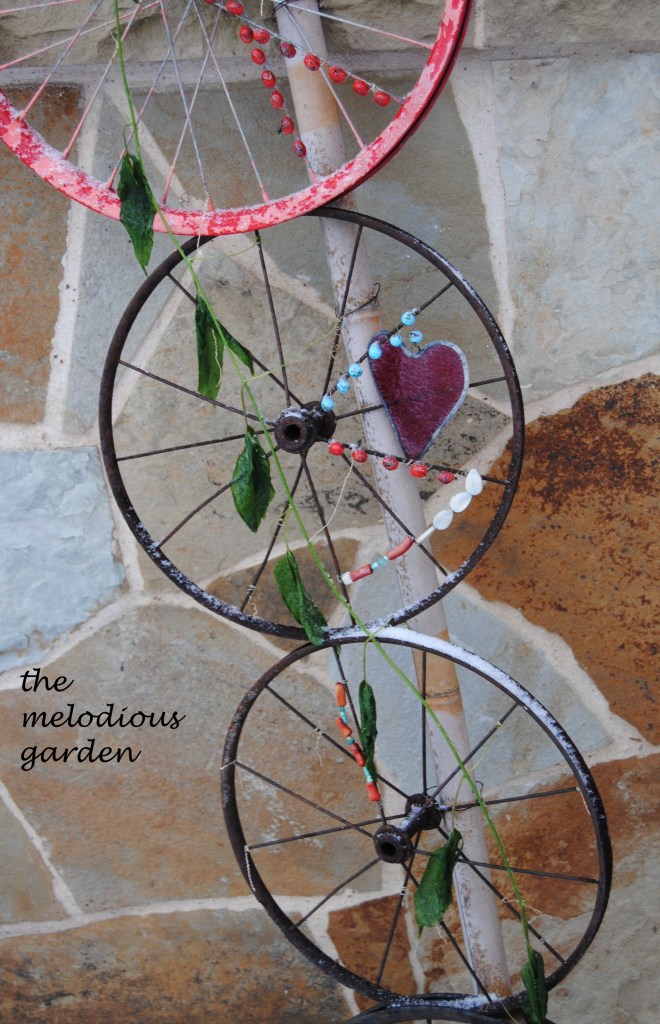
I have a soft spot in my heart for old wheels. I pick up random lone wheels at estate sales and antique stores, perfect as they are for garden decorations. A circle, with no beginning and no end.

My husband is a hardcore bicyclist. He thinks nothing of working all day and coming home and hopping on his bike and cranking out 60 miles. He loves the adrenaline of the open road, powered only by his own legs and the energy within those two thin wheels. More than a century ago, Dr. K. K. Doty wrote that “A good bicycle, well applied, will cure most ills this flesh is heir to.” While we know a good bicycle won’t cure his bladder cancer, we do know and appreciate that bicycling is – now more than ever – good for his mental and physical health, just as digging in the dirt is good for my mental and physical health.

It has been a long time since I have been able to sit down with my thoughts, my body wanting only to rush, rush, rush and bury more troubles in the dirt and move on away from the events of this past year. “Nothing is so beautiful as spring,” Gerard Manley Hopkins wrote. (Spring, 1877) How true that is! My garden has been rewarding me for all of the troubles I have buried. It is now time to sit and reflect and appreciate the beauty that is unfolding each and every day.

“I love spring anywhere, but if I could choose I would always greet it in the garden.” ~ Ruth Stout

The tall bearded irises have been especially beautiful this week. Most of my irises were purchased many years ago from Argyle Acres, an iris farm in nearby Argyle, Texas. The farm has since closed and their inventory sold to another grower, but pieces of it live on in my garden and in many other gardens in this area.

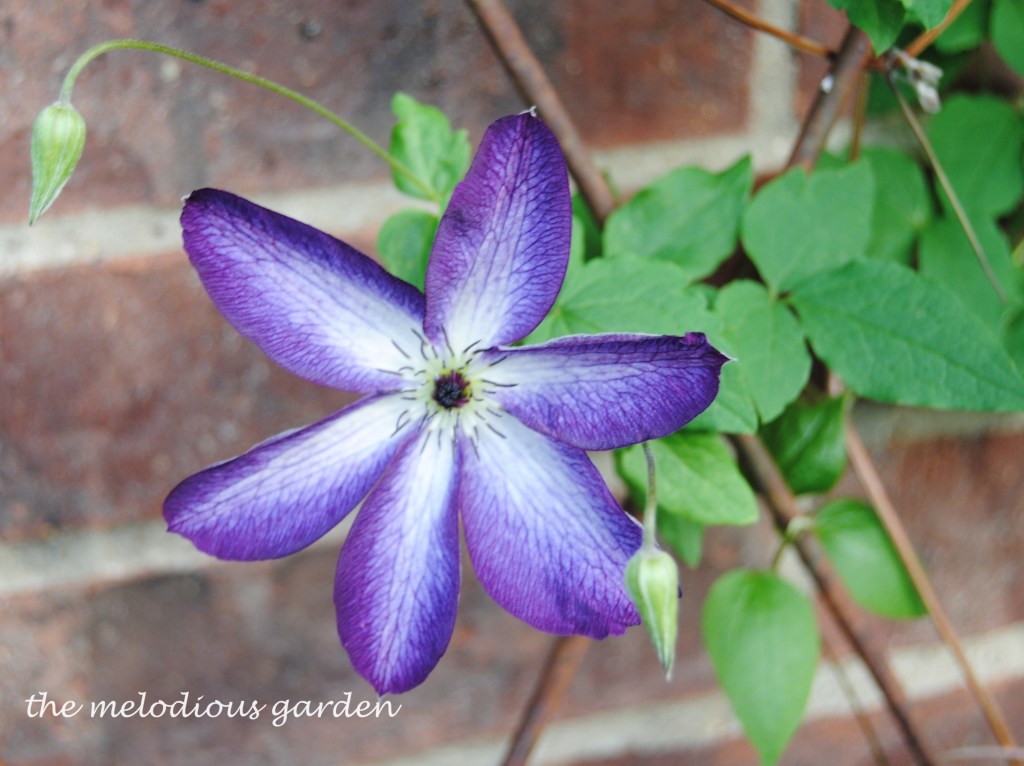
I am sad to say that the names of the irises have long been lost… as has the name of the clematis below. (I don’t tend to record the names of plants, aside from my fruits and vegetables. I would rather… dig in the dirt… than record the names of plants…)

I often talk about my former garden… It was beautiful. And full of pastel roses and pastel flowers and pastel garden art. The above flowers are remnants of my former garden, a reminder of what once was. My new garden is mostly loud. Bold. A riot of colors. Is it true that women become more radical, more bold, once they hit 50? I don’t know, but my garden sure has!

Gaillardia (aka: Blanket flower), native to this region, is a great example of my new color palette. Bold petals in bright gold, transitioning to orange-red as they nears the center. (Shown above)

Vibrant yellow blossoms on yarrow are a lovely contrast to its gray-green foliage. I am hopeful that it will be able to compete with the Malvaviscus arboreus (aka: Turk’s cap). (Shown above)

I am adding a few touches of white to the front gardens, as I like to lay outside under the moon and I love the way white blossoms light up under the moon’s light. I normally shy away from bulbs that do not naturalize in this zone, but am thankful I made an exception for the ranunculus. (Shown above) The bulbs were planted in late winter and have been putting on a show for the past few weeks.

Thank you for taking the time to read my day’s ramblings and, wherever you may be this spring day, I hope that you are able to pause and appreciate the beauty that is spring.

Photographs were taken March 31, 2024, in my southern Denton County, Texas, garden.

gardening

Gardening with enthusiasm and recklessness…

Who would have guessed six years ago, when I started my garden writing journey, that I would one day be quoting Joe Paterno. And Ice Cube. In the same article. And. Truth be told. Not I. Yet here I am.

“We play garden with enthusiasm and recklessness. We aren’t afraid to lose. If we win, great; but win or lose, it is the competition that gives us pleasure.” ~ Joe Paterno

Gardening in Texas in August is much like a high-stakes football game. Are we up for the challenge? Have we prepared well in advance for this moment? Are we focused on the fundamentals? Are we able to quickly adjust our strategies? Can we throw a Hail Mary? And. Yes. “You win some, you lose some. You live, you live to fight another day.” ~ Ice Cube

Life, football and gardening all have metaphors and analogies galore. You win some, you lose some – perhaps the most overused phrase in the English language – easily applies to life and any sporting endeavor. In gardening, it is often overlooked as it can take weeks, months and sometimes even a few years to make sense of a win or a loss. Why is one year better for tomatoes and not for cucumbers? Is the pomegranate you nursed through two freakishly hot summers really a mislabeled ornamental variety? To paraphrase Ice Cube, “If you garden, you garden to fight another day.” Or perhaps it is, “If you live, you live to garden another day.” Either way, you roll with the punches, you take what life gives you and make lemonade from life’s lemons. And. Yes. That means gardening when the thermometer tops out at 106 degrees for days weeks on end.

You win some, you lose some. And sometimes something eats your watermelon. (Shown below.) I am not sure whether it was squirrel, rat or rabbit that initially got the watermelon, but the pillbugs are finishing off the job.

Are we up to this challenge, gardening in a Texas summer? More importantly, Are our gardens up to this challenge? Better yet, how can we get our gardens up to the challenge? By feeding the soil, not the plants. A healthy soil is first and foremost the most important part of gardening. Healthy soil should be teeming with life, visible to the naked eye (earthworms) and invisible to the naked eye (bacteria). Watering long and deep and infrequent promotes healthy, extensive root development, over the shallow roots which form when plants are watered often for short periods of time. Mulch, mulch, mulch, but please. No mulch up against the trunks of trees or shrubs. The plant needs space to breath. We mulch the ground, not the plant.

Have we prepared well in advance for this moment? Some people are fair weather gardeners, enjoying the cooler temperatures and ample rainfalls that spring and fall supplies. Still others may flip the seasons – If northern climate gardeners can take off the cold of winter, then southern gardeners can take off the heat of summer! There is nothing wrong with being a two or a three season gardener. Four season gardeners – such as myself – those of us that garden with enthusiasm and recklessness the entire year – prepare well in advance for today’s high temperatures, yet somehow try to balance preparing for the upcoming seasons. We are nursing tomatoes through the summer, in anticipation of a nice fall harvest, while starting our winter collard greens and cabbages. There is a learning curve to figuring out what to start when and how to know when to pull the plug on something to make room for another crop. Thankfully, two of my favorite local garden centers have extensive vegetable planting guides on their websites (links below) and I keep multiple copies printed off – on my gardening clipboard and in my gardening binder and folded up with my seed inventory. Seed packets will say how many days to harvest and knowing how to calculate that off the average first or last freeze dates is a critical skill for all vegetable gardeners.

You win some, you lose some. Astia zucchini (shown below) has been a fabulous producer all season long, with both the plant and the harvest being of manageable size.

Are we focused on the fundamentals? Yes, gardeners are easily seduced by the pretty pictures in a seed catalog or by the racks of seeds on display at the nursery. It is always fun to push the envelope, to try to grow something others in our region aren’t growing. But at the end of the day, what we can harvest – and eat – is what nourishes our soul and our body. Leave room in the garden to play with new varieties, but focus on the fundamentals, the tried and true varieties. Yellow pear tomatoes are one I have grown for more than twenty years because I know they will always produce well, even in higher temperatures. That is my nod toward the fundamentals. The tropical papayas and guavas, which spend their winters nicely tucked away inside our home, are my enthusiasm and recklessness.

Are we able to quickly adjust our strategies? That may mean pulling a plant that just isn’t producing. Or – in my case this past week – pulling a plant that was overly vigorous and overly productive. I mean: Just how many zucchinis is too many?! It was time to break up and move on, for fall gardening is just around the corner. Adjusting our strategies may mean putting up shade cloth to protect tender young plants or moving a container plant to a shadier location. It may also mean getting up and out in to the garden with the sunrise, to get a few hours of gardening in before the sun is too high, or watering in the evening so the water can seep in slowly and not evaporate.

You win some, you lose some. Black Beauty zucchini proved a bit too aggressive in my garden, having swallowed up one pathway and one twenty pound dog, while tossing out meme worthy harvests. I was away from the garden for two days last week and needed the wheelbarrow to move its harvest. Just one Black Beauty produced two batches of zucchini bread and one vegetarian enchilada casserole. It was time to go.

Ah. The Hail Mary. Gardeners are great at this analogy, and fall tomatoes may be the perfect example of the Hail Mary. We plant them in the hottest, driest days of summer and nurse them along for weeks on end, in desperation for just a few more homegrown tomatoes before the frost is on the pumpkin. Growing peas in North Texas may be a close second to the fall tomato. How late is too late to start? When is it too early? For such a durable seed, they are a fickle little thing and one must consult Mother Nature for the inside scoop. If anyone has this figured out already, please let this gardener know. Which brings me nicely back to Joe, for it is the competition that give gardeners pleasure, knowing that we did it. We outsmarted the squash vine borers! We had homegrown tomatoes at Christmas! We survived the summer of 2023! Okay, it may be a bit too early to celebrate that one… But chins up. February is just around the corner.

“We play garden with enthusiasm and recklessness. We aren’t afraid to lose. If we win, great; but win or lose, it is the competition that gives us pleasure.” ~ Joe Paterno

Two vegetable planting guides for North Texas:

Redenta’s Garden Shop

North Haven Gardens

gardening

The first week of August is motionless and hot

It’s the second day of August and this Texas gardener feels akin to a cicada molt clinging to a dried up echinacea blossom. Need proof? I snapped this selfie, shown below, yesterday morning while wandering about my garden.

“August is one of the hottest months of the northern year, so hold your breath and see that the fan is in order. It is also one of the longest months, and sometimes it seems even longer.” ~ Hal Borland

Texas – and most of the south – baked in a heatwave back in 2000. I often talk about that summer, as I worked at an independent organic garden center way back then and that summer is seared in to my cells and in to my memory. I worked that September day in 2000 when the thermometer hit 111 degrees in DFW and – while my memory fails me much too often these days – I still can remember that feeling of… Will this heat never break?

Last summer felt exactly like 2000. Now this summer feels too much like 2000…and 2022… But the garden carries me through and I find myself fluttering about the garden, though not as a butterfly would seeking nectar, more as a weary old soul seeking a bit of shade here and a hope for tomorrow there, the promise that each new day brings, signs that we are all together part of this amazing journey called Life. When the world feels much too heavy, as it has of late, I seek solitude and grace and comfort in my plants.

“To plant a garden is to believe in tomorrow.” I often reference Audrey Hepburn’s famous quote, but the arrival last week of a fresh supply of vegetable seeds – some for late summer harvests and some for winter – brought more joy than any diamond necklace ever could. To look at a seed and see its potential, to know that the simple act of poking it in the soil can bring forth nurturing, healing food. That is to believe in tomorrow.

While I have been a passionate (obsessive?) gardener for nearly three decades, this is my first season growing tomato plants from seed. The former gardener in me always wanted one or two of various tomato varieties, so it seemed more practical to buy a half dozen transplants than to buy multiple packs of seed. Late last summer, I purchased a grab bag of assorted vegetable seeds, some of which were simply labeled as a generic sounding “large cherry tomato.” Not one to pass up a new learning experience, I decided to try my green thumb – finally – at growing tomatoes from seed. This may have unleashed a new gardening passion, for harvesting tomatoes off of a plant that one grew from seed is such an incredible feeling. The larger takeaway from growing tomatoes from seed? Not only that you can believe in tomorrow, but also believe in next month and the month after and maybe, just maybe, can pull through this season of life, no matter how many lemons life has lobbed your way.

Tithonia, aka Mexican sunflower, is an annual that I grew for a summer or two back in my early days of gardening, then stopped when I fell hard for pastel colored roses. I am so thankful that I have rediscovered them, for they are truly a bright spot in the August garden, blooming a color equally matched by the heat of the summer sun.

Zinnias are another flower that I stopped growing, though I don’t quite know why. Maybe simply because I didn’t have room as my rose collection grew. Maybe the blessing behind losing my roses was that it has allowed me space to explore more of the botanical world and rediscover lost loves. I am not sure who enjoys the zinnias more right now – me, the bumblebees or the butterflies? We are all lured closer by their cheery blossoms.

“The first week of August hangs at the very top of summer, the top of the live-long year, like the highest seat of a Ferris wheel when it pauses in its turning. The weeks that come before are only a climb from balmy spring, and those that follow a drop to the chill of autumn, but the first week of August is motionless, and hot.” ~ Natalie Babbitt

Tuck Everlasting was a favorite book when my son was younger and how perfectly the author captures this first week of August, motionless and hot. This volunteer sunflower, more than eight feet tall, seems to hang, too, at the very top of summer, motionless and hot. A week ago, this was the local hangout for all the cool bees in town. Alas. Now it is fading away into the cloudless August sky.

“August is just another thirty-one days of concentrated summer, but it certainly gets one in condition to appreciate fall when it comes.” ~ Hal Borland

I am drawn to recording the garden at the top of each month, a time to wander the garden and pause and appreciate the different aspects of the garden – sometimes it is a flower, sometimes greenery, sometimes just a pathway or a special vignette. This yellow primrose has been blooming since early May and looks especially lovely with the clear blue chicory flowers. Double Alas. I didn’t manage to record the variety when it was planted during last year’s major garden renovation. Also, I am 99.99% certain it is a hybridized variety as it does not seem to be a good source of pollen. The bees are all over neighboring plants and seldom take even a passing glance at the primrose. Still, it is delightful in the garden and I am thankful for the sunny splash of color.

Happy August and thank you for dropping by. Think cooling fall thoughts for soon – though not soon enough – us gardeners will be lamenting the cold of winter.

All photographs in this post were taken Tuesday, August 1, 2023, in my zone 8a, Southern Denton County, Texas, garden.

gardening, nature

In the hush of a summer noon

“How blest to sit in the fragrant shade,
In the hush of a summer noon,
To watch the bees at their happy task,
And listen their drowsy tune…” ~ Elizabeth Anne Chase Akers Allen

Poets and gardeners alike adore the bee family. Many lines of poetry have been written about the humming and buzzing of bees, and every gardener worth their weight in honey knows the important role bees play in pollinating their gardens. Alas. Few poets write wistfully of flies and I have yet to meet a gardener that talks about the flies in their garden. Mark Twain perhaps said it best when he wrote that he would “rather have ten snakes in the house than one fly.” That could explain why I have yet to stumble across a field guide to the various flies of Texas.

This happens to be Pollinator Week, a time to say Thank You to all of our hardworking pollinators, and not just the bees that poets wax poetic about. Bees – and flies! – hummingbirds, butterflies, moths, wasps, bats and beetles are all responsible for pollinating our crops.

Instead of stepping on my usual soapbox and writing about the importance of pollinators and how much humans depend on them to pollinate our crops and how everyone can take small steps to benefit our pollinators… because we all know that is important, right?… Instead I thought I would share some of the pollinators spotted around my melodious garden this month of June and some of the flowers I have that lure in the pollinators, because honestly we should be celebrating them all month long.

A little pollinator action on a zucchini plant, shown in the photograph above, taken on June 21st.

It is estimated that one out of every three bites of food we eat requires pollination. Some foods require pollination to produce, such as zucchini. Other foods indirectly require pollination, such as meat and dairy. Livestock are primarily fed grains that require pollination, so to raise meat for consumption or to produce milk, pollinators are needed. Some foods, such as blueberries, are self-fertile and do not require pollination to produce a crop, but the plants will have higher yields with pollination.

A large patch of zinnias, shown below, is planted just behind the zucchini in the above photograph. Blue fortune agastache is a lovely contrast to the bold, bright colors of the zinnias. Both plants are attractive to bees and butterflies. Planting flowers around your vegetables is a great way to ensure plenty of pollination.

A little pollinator action on a tomatillo, shown below, photograph taken June 1st.

Cosmos and zinnia, shown in the photograph below, are planted directly in front of the tomatillos.

Moths are often overlooked as pollinators, but they are an equally important insect to have in the garden. In addition to pollinating plants, they are a great food source for amphibians and birds. In the photograph below, a moth rests for a spell on a tomatillo plant.

“I like to psychoanalyze the flies. They are very inquisitive, for instance – eager to investigate anything, taste anything, crawl over any object from a buzz-saw to a bald head. Flies are the most obstinate creatures in the universe for they never give up an undertaking. They don’t know how to desist.” ~ Dorothy Scarborough

You didn’t think I could mention flies without photographing one, did you? It actually took me quite a while to find a fly, shown in the photograph above, then there he was – sunning himself on the leaf of a pole bean.

Above, a gray hairstreak nectars on our native echinacea, aka coneflower. The native variety attracts a wide variety of pollinators.

Host plants, such as passionvine, shown below, are also important to pollinators. Gulf fritillary butterflies lay their eggs on passionvine. The eggs then hatch and the caterpillars feed on the passionvine.

“I am regretful that in my growing up years bugs were not regarded seriously as now. I have to get my mind adjusted to the notion of taking them as important members of society, since in my green days they were brushed aside or stepped on without qualm. I didn’t know that scholars gave their whole lives to studying worms, or work up a passionate fervor over spiders, or rhapsodize over bees.” ~ Dorothy Scarborough

I could rhapsodize all day and night over the pollinators in my garden, but will leave this here for now… It is unseasonably hot in Texas right now. While poets and gardeners can seek relief in air conditioned homes, wildlife cannot. (Except, perhaps, flies and mosquitoes.) Celebrate Pollinator Week Month and consider doing just one small thing to help our pollinators. Need ideas? (You didn’t really think I could pass a chance to step on my soapbox, did you?)

gardening, nature

Summer has set in

Nearly two hundred years ago Samuel Taylor Coleridge famously – or infamously? – wrote that summer set in “with its usual severity.” Much the same could be written today, on this summer solstice.

Texas has been in the national spotlight this past week for its record high heat index readings. This is where I would normally say, “Ah, but it’s a dry heat…” Alas. No. Unseasonably high humidity is pushing the “feels like” temperatures in to the stratosphere. “People don’t notice whether it’s winter or summer when they’re happy,” Anton Chekov wrote in 1898. Oh, there is no missing that it is summer in Texas right now! Even the happiest of folks know 115 degrees when they feel it. Today I am grateful for air conditioning and deodorant and iced tea.

“Heat, Ma’am! It was so dreadful, that I found there was nothing left for it but to take off my flesh and sit in my bones,” wrote Sydney Smith. Today I am also grateful for native plants and zinnias and daylilies and for the bees that dart about my garden as I sit here, sweltering in my bones.

Our native beautyberry won’t form its namesake beautiful berries for quite a while yet and their flowers are less than noteworthy and somewhat hidden under its large leaves, but that doesn’t stop the bees from partaking of its nectar. Callicarpa americana (shown above) grows three to six feet tall and wide and its berries, which grow in clusters along the branches, are an important food source for birds during the winter. In its natural habitat, beautyberry would be found growing in wet bottomlands or along waterways, but it is very adaptable to our irrigated gardens.

Echinacea, aka coneflower, was one of the first native plants in my garden 28 years ago and it remains one of my favorites. It attracts many beneficial insects and is extremely durable, even withstanding full sun, with scant supplemental watering, around my mailbox. I will periodically deadhead the spent flowers through the summer, which encourages another wave of blooms into late summer and early fall. I stop deadheading echinacea (shown above) in the fall and allow those seedheads to remain standing through the winter. It is reported that songbirds will feed on the seeds in the cold of winter, though I have never personally witnessed that in my garden. In the late winter or early spring, I will cut down any remaining coneflower stalks and scatter those seeds about the garden. In this manner, I have sown multiple stands of echinacea around my property.

Ratibida pinnata (above) is possibly one of my new favorite plants, in part because I love its common name. Grayheaded coneflower. As my “new and improved” gardens were coming together last year, I found myself drawn to BIG. And not just BIG, but – Tall plants. Big blooms. Bold botany. Plants that command your attention. Thus entered the grayheaded coneflower. At three to five feet tall, he fits the bill. Big. Yet oh, so, wispy. I also adore how delicate – and bright yellow – the petals are.

Zinnias and agastache (shown above) are a happy accidental combination. I direct sow zinnias in the garden, at first with thoughtful selection of seed and careful consideration to date and location of sowing, later with reckless abandon. A little here, a little too much there, I morph into the botanical version of Tinker Bell scattering pixie dust. But then. This happens. And I am reminded exactly why I take a lighthearted approach to gardening. Nothing by the rows. Nothing by the rules. Sometimes happenstance gardening is best. Such a beautiful way to enter summer, sitting on the patio with this amazing view.

The pollinators were out in force this morning, happily working away at pollinating my zucchini plants. (Shown above.) Last year, I fought squash vine borers something fierce. And by “something fierce,” I mean – I gave in and let them have the plants until I gave up and ripped them out and tossed them in the compost bin. This year, I sowed three to ten times more seeds than needed, of different varieties and at staggered dates. The squash vine borers? I think they were overwhelmed by their options and flew right on past. Which means zucchini is on the menu more than a handful of times each week. Zucchini bread. Zucchini lasagna. Zucchini and bean soup. Zucchini enchiladas. Zucchini muffins. In all honesty, some years are just better for one crop over another crop. Last year, I had great success with both Dragon’s Tongue and Helda beans. This year, neither one germinated well and the ones that did grow haven’t produced much. But the zucchini? This has been a very good year for the zucchini.

Keep Calm and Stay Cool. Plant something and watch it grow, what a wonderful way to honor the longest day of the year!

All photographs taken June 21st, 2023, in my zone 8a North Texas garden.