gardening

The Round Tuit And Me

“Man, however, seems to be the only living thing that gets tangled in time. The trees never fall behind, nor does the grass… Maybe they have better clocks than man has ever made. Or maybe they get along better by not depending on such contrivances as man has devised to split the days into hours and the hours into minutes and seconds. I sometimes wonder just what advantage man ever gained by tying himself to a little machine that goes tick, tick, tick and counts one, two, three up to twelve and then starts all over again.” ~ Hal Borland

I was asked the other day if I still wrote and my answer was… well, time has a way of getting away from you, doesn’t it? How has two months passed since last I wrote? Where has that time gone? I have been off in my own head, with an article rattling about, just waiting for it to spill out on to the keyboard. Alas. Now is not the time for that piece; it needs to wait, bouncing around my head some more. In time, I will get a round tuit.

I have an affinity for weird things, odd cast-offs and such. Estate sales, antique markets, thrift stores and Etsy make my heart flutter – so many random and curious things, all in need of a new forever home. I know I can’t rescue all of them, but I do my darndest to save the ones I can.

A round tuit is one such thing.
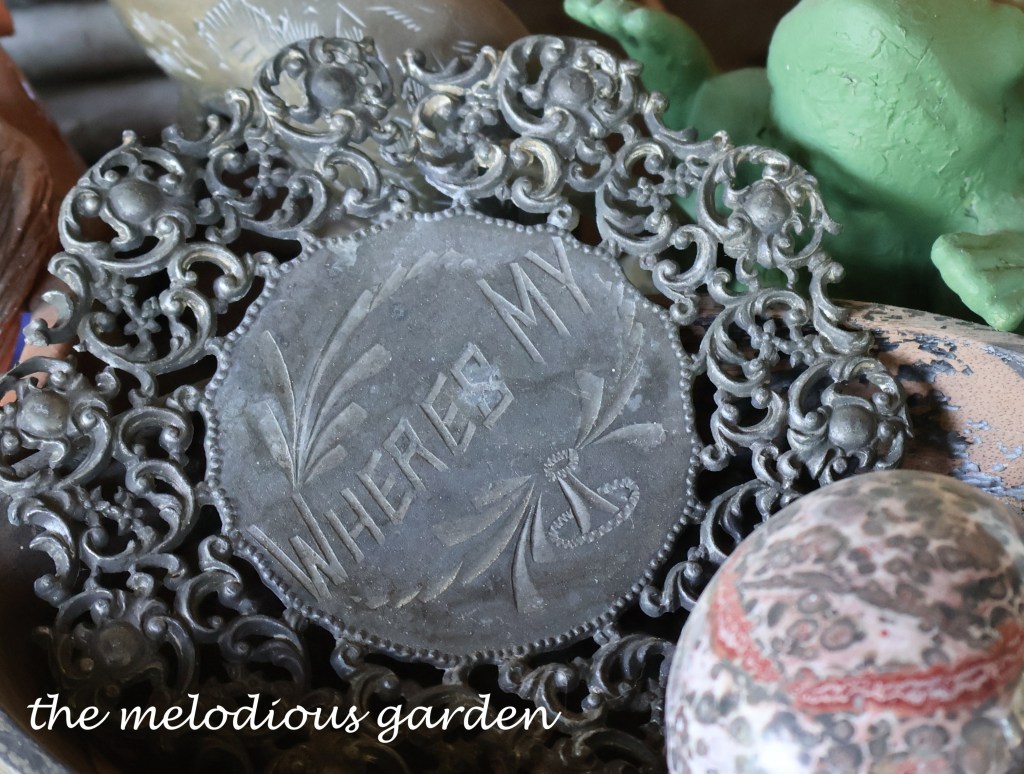
Is that the meaning of this? I actually have no idea. An old piece of ornate metal. “Where’s My” engraved in the center. Does it mean, “Where’s my round tuit?” I haven’t a clue. But it is wonderfully weird and so it feels right at home with me.

“The round tuit” – meaning “I will do it when I get around to it” – has been around since King Arthur’s days. Or since the 1964 World’s Fair. Your choice, I guess, because the internet is full of conflicting sources. I do remember my late grandma making “round tuits” to give out as Christmas gifts sometime in the 1980’s. And, yes, I tend to write When I Get A Round Tuit. Which, I know, has been much too long ago.

In all honesty, though – I have felt a bit of Imposter Syndrome of late. Am I a gardener? Or merely one that sticks seeds in the soil, only to see them sprout and — perish overnight?! Mowed down in the cover of darkness. My gardening skills have been put to the test as of late. How can one write about gardening when they are struggling so much with their own garden?

I was slow at first to respond to this gardening test, hoping that my lassez-faire approach to pest management would continue to hold. A well-balanced garden will right itself. For every pest, there is a predator. Let nature be and she will find a way. I finally realized – I Need To Take Action.

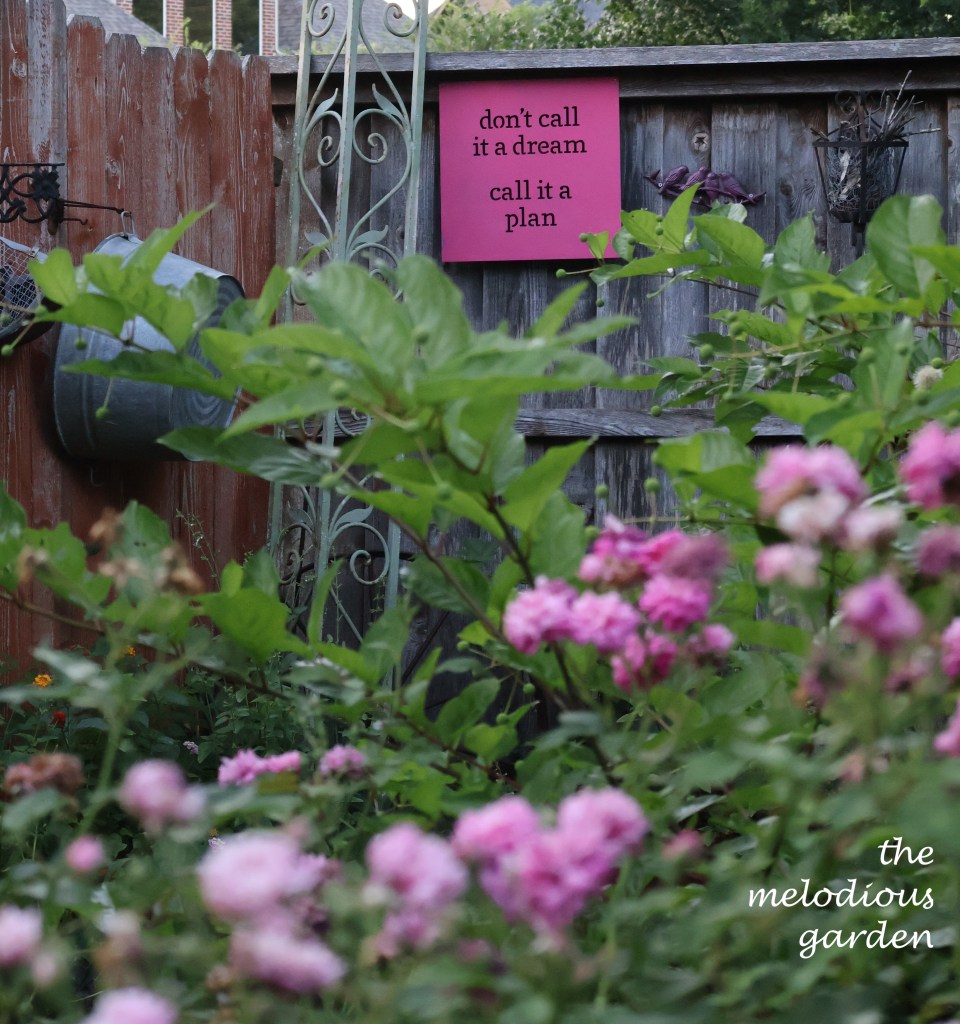
Perhaps it’s my own fault, for one of my garden signs reads: A well-planned garden feeds many mouths. Did one of the critters read this sign and tell their friends who told their friends and suddenly there was a major party going on outside every night?

Or maybe I jinxed myself for telling one too many people that a balanced ecosystem has a way of balancing itself out. Ah! Build it and they will come! Another thing I have perhaps said a few too many times could be to blame.

Maybe it was my absence from the garden last year as I recovered from shoulder and bicep surgery that opened the gates and rolled out the welcome mat to every critter and pest this side of the Red River?

No matter the reason, this has been a downright soul-sucking brutal gardening season. The pepper plants are constantly getting nibbled to the nubs. The tomatoes have been shredded. Literally! The stems, are being gnawed and shredded and destroyed one by one. The green beans? Mowed down. The peaches? Gone. Overnight. Every last one of them, not even ripe! The figs? Yes, they have suffered the same fate.

In desperation, I purchased a night vision trail cam and set it up along the back fence line of my garden. I needed to know what I was up against, right? In hindsight, was that a good garden purchase? Perhaps not. Did I really want to know that I have a virtual Noah’s ark of critters coming, two by two, through the night, scurrying along the fence? No, I don’t think I did.
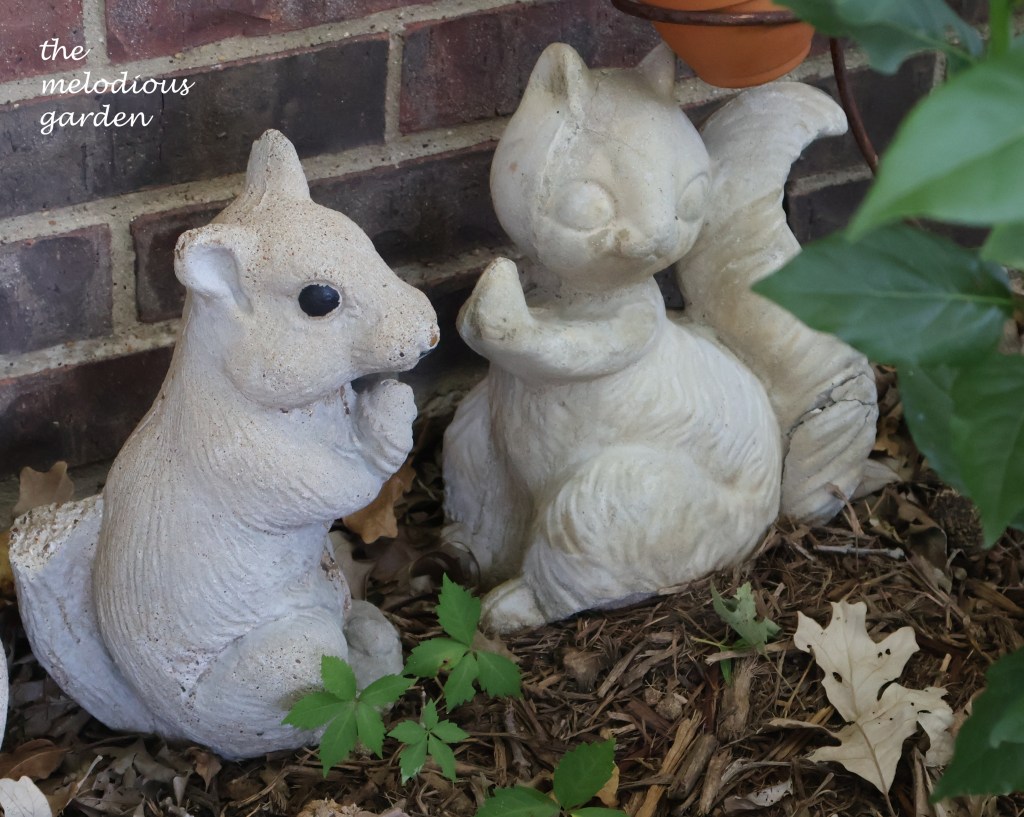
Fake snakes and fake owls were deployed and moved around daily, all to no avail. Have I scared myself with the fake snakes? Yes. Yes, I have. I even said: The fake snakes won’t scare me. I’m not scared of snakes. I know where I put them, why would they scare me? Yes. I jinxed myself yet again.

One morning, a few weeks ago, I was hauling a large trash can full of garden prunings through the garden, on the way to the compost bins. Little did I know that I bumped against said fake snake. Little did I know that said snake fell off his perch above a tomato plant, where he was unsuccessfully scaring away the critters. Little did I know that said fake snake fell in to said trash can full of prunings. And there was I. Not scared of snakes. Proceeding to dump the trash can when the fake snake flipped out of the can and landed on to my arm. In that moment, it was a snake. A very real snake. Yes. I might have screamed like a girl and nearly fainted straight away.

Enter Plan D. Deterrent of another kind. Garlic is known to repel vampires, surely it would work on the rabbits and possums. Even better: mix the dried garlic with some hot pepper flakes. Alas. While sprinkling said mixture about my poor remaining tomatoes and peppers, I dropped the container and out spilled several cups of dried garlic and hot pepper flakes. Cleaning up that mess nearly did me in and, at that point, it was Me waging war against Myself and neither one of us was winning. And now, more than a week later, my eyes still burn whenever I hand water that area of the garden for those dollar store hot pepper flakes sure are super potent! This all leaves me questioning the old gardener’s wisdom that garlic and hot pepper repel pests. My garden smells like a 1980’s pizzeria at the moment and I can’t help but wonder what new critters have wandered in, in search of some pizza.

I have tried multiple methods of Plan B – Barrier – with mixed results. Covering young plantings with chicken wire or using old animal cages – meant to keep animals IN the cage – as a way to keep them OUT of the caged area. I have found that a determined critter will find a way. Placing mesh bags over ripening tomatoes only slightly annoyed whatever was intent on eating them. I would find the mesh bag, gnawed open, in one spot of the garden, the half eaten tomato in another. Seriously! If they are going to steal my tomato, they should at least have the decency to eat the whole thing, amiright?!

In addition to the nocturnal critters, I also have a squirrel that has decided to use one of my hanging baskets as his own dirt filled swinging hammock in the sky.
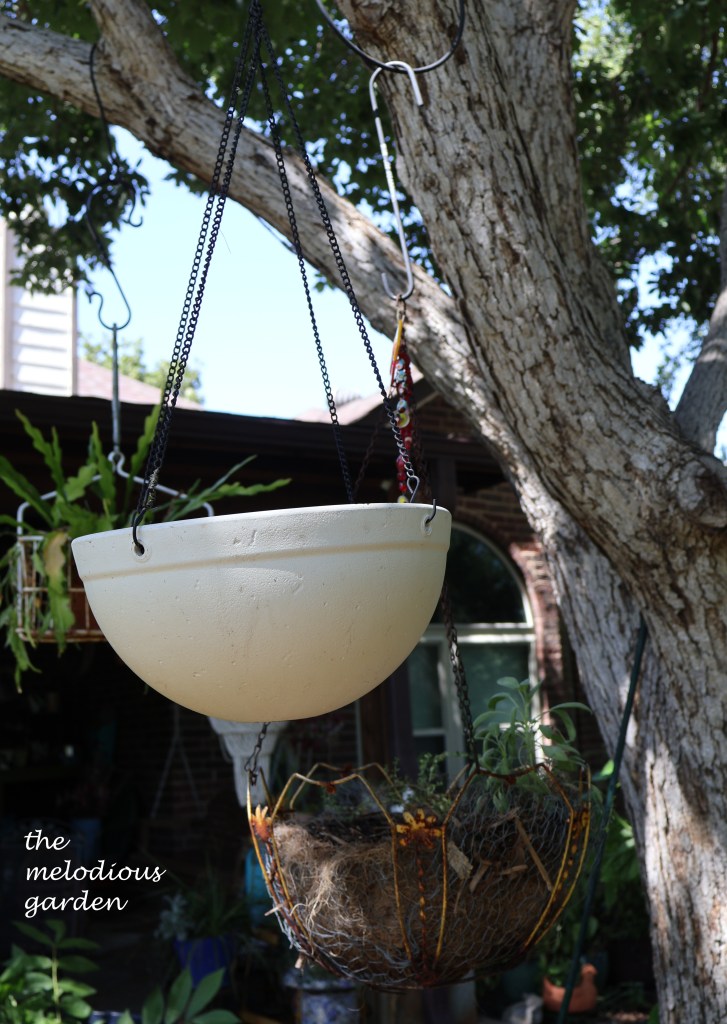
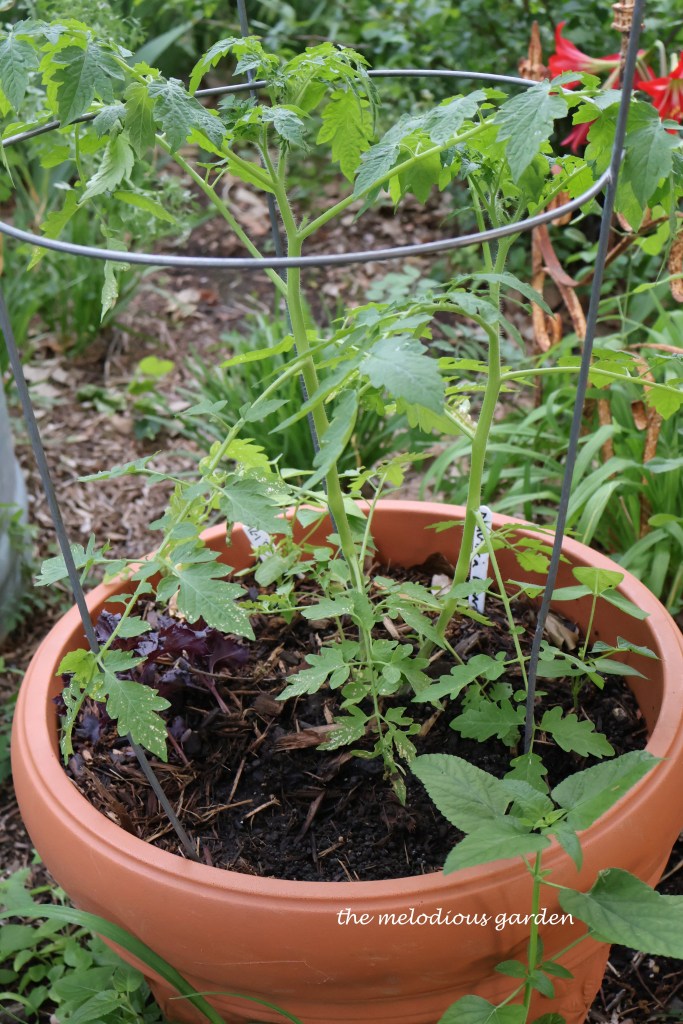
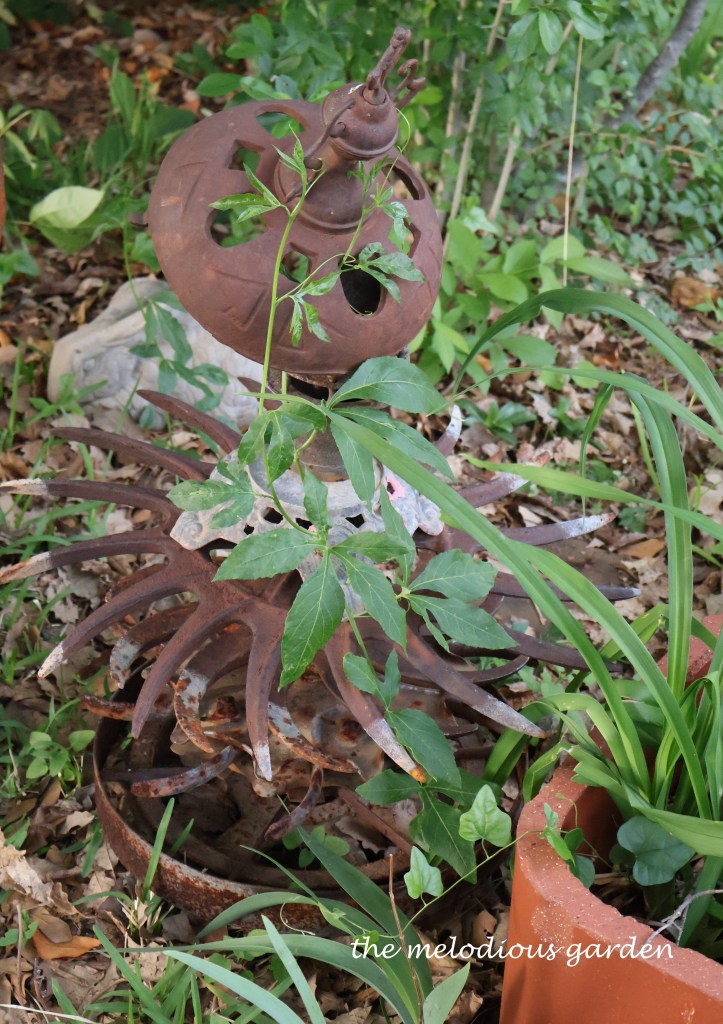
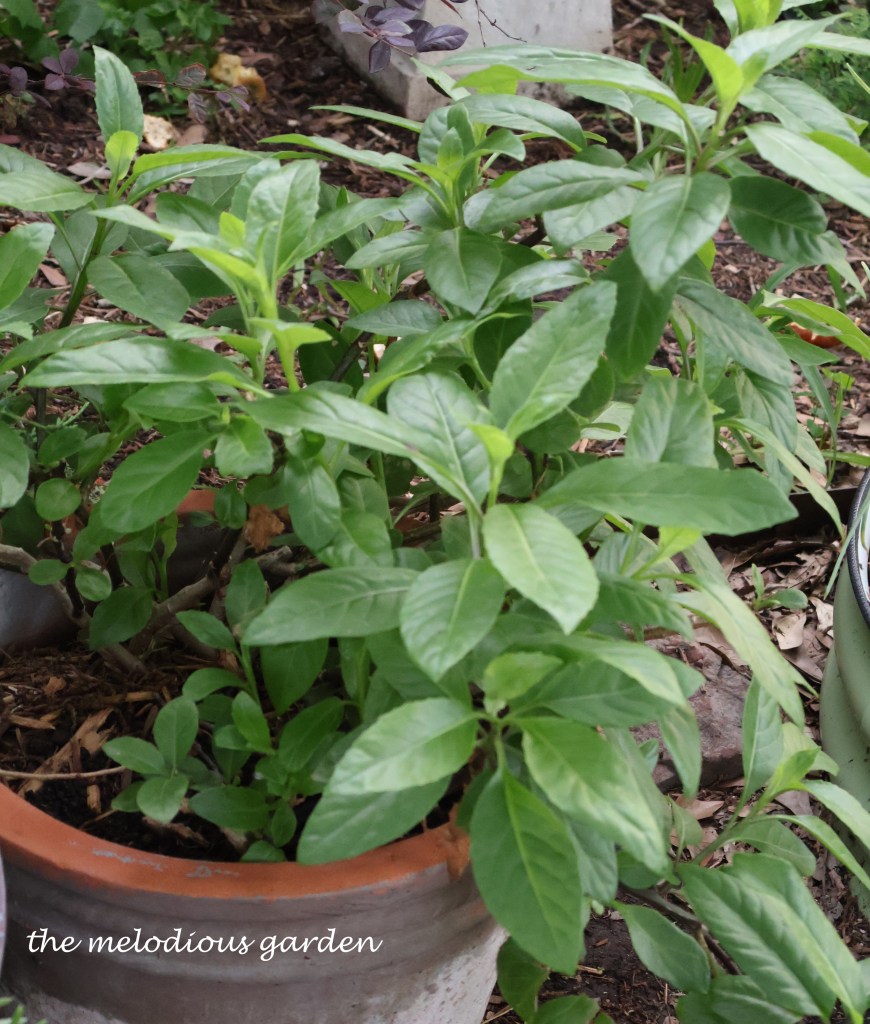
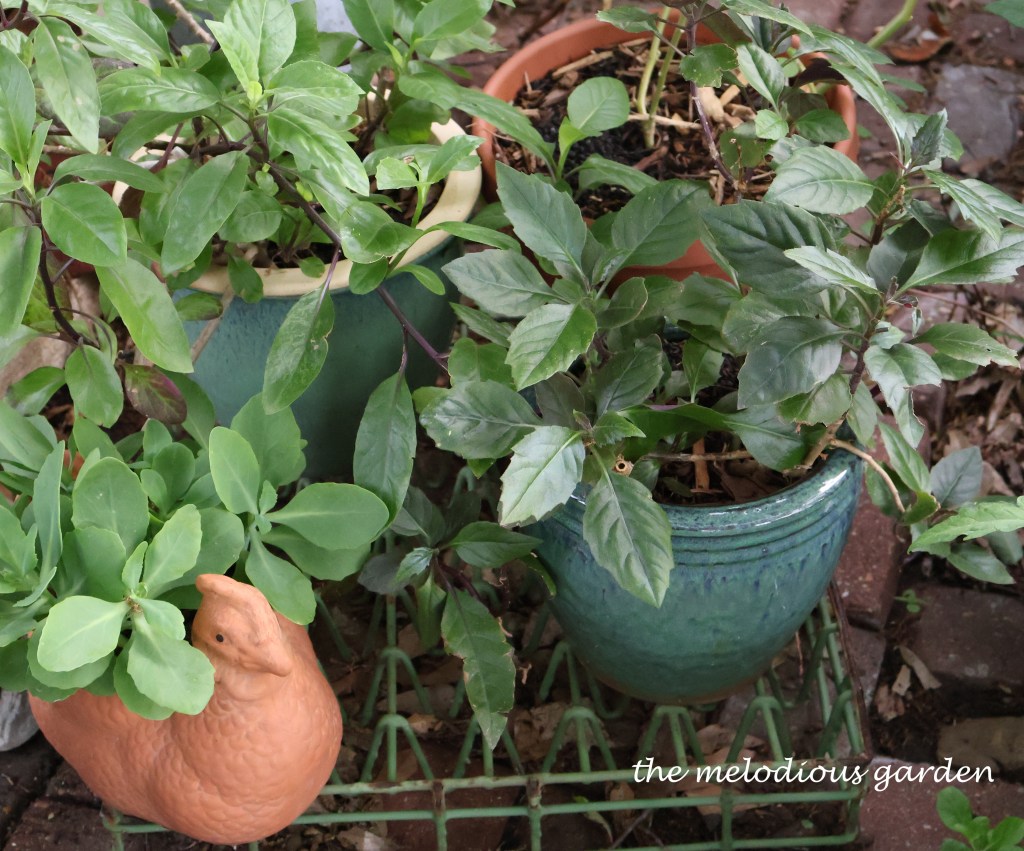
He – because all bad squirrels are males – uprooted the Cherry Falls tomato plant in that front basket, shown above. Where the tomato went, I haven’t a clue! Did he eat it or take it off somewhere? It was never found, dead or alive. To add insult to injury, his preferred route to get to said hammock is through another hanging basket, so he jumps down from the tree branch above, on to another basket (shown below), stays there a bit munching on some herbs, before jumping on over to the other basket where he spends his afternoons, happily splooted out where my tomato should be.

Plan D.O.G. has also been a fail. While my Princess Leia may love nothing more than chasing rabbits and squirrels and wayward neighborhood cats, come summer she prefers to stand and watch life go by from the shade of the patio.
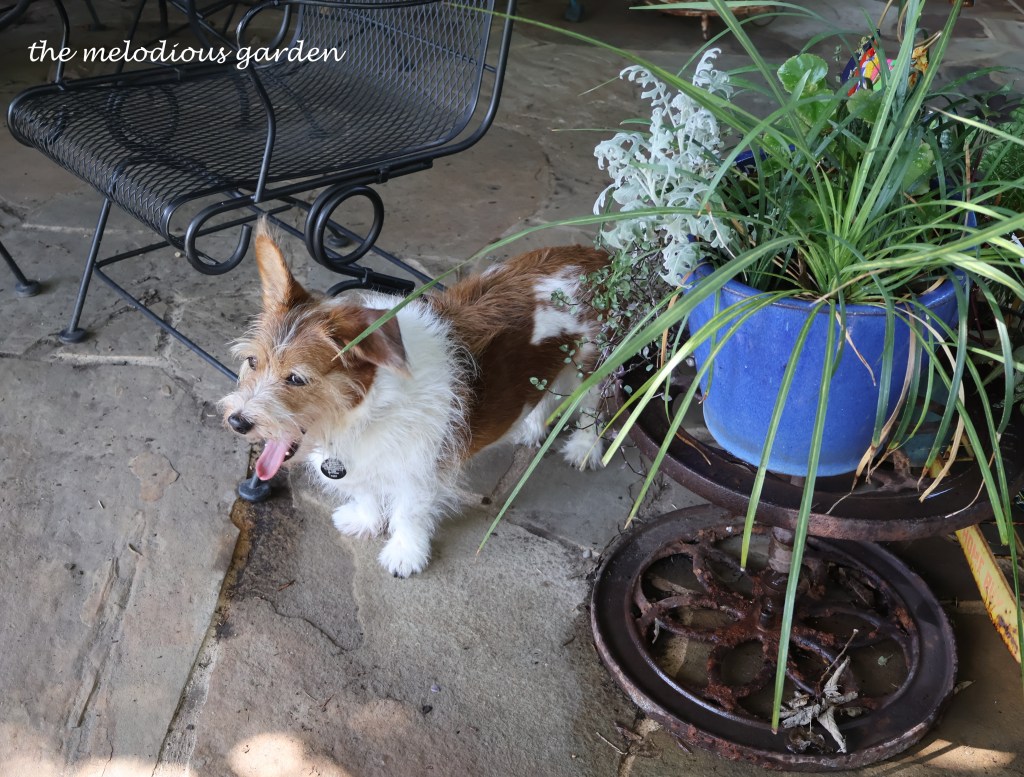
This morning, I swear she looked at me and said, “Mum, it’s a bad hunting day, the rabbits are too fast, it’s too hot, it’s been real, it’s been fun, I’m ready to go inside now.” So she left me to garden by myself – forever hopeful, to continue sticking another round of seeds in the ground, for “Hope springs eternal!” in the garden. I am pretty sure Princess Leia shook her head and uttered “Fool” at me as went back in to the air conditioning.

Desperation has set in. What keeps critters away? Or will I eventually have to admit defeat? The jury is still out. I am in discussions about building a legit fortress around the edible portions of my garden, but that will likely stay in the discussion and dream phase of development. So far, I am still in this to win it. I have hopes I will either find a solution or lean in to the crops that haven’t endured pest damage, such as the longevity spinach shown below.
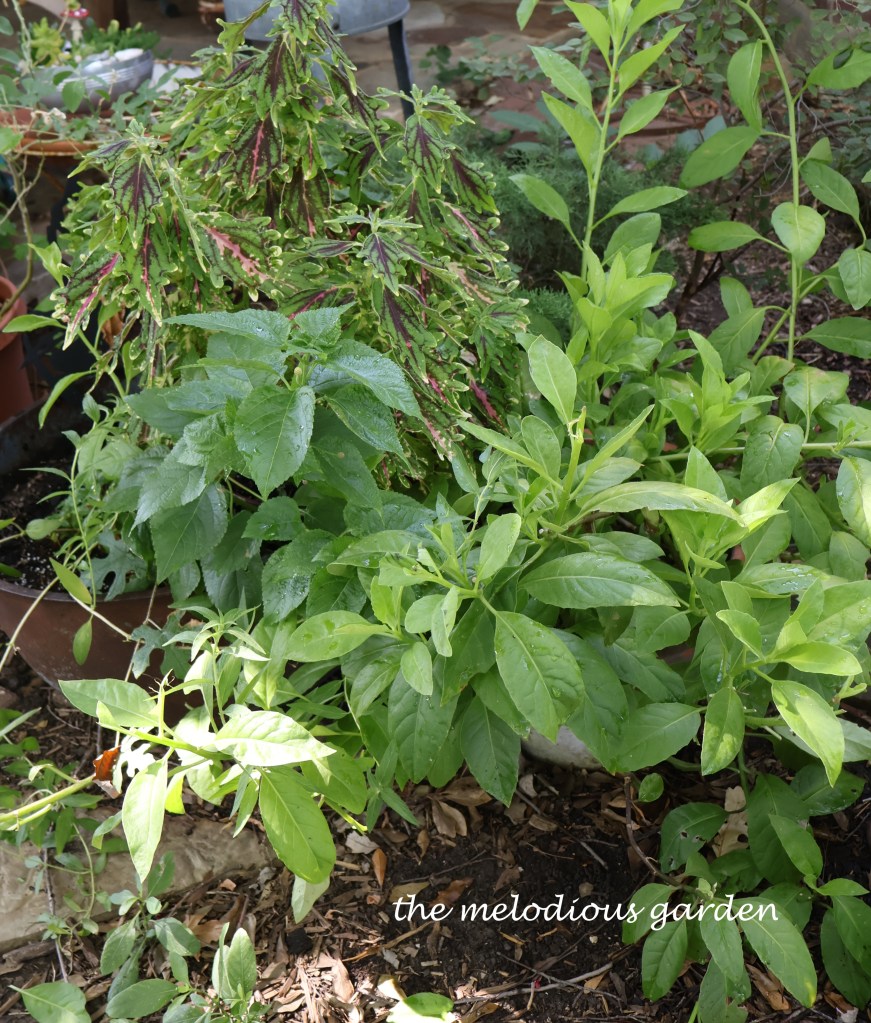
Which brings me to Plan U. Up.

Yes, Up. For several years now, I have grown sissoo spinach, a tender perennial spinach variety, in a container. She has thrived outside in the summer, even in the heat of summer, granting many harvests and nary a pest. In winter, she is cozy inside the house. This year, for the first time, she was mowed down to the soil level one night. So Plan Up was put in to place. UP. And AWAY from the rabbits. Score one for Team Gardener!

Here in North Texas, we are entering one of our best gardening seasons – fall! Yes, the calendar may say it is August and the thermometer may be set to FurnaceHot, but now is the perfect time to be thinking about fall gardening and getting those fall crops in.

Bean and summer squash seeds can now be sown for fall harvests. We are about 100 days from our average first frost, so look at seed packets and see how many days to harvest specific varieties take. Winter squash often take 100+ days to harvest, but each variety is different. It is best to err on the side of caution and look for vegetable seeds that have 90 or less days to maturity/harvest.

Cool season crops, such as broccoli and Brussels sprouts, can be planted out as transplants toward the end of August. Winter greens, like lettuce, chard and collards, are easy to grow from seed, which can be sown directly outside in another week or two. (This gives one time to shop for seeds, either locally or mail order.)

Watering is key when planting (either by seed or by transplant) this time of year. Seeds will germinate quickly in our sun warmed soil but they take frequent watering, so be sure to monitor the soil’s moisture content and adjust watering as needed.
Time, hurries swiftly on,
Each fleeting year seems shorter than the last,
And many hopes which cheered its opening dawn,
Are buried with the past.
~ Mary Ann H. Dodd Shutts

Keep Calm and Garden On.

All photographs taken today, August 13th, in my Denton County, Texas, garden.
gardening

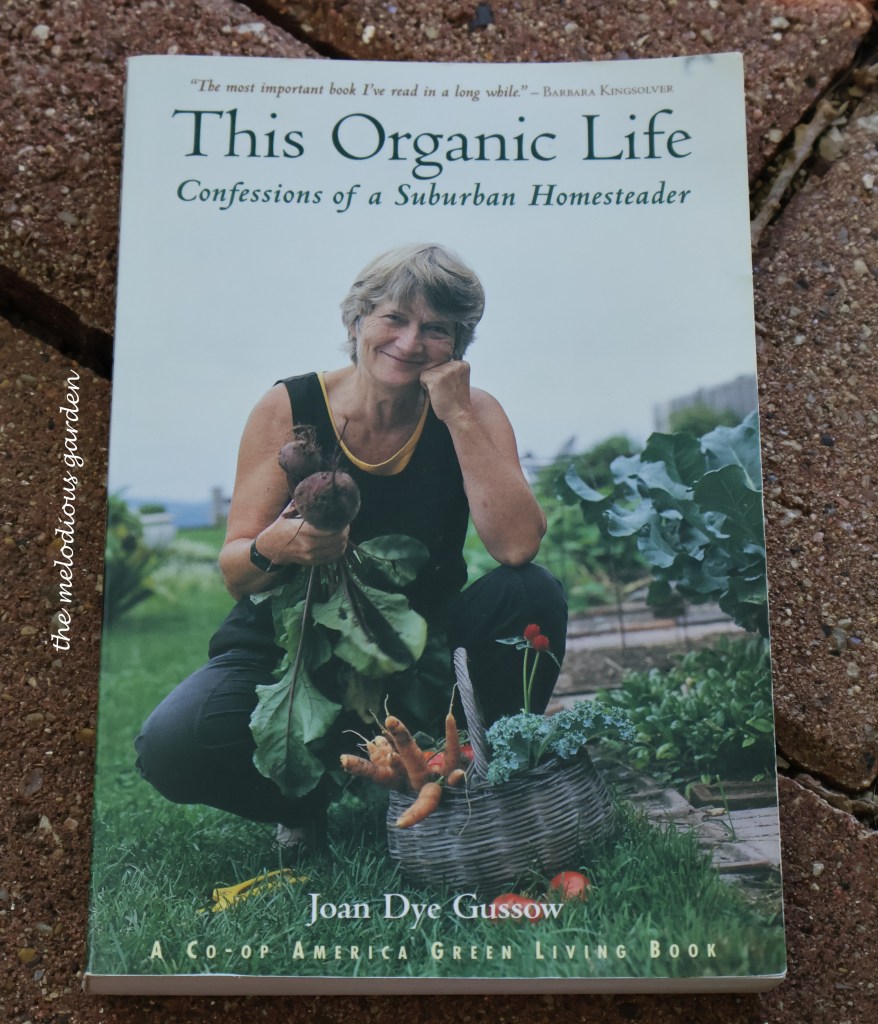
RIP: This Organic Life

Your mom likes to bounce around, my husband told our young adult son. I am fairly certain he was referring to the reading material I had packed for our recent four day trip to West Texas. But, honestly, he could have been referring to any number of my ADHD tendencies. In this case, yes. It was my reading material. And, yes, I did plan to bounce around. Why else would one pack five magazines and seven books to read over four days if one wasn’t planning to bounce around some?

One of the books I packed was Growing, Older by Joan Dye Gussow. I had pulled it off the shelf – once again – to try and read. I had numerous failed attempts at reading this book, as evidenced by the various dog eared pages throughout the first twenty or so pages of the book. Yet, here I was, once again drawn to read this book.

Why did I not devour it as I had her previous book, This Organic Life: Confessions Of A Suburban Homesteader? If one were to ask me for a list of my five all time most favorite books, This Organic Life would be on the list. If one were to ask me if there was one book I had read multiple times, again – it would be This Organic Life. Why, then, could I not get through Growing, Older? Ah. There it is. Why did I not notice this or think about this as I was packing!

That subtitle.

A Chronicle Of Death, Life and Vegetables.

Death. “Growing, Older begins when Gussow loses her husband of forty years to cancer.”

One simply does not read a book on cancer and death when one’s husband has cancer. And one certainly does not read a book on said topic while on a four day road trip where one’s husband is doing a 24 hour bike ride that supports a cancer organization. Yet, there I was. Growing, Older. Determined this time to read it in its entirety. I pulled it out and tried to pick up at the current dog eared page. No. I would need to start over from the beginning. Too much time and too much life has passed since my last attempt at reading Gussow’s book.

It would be fair to ask: Why was I so determined to read this book? Well, Gussow’s earlier book was simply so good, so inspirational, that I couldn’t figure out why this book felt entirely different to read. Ah. Cancer. Death. It felt too ominous, too personal. More from the back cover reveals my own anxiety. “Without a partner, she continues growing her own year-round diet – while bucking popular notions of how ‘an elderly widowed woman’ should behave.” There it is. My own fears. Very early in my husband’s cancer journey, he nearly died from surgery complications. Not cancer. But surgery complications. That experience is still raw. And – to be brutally honest – I yelled at him, “How could you almost die already? You haven’t even starting fighting cancer yet and you almost died!” Growing, Older brought all of those emotions and memories flooding back.

Our trip to West Texas for the 24 Hours In The Canyon bike ride was certainly not an ideal time to try to read this book once again, yet by the time we got home I was more than halfway through the book and even more determined to finish it, which I did just a few days later. I am thankful that I finished the book, but it won’t be one I read again and again, as I have with This Organic Life.

I don’t recall where or when I bought and first read This Organic Life, but it was published in 2001, which was the year I had to leave my much-loved job at an organic garden center as I was first on bedrest due to pregnancy complications, then a mom to a premature baby boy. I had a lot on my plate in those days and for many years after, but I would – from time to time – be drawn to this book for a quick re-read until – at this point in my life – I can nearly recite entire passages and open the book and quickly find a quote that I want to reference. It feels like an old friend by now, which is why, after finishing Growing, Older, I was interested in searching the author’s name online and was saddened to read that she had passed away last year, just a few days before my dad passed away. Gussow was 96 years old at the time of her passing, perhaps a testament to the value of eating one’s own homegrown organic vegetables.

I talk often about my original garden, the one I started thirty years ago. It was organic from the start. No chemicals have been used here since we acquired this piece of earth. Somewhere in those first few years of gardening I discovered antique roses and it was love at first sight. Within a few years, a couple of antique roses led to a dozen led to 150 at the height of its glory. I always left room for herbs and a few vegetable plants, but my original garden was primarily a rose garden. My husband had asked me early on to please, leave a bit of grass and I took him at his word: Bit. We have a bit of lawn. Over the years, sod was removed for new flower beds until now – from the street out front to the back fence line – nearly every inch of the property is devoted to my gardens.

Rose Rosette Disease is an awful virus that is spread by a microscopic mite and it tore through my garden like wildfire around 2012. Over a two year time period, I had three distinct waves of RRD and – in the end – my rose garden was reduced to only four roses that somehow avoided the mite and the virus. I was still in the midst of figuring out my “What Next For This Garden?” when I had several autoimmune health issues and one nasty neurological disease pop up. I spent the better part of a year living on toast as that was one of the few foods that I could tolerate eating. During this time, much of my garden went feral – the roses had been removed but nothing planted to take their place. Then Covid hit. My doctors were all in agreement: I was way too sick to get Covid and I needed to avoid any risk of exposure. The seed for eating locally grown food had been planted years prior, when I first read This Organic Life and admired Gussow’s passion for, in her own words, “year-round local eating” and “vegetal self-sufficiency.” During those early Covid lockdown weeks, sending my husband to the grocery store with my grocery list, I realized it was time to start shopping at the local farmer’s market that I had long wanted to attend. Perhaps I could grocery shop in the open air and improve my health by eating locally grown produce? I got to know many of the vendors, including Cardo, who began growing microgreens back in the 1970’s while he was in college. I slowly started trying new foods and seeing improvements in my health. Cardo sparked my interest in microgreens and growing unusual fruits and vegetables. This Organic Life was pulled off the shelf once more and re-read, this time with a deeper interest – Could I grow my own food? I had the empty flower beds, just waiting for my “What Next?” Could I pivot from a flower gardener to a vegetable gardener? This Organic Life was the perfect manual I needed – filled with inspiration and advice. Gussow’s garden in New York may be vastly different than my garden in North Texas, but all gardeners face the same challenges at some point in time – too wet, too dry, too hot, too cold and – What about those pests?! Sure, I don’t have woodchucks and muskrats, but the feeling of walking out to the garden in the morning and finding the spaghetti squash – the one you have patiently been waiting to mature – half eaten by a squirrel is the same sort of Mr. McGregor angst.

Five years have now passed since I first started converting my gardens over to food production. I have had some derailments along the way, with both my ongoing health issues and my husband’s cancer taking over some of my time and energy. But to everything there is a season, a time when one needs to sit back and just feel the peace of the garden and then there are times to move forward. I am so thankful that I have (finally!) read Growing, Older as it showed me that life moves on even in grief and that you can bury a lot of sorrow in the garden. I am so thankful that my husband and I are both doing well at the moment and that I am able – in this season – to devote more of my time and energy in to growing my own food. I wish I had been able to meet Gussow during her lifetime, but I feel a bit of her every time I am able to prepare a meal with my own harvests. May her spirit live on, inspiring future generations.

Keep calm and garden on.

(Photograph above shows my harvest on June 1st, 2026. I garden in zone 8b in Southern Denton County, Texas.)

gardening

Why art thou dreaming!

“Heart of mine, why art thou dreaming!
Dreaming through the weary day,
While life’s precious hours are wasting,
Fast, and unimproved, away?” ~ Mary Ann H. Dodd

Life is filled with precious hours, slowly ticking time off, yet how often we spend them dreaming away the time. Next year, I will conquer this thing. Next month, I hope to do that thing. Next week? Tomorrow? Tomorrow! There are always dreams. There is always time. Until there isn’t.

Cancer is a beast. A beast that has touched my life again and again. My uncle. My aunt. My father. Neighbors and friends. My husband’s aunt. My husband.

One evening in May, 2023, my husband went out for his typical post-work bike ride. The following morning, he urinated straight blood. Was it a one-off experience, brought on by strenuous biking, or something more sinister? Thankfully, alarmed, he called his family doctor before even exiting the bathroom. Thankfully, he kept that doctor appointment scheduled for just a few days later, even though there was no more visible blood in his urine. An in-office urine collection was filled with microscopic amounts of blood. Thankfully, the doctor, suspecting a kidney stone, sent him right away for a CT scan of his abdomen. Thankfully, everything moved so fast – a month from the first symptom to the first surgery. Alas. The beast, cancer, had touched our lives once again. This time, up close and personal. Bladder cancer. The same cancer my father had been diagnosed with just a few years earlier. My father – a male, a life-long smoker and fire fighter – was in three high risk categories for bladder cancer. My husband? His only risk factor was being male. Yet here it was. That beast.

The first year after diagnosis is always a blur, or so we have been told. Surgeries. Treatment plans. Endless doctor appointments. “This is so surreal,” I must have uttered a dozen times a day, trying to make it make sense. He is always the healthy one, I would tell everyone. Never sick. Never a broken bone. Never a surgery or hospital stay. How do you answer that common greeting, “How are you doing?” How is he doing? How am I doing? How are we doing? To quote The Beatles, “I get by with a little help from my friends.”

Year One rolls in to Year Two and the numbness starts to wear off. No more surgeries. Just treatments, biopsies, scans and more doctor appointments. Year Two, my father died of cancer, though not of his original bladder cancer. Merkel cell carcinoma. Another beast had entered our lives. We are now in Year Three of my husband’s battle with this beast. Bladder cancer is highly recurrent. A lifetime of scans and monitoring. In the words of his urology oncologist: As long as you are biking and fighting, we are monitoring and treating. We get by with a little help from our friends. My husband’s biking community has been outstanding. Their love and support, we feel it. It warms our hearts in ways we could never fully convey.

“Tell me, what is it you plan to do 
with your one wild and precious life?” ~
Mary Oliver

Last year, my husband set a biking goal for 2026: To compete in the 24 Hours In The Canyon biking event at Palo Duro Canyon State Park. This year, the 20th anniversary, the event was held over the last weekend of May – from noon on Saturday to noon on Sunday. The ride supports The Cancer Survivorship Center, which serves adult cancer patients in the Texas and Oklahoma panhandle and let me tell you – It was an emotional weekend! Nearly 50 of the riders, my husband included, are cancer warriors. To see and talk with others that have been touched by the beast named Cancer, to see the community of road and mountain bikers come together to support one another while also supporting a wonderful cancer support organization, to know that so many people changed their dreams into plans to put in the training and dedication it takes to ride for 24 hours, to know that so many gave of their time and energy and volunteered to support this event… We all get by with a little help from our friends.

Now I know this is primarily a gardening blog and this begs the question: Does this have anything to do with gardening? Yes, though perhaps indirectly. You see, my husband has been so blessed to be part of a local biking community, and I have been blessed to belong to a wonderful gardening community.

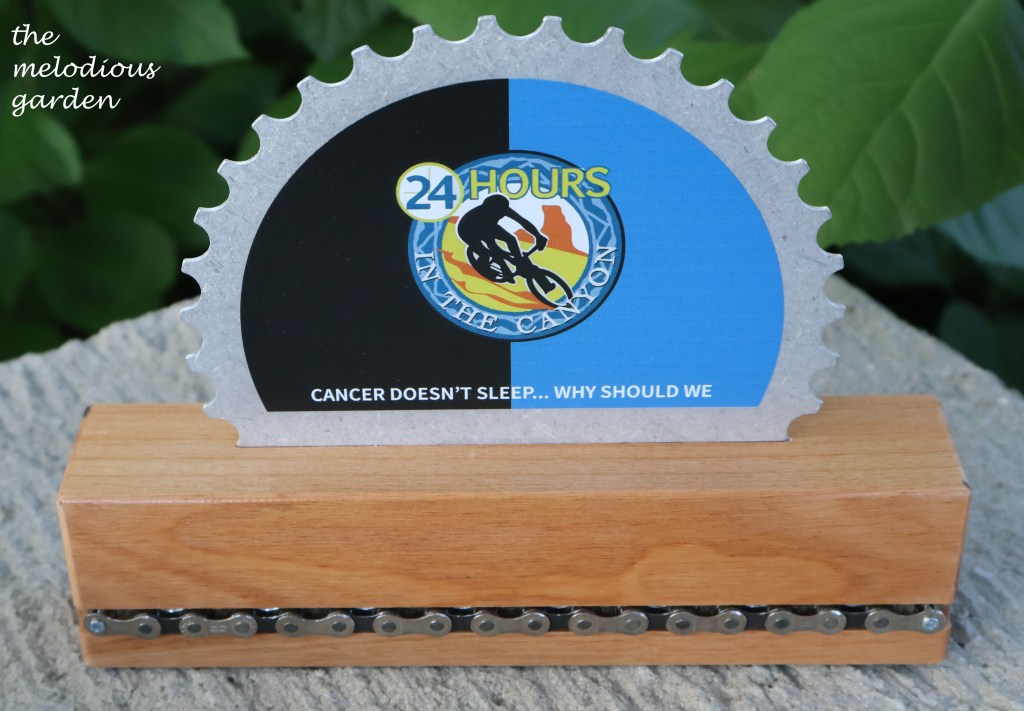
In an article from 2023, Amy Doneen wrote, “A sense of belonging in a group can significantly impact a person’s mental health, reducing anxiety, stress and loneliness. Humans have traditionally lived communally, looking out for one another, supporting one another and sharing in the joys and challenges of life. It is a beautiful fact that our lives are more fruitful and rewarding when we share them with others.” This past weekend, at Palo Duro Canyon State Park, we felt that sense of belonging, sharing in the joys and the challenges of life. My husband biked 194 miles over 24 hours, in challenging conditions, to come in first place for his age bracket. His trophy sums it up: “Cancer doesn’t sleep, why should we?”

Cancer is now our ever present. That uninvited guest that showed up at suppertime and stayed the night and the next day and the next week. Life’s precious hours are wasting away. It is up to each of us to make the best of our time here on earth. What will we do with our one precious and wild life?

“The man who has planted a garden feels that he has done something for the good of the world…. It is a pleasure to eat of the fruit of one’s toil. To dig in the mellow soil… is a great thing. One gets strength out of the ground…. There is life in the ground; it goes into the seeds; and it also, when it is stirred up, goes into the man who stirs it. The hot sun on his back as he bends to shovel and hoe, or contemplatively rakes the warm and fragrant loam, is better than much medicine.” ~ Charles Dudley Warner

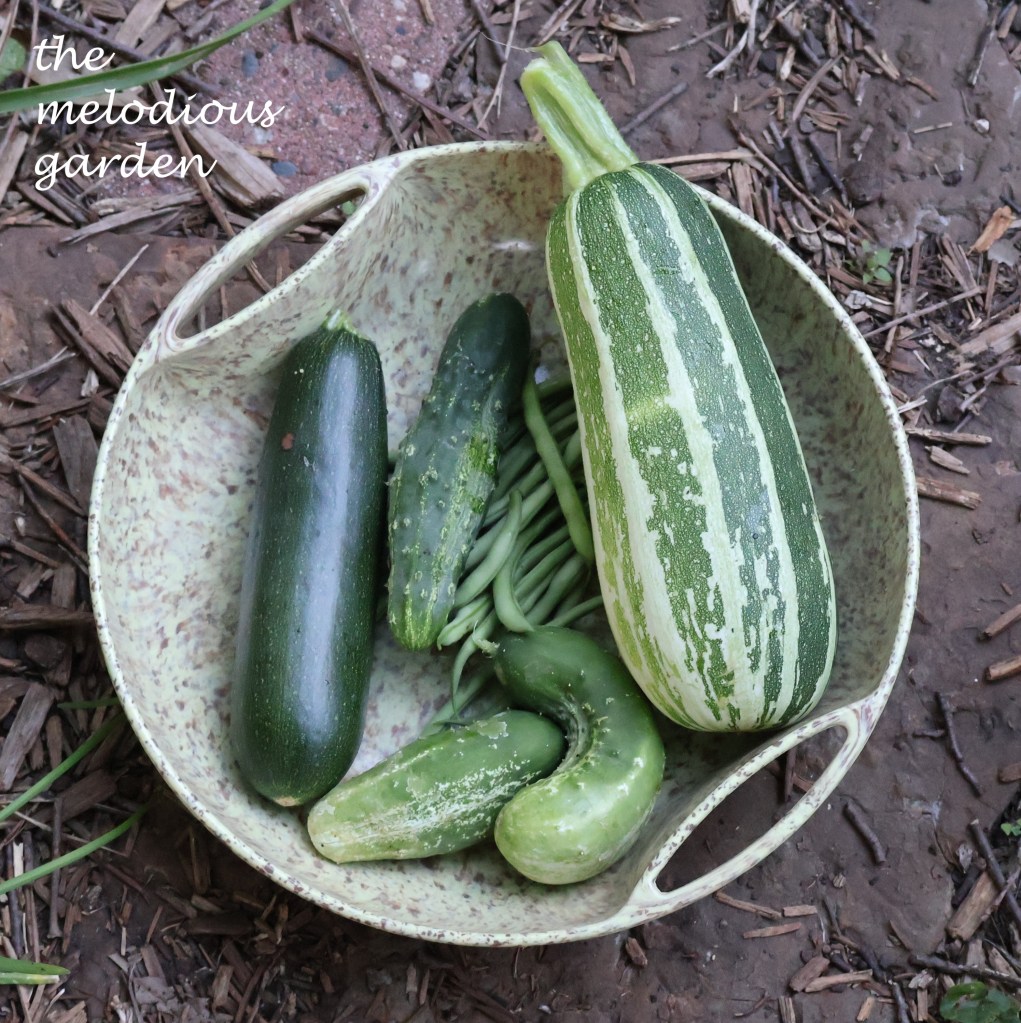
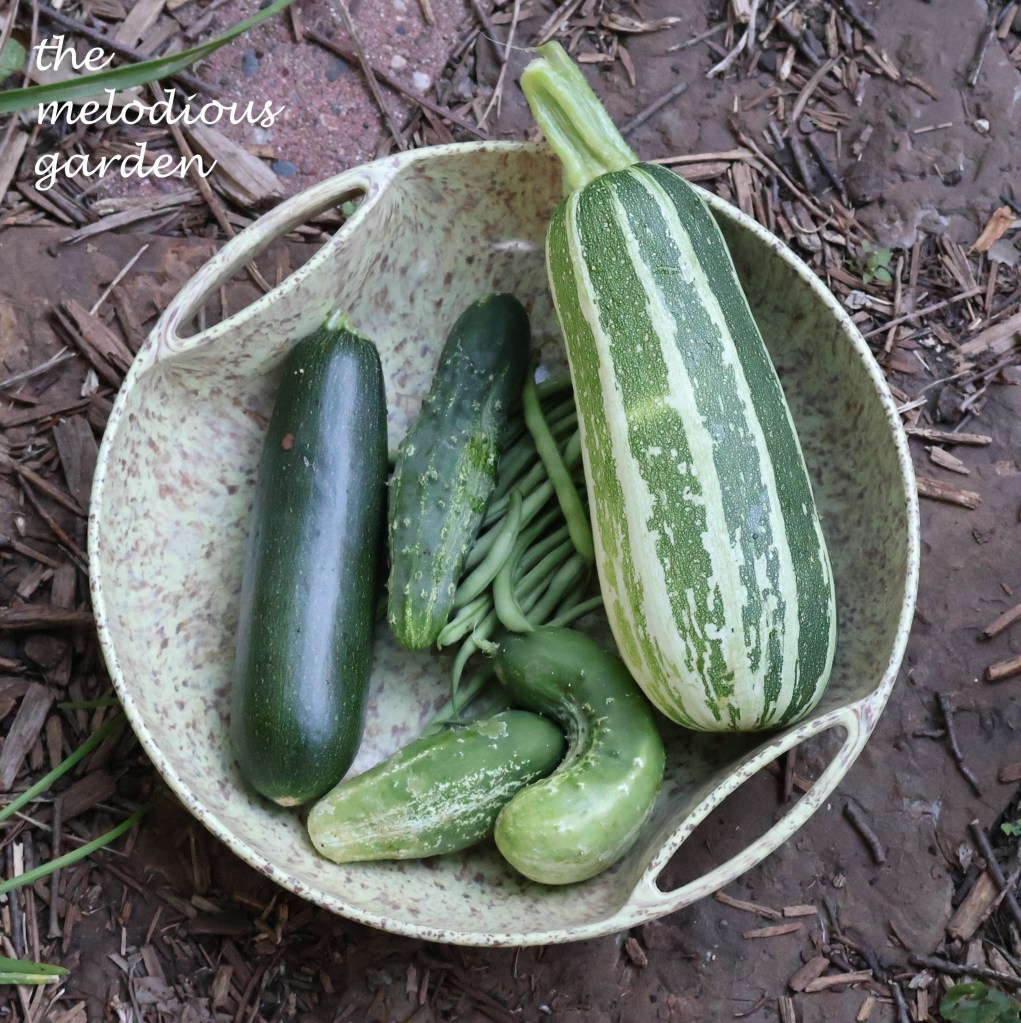
My husband bikes and I garden. He flies down the road on two thin bicycle tires while I stay grounded at home, tending my garden. I loved spending the weekend at Palo Duro Canyon, camping under the full moon, waking to the birds singing. I loved seeing where my husband’s training, planning and hard work took him. I also loved returning home, rushing out to my garden and harvesting what grew in the few days we were away. I loved making supper tonight with the fruits of my toil – zucchini, peppers, onions, garlic and green beans – knowing that fresh organic homegrown produce nourishes our body and soul. May we all be blessed with a passion that enables us to turn our dreams into plans, that gives us a sense of purpose in life, that leads us to our tribe, our community.

Keep calm and garden on. Sow some seeds of kindness today.

Photographs taken June 1st, 2026. I live and garden in zone 8b, southern Denton County, Texas.

gardening

The rain had kissed each flower lovingly

“When at morn I saw the world in a dewdrop dress,
I knew what had happened.
The rain had kissed each flower lovingly.
So sweet and so loving was the kiss
That it shone like silver
And the air was filled with fragrance.”
~Julia Cooley Altrocchi

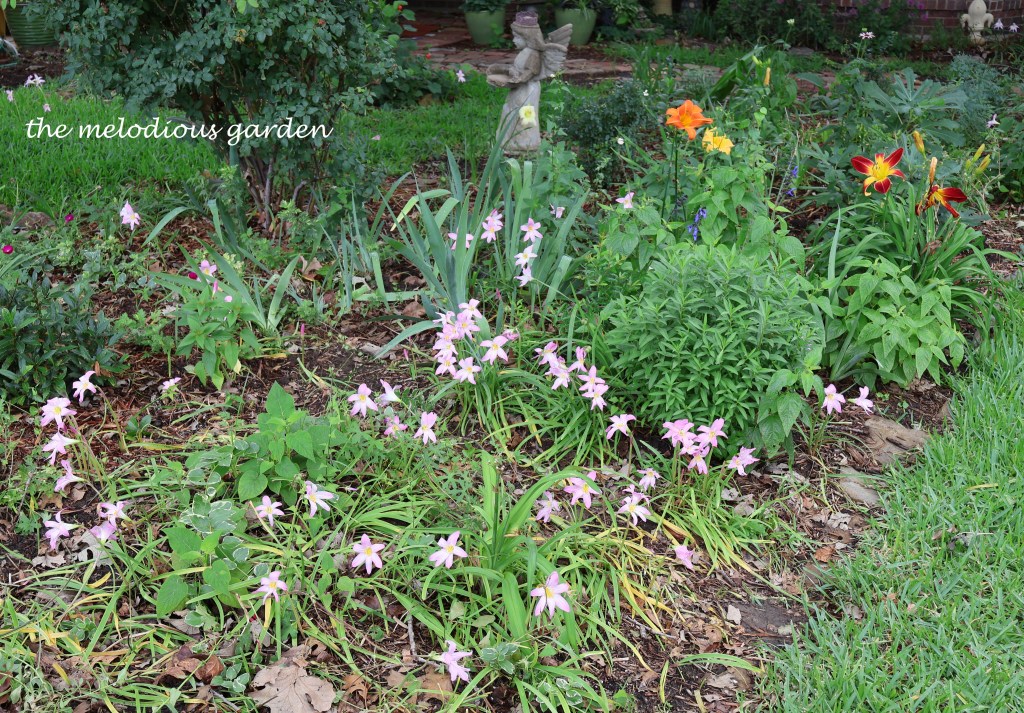
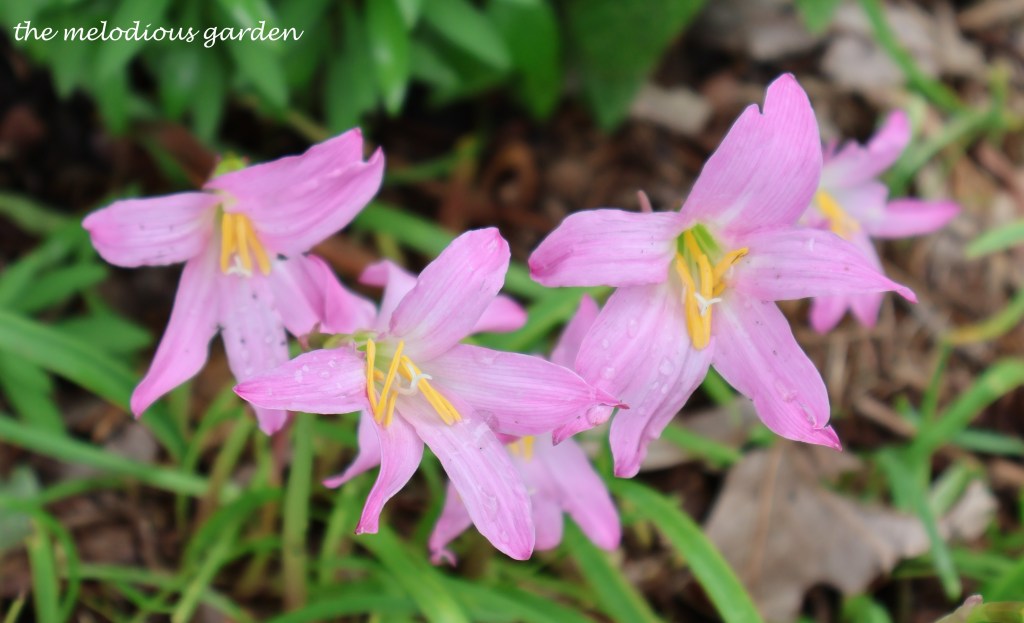
I woke up bright and early this morning to discover that the rain had once again kissed each flower in my garden ever so lovingly. Nearly an inch of rain in the rain gauge – what a glorious sight! The delicate pink rain lilies that freely reseed about my garden were all abloom – another glorious sight!

Zephyranthes – aka rain lily – is a member of the Amaryllis family, with strappy grass like leaves. It flowers off and on throughout the growing season, triggered by rain or supplemental watering.

The rain lilies that dot my garden were originally planted over 25 years ago and I have long ago forgotten the exact variety or name.

My original gardens, started 30 years ago, were – in the words of Shelby’s mom in Steel Magnolias – pink and pink. Blush and Bashful – two shades of pink, one much deeper than the other, to paraphrase the scene from Truvy’s hair salon.

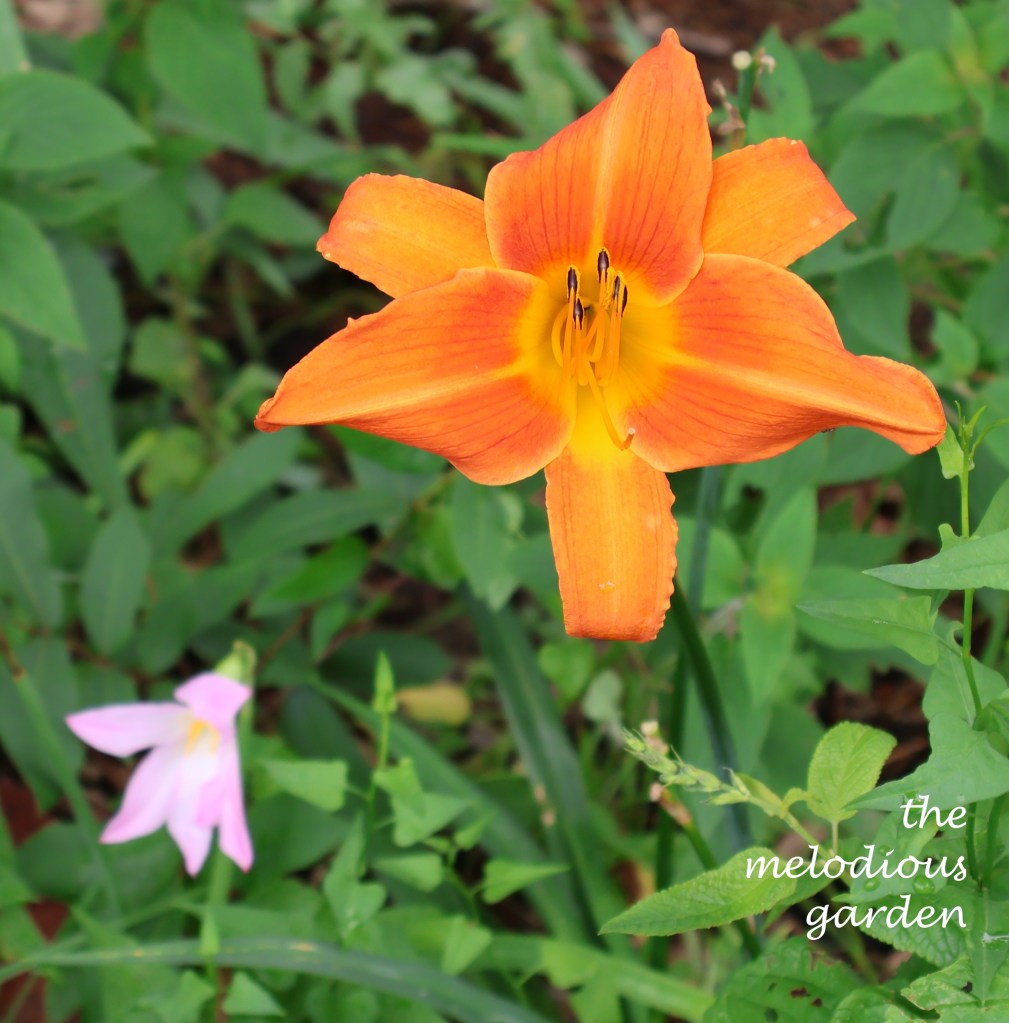
Yes, I loved pink. Pink roses. Pink daylilies. Pink irises. Pink rain lilies. But time marches on and tastes change. My gardens today feature bright and bold colors. Red. Orange. Yellow. But the pink rain lilies will remain. A nod to the former gardens. Of course it helps that the pink rain lily is the perfect compliment to a bright orange daylily.

I also doubt I could dig up all of the tiny rain lily bulbs now if I wanted to!

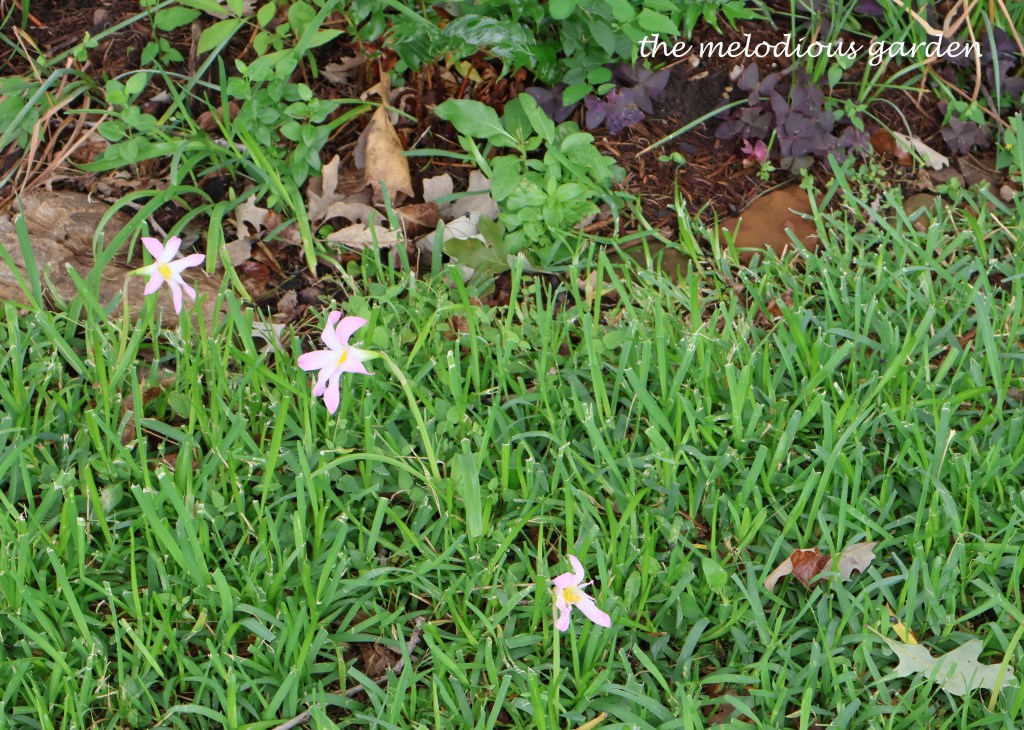
Did I mention they have even migrated out to our only small patch of lawn? I imagine someday – hopefully years down the road – I will be gone from this space yet the rain lilies will bloom on and on, for future inhabitants of this place to enjoy. Or curse – though I can’t imagine anyone hating such a lovely bloom.

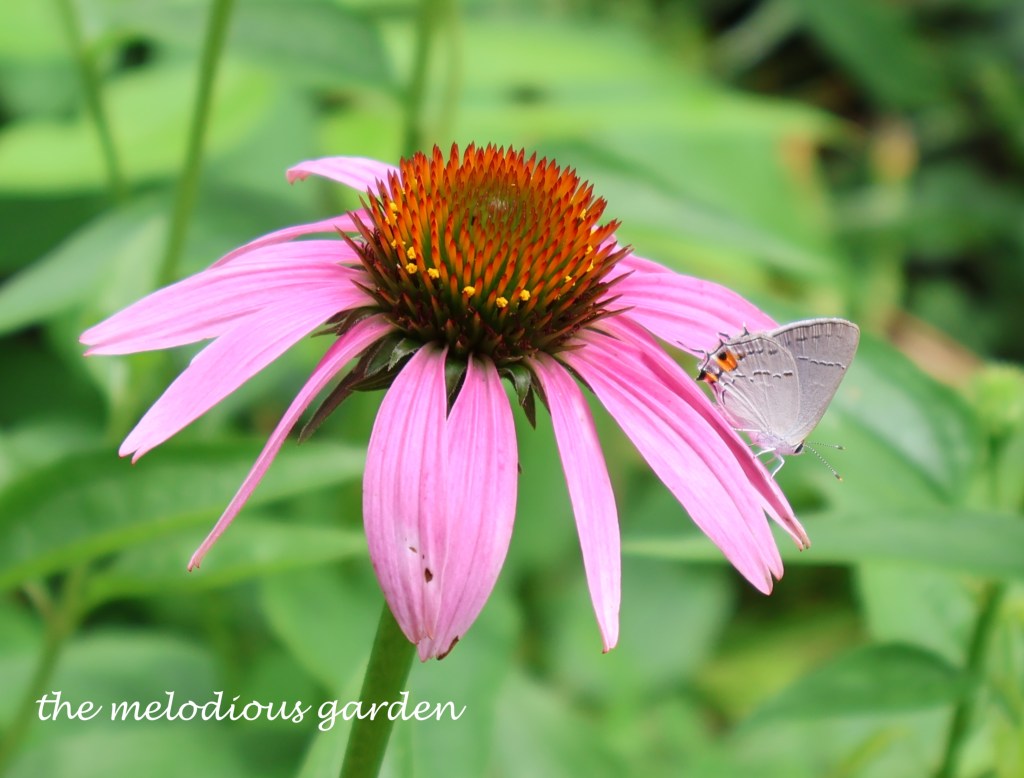
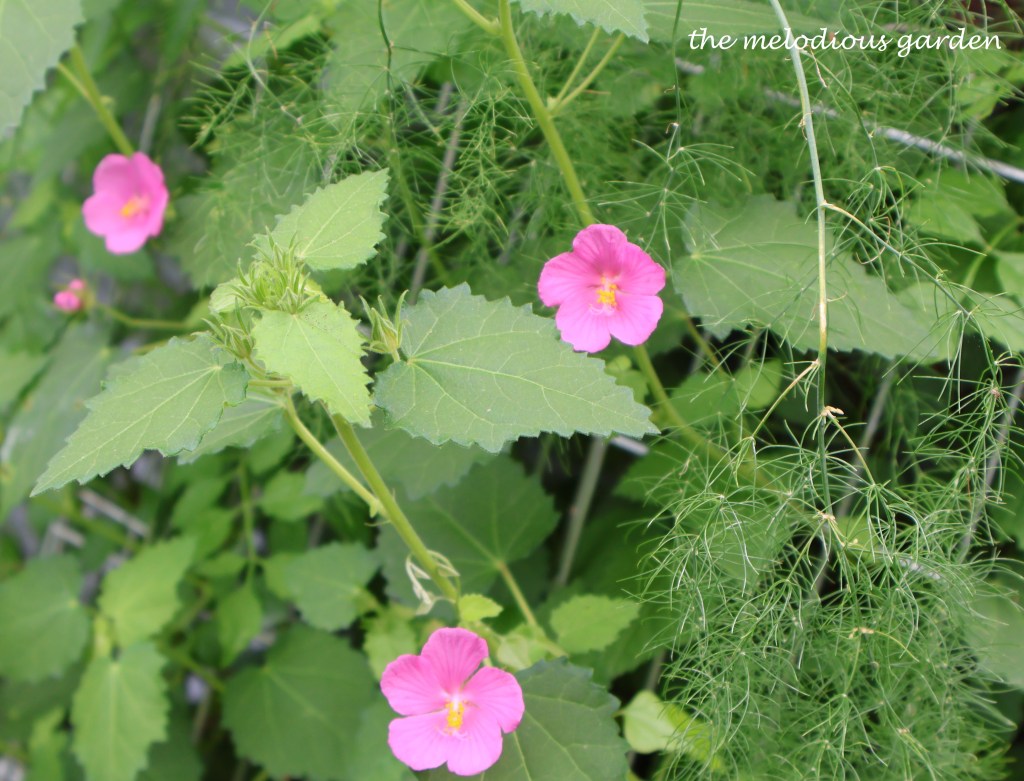
Other soft pink flowers that will always be a part of my garden are the native coneflower (Echinacea) and rock rose (Pavonia). Both reliably draw in pollinators and freely self-sow about the gardens.

(Coneflower, shown above. Rock rose, shown below.)

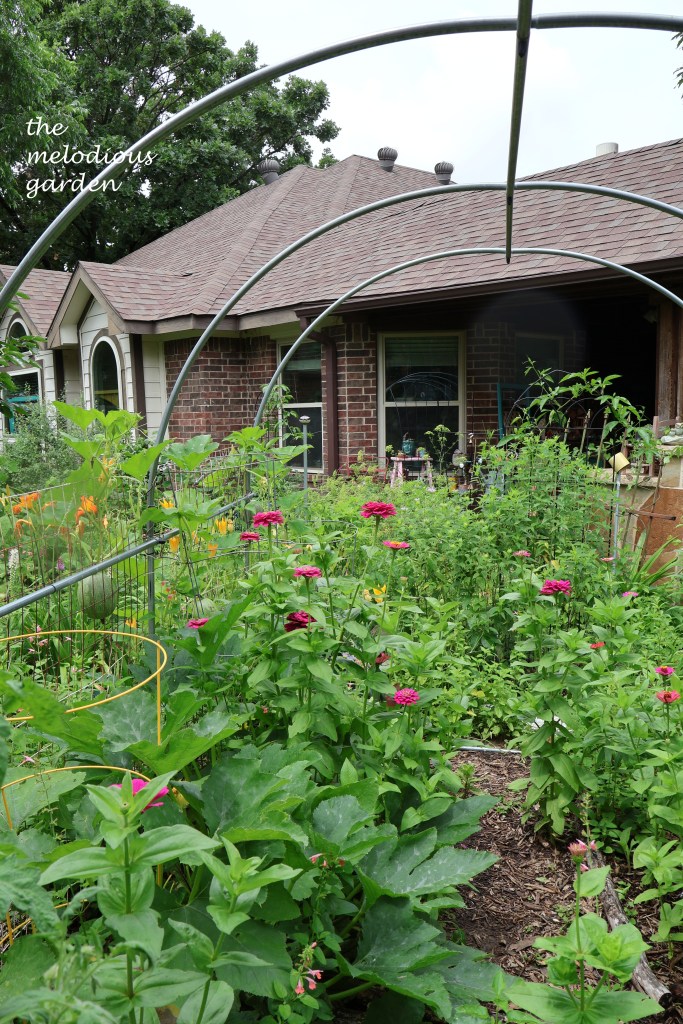
It almost goes without saying, but hot pink is always allowed in my garden because it so nicely fits under the bright and bold category. Pink zinnias are currently blooming in what was meant to be my flower-free, dedicated vegetable growing polytunnel space. The polytunnel will, hopefully, allow me to extend the vegetable growing seasons a bit on each end. A winter cover will give a few tomatoes and peppers some protection against freezing weather, while also allowing me to start peas much earlier in the year. A shade covering in the heat of summer will, if all goes as planned, protect sensitive plants from our brutal August sun. Neither have yet to be tested, but they sound good in theory.

This spring has been filled with rainy days and cool, but terribly humid, overcast days. Alas. Due to our extremely dry winter, North Texas is still almost three inches behind on our average rain amounts. Longtime Texas gardeners know to appreciate this weather while we can because we never know when the faucet might turn off and the heat crank up.

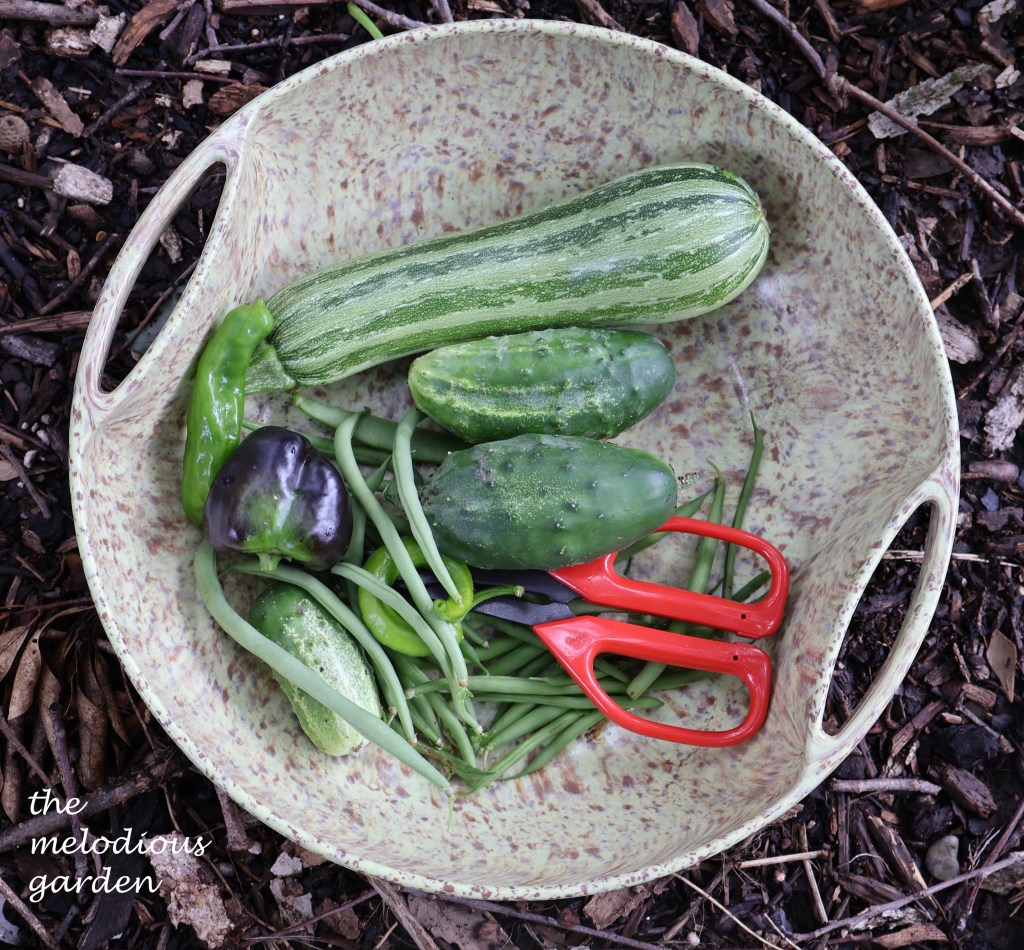
My food forest garden – except for the zucchini – has been slowly turning out vegetables. Nearly every day, I have something to harvest and use as a base for a meal. The zucchini has been – well, it is zucchini, amiright? I froze two zucchini today, after freezing four zucchini and dehydrating three zucchini over the past weekend. We have eaten fried zucchini. We have eaten zucchini fritters. We have eaten black bean zucchini tamale pie, wherein I used two zucchini instead of the one the recipe called for. I have gone to bed confident that I have only two zucchini in the fridge to eat or preserve the following day, only to wake up and discover four zucchini await. It is a great problem to have, though, as I know I will make good use of the excess.

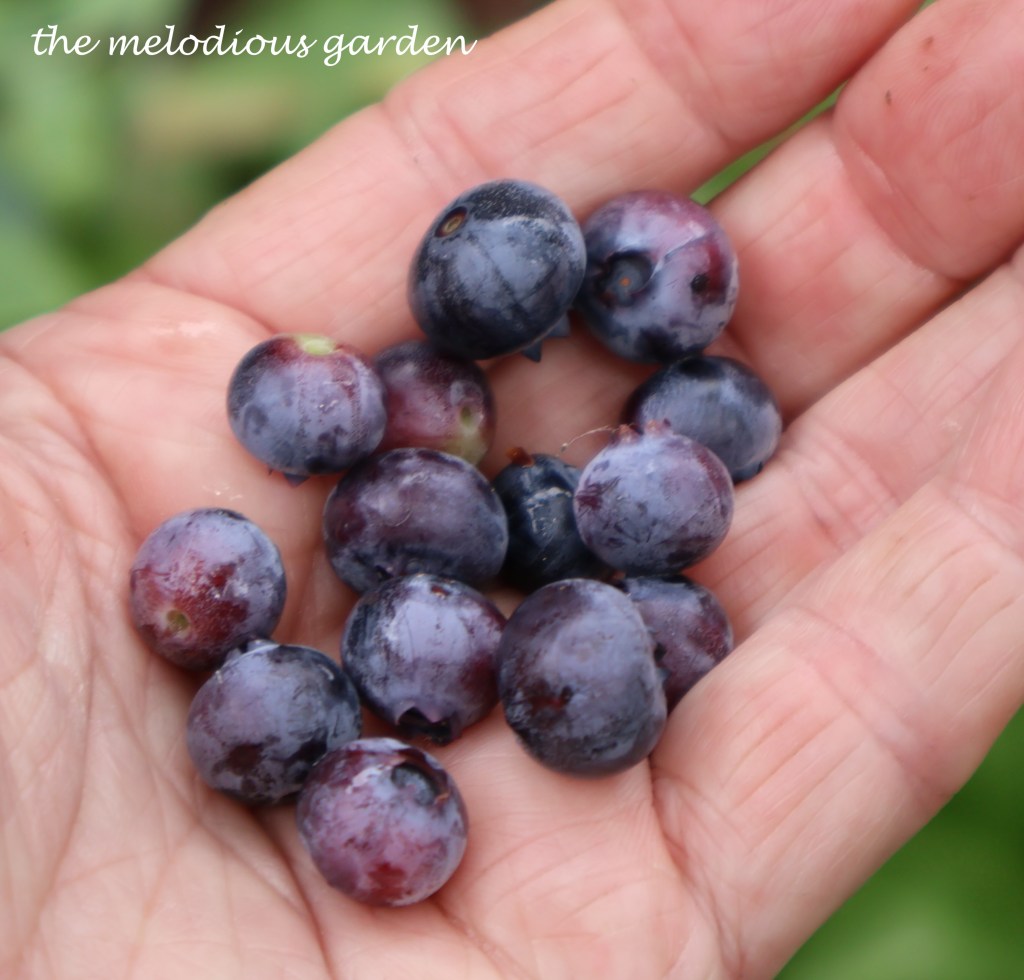
This has been the first year for the blueberries to produce. I am still a long way from having enough to make a pie, but there have been a few days I could possibly have a decent amount for a solo pancake, if they ever made it inside the house. It has been such a pleasure to pick and eat the blueberries immediately while still in the garden.

Keep calm and garden on. When life gives you zucchini, make fritters.

Southern Bulb Company is a fabulous mail order source for rain lilies (and various other bulbs.)

The rock rose photograph was taken earlier this month in my zone 8b North Texas garden. All other photographs were taken today, May 27th.

gardening, nature

May Day 2026

“In the spring I have counted one hundred and thirty-six different kinds of weather inside of four-and-twenty hours.” ~ Mark Twain

This past week alone has found us with 136 different kinds of weather. Monday, the day I decided to reset my driveway food forest for the summer sunlight, was a stifling 90+ degrees. Tuesday afternoon, I moved half of my driveway food forest (again!) to make a path to get one of our vehicles in the garage due to a severe storm. I have found that an adrenaline fueled mad rush to get a vehicle under cover, as a storm is bearing down on us, is the best insurance against a storm actually hitting us. Tuesday’s storm again proved that, as the storm skirted just to the west of us, with softball size hail 60 miles away. By Thursday, I was back to gardening in winter clothes, as it was cloudy and damp, barely hitting 60 degrees. I planted corn, okra and amaranth on Thursday, though I did apologize to the seeds, for I know they much prefer warmer, sunnier weather. Those days are coming soon enough, but not today. This morning, like most mornings, I grabbed an apple to eat while doing my early morning garden walkabout. Fifteen minutes later, it felt nice to step back inside and feel the warmth of our furnace hard at work, likely its first ever May Day to run. The garden, I am pleased to say, is looking exceptionally good at the moment, as the flora has appreciated the rainy days after such a dry winter and early spring and don’t appear to mind the temperature swings quite as much as I do.

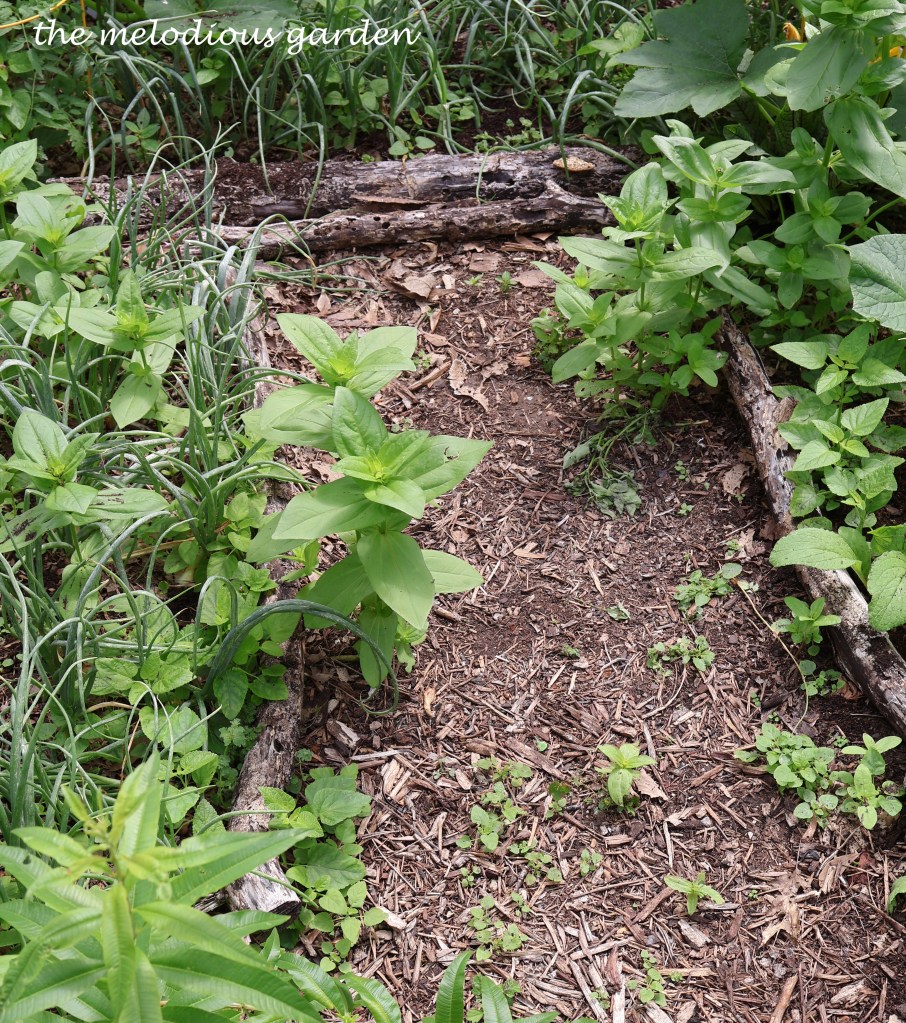
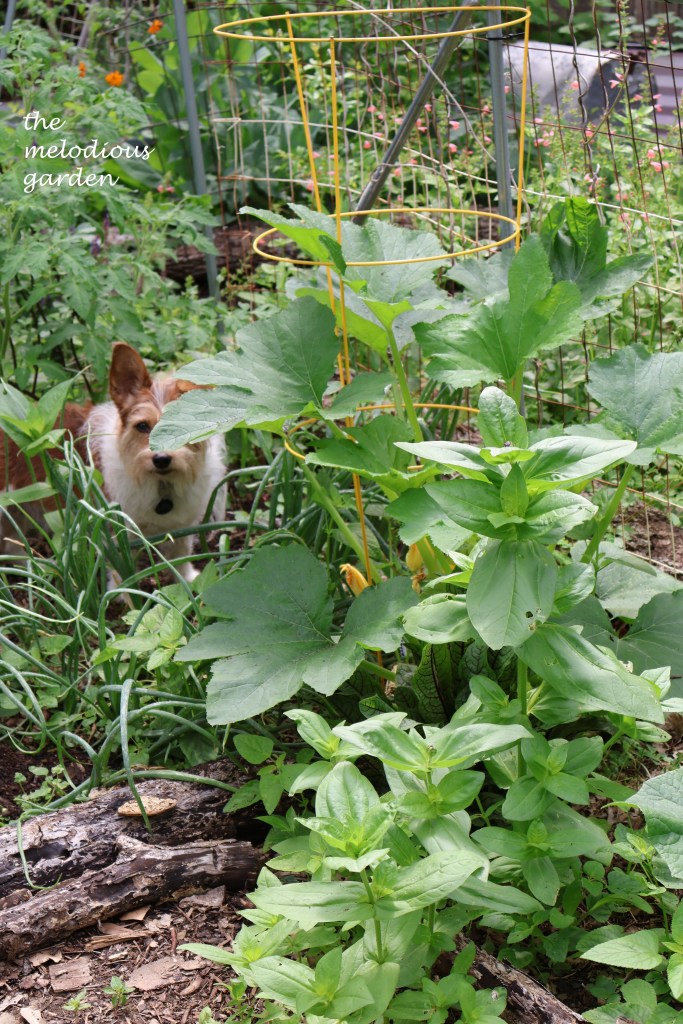
I am not one to make New Year’s resolutions, but I did resolve that this was the year I would not let flowers take over the garden paths or the vegetable beds. I would have dedicated areas for flowers and dedicated areas for vegetables. The two could touch and mingle around the edges, but I would not sacrifice my vegetable beds to wayward flowers. I am, by nature, a bit of a chaos gardener; I garden with reckless abandon and throw caution to the wind. But this year, I would reign that in! And here it is, the first day of May, not even the height of summer blooms, and already I am making allowances. I know I did not sow zinnia seeds inside my polytunnel. Did one of our heavy rains float the seeds here? Did the zinnias reseed from previous years? I really don’t know. What I do know, though, is that I now have zinnias coming up in what is suppose to be a dedicated vegetable bed. And also coming up right in the middle of the path inside this area! I have now failed on my resolution twice over because I just don’t have the heart to pull them or dig them up to move elsewhere. I also have salvia coccinea coming up in this area, but it can be a bit of a thug and I don’t mind pulling up the excess. The zinnias, for now, can stay.

While photographing the zinnias and zucchini, I also solved the mystery of why my onion stalks are falling over prematurely. I have been blaming the rabbits and squirrels, for I have seen both of them running over the onions on numerous occasions. Alas. I do believe it may be the work of my Rabbit Hunter and Squirrel Chaser, my Princess Leia. It’s a good thing she is so cute.

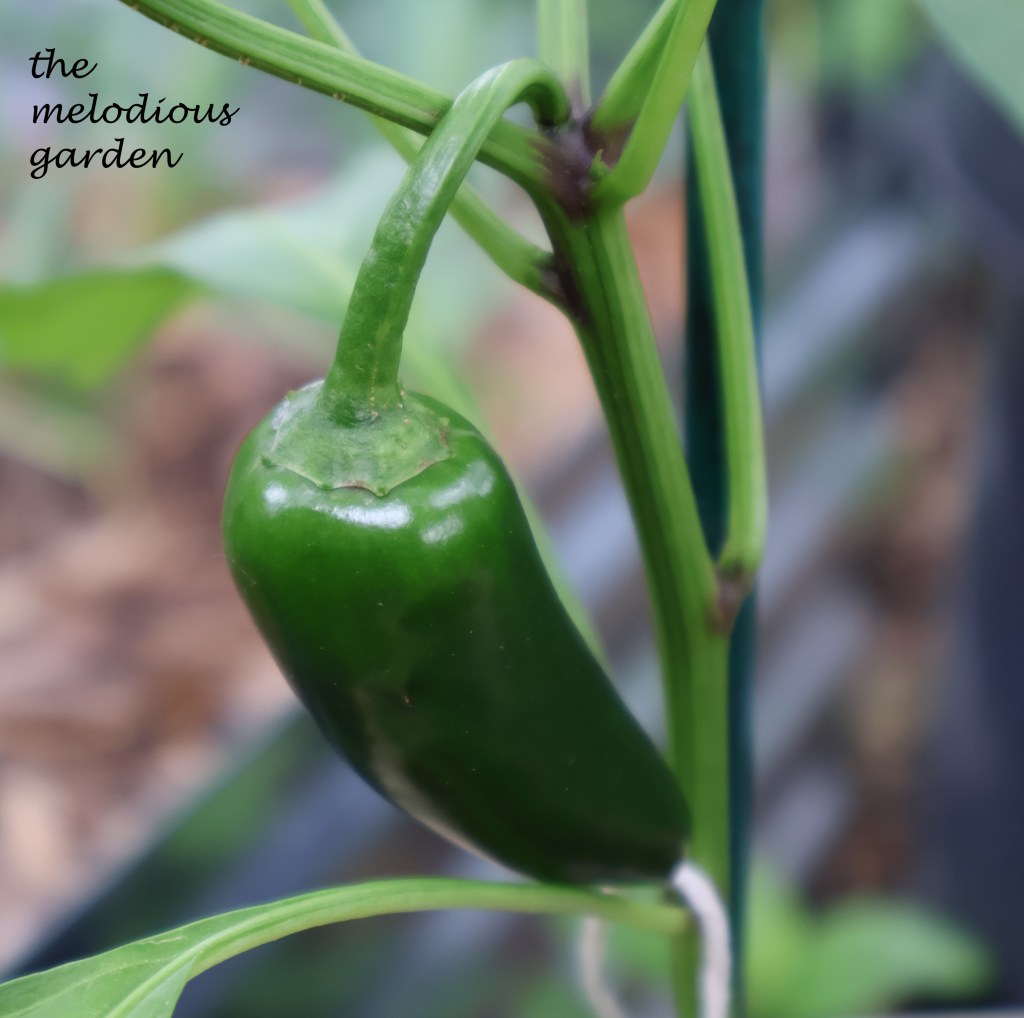
Last year, after my father’s death in March, I struggled to get my head in the game. I spent the spring and early summer floating aimlessly about the garden, needing some sort of direction. In mid-summer, I found out that I needed shoulder surgery and would be out of the gardening game from August through fall and in to early winter. This spring has been a deep sigh of relief, a time to renew my passion for growing an abundance of vegetables. The garden is rewarding me with a few early harvests, not enough to bring inside just yet, but a sneak peak of what – hopefully! – is ahead. I have been able to enjoy a small snack of green beans or cherry tomatoes here and there, eaten fresh off the plant. Peppers, despite some chilly days, are beginning to grow and ripen. (Serrano pepper shown below.)

“The word May is a perfumed word… It means youth, love, song; and all that is beautiful in life.” ~ Henry Wadsworth Longfellow

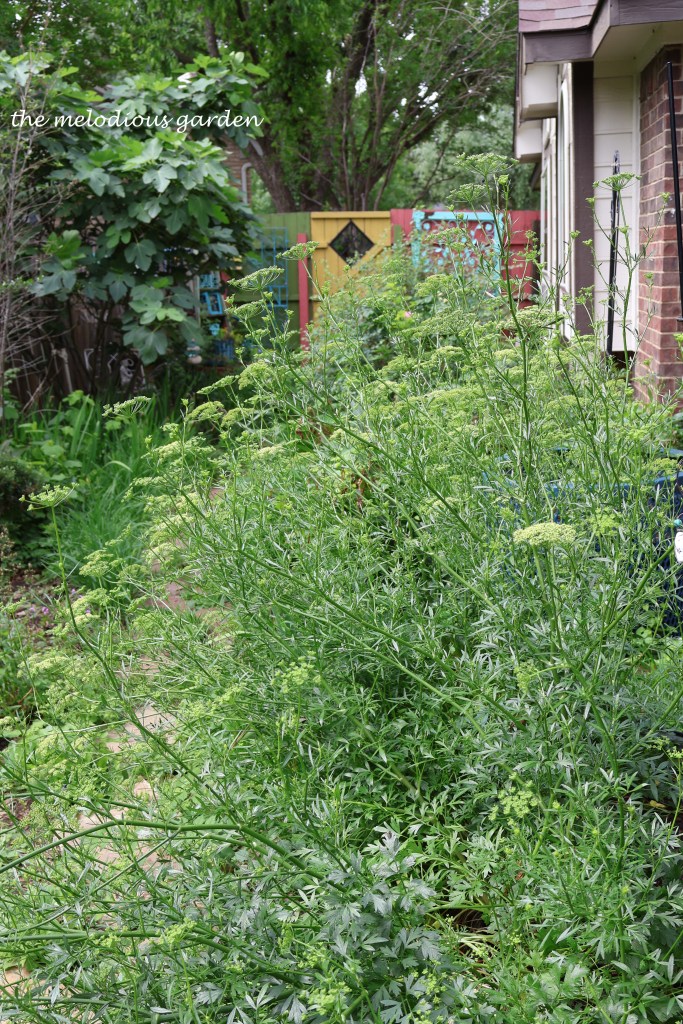
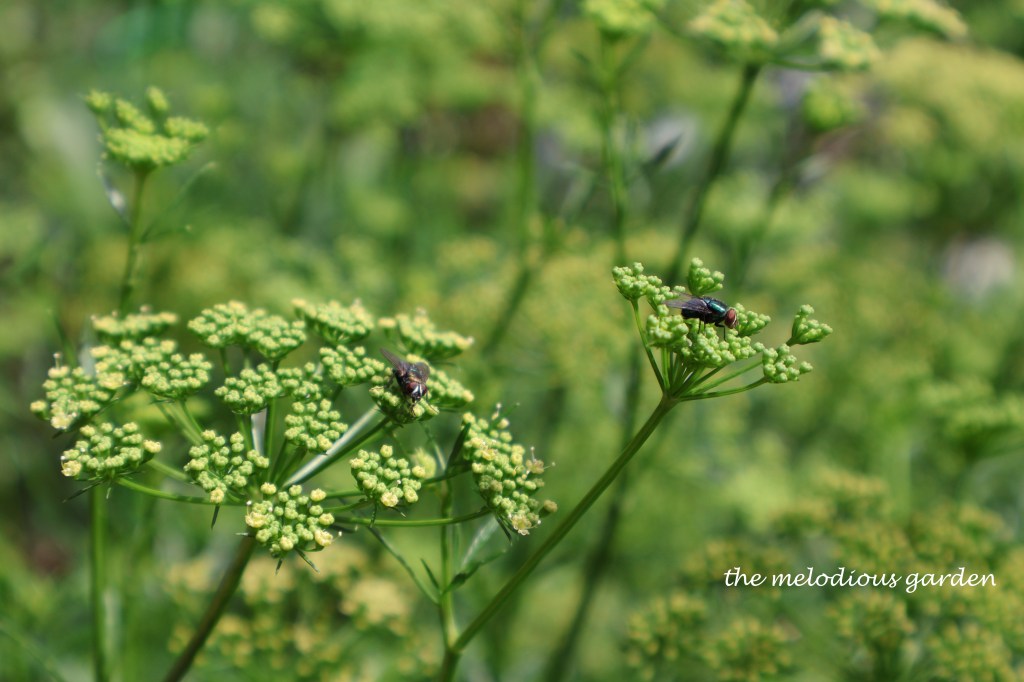
I decided to let the flat-leaf parsley go to seed, for the pollinators love its umbel flowers, held well above the main growth of the plant. (Shown in photographs above and below.) Today, it was abuzz with bees and flies. Flies are much maligned but make excellent pollinators for they will venture out even on stormy days.

May — The very word makes the heart leap. Birds, Buds, Blossoms, Beauty! Break away from every bondage of circumstance or low spirits and go out into the sunshine. Answer back the bird-note in your heart, kiss your finger tips to every new blossom and be a part of the spring. ~ Eva D. Kellogg

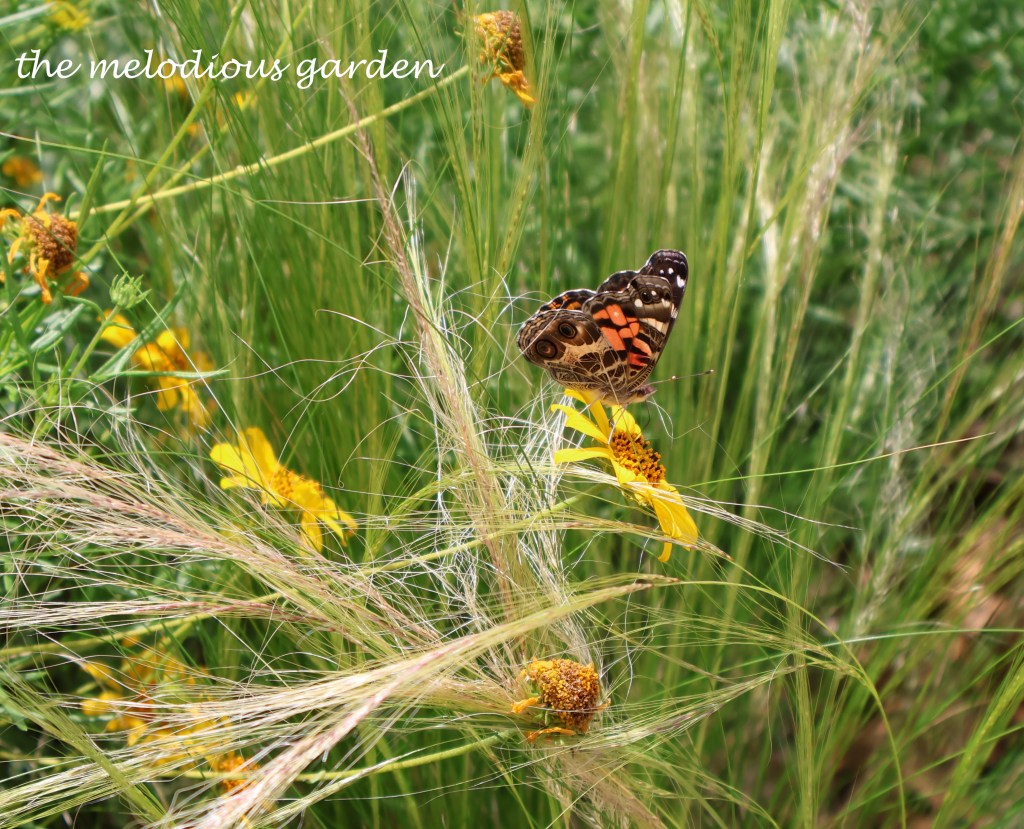
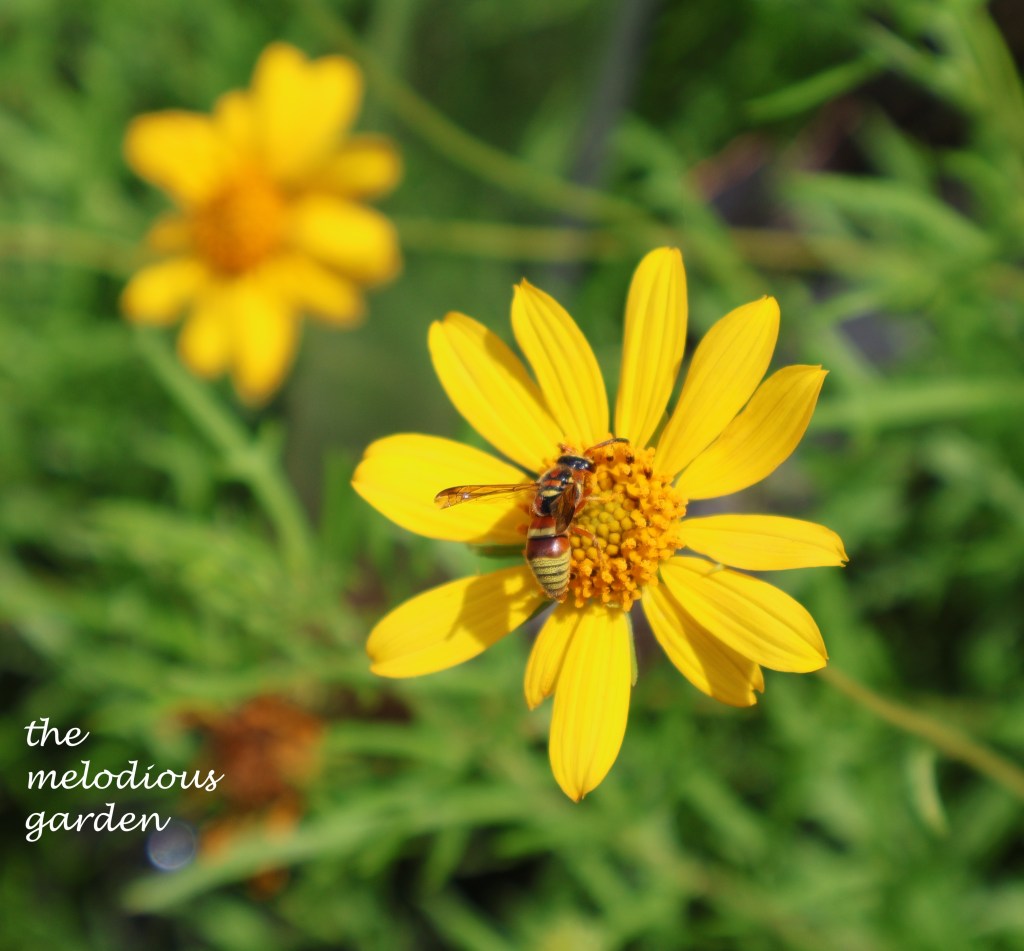
Blossoms and Beauty, indeed! I cannot believe it took me 30 years to plant skeleton-leaf goldeneye, a Texas native wildflower in the sunflower family. It has quickly become one of my favorite plants, as it is a favorite of pollinators and – doesn’t it just look spectacular with the shimmery Mexican feather grass?

Two added bonuses: It blooms from late spring until fall, which is an unusually long bloom time for a perennial. It also thrives in hot, dry environments. Last spring, I first planted one in that “hell strip” area – the small strip between the sidewalk and the street, where it gets baked in the sun, roasted by the reflected heat of pavement and ignored by the water hose.

How beautiful are the rosy footsteps of May! Less showery and changeful than April, and not so heated and burdensome as June, she stands like a gentle mediator between the two… With her soft blue eye, and her mild but radiant countenance, she comes like an angel of light among men… She scatters in her path the sweetest flowers of nature, and everywhere breathes fragrance and joyousness. The birds of the air are caroling her welcome, and even the mute beasts of the field seem happier at her coming. ~ Eliza Cook’s Journal

Happy May Day! Keep calm, garden on and enjoy these spring days.

All photographs taken May 1, 2026, in my southern Denton county, Texas, garden. Located in gardening zone 8 b.
gardening, nature

The Three R’s And Fungi

Yesterday was the 56th anniversary of the first Earth Day, though – in reality – we should strive to take care of the Earth every day. And yet, “we humans have been partying pretty hard. We’ve ransacked most of the Earth for resources,” wrote David Brower in his book, Let The Mountains Talk, Let The Rivers Run: A Call To Those Who Would Save The Earth. It has been 30 years since its publication and, sadly, more true today than in 1995.

As I was wandering my garden yesterday, an overcast April day, the plants still wet from recent rains, I was pondering what Earth Day means to me, as a gardener, as one who tries to live as softly on this Earth as possible. It is said that stewardship begins with respect for nature. I know that I am just one owner of this piece of property. I know not who lived here prior or how they used the land and its resources. I know not who will own this property in 50 years. But I respect and appreciate nature and hope that future inhabitants of this land know that I did my best to care for this part of Earth.

“Reduce, Reuse and Recycle,” the hallmarks of environmental activism and sustainability, are not just words to toss about, but words to live and garden by, essential to caring for this property, not just inside the house, but outside in the garden. How do fungi fall in to this mix?
In the words of mycologist Paul Stamets, fungi are “nature’s grand recyclers.” They break down organic material, like decaying wood and leaves, and transform them into nutrient-rich soil. Fungi are the ultimate at reducing, reusing and recycling.

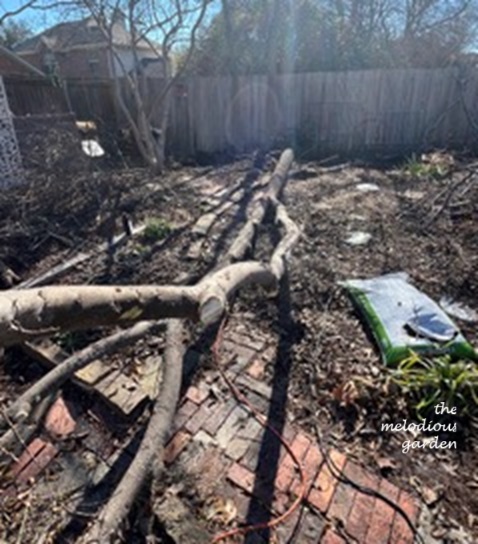
As I was redoing my garden five years ago – shifting from 25 years as an ornamental rose garden, now mostly edible and native plantings – my husband and I needed to remove a number of older junk shrubs and trees from the back edges of our property. The junk shrubs were intentionally planted many years ago to give us privacy when a new subdivision sprang up beside us. The junk trees started their life here from wind blown seeds, undesirable elm trees, overlooked for far too long until they had taken hold and grown much too large and much too junky. But what to do with the many branches and logs besides hauling them off to the landfill? (I abhor sending organic matter to a landfill!)

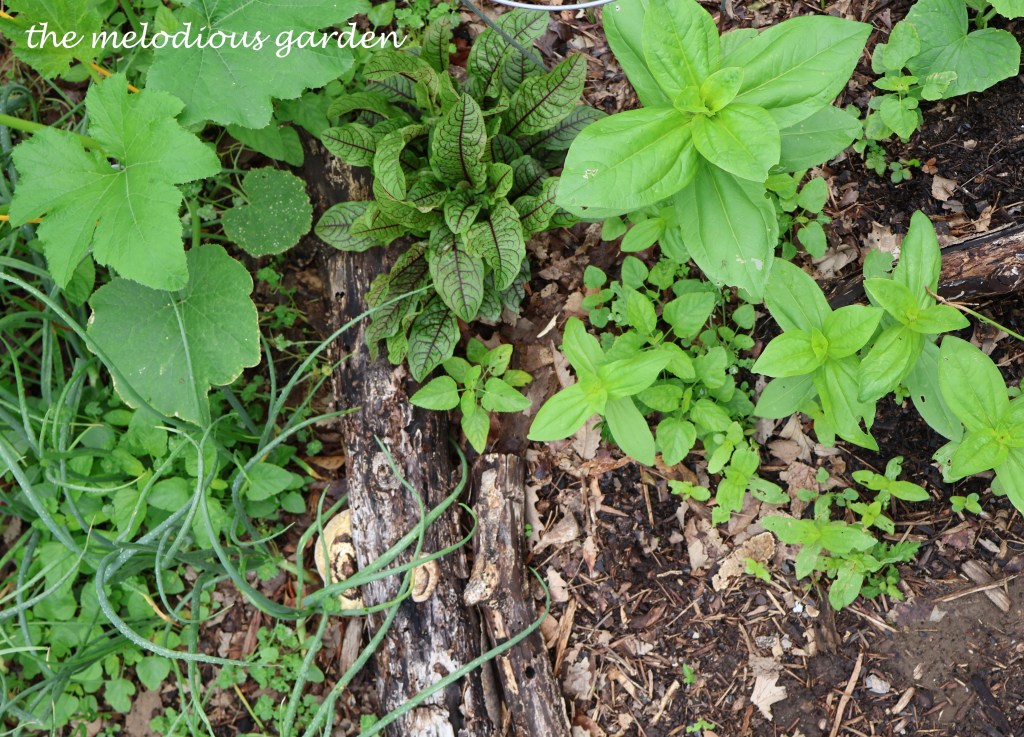
The solution was obvious: I would line my new garden areas with the branches and logs. And so it began… quite organically and often dictated by the length of wood or the amount of energy needed to cut or move a larger section. Our home is situated on the outermost part of a faux cul-de-sac, giving us a larger than normal five sided, somewhat wedge of a pie shaped, property. I opted to start at the farthest most corner and work inward, with long L shaped beds along those fence lines. From there, geometry took over, necessitated by the straightness of logs, a sort of living game of garden Tetris. Some beds are long and narrow. Others are square, L or U shaped.

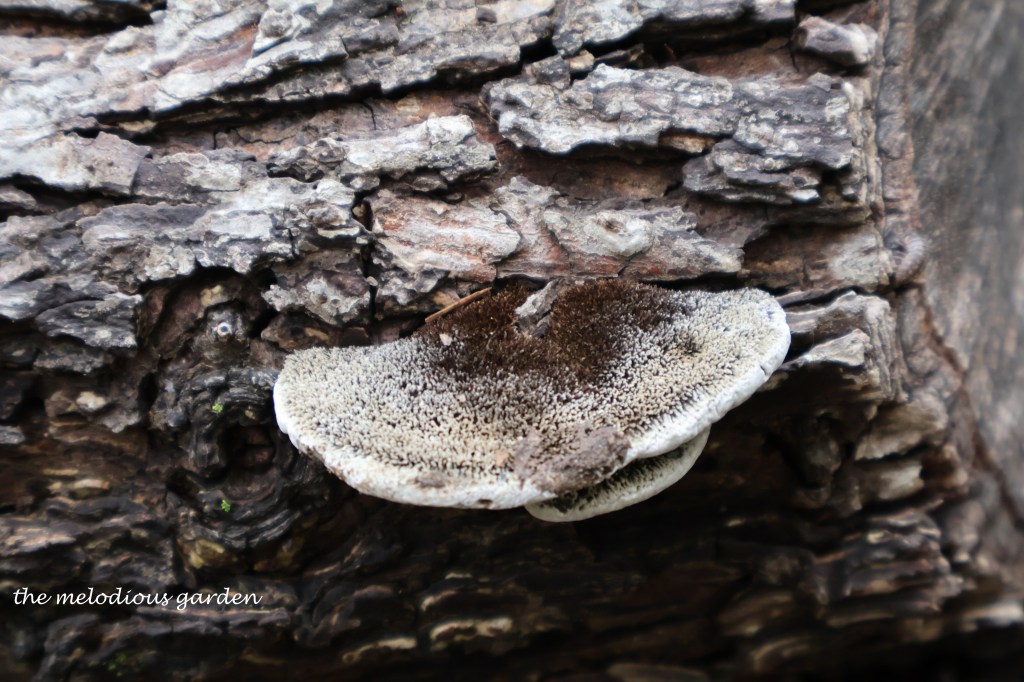
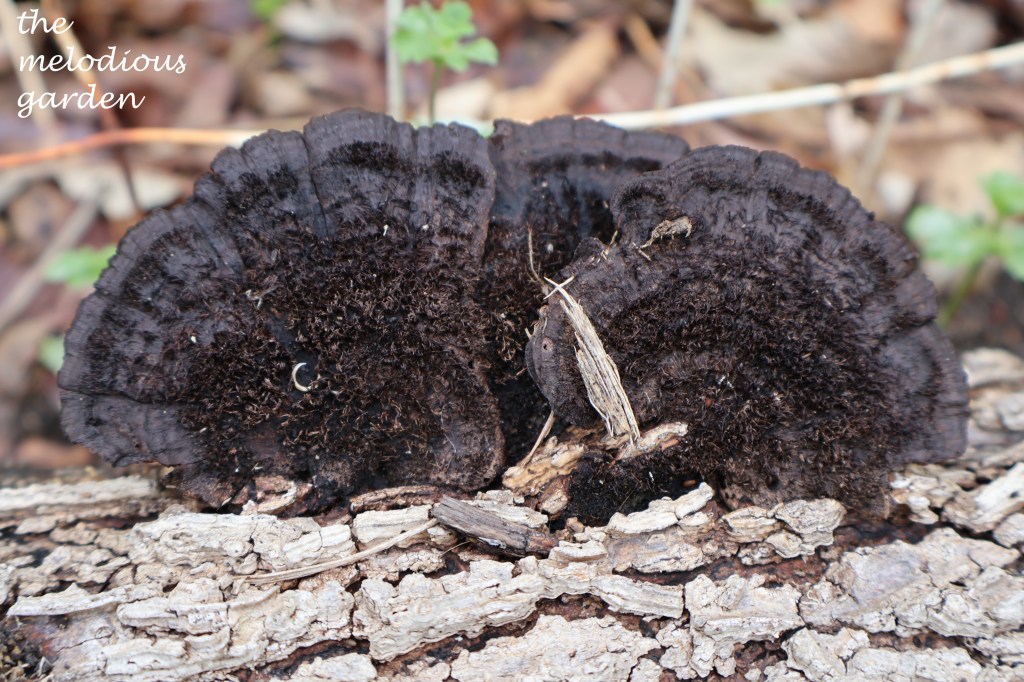
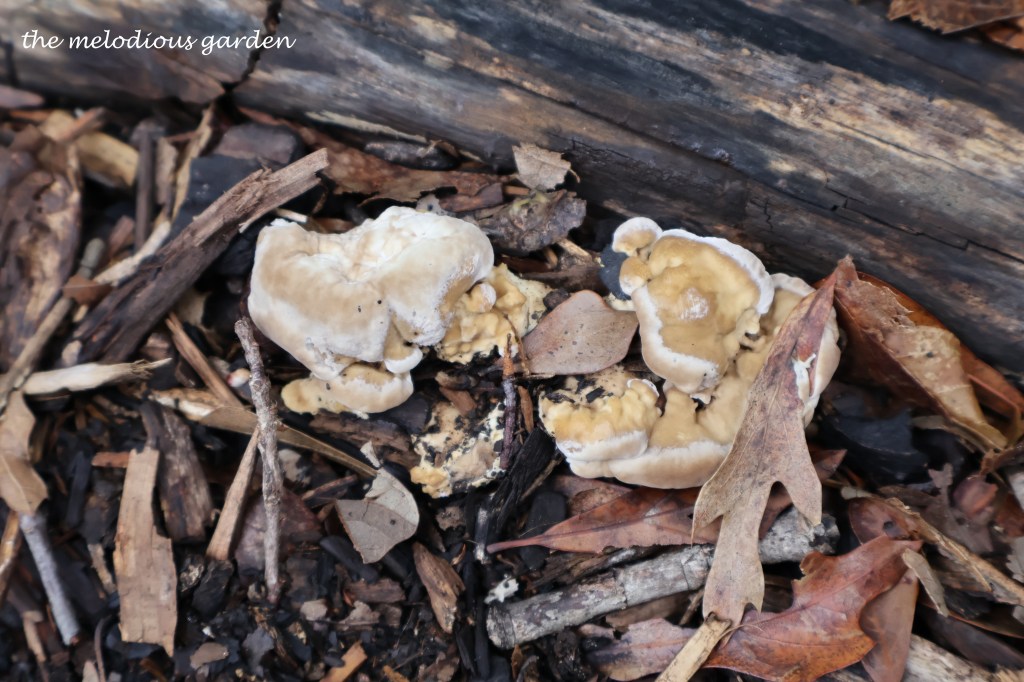
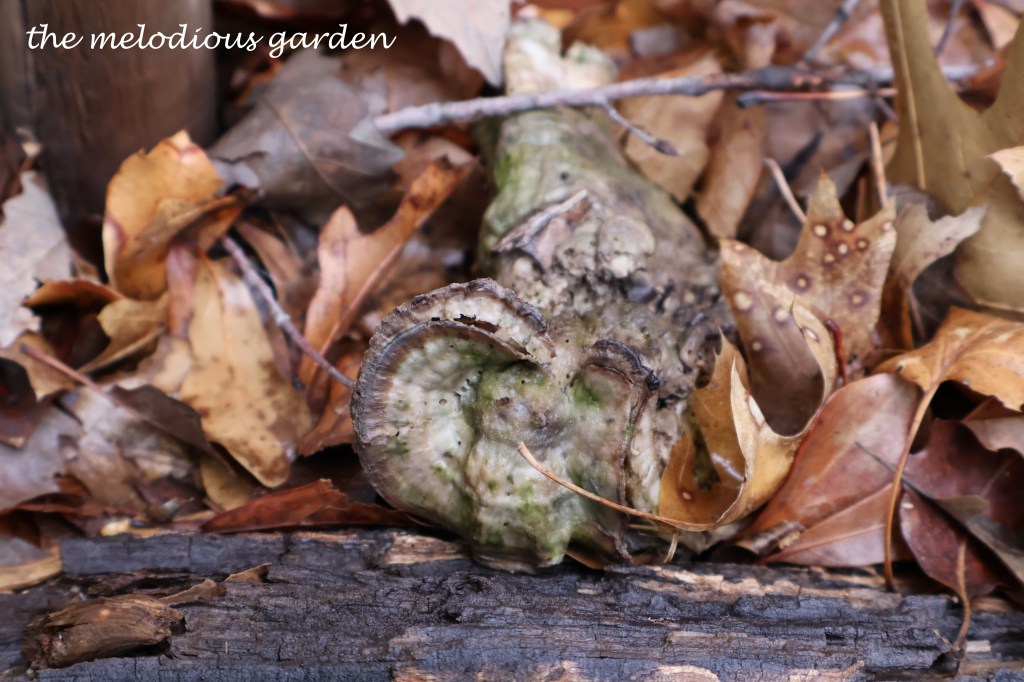
Over the past few years, it has been amazing to watch as the various fungi have appeared and as the logs are breaking down, disappearing, nature’s grand recyclers hard at work. What started as a way of reducing our need for the landfill has added life and nutrients to the property.

The earthworms have been hard at work, too, mixing this new nutrient-rich soil with the heavy clay gunk original to the property, leaving behind a lovely friable soil.

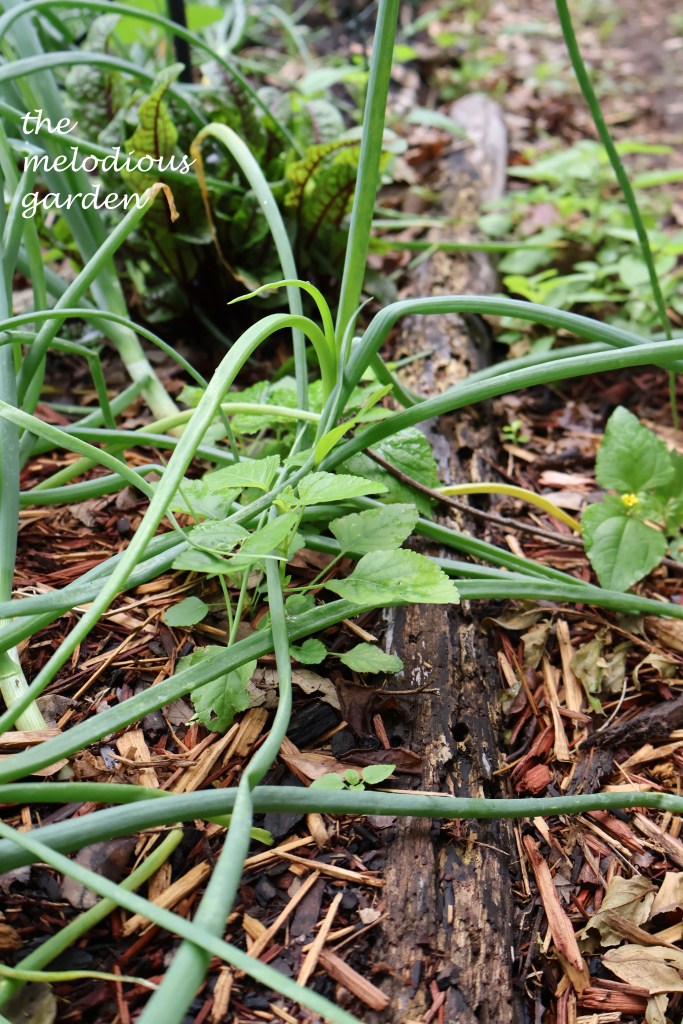
The logs – some are now fully buried, others partially buried – act as a sponge and store water, which they release slowly over time, meaning less watering is needed even in the heat of a Texas summer. Hügelkultur, the German word for these “mound cultures,” not only kept these logs out of the landfill, but continue to work by conserving water.

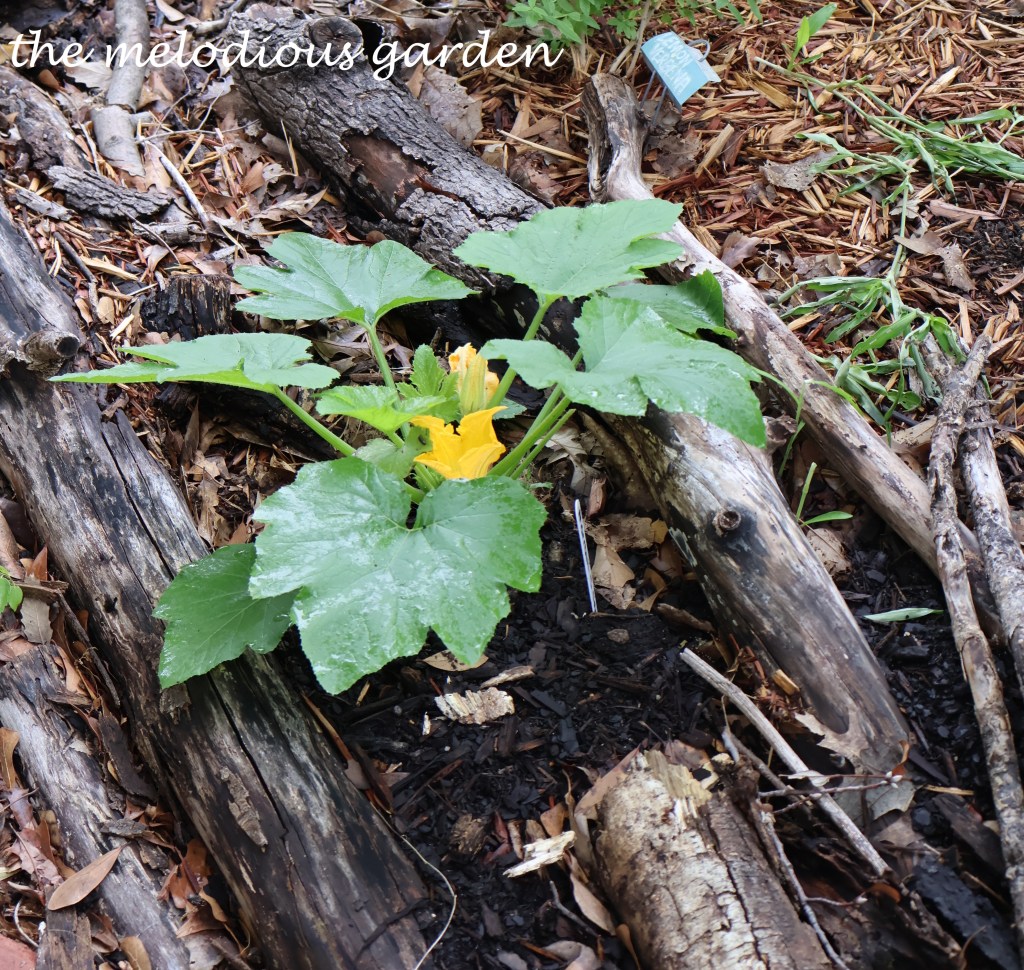
Pockets formed between rows of decomposing logs have been an especially fertile areas for vegetable growing. (Squash, shown above, growing in one such pocket.)

Using logs to edge vegetable beds and building up the soil level – the mound culture – allows for better drainage as the planting areas are slightly higher than the remaining soil.

Someday, I may elevate my food growing game and intentionally grow edible mushrooms. In the meantime, I am content watching the non-edible fungi that flourish in my garden, as they reduce, reuse and recycle organic matter.

All photographs (*) taken April 22, 2026, in my southern Denton County, Texas, suburban garden.
(* The 3rd photograph is actually from a few years ago, as we were taking down the junk elm trees.)

gardening

April days, egg yolks and weeds

The garden in mid April is a tale of the good, the lovely and the terrible, horrible, no good, really bad.

We have been blessed with rainy weather the past few weeks, with enough cloudy days in between rain showers to keep the temperatures down and the humidity high. The plants are loving it. Alas. Both the desired plants and the non-desired are loving it. But let’s save those undesired plants for later…

“Anyone who thinks gardening begins in the spring and ends in the fall is missing the best part of the whole year, for gardening begins in January with a dream.” ~ Josephine Nuese

This year’s garden began shortly before the calendar rolled over to 2026, when those first seed catalogs landed in the mailbox and dreams and plans were put on paper. Tomato seeds were sown in trays on the kitchen table sometime between Christmas and the new year and nurtured indoors until it was safe to plant outside. There is, perhaps, nothing more rewarding than watching your own homegrown tomato plant grow and flourish, aside from watching it produce a harvest. Those harvest days are coming; in the meantime, I am content watching the plants grow.

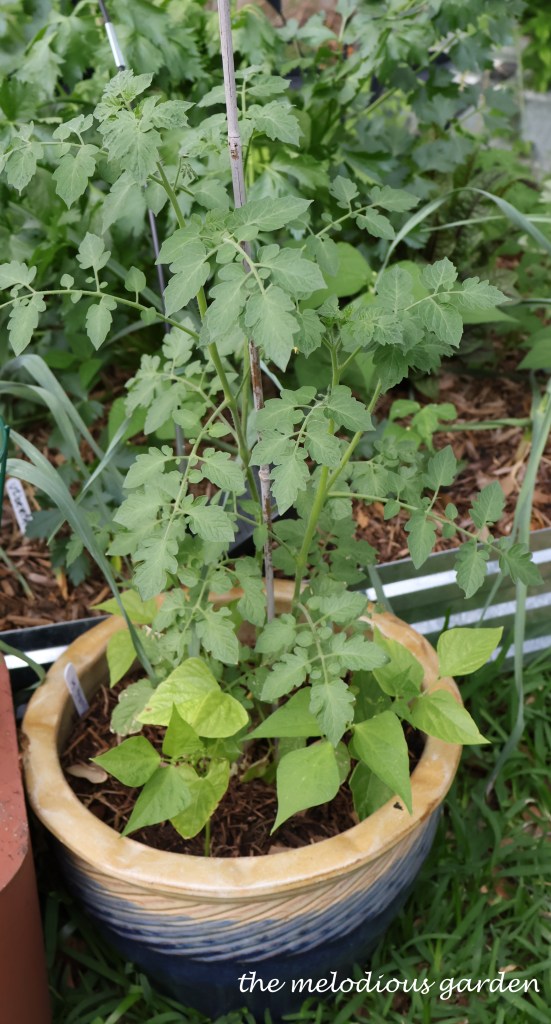
Yellow pear tomato has long been my favorite variety, as it has proven year after year to produce well in my garden – even in the heat of summer and well in to the fall. But there is always room for testing out new-to-me tomatoes and two that I am growing for the first time this year are Crokini and Egg Yolk.

Crokini, shown above.

Egg yolk, shown below. (A funny name for a tomato, but it is suppose to have bright yellow fruits – like an egg yolk.)

Yes, those are beans popping up with the tomatoes. I am attempting to outsmart the rabbits by growing their beloved green beans just out of their easy reach. So far, so good!

For happy health, fuel yourself with dreams and greens. ~ Terri Guillemets

I started down the road of edimental (edible + ornamental) food forest gardening around 2021 as a way to garden myself back to health and grow at least a bit of my produce. Two of my earliest purchases were longevity spinach and Okinawa spinach. Both are tender perennials that overwinter inside, tucked in a corner of our kitchen. By the end of winter, they always look more than a little sad but they rebound quickly once outside. I am still amazed that I can harvest fresh greens throughout our Texas summers.

Longevity spinach, shown above.

Longevity spinach (back left) and Okinawa spinach (front right), shown below.

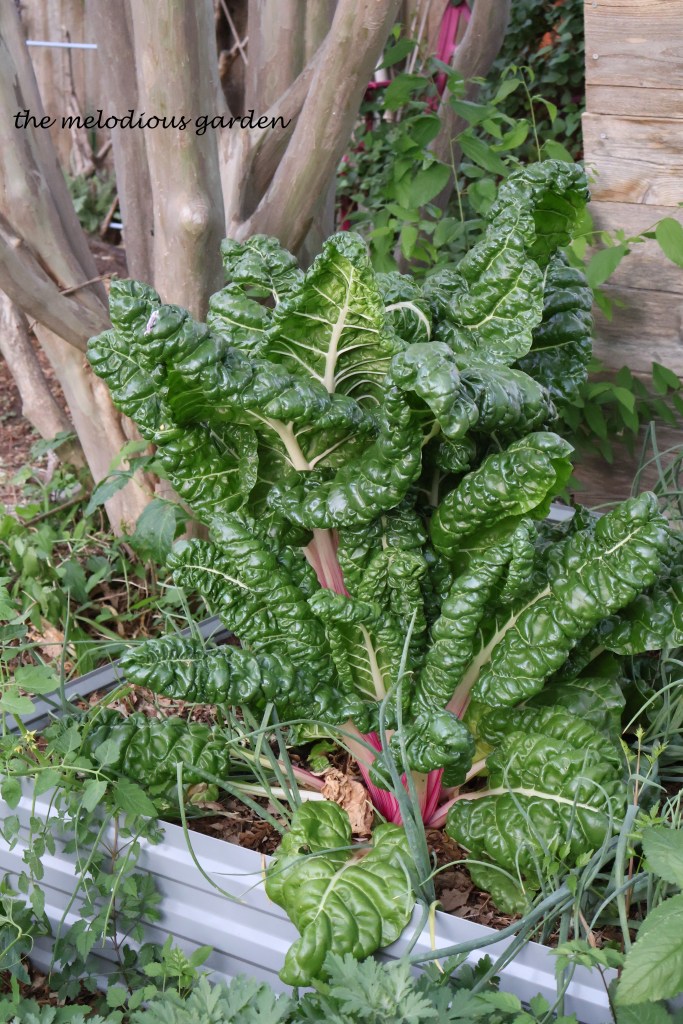
Swiss chard, shown below, is another green that provides abundant harvests in my region. This one is, perhaps, one of the loveliest, the largest and most lush Swiss chards I have ever grown. I really must harvest more but it really puts the “ornamental” in edimental and makes it difficult to clip any leaves. Swiss chard, as a biennial, has a two year growing cycle. Plant it once and you have fresh salad greens for two years. (Sneak peak: The photo below also shows some of the terrible, horrible going on in my garden!)

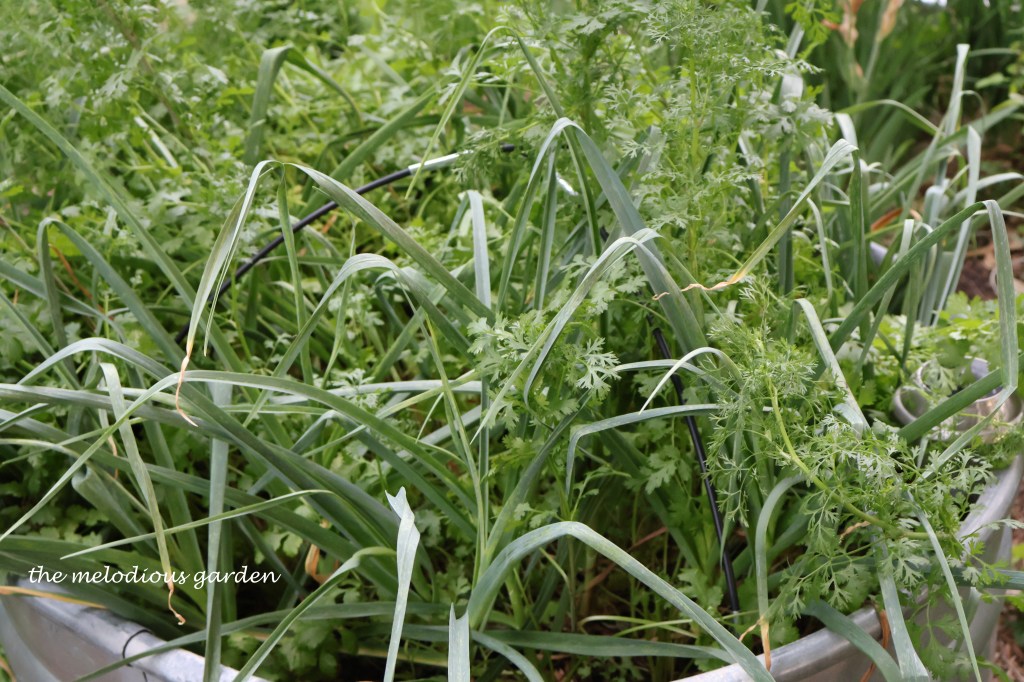
Garlic was planted in the late fall, later than I would normally plant, but rotator cuff surgery kept me out of the garden in early fall. A few of the garlic beds were later sown with cilantro seeds, in hopes of getting a double harvest. (Photo below.) We shall see how it actually worked when the garlic is pulled in late spring to early summer… but the cilantro has been wonderful.

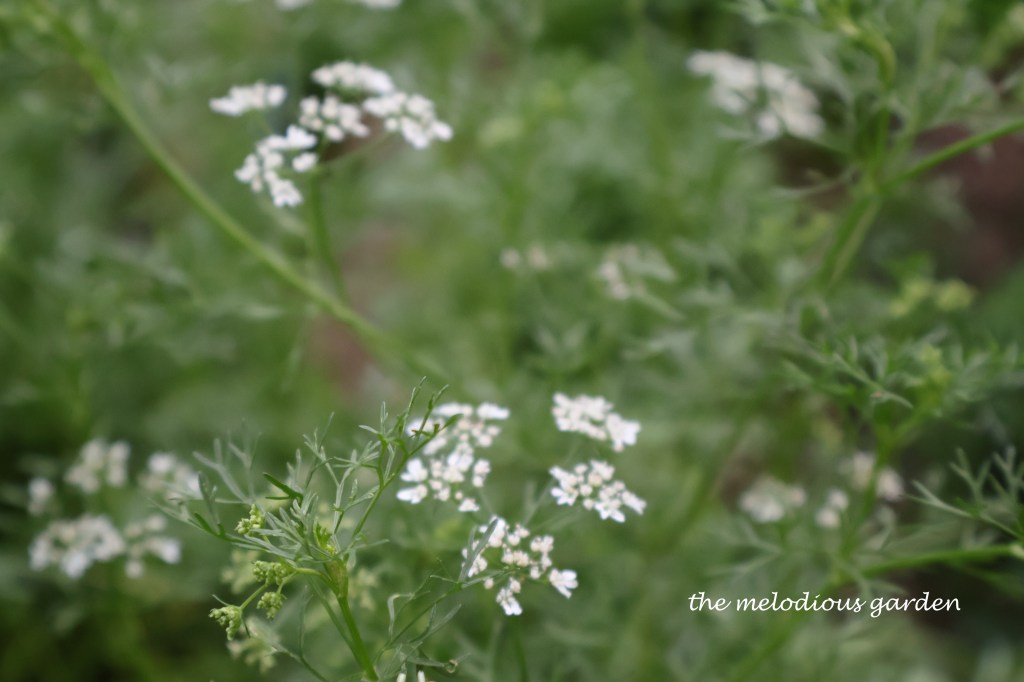
I am allowing some of the cilantro to bloom as it provides much needed nectar this time of year. Bonus: The blooms are quite lovely.

(Cilantro in bloom, shown below.)

Cilantro is a cool season herb and will not take our summer heat in North Texas. If one is dreaming of fresh salsa, made exclusively from the garden, it is best to give up those dreams or move to a more favorable gardening region. Slight tweaks to the dreams can make it work. One could grow their cilantro in the fall through early spring (it tolerates our winter cold, if given protection during extreme cold/snow/ice), harvest and freeze the cilantro in spring, all the while waiting on the onions, tomatoes and peppers to be ready to harvest. The cilantro will discolor some when thawed, but still retains its flavor. (It quickly loses its flavor when dehydrated.) Another tweak may actually be throwing in the trowel and buying cilantro at the store when your summer veg are ready for salsa making. I have dreams one day of growing cilantro (and dill!) hydroponically inside during the summer, but have not reached that level quite yet.

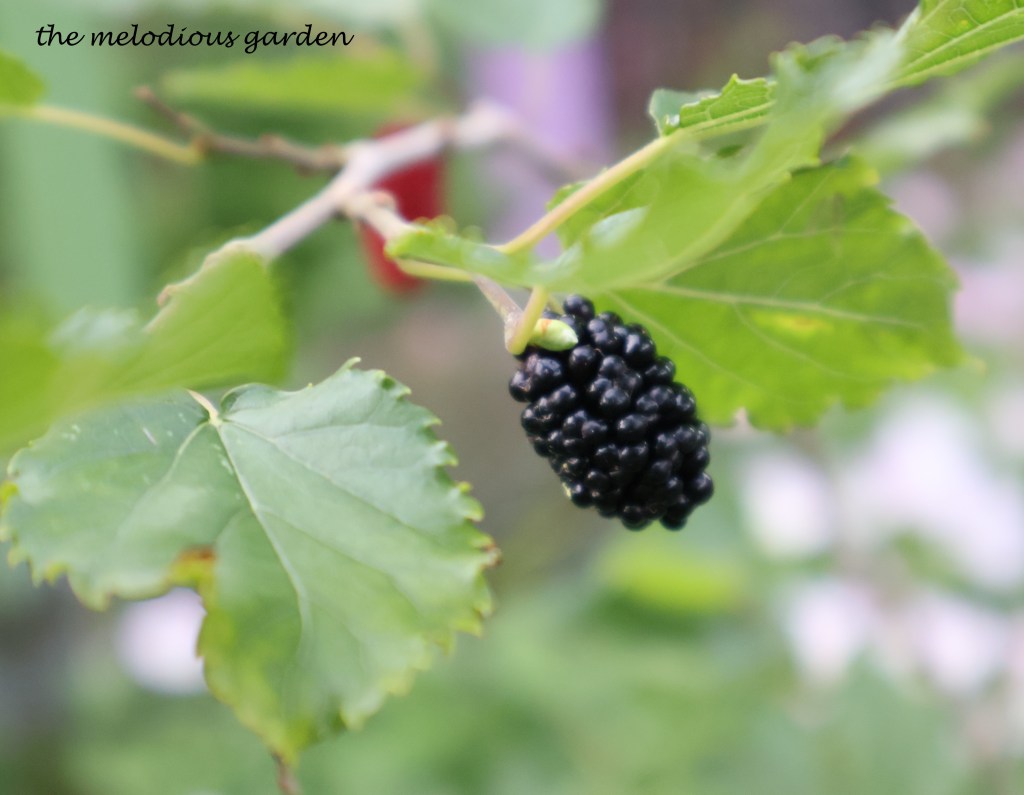
Speaking of more favorable gardening regions… I was born and raised in America’s breadbasket – the rich soils and abundant rains of the Midwest. I have fond memories of my childhood, eating mulberries from the tree that grew wild outside our small town’s public swimming pool. In my quest to grow nutrient dense foods for myself, I turned to the lowly mulberry. A weedy shrubby tree to some. Dark and rich in anthocyanins to others. This spring has found me introducing my young adult offspring, currently living at home, to the joys of fresh picked mulberries, the purple pigment staining the fingers and lips.

(Issai mulberry, shown below.)

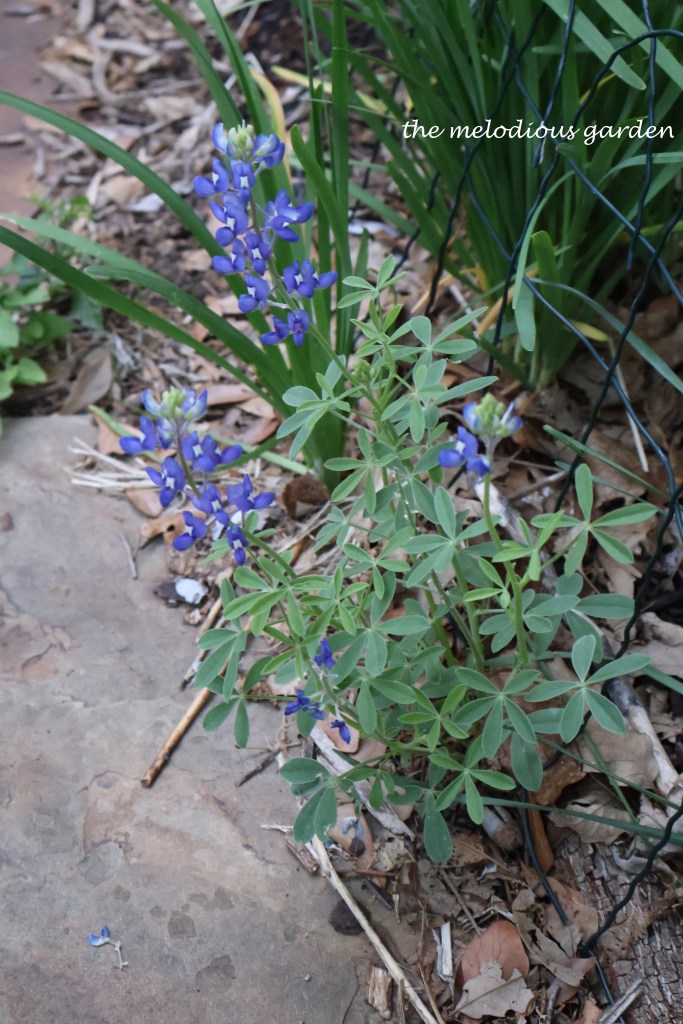
I have lived in Texas for nearly 40 years now and have gardened the same plot of land in North Texas for 30 years. I have loved and planted Texas native plants all along. Alas. Growing the bluebonnet, our state flower, continues to mystify me. For three years in a row now, I have officially had ONE lone bluebonnet. I have sown and scattered seeds in every manner possible, all to little avail. The first lone bluebonnet appeared in the middle of a pathway, up near our house. Last year, the solitary bluebonnet popped up about halfway down our gently sloping back yard. This year, the solo wildflower showed up beside the pathway at the end of the slope, right before our property turns in to city land. What will next year bring? Perhaps a plethora of bluebonnets on city property? Stay tuned for updates in spring 2027! In the meantime, I have been enjoying this lovely pop of bright blue. (Bluebonnet shown below.)

Weeds are nature’s graffiti. ~ J.L.W. Brooks

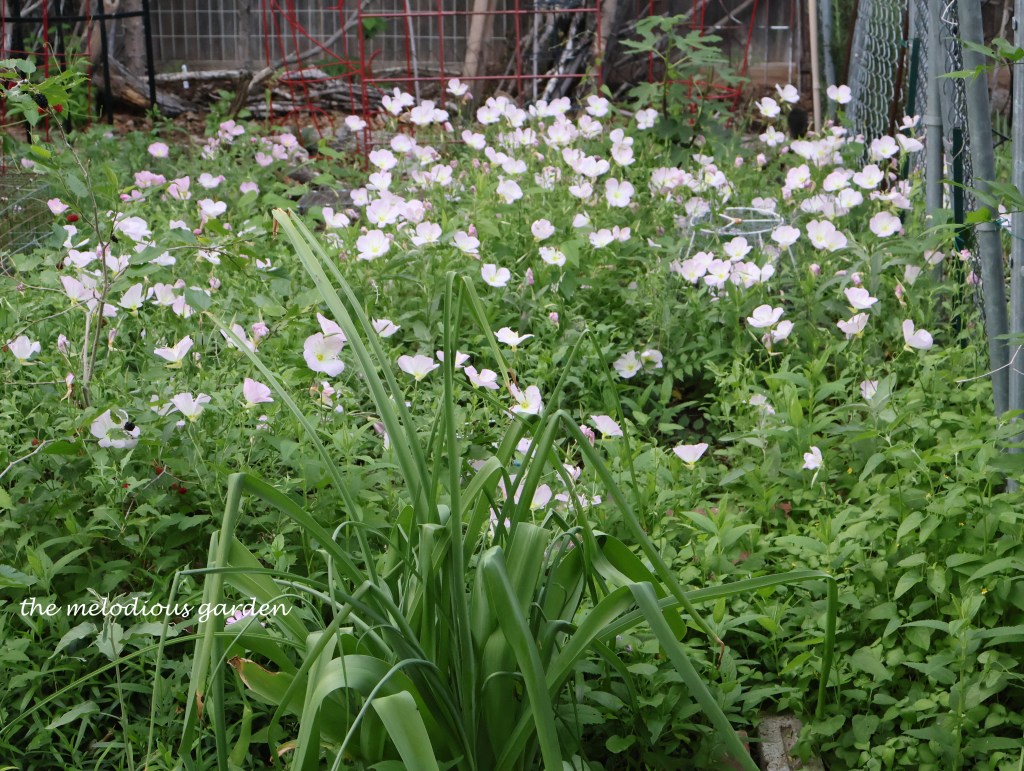
Is the pink evening primrose a weed or a wildflower? The answer depends. It is quite possibly shifting from lovely to horrible as I type. Sure, it is beautiful en masse along our Texas roadways. Taking over my garden? Not so much. Lovely today, nature’s graffiti tomorrow. Next month, when it has finished blooming, I shall take a hoe to it and reduce it’s footprint in my garden. In the meantime, I will enjoy it’s beauty, just as the bees are enjoying it’s nectar. (Pink evening primrose, shown below.)
Weeds are Nature’s makeshift. She rejoices in the grass and the grain, but when these fail to cover her nakedness she resorts to weeds. ~John Burroughs

That line between unwanted weed and wanted flower is hazy at best. My beloved passionvine is one such “somewhere between unwanted and wanted” flower in my garden. How do I love thee? Let me count the ways. 1.) It is stunning in bloom! 2.) It is the host plant for gulf fritillary butterflies, which I adore. 3.) I love planting for our pollinators and it sure does lure them in. 4.) Did I mention it is stunning? Yes. But it deserves mentioning twice because it has such an unusual flower and incredible tropical vibe. Alas. Scrambling over everything that stops for a nanosecond? Not so much. Thankfully, the unwanted tender young seedlings are a cinch to pull up. I have made a note to myself to keep three or four vines, but not a dozen. And I will only keep those seedlings that sprouted up by something vertical to climb. All others will be removed! (…so she says now…) The passionvine pictured below is safe, as I can easily train the vine from this stack of old metal pieces and parts toward an arbor nearby.
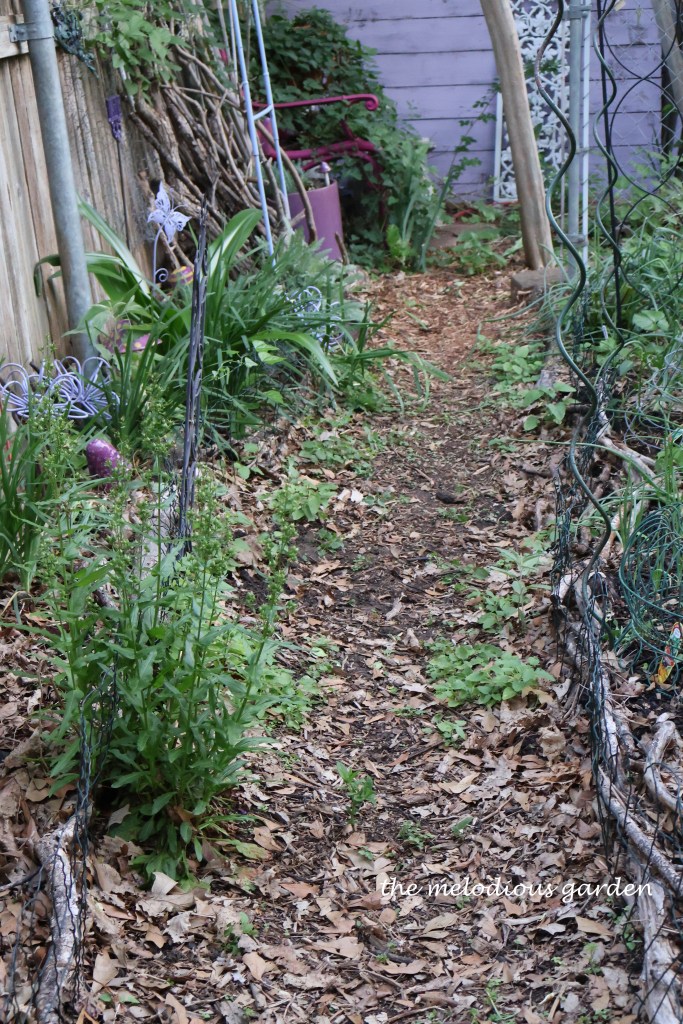
I have also vowed to keep my pathways open this year and am off to a great start. (…though the year is still young…) I have been potting up and giving away the extra Salvia coccinea in the pathway shown below, as last year it became nearly impassable by September. I have a dozen or so more young seedlings that need to be dug this weekend. And, yes, I did decide to leave the penstemon (far left in photograph) as it won’t sprawl and hog the pathway the way an ornamental salvia will.

Weeds are great travelers; they are, indeed, the tramps of the vegetable world. They are going east, west, north, south; they walk; they fly; they swim; they steal a ride; they travel by rail, by flood, by wind; they go under ground, and they go above, across lots, and by the highway. ~ John Burroughs

Now about those “true” weeds and the terrible, horrible, no good really bad stuff going on in the garden. Enter: briar vine. Can I get an Amen?! And can I please get some help battling it?! If ever there was a weed that travels east, west, north and south, this is it. And yes, the vines go underground and the vines go above ground. I remain committed to organic gardening and will not use herbicides, especially now that I am growing food for my health, but the digging and weeding and gently pulling it off desired plants seems endless. In addition to briar vine, I battle trumpet vine – a variety that was sold as “non invasive – and junk trees galore – squirrel and wind planted oaks, pecans and elms. At least I will always have something to weed, said no gardener ever.
A beautiful clematis, being swallowed alive by briar vine, is shown below.

All photographs were taken April 13, 2026, in my Southern Denton County, Texas, garden, zone 8b.

All links are provided as a courtesy; I do not receive money or products from any companies linked.

gardening

The elephant in the garden center…

It is a common refrain.

Oh, I can’t garden. I kill everything I plant.
I tried to put in a garden, but I guess I am just just not cut out for it because everything I planted died.

As my life happily revolves around gardening, the topic ends up weaved in, in some way, to many conversations. And, as the saying goes: If I had a nickel for every time someone told me they lack the gardening gene, I would be able to buy myself a lovely Victorian greenhouse!

I am honestly sad when someone tells me they lack the green thumb needed to be a gardener. I often tell them that it takes time and practice, that we learn more from our failures than we do of our successes. One can’t simply put in a garden, kill something, then give up. We didn’t do that when we learned to ride a bike, right? We kept trying until we figured out how to balance on two wheels and pedal and turn corners and brake without flying over the handlebars. The same is true for gardening.

There are many pieces and parts to successful gardening – soil, weather, sunlight/shade, knowing what to plant when. As with balancing a bike, if one thing is off, it can affect the whole. It takes practice and research and – yes – sometimes killing a few plants to figure out how to garden successfully. The goal is to research and learn so we don’t have to kill quite so many plants as we grow as gardeners.
Today, though, I want to talk about the elephant in the room garden center.

This morning, like, um, too many mornings, I decided to stop by the local chain garden center that is conveniently located between our house and the gym. (It is my reward for getting up early on a Monday morning and hitting the gym.) And there it was. That elephant. Looking all cute and promising, lush and green. Just waiting to be purchased and taken home and tucked in to some new gardener’s garden.

I don’t blame the new gardener. How would they know that we can’t plant elephants in North Texas in mid-February? Why, after all, would a garden center be selling something that is still many weeks two months away from doing well in the garden?

Well, it’s an easy buck (five bucks, actually) for the garden center. And, sadly, many new gardeners fall for those elephants, enough that garden centers continue to sell them. It’s a vicious cycle. There is implied trust, that what is being sold is acceptable to be planted. But it leaves many wanna be gardeners thinking they can’t garden. Of course the elephant died. It is February. Elephants are a heat loving plant, they are very cold sensitive and we are still weeks away from our average last frost date. But the new gardener? They are still learning, practicing, researching, figuring out what to plant when. So they trust that the plants available today are suitable to be planted today.

Those are the elephants. We look the other way when we see them being sold before (or after) their time. It’s easier to blame the unknowing plant buyer than to blame the industry. And yet the industry continues to push out summer vegetables earlier and earlier, when they know the majority of those plants will likely freeze when planted this early.

First – I want to take a moment to discuss where plants may be purchased, as that it a critical part of gardening and understanding elephants, as it directly impacts what ends up for sale to the consumer/gardener.

1.) a Big Box hardware or home improvement store that has a garden center attached to it, where wholesale plant buying decisions are often made hundreds of miles away

2.) a chain garden center (ie: they are a dedicated garden center but they have many locations across a region)

3.) an independent garden center (ie: they are a dedicated garden center but only have one or two locations).

I personally prefer to purchase from number three, the independent garden center. I find that they are much more likely to sell plants that will do well in our area and are more likely to sell the correct plants for the season. They also tend to hire gardeners as employees. Because independent garden centers have a direct financial impact from every plant they sell – or don’t sell – they are much more likely to educate gardeners and have resources available, from “how to” classes to handouts and planting guides. I love supporting the many wonderful independent garden centers in North Texas, as I think the quality of their plants is well worth the drive. Prices at independent garden centers tend to be a bit higher than Big Box stores, but less than our chain garden centers. This now circles back to this morning and those elephants.

We have a chain garden center that is quite literally – In Our Back Yard. When we bought our house 30 years ago, the land behind our back fence was horse pastures. Then suburbia came in and McMansions sprouted up, along with a chain garden center, a Tex-Mex restaurant and a drive through coffee place. I have been known to walk to this garden center. It is way too convenient for those times when I just need a bag of potting soil or a plant pick me up. Or a reward for dragging myself to the gym on a Monday morning.

But. Those elephants!

Row after row of lovely vegetable starts! They did look appealing, fresh off the delivery truck. Lush green growth. Beautiful color photographs showing what harvests await.

But one of the first “rules” of gardening – one of the most important steps to a successful garden – is knowing what to plant when.

I garden just north of Dallas-Fort Worth, in USDA plant hardiness zone 8b. According to The Old Farmer’s Almanac, my average last freeze date of the winter is March 23rd. Our average first freeze of the fall/winter is November 9th, which gives me roughly 230 days without freezing temperatures. I say “roughly” because 1.) these are averages and 2.) other sources may give dates a week or so off.

What that information means, though, is that gardeners in North Texas may well expect a freeze in mid- to late March, which is still over a month away. Some of those vegetable starts available this morning at the chain garden center are perfectly fine to be planted now. But the majority of them left me sad, disheartened to know that new gardeners would likely be lured in to buying and planting them. A vegetable planting guide, a handy chart of what vegetable to plant when, is such a simple thing, one of the most practical and inexpensive tools every gardener should have. Vegetable planting guides should be readily available at all garden centers, either as a QR code to scan or as a handout.

I personally keep three vegetable planting guides from the three independent garden centers that I frequent. Yes, the information overlaps and having three may be overkill, but it also guarantees I can always find a copy when I need it because – yes – even long-time gardeners sometime need to doublecheck planting dates. Brassica (cauliflower, broccoli, etc), lettuce and Swiss chard can handle cooler temperatures. Those can be planted now. But hold off on those elephants – corn, beans, squash, cucumbers.

Perhaps the biggest elephant in the room garden center – corn. Corn! Now I grew up in Iowa (a far ways from North Texas) and we always said corn should be knee high by the fourth of July. I don’t actually know what it should be here, but I can assure you buying knee high corn in February won’t get you anywhere except out five bucks. Corn loves the heat of summer. Our soil temperatures and air temperatures are still too cool for corn, our days are still too short. We can still reasonably get a freeze for another five to six weeks. And yet, as I wandered the greenhouse this morning, I saw so many individuals stop and look at them. Perhaps they had the same thought I did, “In what universe is it okay to buy and plant corn in mid-February?!” Alas. I know that cycle – the garden center offers them because they sell – and new gardeners buy those heat loving plants way too early in the season and then we get that March freeze (because we always do) and they think the failure is on them, that they can’t garden, they lack the gardening gene, when in reality the garden center should not have sold heat loving plants in mid-February!

And, yes, I know. Experienced gardeners love to push the bounds. Many of us love to tempt Mother Nature and plant our tomatoes in early March, knowing full well that we may still have a late frost and we will be dashing about, covering our tomatoes. But new gardeners may well not know this. All they know is that they bought said plant, planted it and it died. Now they think they can’t garden. The garden center made their money, but they potentially lost a future wonderful gardener who just bought the wrong plant, planted it at the wrong time and gave up before they had the wisdom to know not to plant elephants in North Texas in mid-February!

gardening

Back in the saddle again…

The rollercoaster which is my life decided it was time to fly off a cliff. Or so it has felt like the past few months.

Last autumn, I took a hard kersplat while training for a 10k run. (Otherwise known as: I took a fall last fall. Autumn and kersplat sound much better, amiright? But I digress…) Life being what it is, it wasn’t until June that I decided to confront the nagging pain and discomfort in my right shoulder, a result of landing hard on my bent arm last autumn. And – wouldn’t you know it – I had a complete tear in the rotator cuff, as well as a torn bicep, and. Hello, Cliff. Time to take flight.

Two months ago, I had surgery to repair both tears and – if you aren’t familiar with post rotator cuff surgery – consider yourself very, very fortunate. Six weeks in the bulkiest, hottest, most uncomfortable contraption ever invented. Yes, they call it an “abductor shoulder sling.” I prefer to call it… er… I will keep this G rated. I will just say that at my six week post-op appointment, I told the orthopedic surgeon that I had a gallon of gasoline and a metal trash in my truck and I planned to burn that… er… sling… in his parking lot, if he wanted to join me for the bonfire. He advised me to throw the sling in the attic “as insurance that I will never ever need it again – Murphy’s Law – as soon as one gets rid of it, they will need it again.” So off to the attic the sling went… I am not one to tempt Fate nor Murphy.

And what does all of that have to do with gardening and being Back in the Saddle Again?

Well, my garden assistant – otherwise known as The Husband – the one who had dutifully kept my garden watered through the hottest part of a Texas summer while I was confined to the above mentioned sling – had been telling me for the past week that I had a lot of peppers that needed to be picked. Yes, yes, I knew that. But I am in what the physical therapist calls, “The Danger Zone.” I am out of the sling but not out of the woods and free to roam about quite yet. My garden strolls have been limited to just that. Strolls. On paths. No actual gardening. Ah. But Sunday, while The Husband, otherwise known as The Enforcer Of Shoulder Rehab Rules, was away running errands, I decided those peppers weren’t going to pick themselves, so off to the garden I went!

Ah! I am ridin’ the range again! Back in the saddle, I am!

It will be slow and steady for quite a while yet but I cannot even begin to tell you how glorious it felt to get some dirt under my fingernails.

And. About those peppers!

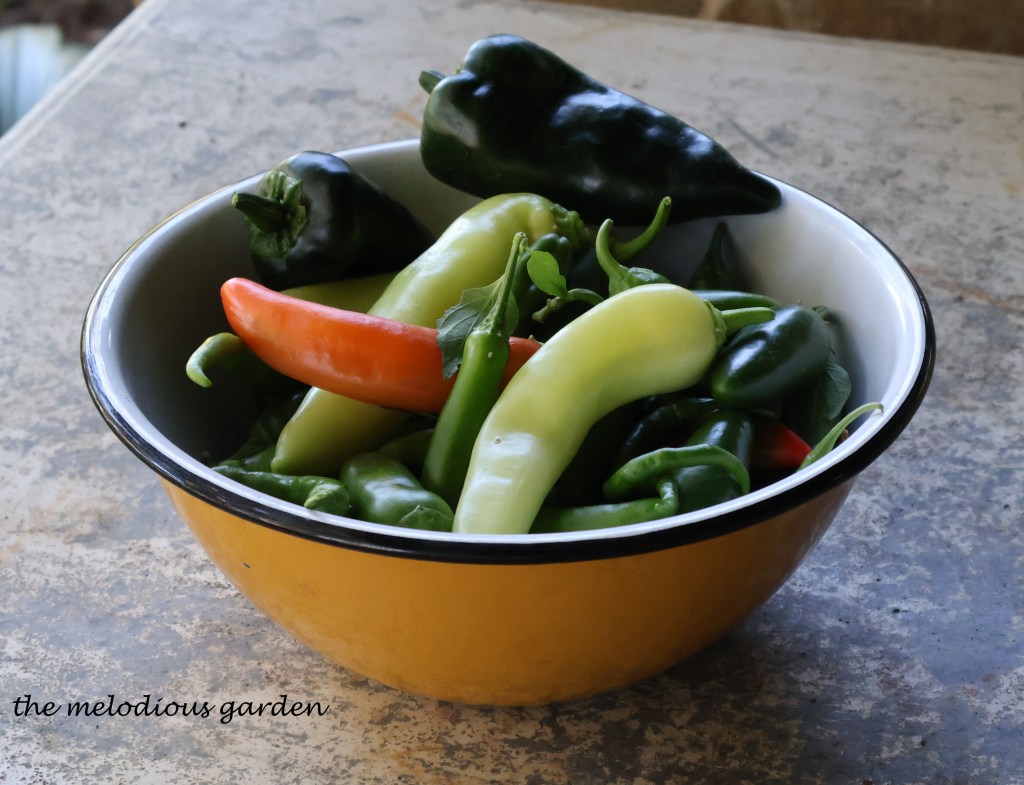
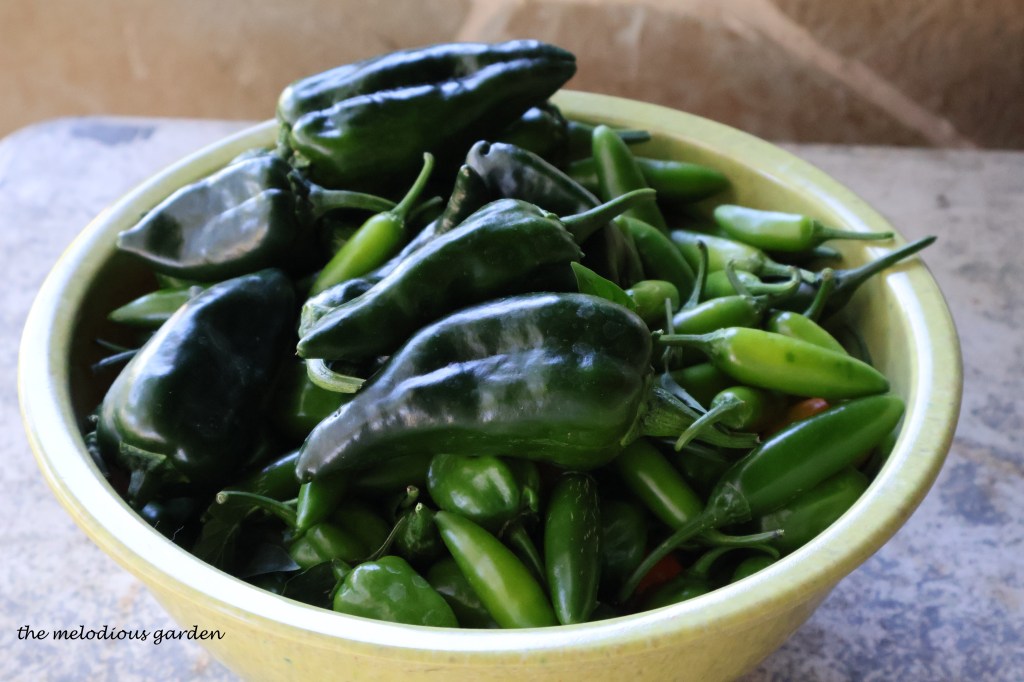
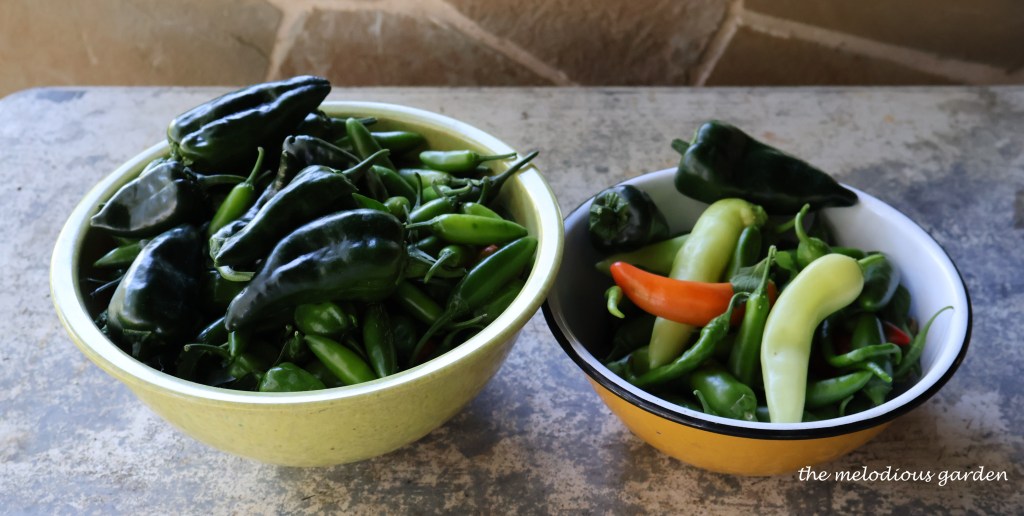
I picked a bowl.

And then needed another bowl?!

Yes. The Husband was right. (Sh… Don’t tell him I said that! Our secret, okay?)

I Had Some Peppers To Pick!

Two bowls worth of peppers! Not too shabby considering the garden had run feral for two months.

Some of the poblano peppers went straight in to supper that night as tamale stuffed peppers, which was the first time making that recipe and it will be back on the menu again soon. Some of the peppers are too wickedly hot (ie: 45 minutes after I tasted and spit out one of them, I was beginning to feel my lips again…) Those will most likely be given to a neighbor who likes him some hot peppers. Some of the peppers are destined for the dehydrator, as I purchased one last summer after I realized I can make my own chimichurri seasoning.

I am now anxious to get some winter veg planted, though I will need to clear some garden space first as the passionvine, in my absence, may have tried to outperform kudzu as fastest growing vine in the south. That task will need to wait a while, though, as the fritillary butterflies have been all aflutter the past few days. In the meantime, I will wander the garden a bit more now and dream of better gardening days ahead. And dream of once again having two strong sturdy shoulders.

Keep calm and garden on and take care of your body and each other.

gardening

If there’s life, there is hope

January was a long year, wasn’t it?

First came the dread, then the reality. Through it all, the word “Hope” has buoyed me.

Hope springs eternal. February, here in North Texas, has arrived with sunshine and above average, very warm temperatures. The most perfect day to spend in the garden, in quiet contemplation of Hope. And Peace. And Harmony. For America. For the world.

“To plant a garden is to believe in tomorrow.” ~ Audrey Hepburn

Audrey Hepburn’s famous quote, while not actually using the word “Hope,” is all about hope. The promise of tomorrow. A new day. A new beginning. Twenty four fresh new hours to make a difference. To make an impact.

“This will be my fight song: left foot, right foot, breathe. Help the poor however you can, plant bulbs right now in the cold rocky soil, rest.” ~ Ann Lamott

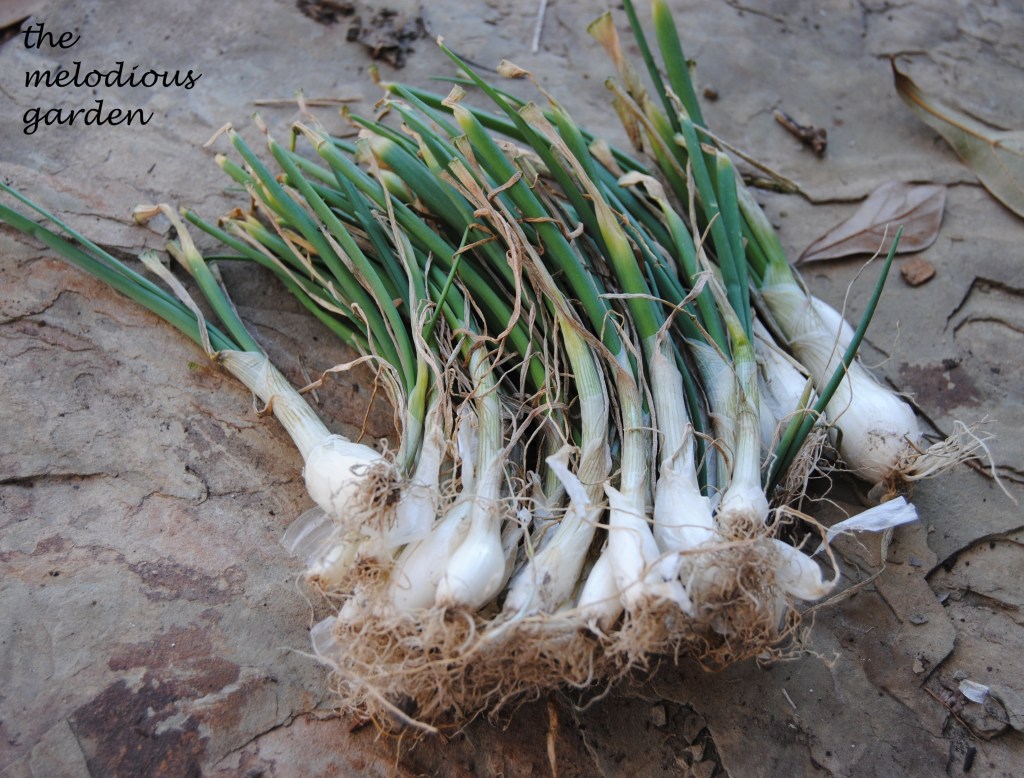
I purchased onion slips earlier this week, as now is the time to plant them in my region. More than a decade has passed now since I spent a quiet, mediative day in the garden, planting onions while my dear aunt was in the hospital, her colon cancer metastasized to her brain, necessitating emergency surgery. She has, sadly, since passed away, but I always think of her and her amazing spirit whenever I plant onions. I know that she is peering down at me, happy that I continue to garden and that I continue to seek hope and peace in the garden.

Tomorrow, the first of the onions will be tucked in the soil, then covered with a layer of freshly shredded leaves. Hope does spring eternal in the garden. Onions, from such humble beginnings, to be harvested months from now and used to nourish my body and soul.

“If there’s life, there is hope.” ~ Stephen Hawking

I was reminded earlier today of a conversation I had last year about the guerilla garden going on behind our property line. The individual wondered why I would invest the time and the money on something that might be removed or mowed over. Ah. But what if something grows from my guerilla garden efforts? Food to feed the hungry. Shade for a too hot planet. Habitat for birds. Friendships. Inspiration for others to take on their own guerilla project. What if the only thing it ever grows is hope to those that need it most?

Keep calm and garden on and always remain hopeful.

What to plant in the garden in February:

Plant onions: I soak onion slips in seaweed, diluted per container directions, for 30 minutes prior to planting.

Peas: Can be sown outside through mid-February.

Potatoes: Can be planted outside any time this month.

Asparagus and horseradish: Both can be planted outside this month. Soak the crowns in diluted seaweed for 30 minutes before planting.

Late winter vegetables: Cabbage, broccoli, Brussels sprouts and cauliflower can all be planted now. Many garden centers are getting a freshy supply of transplants this time of year.

What to sow outside now through mid-March: Beets, carrots, kale, spinach, mustard, Swiss chard, lettuce, kohlrabi, collards, spinach and turnips.

Radish: Can be sown outside now through May.

Additionally, eggplant and pepper seeds can be sown inside now through early March.

Many garden centers are receiving fruit trees and berries. Research best varieties for your location and shop early for best selection.