
The garden in mid April is a tale of the good, the lovely and the terrible, horrible, no good, really bad.
We have been blessed with rainy weather the past few weeks, with enough cloudy days in between rain showers to keep the temperatures down and the humidity high. The plants are loving it. Alas. Both the desired plants and the non-desired are loving it. But let’s save those undesired plants for later…
“Anyone who thinks gardening begins in the spring and ends in the fall is missing the best part of the whole year, for gardening begins in January with a dream.” ~ Josephine Nuese
This year’s garden began shortly before the calendar rolled over to 2026, when those first seed catalogs landed in the mailbox and dreams and plans were put on paper. Tomato seeds were sown in trays on the kitchen table sometime between Christmas and the new year and nurtured indoors until it was safe to plant outside. There is, perhaps, nothing more rewarding than watching your own homegrown tomato plant grow and flourish, aside from watching it produce a harvest. Those harvest days are coming; in the meantime, I am content watching the plants grow.
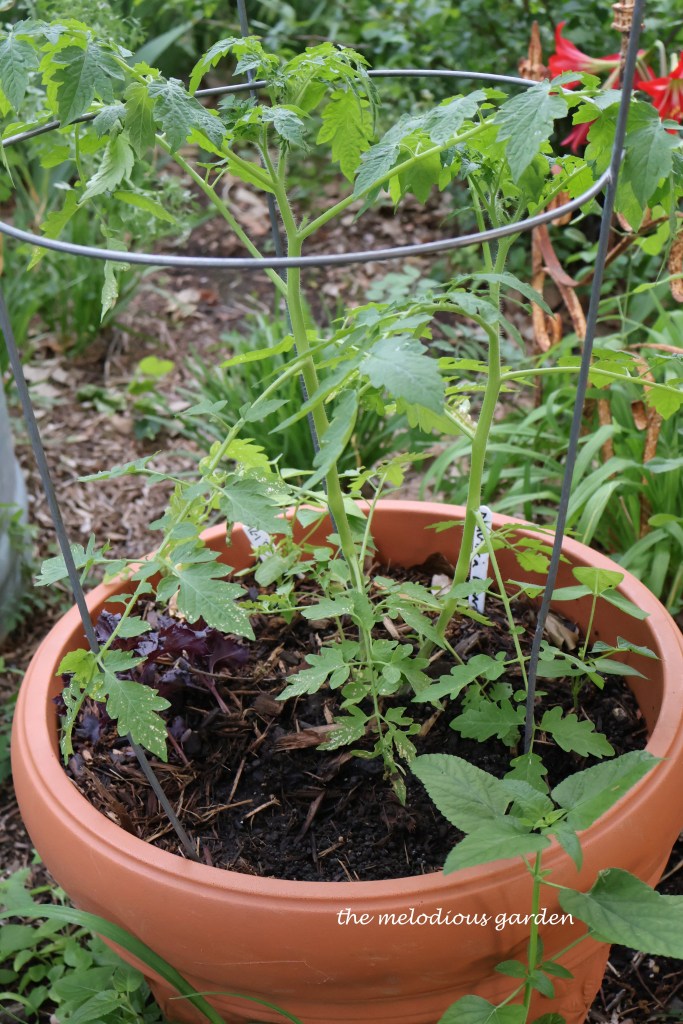
Yellow pear tomato has long been my favorite variety, as it has proven year after year to produce well in my garden – even in the heat of summer and well in to the fall. But there is always room for testing out new-to-me tomatoes and two that I am growing for the first time this year are Crokini and Egg Yolk.
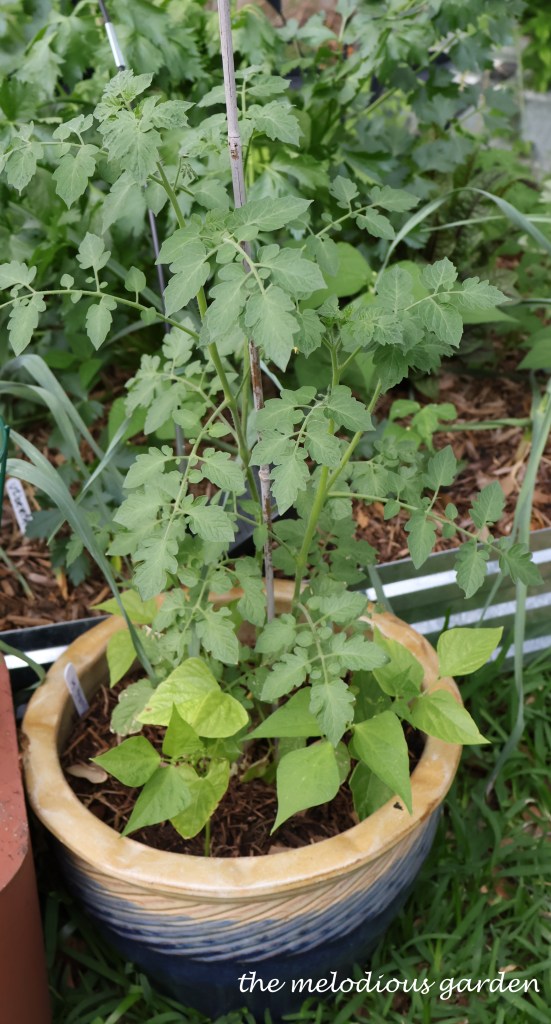
Crokini, shown above.
Egg yolk, shown below. (A funny name for a tomato, but it is suppose to have bright yellow fruits – like an egg yolk.)
Yes, those are beans popping up with the tomatoes. I am attempting to outsmart the rabbits by growing their beloved green beans just out of their easy reach. So far, so good!
For happy health, fuel yourself with dreams and greens. ~ Terri Guillemets
I started down the road of edimental (edible + ornamental) food forest gardening around 2021 as a way to garden myself back to health and grow at least a bit of my produce. Two of my earliest purchases were longevity spinach and Okinawa spinach. Both are tender perennials that overwinter inside, tucked in a corner of our kitchen. By the end of winter, they always look more than a little sad but they rebound quickly once outside. I am still amazed that I can harvest fresh greens throughout our Texas summers.
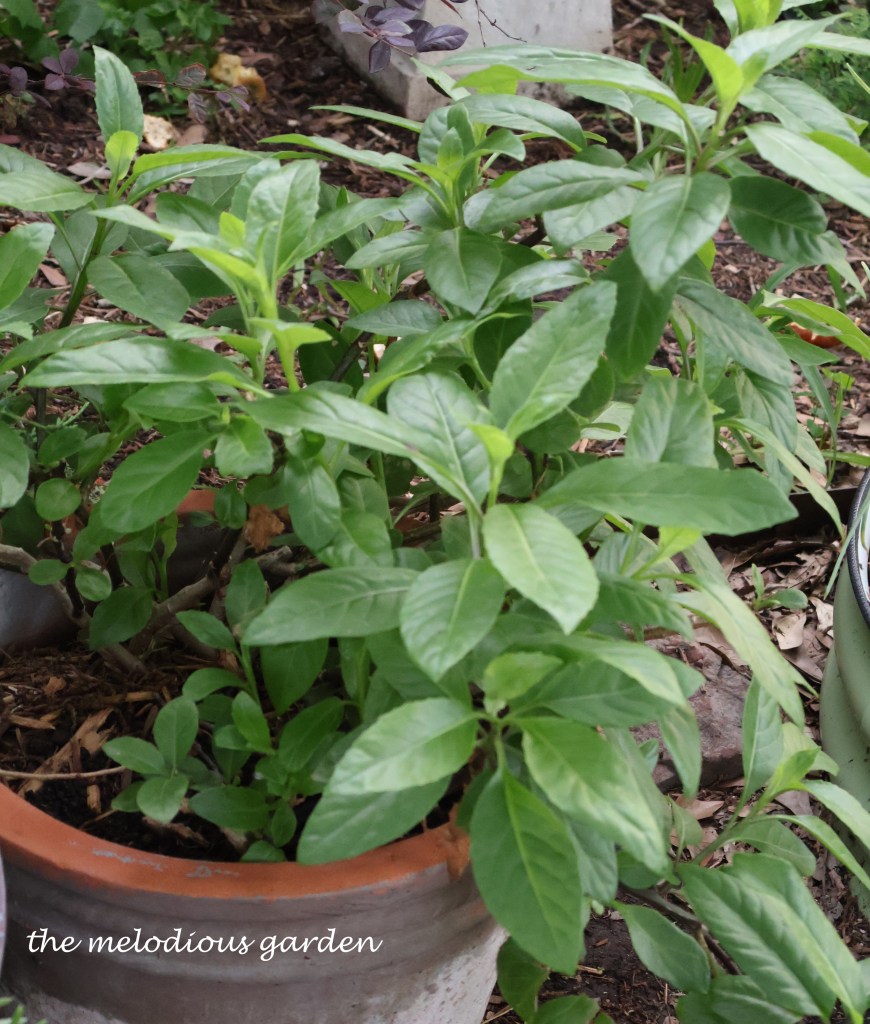
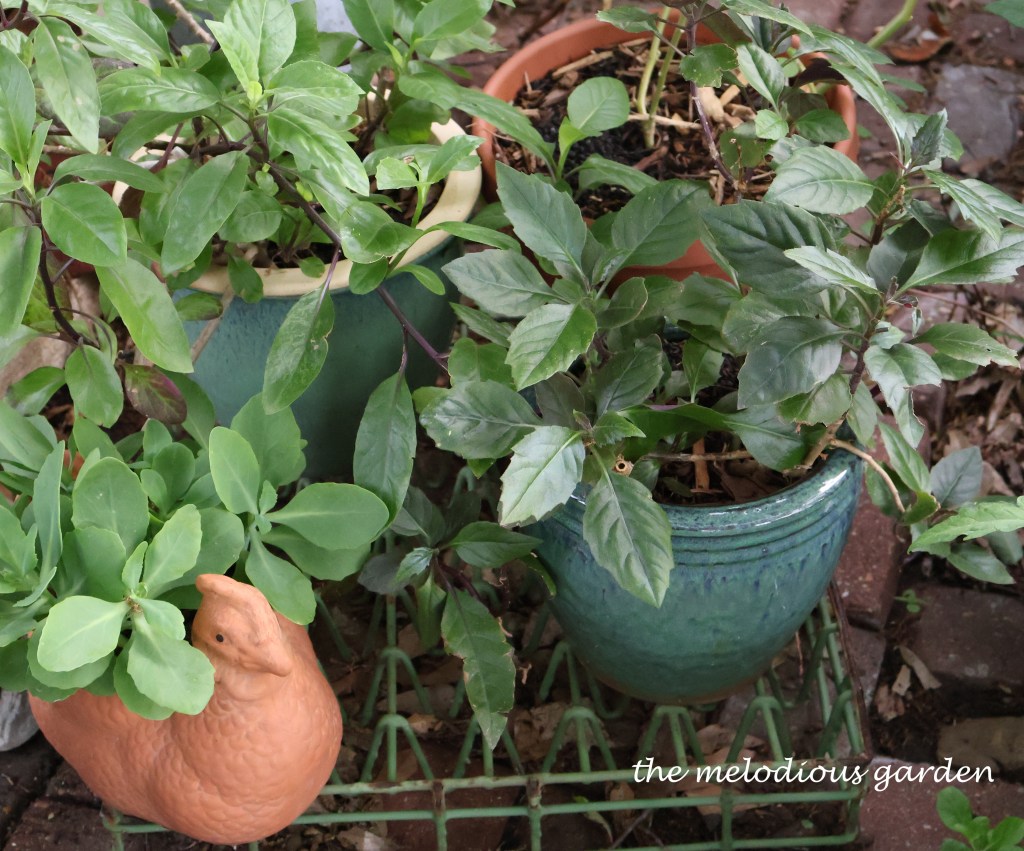
Longevity spinach, shown above.
Longevity spinach (back left) and Okinawa spinach (front right), shown below.
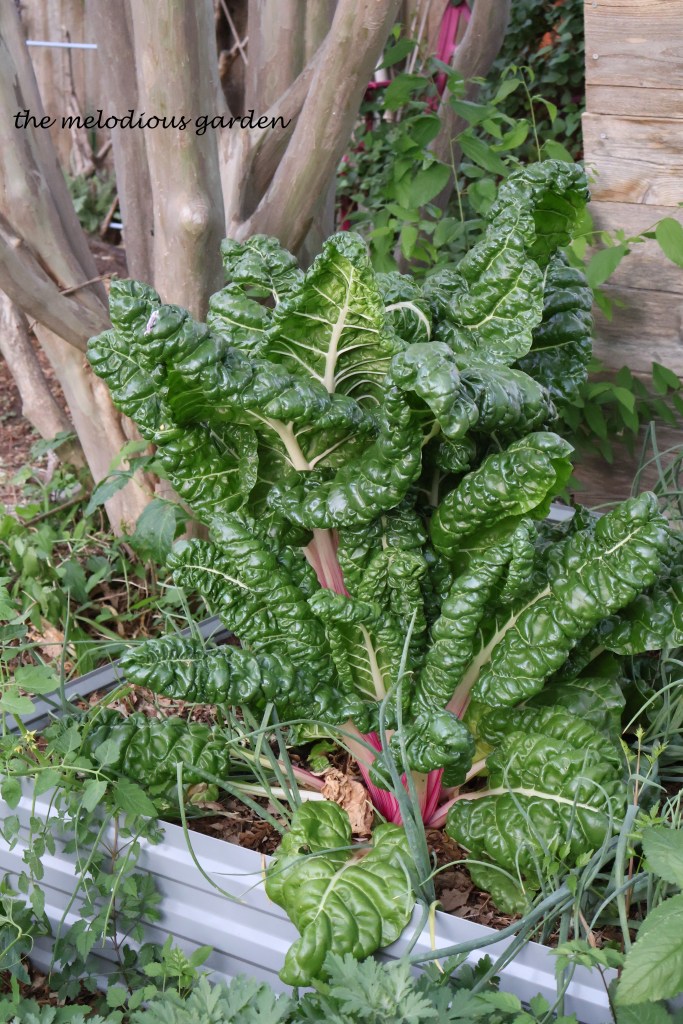
Swiss chard, shown below, is another green that provides abundant harvests in my region. This one is, perhaps, one of the loveliest, the largest and most lush Swiss chards I have ever grown. I really must harvest more but it really puts the “ornamental” in edimental and makes it difficult to clip any leaves. Swiss chard, as a biennial, has a two year growing cycle. Plant it once and you have fresh salad greens for two years. (Sneak peak: The photo below also shows some of the terrible, horrible going on in my garden!)
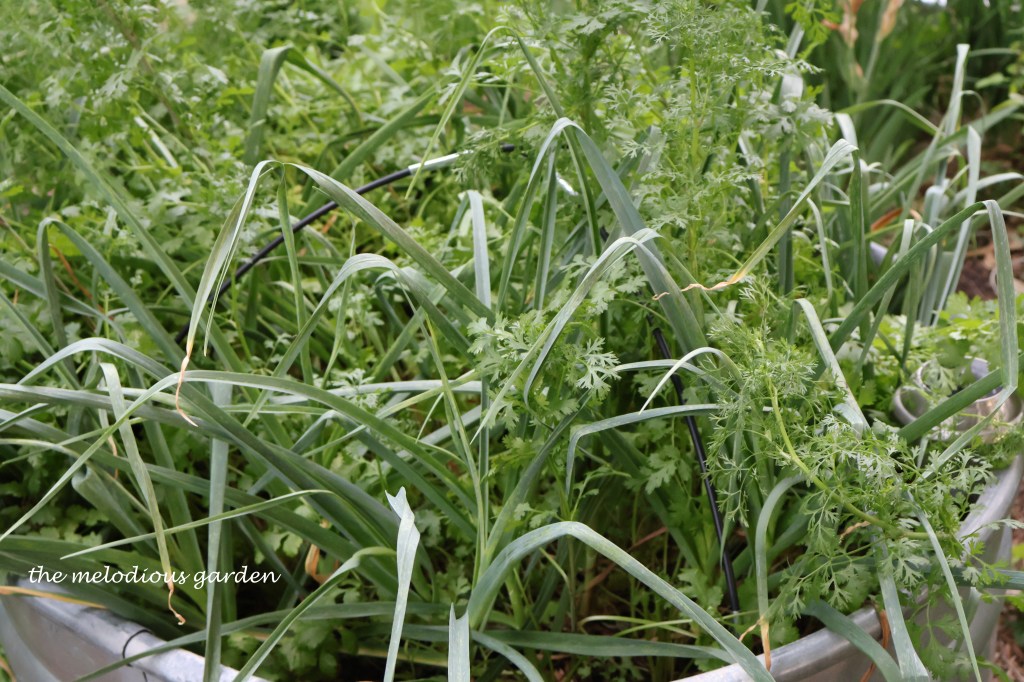
Garlic was planted in the late fall, later than I would normally plant, but rotator cuff surgery kept me out of the garden in early fall. A few of the garlic beds were later sown with cilantro seeds, in hopes of getting a double harvest. (Photo below.) We shall see how it actually worked when the garlic is pulled in late spring to early summer… but the cilantro has been wonderful.
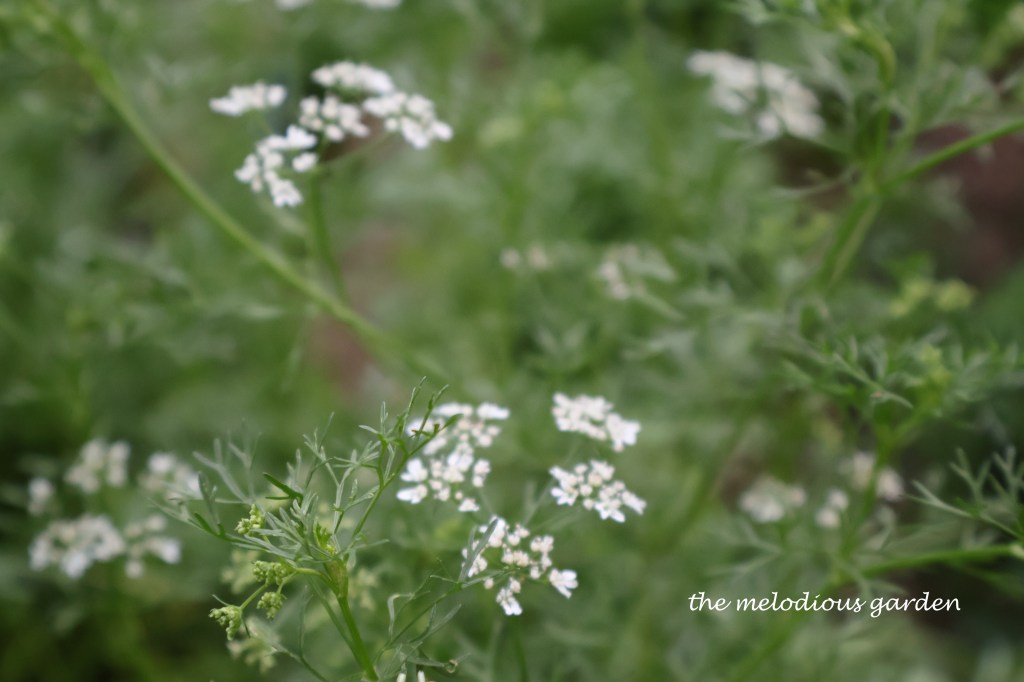
I am allowing some of the cilantro to bloom as it provides much needed nectar this time of year. Bonus: The blooms are quite lovely.
(Cilantro in bloom, shown below.)
Cilantro is a cool season herb and will not take our summer heat in North Texas. If one is dreaming of fresh salsa, made exclusively from the garden, it is best to give up those dreams or move to a more favorable gardening region. Slight tweaks to the dreams can make it work. One could grow their cilantro in the fall through early spring (it tolerates our winter cold, if given protection during extreme cold/snow/ice), harvest and freeze the cilantro in spring, all the while waiting on the onions, tomatoes and peppers to be ready to harvest. The cilantro will discolor some when thawed, but still retains its flavor. (It quickly loses its flavor when dehydrated.) Another tweak may actually be throwing in the trowel and buying cilantro at the store when your summer veg are ready for salsa making. I have dreams one day of growing cilantro (and dill!) hydroponically inside during the summer, but have not reached that level quite yet.
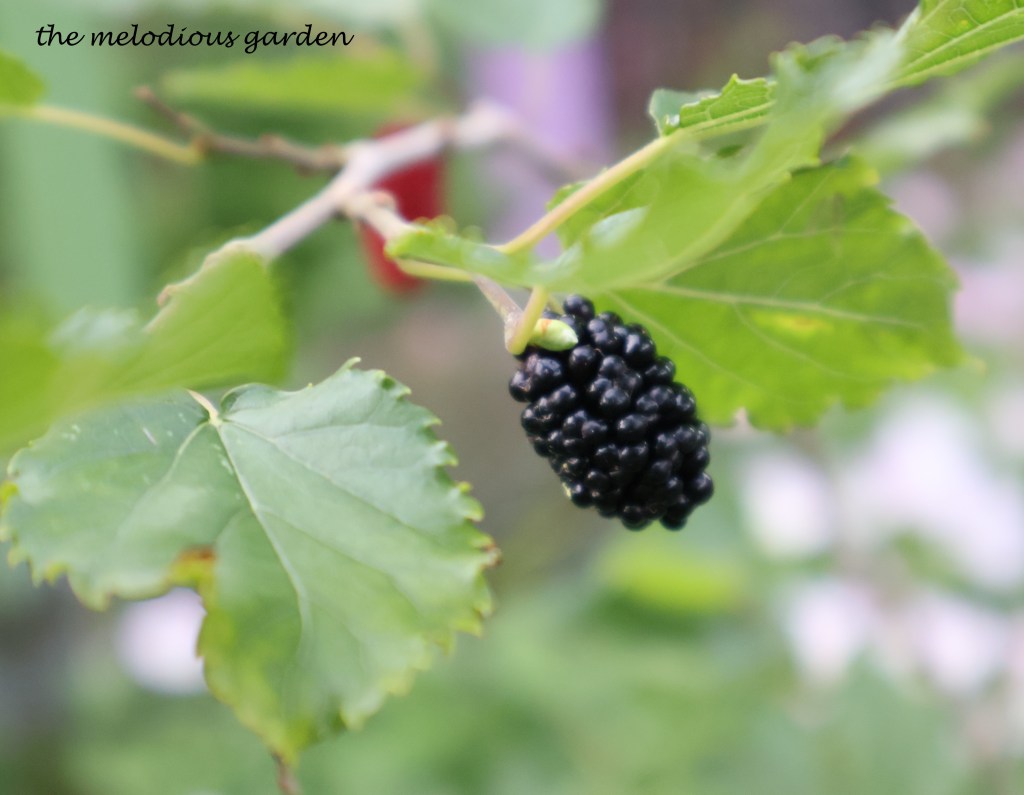
Speaking of more favorable gardening regions… I was born and raised in America’s breadbasket – the rich soils and abundant rains of the Midwest. I have fond memories of my childhood, eating mulberries from the tree that grew wild outside our small town’s public swimming pool. In my quest to grow nutrient dense foods for myself, I turned to the lowly mulberry. A weedy shrubby tree to some. Dark and rich in anthocyanins to others. This spring has found me introducing my young adult offspring, currently living at home, to the joys of fresh picked mulberries, the purple pigment staining the fingers and lips.
(Issai mulberry, shown below.)
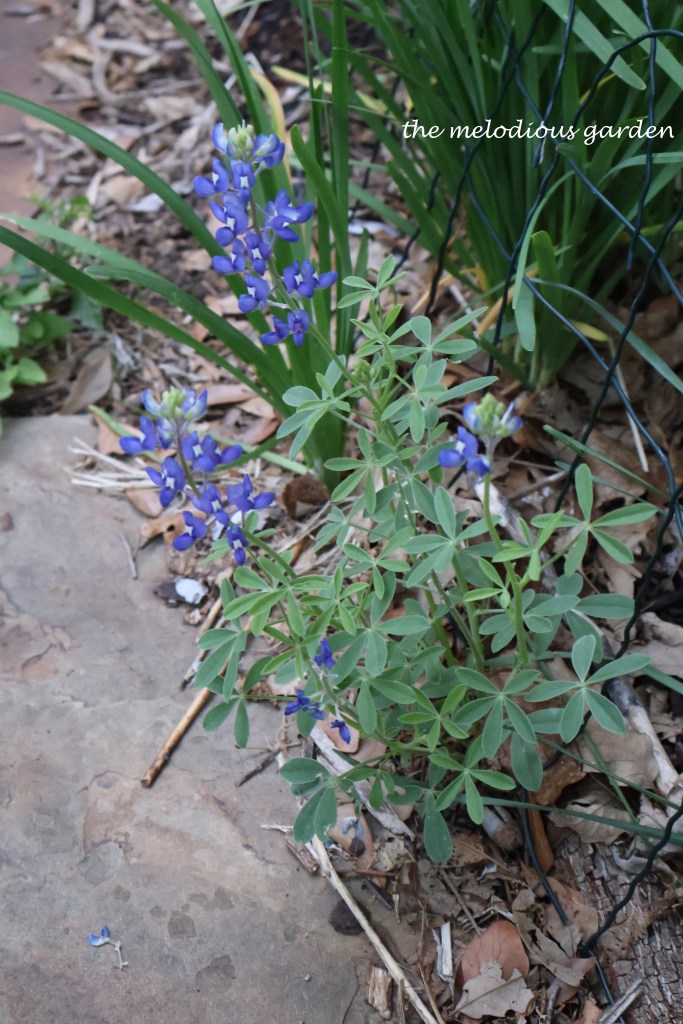
I have lived in Texas for nearly 40 years now and have gardened the same plot of land in North Texas for 30 years. I have loved and planted Texas native plants all along. Alas. Growing the bluebonnet, our state flower, continues to mystify me. For three years in a row now, I have officially had ONE lone bluebonnet. I have sown and scattered seeds in every manner possible, all to little avail. The first lone bluebonnet appeared in the middle of a pathway, up near our house. Last year, the solitary bluebonnet popped up about halfway down our gently sloping back yard. This year, the solo wildflower showed up beside the pathway at the end of the slope, right before our property turns in to city land. What will next year bring? Perhaps a plethora of bluebonnets on city property? Stay tuned for updates in spring 2027! In the meantime, I have been enjoying this lovely pop of bright blue. (Bluebonnet shown below.)
Weeds are nature’s graffiti. ~ J.L.W. Brooks
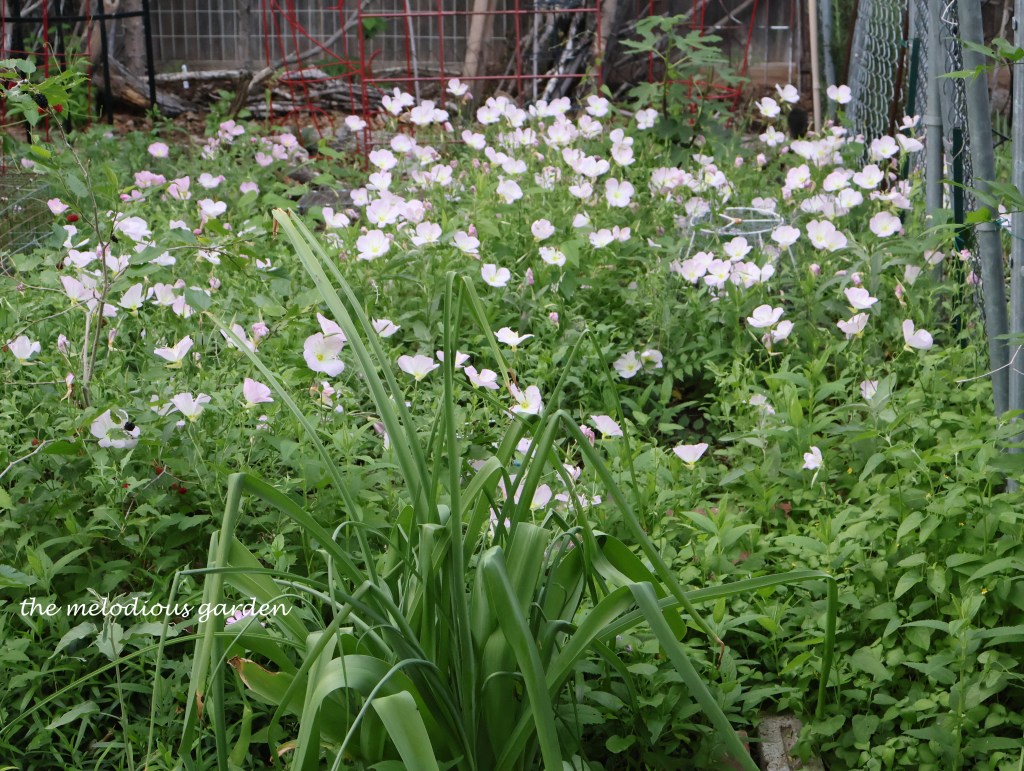
Is the pink evening primrose a weed or a wildflower? The answer depends. It is quite possibly shifting from lovely to horrible as I type. Sure, it is beautiful en masse along our Texas roadways. Taking over my garden? Not so much. Lovely today, nature’s graffiti tomorrow. Next month, when it has finished blooming, I shall take a hoe to it and reduce it’s footprint in my garden. In the meantime, I will enjoy it’s beauty, just as the bees are enjoying it’s nectar. (Pink evening primrose, shown below.)
Weeds are Nature’s makeshift. She rejoices in the grass and the grain, but when these fail to cover her nakedness she resorts to weeds. ~John Burroughs
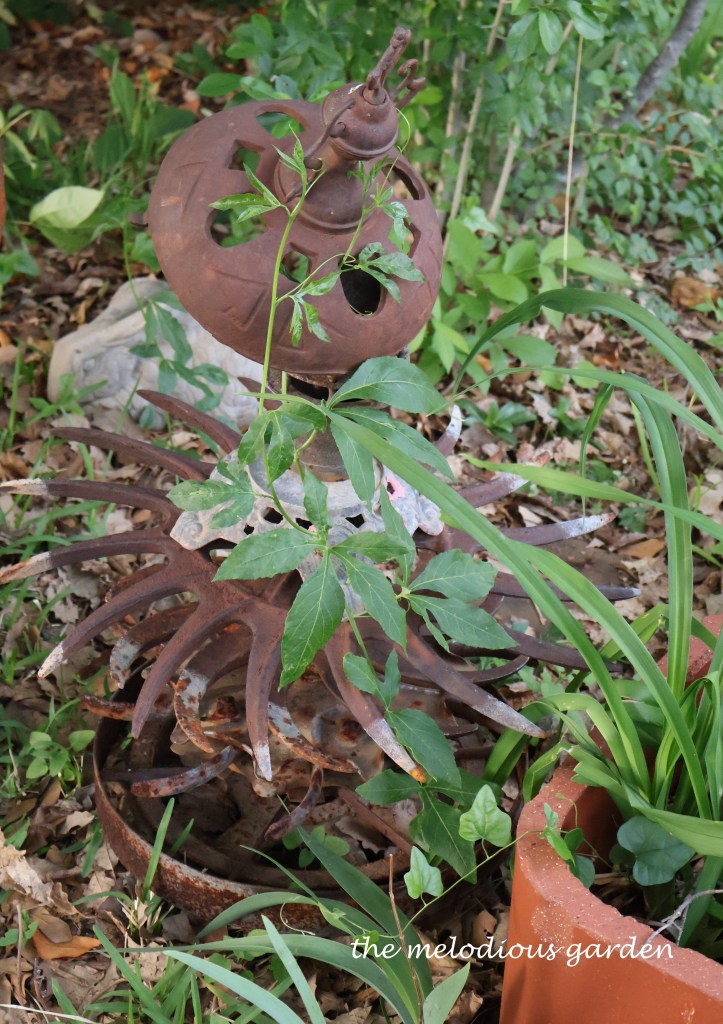
That line between unwanted weed and wanted flower is hazy at best. My beloved passionvine is one such “somewhere between unwanted and wanted” flower in my garden. How do I love thee? Let me count the ways. 1.) It is stunning in bloom! 2.) It is the host plant for gulf fritillary butterflies, which I adore. 3.) I love planting for our pollinators and it sure does lure them in. 4.) Did I mention it is stunning? Yes. But it deserves mentioning twice because it has such an unusual flower and incredible tropical vibe. Alas. Scrambling over everything that stops for a nanosecond? Not so much. Thankfully, the unwanted tender young seedlings are a cinch to pull up. I have made a note to myself to keep three or four vines, but not a dozen. And I will only keep those seedlings that sprouted up by something vertical to climb. All others will be removed! (…so she says now…) The passionvine pictured below is safe, as I can easily train the vine from this stack of old metal pieces and parts toward an arbor nearby.
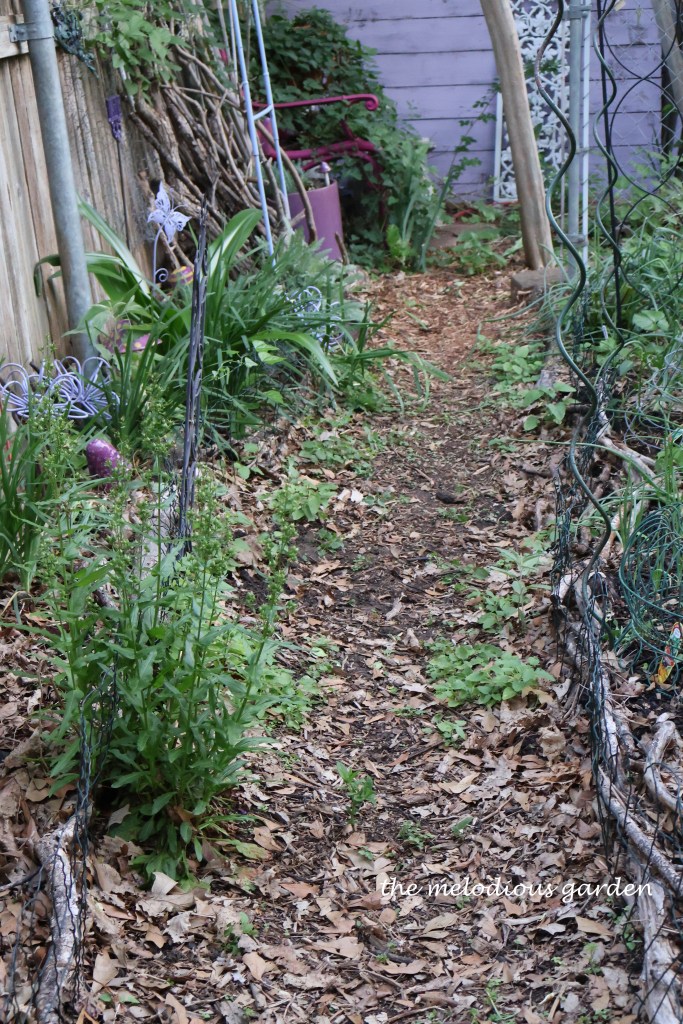
I have also vowed to keep my pathways open this year and am off to a great start. (…though the year is still young…) I have been potting up and giving away the extra Salvia coccinea in the pathway shown below, as last year it became nearly impassable by September. I have a dozen or so more young seedlings that need to be dug this weekend. And, yes, I did decide to leave the penstemon (far left in photograph) as it won’t sprawl and hog the pathway the way an ornamental salvia will.
Weeds are great travelers; they are, indeed, the tramps of the vegetable world. They are going east, west, north, south; they walk; they fly; they swim; they steal a ride; they travel by rail, by flood, by wind; they go under ground, and they go above, across lots, and by the highway. ~ John Burroughs
Now about those “true” weeds and the terrible, horrible, no good really bad stuff going on in the garden. Enter: briar vine. Can I get an Amen?! And can I please get some help battling it?! If ever there was a weed that travels east, west, north and south, this is it. And yes, the vines go underground and the vines go above ground. I remain committed to organic gardening and will not use herbicides, especially now that I am growing food for my health, but the digging and weeding and gently pulling it off desired plants seems endless. In addition to briar vine, I battle trumpet vine – a variety that was sold as “non invasive – and junk trees galore – squirrel and wind planted oaks, pecans and elms. At least I will always have something to weed, said no gardener ever.
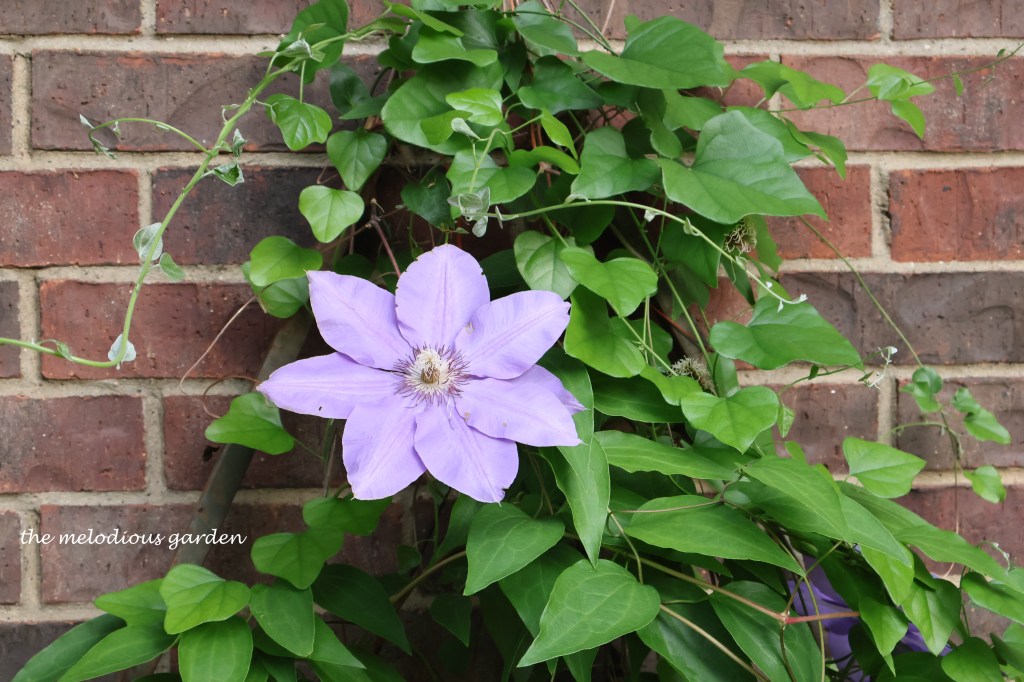
A beautiful clematis, being swallowed alive by briar vine, is shown below.
All photographs were taken April 13, 2026, in my Southern Denton County, Texas, garden, zone 8b.
All links are provided as a courtesy; I do not receive money or products from any companies linked.


