
Yesterday was the 56th anniversary of the first Earth Day, though – in reality – we should strive to take care of the Earth every day. And yet, “we humans have been partying pretty hard. We’ve ransacked most of the Earth for resources,” wrote David Brower in his book, Let The Mountains Talk, Let The Rivers Run: A Call To Those Who Would Save The Earth. It has been 30 years since its publication and, sadly, more true today than in 1995.
As I was wandering my garden yesterday, an overcast April day, the plants still wet from recent rains, I was pondering what Earth Day means to me, as a gardener, as one who tries to live as softly on this Earth as possible. It is said that stewardship begins with respect for nature. I know that I am just one owner of this piece of property. I know not who lived here prior or how they used the land and its resources. I know not who will own this property in 50 years. But I respect and appreciate nature and hope that future inhabitants of this land know that I did my best to care for this part of Earth.
“Reduce, Reuse and Recycle,” the hallmarks of environmental activism and sustainability, are not just words to toss about, but words to live and garden by, essential to caring for this property, not just inside the house, but outside in the garden. How do fungi fall in to this mix?
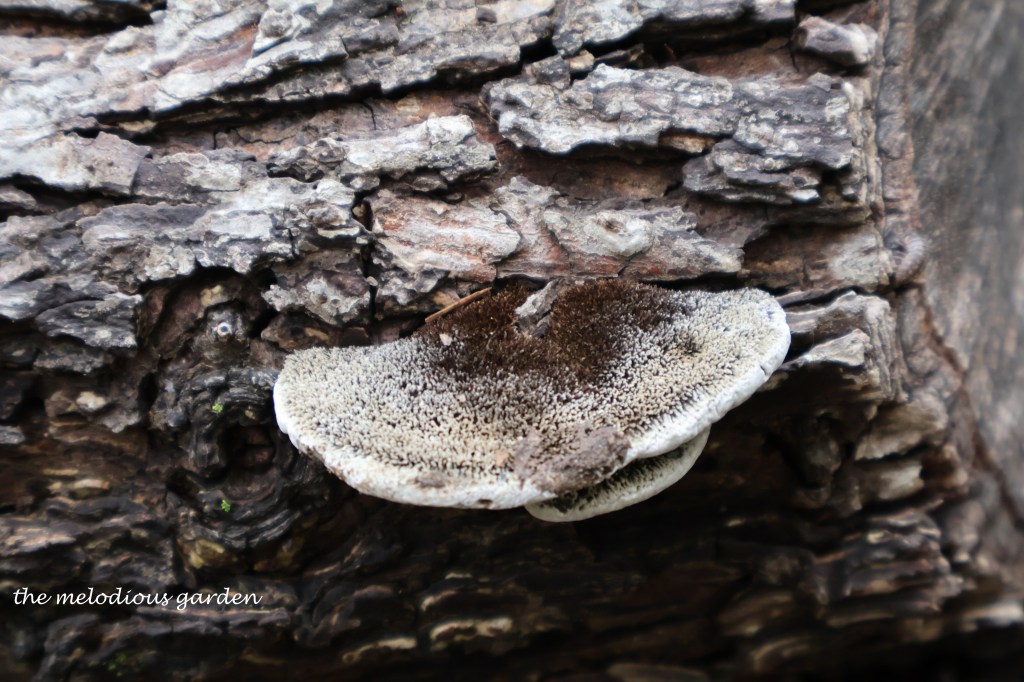
In the words of mycologist Paul Stamets, fungi are “nature’s grand recyclers.” They break down organic material, like decaying wood and leaves, and transform them into nutrient-rich soil. Fungi are the ultimate at reducing, reusing and recycling.
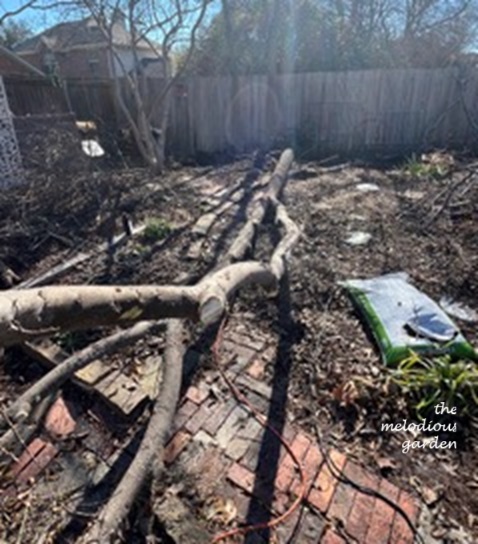
As I was redoing my garden five years ago – shifting from 25 years as an ornamental rose garden, now mostly edible and native plantings – my husband and I needed to remove a number of older junk shrubs and trees from the back edges of our property. The junk shrubs were intentionally planted many years ago to give us privacy when a new subdivision sprang up beside us. The junk trees started their life here from wind blown seeds, undesirable elm trees, overlooked for far too long until they had taken hold and grown much too large and much too junky. But what to do with the many branches and logs besides hauling them off to the landfill? (I abhor sending organic matter to a landfill!)
The solution was obvious: I would line my new garden areas with the branches and logs. And so it began… quite organically and often dictated by the length of wood or the amount of energy needed to cut or move a larger section. Our home is situated on the outermost part of a faux cul-de-sac, giving us a larger than normal five sided, somewhat wedge of a pie shaped, property. I opted to start at the farthest most corner and work inward, with long L shaped beds along those fence lines. From there, geometry took over, necessitated by the straightness of logs, a sort of living game of garden Tetris. Some beds are long and narrow. Others are square, L or U shaped.
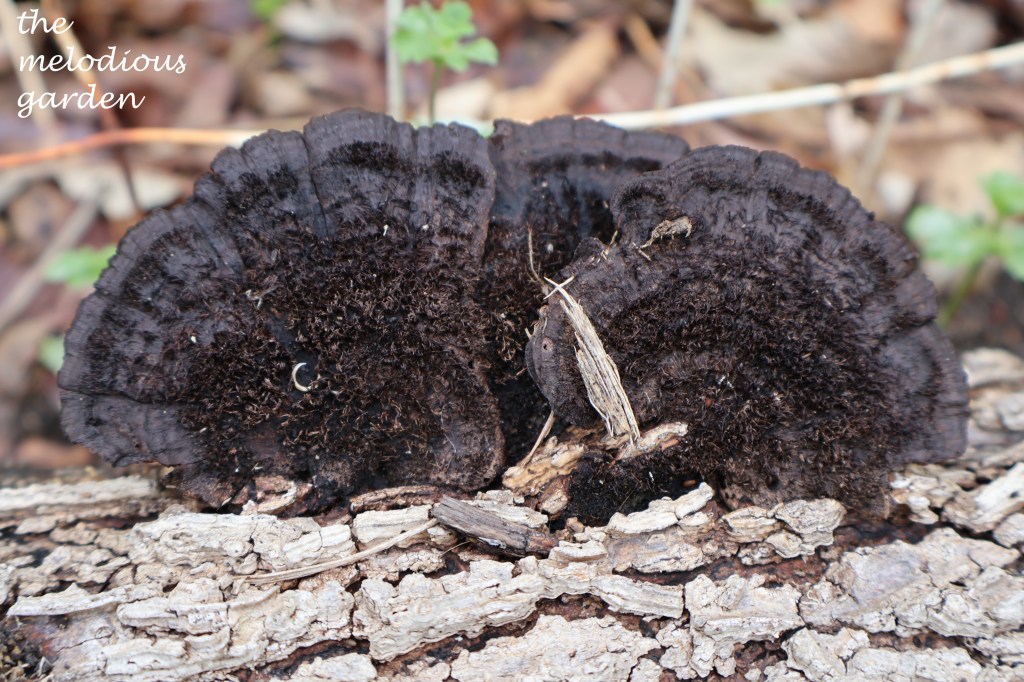
Over the past few years, it has been amazing to watch as the various fungi have appeared and as the logs are breaking down, disappearing, nature’s grand recyclers hard at work. What started as a way of reducing our need for the landfill has added life and nutrients to the property.
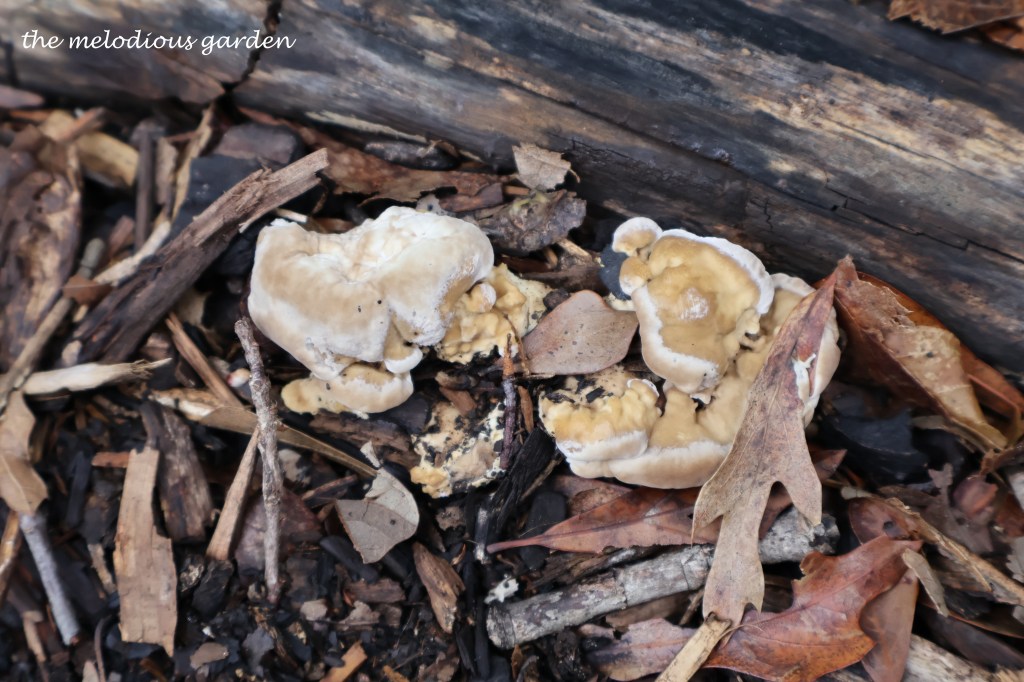
The earthworms have been hard at work, too, mixing this new nutrient-rich soil with the heavy clay gunk original to the property, leaving behind a lovely friable soil.
The logs – some are now fully buried, others partially buried – act as a sponge and store water, which they release slowly over time, meaning less watering is needed even in the heat of a Texas summer. Hügelkultur, the German word for these “mound cultures,” not only kept these logs out of the landfill, but continue to work by conserving water.
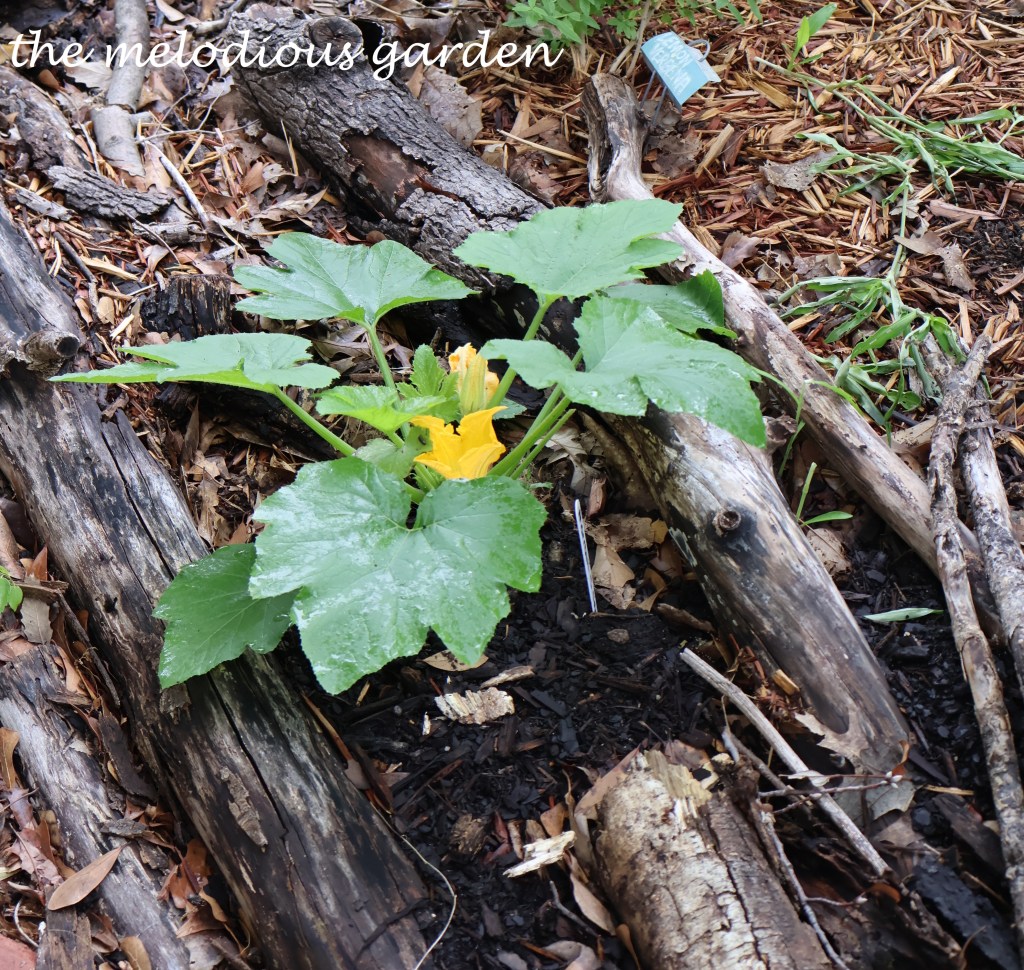
Pockets formed between rows of decomposing logs have been an especially fertile areas for vegetable growing. (Squash, shown above, growing in one such pocket.)
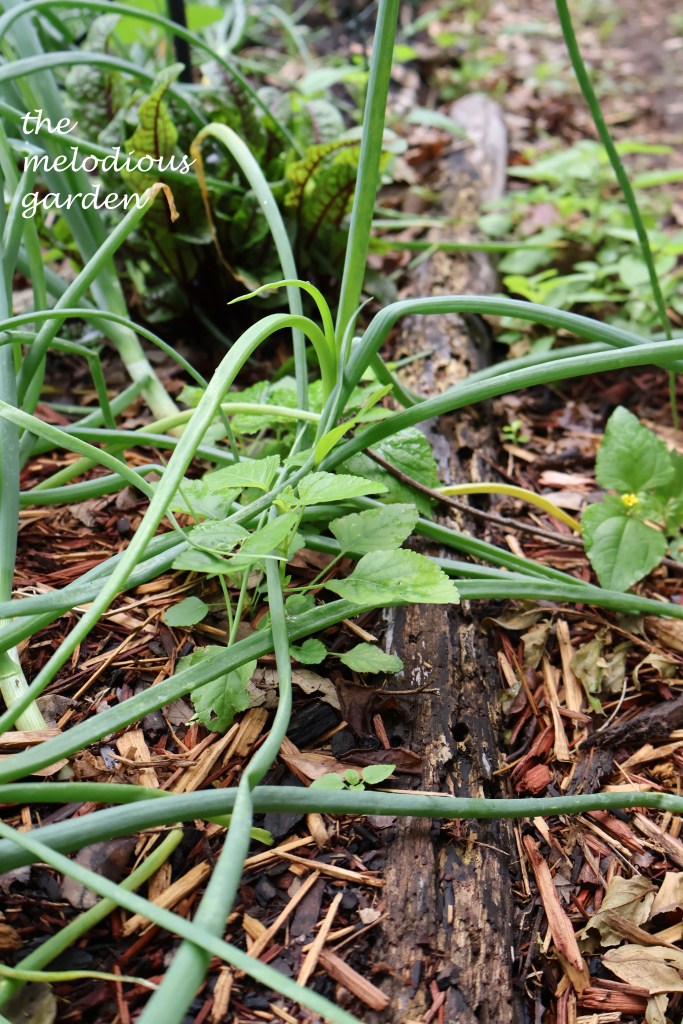
Using logs to edge vegetable beds and building up the soil level – the mound culture – allows for better drainage as the planting areas are slightly higher than the remaining soil.
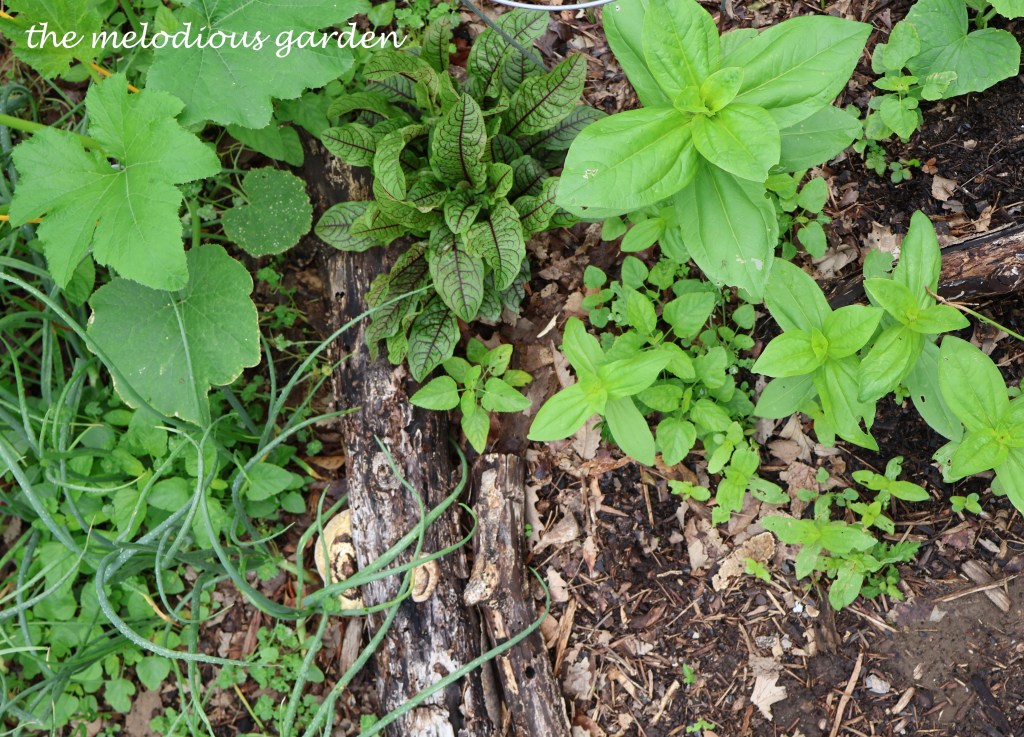
Someday, I may elevate my food growing game and intentionally grow edible mushrooms. In the meantime, I am content watching the non-edible fungi that flourish in my garden, as they reduce, reuse and recycle organic matter.
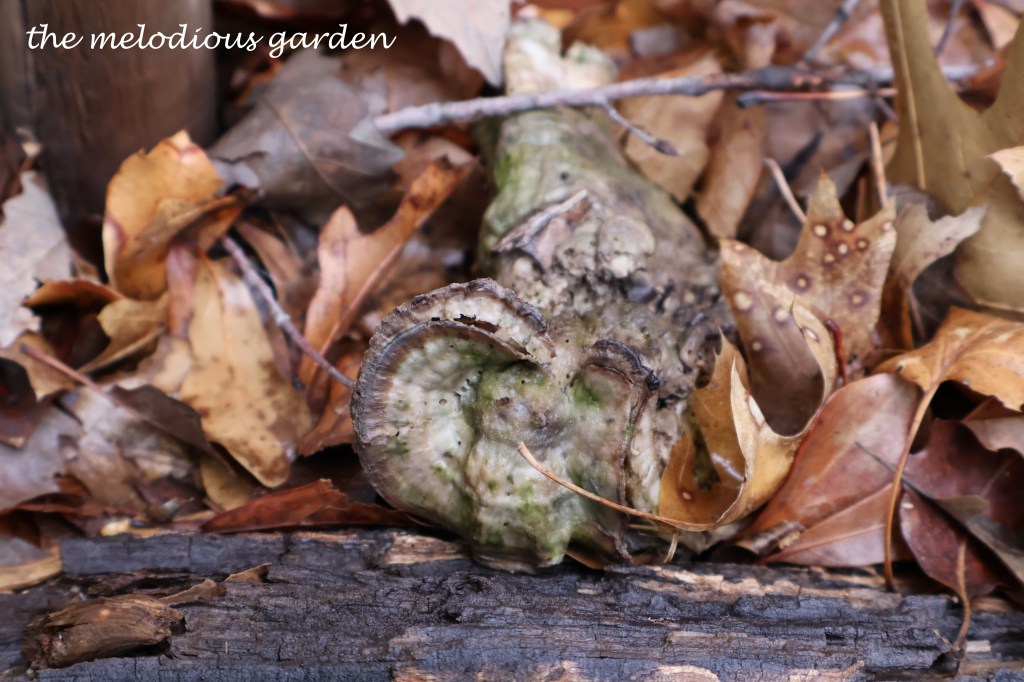
All photographs (*) taken April 22, 2026, in my southern Denton County, Texas, suburban garden.
(* The 3rd photograph is actually from a few years ago, as we were taking down the junk elm trees.)

