
As 2024 closes out, I find myself wandering about the garden, reflecting on what this year has been and looking ahead to 2025. I am filled with a gardener’s optimism at new opportunities and new adventures that await in the coming year.
2024 was a year of lessons and growth, filled with good times and challenges and many unforgettable moments.
Perhaps the most unforgettable moment of all was in January when we (finally!) removed three large cedar elms from the back section of my gardens. (Photo below…) The trees sprouted some years prior, seeds blown in from a neighbor’s tree. As junk trees tend to do, these grew fast and furious, a daunting task to cut down.

This is forever an unforgettable moment as the last of the three trees twisted as it fell and landed with a Plop. Right in the neighbor’s in-ground hot tub! Thankfully the tree didn’t damage anything and the neighbor wasn’t too upset at us. But it was quite a chore getting the tree up and out of the water and up and over the fence.
The trees were cut into long sections and now edge my latest vegetable bed. (Photo below…) I had plans to construct a greenhouse out of an old metal gazebo but record rainfall this spring led to a rather lush garden by June and I didn’t have the heart to remove or cut back any of the plants to make room for the project. Perhaps this will be my first project of 2025, as nothing is stronger than a gardener’s wintertime optimism.

2024 was my 29th year gardening this same patch of earth and what a year it was – for rain! By early June, the ground was so saturated and water was standing the entire length of our property along the west side of our house. I ended up digging a trench to push the water away from our garage to the ditch that runs behinds our property line. (Photo below…) Eventually, I will need to decide what to do with the trench – fill it in with soil or construct a dry creek bed? It currently sits much the way it was in June, though thankfully drier now.

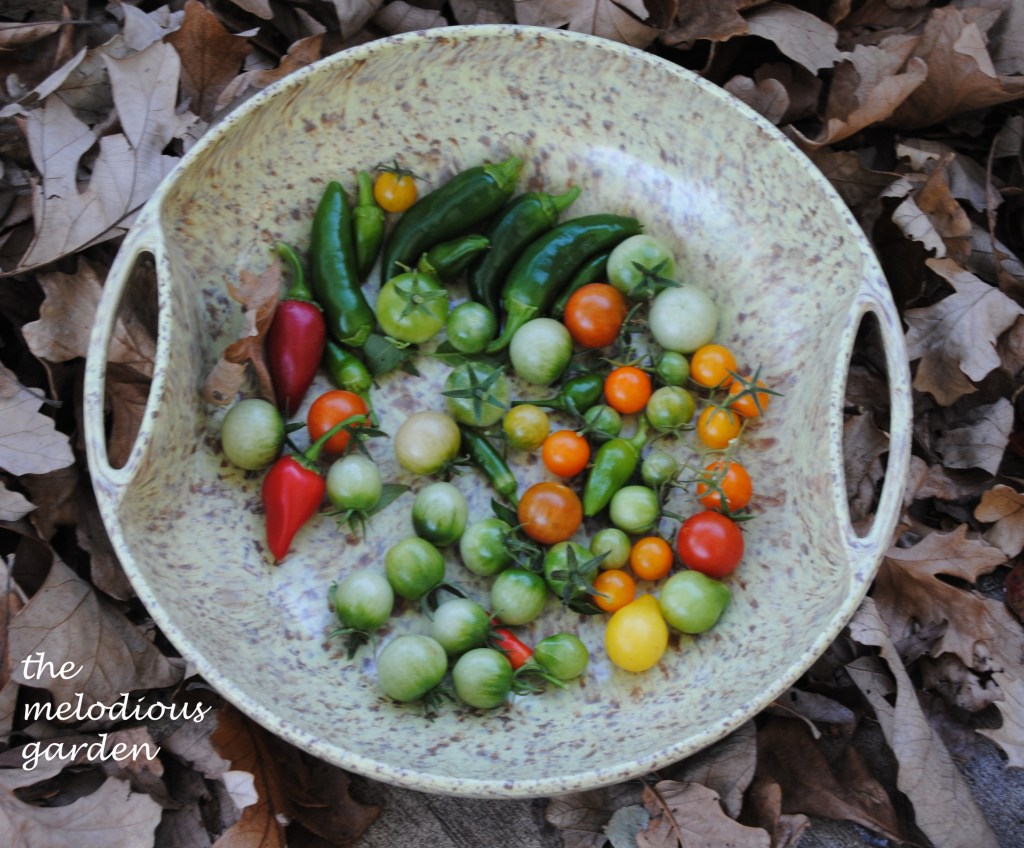
This last day of 2024, we are now roughly six weeks past our average first freeze of the season, a good example of the extremes that make up an average. We have been down near freezing a few times and have even had a few mornings with a light frost on the ground, but nothing cold enough – or not cold for long enough – to kill off tender plants. Sure, the tomato plants look brutal, nearly ten months now since their planting date, and the harvests are much smaller now, but these bonus harvests are such a treasure in wintertime. (Photo below…) Eggplant and peppers are also still growing and producing, though the first full week of January looks to finally bring us a killing freeze.

Not to be outdone by the tender vegetables, even the tropical mandevilla vine is still blooming. (Photo below…)

One of my gardening goals for 2025 is to reign in the self-seeding passionvine. I have vowed to only let a handful grow, as they have a habit of popping up everywhere and scrambling over everything in their path. I love the blossoms and the fact that the vine is the host plant for the gulf fritillary butterfly. Alas. The vines sure can get out of hand by the end of summer! Our weather has been so mild lately that a few caterpillars are still munching down on the foliage.

This spring and early summer, many of my noontime meals were entirely from my garden, though the heat of summer and sudden switch from too much rain to not a drop of rain was quick and intense and brutal on the garden. Fall rains have been nicely spaced out and many of the “winter greens” are doing quite well, including the Red Dragon cabbage. (Shown in photo below…)

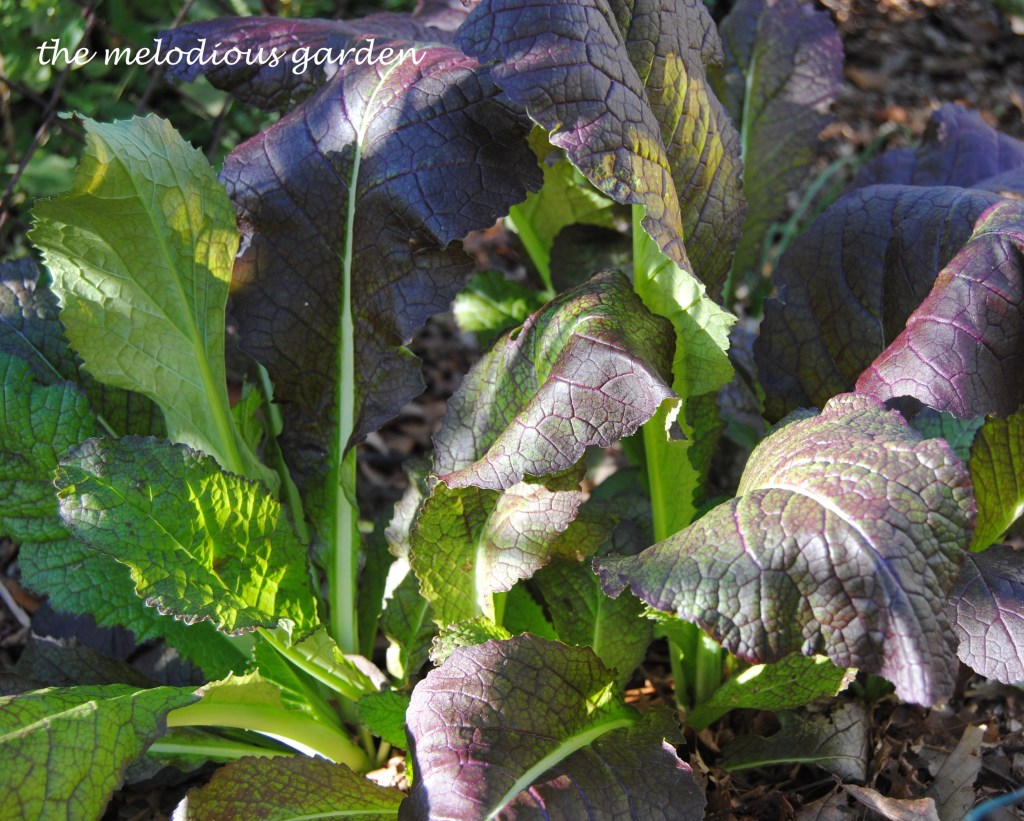
Red Giant mustard (shown below) is also doing very well. In 2025, I would like to write more about my chronic health issues and what prompted me to switch from ornamental gardening to edible gardening, along with my reasons for growing vibrantly hued vegetables.
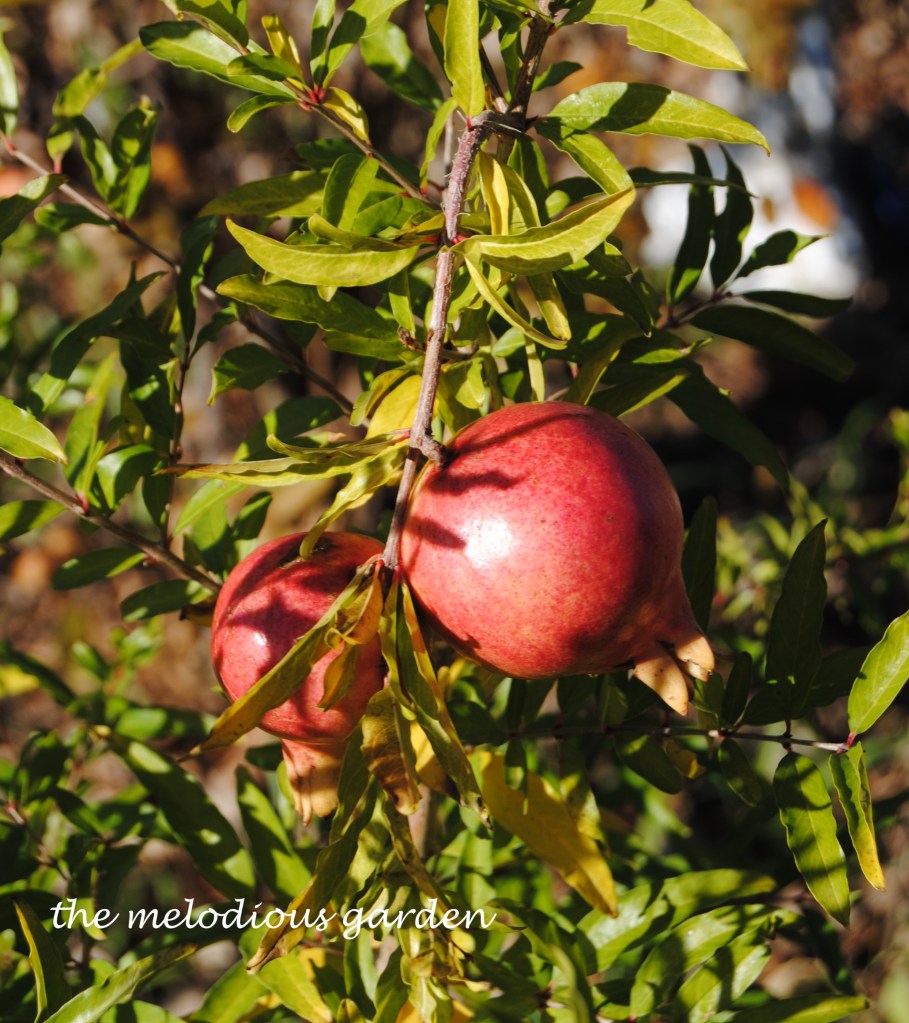
I planted a number of dwarf ornamental pomegranates (shown below) about six years ago when I was in transition – a former ardent rose gardener but not yet a veg and fruit gardener. I have yet to decide what to do about these pomegranates. Yes, they are beautiful! Alas. The fruits are not suitable to eat and they are taking up valuable real estate. I have since planted a number of edible pomegranates, though they are still a few years away from producing a crop.
And on that note – Here’s to a healthy and active new year. May 2025 be filled with many happy days spent in the garden, either hard at work or simply meandering about barefoot. Be well, my gardening friends.
(The first two photographs were taken in January 2024. The third photo was taken in June 2024. The remaining photographs were taken December 30, 2024. All photos taken in my southern Denton County, Texas, garden.)







 the melodious garden