gardening

Goodbye 2024

As 2024 closes out, I find myself wandering about the garden, reflecting on what this year has been and looking ahead to 2025. I am filled with a gardener’s optimism at new opportunities and new adventures that await in the coming year.

2024 was a year of lessons and growth, filled with good times and challenges and many unforgettable moments.

Perhaps the most unforgettable moment of all was in January when we (finally!) removed three large cedar elms from the back section of my gardens. (Photo below…) The trees sprouted some years prior, seeds blown in from a neighbor’s tree. As junk trees tend to do, these grew fast and furious, a daunting task to cut down.

This is forever an unforgettable moment as the last of the three trees twisted as it fell and landed with a Plop. Right in the neighbor’s in-ground hot tub! Thankfully the tree didn’t damage anything and the neighbor wasn’t too upset at us. But it was quite a chore getting the tree up and out of the water and up and over the fence.

The trees were cut into long sections and now edge my latest vegetable bed. (Photo below…) I had plans to construct a greenhouse out of an old metal gazebo but record rainfall this spring led to a rather lush garden by June and I didn’t have the heart to remove or cut back any of the plants to make room for the project. Perhaps this will be my first project of 2025, as nothing is stronger than a gardener’s wintertime optimism.

2024 was my 29th year gardening this same patch of earth and what a year it was – for rain! By early June, the ground was so saturated and water was standing the entire length of our property along the west side of our house. I ended up digging a trench to push the water away from our garage to the ditch that runs behinds our property line. (Photo below…) Eventually, I will need to decide what to do with the trench – fill it in with soil or construct a dry creek bed? It currently sits much the way it was in June, though thankfully drier now.

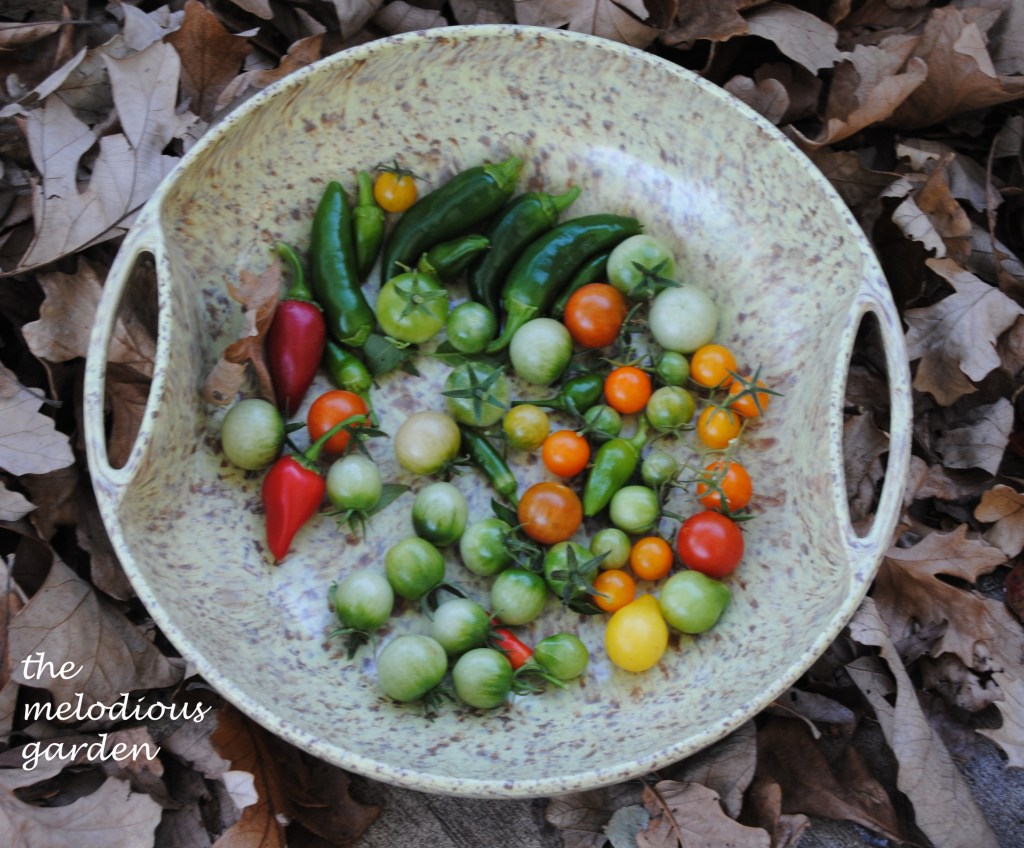
This last day of 2024, we are now roughly six weeks past our average first freeze of the season, a good example of the extremes that make up an average. We have been down near freezing a few times and have even had a few mornings with a light frost on the ground, but nothing cold enough – or not cold for long enough – to kill off tender plants. Sure, the tomato plants look brutal, nearly ten months now since their planting date, and the harvests are much smaller now, but these bonus harvests are such a treasure in wintertime. (Photo below…) Eggplant and peppers are also still growing and producing, though the first full week of January looks to finally bring us a killing freeze.

Not to be outdone by the tender vegetables, even the tropical mandevilla vine is still blooming. (Photo below…)

One of my gardening goals for 2025 is to reign in the self-seeding passionvine. I have vowed to only let a handful grow, as they have a habit of popping up everywhere and scrambling over everything in their path. I love the blossoms and the fact that the vine is the host plant for the gulf fritillary butterfly. Alas. The vines sure can get out of hand by the end of summer! Our weather has been so mild lately that a few caterpillars are still munching down on the foliage.

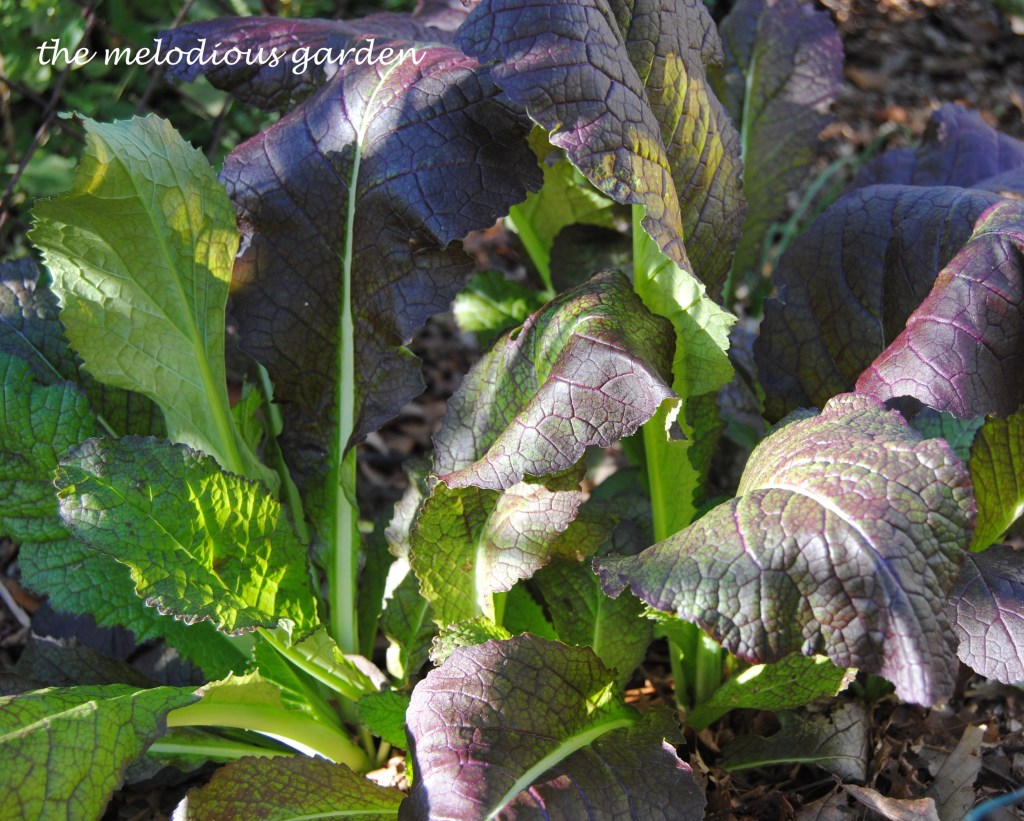
This spring and early summer, many of my noontime meals were entirely from my garden, though the heat of summer and sudden switch from too much rain to not a drop of rain was quick and intense and brutal on the garden. Fall rains have been nicely spaced out and many of the “winter greens” are doing quite well, including the Red Dragon cabbage. (Shown in photo below…)

Red Giant mustard (shown below) is also doing very well. In 2025, I would like to write more about my chronic health issues and what prompted me to switch from ornamental gardening to edible gardening, along with my reasons for growing vibrantly hued vegetables.

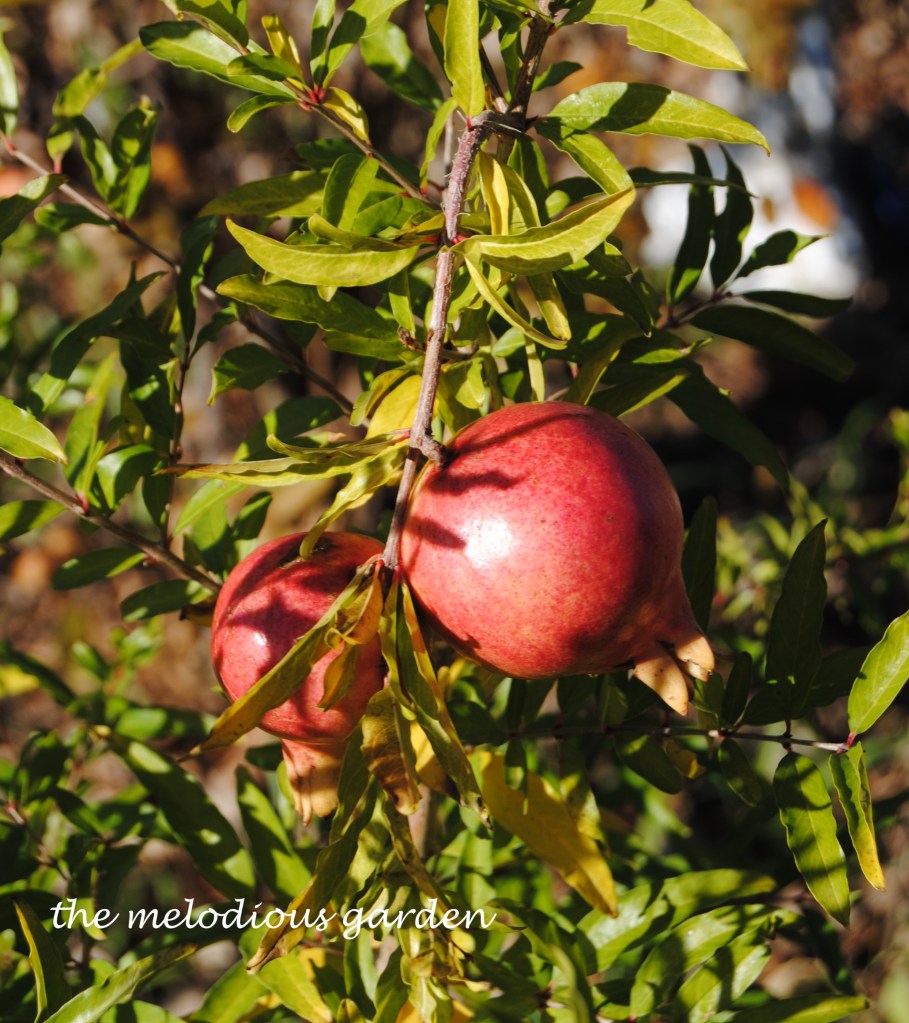
I planted a number of dwarf ornamental pomegranates (shown below) about six years ago when I was in transition – a former ardent rose gardener but not yet a veg and fruit gardener. I have yet to decide what to do about these pomegranates. Yes, they are beautiful! Alas. The fruits are not suitable to eat and they are taking up valuable real estate. I have since planted a number of edible pomegranates, though they are still a few years away from producing a crop.

And on that note – Here’s to a healthy and active new year. May 2025 be filled with many happy days spent in the garden, either hard at work or simply meandering about barefoot. Be well, my gardening friends.

(The first two photographs were taken in January 2024. The third photo was taken in June 2024. The remaining photographs were taken December 30, 2024. All photos taken in my southern Denton County, Texas, garden.)

gardening

November comes and November goes…

November comes and November goes and with it, 2024 is nearing its end.

One frenetic month to go before we usher in a new year, a new beginning, a time when hope springs eternal and the seed catalogs flood the mailbox and the promise of a new gardening year begins again.

November comes
      And November goes,
      With the last red berries
      And the first white snows.
With night coming early,
      And dawn coming late,
      And ice in the bucket
      And frost by the gate.
The fires burn
      And the kettles sing,
      And earth sinks to rest
      Until next spring.
~Elizabeth Coatsworth

Thankfully my North Texas garden hasn’t seen snow yet – or even frost by the gate – as Elizabeth Coatsworth’s poem flows. Our earth never truly sinks to rest as it does it does in colder gardening climates. Winter gardening in this region can be that Lagniappe – that extra little something – Mother Nature’s way of saying, “You made it through another Texas summer! Here is a little extra, your reward, a little something.” Some gardeners retreat inside, happy to curl up with a cup of hot tea and dream of the spring garden… Others are planting collard greens and kale and preparing new garden beds for the seasons ahead. Both are perfectly acceptable. That is the joy of gardening – You do you! Because… She who plants a garden plants happiness.

(Photo above: I am always on the hunt for preowned garden items, whether from estate sales, thrift stores or antique markets. This little plaque came from an estate sale, out of a dusty old greenhouse. Oh, how I wish I knew the gardener! But her spirit lives on now in my garden.)

You Do You may well be my garden motto, though I am quite unsure how to put that in the first person. My garden is unique. Not everyone’s cup of tea. But I am good with that. I garden for my self – both for my physical health and my mental health. This year, I opened my garden for three garden tours, two formal tours and one very informal tour. Each time I had the same apprehension. I know my garden can be… a bit much. But I love it that way. It is free spirited, much like myself. A bit wild around the edges.

Last year, I joined the local garden club, which is still in its very early years of existence. For background: We bought our home 29 years ago, knowing how I wanted to garden. For that reason, we sought out a property tucked away from street view and without an HOA. Our property – and my garden – are not the norm for this area and especially not for this suburban garden club. When I offered my garden as a stop along their progressive supper/garden tour, it was with a disclaimer: My garden was anything but a standard suburban garden! The garden club visited my garden in early May, the final stop of the evening and the ladies lingered over tea and homemade rosemary orange cake. The feedback was all lovely and I do hope that many were encouraged to think outside the box, to have some fun in their own gardens.

A few years after we bought our home, I attended a garden club’s plant sale in a nearby suburb. I loved the club and the gardeners so much that I decided to join, as our suburb was still small at the time and we didn’t yet have a club. This year marks my 25th year as a member of that garden club and the third time I have opened my gardens for a tour.

I have said before that gardeners are a fickle lot when it comes to the weather, so it goes without saying… Between the first garden tour in May and this second garden tour five weeks later, it rained….

And rained.

And rained.

We swung from historic drought to historic flooding rains in a matter of weeks. Our garage flooded for the first time ever. Two days before the June tour, I was up to my ankles in mud, digging a trench along the side of our property, trying to get the water to drain away from the house, in hopes that the main path to the back gardens would dry out enough to make it passable for garden visitors.

As more rain was falling and even more rain was forecast, I spent the day before the tour hauling in mulch and placing a new stepping stone path along the other – slightly higher – side of the house.

With even more rain falling, I decided on Plan C.

I posted a note on the front door: Please come through the house. Don’t worry about tracking in mud. Seriously. Do Not Worry! Mud Happens!

The rain that fell that June morning would be the last that my garden would see until late October. But that June day was glorious. The rain cleared off, the sun came out and I had 80 or so garden club members through my garden.

The third garden tour of the year was quite unexpected and very informal. A neighbor wanted to organize a block party over the Fourth of July weekend and asked if we would mind if it was held outside our home, our property being tucked away at the end of the subdivision and away from vehicular traffic. I had long assumed that most of our neighbors simply put up with me, the eccentric gardener at the end of the street, so I was unprepared for all the requests for garden tours. I didn’t have the chance to reign in the weeds or to tuck in some of the crazy…

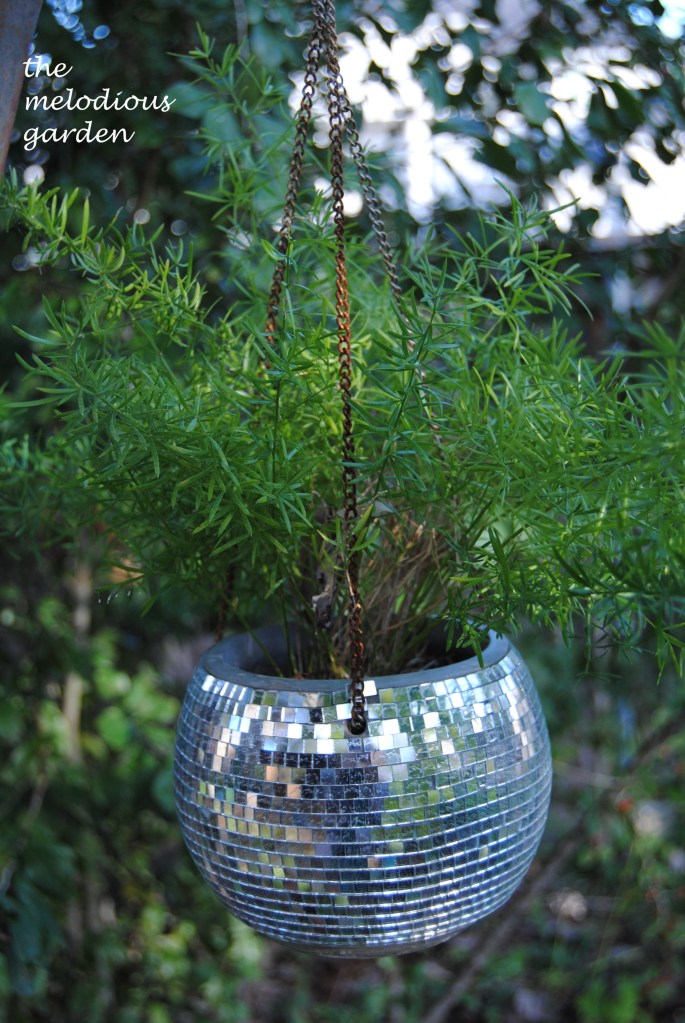
(… because every free spirited garden needs a disco ball!)

But – from what I heard – the gardens lived up to everyone’s expectations of what the rest of my gardens would look like. From the driveway food forest to the (shh… back garden annex…), the neighbors loved what they saw. A little fun, a little wild, packed full of plants of every sort.

I don’t know quite how it happened, but then – in a blink of an eye – that early July day is now… almost December? Summer and autumn went by much too fast.

(Photo above: This morning’s harvest, what may be the last of the summer vegetables from 2024.)

I heard a bird sing
In the dark of December,
A magical thing,
And sweet to remember:
“We are nearer to spring
Than we were in September.”
~Oliver Herford

The first seed catalog arrived in the mail just a few days ago and I have yet to find time to sit down and dream and plot and plan, but I know cold wet days are ahead and seed catalogs always make one feel hopeful and cozy when most needed. The garden walk this morning was good for the soul, a sunny yet crisp cold day, this last day of November.

(Photo above: cypress vine growing over a pepper plant.)

By this time of year, the gardens are late season feral and overgrown, vines scampering and rambling, smothering everything in their path. It makes harvesting an adventure, a real life Jumanji meets Easter egg hunt. I have made a mental note to keep the vines in check next year, to not let them get out of control. But I know… I will see them in full bloom, hummingbirds and butterflies flitting about, and let them be. You do you. And this is me.

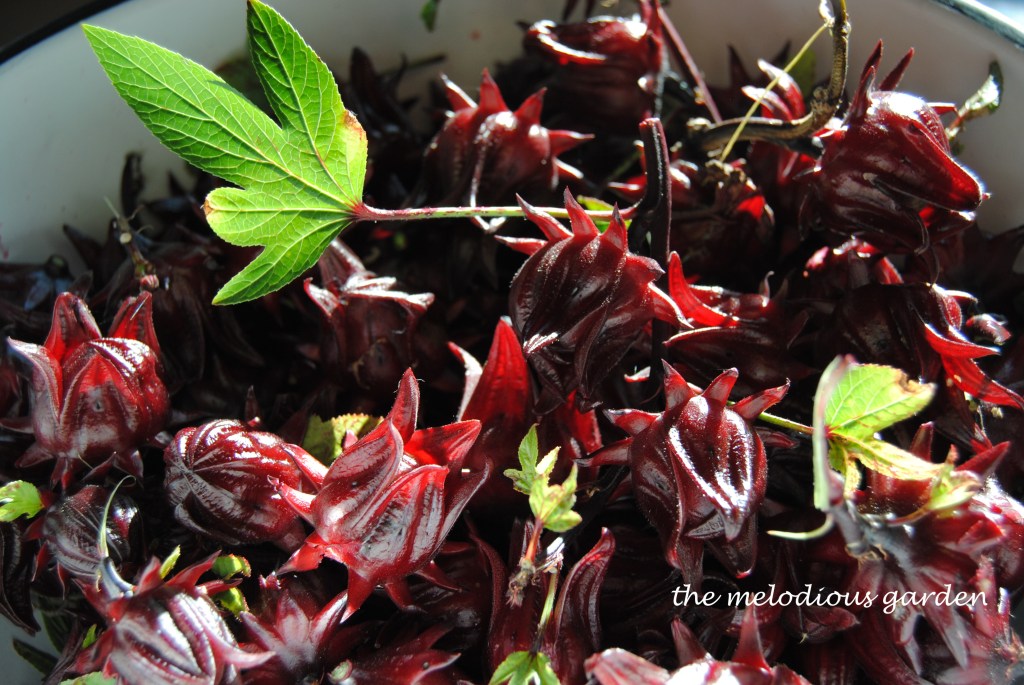
This morning, I harvested roselle hibiscus, which I will dehydrate to use this winter in teas and in dying papers and fabrics.

November is usually such a disagreeable month…as if the year had suddenly found out that she was growing old and could do nothing but weep and fret over it. This year is growing old gracefully…just like a stately old lady who knows she can be charming even with gray hair and wrinkles. We’ve had lovely days and delicious twilights. This last fortnight has been so peaceful…. ~ Lucy Maud Montgomery

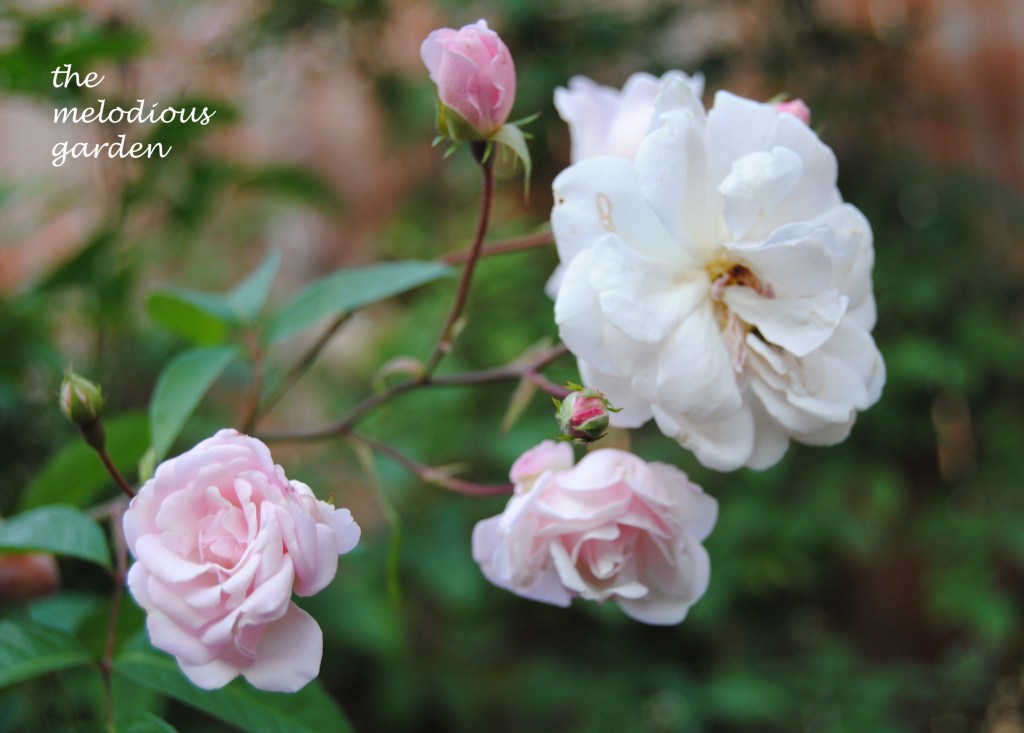
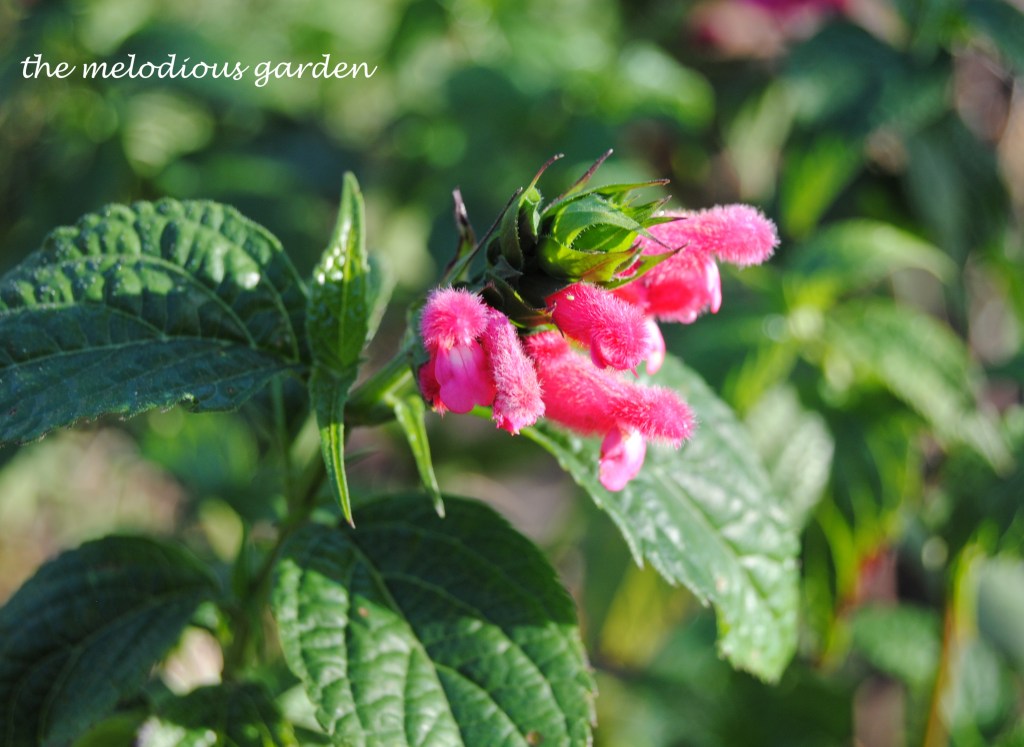
The garden is growing old gracefully this year. We have had cold nights, but have yet to have a freeze. The roses (above) and salvias (below) are still blooming, as if they know December and colder days are coming. But, until then… I am out enjoying the garden, feral as it is.

gardening, nature

Rome wasn’t built in a day

And neither was a garden!

One of the comments I hear most often about my garden is, “You must spend a lot of time in your garden!”

I hear that with both inflections…

Good: This is such a beautiful, peaceful retreat you have created, you must spend a lot of time in it!

And

Not So Good: This looks like a lot of work! You must spend a lot of time out here taking care of it!

My general answer is, Well, Yes and Yes but also… Not so much.

Yes, my garden is a lot of work. For the most part, though, it is very enjoyable work. Gardening soothes my soul and calms my mind. Yes, I do spend a lot of time in the garden, both for pleasure (relaxing) and because the weeds aren’t going to pull themselves. But also – not so much, because what visitors to my garden see is… 28 years of work.

Yes, I often spend entire days outside in the garden, especially in late winter and early spring when I am cutting back the previous year’s flower stalks and resetting my vegetables from cool season crops to summer ones. And I did just spend ten hours weeding and mulching the Saturday before a garden club came to tour my gardens. Where many people might see that as work, I see that as (mostly) pleasurable. The few exceptions are junk trees, briars and trumpet vine, but that is where the ritual morning and/or evening garden stroll comes in handy. Newly sprouted cedar elm or oak trees, for example, are easy to spot and pluck up. Give them a season and they are a chore to remove.

I (even? especially?) enjoy the physical aspect of hauling mulch, as it reminds me to be thankful for the ability to do such tasks. It wasn’t that long ago (four years ago, to be exact) that I didn’t know if I would ever be strong enough to haul mulch again. Our bodies are designed for movement and physical work, something that is often overlooked in today’s world.

But Rome wasn’t built in a day and it takes time for a garden to develop, to come together, to mature and evolve and settle in. I can look back at photographs taken of our property 20… 25… 28 years ago and think, I have put a lot of work in to this garden! But what I see is the evolution of both the garden and the gardener. I don’t now remember the back breaking work of removing so much sod, hauling in bricks and rocks and dump truck loads of compost and mulch. This garden wasn’t built in a day. It grew day by day and season by season until I am now approaching 30 years of living and gardening here. A labor of love perhaps, but a sanctuary for this gardener and for the visitors that flutter through.

Photograph taken May 17, 2024, in my Southern Denton County, Texas, garden.

gardening

…young and hip, I am not… Or am I?

One moment you are young and hip and the next moment you are taking photographs of your vegetables. Or so the meme goes…

I say you can be young and hip *and* still take photographs of your vegetables!

Not that I am either young or hip. Or am I?

I crossed the threshold to “not young” a few years ago. However, I firmly believe, as the saying goes, that “we don’t stop gardening because we grow old, rather we grow old because we stop gardening.” Gardening keeps us all young at heart, as you are never too old to see the magic contained within a simple seed.

I don’t know that I was ever hip. At least not in the conventional sense. But I do think gardeners are quite hip in their own way. We are all gardening our own little piece of this world, doing our own thing, marching to the beat of our own drum, yet all – in a grander sense – beautifying this wonderful planet. And you can’t get any more hip than that, amiright?

Popeye loved his spinach and kale has had its moment of nutritional fame. Chard, however, is often overlooked by today’s chefs and gardeners but it is also a nutritional powerhouse. Chard, shown in the above photograph, has been loving our unusually cool spring days and abundant rainfall. This patch is nearing two years old and it is still tender and flavorful in salads. Chard grows wonderfully in containers and can take a good amount of shade, so it is a leafy green that anyone can grow, even on a small balcony or patio.

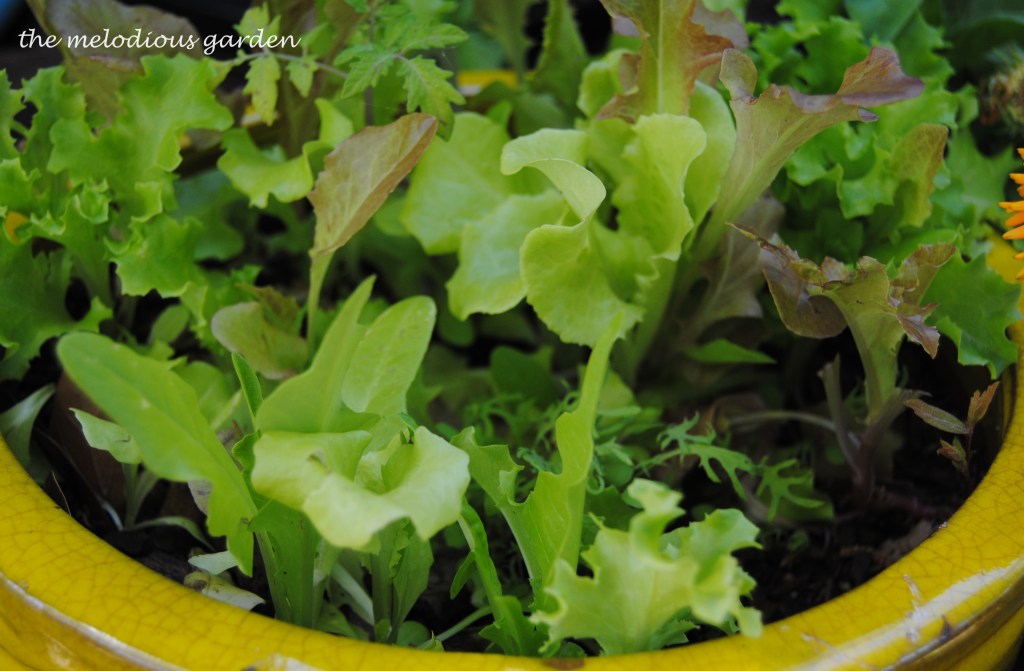
Cut and come again mesclun (lettuce) mix, shown above, is another leafy green that does well in containers and in a semi-shady location. This pot was sown in the fall and has provided a number of cuttings through winter and spring. Alas. It was time for one final harvest, so the container could be planted with summertime crops.

Peas are so beautiful in the garden, from the gorgeous blossoms to the delicate tendrils and the dangling pods. Both the leaves and the pods are edible, making this a two-for-one plant. Peas (shown above and below) are a cool season crop so I know our days together are winding down. I will, however, continue to grow some inside so I can enjoy the leaves as a microgreen.

Only time will tell if I have a fava bean (shown below) harvest this spring or not, as they do not like warmer temperatures. We usually go from winter to extreme summer with barely a pause for moderate spring temperatures, making cool season plantings – such as these fava beans – a gardening gamble. Until then, I will admire the flowers and know that they are providing important nectar for the pollinators.

It is always exciting to see the first tomatoes of the year, after a winter with no homegrown ones. “And we are off to the races!” Which tomato will ripen first? Which tomato will be most productive?

Several of my tomatillos (shown below) are already starting to produce, which makes this homemade salsa loving girl very happy.

Ah. Sunchokes. What to say other than, Yes, they appear do to be a super spreader, as I was warned they could be. Sunchokes, aka Jerusalem artichokes, are a love it or hate it food. I have yet to eat any to know which side I will come down on.

A bit of the backstory to this raised bed, shown below with super spreader sunchokes and rosemary: It is hiding the stump of a very aggressive junk vitex tree that we took down two years ago. I spent an entire Saturday this time last year, sawing and hacking away at the stump, which had refused to die. Then I put the metal ring around the stump, filled it with soil, planted some sunchokes and said, “Battle On! Vitex versus Sunchokes.” Then I spent all summer and fall plucking little bits of the vitex that took my dare and tried to grow. The sunchokes rewarded me with absolutely stunning yellow flowers last year, which the pollinators all loved. This year, no sign of the vitex. But the sunchokes. Oh.My. Do I have sunchokes. So far, the count stands at Vitex 0, Sunchoke 1,001. (Note to self: Move the rosemary before it gets consumed…)

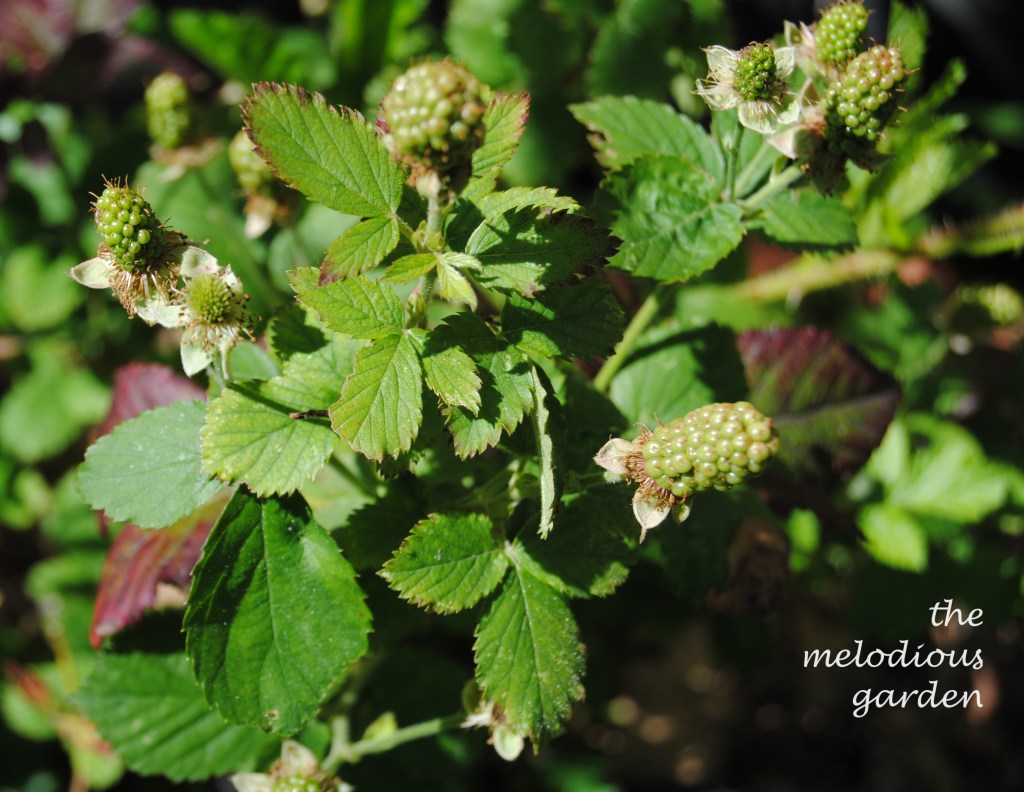
I planted four Baby Cakes blackberries (shown below) two years ago and they have grown so well that I added another three this year. I also have seven vining blackberries, so I am hopeful we will have an abundance of blackberries in another few years.

Bountiful Blue blueberry, shown below, is a new addition to the garden this spring. I am hopeful I can defy our alkaline soils and grow a decent crop of blueberries.

My original gardens were mostly ornamental, with just a few edible crops tucked in here and there. The transition to a mostly food producing garden is now in its third season and things are going very well. I have had zero regrets…even if it means I now take photographs of my vegetables!

Keep Calm and Garden On. And grow some chard. You won’t regret it!

All photographs taken April 12, 2024, in my southern Denton County, Texas, garden.

gardening, vintage

…digging in the dirt…

My garden has always been my sanctuary, the place I retreat to when I need to recharge. When life is simply too much or moving too fast, my garden lifts me up, comforts me. In the words of Wendell Berry, “I come into the peace of wild things” in my garden.

Wandering about my garden the past few days, whispering to the bumblebees, praising the newly sprouted seedlings for pushing through, I am reminded of the quote ~ You can bury a lot of troubles digging in the dirt. This past year has been full of challenges and I have buried a mountain of troubles digging in the dirt.

People often talk about significant events cleaving their lives in half. “Back when we were young and naive” is how I often refer to this time last spring, the time before cancer became part of our normal every day conversations. Our lives have been split in two. By a very kind looking oncologist that bears a remarkable resemblance to Waldo. Last April, we were young and naive. Now we are living on the other side. My husband has bladder cancer, diagnosed last May. Two surgeries and three rounds of treatments so far. We are in this for the long haul. Bladder cancer is extremely recurrent and likes to travel about the body so we are now in a real life game of Whac-A-Mole. My husband has always been the healthy one, the sharp contrast to my chronic health issues. That changed in a blink of an eye. A bit of blood in the urine, nothing too alarming, but enough to warrant additional testing. Yes, you really can bury a mountain of troubles digging in the dirt. My garden has pulled me through this past year.

I have a soft spot in my heart for old wheels. I pick up random lone wheels at estate sales and antique stores, perfect as they are for garden decorations. A circle, with no beginning and no end.

My husband is a hardcore bicyclist. He thinks nothing of working all day and coming home and hopping on his bike and cranking out 60 miles. He loves the adrenaline of the open road, powered only by his own legs and the energy within those two thin wheels. More than a century ago, Dr. K. K. Doty wrote that “A good bicycle, well applied, will cure most ills this flesh is heir to.” While we know a good bicycle won’t cure his bladder cancer, we do know and appreciate that bicycling is – now more than ever – good for his mental and physical health, just as digging in the dirt is good for my mental and physical health.

It has been a long time since I have been able to sit down with my thoughts, my body wanting only to rush, rush, rush and bury more troubles in the dirt and move on away from the events of this past year. “Nothing is so beautiful as spring,” Gerard Manley Hopkins wrote. (Spring, 1877) How true that is! My garden has been rewarding me for all of the troubles I have buried. It is now time to sit and reflect and appreciate the beauty that is unfolding each and every day.

“I love spring anywhere, but if I could choose I would always greet it in the garden.” ~ Ruth Stout

The tall bearded irises have been especially beautiful this week. Most of my irises were purchased many years ago from Argyle Acres, an iris farm in nearby Argyle, Texas. The farm has since closed and their inventory sold to another grower, but pieces of it live on in my garden and in many other gardens in this area.

I am sad to say that the names of the irises have long been lost… as has the name of the clematis below. (I don’t tend to record the names of plants, aside from my fruits and vegetables. I would rather… dig in the dirt… than record the names of plants…)

I often talk about my former garden… It was beautiful. And full of pastel roses and pastel flowers and pastel garden art. The above flowers are remnants of my former garden, a reminder of what once was. My new garden is mostly loud. Bold. A riot of colors. Is it true that women become more radical, more bold, once they hit 50? I don’t know, but my garden sure has!

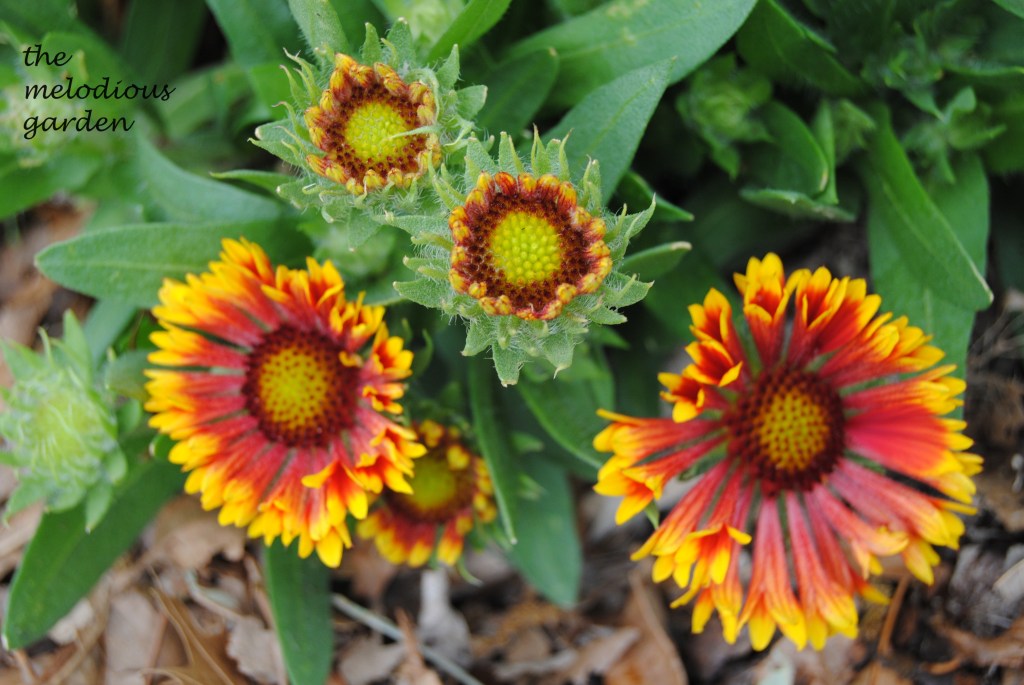
Gaillardia (aka: Blanket flower), native to this region, is a great example of my new color palette. Bold petals in bright gold, transitioning to orange-red as they nears the center. (Shown above)

Vibrant yellow blossoms on yarrow are a lovely contrast to its gray-green foliage. I am hopeful that it will be able to compete with the Malvaviscus arboreus (aka: Turk’s cap). (Shown above)

I am adding a few touches of white to the front gardens, as I like to lay outside under the moon and I love the way white blossoms light up under the moon’s light. I normally shy away from bulbs that do not naturalize in this zone, but am thankful I made an exception for the ranunculus. (Shown above) The bulbs were planted in late winter and have been putting on a show for the past few weeks.

Thank you for taking the time to read my day’s ramblings and, wherever you may be this spring day, I hope that you are able to pause and appreciate the beauty that is spring.

Photographs were taken March 31, 2024, in my southern Denton County, Texas, garden.

gardening

The world is full of wonder

We spend a lot of time looking for happiness when the world right around us is full of wonder. To be alive and walk on the earth is a miracle, and yet most of us are running as if there were some better place to be. ~ Thich Nhat Hanh

Perhaps the best part of gardening is that it forces us to slow down, to stop and smell the roses, to admire the intricate details of a flower, to observe a bee gathering pollen, to watch a butterfly drift and flutter about.

Plains Coreopsis (Coreopsis tinctoria), shown below, has such amazing details. Seeds were purchased from Wildseed Farms and direct sown out in the garden.

Have fun even if it’s not the same kind of fun everyone else is having. ~ C. S. Lewis

My former rose garden was straight out the Steel Magnolias. You know the scene… Where Shelby says her wedding colors are blush and bashful and her mother interjects to say the colors are pink and pink. Yes. My rose garden was pink and pink and the many shades of pink. I knew my garden’s reincarnation would not be. I wanted bold. I wanted big. I wanted bright. I wanted fun. Colorful Fun. I wanted anything but delicate soft pink. Enter: The big and bold daylily.

I’m going to make everything around me beautiful – that will be my life. ~ Elsie de Wolfe

Miss Rumphius by Barbara Cooney was one of our family’s favorite books when our son was just a wee thing. Though he towers over me now, I still pull out the book from time to time and tear up reading its story. Miss Rumphius’ grandfather tells the young child to do something to make the world more beautiful. I think of this story again and again as I wander about my garden. As I sit on my patio and gaze out on the garden while writing this post, I listen to the birds chirping and can say that – in my own humble way – I have done something to make the world more beautiful.
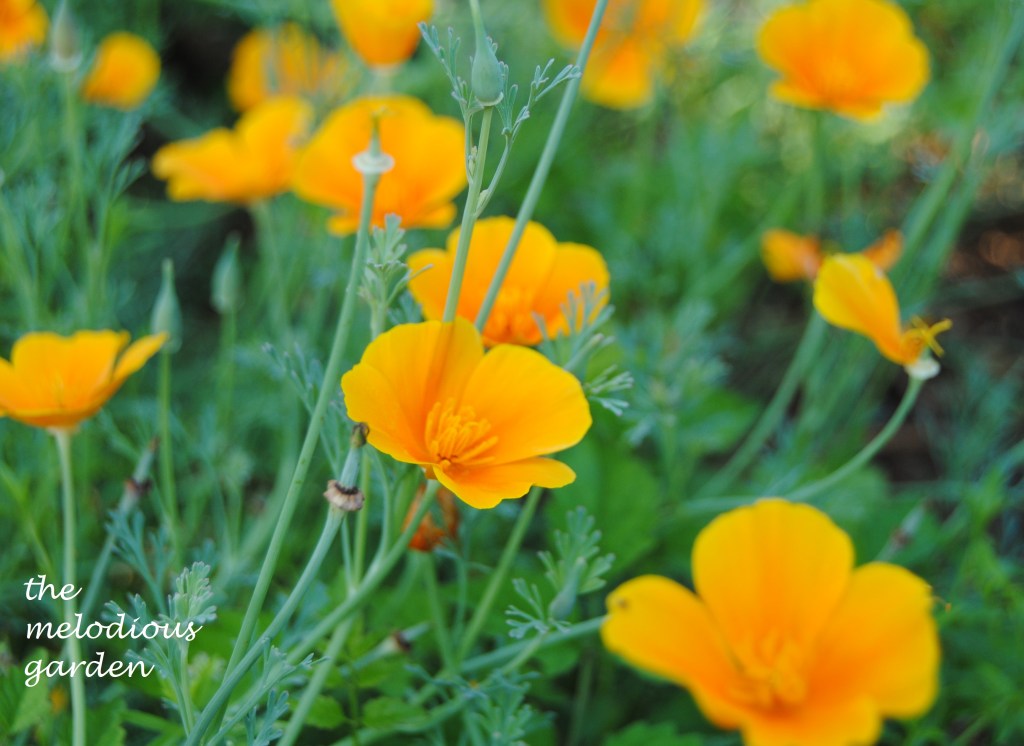
This is my first year growing California poppies (shown below), but hopefully it won’t be my last. They have bloomed steadily for well over a month now, such a cheerful, bright color. Poppy seeds need winter’s cold to break down the hard outer coat, so the seeds were direct sown in the garden in late fall.

meraki (verb) to do something with soul, creativity or love; to leave a piece and essence of yourself in your work.

Gold-wave Coreopsis, shown below, is also from Wildseed Farms. Another winner, one that has won a place in my heart and in my garden.

When you do things from your soul, you feel a river moving in you, a joy. ~ Rumi

In my garden there is a large place for sentiment. My garden of flowers is also my garden of thoughts and dreams. The thoughts grow as freely as the flowers and the dreams are as beautiful. ~ Abram L. Urban

Oh, the thoughts and dreams that go in to the garden, not to mention the sweat and work, always a joy. There are a thousand ways to garden, no one correct right or wrong way. Each gardener charts their own journey, sets out to see their visions come alive. Keep calm, my fellow gardeners, and garden on, growing your thoughts and dreams into botanical poetry.

gardening, nature

What good are bugs? And what good is henbit anyway?!

It’s henbit season here in North Texas. When lines are drawn. Either you are for henbit or you are against henbit. A middle ground is sometimes found. Against henbit in the front yard. For henbit in the back. Where the neighbors can’t see it. We have probably all had that one neighbor at one time or another that would saunter over and give some unsolicited advice on lawncare. Thankfully mine moved away several years ago. I am thinking the couple that bought that house must be for henbit. Or their lawn crew just hasn’t been called out yet. Right now, their front lawn is a blaze of lavender flowers, bees buzzing about. I walked past it earlier today and couldn’t help but smiling, for I know somewhere in the universe, the previous homeowner is cringing and just knows that his once tightly manicured and chemically induced lawn has gone to the bees.

As I was mulling over today’s blog topic, I glanced over at the bookcase that holds many of my gardening books and one book’s title – out of the hundred or so books – jumped out at me. What good are bugs?

My past few posts have focused on the quote “If something is not eating your plants, your garden isn’t part of the ecosystem.” I have highlighted two beautiful butterflies, along with their caterpillar stage and their specific host plants. I think supporting the life cycles of butterflies is something we can all agree on, right? But what about other bugs? Do we have to love them all? And for that matter. What good is henbit anyway?!

What Good Are Bugs? Insects In The Web Of Life, written by Gilbert Waldbauer, may be a heavier read than most people are interested in, but it does a great job explaining exactly why humans need bugs in our lives. (And, thankfully, it can be read in bits and pieces, as that is how I tend to read non-fiction.)

We know – and appreciate – that our food supply is dependent on insects for pollination. But do we stop and appreciate the bugs that are on the clean up crew? The ones that eat and break down dead animals and plants, not to mention animal dung? Without them, the planet would look vastly different than it does. Insects are also important food sources for wildlife further up the food chain. If we eat eggs and/or chicken, than we also need to appreciate that free range chickens are an insect eating machine.

Where does henbit fit in this picture? Henbit starts blooming in mid- to late-winter, a time when very few plants are blooming, yet this is also a time when many insects are venturing out on warm, sunny days, in search of nectar.

Do you remember the old advertisements for lawn chemicals? Chances are the man in the ad is smoking a cigarette or a pipe while applying whatever chemical is being touted. The children and family dog are probably nearby, playing on the lawn, still wet from the chemicals. The wife is likely standing on the patio, wearing high heels and a dress, smiling. Some ideals are hard to break from. Others are easy to kick to the curb. We can look at the old advertisements today and see them as quaint. A different era. Smoking hasn’t been allowed in advertisements since the Nixon administration. But what about the ideal that our lawns must be sprayed with chemicals and devoid of all life except for the desired green grass? When are we going to kick that to the curb?

Thankfully, society is starting to wake up. More and more, we see and hear about people that are planting for pollinators, allowing areas of weeds to bloom, eliminating chemicals, installing native wildlife habitats, the list goes on and on. Imagine if even a quarter of the world did just one or two small things to help wildlife, the changes would ripple out, for we really are intertwined in one giant web of life.

Not convinced on the benefits of henbit? What if I told you it is also edible? And who doesn’t love some free food?! The top growth of henbit (stems, leaves and flowers) can all be eaten and is quite delicious in salads. Wild greens, such as henbit and dandelion, are also high in nutrients.

I have allowed a few of my winter greens to flower, as an added nectar source for the insects. The photograph below shows the lavender blooms of henbit, along with the bright yellow bloom of a winter green. Several types of kale are also shown.
Photograph below, taken today, shows a bee on another winter green I have let go to flower.

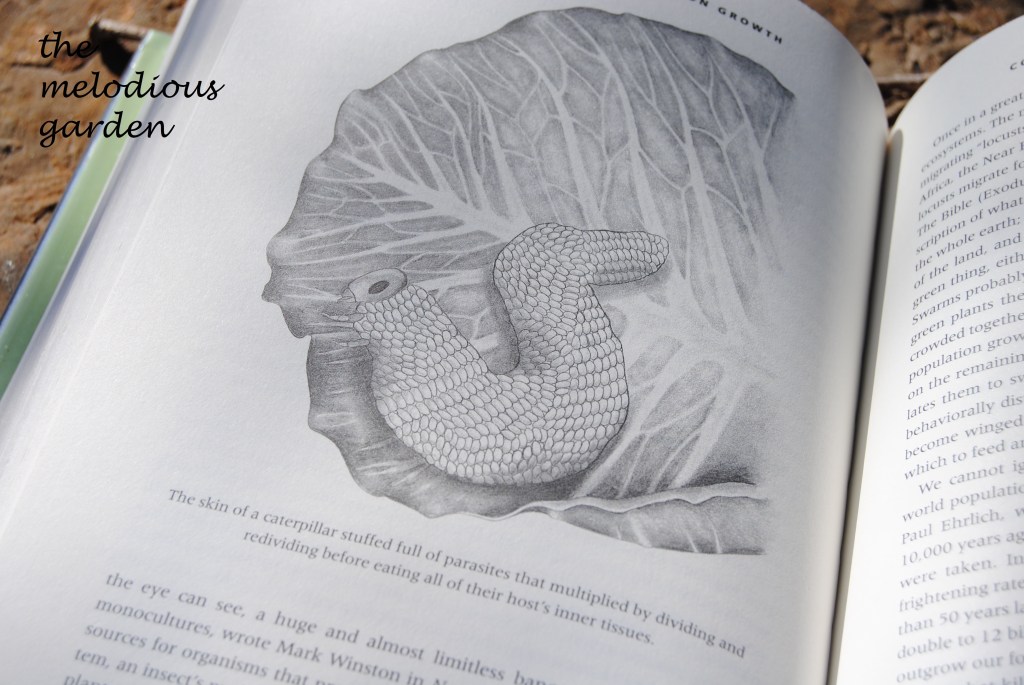
The sketches in the book What Good Are Bugs? are quite adorable…

Keep Calm and Appreciate The Insect World.

Even Parasites.