gardening, vintage

…digging in the dirt…

My garden has always been my sanctuary, the place I retreat to when I need to recharge. When life is simply too much or moving too fast, my garden lifts me up, comforts me. In the words of Wendell Berry, “I come into the peace of wild things” in my garden.

Wandering about my garden the past few days, whispering to the bumblebees, praising the newly sprouted seedlings for pushing through, I am reminded of the quote ~ You can bury a lot of troubles digging in the dirt. This past year has been full of challenges and I have buried a mountain of troubles digging in the dirt.

People often talk about significant events cleaving their lives in half. “Back when we were young and naive” is how I often refer to this time last spring, the time before cancer became part of our normal every day conversations. Our lives have been split in two. By a very kind looking oncologist that bears a remarkable resemblance to Waldo. Last April, we were young and naive. Now we are living on the other side. My husband has bladder cancer, diagnosed last May. Two surgeries and three rounds of treatments so far. We are in this for the long haul. Bladder cancer is extremely recurrent and likes to travel about the body so we are now in a real life game of Whac-A-Mole. My husband has always been the healthy one, the sharp contrast to my chronic health issues. That changed in a blink of an eye. A bit of blood in the urine, nothing too alarming, but enough to warrant additional testing. Yes, you really can bury a mountain of troubles digging in the dirt. My garden has pulled me through this past year.

I have a soft spot in my heart for old wheels. I pick up random lone wheels at estate sales and antique stores, perfect as they are for garden decorations. A circle, with no beginning and no end.

My husband is a hardcore bicyclist. He thinks nothing of working all day and coming home and hopping on his bike and cranking out 60 miles. He loves the adrenaline of the open road, powered only by his own legs and the energy within those two thin wheels. More than a century ago, Dr. K. K. Doty wrote that “A good bicycle, well applied, will cure most ills this flesh is heir to.” While we know a good bicycle won’t cure his bladder cancer, we do know and appreciate that bicycling is – now more than ever – good for his mental and physical health, just as digging in the dirt is good for my mental and physical health.

It has been a long time since I have been able to sit down with my thoughts, my body wanting only to rush, rush, rush and bury more troubles in the dirt and move on away from the events of this past year. “Nothing is so beautiful as spring,” Gerard Manley Hopkins wrote. (Spring, 1877) How true that is! My garden has been rewarding me for all of the troubles I have buried. It is now time to sit and reflect and appreciate the beauty that is unfolding each and every day.

“I love spring anywhere, but if I could choose I would always greet it in the garden.” ~ Ruth Stout

The tall bearded irises have been especially beautiful this week. Most of my irises were purchased many years ago from Argyle Acres, an iris farm in nearby Argyle, Texas. The farm has since closed and their inventory sold to another grower, but pieces of it live on in my garden and in many other gardens in this area.

I am sad to say that the names of the irises have long been lost… as has the name of the clematis below. (I don’t tend to record the names of plants, aside from my fruits and vegetables. I would rather… dig in the dirt… than record the names of plants…)

I often talk about my former garden… It was beautiful. And full of pastel roses and pastel flowers and pastel garden art. The above flowers are remnants of my former garden, a reminder of what once was. My new garden is mostly loud. Bold. A riot of colors. Is it true that women become more radical, more bold, once they hit 50? I don’t know, but my garden sure has!

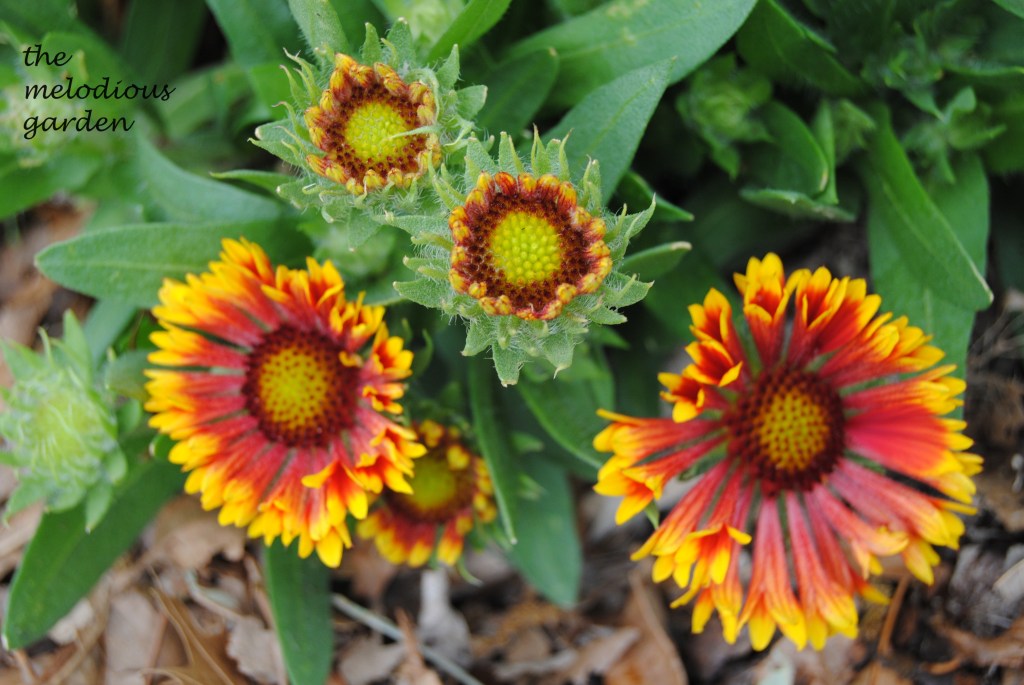
Gaillardia (aka: Blanket flower), native to this region, is a great example of my new color palette. Bold petals in bright gold, transitioning to orange-red as they nears the center. (Shown above)

Vibrant yellow blossoms on yarrow are a lovely contrast to its gray-green foliage. I am hopeful that it will be able to compete with the Malvaviscus arboreus (aka: Turk’s cap). (Shown above)

I am adding a few touches of white to the front gardens, as I like to lay outside under the moon and I love the way white blossoms light up under the moon’s light. I normally shy away from bulbs that do not naturalize in this zone, but am thankful I made an exception for the ranunculus. (Shown above) The bulbs were planted in late winter and have been putting on a show for the past few weeks.

Thank you for taking the time to read my day’s ramblings and, wherever you may be this spring day, I hope that you are able to pause and appreciate the beauty that is spring.

Photographs were taken March 31, 2024, in my southern Denton County, Texas, garden.

gardening

The world is full of wonder

We spend a lot of time looking for happiness when the world right around us is full of wonder. To be alive and walk on the earth is a miracle, and yet most of us are running as if there were some better place to be. ~ Thich Nhat Hanh

Perhaps the best part of gardening is that it forces us to slow down, to stop and smell the roses, to admire the intricate details of a flower, to observe a bee gathering pollen, to watch a butterfly drift and flutter about.

Plains Coreopsis (Coreopsis tinctoria), shown below, has such amazing details. Seeds were purchased from Wildseed Farms and direct sown out in the garden.

Have fun even if it’s not the same kind of fun everyone else is having. ~ C. S. Lewis

My former rose garden was straight out the Steel Magnolias. You know the scene… Where Shelby says her wedding colors are blush and bashful and her mother interjects to say the colors are pink and pink. Yes. My rose garden was pink and pink and the many shades of pink. I knew my garden’s reincarnation would not be. I wanted bold. I wanted big. I wanted bright. I wanted fun. Colorful Fun. I wanted anything but delicate soft pink. Enter: The big and bold daylily.

I’m going to make everything around me beautiful – that will be my life. ~ Elsie de Wolfe

Miss Rumphius by Barbara Cooney was one of our family’s favorite books when our son was just a wee thing. Though he towers over me now, I still pull out the book from time to time and tear up reading its story. Miss Rumphius’ grandfather tells the young child to do something to make the world more beautiful. I think of this story again and again as I wander about my garden. As I sit on my patio and gaze out on the garden while writing this post, I listen to the birds chirping and can say that – in my own humble way – I have done something to make the world more beautiful.

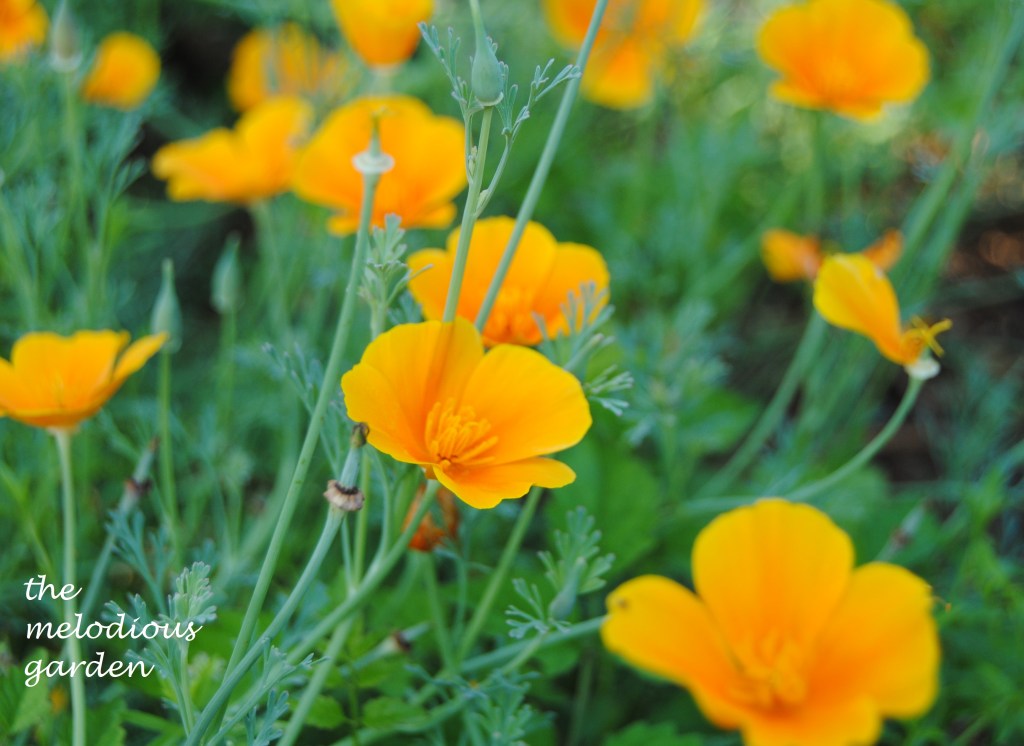
This is my first year growing California poppies (shown below), but hopefully it won’t be my last. They have bloomed steadily for well over a month now, such a cheerful, bright color. Poppy seeds need winter’s cold to break down the hard outer coat, so the seeds were direct sown in the garden in late fall.

meraki (verb) to do something with soul, creativity or love; to leave a piece and essence of yourself in your work.

Gold-wave Coreopsis, shown below, is also from Wildseed Farms. Another winner, one that has won a place in my heart and in my garden.

When you do things from your soul, you feel a river moving in you, a joy. ~ Rumi

In my garden there is a large place for sentiment. My garden of flowers is also my garden of thoughts and dreams. The thoughts grow as freely as the flowers and the dreams are as beautiful. ~ Abram L. Urban

Oh, the thoughts and dreams that go in to the garden, not to mention the sweat and work, always a joy. There are a thousand ways to garden, no one correct right or wrong way. Each gardener charts their own journey, sets out to see their visions come alive. Keep calm, my fellow gardeners, and garden on, growing your thoughts and dreams into botanical poetry.

gardening, nature

What good are bugs? And what good is henbit anyway?!

It’s henbit season here in North Texas. When lines are drawn. Either you are for henbit or you are against henbit. A middle ground is sometimes found. Against henbit in the front yard. For henbit in the back. Where the neighbors can’t see it. We have probably all had that one neighbor at one time or another that would saunter over and give some unsolicited advice on lawncare. Thankfully mine moved away several years ago. I am thinking the couple that bought that house must be for henbit. Or their lawn crew just hasn’t been called out yet. Right now, their front lawn is a blaze of lavender flowers, bees buzzing about. I walked past it earlier today and couldn’t help but smiling, for I know somewhere in the universe, the previous homeowner is cringing and just knows that his once tightly manicured and chemically induced lawn has gone to the bees.

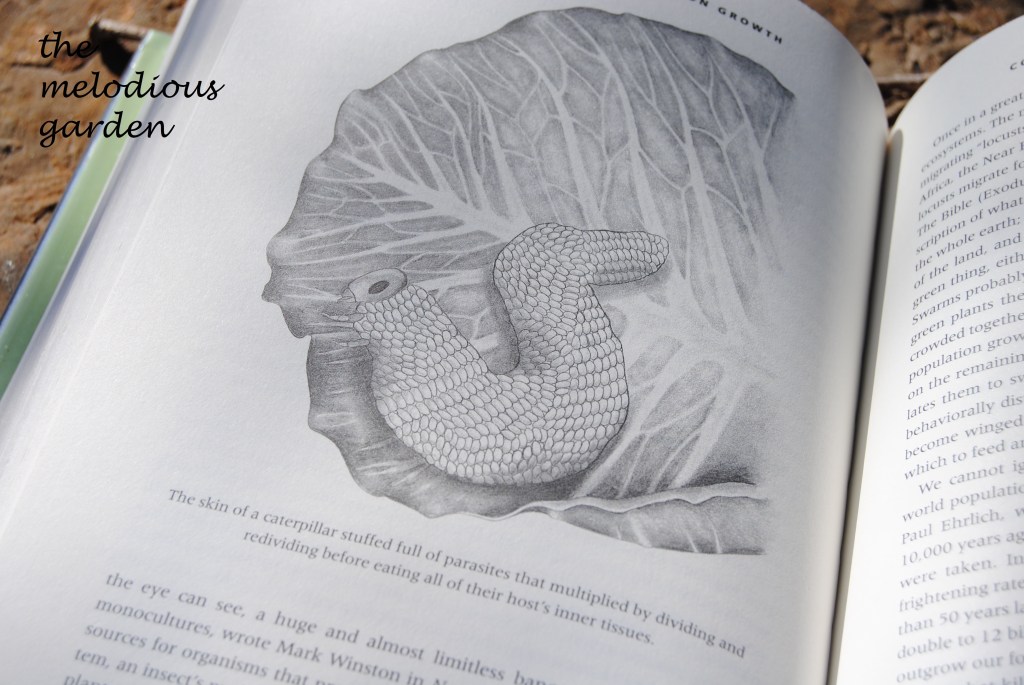
As I was mulling over today’s blog topic, I glanced over at the bookcase that holds many of my gardening books and one book’s title – out of the hundred or so books – jumped out at me. What good are bugs?

My past few posts have focused on the quote “If something is not eating your plants, your garden isn’t part of the ecosystem.” I have highlighted two beautiful butterflies, along with their caterpillar stage and their specific host plants. I think supporting the life cycles of butterflies is something we can all agree on, right? But what about other bugs? Do we have to love them all? And for that matter. What good is henbit anyway?!

What Good Are Bugs? Insects In The Web Of Life, written by Gilbert Waldbauer, may be a heavier read than most people are interested in, but it does a great job explaining exactly why humans need bugs in our lives. (And, thankfully, it can be read in bits and pieces, as that is how I tend to read non-fiction.)

We know – and appreciate – that our food supply is dependent on insects for pollination. But do we stop and appreciate the bugs that are on the clean up crew? The ones that eat and break down dead animals and plants, not to mention animal dung? Without them, the planet would look vastly different than it does. Insects are also important food sources for wildlife further up the food chain. If we eat eggs and/or chicken, than we also need to appreciate that free range chickens are an insect eating machine.

Where does henbit fit in this picture? Henbit starts blooming in mid- to late-winter, a time when very few plants are blooming, yet this is also a time when many insects are venturing out on warm, sunny days, in search of nectar.

Do you remember the old advertisements for lawn chemicals? Chances are the man in the ad is smoking a cigarette or a pipe while applying whatever chemical is being touted. The children and family dog are probably nearby, playing on the lawn, still wet from the chemicals. The wife is likely standing on the patio, wearing high heels and a dress, smiling. Some ideals are hard to break from. Others are easy to kick to the curb. We can look at the old advertisements today and see them as quaint. A different era. Smoking hasn’t been allowed in advertisements since the Nixon administration. But what about the ideal that our lawns must be sprayed with chemicals and devoid of all life except for the desired green grass? When are we going to kick that to the curb?

Thankfully, society is starting to wake up. More and more, we see and hear about people that are planting for pollinators, allowing areas of weeds to bloom, eliminating chemicals, installing native wildlife habitats, the list goes on and on. Imagine if even a quarter of the world did just one or two small things to help wildlife, the changes would ripple out, for we really are intertwined in one giant web of life.

Not convinced on the benefits of henbit? What if I told you it is also edible? And who doesn’t love some free food?! The top growth of henbit (stems, leaves and flowers) can all be eaten and is quite delicious in salads. Wild greens, such as henbit and dandelion, are also high in nutrients.

I have allowed a few of my winter greens to flower, as an added nectar source for the insects. The photograph below shows the lavender blooms of henbit, along with the bright yellow bloom of a winter green. Several types of kale are also shown.

Photograph below, taken today, shows a bee on another winter green I have let go to flower.

The sketches in the book What Good Are Bugs? are quite adorable…

Keep Calm and Appreciate The Insect World.

Even Parasites.