bibliophile

…of golden daffodils

I wandered lonely as a cloud
That floats on high o’er vales and hills,
When all at once I saw a crowd,
A host, of golden daffodils;
Beside the lake, beneath the trees,

Fluttering and dancing in the breeze.

Continuous as the stars that shine
And twinkle on the milky way,
They stretched in never-ending line
Along the margin of a bay:
Ten thousand saw I at a glance,

Tossing their heads in sprightly dance.

The waves beside them danced; but they
Out-did the sparkling waves in glee:
A poet could not but be gay,
In such a jocund company:
I gazed—and gazed—but little thought

What wealth the show to me had brought:

For oft, when on my couch I lie
In vacant or in pensive mood,
They flash upon that inward eye
Which is the bliss of solitude;
And then my heart with pleasure fills,

And dances with the daffodils.

~~~ William Wordsworth
daf
The first daffodil of the season, hearkening in spring in the melodious garden.


bibliophile

The Barefoot Boy

A number of years ago, a group of school children and their mothers visited my garden. One of the mothers sent me a Thank You note after and wrote that my son reminded her of this poem, The Barefoot Boy. I have cherished the poem ever since…

To my own Barefoot Boy:
Always stay little, my little man. Though you now tower over me, please never forget the knowledge learned outside of school. Remember your childhood rich in flowers and trees, humming-birds and honey-bees. Live and laugh, my little man.

el in garden

Blessings on thee, little man,
Barefoot boy, with cheek of tan!
With thy turned-up pantaloons,
And thy merry whistled tunes;
With thy red lip, redder still
Kissed by strawberries on the hill;
With the sunshine on thy face,
Through thy torn brim’s jaunty grace;
From my heart I give thee joy,—
I was once a barefoot boy!
Prince thou art,—the grown-up man
Only is republican.
Let the million-dollared ride!
Barefoot, trudging at his side,
Thou hast more than he can buy
In the reach of ear and eye,—
Outward sunshine, inward joy:
Blessings on thee, barefoot boy!


barefoot at beach
Oh for boyhood’s painless play,
Sleep that wakes in laughing day,
Health that mocks the doctor’s rules,
Knowledge never learned of schools,
Of the wild bee’s morning chase,
Of the wild-flower’s time and place,
Flight of fowl and habitude
Of the tenants of the wood;
How the tortoise bears his shell,
How the woodchuck digs his cell,
And the ground-mole sinks his well;
How the robin feeds her young,
How the oriole’s nest is hung;
Where the whitest lilies blow,
Where the freshest berries grow,
Where the ground-nut trails its vine,
Where the wood-grape’s clusters shine;
Of the black wasp’s cunning way,
Mason of his walls of clay,
And the architectural plans
Of gray hornet artisans!
For, eschewing books and tasks,
Nature answers all he asks;
Hand in hand with her he walks,
Face to face with her he talks,
Part and parcel of her joy,—
Blessings on the barefoot boy!


el outside
Oh for boyhood’s time of June,
Crowding years in one brief moon,
When all things I heard or saw,
Me, their master, waited for.
I was rich in flowers and trees,
Humming-birds and honey-bees;
For my sport the squirrel played,
Plied the snouted mole his spade;
For my taste the blackberry cone
Purpled over hedge and stone;
Laughed the brook for my delight
Through the day and through the night,
Whispering at the garden wall,
Talked with me from fall to fall;
Mine the sand-rimmed pickerel pond,
Mine the walnut slopes beyond,
Mine, on bending orchard trees,
Apples of Hesperides!
Still as my horizon grew,
Larger grew my riches too;
All the world I saw or knew
Seemed a complex Chinese toy,
Fashioned for a barefoot boy!


Oh for festal dainties spread,
Like my bowl of milk and bread;
Pewter spoon and bowl of wood,
On the door-stone, gray and rude!
O’er me, like a regal tent,
Cloudy-ribbed, the sunset bent,
Purple-curtained, fringed with gold,
Looped in many a wind-swung fold;
While for music came the play
Of the pied frogs’ orchestra;
And, to light the noisy choir,
Lit the fly his lamp of fire.
I was monarch: pomp and joy
Waited on the barefoot boy!


Cheerily, then, my little man,
Live and laugh, as boyhood can!
Though the flinty slopes be hard,
Stubble-speared the new-mown sward,
Every morn shall lead thee through
Fresh baptisms of the dew;
Every evening from thy feet
Shall the cool wind kiss the heat:
All too soon these feet must hide
In the prison cells of pride,
Lose the freedom of the sod,
Like a colt’s for work be shod,
Made to tread the mills of toil,
Up and down in ceaseless moil:
Happy if their track be found
Never on forbidden ground;
Happy if they sink not in
Quick and treacherous sands of sin.
Ah! that thou couldst know thy joy,
Ere it passes, barefoot boy!
~~~ By John Greenleaf Whittier

bibliophile, vintage

In the garden I spend my days…

In the garden I spend my days; in my library I spend my nights. My interests are divided between my geraniums and my books. With the flower I am in the present; with the book I am in the past.
~ Alexander Smith, 1863

winnie the pooh

I stumbled across this quote a few days ago and it moved me. I have been reflective of late, now the mother of a teenage boy. As he moves into manhood and I go through our overflowing bookshelves, it hits me hard. All of the great books we have enjoyed over the years. Some I will pass on… Some I will treasure forever, both in my heart and in my home.

winne the pooh 1

Part of the melodious garden’s mission is to pass along the love of literature and share with others the joy of reading great books. In my own way, I am a literary preservationist. I find books without a home and find new homes for them.

poetry for very young

As I sort through our home library and organize and price my books for work, I am struck by how many of the books are duplicates. The books I now seek for my business are often the same books my son loved as a child. Each one a welcome piece of the past. With the flower I am in the present; with the book I am in the past. How wonderful and true that is.

books2

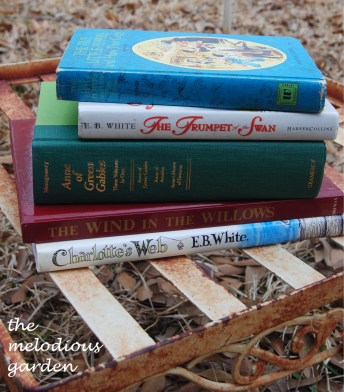
Books featured on this blog post will be available this spring at the melodious garden’s boutique at The Grapevine Antique Market. Please feel free to contact me if you are interested in these treasures today.

bambi

A few of the books pictured:
Bambi – copyright 1950
Five little Peppers and how they grew – copyright 1965
Hans Brinker – copyright 1957
Poems to read to the very young – copyright 1961
Winnie the pooh (before he became the yellow bear we know today!) – copyright 1946
The Pooh Story Book – copyright 1965

books1

gardening

Daylilies 101

Whether a gardener is looking for something to plant in full North Texas sun or a hardy perennial for a semi-neglected spot or an affordable plant for a tight garden budget, my answer is almost always the same. Plant a daylily. Hemerocallis -the perfect solution for so many gardening dilemmas.

There is full sun and then there is North Texas Full Sun and, yes, daylilies will grow – thrive – in sunny locations. They will also tolerate light shade, but do need at least 6-8 hours of sun a day.

Daylilies do well in semi-neglected areas, such as the hell-strip between your front sidewalk and street. Yes, they will flower best if some fertilizer is applied in early spring, but they won’t hold it against you if you don’t get around to it. They absolutely thrive in well tended gardens.

Newer varieties of daylilies are often very expensive, but older ones are available for a song. The plants can be divided every two to three years, which means that daylillies are often passed along from one gardener to another.

Daylilies are one of the easiest perennials to divide. If planted in the ground, simply lift out the clump with a pitchfork and soak the roots in some seaweed water. The roots can be teased apart and each section replanted. If you are buying a larger daylily at the nursery, it can often be divided before planting. Again, just soak the root ball and tease the roots apart. Just know that dividing perennials often stunt the first year’s blooms.

From color to size, there is a daylily for every garden.

Daylilies come in an assortment of colors, from near white to deep purple and bright yellow. They have a long bloom season, as some bloom early, some late, with some reblooming. Some have evergreen or semi-evergreen foliage, even in the coldest of winters, while others go dormant in winter.

Both the bloom size and the bloom height vary widely from one variety to another. Some daylily varieties have blooms as small as four inches across, while other daylily blooms are a jaw-dropping seven inches across. Likewise, some daylily blooms are held just a foot or two above soil level, while others top out at four feet or more!

Daylily terminology can be confusing to new gardeners, so here is a quick rundown on the basics. First off, daylily blooms have three petals and three sepals, alternating.

Bicolor: If the three petals are a different color than the three sepals, it is said to be bicolor. Wilson Yellow daylily, below, is bicolor.

wilsonyellow

Bitone: A daylily with three petals a different shade of the same color of the three sepals is considered bitone.

dayllilyandcomte2

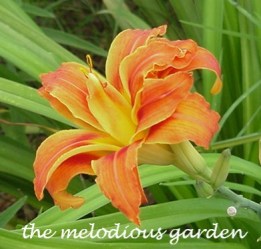
Double: A double daylily has a second set of petals, such as the two daylilies pictured below.

double orange

daylillywithsalviagreggi

Edge: A daylily with an outer ‘edge’ of color that is considerably different than that of the petals and sepals. I wish I had a photo to share. (Note to self: Order a daylily with an edge.)

Eyezone: A daylily has an eyezone if the blossoms have a ring of color just above the throat, such as Bonanza shown below.

bonanza

Spider: A daylily is considered a spider if the petals and sepals are four times longer than their width. Alas, I don’t have any personal photos of a spider daylily, but trust me when I say: Spider daylilies are amazingly exotic and always a showstopper.

A few additional daylily photos from my garden over the years:

Rosie Meyer

rosie meyer

White Select

whiteselect

Lavender Blush (with our native winecup)

lavenderblushwinecups

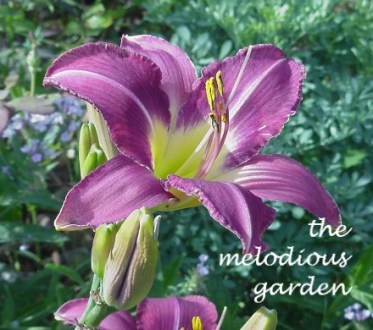
Mountain Violet

mountain violet

Anxious to plant daylilies? So am I! I have used the same online vendor (Oakes Daylilies) for years because their quality and selection is amazing. (I will post photos of my shipment.) Local nurseries will be receiving spring shipments of daylilies in the next month or two, though selection is often limited.

herbal fare

Cheddar Dill Puffs

If at first you don’t succeed – try, try again. So it goes with dill and me.

I can grow fennel, which is botanically related to dill though miles apart in flavor. I try, try again with dill, which is how it sometimes goes with gardening. As with real estate, gardening is all about location location, location. Until I find dill’s perfect location, I will resort to buying fresh dill at the grocery store.

Fennel growing in my southern Denton county garden in January, despite the record cold:

fennel

Cheddar Dill Puffs

Ingredients:
1 cup water
1/2 cup (1 stick) unsalted butter
1/2 teaspoon salt
1 cup all-purpose flour (I used King Arthur’s gluten free flour)
4 large eggs
1 1/2 cup finely grated cheddar cheese
2 tablespoons fresh dill, finely chopped

Preheat oven to 375 degrees.

In a heavy saucepan over medium heat, cook the water, butter and salt until the butter melts. Stir to combine. Add flour all at once, stirring vigorously about two minutes. The mixture will start to come together and pull away from the sides of the saucepan. Remove from heat and cool slightly.

Add eggs, one at a time, beating well after each addition. The batter will separate, then smooth out after each egg is added to the mixture.

Stir in cheese and dill.

Line two baking sheets with parchment paper. Drop the batter on prepared baking sheets by spoonfuls, about one inch apart. Bake about 25-30 minutes or until the cheddar puffs are golden brown.

Makes around 22 cheddar puffs.

dill cheddar puffs

gardening

A Red, Red Rose

Valentine’s Day is exactly a week away. If you are a gardener in North Texas, that can mean only one thing: It is time to prune the roses! That is, assuming you have roses left after Rose Rosette Virus spread throughout the land… Myself, I have just a handful left, down from the 100+ antique roses I had just a few short years ago. RRV was brutal in my Denton county garden.

One of the few roses I have remaining is Thomas Affleck, an intense pink rose with abundant hips. This rose was bred at The Antique Rose Emporium in Brenham, Texas, and named after a Texas nurseryman. I have no idea why this rose was spared when all the roses in the same flower bed were hit with RRV. It was the newest rose, not two years in the ground. Perhaps it was protected by the larger plantings around it.  Perhaps it will prove to be hardier than the norm. Time will tell as RRV is still abundant in the area.

One long-time rose gardener in North Texas says that he will continue to grow roses, even if he has to treat them as annuals. I admire his perspective and tenacity, as I miss my roses. But I am not yet ready to dive back into roses. Time marches on and so does the garden. I am expanding my herbs, adding in more Texas natives and planting more for the bees and butterflies.

If you are in North Texas and surrounded by RRV, it is wise to practice safe pruning. Don’t prune on an overly windy day. Disinfect your pruners between roses. Immediately bag all rose clippings. Clean up any rose debris around the base of your plants before adding fresh mulch. Remove any affected roses immediately. Do not listen to false reports that RRV can be treated. As much as I wish it could, there is no proven method at this time for saving roses once they are affected.

If you have a gardener and they prune your roses, please do us all a favor: Make them bag the pruned rose clippings! Do not let them drive off your property with the clippings tied down in a trailer bed, where the wind can further spread the mites that carry RRV.

If you are adding roses to your garden this season, please shop wisely. Skip over Knockout roses, which were mass bred and over planted. Shop your local independent nurseries that carry roses from reputable growers. Space your roses a few feet apart so the mites cannot travel from one plant to another.

——

A midwinter arrangement of greenery, including rose hips from Thomas Affleck and yaupon holly berries:

valentines greenery

A Red, Red Rose by Robert Burns

O my Luve is like a red, red rose
   That’s newly sprung in June;
O my Luve is like the melody
   That’s sweetly played in tune.
So fair art thou, my bonnie lass,
   So deep in luve am I;
And I will luve thee still, my dear,
   Till a’ the seas gang dry.
Till a’ the seas gang dry, my dear,
   And the rocks melt wi’ the sun;
I will love thee still, my dear,
   While the sands o’ life shall run.
And fare thee weel, my only luve!
   And fare thee weel awhile!
And I will come again, my luve,
   Though it were ten thousand mile.


herbal fare

Lavender lemonade

While I have long cooked with a variety of herbs, I am relatively new to utilizing lavender. It wasn’t until I tasted a lavender cheddar cheese last year that I became intrigued with cooking and baking with lavender. This recipe is one of my new favorite drinks.

Lavender lemonade
Lavender mixture:
Bring 2 cups water with 1/2 cup sugar to a low boil, whisking until sugar is dissolved. Add 1/4 cup honey and 3 tablespoons dried culinary lavender. Cover and let steep 15 minutes.
Strain lavender mixture, pressing down on the lavender to release more of its essence.
In a large pitcher, combine lavender water with 2 cups lemon juice and 4 cups water.

lemons

Chill at least two hours and serve over ice. Garnish with lemon slices, if desired.

Serves eight. (This lemonade goes wonderfully with lavender macarons, pictured above.)
This recipe can easily be cut in half.

herbal fare

Cranberry Mint Green Tea

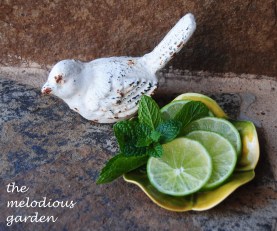
lime and mint picture

Cranberry Mint Green Tea, iced

Bring 2 cups water to a low boil. Add 2 green tea bags and let steep ten minutes. Remove tea bags and chill tea, at least one hour.

Meanwhile, place 1/4 cup frozen cranberries in a bowl with 2 chopped mint springs and juice from two limes. Sprinkle with 1 tablespoon sugar.

When ready to serve, mash cranberry mixture until berries are popped and mint leaves well crushed. Strain mixture into cold tea.

Serve over ice and garnish with mint leaves and lime slices.

Serves two.

cranberry green tea

gardening

Early Spring

Harshness vanished. A sudden softness
has replaced the meadows’ wintry grey.
Little rivulets of water changed
their singing accents. Tendernesses,

hesitantly, reach toward the earth
from space, and country lanes are showing
these unexpected subtle risings
that find expression in the empty trees.

By Rainer Maria Rilke


Winter was brutal in North Texas this year, with some of the coldest and driest weather we have experienced in years. But signs of spring are now popping up – subtle risings of warmer weather. The winter’s harshness has vanished. For now at least. The wintery grey is turning a lush green. Oh, we will have more winter to come. Our average last freeze date is March 12 and Mother Nature can be rough on us gardeners. An early spring often means one last late cold snap, a freeze so late it reminds gardeners of how mathematical averages are calculated. It is not unheard of for North Texas to have snow on Easter, after all. But – for today – I am enjoying the bright blue sky and the soft greens of an early spring.

Spring bulbs emerging

bulbs

Fennel putting on new growth

fennel

Salad burnet, a wonderful evergreen herb

salad burnet

Hellebores, or Lenten Rose, will be blooming soon

hellebores

Rosemary, blooming

rosemary blooming

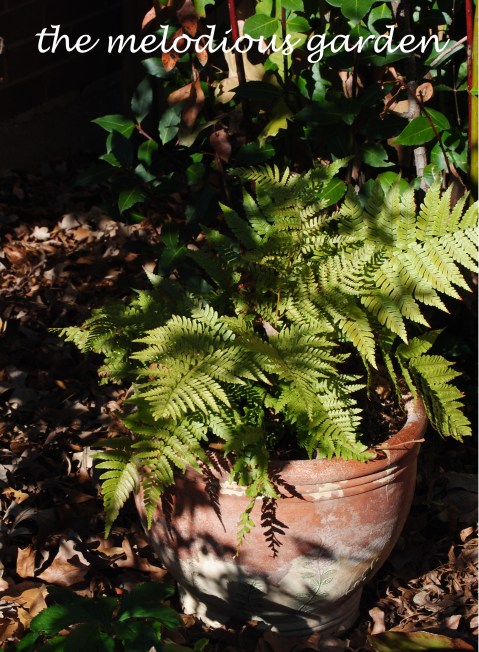
An evergreen fern, nestled away in a shady spot

fern