gardening

In Gratitude…

We can only be said to be alive in those moments when our hearts are conscious of our treasure. ~Thornton Wilder

I have spent much of this year trying to get my proverbial ducks in a row. “I just can’t get my head in the game,” I have muttered more times that I would care to admit.

My father passed away from skin cancer in mid-March, while my husband was midway through a round of bladder cancer treatments. Our flight to Omaha was canceled, as the Midwest was forecast to receive a blizzard. And receive a blizzard they did! We ended up driving north, in to the blizzard and through the blizzard, to make it to my father’s funeral. Bladder cancer treatments and long car rides do not go together. Add in the swirling, blinding snow and fierce winds and… Well, that is one road trip we will never forget, try as we might. I do firmly blame cite that day as to why… I just can’t get my head in the game. It is November? Already? How? When did it get so late? Where are my ducks? Not in a row! Is this grief? Or just wayward ducks? But here we are. Somehow. Thanksgiving Eve.

Despite all that, I do have much to be thankful for this year. In no particular order…

This year, I am extremely thankful for my husband’s health. We found out in July that he is NED – No evidence of disease. Yes, we are currently living in this weird gray area of “not actively a cancer patient” and trying to figure out what our new normal looks like, as we float between scans and cystoscopies. Bladder cancer is one of the most recurrent of cancers, and it is a cancer that often moves about the body, but for today we are thankful. NED. We will take it. The urology oncology department at UT-Southwestern is wonderful and we are so thankful to live near such an outstanding medical facility. My husband is a hard-core cyclist and is currently 650 miles shy of hitting his goal of biking 7,500 miles this year. I am thankful for his biking, as it is good for his body and his soul. It is also a great equalizer. He has his bike. I have my garden. I don’t say anything about how much time he bikes. He doesn’t say too much about how much money I spend on the garden. It’s all equal.

I cannot count my blessings without including my most precious one, my son. He was born premature via an emergency c-section due to HELLP Syndrome. We planted a Chinkapin Oak shortly after he came home from NICU and they have grown up together. (Both shown in photograph below) In a blink of an eye, they both now tower over me. Our son received his master’s degree in May of this year and is – drumroll, please – employed in his career field! The days were long, but the years were too short… We are forever thankful for the medical care we received before, during and after his birth.

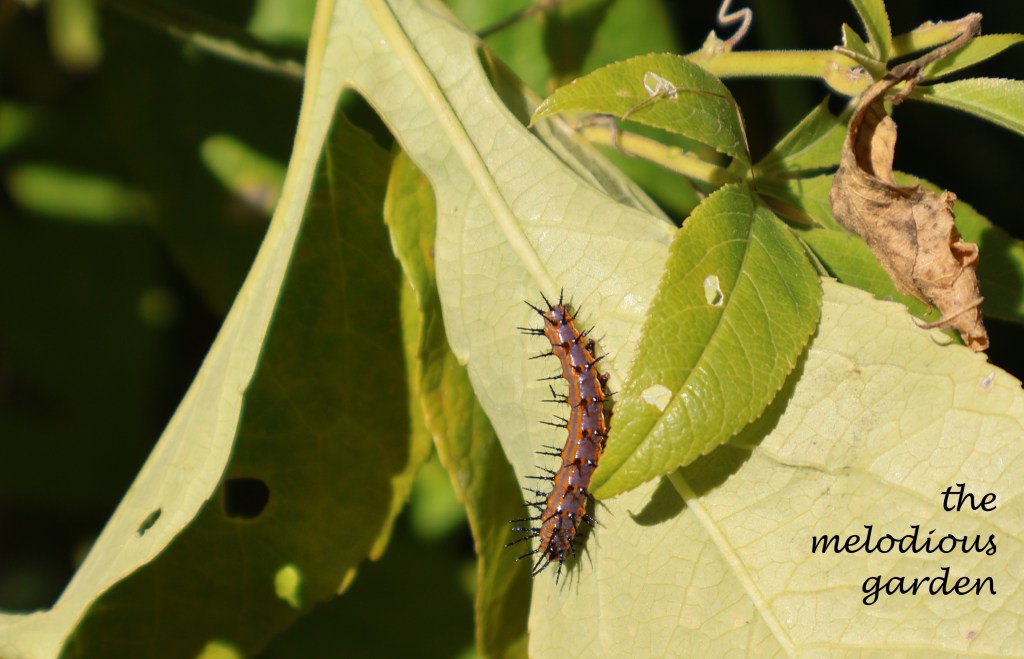
This Thanksgiving week, I am thankful for my garden, for the joy it brings to my life, for the food it provides my body, for the healing energy it gives my soul. I am thankful for the wildlife that pass our way, such as the gulf fritillary caterpillar I spied this Thanksgiving Eve day. (Photograph below)

I am thankful for the rain and the sunshine that enables the garden to grow, such as the garlic that is already several inches tall after just a week in the ground. (Photograph below) I am thankful for my own health, as my body continues to play “Whack-A-Mole” with various ailments. This year, it has been my right shoulder and bicep, surgically repaired in late August. I am extremely thankful that I have been able to resume gardening this fall. (And very, very thankful that my husband took care of my garden while I was recovering from surgery!)

…all which we behold is full of blessings… ~ William Wordsworth

Notable harvests this year include: Our first tastes of loquats! Heavenly! And persimmons! Oh My. (Loquat shown in photograph below.)

One should never count their loquats before they ripen, but my Christmas loquat is currently blooming and I am ever so hopeful that I will get a good harvest next spring. As loquats bloom during the winter months, mine resides in a large container which comes in to the garage during freezing weather.

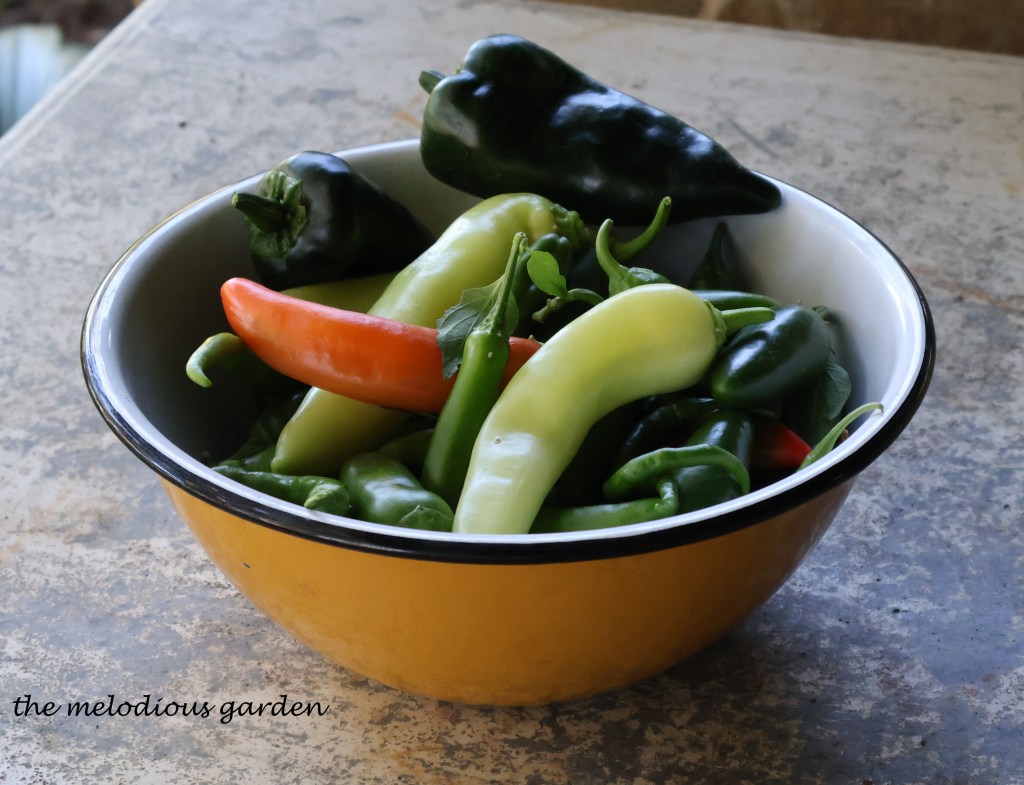
It has been another wonderful year for hot peppers. Here it is, late November, and I still have Tabasco peppers growing and soaking up the sunshine. (Photograph below)

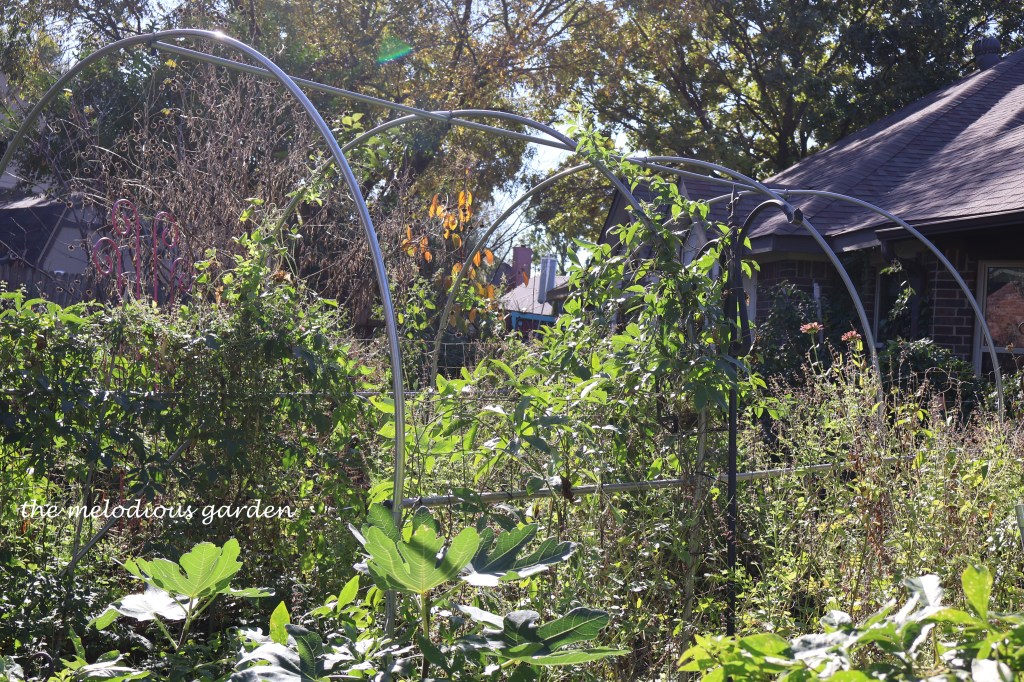
I added seven new raised beds, plus a poly tunnel, early in 2025. I have hopes that those will be dedicated to vegetable production, otherwise I tend to let the flowers roam a bit too freely and crowd out the veg. This year was not a good test of that strategy due to the above mentioned “Can’t get my head in the game,” coupled with being sidelined from gardening while my shoulder and bicep recovered. The poly tunnel (currently minus its poly covering) is comically overgrown at the moment! (Photograph below) But – as I promised my tomato cages, when I stacked them up prior to my surgery: Here’s to a healthy and productive 2026!

In addition to the overgrown poly tunnel, I have lost more than one pathway, overtaken now by salvia coccinia. (Photograph below) Yes, I have my work cut out for me, reigning the garden back in. But I am thankful for free spirited reseeding flowers, such as this salvia, and the whimsy they bring as they pop up here and there.

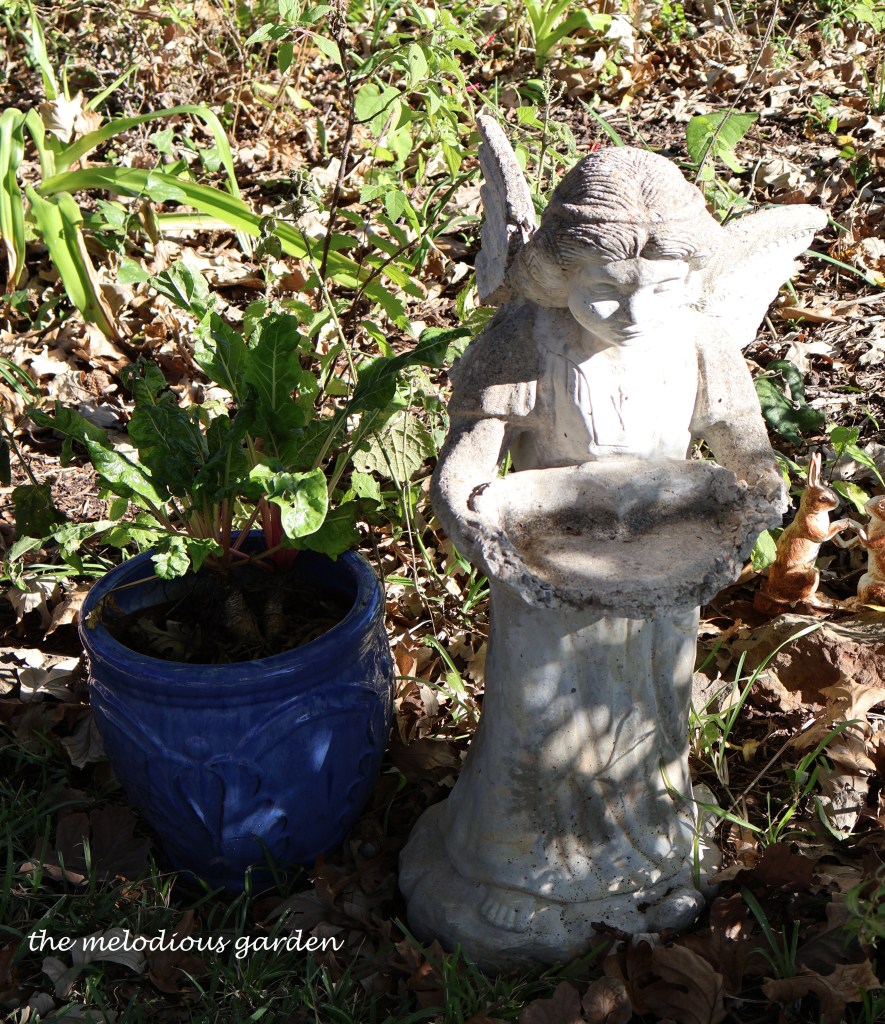
It is perhaps odd to be thankful for garden art, but that is part of what makes a garden – well – a garden. The statuary. The decorations. Those unique touches. The stories and memories behind each piece, collected over the years. This angel (shown below) came to my garden early in the year, a free piece listed on our local “buy nothing” group. Yes, the bowl and a wing is broken, but – to me – that is what makes her so charming. I should mention here that she weighs in at a hefty 200-some-odd pounds and was a beast for me to get loaded in to my truck by myself. I am (on most days) thankful for my personal trainer. Without him, I wouldn’t push myself to lift such heavy weights which directly translated to being able to load this beast of an angel.

For gratitude not merely stands alone at the head of all the virtues, but is even mother of all the rest. ~ Cicero

I am ever thankful for family and friends, food on the table and a warm place to rest my head at night. For good books and chocolate. …to be continued… Until then, Keep calm and garden on!

(The loquat photograph was taken in April of this year. The remaining photographs were taken today, November 26th, on Thanksgiving Eve day, in my southern Denton County, Texas, garden.)

gardening

Back in the saddle again…

The rollercoaster which is my life decided it was time to fly off a cliff. Or so it has felt like the past few months.

Last autumn, I took a hard kersplat while training for a 10k run. (Otherwise known as: I took a fall last fall. Autumn and kersplat sound much better, amiright? But I digress…) Life being what it is, it wasn’t until June that I decided to confront the nagging pain and discomfort in my right shoulder, a result of landing hard on my bent arm last autumn. And – wouldn’t you know it – I had a complete tear in the rotator cuff, as well as a torn bicep, and. Hello, Cliff. Time to take flight.

Two months ago, I had surgery to repair both tears and – if you aren’t familiar with post rotator cuff surgery – consider yourself very, very fortunate. Six weeks in the bulkiest, hottest, most uncomfortable contraption ever invented. Yes, they call it an “abductor shoulder sling.” I prefer to call it… er… I will keep this G rated. I will just say that at my six week post-op appointment, I told the orthopedic surgeon that I had a gallon of gasoline and a metal trash in my truck and I planned to burn that… er… sling… in his parking lot, if he wanted to join me for the bonfire. He advised me to throw the sling in the attic “as insurance that I will never ever need it again – Murphy’s Law – as soon as one gets rid of it, they will need it again.” So off to the attic the sling went… I am not one to tempt Fate nor Murphy.

And what does all of that have to do with gardening and being Back in the Saddle Again?

Well, my garden assistant – otherwise known as The Husband – the one who had dutifully kept my garden watered through the hottest part of a Texas summer while I was confined to the above mentioned sling – had been telling me for the past week that I had a lot of peppers that needed to be picked. Yes, yes, I knew that. But I am in what the physical therapist calls, “The Danger Zone.” I am out of the sling but not out of the woods and free to roam about quite yet. My garden strolls have been limited to just that. Strolls. On paths. No actual gardening. Ah. But Sunday, while The Husband, otherwise known as The Enforcer Of Shoulder Rehab Rules, was away running errands, I decided those peppers weren’t going to pick themselves, so off to the garden I went!

Ah! I am ridin’ the range again! Back in the saddle, I am!

It will be slow and steady for quite a while yet but I cannot even begin to tell you how glorious it felt to get some dirt under my fingernails.

And. About those peppers!

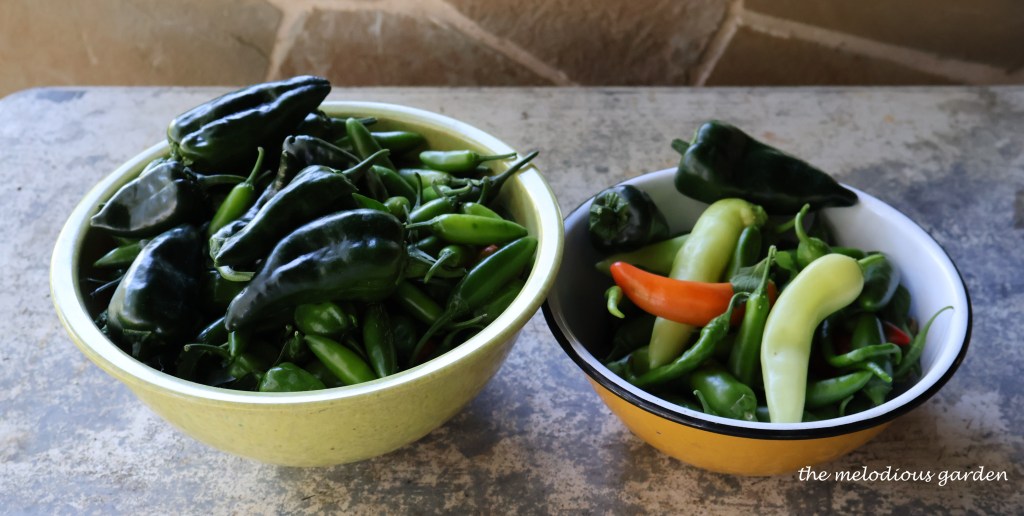
I picked a bowl.

And then needed another bowl?!

Yes. The Husband was right. (Sh… Don’t tell him I said that! Our secret, okay?)

I Had Some Peppers To Pick!

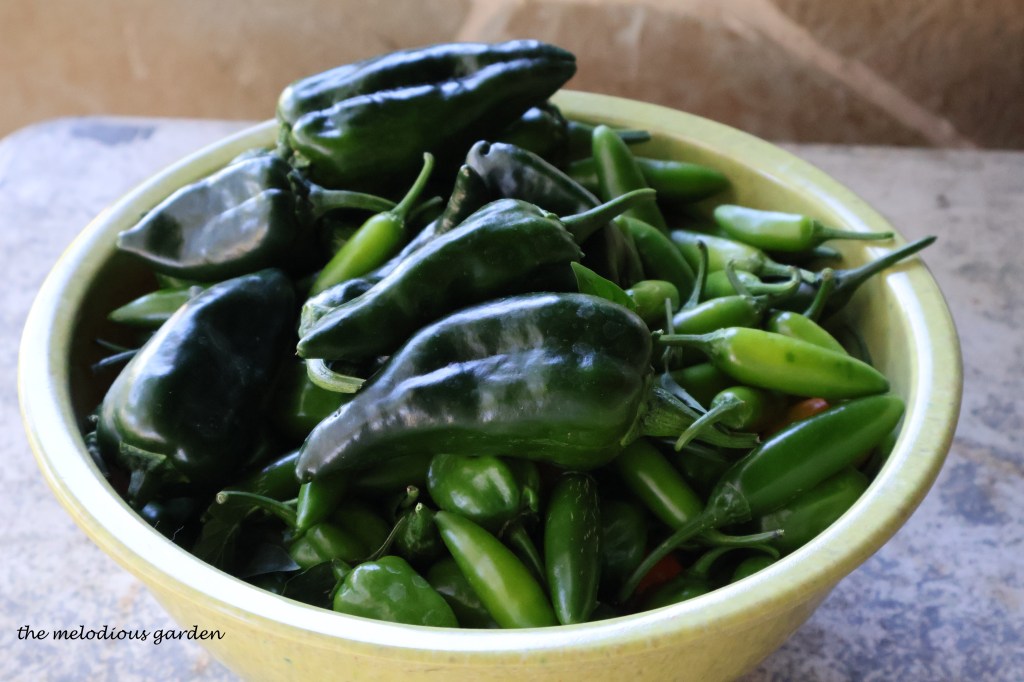
Two bowls worth of peppers! Not too shabby considering the garden had run feral for two months.

Some of the poblano peppers went straight in to supper that night as tamale stuffed peppers, which was the first time making that recipe and it will be back on the menu again soon. Some of the peppers are too wickedly hot (ie: 45 minutes after I tasted and spit out one of them, I was beginning to feel my lips again…) Those will most likely be given to a neighbor who likes him some hot peppers. Some of the peppers are destined for the dehydrator, as I purchased one last summer after I realized I can make my own chimichurri seasoning.

I am now anxious to get some winter veg planted, though I will need to clear some garden space first as the passionvine, in my absence, may have tried to outperform kudzu as fastest growing vine in the south. That task will need to wait a while, though, as the fritillary butterflies have been all aflutter the past few days. In the meantime, I will wander the garden a bit more now and dream of better gardening days ahead. And dream of once again having two strong sturdy shoulders.

Keep calm and garden on and take care of your body and each other.

gardening, nature

Spring flew swiftly by…

“Now is it as if Spring had never been,
And Winter but a memory and dream,
Here where the Summer stands, her lap of green
Heaped high with bloom and beam…” ~ Madison Julius Cawein

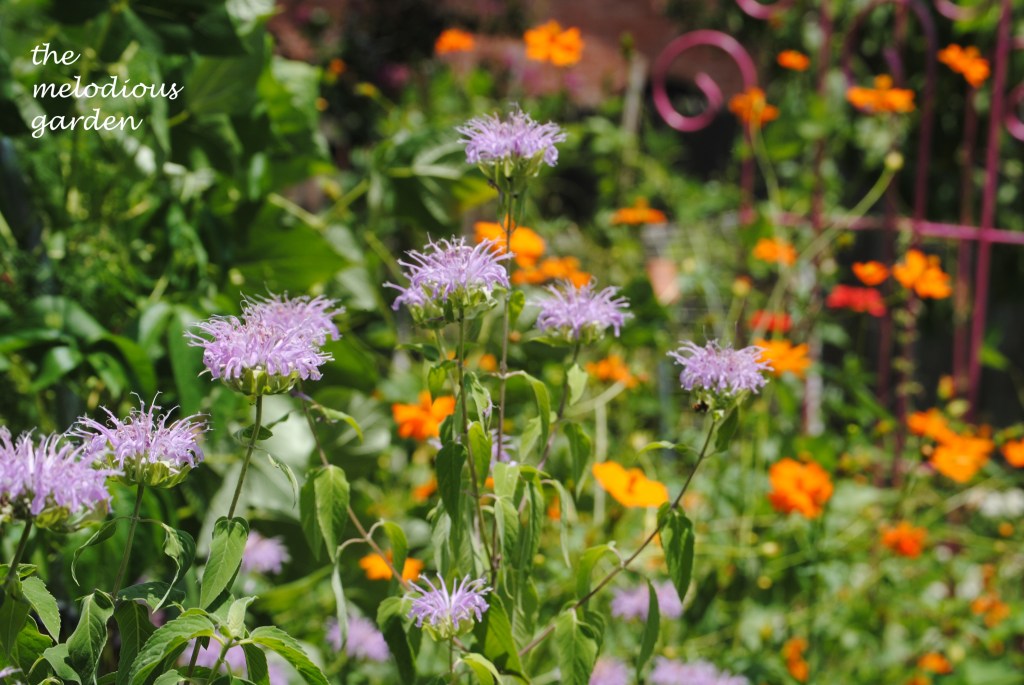
Spring came and went in a blink of an eye and somehow it is July already, the midpoint of the calendar year. The garden is indeed heaped high in bloom – daylilies, hibiscus and coneflowers, oh my! Such a riot of colors! Sometimes color combinations in my garden are planned. Other times, they are quite accidental, as is the case of the lavender Monarda fistulosa (bee balm) and the bright orange of Bright Lights Cosmos. (Shown below.)

Thomas Edison is reported to have only kept a personal diary for a few short days while on a vacation in 1885, but one of his few entries is perfectly poetic:

Arose early, went out to flirt with the flowers.

I feel much the same way each morning. What a delight it is to stroll the garden, camera in hand, and flirt with the day’s flowers and whisper a soft “Hello” to the bees buzzing about.

The hardy hibiscus, with their long pistil and ample supply of pollen, lures in bumblebees galore. (Shown above) Bumblebees are quite territorial and it is not uncommon to witness a rumble and a tumble as two fight over their garden space. “Possession is nine-tenths of the law” clearly does not apply to pollen and bumblebees!

“Nature is always beautiful to those who always look for beauty in her.” ~ The Harvest of a Quiet Eye: Leisure Thoughts for Busy Lives by John Richard Vernon

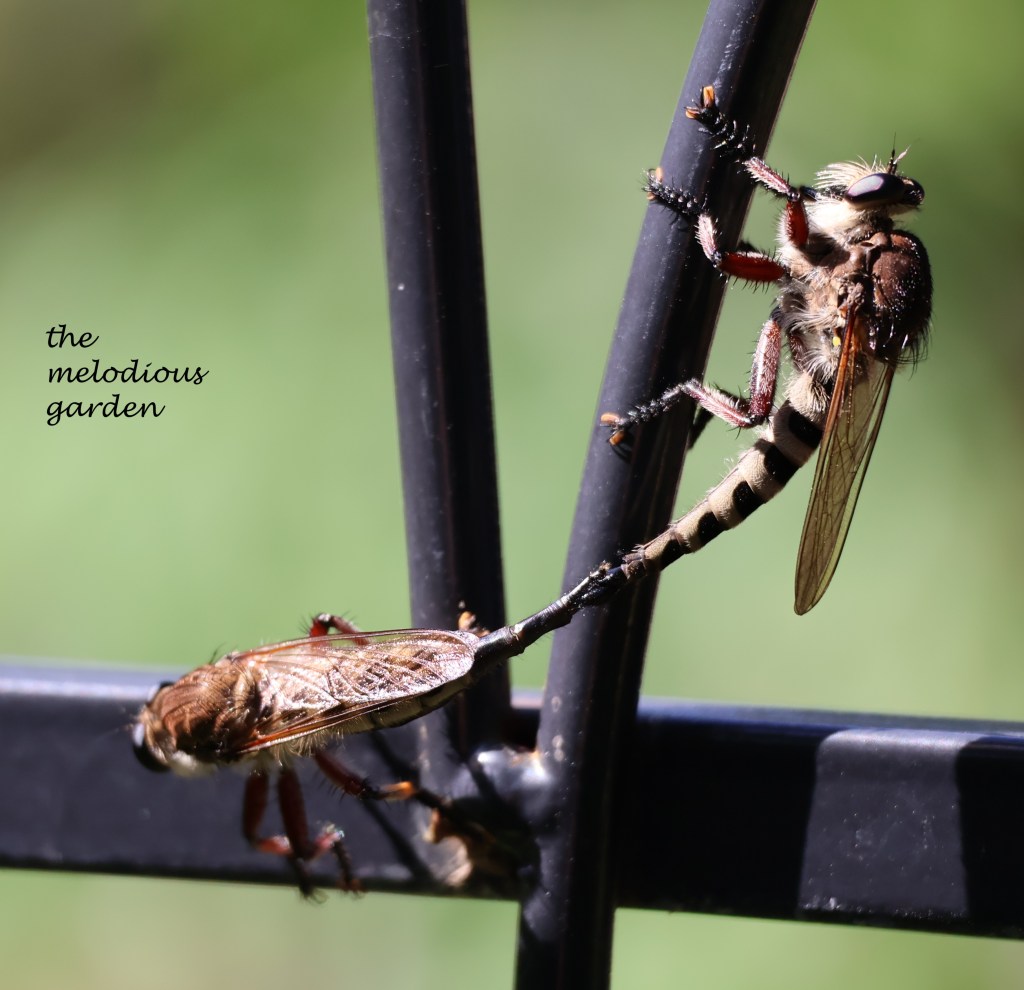
In the bug world, there are beneficial insects and harmful insects and those straddling the middle as either sometimes good/sometimes bad or neither overly good nor overly bad. There are beautiful insects, such as the monarch butterfly or the luna moth. And then there are ugly or creepy insects, such as, well… I don’t want to disturb my readers so we will leave ugly and creepy to your imagination. At first glance, robber flies (shown below) may not be as beautiful as, say, a lady beetle, but they are still… well, Beauty can be in the eye of the beholder, amiright? There is a primitive, utilitarian beauty to the humble robber fly. Large eyes. Long legs. Both beneficial in their quest for prey. Which brings me to their other status in the bug world. Robber flies are beneficial because they kill harmful insects, such as grasshoppers and leafhoppers. Alas. They also eat butterflies and dragonflies, which puts them smack in that middle ground. Beneficial? Yes. Sometimes. …If only we could direct them as to what they should be preying on…

A number of lizards call my gardens home, for which I am eternally grateful. However, they, too, are a species that have both beneficial and sad dining habits. The anole, shown below, had just eaten a grasshopper when I snapped this photograph. Knowing Texas summers and baseball bat size grasshoppers go hand in hand, I am appreciative of this fella’s hard work and dedication to taking one down. I will chose to overlook his ability to also take down dragonflies.

As a child, I memorized Richard Le Gallienne’s poem, “I meant to do my work today.” The words still bubble up in my soul whenever I feel the pull of nature. “I meant to do my work today – but a brown bird sang in the apple tree and a butterfly flitted across the field…”

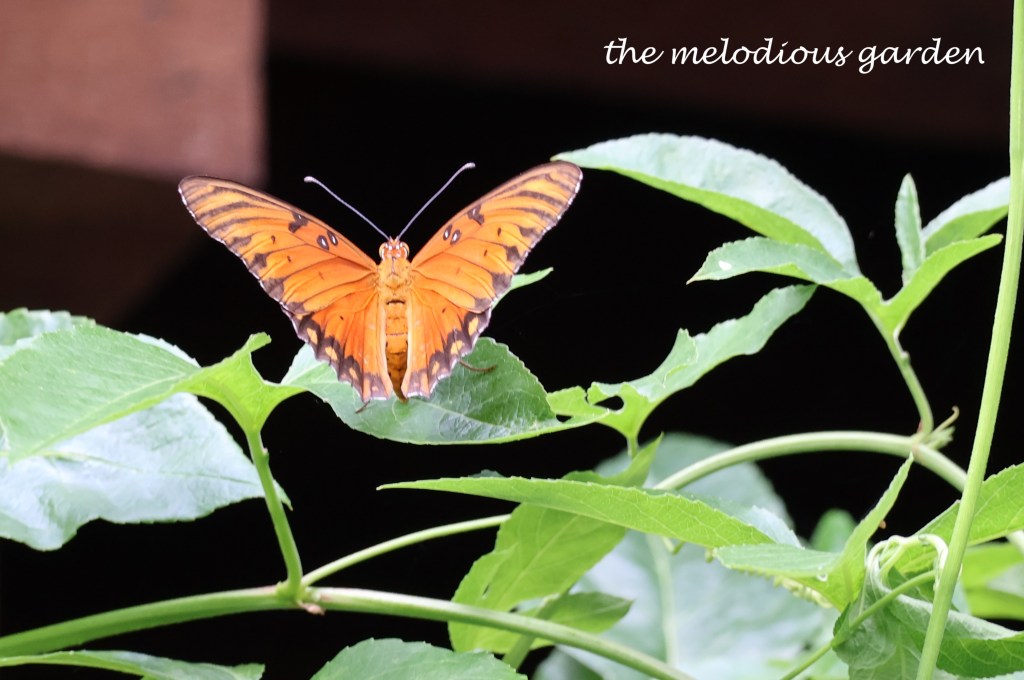
This morning, I found myself with five extra minutes before I needed to leave for a class at the gym, so I grabbed my camera and headed to the back gardens. Not one, but four butterflies flitted across my garden! Gulf fritillary butterflies (shown above and below) had found my garden and were busy dancing about, depositing their eggs on my passionvine – Mother Nature’s way of giving my garden an A+, gold star and seal of approval all in one wonderful moment. As the poem goes, “What else could I do but laugh and go?” And what fun it was to photograph them!

“Here rest your wings when they are weary;
Here lodge as in a sanctuary!
Come often to us, fear no wrong;
Sit near us on the bough!
We’ll talk of sunshine and of song,
And summer days, when we were young…”
~ To a Butterfly by William Wordsworth

The year has gone by much too fast, as it always has a way of doing the older we get. But here’s to slowing down and enjoying the garden and spending time in nature whenever we can.

“Spring flew swiftly by, and summer came… The earth had donned her mantle of brightest green, and shed her richest perfumes abroad. It was the prime and vigour of the year, and all things were glad and flourishing.” ~ Oliver Twist by Charles Dickens

(All photographs taken in my Southern Denton County, Texas, garden between mid-June and July 3rd.)

gardening

Raine, raine, goe to Spain. Faire weather come againe.

I know this gardener will regret uttering those words come August, but today I had planned needed to get some gardening done between thunderstorms and soaking rains. Alas. The rain settled in hours earlier than I realized it would. Weeding and planting will have to wait once again.

May Day

A delicate fabric of bird song
Floats in the air,
The smell of wet wild earth
Is everywhere…

By Sara Teasdale

The Dallas/Fort Worth area received nearly two and a half inches of rain on the last day of April and we are forecast to get an additional two to four inches this week. The gardens look especially beautiful at the moment – so lush and so many shades of green. But. The weeds! One needs to be wary of the weeds that are threatening to grab you by the ankles and not let go! I don’t know if the smell of wet wild earth is everywhere today, but my corner of the earth is wet and it is wild!

Of course everything is blooming most recklessly: if it were voices instead of colors, there would be an unbelievable shrieking into the heart of the night.

~ Rainer Maria Rilke

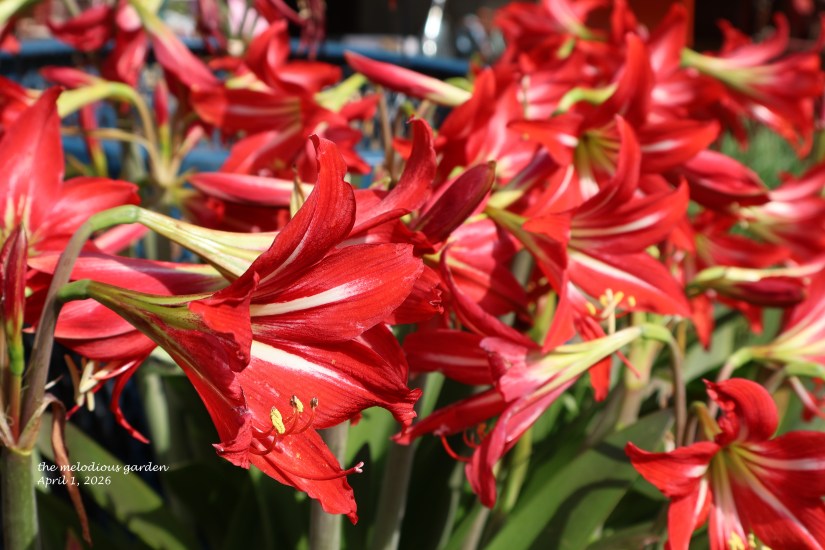
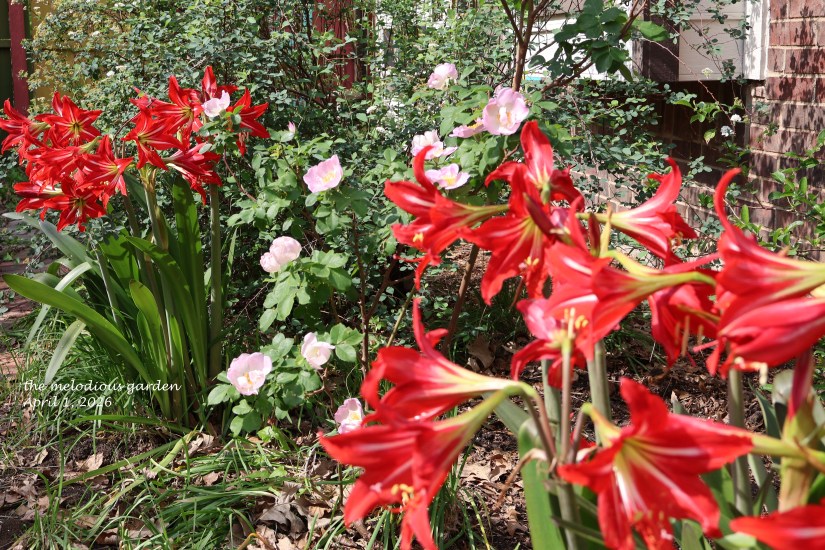
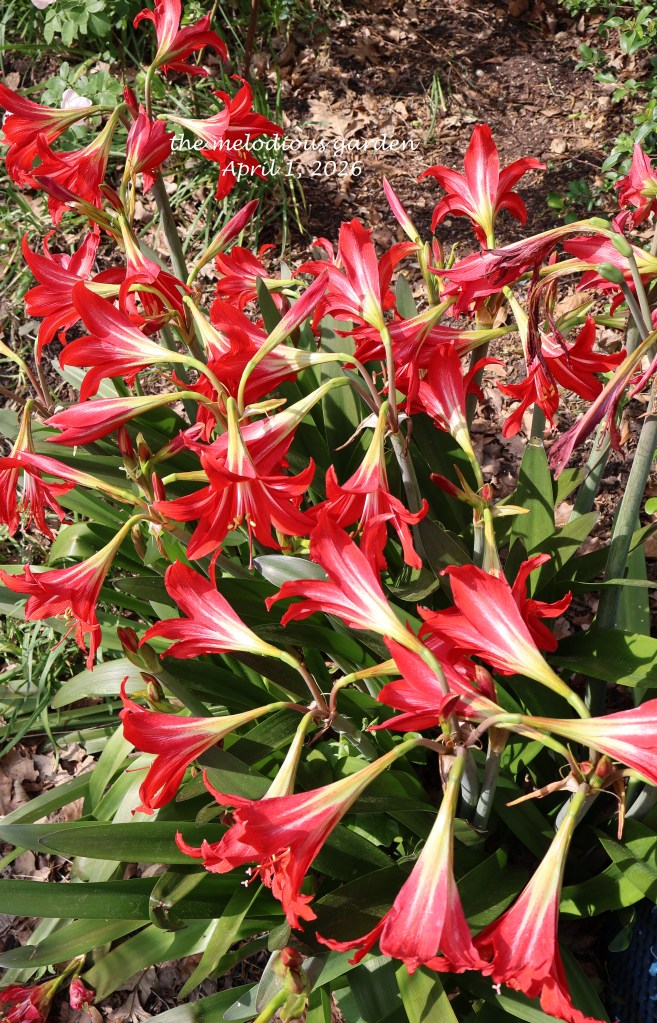
The bright red hardy amaryllis, shown above, is a staple of many southern gardens and for good reason. It is extremely reliable – plant once and it will bloom and multiply for decades to come. The hardy amaryllis is also a great passalong plant, assuming one has a sturdy back and an equally sturdy pitchfork to wrestle a few bulbs out of the ground. In this region, the amaryllis is the year’s first bright pop of color, blooming right as the daffodils are beginning to fade away yet before summer’s riot of flowers take over.

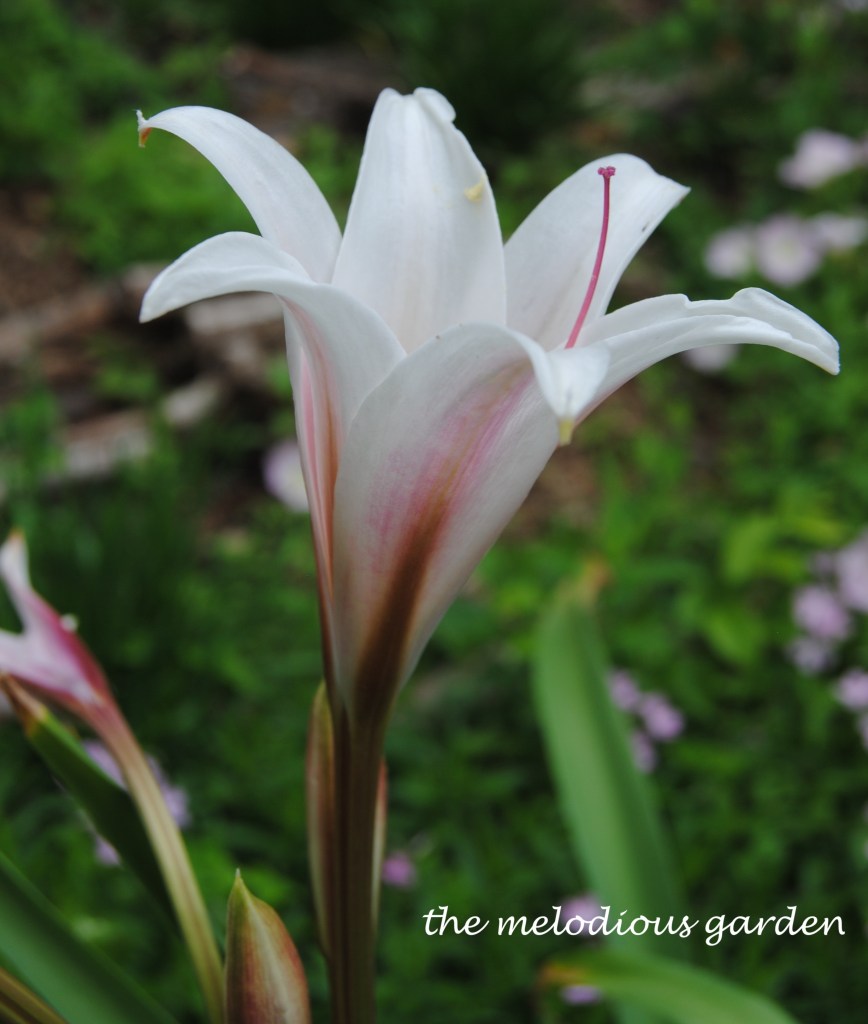
Another southern favorite – Crinum “Milk and Wine Lily,” shown below – is as delicate looking as the amaryllis is bold. The flowers are white, tinged with pastel pink streaks, but don’t be fooled by the softness of the flower. Crinum lilies are Texas tough and able to withstand our weather extremes.

Bulbs for both the hardy amaryllis and crinum lily can be purchased at The Southern Bulb Company. Both are considered heirloom plants – plants that withstand the passage of time, plants that can be passed down from one generation to the next.

To everything…there is a season…

A time to be born, a time to die
A time to plant, a time to reap

And a time to every purpose under heaven

~ Peter Seeger

We describe garden plants as being hardy, but gardeners are also hardy. We take the weather and the seasons as they come. Sometimes we have too much rain. Other times, not enough. Too hot. Too cold. Yes, we complain about the weather, but we garden on. Some seasons we have the time and energy to throw ourselves headlong in to our gardens. Other seasons, our gardens may run feral. This is the season I immerse myself deeply in the comfort of my gardens.

My dad passed away on March 13th, just days after his 78th birthday. My gardens have always been my refuge, my escape when the world is too much. In the days after my dad’s death, I found myself wanting to be alone in the back garden, away from passing neighbors out front, to seek peace and quiet in nature, to reflect on the past, to think ahead to the future.

I grew up in the rural Midwest, surrounded by generations of gardeners and farmers. My dad’s parents – my grandparents – often took me fishing when I was growing up and my grandma and I would pick the gooseberries that grew wild along the path as we walked down to the fishing spot. Fried fish and gooseberry pie would be the evening meal. My grandma’s dad – my great-grandfather – grew red roses over a white arbor at the entrance to his vegetable patch. In the front yard, he grew a hedge of pink peonies and I always loved to watch the ants crawling over the blossoms, though I was years away from knowing or understanding their symbiotic relationship. Those roots – and memories – run deep. I am still the happiest with dirt under my nails, mud streaked across my cheeks and caked on my kneecaps. My dad was the last of his siblings, the last of that branch of our family tree. I have found myself grieving that generation lost as much as the individual. Time has a way of marching on, though, doesn’t it? Time doesn’t cease to move forward just because we are grieving and reflecting on the past. Seven weeks have now passed since my dad died. It may seem strange that I planted tomatoes the day after he died, but deep down in my soul I knew – To plant a garden is to believe in tomorrow. (Audrey Hepburn)

Our lives should not be overcast by gloom of the past or future… Both are mere reflections. The past should reflect the light of pleasant memories upon our present, and contemplation of the future should shed its rays of hope upon our to-day.

~ Ellsworth R. Bathrick

Black strawberry tomato, shown below.

All photographs taken April 28th in my Denton County, Texas, garden.

gardening

If there’s life, there is hope

January was a long year, wasn’t it?

First came the dread, then the reality. Through it all, the word “Hope” has buoyed me.

Hope springs eternal. February, here in North Texas, has arrived with sunshine and above average, very warm temperatures. The most perfect day to spend in the garden, in quiet contemplation of Hope. And Peace. And Harmony. For America. For the world.

“To plant a garden is to believe in tomorrow.” ~ Audrey Hepburn

Audrey Hepburn’s famous quote, while not actually using the word “Hope,” is all about hope. The promise of tomorrow. A new day. A new beginning. Twenty four fresh new hours to make a difference. To make an impact.

“This will be my fight song: left foot, right foot, breathe. Help the poor however you can, plant bulbs right now in the cold rocky soil, rest.” ~ Ann Lamott

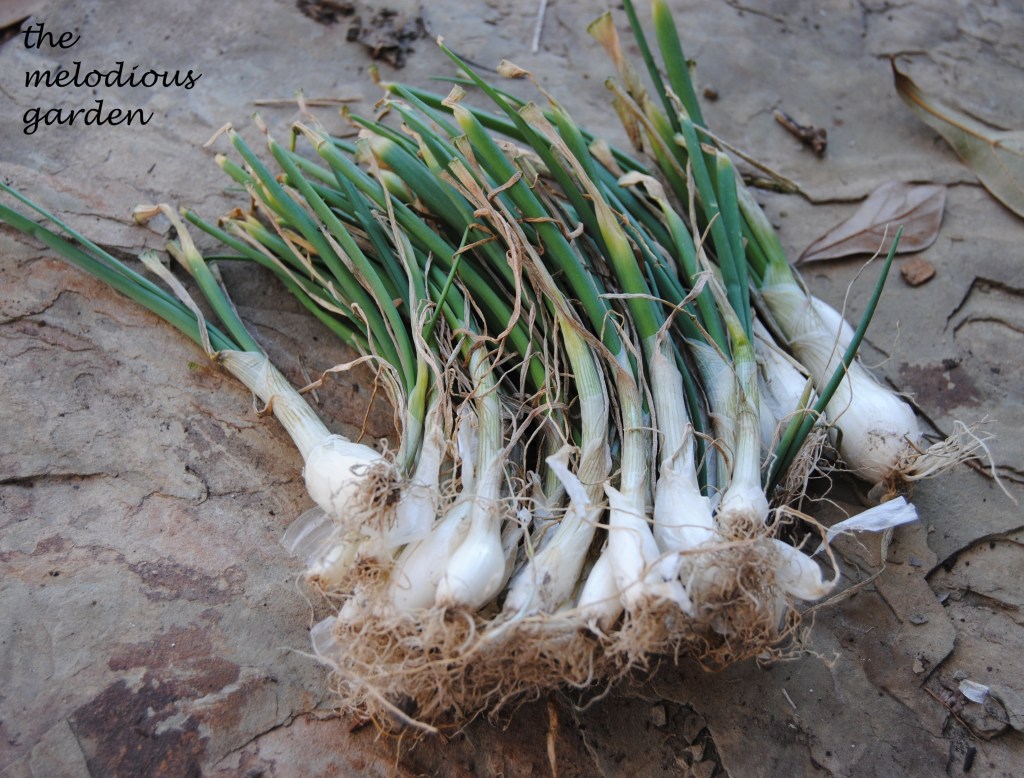
I purchased onion slips earlier this week, as now is the time to plant them in my region. More than a decade has passed now since I spent a quiet, mediative day in the garden, planting onions while my dear aunt was in the hospital, her colon cancer metastasized to her brain, necessitating emergency surgery. She has, sadly, since passed away, but I always think of her and her amazing spirit whenever I plant onions. I know that she is peering down at me, happy that I continue to garden and that I continue to seek hope and peace in the garden.

Tomorrow, the first of the onions will be tucked in the soil, then covered with a layer of freshly shredded leaves. Hope does spring eternal in the garden. Onions, from such humble beginnings, to be harvested months from now and used to nourish my body and soul.

“If there’s life, there is hope.” ~ Stephen Hawking

I was reminded earlier today of a conversation I had last year about the guerilla garden going on behind our property line. The individual wondered why I would invest the time and the money on something that might be removed or mowed over. Ah. But what if something grows from my guerilla garden efforts? Food to feed the hungry. Shade for a too hot planet. Habitat for birds. Friendships. Inspiration for others to take on their own guerilla project. What if the only thing it ever grows is hope to those that need it most?

Keep calm and garden on and always remain hopeful.

What to plant in the garden in February:

Plant onions: I soak onion slips in seaweed, diluted per container directions, for 30 minutes prior to planting.

Peas: Can be sown outside through mid-February.

Potatoes: Can be planted outside any time this month.

Asparagus and horseradish: Both can be planted outside this month. Soak the crowns in diluted seaweed for 30 minutes before planting.

Late winter vegetables: Cabbage, broccoli, Brussels sprouts and cauliflower can all be planted now. Many garden centers are getting a freshy supply of transplants this time of year.

What to sow outside now through mid-March: Beets, carrots, kale, spinach, mustard, Swiss chard, lettuce, kohlrabi, collards, spinach and turnips.

Radish: Can be sown outside now through May.

Additionally, eggplant and pepper seeds can be sown inside now through early March.

Many garden centers are receiving fruit trees and berries. Research best varieties for your location and shop early for best selection.

gardening, nature

A (garden) revolution going on

What is more thrilling than spending five hours with like minded gardeners and naturalists on a cold January day? Seeing a room full of people that have embraced native Texas plants, feeling their enthusiasm about restoring our prairie ecosystem and knowing that so many have joined the revolution and are planting native plants.

“Just dig it: Practical ideas for adding native plants to your yard” was hosted by Friends of LLELA – Lake Lewisville Environmental Learning Area – earlier this month, and featured four wonderful speakers each discussing different aspects of gardening with native prairie plants.

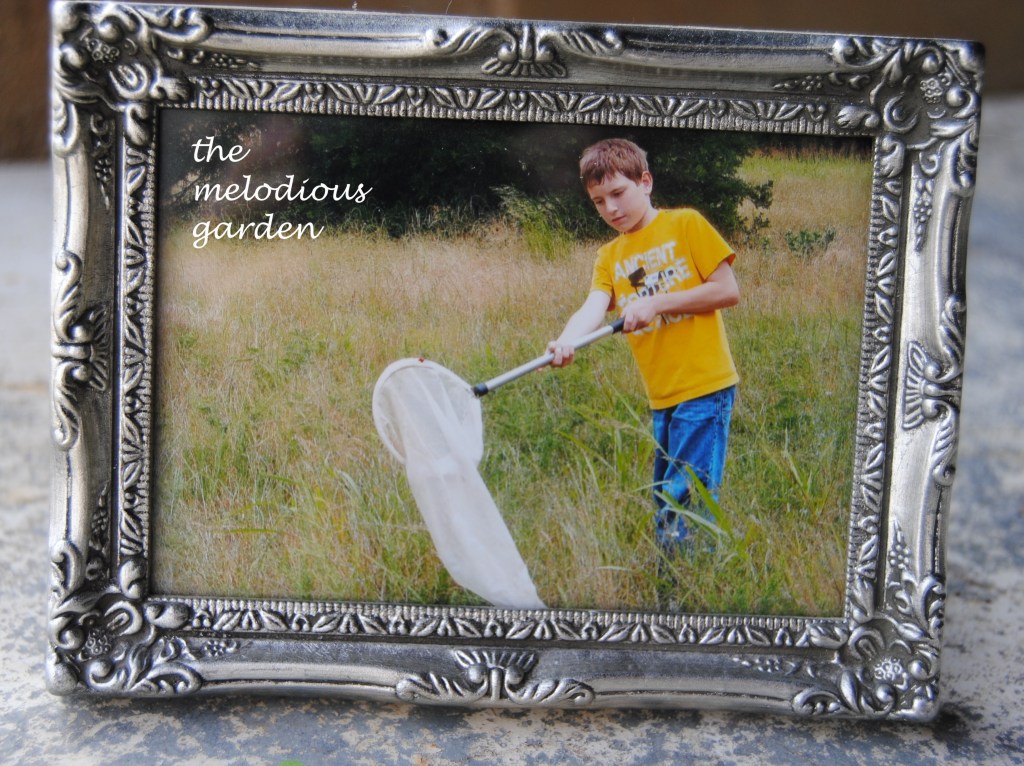
Now before I go on, I simply must share a photograph of my son, taken during a nature class at LLELA, many moons ago. My son is now a college graduate and, thankfully, still loves the outdoors. I have faith that this generation of kids will take the baton and carry on protecting and restoring important ecosystems around the globe.

Before we bought our home nearly thirty years ago, I knew “how” I wanted to garden – passionately, organically, naturally. My garden has evolved a lot over the decades, but those three things have never changed. I have always loved our native plants and – once upon a time – worked at an organic garden center that was one of the few (at that time) in the Dallas-Fort Worth metroplex that offered native plants. Yes, I once had over 150 antique and heirloom roses. But I also incorporated a variety of native plants. Yes, my garden now grows fruits and vegetables. But I still love native plants and try to squeeze in as many as possible. I am not a purist. I don’t personally believe that the average home garden has to be 100 percent native plants to be beneficial. I believe that every bit of habitat we can provide for wildlife is important. I believe that one can have entirely native prairie plants or a mix of native and non-native plants. Every action to preserve or restore habitat is important, no matter how small.

My garden is located in Denton county, just north of Dallas and Fort Worth, in the Cross Timbers and Prairies Ecological Region. This area was originally a combination of prairie and woodland, both of which provided a lush habitat for a large number of mammals and birds. Alas. As the song goes, “They paved paradise and put in a parking lot.” They also paved paradise and put in a major north-south interstate, I-35. One can drive from the southern border of Texas, past my garden just north of Dallas-Fort Worth, and all the way north to Minnesota. This central section of America is a major flight path for many migratory birds, as well as the now threated monarch butterfly. A road trip game of I Spy will net you a lot of billboards, fast food restaurants and acres of cultivated farmland, but very little wildlife habitat, either preserved or restored. This midsection of America is crucial for the survival of many birds and butterflies, which is why it is so important to plant native plants whenever possible – whether it be in the home garden, school garden or local nature center.

What can the average suburban or urban landowner do to counter all of that pavement and help restore lost habitat? Quite a bit, actually, just by reducing our lawn size and putting in a few native plants that provides much needed food and shelter. Or go a step or two further and put in a pocket prairie, a native prairie garden on less than an acre. This can be a small residential front yard or an entire backyard, whatever fits your style. In the ever-expanding sea of concrete throughout the central portion of America, every bit is important.

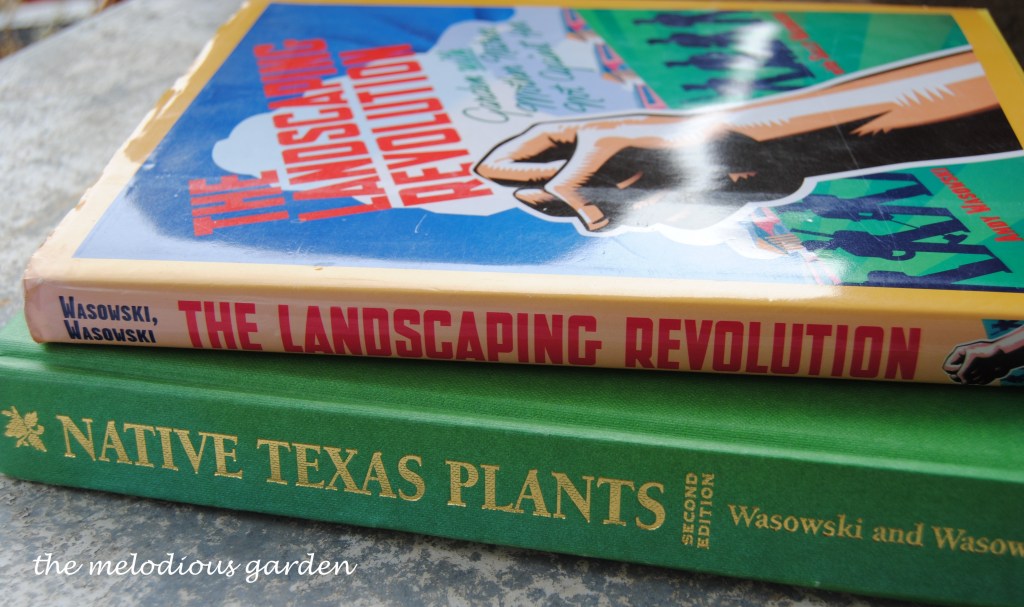
Andy and Sally Wasowski’s books on native plants and naturalistic gardening (shown above) were some of the first books that I bought after we purchased our home. They have been my inspiration and guide, both are books I go back to time and again. Some of the beautiful flowers I first learned about from Native Texas Plants are shown and briefly described below.

Penstemon tenuis, aka Gulf coast penstemon, shown below, is a great example of how fluid and ever changing native garden are. I no longer know where this was originally planted in my garden as it has popped up randomly here and there for many, many years. It has never been an aggressive reseeder, though any unwanted plants can easily be dug up and shared with fellow gardeners. This penstemon is extremely easy to grow and the lovely soft lavender color goes with many color schemes, if that is something that interests you. It is always covered with pollinators. This penstemon blooms early in the spring.

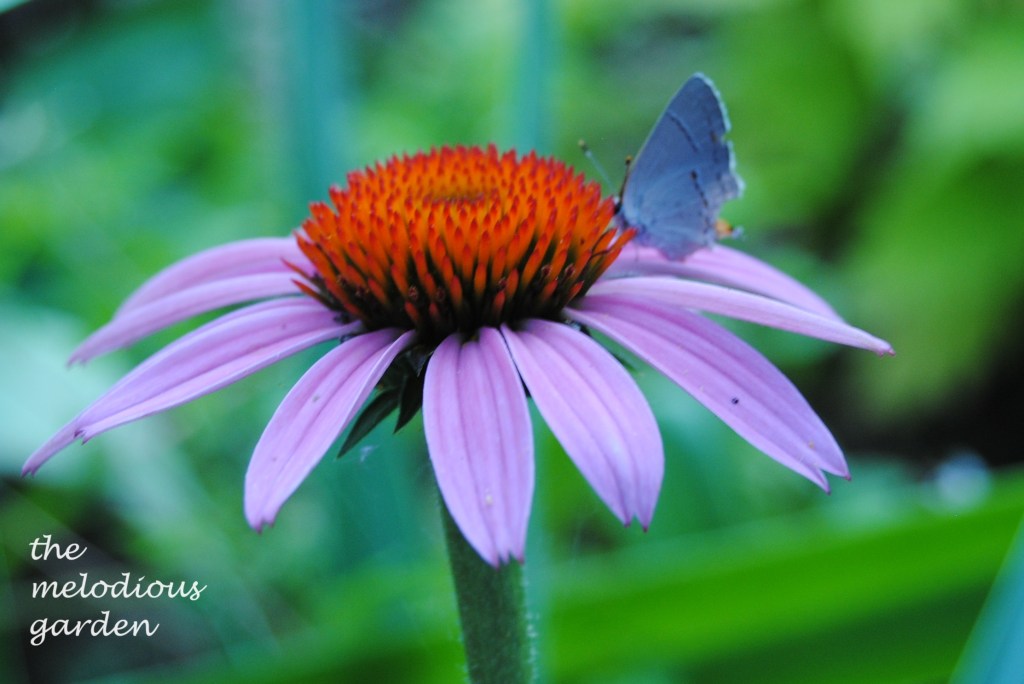
Echinacea, shown below, is another plant that moves about my garden and is always covered in pollinators. I leave the old flowerheads on the stalks over winter as songbirds love to feast on the seeds. In late winter I scatter any seeds that remain wherever I would like more to pop up.

Sisyrinchium, aka blue-eyed grass, shown below, is perhaps one of my favorite native plants. I love how dainty and crystal blue the flowers are. This is another early spring bloomer.

Malvaviscus drummondii, aka turk’s cap, shown below, is a highly adaptable plant, growing well in sun or shade and in wet or dry conditions. This is a favorite of hummingbirds and butterflies. It blooms through the heat of summer and up to the first hard freeze.

Callirhoe involucrata, aka winecup, shown below, rambles and scrambles about the garden. It grows from a tuber to form a rosette that then extends every which way. It blooms very early in the spring in my garden. Every few years, I dig out the older overgrown tubers and toss them in the compost pile, allowing the smaller tubers to grow and carry on.

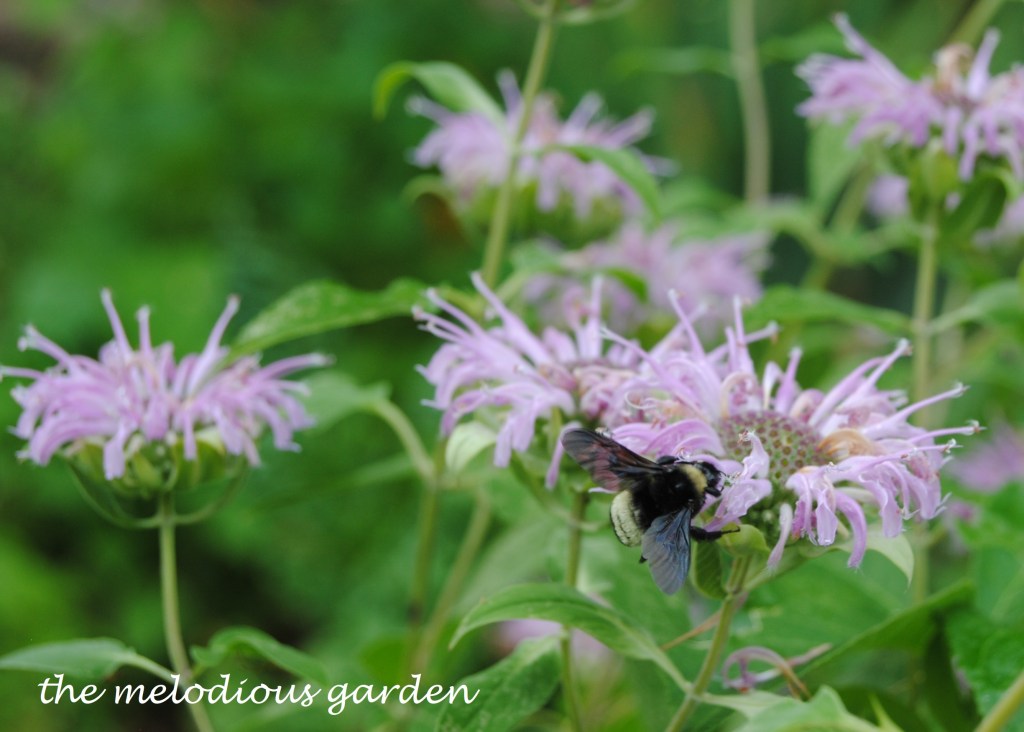
Monarda fistulosa (shown below) is the native, wild growing bee balm. It is harder to find (often sold alongside herbs) but much more hardy than the newer hybridized variations.

A few years ago, I had both the wild bee balm and a hybridized variety growing side by side. The wild bee balm was covered in pollinators while the hybridized one was void of any insects. This was a great chance to witness why the wild varieties are favored by wildlife, as many hybridized plants are bred for color or size and often lack the amount of pollen and nectar that wild plants contain.

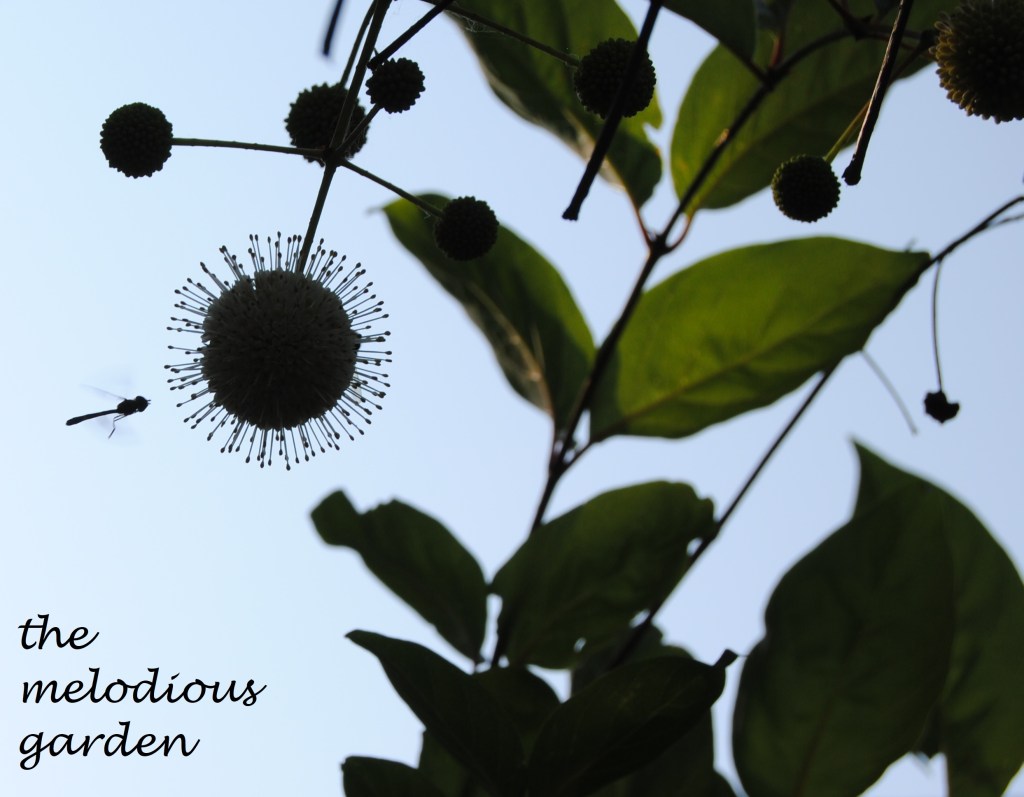
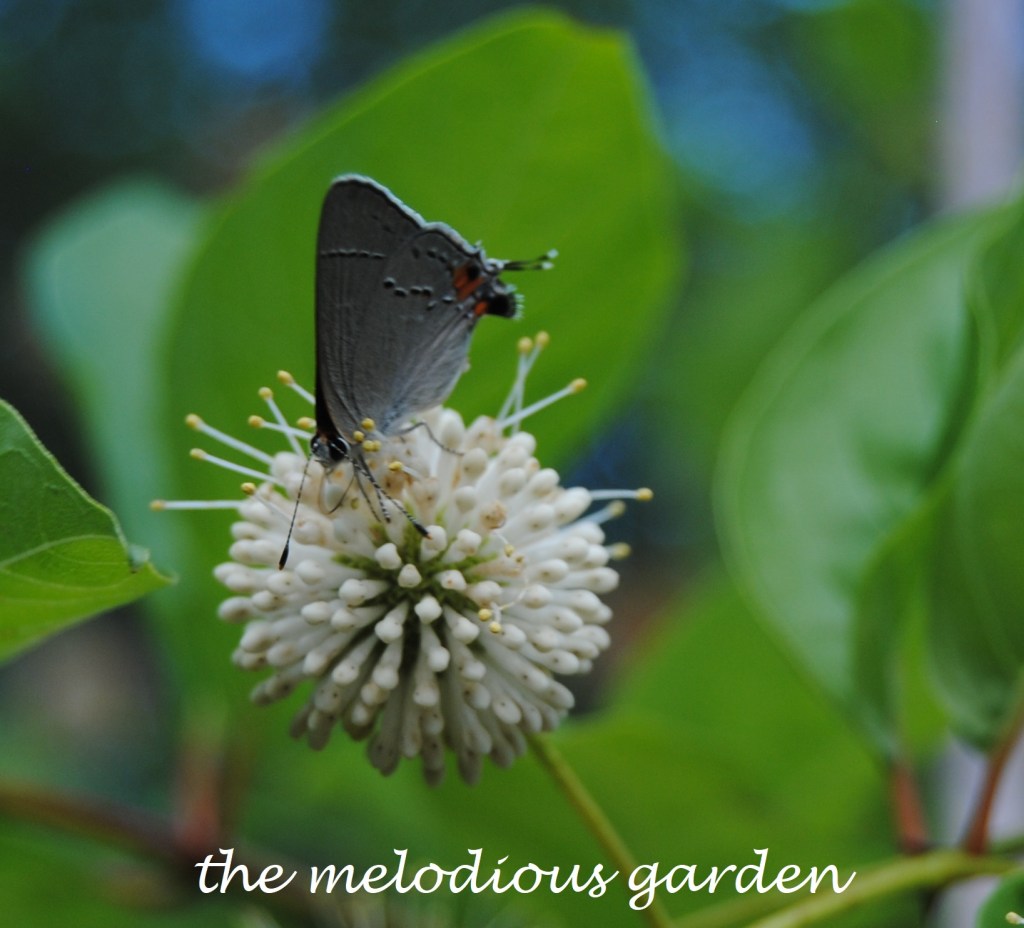
I had to save the best for last. My very favorite native plant of all time – Cephalanthus occidentalis, aka buttonbush, shown below. Yes, it does grow naturally along creeks and rivers, but it will grow nicely in a residential yard. Buttonbush can be pruned up to form a small scale tree, much as the non-native crepe myrtle. Buttonbush, however, has amazing, out of this world, blooming orbs!

Buttonbush, shown above and below, is always covered in pollinators when in bloom.

All photographs were taken in my suburban North Texas garden.

gardening, nature

The first snow of the season

“I’ll know I am growing old when I no longer thrill to the first snow of the season.” ~ Lady Bird Johnson

North Texas had their first – and maybe only – snow of the season yesterday, January 9th. Mother Nature’s gift to me on my 57th birthday – inches and inches of white fluffy snow. The forecast called for the snow to end overnight but, at noon, it was still softly falling.

“He brewed his tea in a blue china pot, poured it into a chipped white cup with forget-me-nots on the handle, and dropped in a dollop of honey and of cream. He sat by the window, cup in hand, watching the first snow fall. ‘I am,’ he sighed deeply, ‘contented as a clam. I am a most happy man.'” ~ Ethel Pochocki, from Wildflower Tea

A Texas snow day is the perfect time to slow down, brew a pot of tea, pull out the seed catalogs and dream of warmer days ahead.

“Anyone who thinks that gardening begins in the spring and ends in the fall is missing the best part of the whole year, for gardening begins in January with the dream.” ~ Josephine Neuse

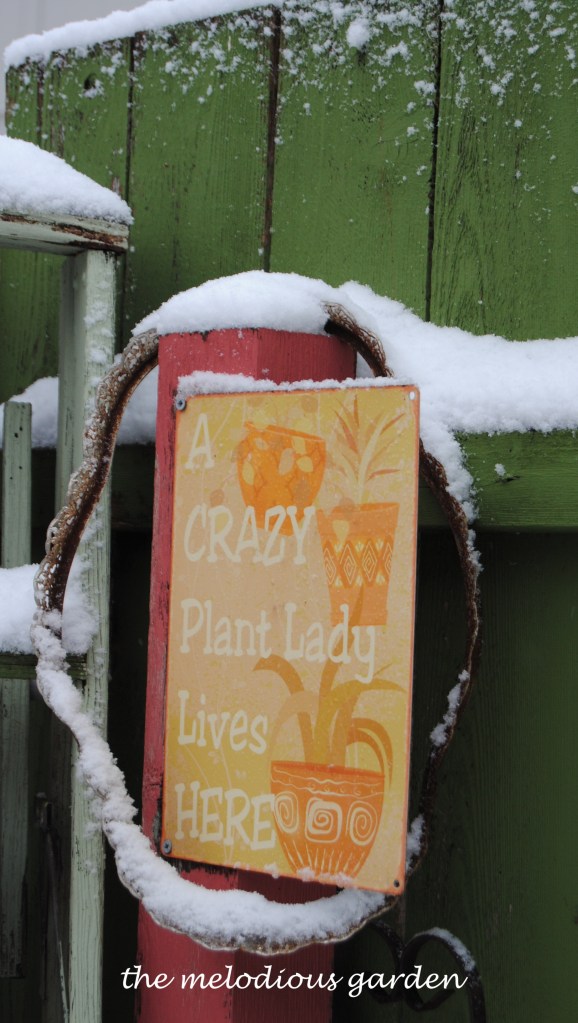
A garden is never “finished” for it is ever evolving, changing over the seasons, as either the gardener or Mother Nature intervenes. I continue on my wellness journey with dreams and plans to grow even more of our food this year, as the work and the harvests nourish and strengthen both my body and soul. I am still enamored with the concept of food forests, mimicking Mother Nature in the suburban fruit and veg garden, but changes will be made this year for I have realized that I tend to let the garden grow feral by late in the summer. I don’t have the heart to pull out the aggressive reseeders. Passionvines that scrambles and smothers everything in its path yet feeds the caterpillars of the gulf fritillary butterfly. An unknown variety of salvia that draws bees from far and wide. Garlic chives that attract and feed late summer butterflies. My solution is to strategically add raised beds, dedicated areas just for vegetables – no aggressive reseeders allowed zones. Will this work? I don’t know. But I am hopeful that this also will give me more areas to grow root crops that struggle in our clay soils. I have amended our soil with organic matter constantly over the nearly 30 years at this property but it simply remains too heavy in wide sections of the property. If nothing else, it further proves that, yes, a crazy plant lady lives here!

“I suppose it all started with the snow. You see, it was a very special kind of snow — a snow to make the happy happier and the giddy even giddier… for it was the first snow of the season. And as any child can tell you, there’s a certain magic to the very first snow.” ~ Romeo Muller’s Frosty the Snowman

“I wonder if the snow loves the trees and fields, that it kisses them so gently? And then it covers them up snug, you know, with a white quilt; and perhaps it says, ‘Go to sleep, darlings, till the summer comes again.'” ~ Lewis Carroll’s Through the Looking-Glass And What Alice Found There

I have collected Campania statuary for more than a quarter of a century now, which is an odd thing to say. A quarter of a century. Y2K. Wasn’t that just yesterday?

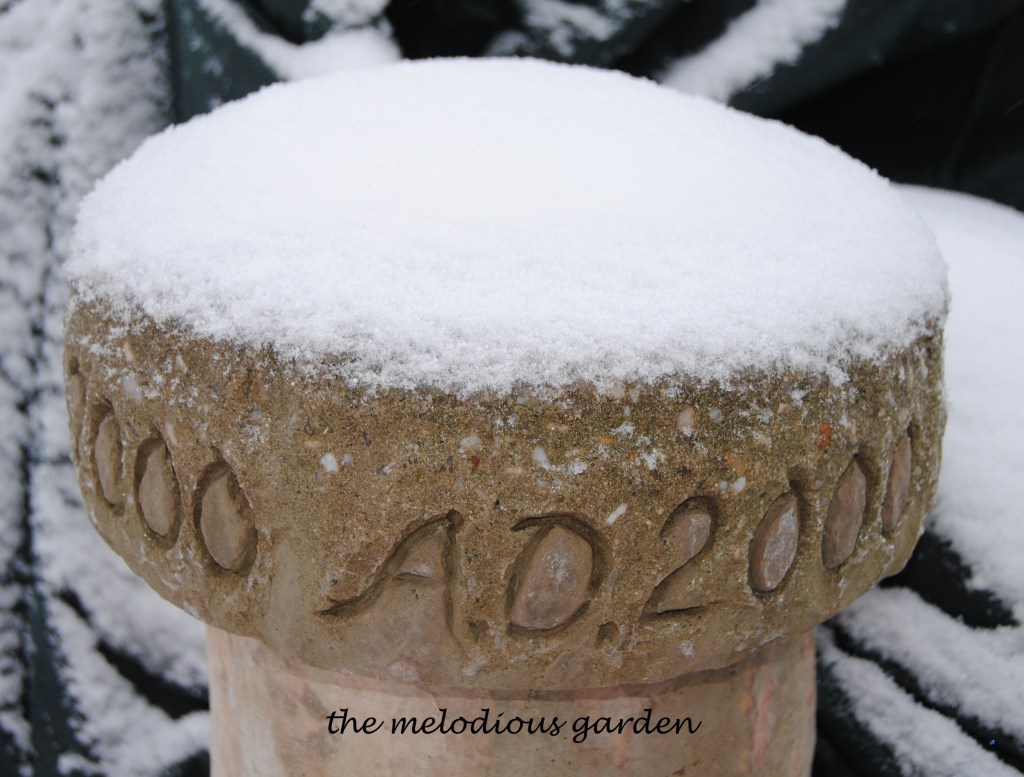
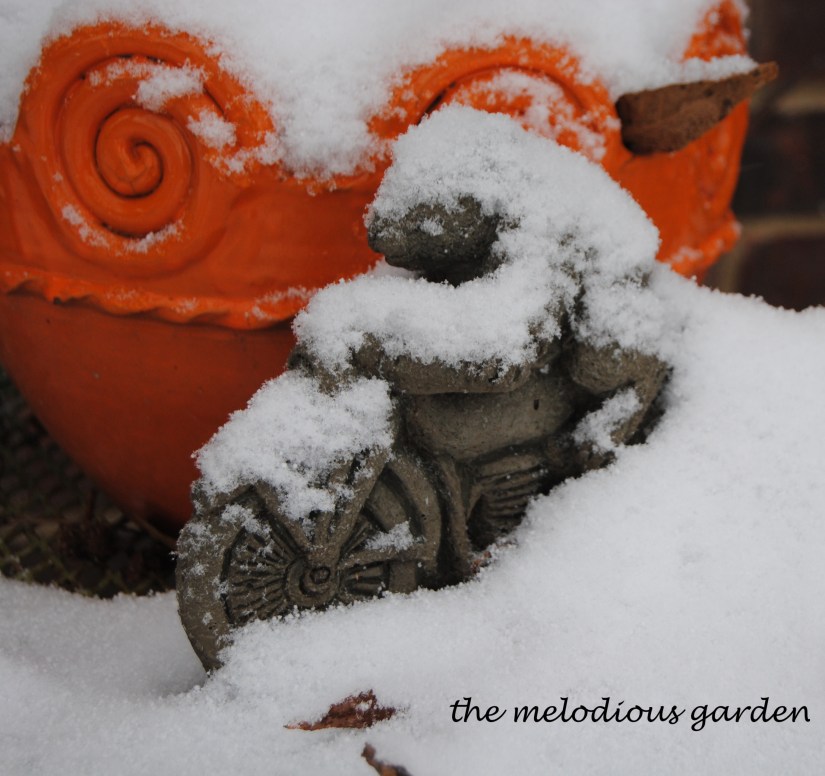
The birdbath above is not mine, though it presently resides in my front garden, a daily reminder to live each day to the fullest. I am bird bath sitting for a friend, married in the year 2000, as her life has taken some unexpected turns due to cancer and fulfilling dreams. We worked together many moons ago, pre-motherhood for both of us. Our children are grown now, though in my mind my boy still loves Ralph, the motorcycle riding mouse. (Photograph below.)

The year 2000 seems so long ago and yet feels like yesterday. My friend and I now share a connection no one wants – both of our husbands have cancer. I am reminded of the quote, “To plant a garden is to believe in tomorrow.” Gardening is an act of hope – an act of defiance! – that even though dark days may lie ahead, spring will come again. And with it, the season of renewal, of rebirth. Just as the plants again spring forth from the ground, so does our belief in tomorrow. It’s no coincidence that seed catalogs flood our mailboxes in the longest nights of winter.

While I have battled chronic autoimmune issues most of my life, my husband had always been so healthy. In a blink of an eye, that changed. One beautiful sunshiny May day in 2024, he was healthy. The next day, he was a cancer patient.

My husband is a hardcore cyclist, often biking 50 or more miles after working a full day in the office. Biking is in his veins. He loves the adrenaline of the open road, powered by his own two legs and the energy within two thin wheels.

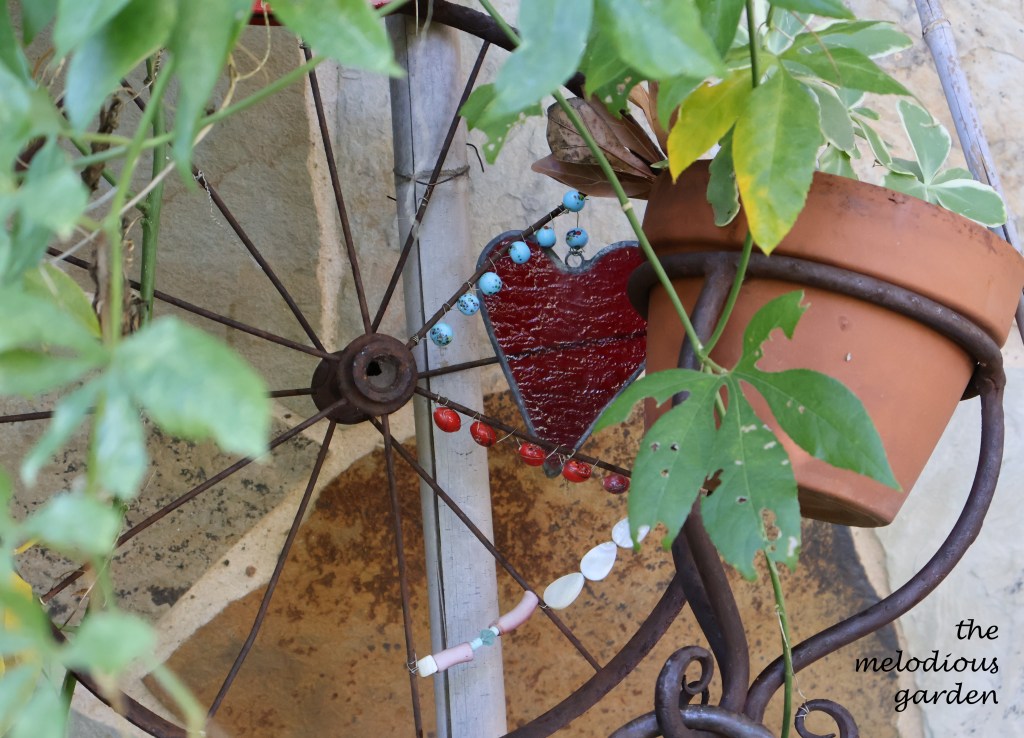
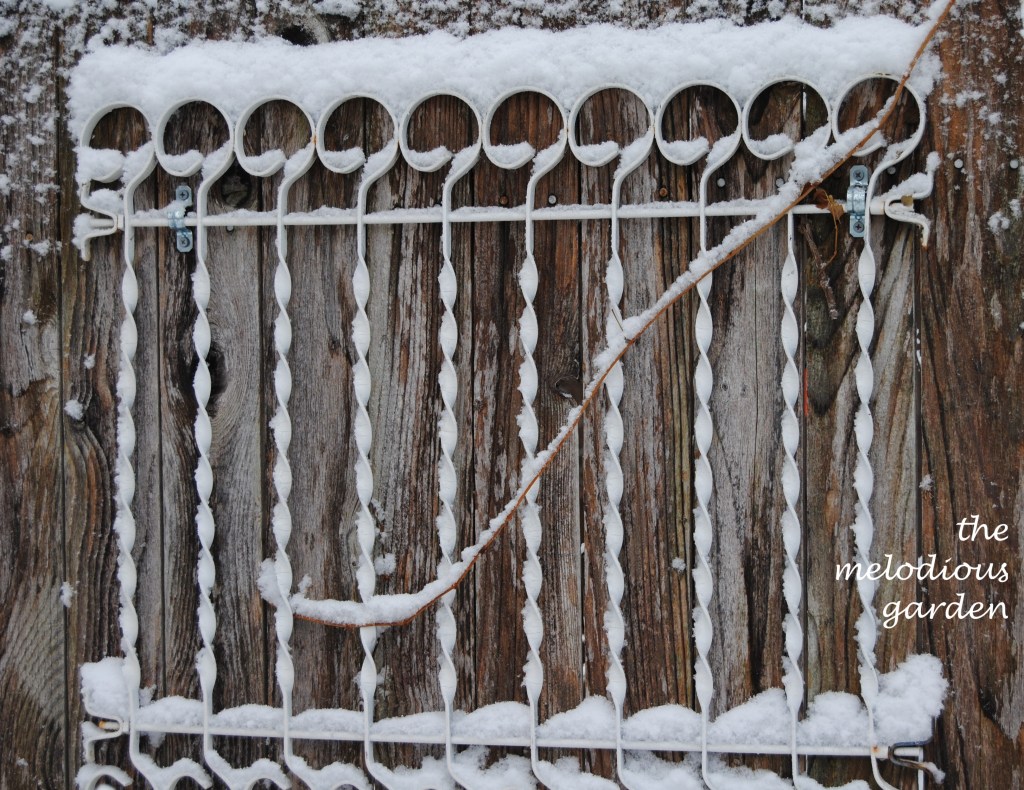
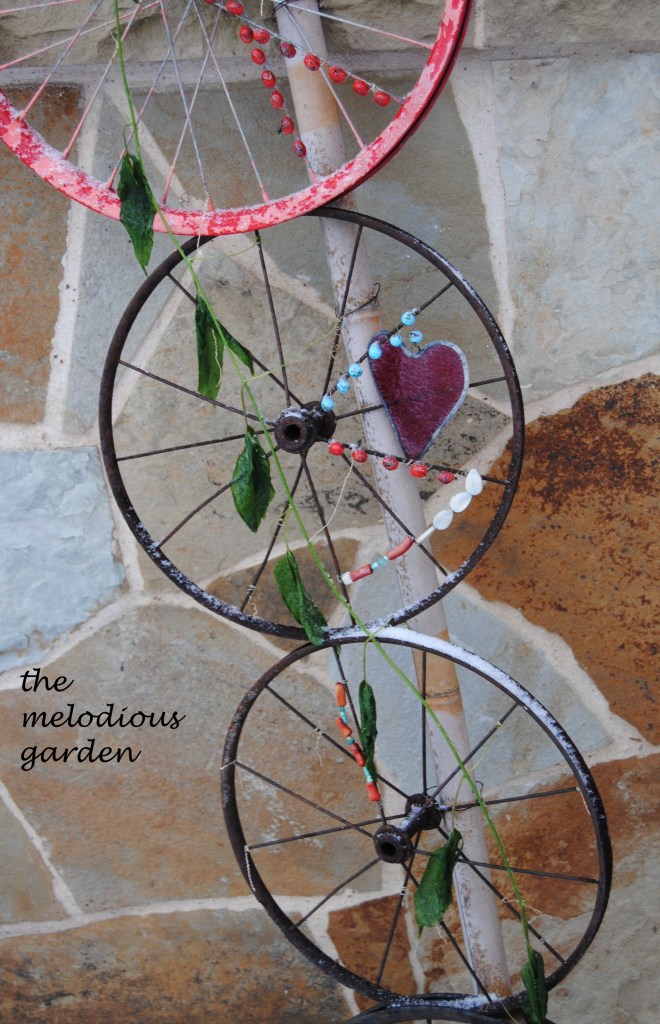
I have a thing for old wheels. I, too, love the energy that is held within each circle, though from a philosophical point of view and not a physical one. In the weeks after my husband’s diagnosis, I stacked up the old bike wheels scattered about my garden and created a trellis of hope. (Photograph above.) The energy within each simple wheel is the energy that powers us through life. My trellis of hope is leaning a bit at the moment, a wayward passionvine is frozen in place, but it still brings me comfort and peace. None of us make it out of this life without some troubles and traumas. We can either perish under the weight or we can ride on, looking for sunnier days ahead.

“The first fall of snow is not only an event but it is a magical event. You go to bed in one kind of world and wake up to find yourself in another quite different, and if this is not enchantment, then where is it to be found? ~ J. B. Priestley

(All photographs taken today, Friday, January 10, 2024, in my southern Denton County, Texas, garden.)

gardening

Beauty is all around us

The new year – 2025 – is here, along with bright sunshine and crystal clear blue skies. Alas. An Arctic cold front is lurking in the forecast, a reminder that it is, after all, January in Texas. Time to find the outdoor faucet covers and frost cloth for pipes and plants will need tucked in for a few nights. (As do our pets.)

I was wandering about the garden this afternoon, assessing the chores that need tackled this weekend. One of the roses that survived the early waves of rose rosette disease is now inflicted and must be bagged and removed immediately. Leaves are a constant chore this time of year. As much as I would love to “leave them all be” (bad pun intended), we would be knee deep in leaves if we didn’t do something about them. Plants were bought in early fall to redo a few shadier spots of the property and they really need to be tucked in the ground sometime soon. I have space remaining for a few more winter vegetables and herbs, if I am inclined to add some. The upcoming freeze will mean even more open planting space, as the last of the tomatoes and peppers can be cut back now and carted off to the compost pile. But the first order of business tomorrow – Winter Protection. There is always something to do in the garden, isn’t there? Sometimes enjoyable work. Sometimes not so much. I dread removing yet another large, well established rose bush, yet I am looking forward to planting more winter vegetables, knowing I will appreciate them come February. One must find that balance in the garden – and in life! – to keep the spirit alive and energized and not too overwhelmed. Sometimes we need a little reminder that beauty is all around us, for it is easy to get bogged down in the chores and overlook the beauty that surrounds us.

“It is the beauty within us that makes it possible for us to recognize the beauty around us. The question is not what you look at but what you see.” ~ Henry David Thoreau

The verdant greens of winter, such as the collards above and the mustard greens below, are especially captivating. So much flavor and nutrition packed in every deeply veined and textured leaf. Greens – including kale, lettuce and Swiss chard, can be planted from fall through winter in North Texas. They are easy to start inside to transplant outdoors as weather and space permits. Transplants are also readily available at most garden centers. Cilantro, a cool season herb, can also be planted outside this time of year and only needs winter protection when the temperatures drop in to the 20’s as they will this weekend.

“If you truly love nature, you will find beauty everywhere.” ~ Vincent Van Gogh

I am constantly amazed at the beautiful fungi that grow on the logs that edge my vegetable beds, proving that there is beauty even in the decomposition of nature.

“Every man should be born again on the first of January. Start with a fresh page. Take up one hole more in the buckle, if necessary, or let down one, according to circumstances; but, on the first of January let every man gird himself once more, with his face to the front, and take interest in the things that are and are to be, and not in the things that were and are past.” ~ Henry Ward Beecher

Tomato seeds were sown indoors in the first few days after Christmas and a few are already poking up out of the soil. It is always good to remind myself not to count my chickens before they hatch, but it is hard not to feel overly optimistic about the upcoming spring garden season when those first tomato seedlings emerge.

The edible garden in January:

Watch for onion slips/sets to arrive at garden centers soon. They can be planted outside this month.

Swiss chard can be sown either indoors or outside.

Lettuce, kale and collards are best sown inside then transplanted outdoors. (Be sure to harden off young transplants.)

Sow tomato seeds indoors, for spring planting.

Eggplant and peppers can be sown indoors in mid-January for spring planting.

Fruit trees and berries are arriving at garden centers now. Shop early for best selection. Be sure to research best varieties for your area and mature sizes for your garden space.

January is also a great time to prepare new vegetable beds for spring planting.

Photographs taken January 3, 2025, in my southern Denton County, Texas, garden.

gardening

Goodbye 2024

As 2024 closes out, I find myself wandering about the garden, reflecting on what this year has been and looking ahead to 2025. I am filled with a gardener’s optimism at new opportunities and new adventures that await in the coming year.

2024 was a year of lessons and growth, filled with good times and challenges and many unforgettable moments.

Perhaps the most unforgettable moment of all was in January when we (finally!) removed three large cedar elms from the back section of my gardens. (Photo below…) The trees sprouted some years prior, seeds blown in from a neighbor’s tree. As junk trees tend to do, these grew fast and furious, a daunting task to cut down.

This is forever an unforgettable moment as the last of the three trees twisted as it fell and landed with a Plop. Right in the neighbor’s in-ground hot tub! Thankfully the tree didn’t damage anything and the neighbor wasn’t too upset at us. But it was quite a chore getting the tree up and out of the water and up and over the fence.

The trees were cut into long sections and now edge my latest vegetable bed. (Photo below…) I had plans to construct a greenhouse out of an old metal gazebo but record rainfall this spring led to a rather lush garden by June and I didn’t have the heart to remove or cut back any of the plants to make room for the project. Perhaps this will be my first project of 2025, as nothing is stronger than a gardener’s wintertime optimism.

2024 was my 29th year gardening this same patch of earth and what a year it was – for rain! By early June, the ground was so saturated and water was standing the entire length of our property along the west side of our house. I ended up digging a trench to push the water away from our garage to the ditch that runs behinds our property line. (Photo below…) Eventually, I will need to decide what to do with the trench – fill it in with soil or construct a dry creek bed? It currently sits much the way it was in June, though thankfully drier now.

This last day of 2024, we are now roughly six weeks past our average first freeze of the season, a good example of the extremes that make up an average. We have been down near freezing a few times and have even had a few mornings with a light frost on the ground, but nothing cold enough – or not cold for long enough – to kill off tender plants. Sure, the tomato plants look brutal, nearly ten months now since their planting date, and the harvests are much smaller now, but these bonus harvests are such a treasure in wintertime. (Photo below…) Eggplant and peppers are also still growing and producing, though the first full week of January looks to finally bring us a killing freeze.

Not to be outdone by the tender vegetables, even the tropical mandevilla vine is still blooming. (Photo below…)

One of my gardening goals for 2025 is to reign in the self-seeding passionvine. I have vowed to only let a handful grow, as they have a habit of popping up everywhere and scrambling over everything in their path. I love the blossoms and the fact that the vine is the host plant for the gulf fritillary butterfly. Alas. The vines sure can get out of hand by the end of summer! Our weather has been so mild lately that a few caterpillars are still munching down on the foliage.

This spring and early summer, many of my noontime meals were entirely from my garden, though the heat of summer and sudden switch from too much rain to not a drop of rain was quick and intense and brutal on the garden. Fall rains have been nicely spaced out and many of the “winter greens” are doing quite well, including the Red Dragon cabbage. (Shown in photo below…)

Red Giant mustard (shown below) is also doing very well. In 2025, I would like to write more about my chronic health issues and what prompted me to switch from ornamental gardening to edible gardening, along with my reasons for growing vibrantly hued vegetables.

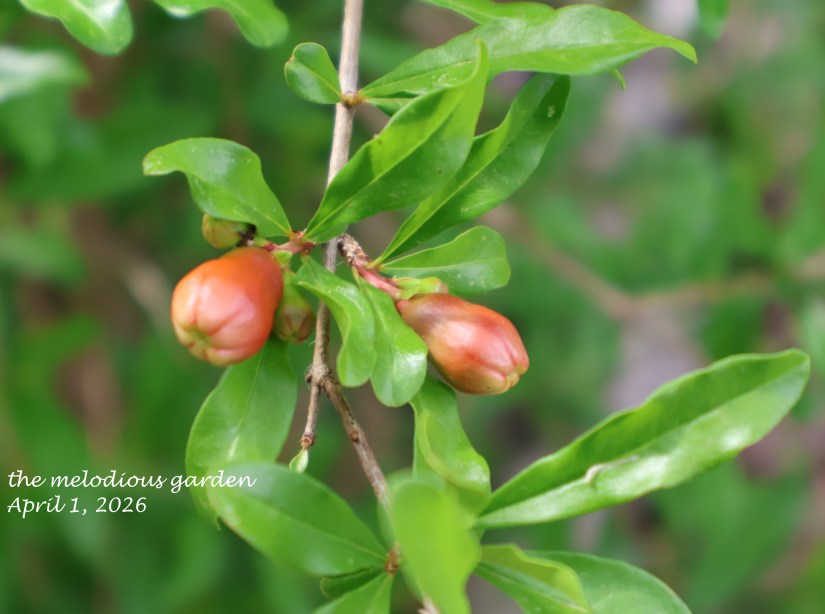
I planted a number of dwarf ornamental pomegranates (shown below) about six years ago when I was in transition – a former ardent rose gardener but not yet a veg and fruit gardener. I have yet to decide what to do about these pomegranates. Yes, they are beautiful! Alas. The fruits are not suitable to eat and they are taking up valuable real estate. I have since planted a number of edible pomegranates, though they are still a few years away from producing a crop.

And on that note – Here’s to a healthy and active new year. May 2025 be filled with many happy days spent in the garden, either hard at work or simply meandering about barefoot. Be well, my gardening friends.

(The first two photographs were taken in January 2024. The third photo was taken in June 2024. The remaining photographs were taken December 30, 2024. All photos taken in my southern Denton County, Texas, garden.)

gardening

November comes and November goes…

November comes and November goes and with it, 2024 is nearing its end.

One frenetic month to go before we usher in a new year, a new beginning, a time when hope springs eternal and the seed catalogs flood the mailbox and the promise of a new gardening year begins again.

November comes
      And November goes,
      With the last red berries
      And the first white snows.
With night coming early,
      And dawn coming late,
      And ice in the bucket
      And frost by the gate.
The fires burn
      And the kettles sing,
      And earth sinks to rest
      Until next spring.
~Elizabeth Coatsworth

Thankfully my North Texas garden hasn’t seen snow yet – or even frost by the gate – as Elizabeth Coatsworth’s poem flows. Our earth never truly sinks to rest as it does it does in colder gardening climates. Winter gardening in this region can be that Lagniappe – that extra little something – Mother Nature’s way of saying, “You made it through another Texas summer! Here is a little extra, your reward, a little something.” Some gardeners retreat inside, happy to curl up with a cup of hot tea and dream of the spring garden… Others are planting collard greens and kale and preparing new garden beds for the seasons ahead. Both are perfectly acceptable. That is the joy of gardening – You do you! Because… She who plants a garden plants happiness.

(Photo above: I am always on the hunt for preowned garden items, whether from estate sales, thrift stores or antique markets. This little plaque came from an estate sale, out of a dusty old greenhouse. Oh, how I wish I knew the gardener! But her spirit lives on now in my garden.)

You Do You may well be my garden motto, though I am quite unsure how to put that in the first person. My garden is unique. Not everyone’s cup of tea. But I am good with that. I garden for my self – both for my physical health and my mental health. This year, I opened my garden for three garden tours, two formal tours and one very informal tour. Each time I had the same apprehension. I know my garden can be… a bit much. But I love it that way. It is free spirited, much like myself. A bit wild around the edges.

Last year, I joined the local garden club, which is still in its very early years of existence. For background: We bought our home 29 years ago, knowing how I wanted to garden. For that reason, we sought out a property tucked away from street view and without an HOA. Our property – and my garden – are not the norm for this area and especially not for this suburban garden club. When I offered my garden as a stop along their progressive supper/garden tour, it was with a disclaimer: My garden was anything but a standard suburban garden! The garden club visited my garden in early May, the final stop of the evening and the ladies lingered over tea and homemade rosemary orange cake. The feedback was all lovely and I do hope that many were encouraged to think outside the box, to have some fun in their own gardens.

A few years after we bought our home, I attended a garden club’s plant sale in a nearby suburb. I loved the club and the gardeners so much that I decided to join, as our suburb was still small at the time and we didn’t yet have a club. This year marks my 25th year as a member of that garden club and the third time I have opened my gardens for a tour.

I have said before that gardeners are a fickle lot when it comes to the weather, so it goes without saying… Between the first garden tour in May and this second garden tour five weeks later, it rained….

And rained.

And rained.

We swung from historic drought to historic flooding rains in a matter of weeks. Our garage flooded for the first time ever. Two days before the June tour, I was up to my ankles in mud, digging a trench along the side of our property, trying to get the water to drain away from the house, in hopes that the main path to the back gardens would dry out enough to make it passable for garden visitors.

As more rain was falling and even more rain was forecast, I spent the day before the tour hauling in mulch and placing a new stepping stone path along the other – slightly higher – side of the house.

With even more rain falling, I decided on Plan C.

I posted a note on the front door: Please come through the house. Don’t worry about tracking in mud. Seriously. Do Not Worry! Mud Happens!
The rain that fell that June morning would be the last that my garden would see until late October. But that June day was glorious. The rain cleared off, the sun came out and I had 80 or so garden club members through my garden.

The third garden tour of the year was quite unexpected and very informal. A neighbor wanted to organize a block party over the Fourth of July weekend and asked if we would mind if it was held outside our home, our property being tucked away at the end of the subdivision and away from vehicular traffic. I had long assumed that most of our neighbors simply put up with me, the eccentric gardener at the end of the street, so I was unprepared for all the requests for garden tours. I didn’t have the chance to reign in the weeds or to tuck in some of the crazy…

(… because every free spirited garden needs a disco ball!)

But – from what I heard – the gardens lived up to everyone’s expectations of what the rest of my gardens would look like. From the driveway food forest to the (shh… back garden annex…), the neighbors loved what they saw. A little fun, a little wild, packed full of plants of every sort.

I don’t know quite how it happened, but then – in a blink of an eye – that early July day is now… almost December? Summer and autumn went by much too fast.

(Photo above: This morning’s harvest, what may be the last of the summer vegetables from 2024.)

I heard a bird sing
In the dark of December,
A magical thing,
And sweet to remember:
“We are nearer to spring
Than we were in September.”
~Oliver Herford

The first seed catalog arrived in the mail just a few days ago and I have yet to find time to sit down and dream and plot and plan, but I know cold wet days are ahead and seed catalogs always make one feel hopeful and cozy when most needed. The garden walk this morning was good for the soul, a sunny yet crisp cold day, this last day of November.

(Photo above: cypress vine growing over a pepper plant.)

By this time of year, the gardens are late season feral and overgrown, vines scampering and rambling, smothering everything in their path. It makes harvesting an adventure, a real life Jumanji meets Easter egg hunt. I have made a mental note to keep the vines in check next year, to not let them get out of control. But I know… I will see them in full bloom, hummingbirds and butterflies flitting about, and let them be. You do you. And this is me.

This morning, I harvested roselle hibiscus, which I will dehydrate to use this winter in teas and in dying papers and fabrics.

November is usually such a disagreeable month…as if the year had suddenly found out that she was growing old and could do nothing but weep and fret over it. This year is growing old gracefully…just like a stately old lady who knows she can be charming even with gray hair and wrinkles. We’ve had lovely days and delicious twilights. This last fortnight has been so peaceful…. ~ Lucy Maud Montgomery

The garden is growing old gracefully this year. We have had cold nights, but have yet to have a freeze. The roses (above) and salvias (below) are still blooming, as if they know December and colder days are coming. But, until then… I am out enjoying the garden, feral as it is.