gardening, nature

The first snow of the season

“I’ll know I am growing old when I no longer thrill to the first snow of the season.” ~ Lady Bird Johnson

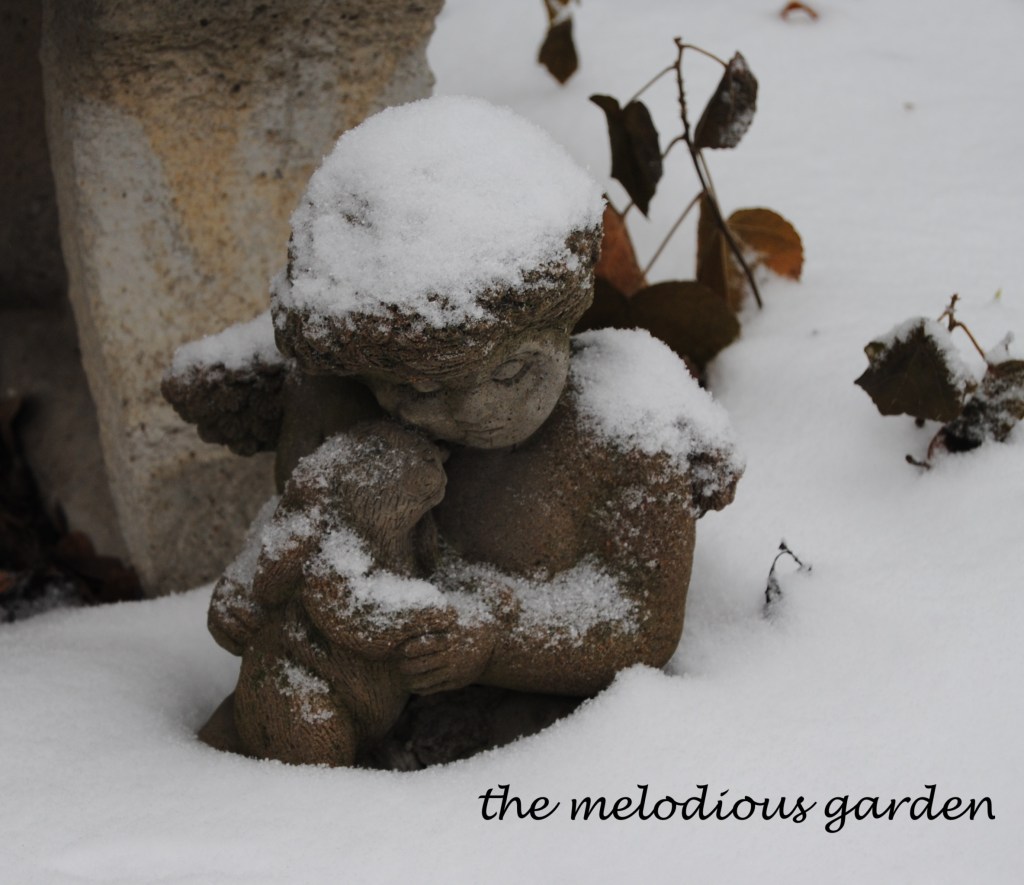
North Texas had their first – and maybe only – snow of the season yesterday, January 9th. Mother Nature’s gift to me on my 57th birthday – inches and inches of white fluffy snow. The forecast called for the snow to end overnight but, at noon, it was still softly falling.

“He brewed his tea in a blue china pot, poured it into a chipped white cup with forget-me-nots on the handle, and dropped in a dollop of honey and of cream. He sat by the window, cup in hand, watching the first snow fall. ‘I am,’ he sighed deeply, ‘contented as a clam. I am a most happy man.'” ~ Ethel Pochocki, from Wildflower Tea

A Texas snow day is the perfect time to slow down, brew a pot of tea, pull out the seed catalogs and dream of warmer days ahead.

“Anyone who thinks that gardening begins in the spring and ends in the fall is missing the best part of the whole year, for gardening begins in January with the dream.” ~ Josephine Neuse

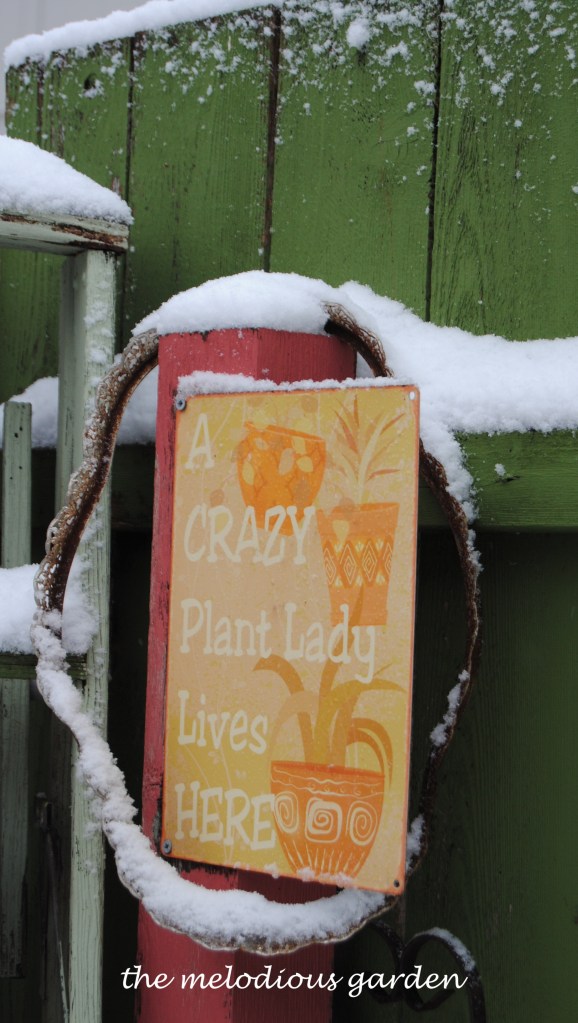
A garden is never “finished” for it is ever evolving, changing over the seasons, as either the gardener or Mother Nature intervenes. I continue on my wellness journey with dreams and plans to grow even more of our food this year, as the work and the harvests nourish and strengthen both my body and soul. I am still enamored with the concept of food forests, mimicking Mother Nature in the suburban fruit and veg garden, but changes will be made this year for I have realized that I tend to let the garden grow feral by late in the summer. I don’t have the heart to pull out the aggressive reseeders. Passionvines that scrambles and smothers everything in its path yet feeds the caterpillars of the gulf fritillary butterfly. An unknown variety of salvia that draws bees from far and wide. Garlic chives that attract and feed late summer butterflies. My solution is to strategically add raised beds, dedicated areas just for vegetables – no aggressive reseeders allowed zones. Will this work? I don’t know. But I am hopeful that this also will give me more areas to grow root crops that struggle in our clay soils. I have amended our soil with organic matter constantly over the nearly 30 years at this property but it simply remains too heavy in wide sections of the property. If nothing else, it further proves that, yes, a crazy plant lady lives here!

“I suppose it all started with the snow. You see, it was a very special kind of snow — a snow to make the happy happier and the giddy even giddier… for it was the first snow of the season. And as any child can tell you, there’s a certain magic to the very first snow.” ~ Romeo Muller’s Frosty the Snowman

“I wonder if the snow loves the trees and fields, that it kisses them so gently? And then it covers them up snug, you know, with a white quilt; and perhaps it says, ‘Go to sleep, darlings, till the summer comes again.'” ~ Lewis Carroll’s Through the Looking-Glass And What Alice Found There

I have collected Campania statuary for more than a quarter of a century now, which is an odd thing to say. A quarter of a century. Y2K. Wasn’t that just yesterday?

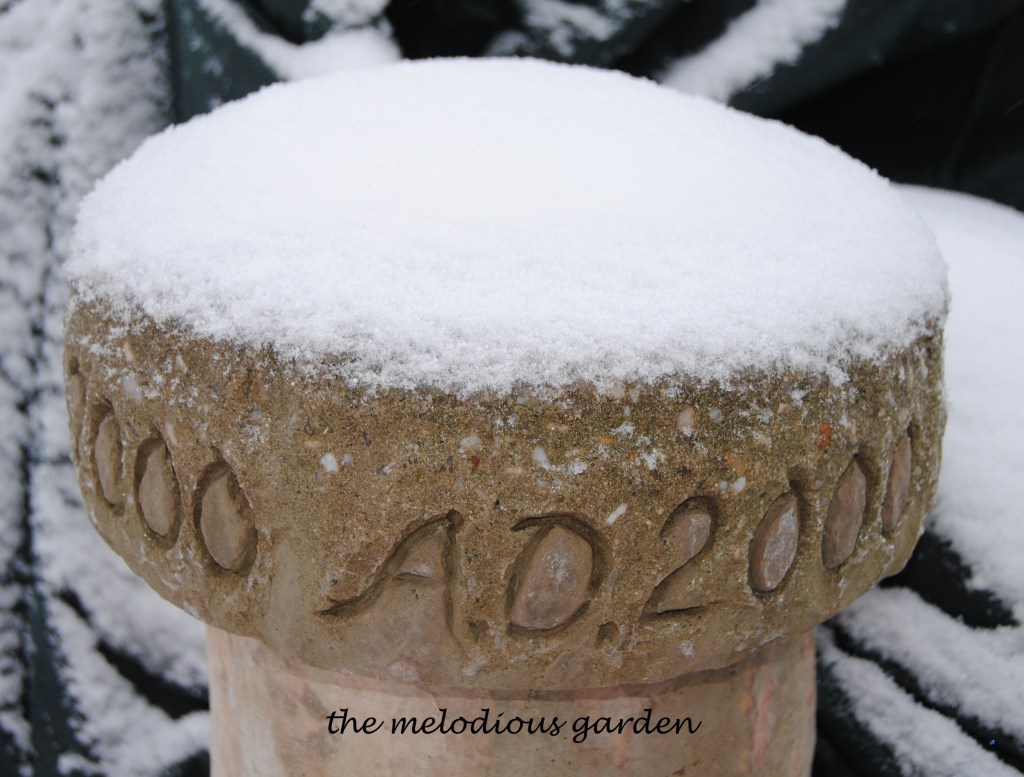
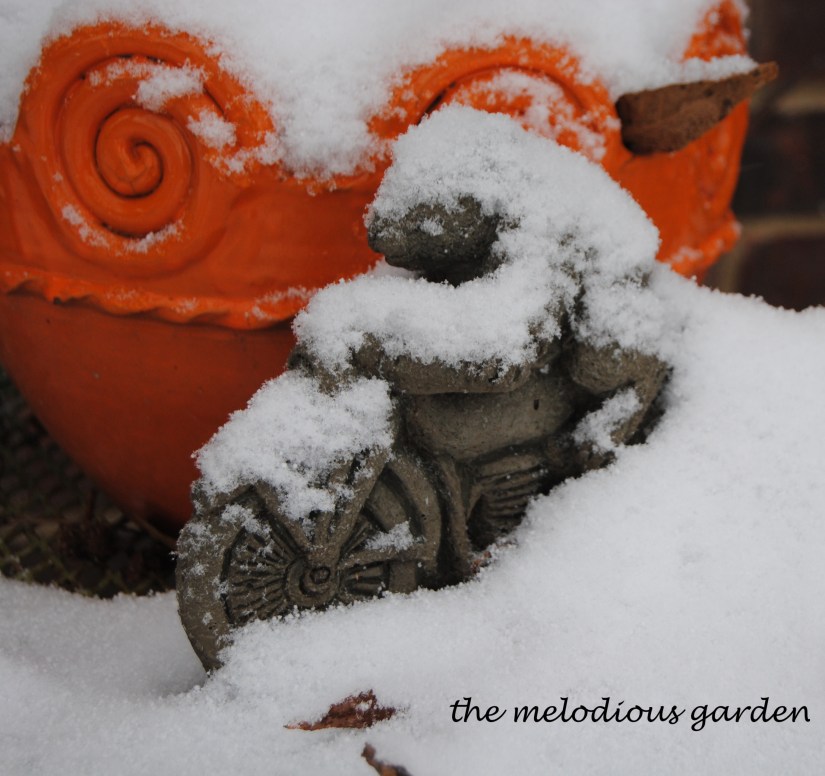
The birdbath above is not mine, though it presently resides in my front garden, a daily reminder to live each day to the fullest. I am bird bath sitting for a friend, married in the year 2000, as her life has taken some unexpected turns due to cancer and fulfilling dreams. We worked together many moons ago, pre-motherhood for both of us. Our children are grown now, though in my mind my boy still loves Ralph, the motorcycle riding mouse. (Photograph below.)

The year 2000 seems so long ago and yet feels like yesterday. My friend and I now share a connection no one wants – both of our husbands have cancer. I am reminded of the quote, “To plant a garden is to believe in tomorrow.” Gardening is an act of hope – an act of defiance! – that even though dark days may lie ahead, spring will come again. And with it, the season of renewal, of rebirth. Just as the plants again spring forth from the ground, so does our belief in tomorrow. It’s no coincidence that seed catalogs flood our mailboxes in the longest nights of winter.

While I have battled chronic autoimmune issues most of my life, my husband had always been so healthy. In a blink of an eye, that changed. One beautiful sunshiny May day in 2024, he was healthy. The next day, he was a cancer patient.

My husband is a hardcore cyclist, often biking 50 or more miles after working a full day in the office. Biking is in his veins. He loves the adrenaline of the open road, powered by his own two legs and the energy within two thin wheels.

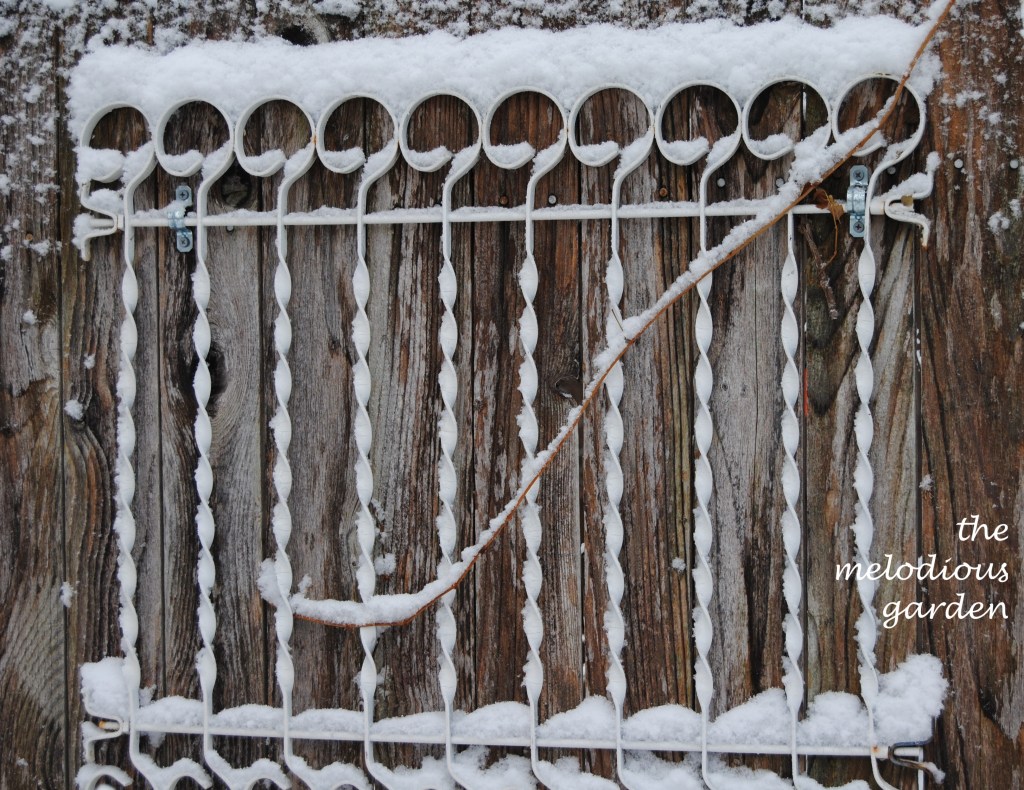
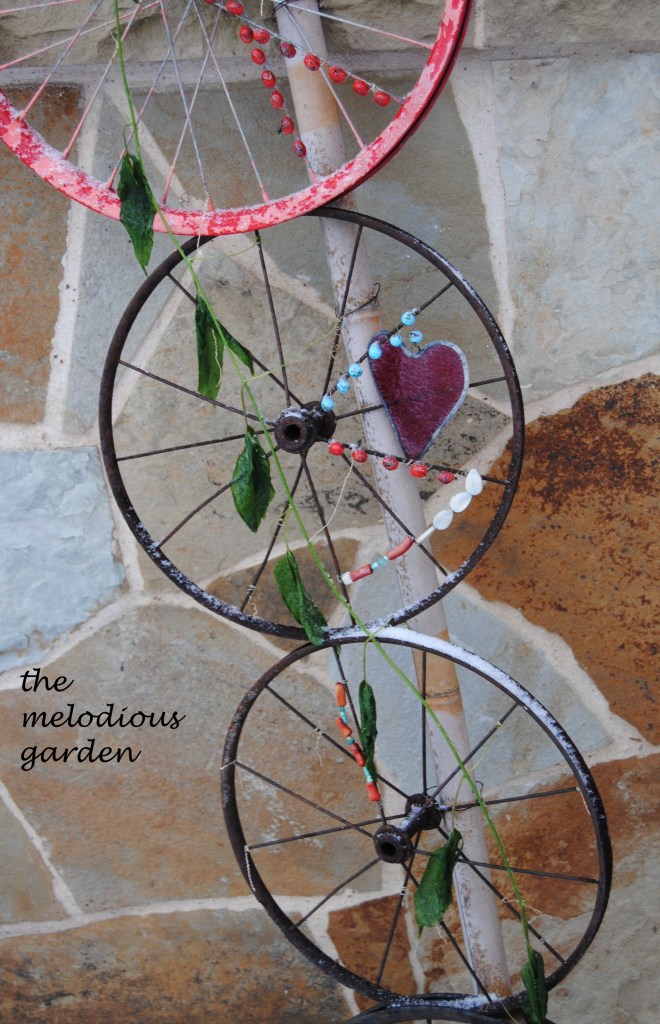
I have a thing for old wheels. I, too, love the energy that is held within each circle, though from a philosophical point of view and not a physical one. In the weeks after my husband’s diagnosis, I stacked up the old bike wheels scattered about my garden and created a trellis of hope. (Photograph above.) The energy within each simple wheel is the energy that powers us through life. My trellis of hope is leaning a bit at the moment, a wayward passionvine is frozen in place, but it still brings me comfort and peace. None of us make it out of this life without some troubles and traumas. We can either perish under the weight or we can ride on, looking for sunnier days ahead.

“The first fall of snow is not only an event but it is a magical event. You go to bed in one kind of world and wake up to find yourself in another quite different, and if this is not enchantment, then where is it to be found? ~ J. B. Priestley

(All photographs taken today, Friday, January 10, 2024, in my southern Denton County, Texas, garden.)

gardening

Goodbye 2024

As 2024 closes out, I find myself wandering about the garden, reflecting on what this year has been and looking ahead to 2025. I am filled with a gardener’s optimism at new opportunities and new adventures that await in the coming year.

2024 was a year of lessons and growth, filled with good times and challenges and many unforgettable moments.

Perhaps the most unforgettable moment of all was in January when we (finally!) removed three large cedar elms from the back section of my gardens. (Photo below…) The trees sprouted some years prior, seeds blown in from a neighbor’s tree. As junk trees tend to do, these grew fast and furious, a daunting task to cut down.

This is forever an unforgettable moment as the last of the three trees twisted as it fell and landed with a Plop. Right in the neighbor’s in-ground hot tub! Thankfully the tree didn’t damage anything and the neighbor wasn’t too upset at us. But it was quite a chore getting the tree up and out of the water and up and over the fence.

The trees were cut into long sections and now edge my latest vegetable bed. (Photo below…) I had plans to construct a greenhouse out of an old metal gazebo but record rainfall this spring led to a rather lush garden by June and I didn’t have the heart to remove or cut back any of the plants to make room for the project. Perhaps this will be my first project of 2025, as nothing is stronger than a gardener’s wintertime optimism.

2024 was my 29th year gardening this same patch of earth and what a year it was – for rain! By early June, the ground was so saturated and water was standing the entire length of our property along the west side of our house. I ended up digging a trench to push the water away from our garage to the ditch that runs behinds our property line. (Photo below…) Eventually, I will need to decide what to do with the trench – fill it in with soil or construct a dry creek bed? It currently sits much the way it was in June, though thankfully drier now.

This last day of 2024, we are now roughly six weeks past our average first freeze of the season, a good example of the extremes that make up an average. We have been down near freezing a few times and have even had a few mornings with a light frost on the ground, but nothing cold enough – or not cold for long enough – to kill off tender plants. Sure, the tomato plants look brutal, nearly ten months now since their planting date, and the harvests are much smaller now, but these bonus harvests are such a treasure in wintertime. (Photo below…) Eggplant and peppers are also still growing and producing, though the first full week of January looks to finally bring us a killing freeze.

Not to be outdone by the tender vegetables, even the tropical mandevilla vine is still blooming. (Photo below…)

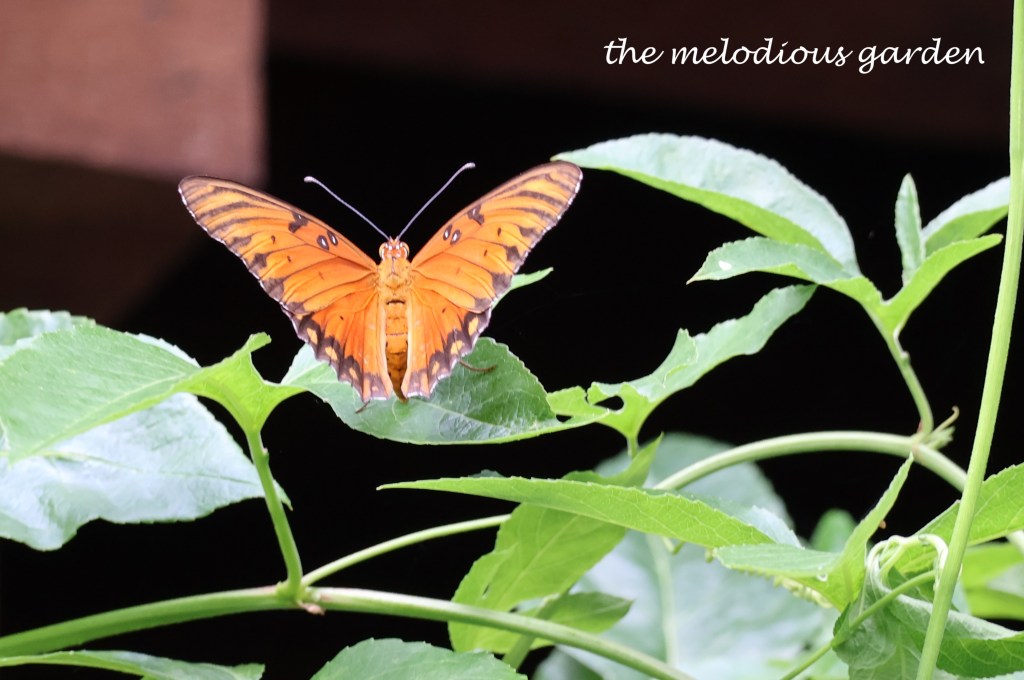
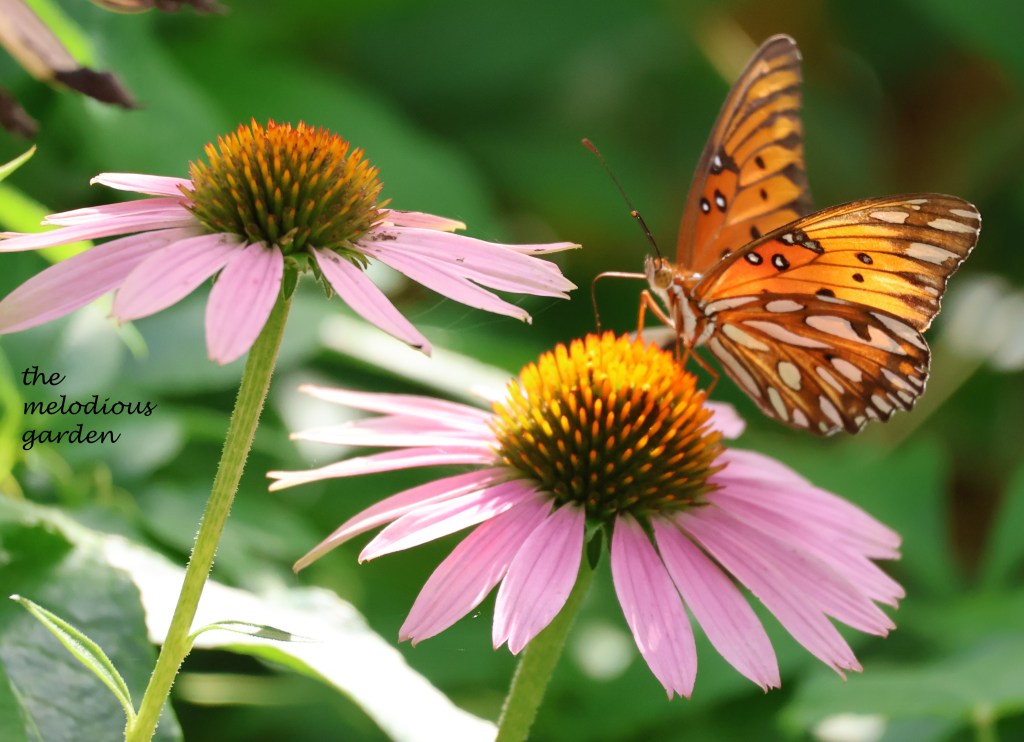
One of my gardening goals for 2025 is to reign in the self-seeding passionvine. I have vowed to only let a handful grow, as they have a habit of popping up everywhere and scrambling over everything in their path. I love the blossoms and the fact that the vine is the host plant for the gulf fritillary butterfly. Alas. The vines sure can get out of hand by the end of summer! Our weather has been so mild lately that a few caterpillars are still munching down on the foliage.

This spring and early summer, many of my noontime meals were entirely from my garden, though the heat of summer and sudden switch from too much rain to not a drop of rain was quick and intense and brutal on the garden. Fall rains have been nicely spaced out and many of the “winter greens” are doing quite well, including the Red Dragon cabbage. (Shown in photo below…)

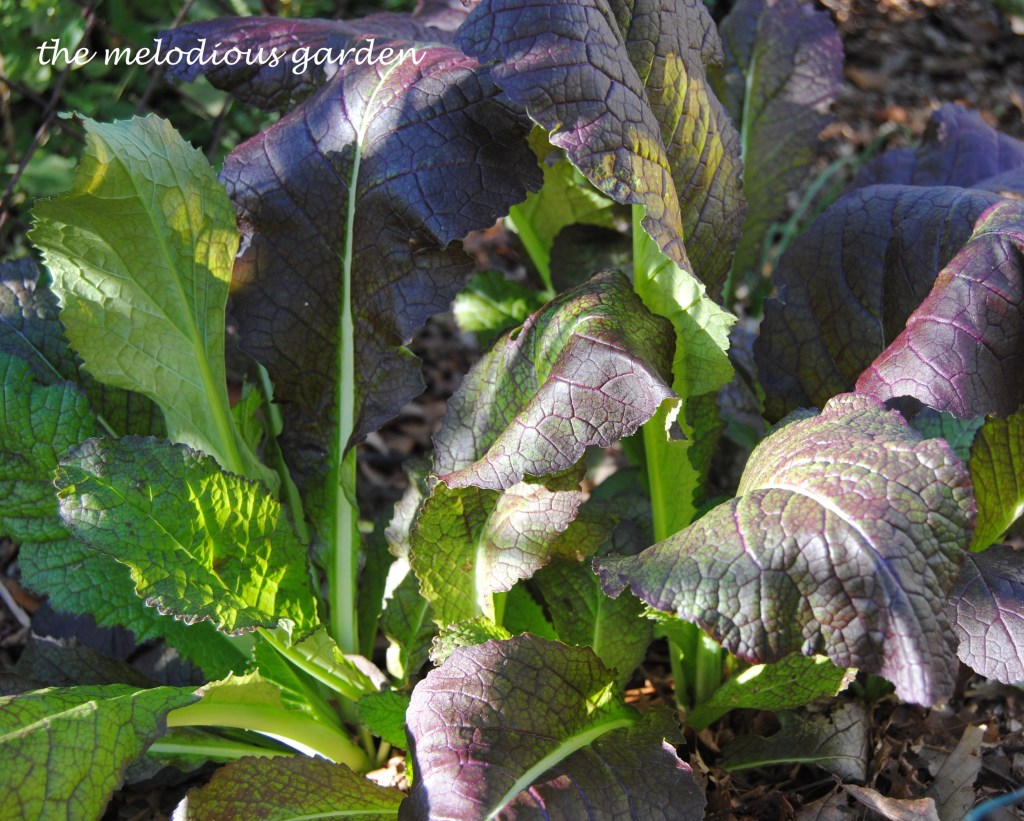
Red Giant mustard (shown below) is also doing very well. In 2025, I would like to write more about my chronic health issues and what prompted me to switch from ornamental gardening to edible gardening, along with my reasons for growing vibrantly hued vegetables.

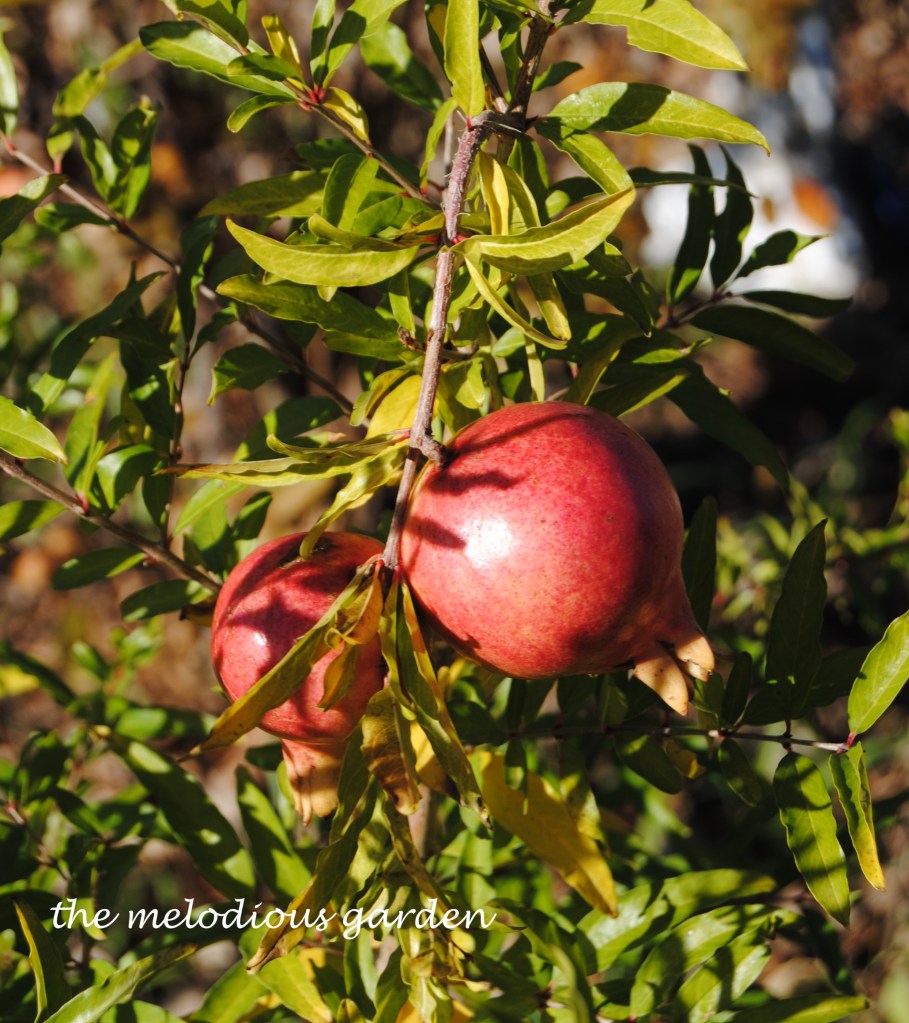
I planted a number of dwarf ornamental pomegranates (shown below) about six years ago when I was in transition – a former ardent rose gardener but not yet a veg and fruit gardener. I have yet to decide what to do about these pomegranates. Yes, they are beautiful! Alas. The fruits are not suitable to eat and they are taking up valuable real estate. I have since planted a number of edible pomegranates, though they are still a few years away from producing a crop.

And on that note – Here’s to a healthy and active new year. May 2025 be filled with many happy days spent in the garden, either hard at work or simply meandering about barefoot. Be well, my gardening friends.

(The first two photographs were taken in January 2024. The third photo was taken in June 2024. The remaining photographs were taken December 30, 2024. All photos taken in my southern Denton County, Texas, garden.)

gardening, nature

What good are bugs? And what good is henbit anyway?!

It’s henbit season here in North Texas. When lines are drawn. Either you are for henbit or you are against henbit. A middle ground is sometimes found. Against henbit in the front yard. For henbit in the back. Where the neighbors can’t see it. We have probably all had that one neighbor at one time or another that would saunter over and give some unsolicited advice on lawncare. Thankfully mine moved away several years ago. I am thinking the couple that bought that house must be for henbit. Or their lawn crew just hasn’t been called out yet. Right now, their front lawn is a blaze of lavender flowers, bees buzzing about. I walked past it earlier today and couldn’t help but smiling, for I know somewhere in the universe, the previous homeowner is cringing and just knows that his once tightly manicured and chemically induced lawn has gone to the bees.

As I was mulling over today’s blog topic, I glanced over at the bookcase that holds many of my gardening books and one book’s title – out of the hundred or so books – jumped out at me. What good are bugs?

My past few posts have focused on the quote “If something is not eating your plants, your garden isn’t part of the ecosystem.” I have highlighted two beautiful butterflies, along with their caterpillar stage and their specific host plants. I think supporting the life cycles of butterflies is something we can all agree on, right? But what about other bugs? Do we have to love them all? And for that matter. What good is henbit anyway?!

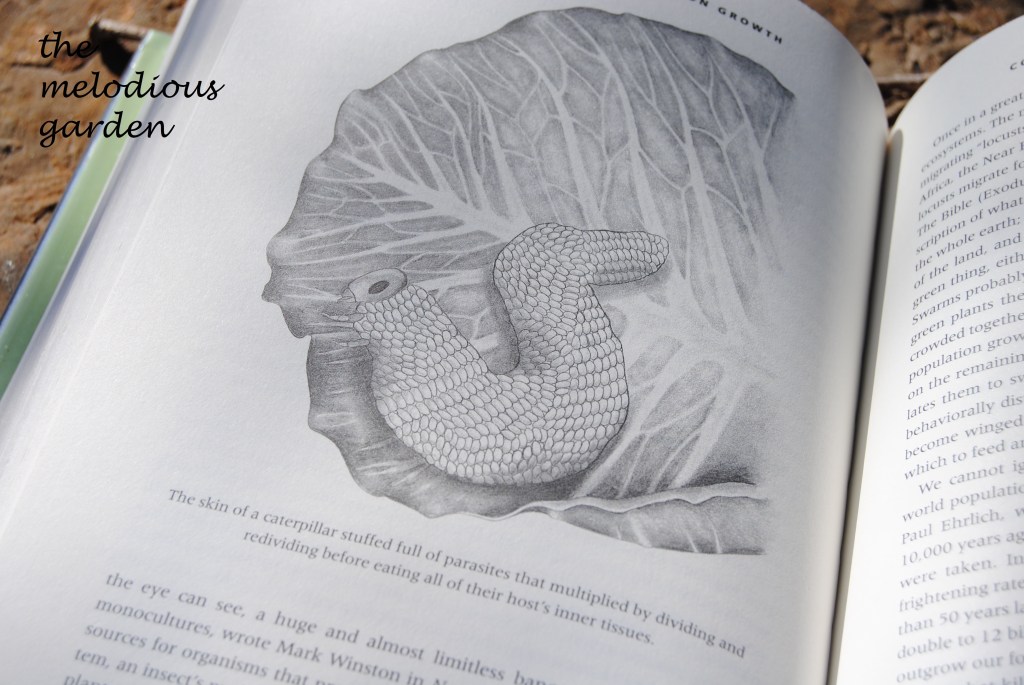
What Good Are Bugs? Insects In The Web Of Life, written by Gilbert Waldbauer, may be a heavier read than most people are interested in, but it does a great job explaining exactly why humans need bugs in our lives. (And, thankfully, it can be read in bits and pieces, as that is how I tend to read non-fiction.)

We know – and appreciate – that our food supply is dependent on insects for pollination. But do we stop and appreciate the bugs that are on the clean up crew? The ones that eat and break down dead animals and plants, not to mention animal dung? Without them, the planet would look vastly different than it does. Insects are also important food sources for wildlife further up the food chain. If we eat eggs and/or chicken, than we also need to appreciate that free range chickens are an insect eating machine.

Where does henbit fit in this picture? Henbit starts blooming in mid- to late-winter, a time when very few plants are blooming, yet this is also a time when many insects are venturing out on warm, sunny days, in search of nectar.

Do you remember the old advertisements for lawn chemicals? Chances are the man in the ad is smoking a cigarette or a pipe while applying whatever chemical is being touted. The children and family dog are probably nearby, playing on the lawn, still wet from the chemicals. The wife is likely standing on the patio, wearing high heels and a dress, smiling. Some ideals are hard to break from. Others are easy to kick to the curb. We can look at the old advertisements today and see them as quaint. A different era. Smoking hasn’t been allowed in advertisements since the Nixon administration. But what about the ideal that our lawns must be sprayed with chemicals and devoid of all life except for the desired green grass? When are we going to kick that to the curb?

Thankfully, society is starting to wake up. More and more, we see and hear about people that are planting for pollinators, allowing areas of weeds to bloom, eliminating chemicals, installing native wildlife habitats, the list goes on and on. Imagine if even a quarter of the world did just one or two small things to help wildlife, the changes would ripple out, for we really are intertwined in one giant web of life.

Not convinced on the benefits of henbit? What if I told you it is also edible? And who doesn’t love some free food?! The top growth of henbit (stems, leaves and flowers) can all be eaten and is quite delicious in salads. Wild greens, such as henbit and dandelion, are also high in nutrients.

I have allowed a few of my winter greens to flower, as an added nectar source for the insects. The photograph below shows the lavender blooms of henbit, along with the bright yellow bloom of a winter green. Several types of kale are also shown.

Photograph below, taken today, shows a bee on another winter green I have let go to flower.

The sketches in the book What Good Are Bugs? are quite adorable…

Keep Calm and Appreciate The Insect World.

Even Parasites.